



















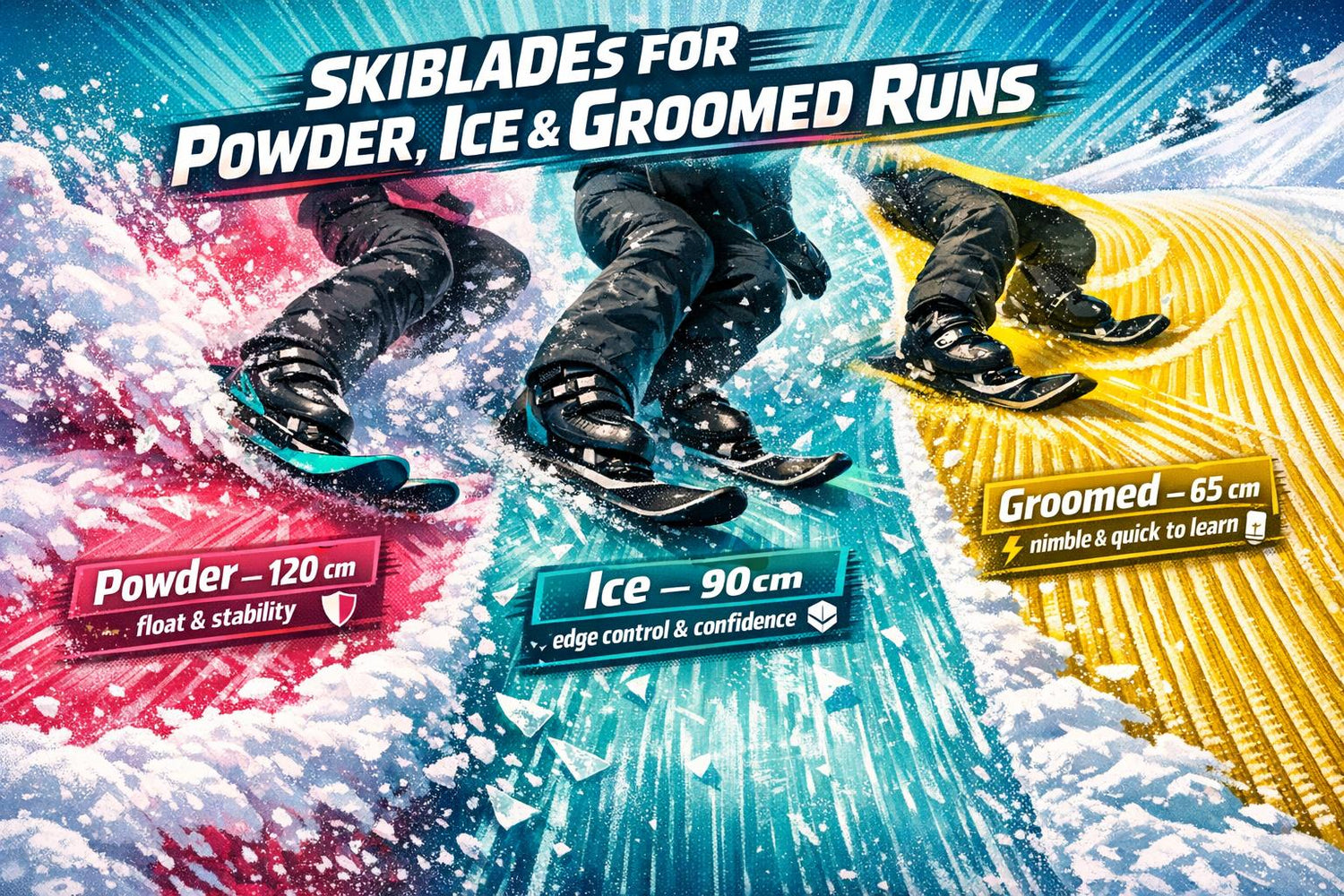
Looking for a new way to hit the slopes? Skiblades might be your answer. These shorter, lighter skis are shaking up the skiing world by offering more control, easier handling, and a quicker learning curve compared to long skis. Whether you're navigating groomed trails, icy slopes, or fresh powder, there's a skiblade model designed to fit your style.
Key Takeaways:
- 65 cm Skiblades: Best for groomed runs, moguls, and park tricks. Easy to carry and great for quick turns.
- 99 cm Skiblades: A balanced option for carving and light powder. More stable than shorter models.
- 99 cm POWDER Skiblades: Designed for deeper snow with improved flotation.
- 120 cm Short Skis: Closest to the feel of long skis, offering better stability for higher speeds and powder.
Why Consider Skiblades?
- Portable: No roof racks needed – they fit in a backpack.
- Beginner-Friendly: Learn in minutes, not days.
- Fun & Agile: Perfect for tight spaces and tricks.
Quick Comparison:
| Model | Best For | Maneuverability | Stability | Starting Price |
|---|---|---|---|---|
| 65 cm Skiblades | Groomed runs, parks | Very High | Medium | $590 |
| 99 cm Skiblades | All-mountain, carving | High | High | $690 |
| 99 cm POWDER | Deep powder | Medium-High | High | $926 |
| 120 cm Short Skis | Powder, high speeds | Medium | Very High | $1,275 |
Skiblades bring a fresh, playful twist to skiing while still holding their own in performance. If long skis feel clunky or hard to manage, these compact options might just change the way you enjoy the slopes. :)
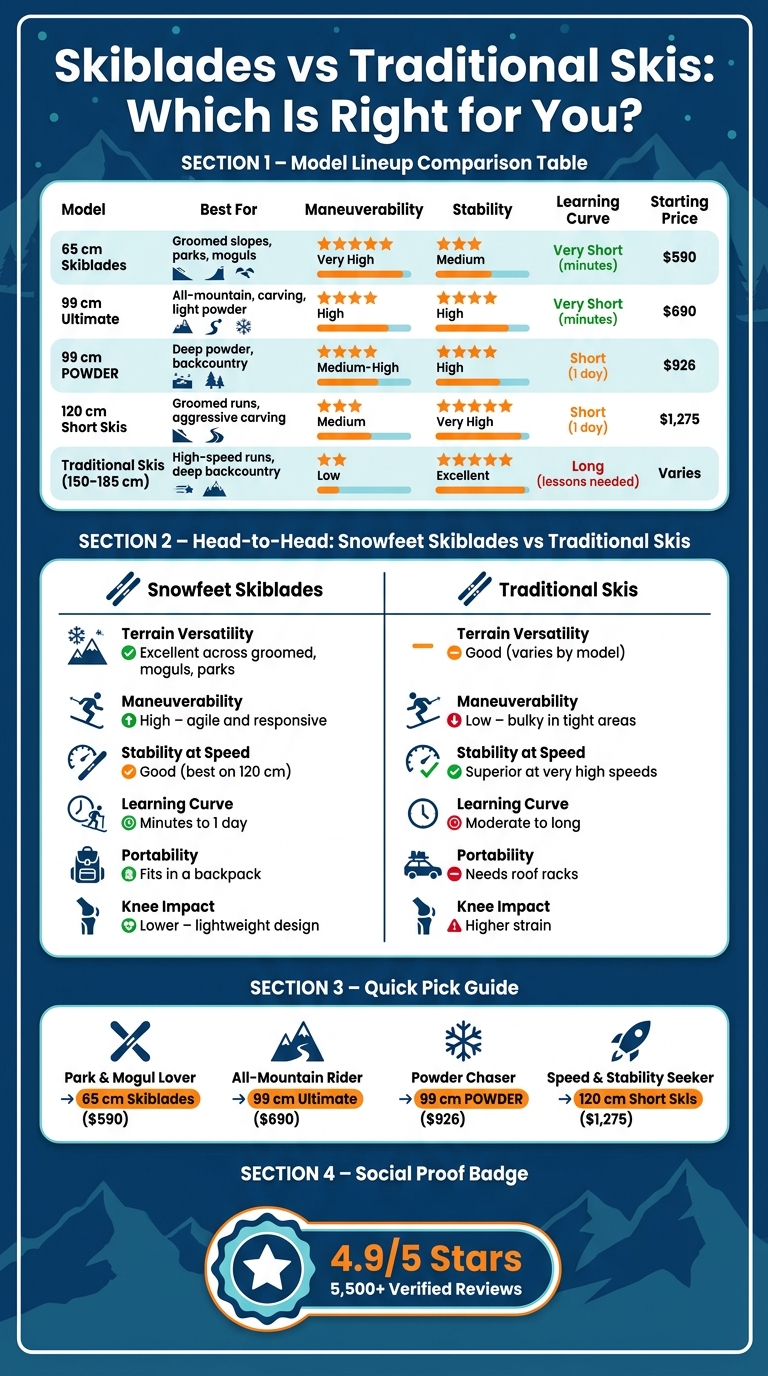
Skiblades vs Traditional Skis: Full Model Comparison Chart
Snowboarder tries Snowfeet* | Which Snowfeet* Short Ski is the Best? | Snowblades 44, 65, 99 Review
1. Snowfeet* Skiblades 65 cm
The Snowfeet* 65 cm Skiblades (25.6 inches) are designed to deliver a unique mix of skiing and skating performance. These short skis are built for agility, making them perfect for carving, spinning, and even skating. Snowfeet* calls them "the perfect hybrid. Long enough to carve like a ski, short enough to skate and spin." Starting at $635, they feature a wood core for durability, metal steel edges for grip, and sintered bases for speed.
Terrain Performance
These skiblades shine on groomed trails. The metal edges grip packed snow with precision, and their compact size allows for sharp, quick turns. On icy surfaces, the steel edges make carving and stopping feel controlled and reliable. However, in deep powder, they fall short compared to longer skis, which naturally handle soft snow better. This balance of performance makes them a versatile choice for most conditions.
Maneuverability
Maneuverability is where the 65 cm Skiblades truly stand out. Their short length makes them perfect for navigating moguls, weaving through crowded lift lines, and tackling tight spaces like tree runs. Plus, they’re super convenient - compact enough to fit in a backpack, which means no need for roof racks or oversized luggage.
Stability
Compared to shorter models like the 44 cm and 50 cm versions, the 65 cm Skiblades offer better stability. That said, traditional long skis still take the lead when it comes to high-speed stability on open runs. With these skiblades, keeping your weight balanced front-to-back is crucial since shorter skis are more sensitive to shifts in weight distribution.
Learning Curve
Most users get the hang of these skiblades in just a few minutes, especially if they have experience in activities like skating, hockey, or rollerblading. Even beginners find them approachable, thanks to their reduced length, which makes turning and stopping much easier compared to full-length skis.
"These ski blades are a blast to use. Super easy to control, quick to turn, and way more forgiving than traditional skis." - Brad Tolin, Verified User
2. Snowfeet* Skiblades 99 cm
The 99 cm model is all about delivering a high-performance skiing experience. Snowfeet* proudly refers to it as their "Ultimate Short Ski", and it’s their top-selling product. Priced at $675 for the wood core version, it offers a stiffer and more stable ride compared to shorter models in their lineup. Let’s dive into how these skiblades handle different terrains and situations.
Terrain Performance
On groomed trails, the 99 cm skiblades shine. Thanks to their deep parabolic sidecut and narrow waist, carving clean, quick turns feels effortless. On icy or hard-packed surfaces, the metal steel edges provide excellent grip, ensuring smooth turns and reliable braking. In light powder - up to about 4 inches - they hold their own. However, for deeper snow, Snowfeet* suggests upgrading to the POWDER 99 cm or the 120 cm model. This balance of agility and traditional ski-like performance is a standout feature.
Maneuverability
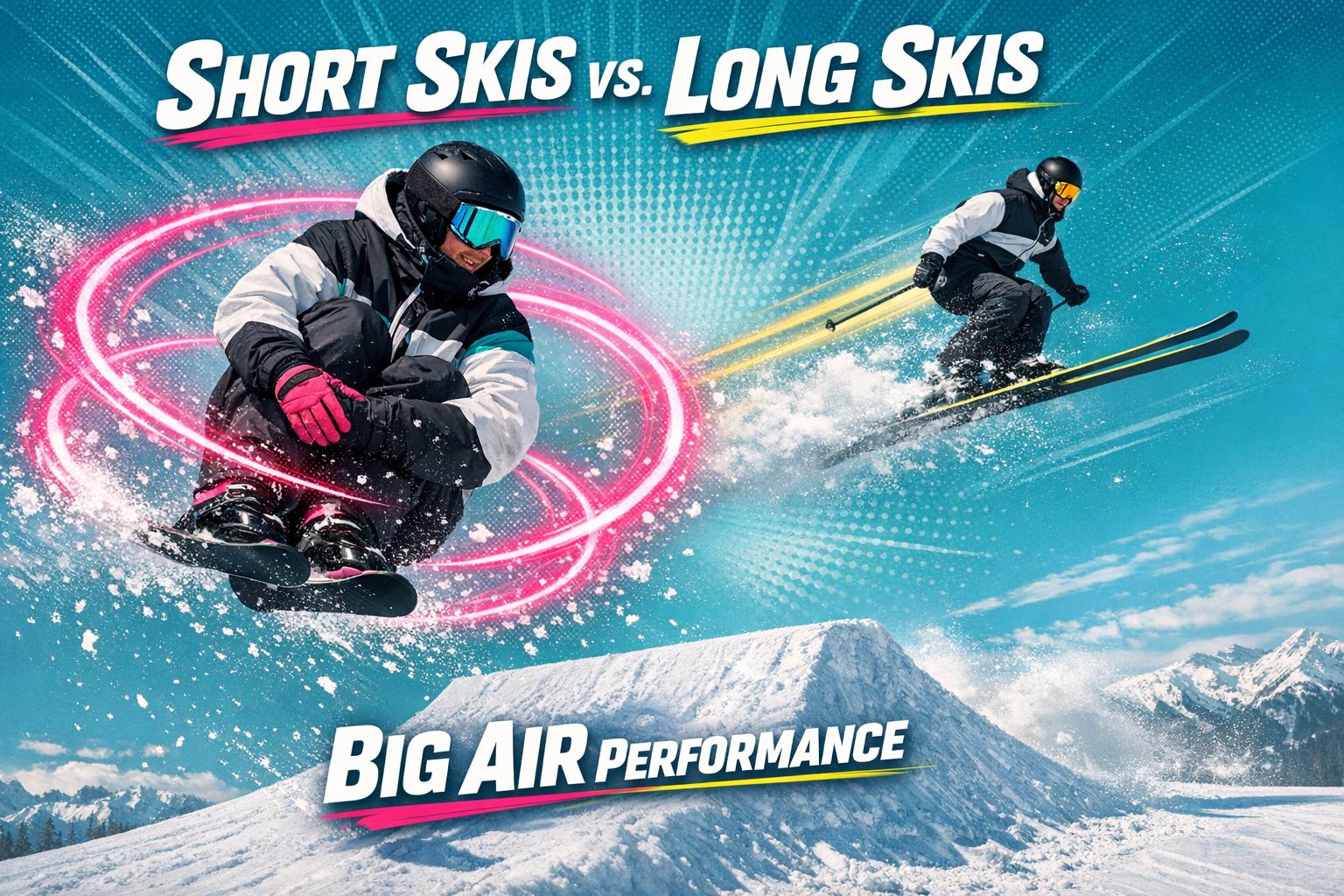
At 99 cm, these skiblades strike the perfect balance between speed and agility. They’re long enough for carving at higher speeds but short enough to remain incredibly nimble. Compared to traditional long skis, they’re much easier to maneuver. The twin-tip design makes it easy to ride switch, spin, or tackle jumps with confidence. Plus, their compact size means they can fit in a backpack, making transportation a breeze - no more lugging around full-length skis!
Stability
The wood core construction gives these skiblades a noticeable edge in stability, especially compared to the shorter 65 cm model. They hold up well at moderate to high speeds, though traditional long skis still offer more stability when flying down wide-open runs. As one user, Brad Tolin, put it:
"Only trade-off is at higher speeds, where longer skis still feel more stable - but for overall fun and maneuverability, these are hard to beat." - Brad Tolin
With a mix of stability and easy handling, the 99 cm model is a versatile choice for skiers who want agility without sacrificing too much control.
Learning Curve
The shorter length of these skiblades makes them much easier to pick up than traditional skis. Most riders adapt quickly - some in just minutes, others within a day. Beginners will find turning and stopping more intuitive, while seasoned skiers can jump right in without much adjustment.
"I had a lot of fun with the 99s. They are easier to turn than skis." - MindySue
3. Snowfeet* POWDER 99 cm
At $675, the Snowfeet* POWDER 99 cm skiblades are designed for those who want to take their skiing adventures off the groomed trails. Dubbed the "Ultimate Short Ski", this all-mountain blade is crafted to handle powder while remaining versatile enough for mixed conditions. Unlike traditional long skis that can feel clunky in deep snow, the POWDER 99 cm offers a blend of stability and agility, building on the performance of the standard 99 cm model to shine in powder without compromising maneuverability.
Terrain Performance
The POWDER 99 cm is ideal for skiers tackling a mix of groomed runs and untouched powder. Thanks to its broader surface area, it floats effortlessly in deep snow, where shorter models like the 65 cm might falter. On groomed trails and hardpack, the deep parabolic sidecut ensures smooth, automatic carving, while the metal steel edges provide solid grip on icy surfaces. Off the beaten path, these skiblades excel in moguls, bumpy snow, and forested areas - places where traditional long skis often feel awkward.
Maneuverability
These skiblades strike a great balance between stability and agility, making them easy to handle in tight spaces where longer skis can feel unwieldy.
Stability
The premium wood core construction gives the POWDER 99 cm a stiffer, more confident feel that’s perfect for aggressive carving and moderate speeds. While they’re stable, it’s worth noting that at very high straight-line speeds, traditional full-length skis still have the edge.
"These ski blades are a blast to use. Super easy to control, quick to turn, and way more forgiving than traditional skis." - Brad Tolin
Learning Curve
One of the standout features of the POWDER 99 cm is how easy it is to pick up. Most skiers can master them in just a day, making them a great choice for beginners building confidence. Experienced riders will appreciate their ability to carve and handle varied terrain. Plus, these skiblades are compatible with ski boot bindings (EU sizes 36–49) and snowboard boot bindings (EU sizes 38–49), giving you flexibility in your gear setup.
sbb-itb-17ade95
4. Snowfeet* Short Skis 120 cm
At $775, the Snowfeet* Short Skis 120 cm take the spotlight as the premium option in the Snowfeet lineup. These skis, measuring 120 cm (47 inches) in length, aim to deliver a classic skiing experience while being lighter and easier to handle compared to traditional all-mountain skis.
Terrain Performance
When it comes to powder, the 120 cm model stands out. It offers better flotation and control compared to the shorter 65 cm and 99 cm versions. The deep parabolic sidecut makes carving on groomed runs a breeze, while the full metal steel edges provide reliable grip and braking on icy surfaces. This combination ensures a smooth and controlled ride across a variety of conditions.
Maneuverability
These skis excel in agility, making them a great choice for navigating moguls, tight trails, or even crowded slopes. Their shorter length allows for quicker turns and better descent control, especially in tricky or narrow areas.
Stability
With a sustainable wood core, sintered bases, and cap construction, the 120 cm model is the most stable in the Snowfeet lineup. It handles moderate and high speeds well, though traditional full-length skis still have the edge when it comes to straight-line stability at very high speeds. The thoughtful design also makes these skis easier to master, even for newer skiers.
Learning Curve
One of the standout features of this model is how quickly skiers can get the hang of it. Most recreational skiers report feeling comfortable within a day, and some even manage to pick up the basics in just minutes. The skis are equipped with standard release bindings that are compatible with ski boot sizes ranging from 4.5 to 14.5 US, making them easy to integrate with your existing gear.
Snowfeet* continues to push the boundaries of ski design, offering a portable and innovative alternative to traditional long skis.
| Feature | Snowfeet* 120 cm | Traditional Long Skis |
|---|---|---|
| Powder Performance | High (best in the short ski range) | High (terrain dependent) |
| Maneuverability | High; easy to turn and handle moguls | Lower; can feel cumbersome |
| Stability at Speed | Good; highest among Snowfeet models | Superior at very high speeds |
| Learning Curve | Approximately 1 day or less | Longer; often requires lessons |
| Portability | High; fits easily in a car | Low; requires racks or larger vehicles |
| Binding Type | Standard release ski bindings | Standard release ski bindings |
5. Standard Traditional Skis (All-Mountain, Powder, or Carving)
Traditional skis have long been the go-to choice for skiers, offering versatility and performance tailored to specific conditions. Major brands like Rossignol, Salomon, and K2 produce full-length skis ranging from 150–185 cm (59–73 inches), each designed with a particular terrain in mind. However, when compared to the compact and nimble Snowfeet*, traditional skis reveal some limitations.
Terrain Performance
Traditional skis perform exceptionally well on groomed runs and excel in high-speed carving. Powder skis, with their wider design, are made for deep snow, but many all-mountain models struggle in such conditions unless specifically built for it. On icy slopes, the metal edges of traditional skis provide solid grip, although the effectiveness depends on the model and the skier’s skill. That said, their terrain adaptability often comes at the cost of maneuverability.
Maneuverability
The length of traditional skis makes them less practical in tight or crowded spaces. Whether navigating moguls, weaving through narrow forest trails, or dealing with busy slopes, their size can make quick turns and precise movements more difficult. Snowfeet* highlights this difference:
"Skiblades | Snowblades | Skiboards are light and easy to ride as opposed to cumbersome, heavy and long skis."
This bulkiness also impacts tricks like spins, jumps, and riding switch, areas where shorter Snowfeet* models excel. Their compact design allows for seamless agility, making tight maneuvers far easier.
Stability
While traditional skis may struggle with maneuverability, they shine when it comes to stability at higher speeds. Longer skis provide a smoother and more stable experience during fast descents, a feature that’s hard to match. However, shorter skis like Snowfeet* trade some of this stability for improved control and fun in other areas. As skier Brad Tolin put it:
"Only trade-off is at higher speeds, where longer skis still feel more stable - but for overall fun and maneuverability, these [short skis] are hard to beat."
Learning Curve
Traditional skis require more time and effort to master. Their heavier build and longer length can be tough on the knees and challenging for beginners to control. Additionally, formal lessons are often necessary before new skiers feel confident. On the other hand, Snowfeet* are designed for ease of use, with many users picking them up within minutes or a single day, skipping the lengthy learning curve entirely.
| Feature | Traditional Long Skis | Snowfeet* Short Skis / Skiblades |
|---|---|---|
| Terrain Versatility | Good (varies by model) | Excellent across groomed slopes, moguls, and parks |
| Maneuverability | Low; bulky in tight areas | High; agile and responsive |
| Stability at Speed | Superior at very high speeds | Good; best on 120 cm model |
| Learning Curve | Moderate to long | Quick (minutes to 1 day) |
| Portability | Low; needs roof racks or large storage | High; fits in a backpack or car trunk |
| Knee Impact | Higher strain | Lower; lightweight design |
| Binding Cost | Expensive (release bindings) | Flexible options at various price points |
Pros and Cons
Snowfeet* offers a range of models, each with its own mix of agility, stability, and versatility on different terrains. Let’s break down what each model does best and where it might not be the perfect fit.
The 65 cm Skiblades (starting at $590) are a playful and compact option. They’re ideal for groomed runs, moguls, and snow parks. Their small size makes spins and jumps feel effortless. However, they’re not the best choice for deep powder or high-speed, open runs.
The 99 cm Ultimate Short Skis (starting at $690) strike a great balance for most riders. They’re easy to carve with, handle light powder well, and stay nimble in tight spots. As verified buyer Brad Tolin put it, they’re "way more forgiving than traditional skis", which echoes the feedback from many users.
The POWDER 99 cm (starting at $926) is the go-to pick for deep snow. Its wood core and wider design give it superior float in powder compared to the all-around capabilities of the 99 cm Ultimate. If backcountry days are your thing, this is your model.
The 120 cm Short Skis (starting at $1,275) bring a more traditional ski feel to the Snowfeet* lineup. They’re compatible with standard release ski bindings, making them the safest option for aggressive, high-speed skiing. Plus, they’re the most stable of the four models.
Here’s a quick comparison of the Snowfeet* lineup and how it stacks up against traditional skis:
| Model | Best For | Maneuverability | Stability | Learning Curve | Starting Price |
|---|---|---|---|---|---|
| 65 cm Skiblades | Groomed slopes, parks, moguls | Very High | Medium | Very Short | $590 |
| 99 cm Ultimate | All-mountain, carving, light powder | High | High | Very Short | $690 |
| 99 cm POWDER | Deep powder, backcountry | Medium-High | High | Short | $926 |
| 120 cm Short Skis | Groomed runs, aggressive carving | Medium | Very High | Short | $1,275 |
| Traditional Skis (150–185 cm) | High-speed runs, deep backcountry | Low | Excellent | Long | Varies |
Snowfeet* excels at creating agile, innovative alternatives to traditional long skis. All models feature full metal steel edges for dependable grip on icy surfaces and a learning curve that’s measured in minutes, not days. While traditional skis still dominate in stability during extreme-speed runs, that’s a trade-off most recreational skiers won’t notice on the slopes.
Conclusion
Choosing the right skiblade depends on your preferred terrain and skiing style. The 65 cm Skiblades are perfect for those who love quick turns on groomed runs, tackling moguls, or playing in the park. If you're after versatility, the 99 cm Ultimate Short Skis are great for carving, light powder, and mixed terrain. For powder enthusiasts, the POWDER 99 cm skis are designed to perform where shorter skis often struggle. And if you're looking for a more traditional ski experience with added maneuverability, the 120 cm Short Skis strike the perfect balance.
Each model offers something special, but the real difference lies in how they compare to traditional long skis. Snowfeet* products stand out thanks to their unmatched agility, easy portability, and a quick learning curve - you’ll be up and running in minutes. With over 5,500 verified reviews averaging 4.9 out of 5 stars, it's clear that skiers love the experience. If long skis feel cumbersome or limiting, Snowfeet* might just be the upgrade you need for a more dynamic and enjoyable ride.
FAQs
Which Snowfeet* length should I choose for my terrain?
For terrain and style, choose your Snowfeet* length wisely:
- 44 cm or 50 cm models: Ideal for quick, agile moves on slopes, parks, or trails.
- 65 cm skiblades: Great for spins, moguls, and navigating tight spaces.
- 99 cm or 100 cm models: A solid choice for groomed runs and light powder, offering great versatility.
- 120 cm model: Built for speed, deep snow, and smooth, stable carving.
No matter the model, you'll love the portability and freedom they bring!
Are skiblades safe at higher speeds compared to long skis?
Snowfeet* skiblades are built for precision and speed, making them a great choice for carving on groomed runs. The 99 cm short skis, for example, are designed to be quick and steady, giving you confidence as you zip down the slopes. That said, these skiblades aren't ideal for everything. They perform best on moderate, well-maintained terrain. For extremely steep slopes or deep powder, longer skis might be a better option since they offer more stability in those conditions. Stick to the groomed trails for the smoothest and safest ride with skiblades.
What boots and bindings work with Snowfeet* skiblades?
Snowfeet* skiblades are incredibly flexible and pair well with most footwear you probably already have. Models like Mini Ski Skates and Skiskates are designed to strap onto regular waterproof winter shoes or snowboard boots, making them super convenient. For more advanced options, like the 65 cm, 99 cm Skiblades, or 120 cm Short Skis, specialized Pro Ski Boot bindings are used. These bindings work with traditional ski boots to give you better precision and control.











ฝากความคิดเห็น
เว็บไซต์นี้ได้รับการคุ้มครองโดย hCaptcha และมีการนำนโยบายความเป็นส่วนตัวของ hCaptcha และข้อกำหนดในการใช้บริการมาใช้