



















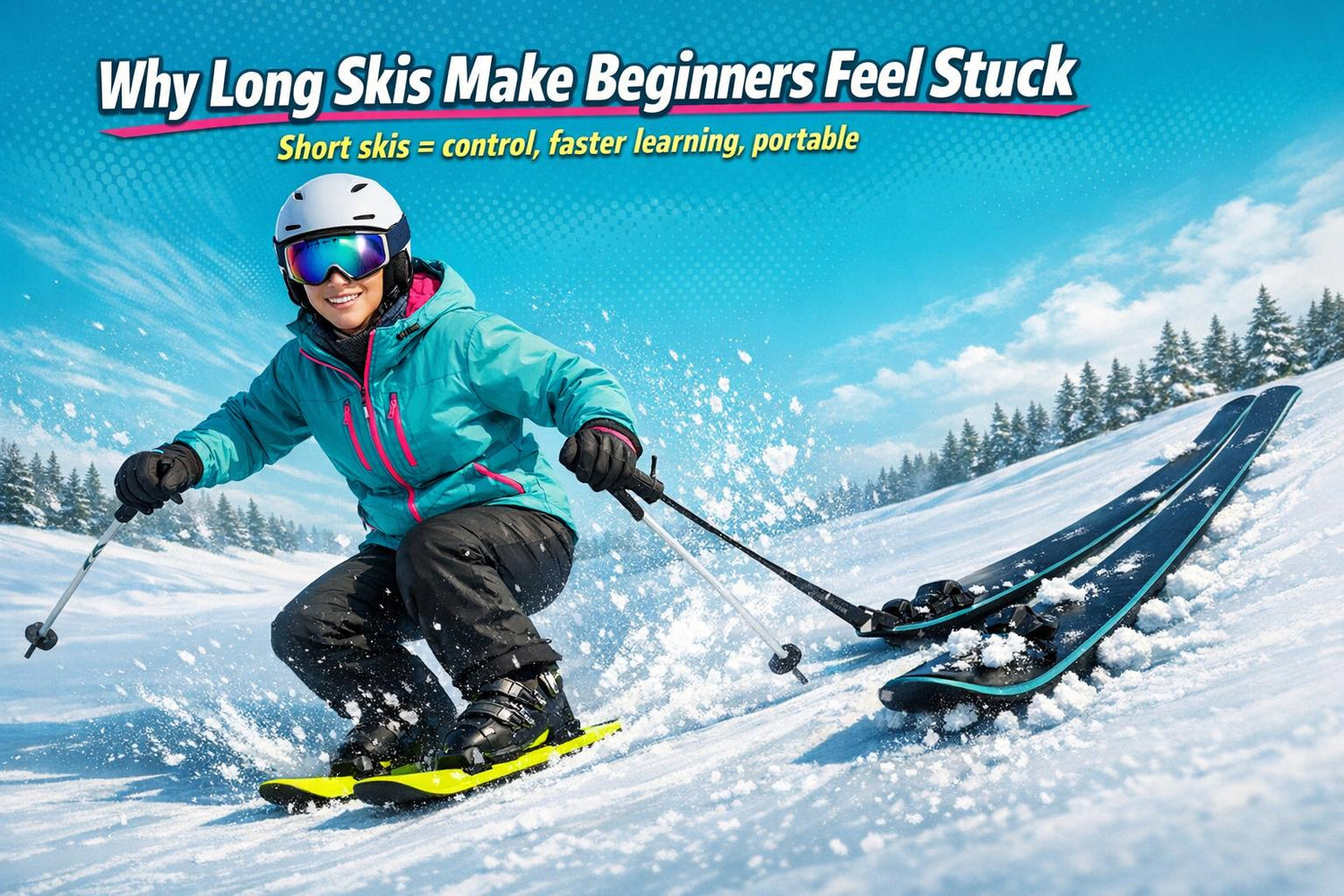
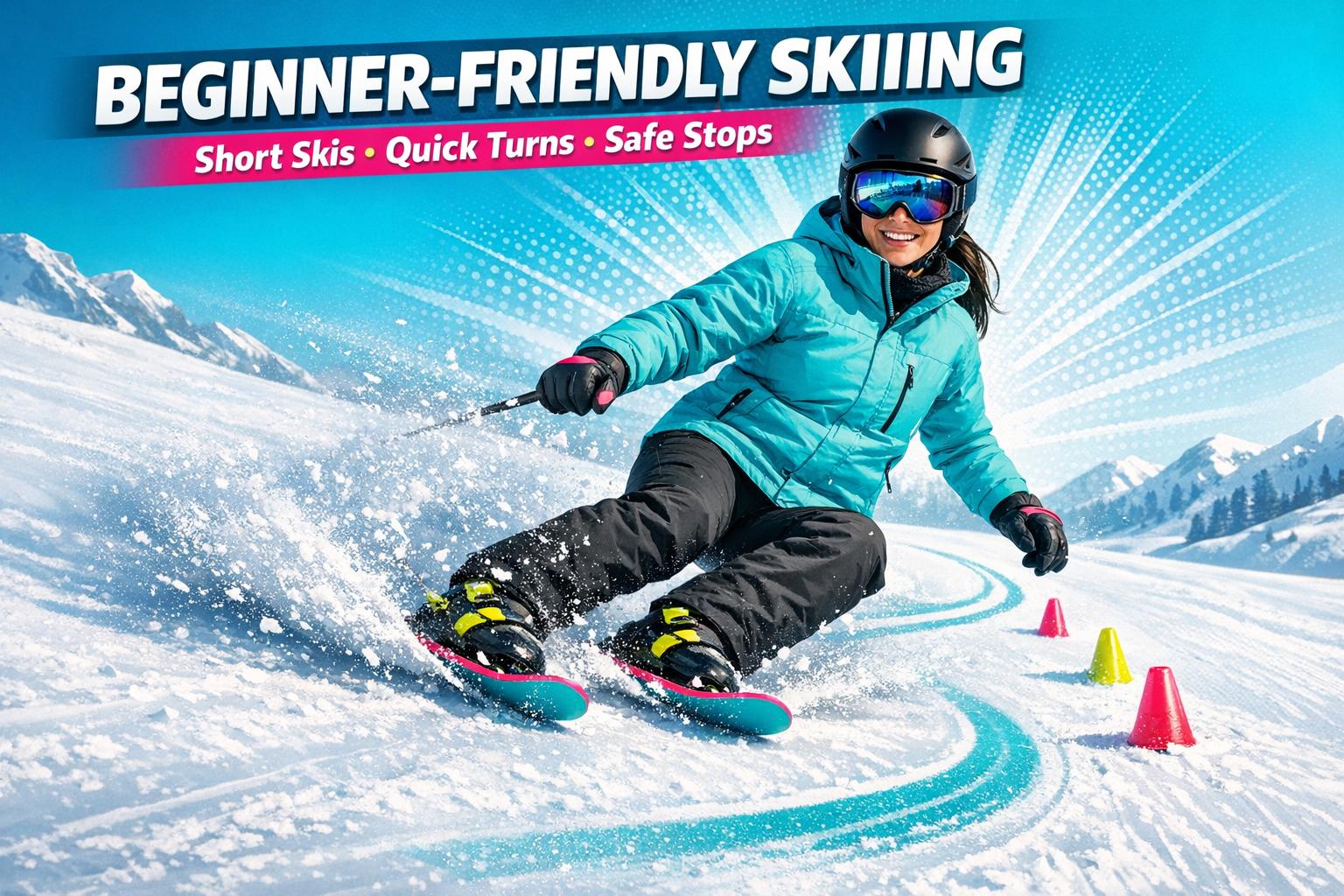
Learning to ski should be fun, but long skis can make it feel like a chore - especially for beginners. Here’s the deal: long skis (160–180 cm) are great for speed and stability, but they’re harder to turn, stop, and control, especially if you’re just starting out. That’s where shorter skis, like Snowfeet Skiblades (65–120 cm) and Skiskates (44 cm), come in. These compact options are easier to handle, help you learn faster, and are a breeze to carry and store.
Key Takeaways:
- Long Skis: More challenging for beginners due to their size, weight, and wide turning radius. They’re harder to control and slow down learning.
- Short Skis: Easier to turn, stop, and manage. Great for beginners who want confidence and quick progress.
- Portability: Snowfeet short skis fit in a backpack, unlike bulky long skis.
If you’re new to skiing, shorter skis simplify the whole experience - on and off the slopes. Let’s dive into why they’re the better choice for beginners.
Why Long Skis Feel Limiting for Beginners
Long skis can feel like a challenge for beginners - not just because they’re physically harder to handle, but because they make it tougher to stay in control. This can create a frustrating experience, both physically and mentally.
The Control Problem with Long Skis
Most adult beginner rental skis are around 55 to 61 inches long. That’s a lot of ski extending both in front of and behind your boots. Even small mistakes, like leaning slightly or twisting your hips, can have a big impact. The extra length makes the ski tips more likely to catch on uneven snow, causing sudden, unexpected shifts.
Turning is where this becomes even more noticeable. Longer skis have a bigger effective edge and a wider turning radius. To make them respond, you need precise edging, proper knee angulation, and careful weight shifts. For beginners still figuring out how to balance, that’s a tall order. When you’re just starting out, your movements are smaller, and long skis tend to respond either too slowly or too abruptly. This unpredictability can leave you feeling confused and discouraged.
Shorter skis, like Snowfeet* Skiblades (65 cm) or Skiskates (44 cm), behave very differently. A small weight shift or a gentle point of the toe results in an immediate and predictable turn. This gives beginners clear feedback and helps them feel more in control. Without that, the erratic nature of long skis can shake your confidence and slow down your progress.
How Long Skis Slow Down Learning
The control issues with long skis don’t just affect confidence - they disrupt how you learn. Progress comes from a cycle of acting, observing, and adjusting. Long skis make this harder because they’re slow to respond, especially at low speeds. Beginners often find themselves guessing what went wrong or right, which makes learning feel like trial and error rather than steady improvement.
Shorter skis fix this by letting you make more turns in less time. Because they pivot easily at slower speeds, you can practice linking turns on gentle slopes without needing a lot of space or steep terrain. More turns per run means more opportunities to learn. Plus, the quick and predictable feedback from shorter skis helps you build skills faster, making the whole experience more enjoyable.
The Main Problems Long Skis Cause for New Skiers
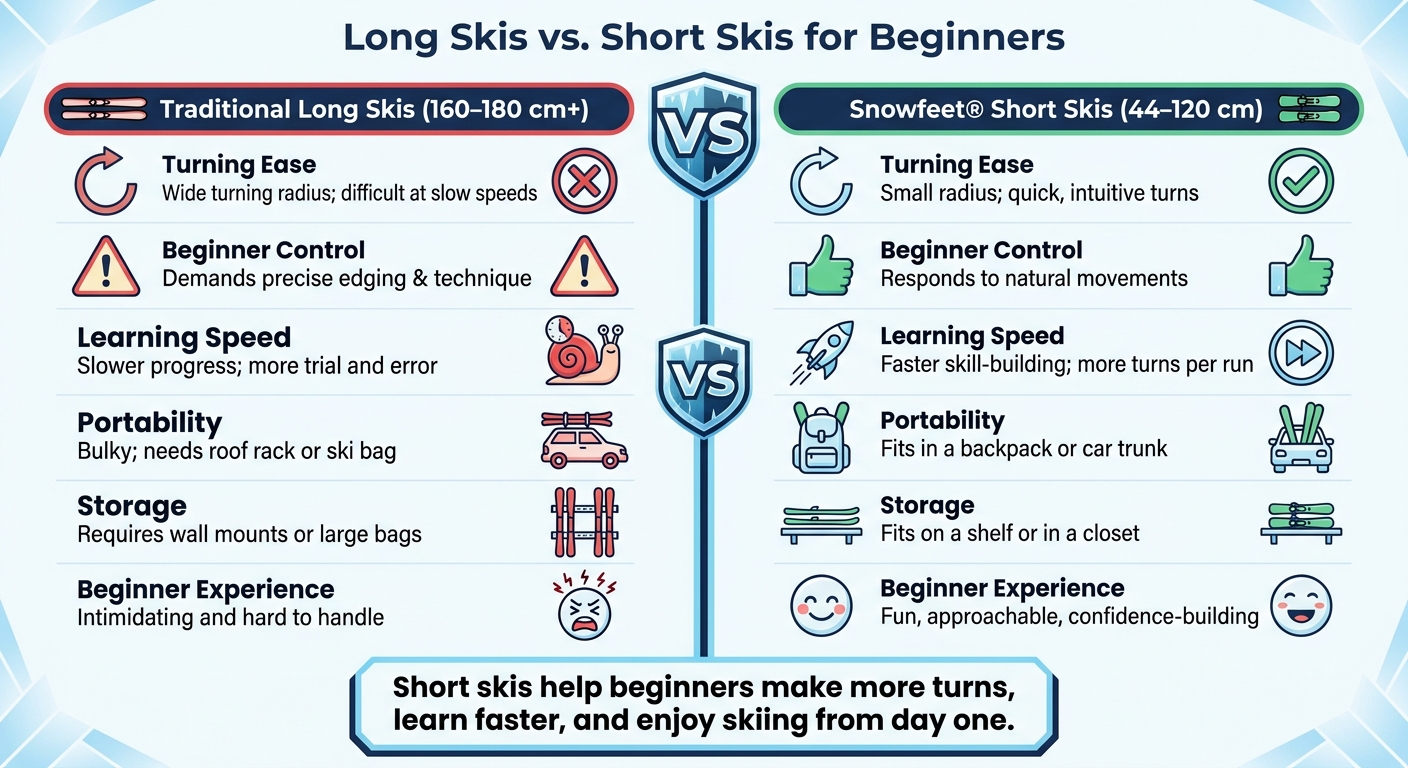
Long Skis vs. Short Skis: Which Is Better for Beginners?
Hard Turns and Low Maneuverability
Most adult skis measure 160–180 cm or longer, and that extra length comes with a bigger turning radius. This means beginners need to master precise edging, weight shifts, and timing to make smooth turns - skills they’re still developing. For someone just starting out, this can feel overwhelming. Quick direction changes or slowing down before a flat section become tricky. Long skis demand coordination that most new skiers simply don’t have yet. The result? Missed turns, moments of panic, or feeling like the skis are in control instead of you. All of this can make learning to ski feel more frustrating than fun.
The Hassle of Carrying and Storing Long Skis
Long skis aren’t just challenging on the slopes - they’re also a pain to handle off them. At 160–180 cm, they’re heavy, awkward to carry, and often require a roof rack or extra storage space. Just getting them from your car to the lift can feel like a workout, leaving beginners tired before their first run. And once you’re home, storing them isn’t much easier. They need wall mounts, ski bags, or a dedicated corner in your garage. If you live in a small apartment or only ski a few times a year, this can make the whole sport feel like more trouble than it’s worth.
This is where Snowfeet* stands out. With Snowfeet* Skiblades (starting at 65 cm) and Skiskates (just 44 cm), storage and transport are a breeze. They fit in a backpack, slide into your car trunk without any Tetris-level rearranging, and can be tucked away on a shelf like a pair of boots. No extra gear or space needed.
Long Skis vs. Snowfeet* Short Skis: A Side-by-Side Look
Here’s a quick comparison of traditional long skis and Snowfeet* short skis, focusing on what matters most to beginners:
| Factor | Traditional Long Skis (160–180 cm+) | Snowfeet* Short Skis (44–120 cm) |
|---|---|---|
| Turning ease | Wide radius; tough at slow speeds | Small radius; quick, easy turns |
| Control for beginners | Demands precise technique | Easy to manage; works with natural movements |
| Learning speed | Slower; more time spent adjusting to the gear | Faster; intuitive and beginner-friendly |
| Portability | Bulky; requires roof rack or extra effort | Lightweight; fits in a backpack or trunk |
| Storage | Needs wall mounts or large ski bags | Compact; fits on a shelf or in a closet |
| Ease for Beginners | Can feel intimidating and hard to handle | Feels more like skating - simple and fun |
One of the biggest differences? Learning speed. With short skis like Snowfeet*, you’re not fighting the equipment. Instead, you’re free to focus on developing your skills, making skiing feel approachable and rewarding right from the start.
How Snowfeet* Short Skis Fix Beginner Pain Points
Traditional long skis can make learning to ski feel like an uphill battle. Snowfeet* short skis flip that script, focusing on getting beginners moving, turning, and having fun right from the start.
Easier Turns and Better Control
Long skis often require advanced techniques, like precise edging, to maneuver effectively. Snowfeet* short skis, starting at just 65 cm, simplify this process. With less ski extending in front of and behind your boots, they respond instantly to weight shifts or hip rotations. This design makes turning intuitive and stopping a breeze - no need for complex skills. For beginners, this eliminates one of the biggest fears: gaining speed without knowing how to stop. Snowfeet* short skis address this head-on, offering control and confidence from the first run.
Lightweight and Easy to Carry
Snowfeet* Skiblades max out at 120 cm, while Skiskates are a compact 44 cm. Their small size means they’re easy to toss in your car trunk, carry through a parking lot, or clip to a backpack. For those who ski occasionally, this convenience is a game-changer. At home, they’re simple to store - no bulky ski bags or special mounts required. Plus, their lightweight design isn’t just about portability; it also helps beginners learn faster.
Faster Progress on the Snow
Unlike long skis, which often demand a steep learning curve, Snowfeet* short skis are designed to work with natural movements. This means beginners can go from basic gliding to linking turns in just one session. For people who only ski a few days a year, this quick progress makes the experience far more rewarding. Ski instructors have noticed the same trend - shorter training skis help students focus on individual skills, like looking where they want to go or gently rotating their legs, instead of struggling with gear that feels unforgiving. Snowfeet* short skis make skiing accessible and enjoyable from day one.
sbb-itb-17ade95
Which Snowfeet* Model Is Right for You
Short skis make learning a lot easier, but now it’s time to figure out which Snowfeet* model fits your style. The decision boils down to three key factors: how much stability you’re after, how portable you need your gear to be, and where you plan to ride. Let’s break down the options to help you decide.
Snowfeet* Skiblades (65 cm, 99 cm, 120 cm)
Skiblades are like a compact version of traditional skis, offering control and ease of use. Here’s how the different sizes compare:
- 65 cm: Perfect for quick turns and a lively ride.
- 99 cm: A great choice for most beginners. It’s stable enough for green and blue runs at U.S. resorts but way easier to handle than a standard 160–180 cm ski.
- 120 cm: Best for riders who want a solid, stable feel. This size works well if you’re on the heavier side, ski at faster speeds, or want to take on more diverse terrain.
"These ski blades are a blast to use. Super easy to control, quick to turn, and way more forgiving than traditional skis." - Brad Tolin, Snowfeet* user
Snowfeet* Skiskates (44 cm)
At just 44 cm (about 17 inches), Skiskates are Snowfeet*’s most compact option. They attach directly to your winter or snowboard boots and give you a skating-like experience on the snow. If you’ve ever ice skated or rollerbladed, you’ll feel right at home with these.
Here’s what Snowfeet* founder Zbyněk has to say:
"In my opinion, Skiskates is the best product for slopes we developed so far. I love how easy they are to ski and skate and how many different kinds of tricks I can perform without much effort." - Zbyněk, Founder, Snowfeet*
Skiskates are also incredibly portable - they’re small enough to fit in a backpack. This makes them ideal for city dwellers, frequent travelers, or anyone short on storage space.
Picking the Right Snowfeet* Model for Your Needs
Here’s a quick comparison to help you choose:
| Model | Length | Best For |
|---|---|---|
| Skiskates | 44 cm | Maximum portability, skate-like feel, small hills |
| Skiblades Short | 65 cm | Easy control with slightly more stability |
| Skiblades Medium | 99 cm | Balanced option for green/blue resort runs |
| Skiblades Long | 120 cm | Faster speeds, varied terrain, solid feel |
Each Snowfeet* model is designed to make learning easier and more fun. If you’re a beginner looking for balance, the 99 cm Skiblades are a safe bet. Need something portable? Go for the Skiskates or 65 cm Skiblades. And if you’re more experienced and want agility, you’ll love the Skiskates for their versatility.
Conclusion: Why Snowfeet* Is a Better Choice for Beginners
Starting out on long skis can feel like an uphill battle - they’re tough to turn, awkward to carry, and can make learning on the slopes a slow and frustrating process. This isn’t about your ability; it’s about using gear that demands skills most beginners haven’t mastered yet. Instead of enjoying your time on the mountain, you end up wrestling with equipment that feels more like a burden than a tool.
That’s where Snowfeet* comes in. Their compact design makes all the difference. They’re easier to control, help you turn more smoothly, and speed up progress on beginner-friendly green trails. Plus, off the slopes, they’re a dream - no need for a roof rack or squeezing oversized skis into your car. Portability and simplicity are baked into the design.
Traditional skis may work for seasoned pros, but for beginners, Snowfeet* offers a simpler, more approachable way to hit the slopes and actually enjoy the ride.
FAQs
Are long skis always bad for beginners?
Long skis, usually ranging from 160 to 190 cm, aren’t the best choice for beginners. Their size can make them heavy, tricky to control, and exhausting to use, which often leads to frustration and, let's be honest, a lot of falls. On the flip side, Snowfeet Skiblades and Skiskates are a game-changer. They’re lightweight, super easy to handle, and perfect for those just starting out. With these, you can learn quicker, gain confidence, and actually have fun while diving into winter sports.
Can I use Snowfeet* on regular ski resort runs?
Snowfeet* are a great choice for hitting the slopes at regular ski resorts. Built for versatility, they handle groomed runs, terrain parks, and moderate trails with ease. Unlike traditional skis from brands like Rossignol or Salomon, their compact size allows for quick turns and better control. Whether you're cruising down green or blue runs, Snowfeet* make it easier and more fun for beginners to learn and navigate the mountain.
What boots and bindings do Snowfeet* Skiblades and Skiskates use?
Snowfeet* Skiblades and Skiskates are all about convenience and flexibility, letting you hit the slopes without investing in special footwear. Most models come with adjustable bindings that don’t require tools, making them super easy to use. These bindings are compatible with regular waterproof winter boots, snowboard boots, or ski boots. They’re designed to provide a snug, anti-slip fit, giving you better control and comfort while staying lightweight and portable. Plus, with sizes ranging from US 4.5 to 14.5, they’re made to fit most people.











ฝากความคิดเห็น
เว็บไซต์นี้ได้รับการคุ้มครองโดย hCaptcha และมีการนำนโยบายความเป็นส่วนตัวของ hCaptcha และข้อกำหนดในการใช้บริการมาใช้