



















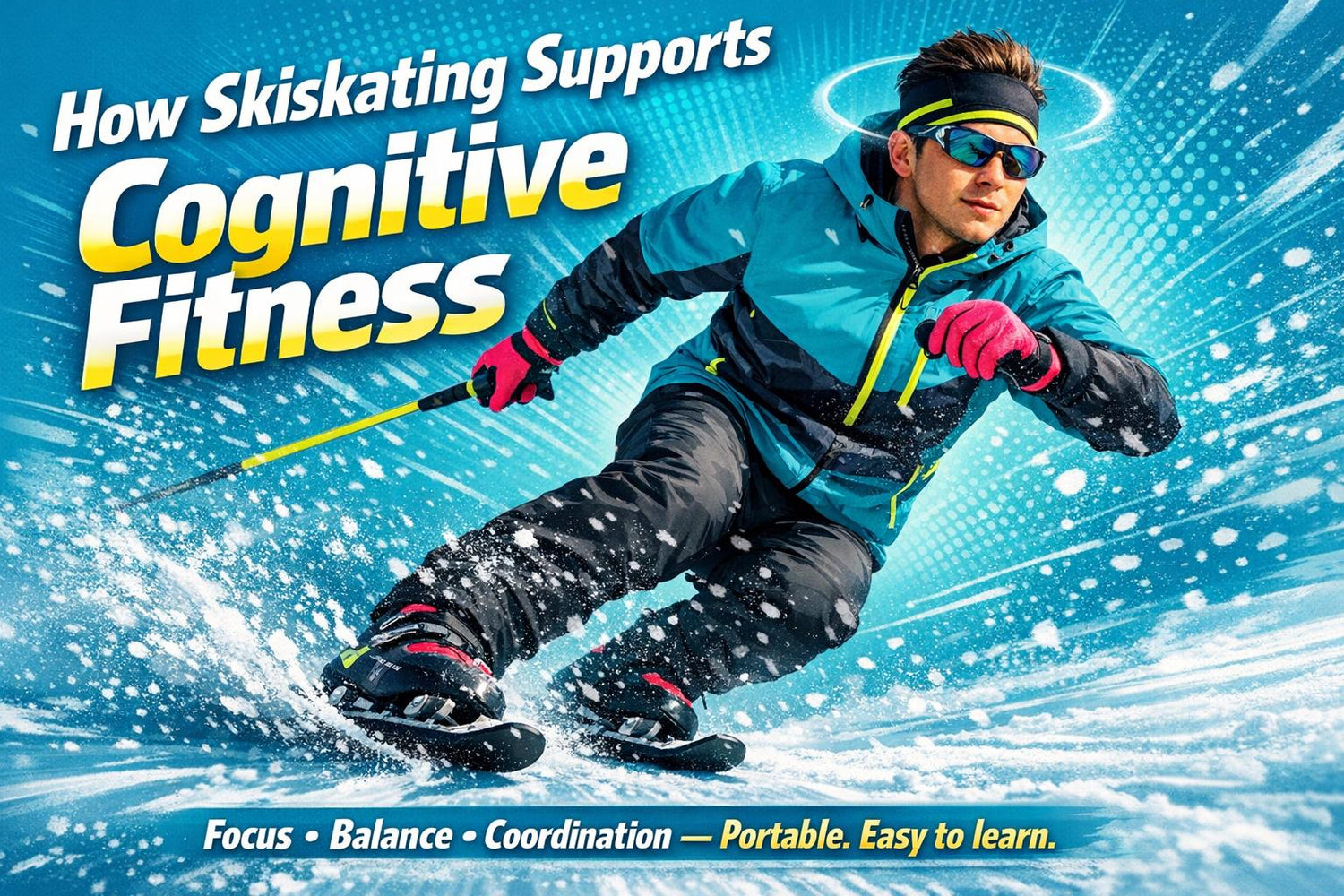
Skiskating isn’t just a winter workout; it’s a brain booster, too. This sport combines skiing and skating, using compact gear called skiskates, to keep your mind and body in sync. Here’s why it works:
- Keeps Your Brain Active: Constant balance adjustments and quick movements sharpen focus and coordination.
- Beats Winter Slumps: Regular activity combats the mental slowdown many experience during colder months.
- Easy to Start: With Snowfeet gear, there’s almost no learning curve - most pick it up in minutes.
- Affordable & Portable: Unlike skiing, it doesn’t require expensive gear or resort trips.
Skiskating is a fun, accessible way to stay sharp and active all winter long. Let’s dive into how it works and why it’s a game-changer for both your body and brain.
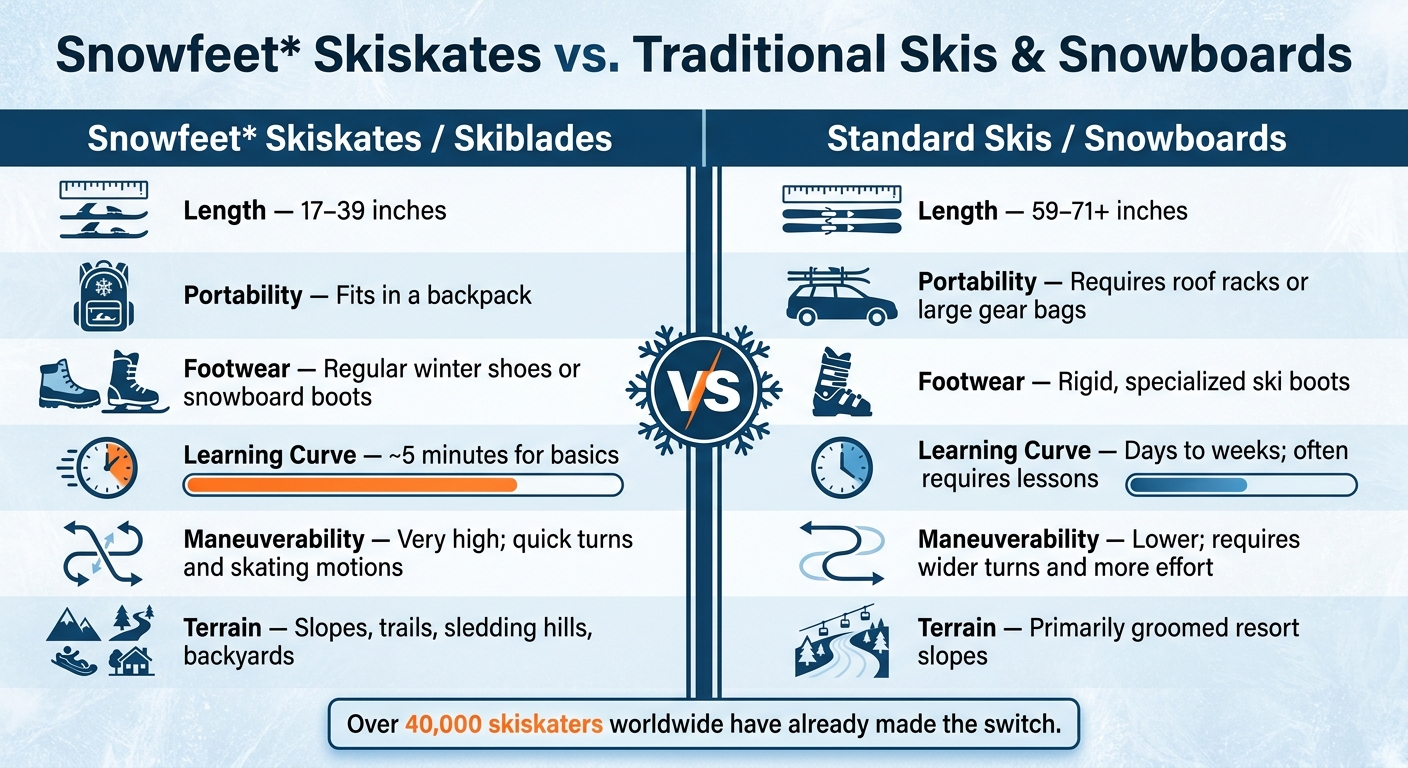
Snowfeet Skiskates vs. Traditional Skis & Snowboards: Key Differences
The Cognitive Cost of Winter Inactivity and Why Most Winter Sports Don't Help
How Winter Inactivity Affects the Brain
When winter rolls in with its cold days and longer nights, many of us naturally slow down. But this drop in physical activity doesn’t just affect our bodies - it takes a toll on our brains too. Experts call this "seasonal physiological drift", a gradual decline that often leads to low mood, sluggishness, and slower mental processing. As NutriVibe explains:
"This cognitive engagement may help counteract the mental dullness and slowed processing speed reported by many individuals during winter months." - NutriVibe
It’s more than just feeling a little off. Staying sedentary during winter can harm critical brain functions like decision-making, spatial awareness, and reaction time. Over time, this inactivity can even shrink the hippocampus (the part of the brain tied to memory and learning). The only way to combat this? Regular exercise.
Winter's cold and darkness also make many people withdraw socially. Fewer interactions, less movement, and limited sunlight create a perfect storm that chips away at cognitive performance as the season drags on.
Why Skiing and Snowboarding Can Be Hard to Access
For those looking to stay active in winter, traditional sports like skiing and snowboarding aren’t always the easiest options. They come with a steep learning curve - literally and figuratively. From the start, beginners face a tough mix of physical and mental challenges. Managing long skis, stiff boots, and tricky slopes can feel overwhelming. Studies even show that cross-country skiing demands more from your body - strength, endurance, balance, coordination, and flexibility - than popular sports like football or basketball. That’s a lot to handle before you’ve even mastered the basics.
Psychological barriers don’t help either. According to Scientific Reports, many people struggle with self-doubt when trying a new sport, flipping between excitement, hesitation, and even retreat. On top of that, media often portrays skiing and snowboarding as activities for seasoned athletes, making them seem out of reach for beginners.
Then there’s the cost. Skiing isn’t cheap. Beyond buying or renting gear, there are lift tickets, lodging, lessons, and travel expenses. It all adds up fast, making it unaffordable for many. For those with sensory sensitivities, the constant vibrations, cold air, and unpredictable terrain can make the experience feel overwhelming, adding yet another barrier.
All these challenges leave a lot of people stuck indoors during winter, and their brains pay the price. That’s why alternatives like skiskating with Snowfeet* are gaining attention - they offer a way to stay active and engaged without the usual hurdles of traditional winter sports.
Why Skiskating With Snowfeet* Works Better
What Makes Snowfeet* Products Different
Skiskating becomes much simpler with Snowfeet* gear. Why? Because their compact design - short skis and skates ranging from just 17 to 39 inches - completely changes how the sport feels and functions. Compared to traditional skis, which can easily exceed 59 inches, Snowfeet* gear is lightweight and easy to handle.
One of the standout features is that Snowfeet* eliminates the need for stiff, uncomfortable ski boots. Instead, you can use regular winter shoes or snowboard boots. Their adjustable, tool-free bindings fit U.S. shoe sizes 4.5 to 14.5, making the gear not only versatile but also shareable among friends and family.
The learning curve? Practically non-existent. Most people can get the hang of it in just five minutes. Here’s how the Snowfeet Team describes it:
"Snowfeet PRO are here to make skiskating more accessible to everybody and opens the door to becoming a skilled skiskater. Even if you have never skied before, Snowfeet feel so natural that anyone can pick up this sport instantly." - Snowfeet Team
Another bonus? The gear is so compact it fits in a regular backpack. Forget about roof racks, oversized gear bags, or dealing with airport hassles. Whether you're heading to a local hill or taking a spontaneous winter trip, Snowfeet* makes it easy.
For those who want a premium experience, models like Skiskates include features like a sustainable wood core, metal edges, and graphite bases for extra speed. These features mirror the technology you'd find in professional skis but in a much smaller, travel-friendly package.
Snowfeet* vs. Standard Skis and Snowboards
When you stack Snowfeet* products against traditional skis or snowboards, the differences are hard to ignore. They’re perfect for anyone put off by the cost, bulk, or steep learning curve of conventional winter sports.
| Feature | Snowfeet* Skiskates / Skiblades | Standard Skis / Snowboards |
|---|---|---|
| Length | 17–39 in | Typically 59–71 in+ |
| Portability | Fits in a backpack | Requires roof racks or large gear bags |
| Footwear | Regular winter shoes or snowboard boots | Rigid, specialized ski boots |
| Learning Curve | About 5 minutes for basics | Days to weeks; often requires lessons |
| Maneuverability | Very high; quick turns and skating motions | Lower; requires wider turns and more effort |
| Terrain | Slopes, trails, sledding hills, backyards | Primarily groomed resort slopes |
Unlike traditional snowboards that can feel restrictive, Snowfeet* lets your legs move naturally. This freedom reduces fatigue and keeps you comfortable while also engaging your brain. The constant need to stay focused and coordinated adds an extra layer of fun to the experience. Whether you're carving down a slope or gliding through a backyard trail, Snowfeet* offers a fresh way to enjoy winter.
How Skiskating Improves Cognitive Fitness
Building Focus and Attention
Skiskating isn’t just about getting your body moving - it’s a workout for your brain too. Using Snowfeet* gear, which is shorter and less stable than traditional skis, forces your brain to stay sharp. You’re constantly scanning the terrain, shifting your weight, and planning your next move. Unlike long skis that offer more stability, skiskates require you to stay actively engaged. Over time, this can boost your ability to concentrate, think ahead, and make quick decisions. It’s like a mental tune-up that also enhances coordination by sharpening the connection between your brain and body.
Improving Motor Coordination and Brain-Body Connection
Skiskating is a full-body activity that calls for balance and precision. Every movement taps into your brain’s motor systems, strengthening the pathways needed for quick, accurate reactions. From carving and quick turns to hockey stops and spins, the sport challenges your brain and body to work as a team. If you’ve ever ice skated or used inline skates, you’ll find that skiskating builds on those skills, reinforcing existing neural pathways while helping you pick up new techniques faster.
Sensory Input and Self-Regulation
Beyond coordination, skiskating provides a sensory experience that keeps your brain fully engaged. Each run delivers feedback to your nervous system, improving your balance and spatial awareness. The freedom to spin, jump, and experiment with different moves adds an element of fun, which can boost your mood and help with emotional balance. Plus, the lightweight design of Snowfeet* gear avoids the bulky feel of traditional skis, making the experience smoother and more enjoyable.
sbb-itb-17ade95
How to Use Snowfeet* Skiskating to Build Cognitive Fitness
How to Structure a Skiskating Session
You don't need hours of skiskating to see results. A session lasting 20 to 40 minutes, 2 to 4 times a week, is enough to boost focus, balance, and mental clarity. Spread your sessions out - like on Monday, Wednesday, and Saturday - to give your brain time to absorb new skills.
Here’s a simple breakdown for your session: start with a 5–10 minute warm-up, follow it with a 10–25 minute drill block, and wrap up with a 5-minute cool-down. In the warm-up, ease into things by walking in your Snowfeet* gear, doing gentle knee and ankle bends, and practicing single-leg balance holds. These moves get your vestibular system and proprioception (your body’s internal GPS) fired up. Snowfeet* gear is perfect for this since it’s lightweight and keeps the focus on your movement, not bulky equipment. For the cool-down, glide slowly and smoothly while syncing your breathing (inhale for 3–4 glides, exhale for 3–4 glides). Finish with stretches targeting your calves, quads, and hips. Once warmed up, dive into drills designed to sharpen your cognitive skills.
Drills That Build Cognitive Skills
Drills are where the magic happens. They help you refine your focus, coordination, and overall mental sharpness. Here are three to try:
- Marker slalom: This drill enhances visual focus. Set up 6–10 markers (cones, water bottles, or flags) spaced 6–10 feet apart in a zig-zag pattern on a gentle slope. Do 4–6 runs, keeping your eyes 1–2 markers ahead instead of staring at your feet. After each run, reflect on where your attention wandered and adjust accordingly.
- Reaction stops: Want to improve your response time? Try reaction stops. Set a stop zone or have a partner signal when to stop during a glide. Aim for 6–10 attempts, focusing on smooth, controlled stops. The hockey stop - using the metal edges and evenly distributing your weight - is a great technique for this.
- Dual-task glides: This drill challenges your divided attention. While gliding on easy terrain, try counting backward by 3s or naming colors of objects you pass. Do 3–5 one-minute passes with 30-second breaks in between. Thanks to Snowfeet* skiskates’ compact design, you can focus entirely on the task without worrying about bulky gear.
Safety and Progression for Beginners
Safety first! If you’re new to skiskating, stick to gentle, short slopes - think beginner ski runs or mild sledding hills. Avoid icy spots, deep powder, and crowded areas until you’ve mastered basic gliding and stopping. Oh, and don’t forget your helmet! Snowfeet* gear is generally accepted at ski resorts since it meets safety standards with its professional metal edges and standard bindings.
Start simple and build gradually. Begin with low-risk drills, then increase complexity by adding new challenges or tightening marker spacing. Only move to steeper terrain once you’re confident. This gradual approach keeps things safe while still challenging your brain, making skiskating a fantastic workout for both body and mind.
Snowfeet* & Skiskates Complete Guide | All you need to know about Skiskating
Conclusion: What Skiskating Does for Your Brain and Body
Skiskating isn't just about gliding across the snow - it's a workout for your brain, too. The constant balancing, quick turns, and adapting to different terrains keep your mind fully engaged. Each session helps improve focus, coordination, and how your brain processes sensory information.
This is where Snowfeet* skiskates really shine. Unlike skiing or snowboarding, which can take weeks to master, Snowfeet* gets you moving right away. That means less frustration and more time honing your mental and physical skills from the start. You’ll notice improvements in focus and coordination almost immediately.
What’s great is that skiskating is for everyone. Whether you're an experienced skier, a hockey player, or completely new to snow sports, skiskating adapts to your skill level. Plus, the Snowfeet PRO (starting at $250) works with regular winter shoes or snowboard boots and can be used on slopes, sledding hills, or even in your backyard. No need for a resort pass or fancy gear - it’s easy to make skiskating part of your routine.
With over 40,000 skiskaters around the world already embracing the sport, the benefits are clear. Regular sessions can sharpen your attention, enhance motor control, and improve how you respond to sensory input. The short learning curve means you’ll see these mental gains quickly. By combining physical movement with mental focus, skiskating with Snowfeet* brings a whole new approach to winter fitness.
FAQs
Which brain skills does skiskating improve most?
Skiskating with Snowfeet* products is more than just fun - it’s a workout for your brain too. By focusing on balance, edge control, and coordination, it helps sharpen cognitive fitness. The activity challenges your mind with precise weight shifts and independent foot movements, which can improve spatial awareness and sensory processing.
What sets Snowfeet* apart from traditional skis is their responsive design. They make it easier to pick up the basics and encourage intuitive movement. This means you’ll develop muscle memory faster and fine-tune your motor skills, giving you a boost of confidence and making your winter adventures even more enjoyable.
Is Snowfeet* skiskating safe for beginners?
Snowfeet* skiskating is a great option for beginners compared to traditional skiing or snowboarding. Its compact and lightweight design feels almost like an extension of your feet, helping you pick up gliding and carving quickly - often in just minutes. Plus, with a lower center of gravity and adjustable bindings that fit your regular winter or snowboard boots, you can skip the bulky, pricey gear. This means less hassle, less fatigue, and more fun right from the start.
Where can I skiskate with Snowfeet*?
You can use Snowfeet* on all kinds of snowy terrains, giving you way more flexibility than regular skis or snowboards. Great places to try them include groomed ski slopes, snow parks for pulling off tricks, and even backcountry trails. Thanks to their compact size, they're also perfect for smaller spaces like your neighborhood sledding hill or even your backyard. Snowfeet* are especially handy in tight spots where long skis just won’t fit, letting you enjoy winter fun with a whole new level of freedom.












ฝากความคิดเห็น
เว็บไซต์นี้ได้รับการคุ้มครองโดย hCaptcha และมีการนำนโยบายความเป็นส่วนตัวของ hCaptcha และข้อกำหนดในการใช้บริการมาใช้