



















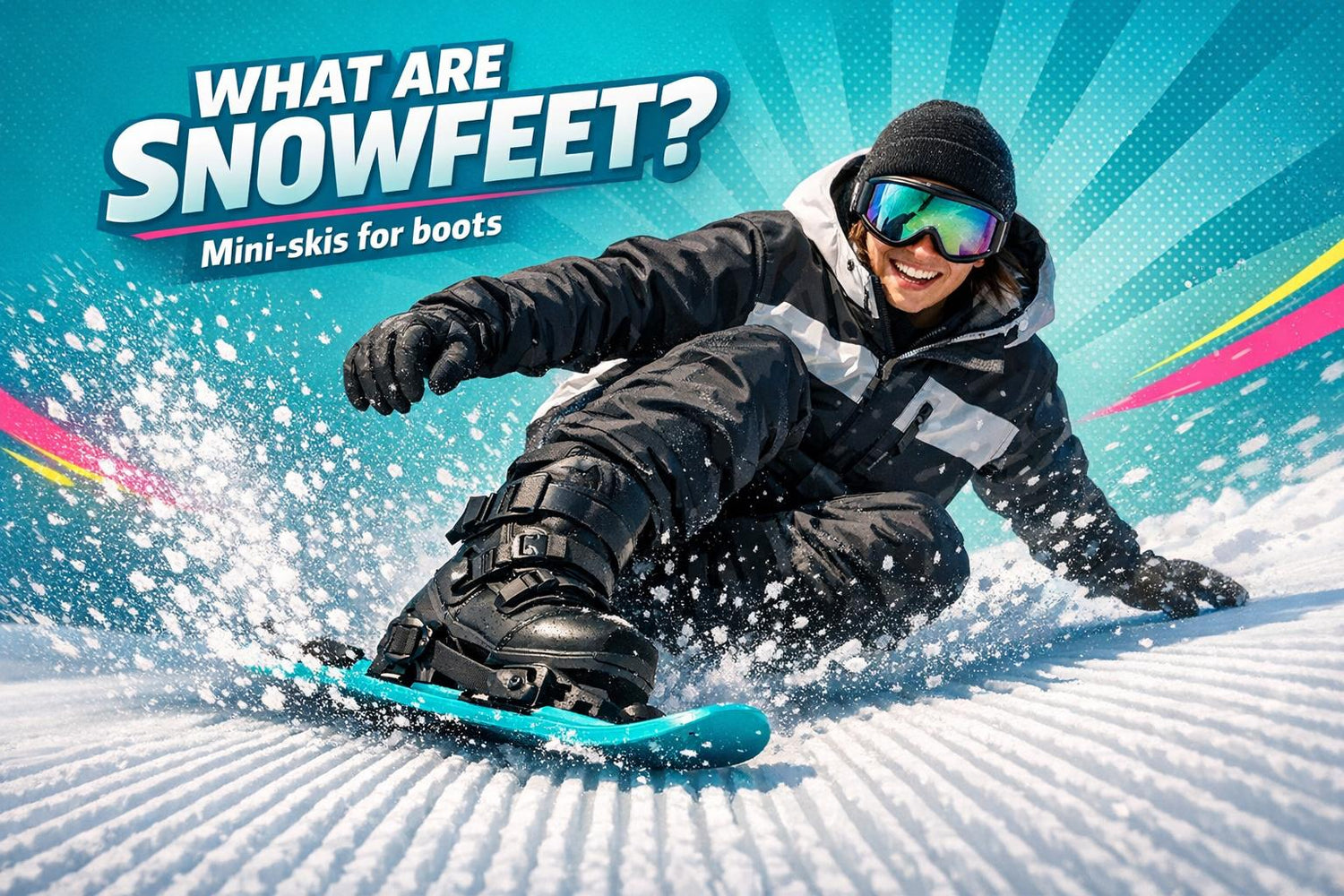
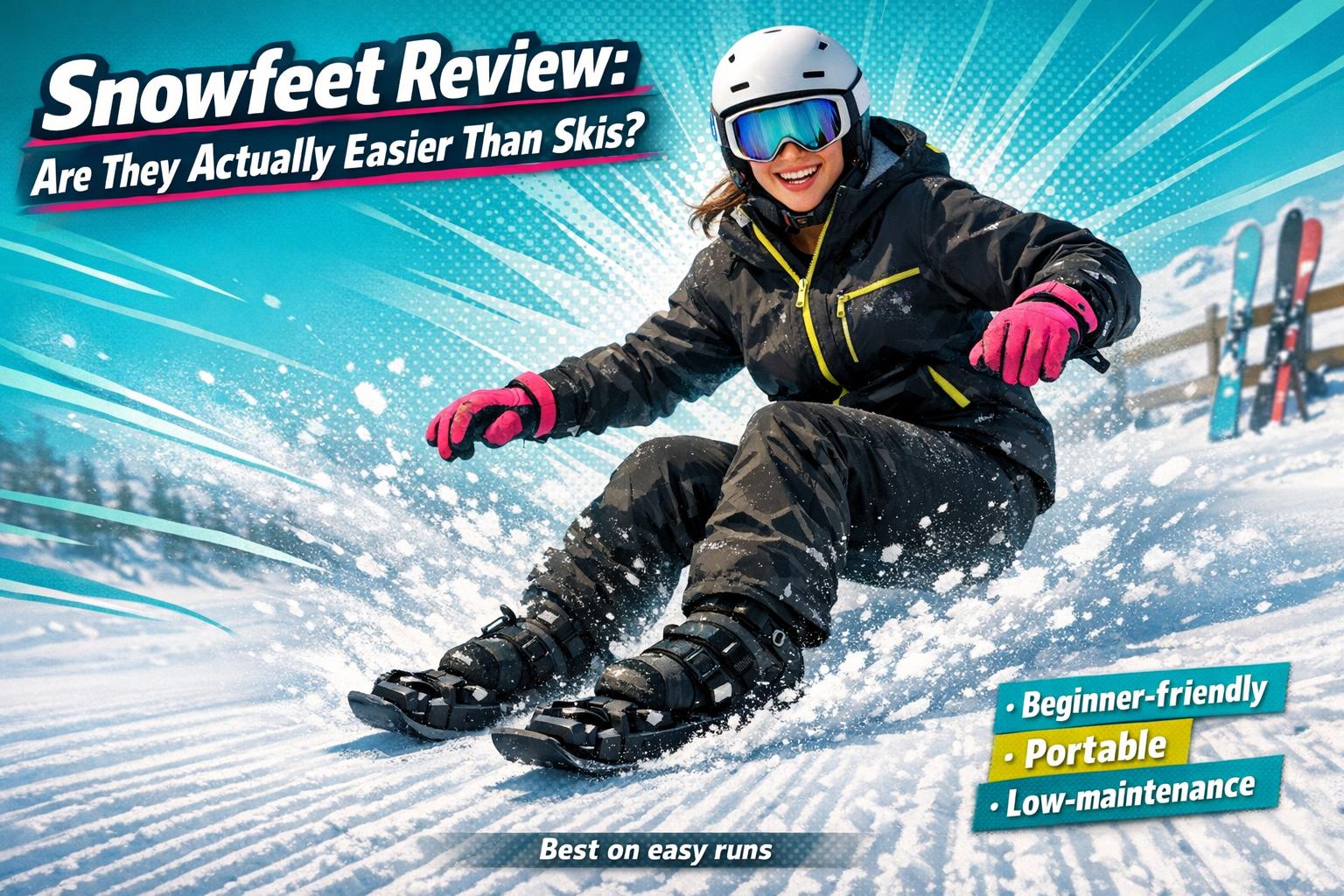
Snowfeet are a mix of skis and skates that attach to your winter boots, offering a fun, compact way to enjoy snowy slopes without the hassle of bulky gear. Think of them as mini skis you can carry in your backpack. They’re easy to learn (most people get it in 5 minutes), cost way less than full ski setups, and work on hills, parks, and even local trails. While they’re not for deep powder or steep expert runs, they’re perfect for casual outings and short sessions near home.
Key Highlights:
- Cost: Starting at $250, compared to $800–$1,800+ for full ski or snowboard setups.
- Portability: Small enough to fit in a backpack; no need for roof racks or oversized luggage.
- Ease of Use: Feels similar to skating, making it beginner-friendly.
- Versatility: Great for local hills, parks, and groomed runs - but not ideal for deep snow or high speeds.
Snowfeet’s simplicity and affordability make them a great option for anyone looking to enjoy winter sports without the usual costs or complications.
Meet the Snowfeet: Turn Your Shoes Into Mini Skis for Maximum Fun!
The Problems with Regular Skis and Snowboards
Traditional skiing and snowboarding come with three major challenges: they’re expensive, the gear is cumbersome, and they’re tough for beginners to pick up.
High Costs and Bulky Gear
Getting started with skiing or snowboarding isn’t cheap. A basic adult ski setup can run you anywhere from $830 to $1,670, while snowboard gear costs between $800 and $1,550. And that’s not even counting lift tickets, which can exceed $200 a day at big-name resorts like Vail or Deer Valley.
Then there’s the gear itself. Skis and snowboards, typically 5–6 feet long, are bulky and awkward to transport. You might need to fold down your car’s rear seats, install a roof rack, or pay extra fees for oversized baggage if you’re flying. Storing them at home can also be a pain.
Snowfeet, on the other hand, offer a compact and budget-friendly alternative. They’re small enough to fit in a backpack, solving both the cost and storage issues that come with traditional gear.
Tough for Beginners to Learn
For newbies, traditional skiing and snowboarding can feel like an uphill battle. Stiff boots lock your ankles in place, making it harder to adjust your balance at slow speeds. Skiing requires mastering techniques like weight transfer, edging, and wedge turns, while snowboarding forces you to get used to a sideways stance. Most beginners need several lessons before they can confidently tackle even the easiest green runs.
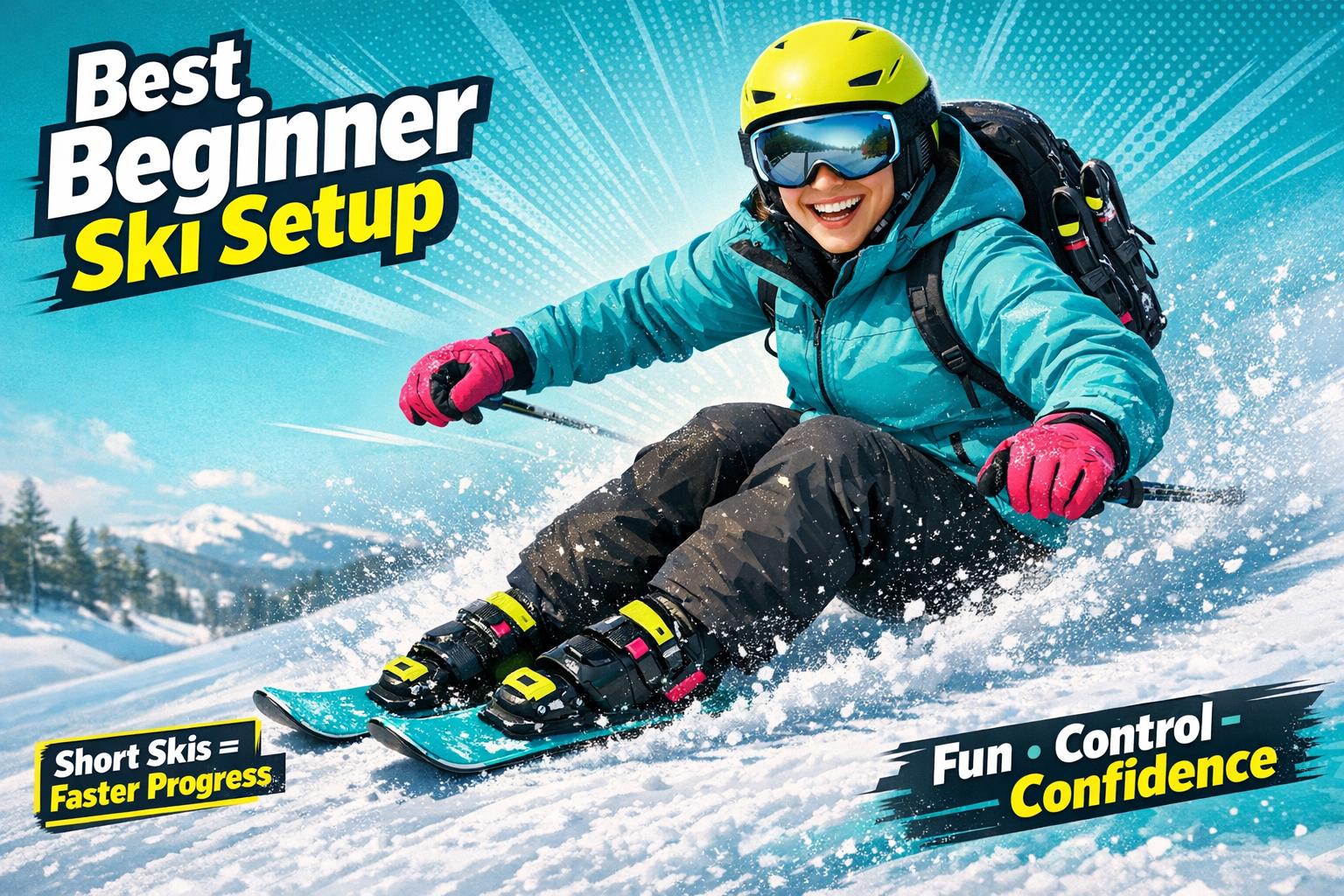
Snowfeet simplify things. Their short length makes turning much easier, and the movement feels more natural - closer to skating or rollerblading, skills many people already know. This makes Snowfeet far more approachable for first-timers, especially outside of traditional resorts.
Limited Terrain Options
Traditional skis and snowboards are designed with groomed resort slopes in mind. Take them off those slopes - onto narrow trails, neighborhood hills, or snow-covered parks - and they become unwieldy. Their length makes tight turns tricky, and walking in ski boots is anything but convenient.
For many Americans who live near smaller, local hills rather than big resorts, this is a real issue. A 2020 report from SnowSports Industries America (SIA) highlighted that cost and access are two of the biggest barriers to entering skiing and snowboarding. Traditional gear’s reliance on resort settings only adds to the problem.
Snowfeet, however, are built to handle a wide variety of snowy terrains. Whether it’s a local hill or a snow-covered park path, you don’t need a groomed slope to enjoy them. This flexibility makes them a game-changer for people who want to enjoy winter sports without the usual limitations.
What Are Snowfeet: Features and How They Work
Snowfeet are compact, boot-mounted mini skis designed for carving and control. They’re often described as a mix between skiing and skating. With metal edges for stopping and carving, a textured base for better glide, and adjustable bindings that fit onto your winter boots, they offer a lightweight and portable alternative to traditional skis. Unlike standard ski setups that can weigh 10–20+ pounds, Snowfeet only weigh a few pounds, making them incredibly easy to carry and use.
The Different Snowfeet Models
Snowfeet come in several models, each tailored to different riding styles and preferences.
| Model | Length | Boot Compatibility | Best For |
|---|---|---|---|
| Snowfeet Mini Ski Skates | ~38 cm (~15 in) | Regular winter boots | Backyard hills, parks, casual fun |
| Snowfeet PRO | ~50 cm (~20 in) | Winter or snowboard boots | Resort runs, snow parks |
| Skiskates | ~44 cm (~17 in) | Snowboard boots | Resort groomers, tricks, skiskating |
| Skiblades | ~65 cm (~26 in) | Ski boots | Carving, faster resort runs |
- Mini Ski Skates: These are the most portable option, small enough to fit in a backpack. They work with regular winter boots, so you don’t need specialized footwear.
- Snowfeet PRO: Built with stronger materials and bindings, this model is ideal for resort use and more demanding terrain.
- Skiskates: Designed for snowboard boots, they offer a more ski-like feel with better edge hold and stability.
- Skiblades: At 65 cm long, these are the closest to traditional skis, perfect for carving and moderate speeds while keeping gear compact.
How Snowfeet Work
Snowfeet function similarly to ice skates but are made for snow. Their short length makes them highly maneuverable and reduces the impact of falls, allowing for quick recoveries. Steering involves shifting your weight side-to-side, and the metal edges help with braking and controlled turns. Keeping your knees bent improves balance and stability. Compared to standard skis that are often 59–71 inches long, Snowfeet’s compact size makes them much easier to handle.
Where You Can Use Snowfeet
Snowfeet shine on groomed resort runs and hard-packed snow, where their metal edges grip effectively for precise turns. They’re also great for smaller hills, snow parks, and snow-covered pathways - places where full-sized skis might feel cumbersome. Most ski resorts allow Snowfeet because they meet the requirement of having metal edges. However, they’re not ideal for deep powder. Their small surface area can sink into fresh snow rather than float like wider skis designed for powder.
"Skiblades deliver impressive control and enjoyment, making them a preferred choice over traditional skis."
These features explain why Snowfeet are gaining popularity among riders looking for a fun, compact alternative to traditional skiing.
sbb-itb-17ade95
Why People Are Switching to Snowfeet
Snowfeet tackle the common headaches of traditional ski and snowboard gear by offering a more compact, user-friendly, and affordable alternative. Here’s why they’re catching on:
Easy to Carry and Transport
Let’s face it - traditional skis are a pain to lug around. At 150–180 centimeters (59–71 inches) long, they require a ski bag, a roof rack, or even extra baggage fees if you’re flying. Snowfeet solve this problem completely. The original models are just 15–20 inches long - small enough to fit in a backpack. Even the slightly longer Skiblades, at around 26 inches, fit easily in a duffel bag or car trunk. No need for roof racks, folding seats, or oversized luggage.
This compact design is perfect for those short on storage space or traveling light. Whether you’re hopping on a bus, grabbing an Uber, or flying out for a weekend in Colorado or Vermont, Snowfeet make it easy to bring your gear without the hassle of oversized baggage.
Easier to Learn Than Regular Skis
Learning to ski can be intimidating. Traditional skis require mastering edge control, which is why beginners often spend hours just figuring out how to stop and turn. Snowfeet simplify this process. Their short, skate-like design means less edge to manage, making turns quicker and more intuitive.
If you’ve ever skated before, you’ll feel right at home. The movements - weight-shifting and edge-to-edge transitions - are similar to skating, not skiing. Many users report being able to make basic turns and stops on their very first session, even on gentle slopes. No expensive lessons or steep learning curves here.
Lower Cost Than a Full Ski Setup
Traditional ski or snowboard gear can cost a small fortune. Snowfeet, on the other hand, offer a budget-friendly way to enjoy winter sports. Since most models attach to winter or snowboard boots you probably already own, there’s no need to invest in separate ski boots. For beginners or casual users, this is a much less expensive way to dive into the snow.
| Gear Type | Estimated New Setup Cost (U.S.) |
|---|---|
| Full ski setup (skis, boots, bindings, poles, helmet) | $900–$1,800+ |
| Full snowboard setup (board, bindings, boots, helmet) | $700–$1,400+ |
| Snowfeet (starting price, uses boots you own) | From $250 |
Works Across More Types of Terrain
Traditional skis and snowboards are great for big resort mountains, but they’re not always practical if you don’t live near one. Snowfeet, however, are versatile. They work well on groomed resort runs, local hills, snow parks, and even backyard slopes. Their lightweight design makes them easy to use anywhere, and their short length allows for quick edge changes - perfect for tight turns or terrain park features.
For those smaller hills where full-size gear feels like overkill, Snowfeet are an ideal choice that still delivers plenty of fun.
When to Pick Snowfeet Over Regular Skis
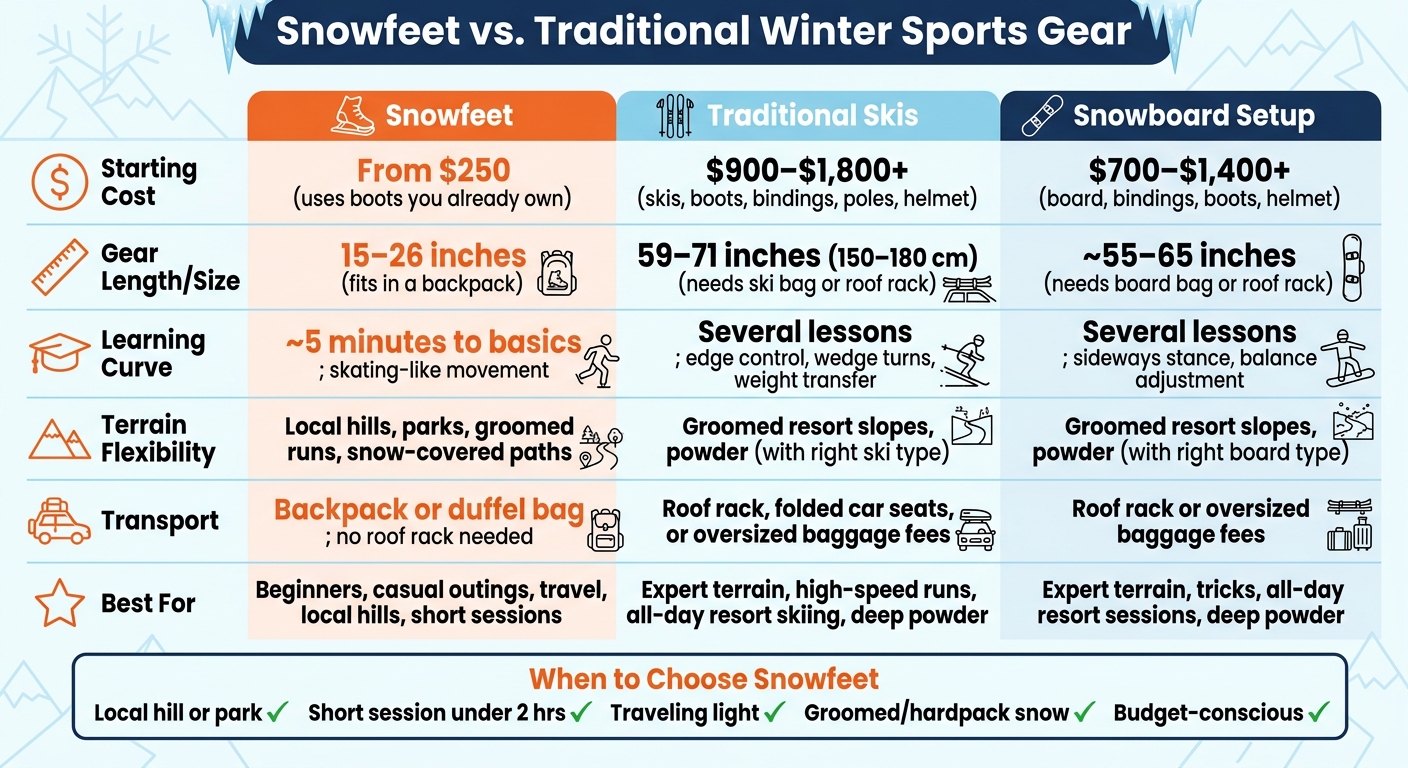
Snowfeet vs. Traditional Skis & Snowboards: Cost, Size & Ease Compared
Snowfeet bring a whole new angle to winter sports. Their portability and simplicity make them a great alternative to traditional skis in certain scenarios. While they’re not built for every condition, they’re perfect for specific situations where convenience and fun are the priorities.
Where Snowfeet Work Best
Snowfeet are ideal for short, laid-back outings close to home. Think neighborhood hills, a local park after fresh snowfall, or even a quick trip to a smaller resort in the Midwest or Northeast. On groomed and moderate slopes, their compact, skate-like design makes them nimble and fun for quick, precise turns - something that can feel bulky on regular skis.
They’re also a lifesaver when traveling. If you’re carpooling, hopping on a bus, or flying to Vermont or Colorado for a weekend getaway, Snowfeet fit neatly into a backpack. No need to worry about oversized baggage fees or wrestling with long skis. And for those quick sessions under two hours, the fast on-and-off design means less time fiddling with gear and more time enjoying the snow.
Where Snowfeet Fall Short
While Snowfeet are fantastic for casual outings, they’re not built for every scenario. For steep, high-speed runs or extended days at a big resort, traditional skis are the way to go. Their longer length provides better stability and grip, especially on icy or uneven terrain.
Deep powder is another area where standard Snowfeet models struggle. In more than 8–10 inches of fresh snow, they tend to sink rather than glide. If powder days are your thing, the Snowfeet POWDER model (99 cm, starting at $675) is worth considering. It offers a middle ground between the ultra-compact original and full-length skis, combining portability with better performance in deeper snow.
| Situation | Better Choice |
|---|---|
| Local hill, park, or small resort | Snowfeet |
| Short, casual session (under 2 hours) | Snowfeet |
| Flying or traveling light | Snowfeet |
| Groomed runs, hardpack, light powder | Snowfeet |
| Steep black-diamond or expert terrain | Regular skis/snowboard |
| Deep powder (8+ inches) | Regular skis or Snowfeet POWDER |
| All-day resort skiing at high speed | Regular skis/snowboard |
Conclusion: Why Snowfeet Are Worth Trying This Winter
Snowfeet offer three big perks: they’re compact, budget-friendly, and a blast to use. Starting at about $250 for the original model, they’re way easier on your wallet compared to a full ski or snowboard setup, which can easily run $600–$1,000 or more when you factor in boots, bindings, and skis or a board. Plus, unlike traditional gear that takes up a ton of space, Snowfeet fit right into your backpack - no hassle, no oversized bags.
Another win? They’re simple to pick up. If you’ve ever ice-skated, you’ll probably get the hang of Snowfeet in just a couple of hours. Compare that to the days it can take to learn skiing or snowboarding, and it’s clear why these are a great option for beginners or anyone short on time. Whether it’s a quick after-work trip to a nearby hill or a last-minute weekend outing, Snowfeet make it easy to jump into the action.
What’s cool is that you’re not limited to big mountain resorts with Snowfeet. A snowy park, a freshly powdered golf course, or even a small hill in your neighborhood can turn into your winter playground. That flexibility - being able to enjoy the snow wherever you find it - makes them stand out from traditional winter sports gear.
FAQs
Do I need special boots for Snowfeet?
No, you don’t need any special boots for Snowfeet*. They’re made to fit with just about any type of boots you already own. Just strap them on, and you’re ready to hit the snow - quick and simple!
Are Snowfeet allowed at most U.S. ski resorts?
Snowfeet are built for flexibility on snowy terrains and share some traits with traditional skiing equipment. In the U.S., many ski resorts welcome new gear like Snowfeet, as long as they comply with safety standards. However, since policies can differ from one resort to another, it’s smart to check ahead. Thanks to their small, lightweight design, Snowfeet offer a fun and easy-to-use option for those looking to try something different from skis or snowboards.
What Snowfeet model should I choose for my terrain?
To pick the right Snowfeet model, think about where you'll be riding and your experience level. If you’re sticking to groomed slopes, the 50cm Snowfeet or 44cm Skiskates are great options - they’re easy to handle and versatile. For steeper or rougher terrain, go for larger models like the 65cm or 99cm Skiblades, which provide better stability. Snowfeet gear is lightweight and portable, giving you more agility and fun compared to traditional skis or snowboards across different terrains.











Lämna en kommentar
Denna webbplats är skyddad av hCaptcha och hCaptchas integritetspolicy . Användarvillkor gäller.