



















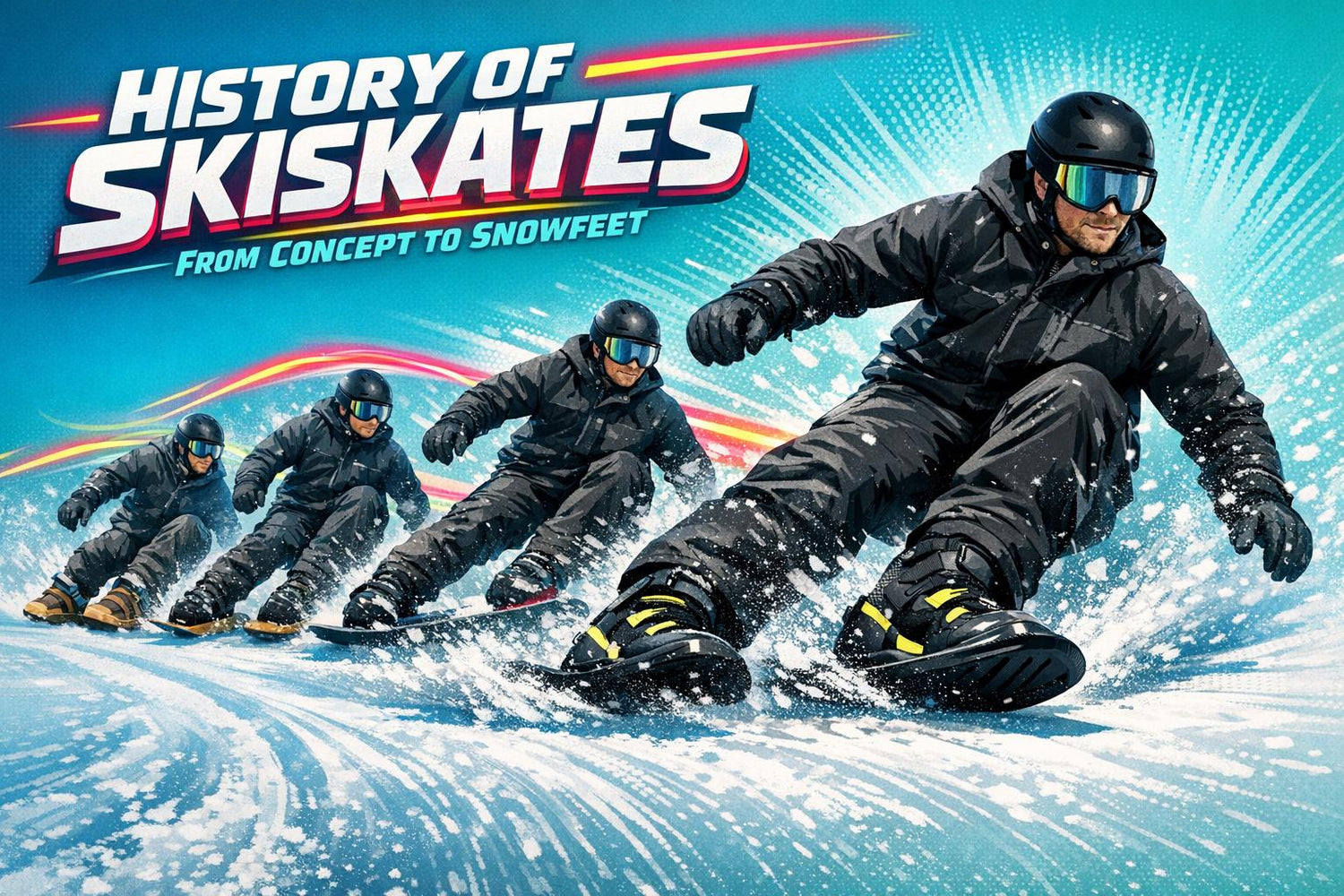
Skiskates, the compact winter sports gear blending skiing and skating, have a long history. Here's the quick version:
- What Are Skiskates? Short skis (44–50 cm) designed for a skating-like motion on snow.
- Origins: Early mountain communities used basic sliding tools for snowy terrain. The first patent, William H. Dutton's Shell Groove Skates, appeared in 1862.
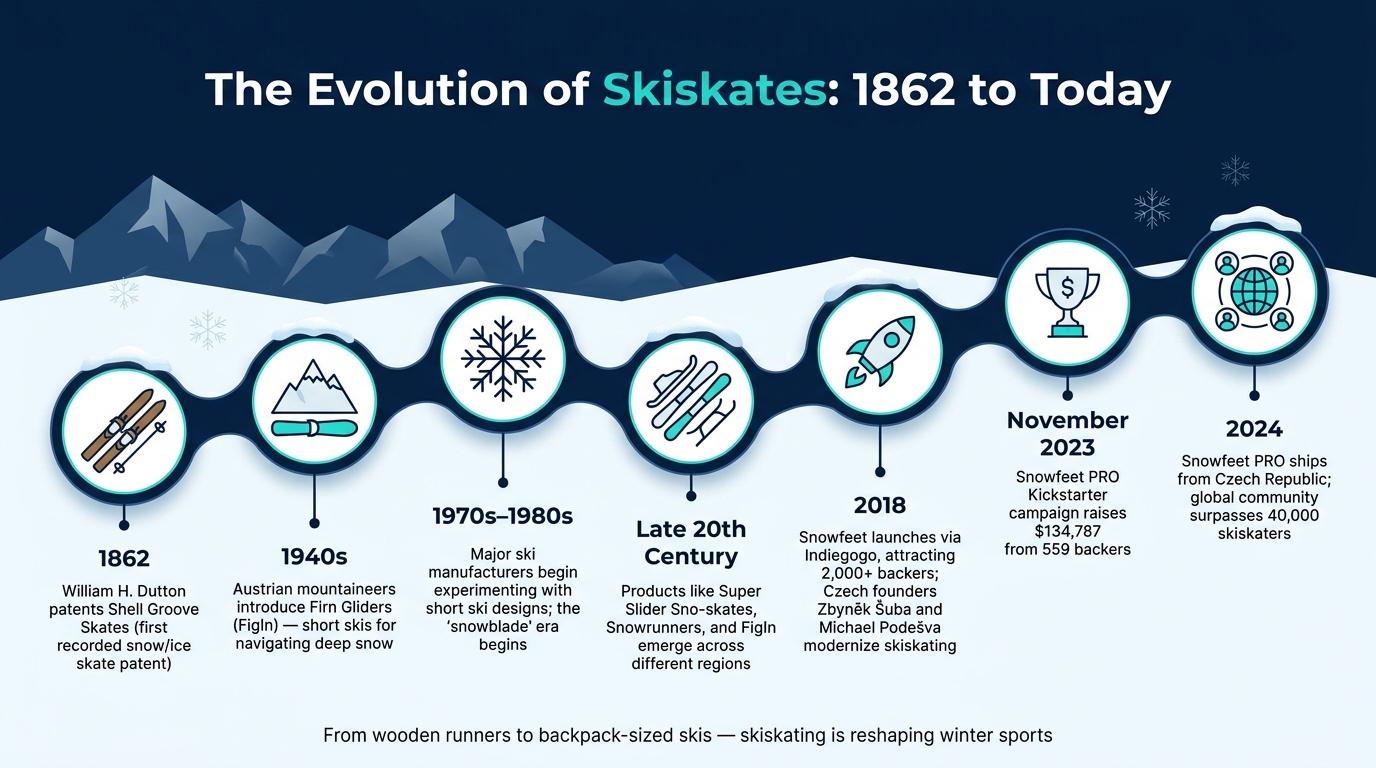
- Evolution: By the 20th century, products like Snowrunners and Figln refined the concept. Modern skiskates gained traction in 2018 with the launch of Snowfeet, thanks to Czech creators Zbyněk Šuba and Michael Podešva.
- Modern Features: Today's skiskates boast wood cores, steel edges, and universal bindings for ski or snowboard boots. They're portable, easy to use, and perfect for beginners or pros.
Snowfeet has turned skiskating into a global trend, with over 40,000 users and a growing community aiming to make it a recognized winter sport. Whether you're into carving slopes or trying tricks, skiskates are reshaping how we enjoy the snow.
Snowfeet* & Skiskates Complete Guide | All you need to know about Skiskating
Origins of Snow Skating
Skiskates Evolution: From 1862 to Today
The Birth of Snow Skating
Snow skating didn’t kick off with flashy product launches or cutting-edge tech. It was born out of pure necessity.
"Similar to the invention of the skis, we believe the origin of skiskates comes from mountain inhabitants thousands of years ago." - Snowfeet Story
Way before ski resorts became a thing, people living in mountainous areas started coming up with simple sliding tools. Why? To get down snowy hills faster and more efficiently. These early experiments laid the groundwork for what we now call snow skating, shaping the future of winter travel and fun.
Early Commercial Snow Skates
Fast forward to the mid-19th century, and snow skating began to take on a commercial form. In 1862, William H. Dutton patented Shell Groove Skates. While there’s some debate about whether they were meant for snow or ice, they marked an important step in the evolution of snow skating.
Over time, the idea spread, and by the 20th century, new variations started popping up. Products like Super Slider Sno-skates, Snowrunners, and Figln reflected how different regions adapted the concept for their own needs. Each design added something new to the mix, showing just how far-reaching and versatile the idea had become.
In the 1940s, Austrian mountaineers introduced Firn Gliders - short skis also known as Figln. These weren’t just for fun; they were practical tools for navigating deep snow in rugged terrain. Interestingly, it wasn’t until about 30 years later that major ski manufacturers started to see the potential of short skis as a commercial product. For decades, the focus had been on longer, more traditional skis.
This early experimentation and gradual commercialization paved the way for today’s skiskates, including the innovative designs introduced by Snowfeet*.
From Early Snow Skates to Modern Short Skis
Changes in Design and Materials
Skiskates have come a long way since their early days. Early models, made from basic plastics, lacked proper edges, making it tough to get a good grip on hard-packed snow and nearly impossible to carve effectively. By the 1970s and 1980s, ski manufacturers started experimenting with short ski designs, ushering in what became known as the "snowblade" era.
Fast forward to today, and modern skiskates are built with precision and performance in mind. They feature sustainable wood cores, hardened steel edges, and parabolic shapes that allow for quick transitions and better control. These compact skis, typically 40 to 65 cm long, pack the performance of traditional skis - those usually range from 150 to 190+ cm - into a much smaller package.
Snowfeet* has been at the forefront of this evolution, taking these advancements to create skiskates that offer a whole new level of versatility and excitement, giving traditional ski and snowboard brands a run for their money.
How Modern Skiskates Took Shape
The shift in materials and design led to a fresh way of thinking about winter sports gear. Instead of simply making shorter versions of traditional skis, the focus turned to blending skiing with skating. As Snowfeet* describes it, the aim was to create something "long enough to ski yet short enough to skate".
Bindings also saw a major upgrade. Early models relied on simple straps, locking users into one type of boot. Modern skiskates, however, feature adjustable, tool-free bindings that work with both ski and snowboard boots. This practical improvement has made the sport more accessible to a wider audience.
"Skiskating is essentially a combination of skiing and skating. This truly unique sport shouldn't be confused with snowblading or skiboarding, as it genuinely feels like ice skating, just on the snow." - Snowfeet* Official Website
In November 2023, Snowfeet* launched a Kickstarter campaign for their Snowfeet PRO, a project three years in the making and shaped by user feedback. The campaign raised $134,787 from 559 backers. The new design, which includes higher tips and tails for better float and a raised platform for easier carving, is set to ship in early 2024 from their Czech Republic manufacturing facilities.
What Modern Skiskates Look Like Today
Key Features of Modern Skiskates
Modern skiskates pack a lot of punch into their compact 44 cm (17-inch) design. They’re built with a mix of sustainable wood cores, hardened steel edges, and high-performance bases made from either graphite or sintered materials. This combo gives them durability and speed to handle various conditions. One of the coolest features? Their universal binding system. Unlike traditional alpine skis that lock you into needing specialized ski boots, skiskates can be used with either ski boots or snowboard boots. That alone makes them super versatile and appealing to a wider range of winter sports enthusiasts.
Their shape is another standout. The parabolic design - narrow in the middle with wider tips and tails - makes quick turns and edge-to-edge transitions a breeze. Whether you’re weaving through moguls or navigating tight forest trails, these skiskates are designed to keep up. Plus, their small size means you can toss them into a regular backpack - no need for awkward, bulky gear bags.
How Skiskates Changed the Winter Sports Experience
The innovative design of skiskates has made getting into winter sports so much easier. If you’ve ever struggled with the steep learning curve of skiing or snowboarding, you’ll appreciate how quickly people pick up skiskating. Those with experience in ice hockey or inline skating often feel at home within minutes, while complete beginners can usually get the hang of it in just a day. That’s a huge contrast to the days - or even weeks - it can take to feel confident on skis or a snowboard.
As Giovanni, a verified Snowfeet* user, put it:
"I used to play ice hockey so Skiskates are perfect for me. It's exactly like ice skating on snow."
Another big perk? They’re lightweight and allow for more natural leg positioning, which means less muscle strain. Sunshine Straiges, another verified user, shared:
"I had no muscle soreness after using these because I can change my leg position, unlike the snowboard which is set."
This flexibility makes a full day on the slopes way more enjoyable and less exhausting. Skiskates are redefining what it means to have fun in the snow, making the experience accessible and comfortable for everyone.
sbb-itb-17ade95
Snowfeet*: Skiskating Built for Today
The Snowfeet* Product Range
Snowfeet* has created a lineup that caters to skiskaters of all levels, from those just starting out to seasoned pros. Their collection includes five main models, each designed with a specific purpose in mind.
| Model | Length | Starting Price | Best For | Compatible Footwear |
|---|---|---|---|---|
| Snowfeet Mini Ski Skates | 38 cm (15 in) | $250 | Casual use, hiking, sledding hills | Winter shoes |
| Snowfeet PRO | 50 cm (20 in) | $275 | Versatile all-around use | Winter shoes or snowboard boots |
| Skiskates | 44 cm (17 in) | $575 | Groomed slopes, tricks | Ski or snowboard boots |
| Skiblades | 65–99 cm (26–39 in) | $635 | Carving, snow parks | Ski or snowboard boots |
| Freedom Skis | 120 cm (47 in) | $775 | High-speed carving | Ski boots |
One standout feature of Snowfeet* products is their flexibility with footwear. Unlike traditional alpine skis that require bulky, expensive ski boots, Snowfeet* models allow you to use regular waterproof winter shoes or snowboard boots. This makes them a great choice for people who want to enjoy the slopes without committing to a full ski boot setup. By focusing on shorter skis and versatile designs, Snowfeet* is reshaping winter sports for a broader audience.
Why Snowfeet* Favors Shorter Skis Over Long Ones
Snowfeet* has a clear message: shorter skis can be more fun and accessible. They challenge the traditional belief that longer skis are always better, emphasizing that shorter designs offer greater freedom, quicker learning, and a lot more versatility.
Zbyněk, the founder of Snowfeet*, sums it up perfectly:
"In my opinion, Skiskates is the best product for slopes we developed so far. I love how easy they are to ski and skate and how many different kinds of tricks I can perform without much effort and almost no restrictions."
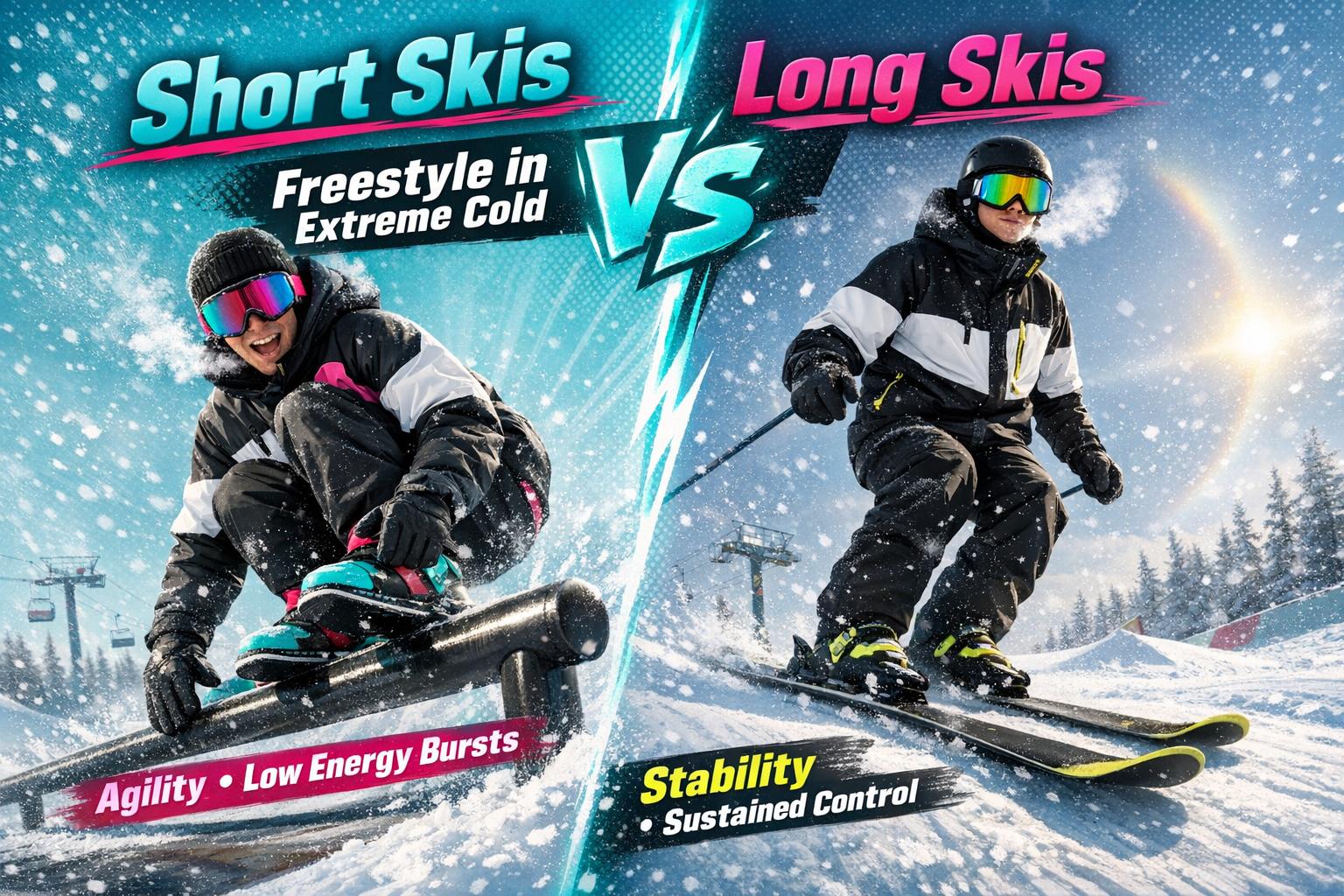
This philosophy changes how people experience the slopes. With a length of just 44 cm (17 inches), Skiskates are incredibly agile, allowing for faster turns, smoother runs through moguls, and easier navigation on tight trails. Plus, their compact size makes tricks like riding backward or spinning much simpler - something that's tough to pull off with traditional skis, which are typically 59–71 inches long. While shorter skis may not match the stability of longer ones at high speeds, most recreational skiers prioritize fun and ease over top-end stability.
Another bonus? The compact design means the entire setup fits in a regular backpack. That means no need for roof racks, oversized luggage fees, or lugging heavy gear through busy airports. Convenience meets performance.
Building Skiskating Into a Recognized Sport
Snowfeet* isn’t just about gear - they're also working to make skiskating a recognized sport. Their efforts have already earned attention in the sports world. Snowfeet* was a finalist for innovation at ISPO, the largest sports trade show globally, and has won both the A'Design and IDA design awards.
The brand's crowdfunding success speaks volumes about the growing interest in skiskating. Their first Indiegogo campaign in 2018 attracted over 2,000 backers, and their Kickstarter for the Snowfeet PRO raised $134,787 from 559 backers in late 2023.
Looking ahead, the team has big aspirations: they aim to bring skiskating to the Olympic Games. With their innovative approach and dedication, Snowfeet* is leading the charge to make skiskating a globally celebrated winter sport.
Early Snow Skates vs. Modern Skiskates vs. Snowfeet*
Comparison Table
Snow skating gear has come a long way over the past 160 years. The simple wooden runners of the 19th century are a far cry from today’s sleek, high-performance designs. Over time, advancements in materials and usability have transformed the experience entirely.
Here’s a breakdown of how these different generations of snow skates compare:
| Feature | Early Snow Skates (19th–20th C) | Modern Skiskates (Professional) | Snowfeet* Mini Ski Skates |
|---|---|---|---|
| Length | ~30 cm (boot-length runners) | 44 cm (17 in) | 38–50 cm (15–20 in) |
| Construction | Wood, simple metal runners, leather | Wood core with metal edges | Fiberglass-reinforced composite with metal edges |
| Boot Compatibility | Tied to standard boots with leather straps | Specialized ski or snowboard boots | Regular winter shoes or snowboard boots (US sizes 6–13) |
| Portability | Bulky; limited performance | Compact but requires specialized boots | Fits in a standard backpack |
| Learning Curve | High; rudimentary fastening systems with limited control | Moderate; requires skiing/skating experience | Low; learn in about 5 minutes |
| Terrain Use | Basic sliding on flat surfaces | Optimized for groomed ski slopes | Suitable for slopes, snow parks, hiking trails, and backyards |
| Starting Price | Not applicable – utilitarian design | From $575+ | From $250 |
Modern designs, particularly Snowfeet*, have essentially reimagined what snow skating can be. The shift from basic wooden runners to advanced fiberglass-reinforced builds with metal edges marks one of the biggest changes in both performance and ease of use.
Unlike professional skiskates, which rely on specialized boots and a certain level of expertise, Snowfeet* prioritizes simplicity. They’re lightweight, portable, and compatible with regular winter shoes, making them accessible to just about anyone. This user-friendly approach brings snow skating to a much broader audience, from beginners to seasoned skaters.
Kathryn Vaughn, a professional skater and coach, highlights the versatility of Snowfeet*:
"We love the ski skates so much that we were doing our figure skating tricks on the snow! We are professional skaters and coaches and it feels so similar down to the rocker!"
That crossover appeal - from skating on ice to gliding on snow - is what makes Snowfeet* stand out. It’s not just about the gear; it’s about opening up new possibilities for fun and creativity in the snow.
Conclusion: Where Skiskates Have Been and Where They Are Going
Skiskating has come a long way - from basic wooden runners to today’s sleek, high-performance designs that can fit in a backpack. What began as a practical way to navigate snowy terrain has transformed into a full-fledged winter sport with a growing community and competitive ambitions.
This transformation isn’t just about better gear; it’s also about the people and support behind it. Snowfeet* has been at the forefront of this movement, building a global community of more than 40,000 skiskaters and raising over $1 million through crowdfunding efforts. They’ve challenged the norm by moving away from bulky, traditional ski equipment and creating a compact, easy-to-use alternative. Let’s face it - not everyone wants to lug around heavy ski boots and long skis. Many just want something they can toss in a bag, strap on, and hit the slopes.
Snowfeet* isn’t just changing how people experience winter sports - they’re shaping its future. Their recognition as an ISPO Innovation Finalist and winners of the A'Design and IDA Design Awards highlights their forward-thinking approach. As they put it:
"Who knows, the sport of skiskating might even make it to the Olympic games one day."
While skiskating is still in its early days, its potential is impossible to ignore.
FAQs
Where can I use skiskates (slopes, parks, trails)?
Snowfeet* skiskates bring a whole new level of flexibility to your winter activities. Whether you're hitting the groomed slopes or showing off tricks in the snowpark, these skiskates are up for the challenge. Their compact size makes them a fantastic choice for hiking trails, cross-country routes, sledding hills, or even just playing around in your backyard. Unlike traditional skis that can be bulky and hard to manage, Snowfeet* are small enough to fit right into your backpack. That means they're perfect for navigating tight spaces and weaving through narrow forest trails with ease.
Do I need ski boots, or can I use winter shoes?
You don’t need ski boots to enjoy Snowfeet*. Unlike traditional skiing, which demands stiff, pricey plastic boots, Snowfeet* lets you keep it simple. You can use your regular waterproof winter shoes for casual fun or opt for snowboard boots if you want more ankle support on the slopes. This means no bulky gear, no extra costs, and way less hassle - just pure fun in the snow.
Are skiskates safe and easy for beginners to learn?
Skiskates are a breeze to pick up compared to traditional skiing. Many beginners find themselves feeling confident within just a few minutes. Unlike skiing, which often comes with pricey lessons, Snowfeet* products are designed to feel natural and intuitive right from the start. If you’ve ever tried ice skating or inline skating, you’ll probably catch on even faster since the balance and edging techniques are pretty similar. With a bit of practice, skiskates can be mastered by anyone, no matter their skill level.











Lämna en kommentar
Denna webbplats är skyddad av hCaptcha och hCaptchas integritetspolicy . Användarvillkor gäller.