



















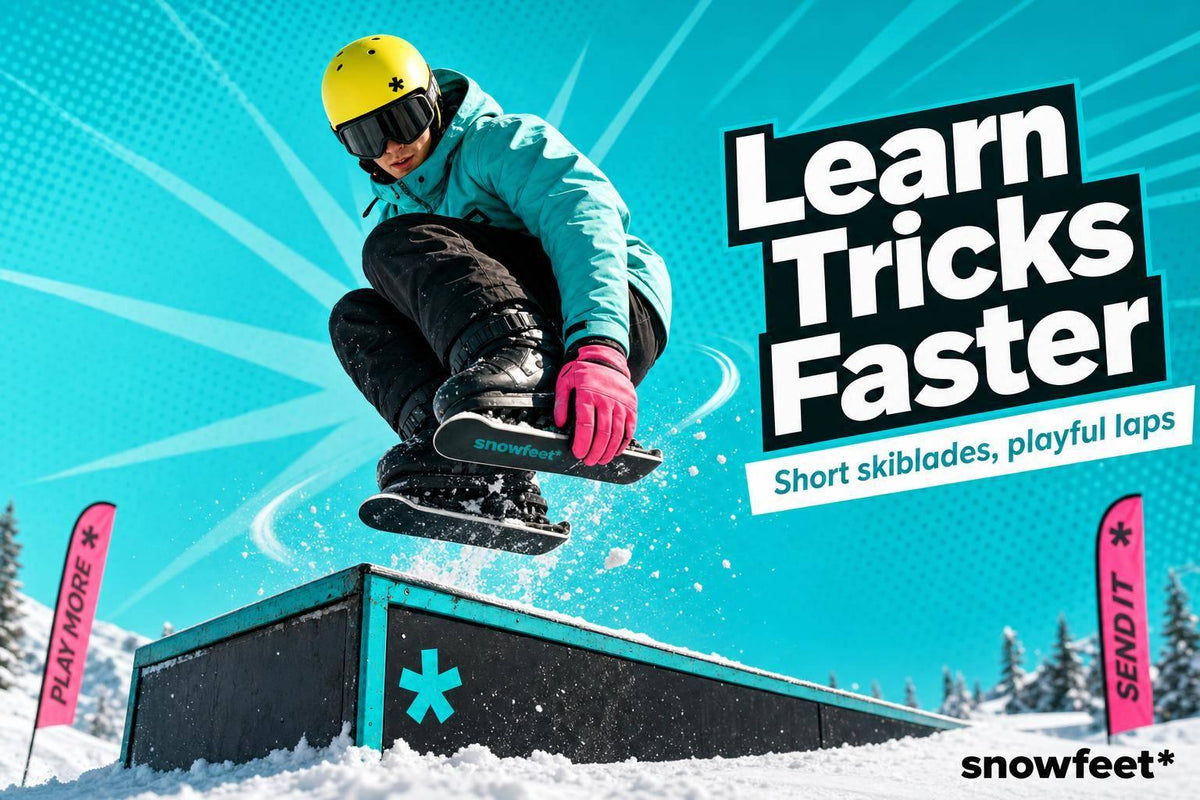
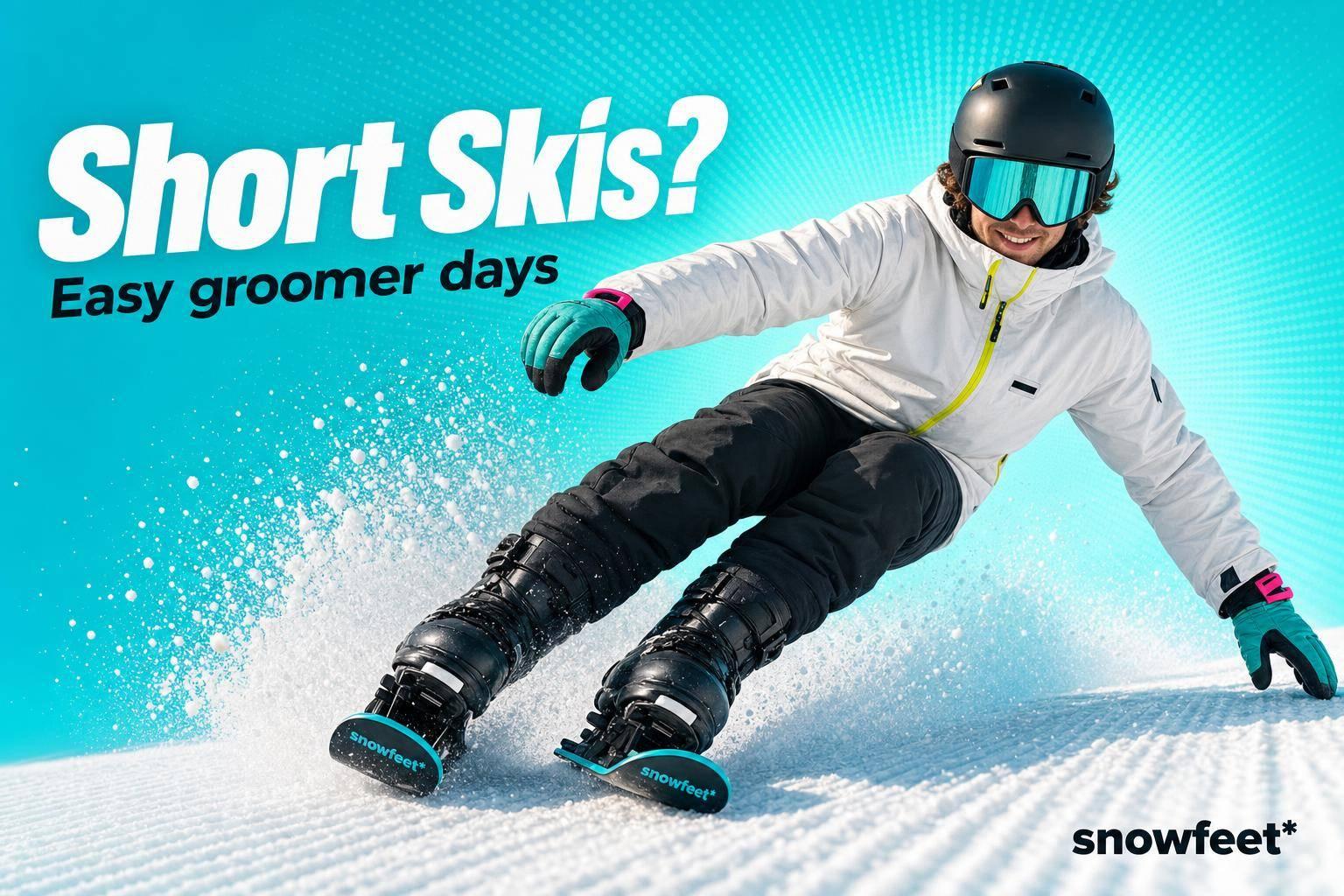
Yes - if you want fun park laps, easy spins, and less ski to fight. If your day is mostly small jumps, boxes, rails, and switch practice, skiblades make a lot of sense. If you want big jump speed, firmer landings, and more support, full park skis still win.
I’d break it down like this:
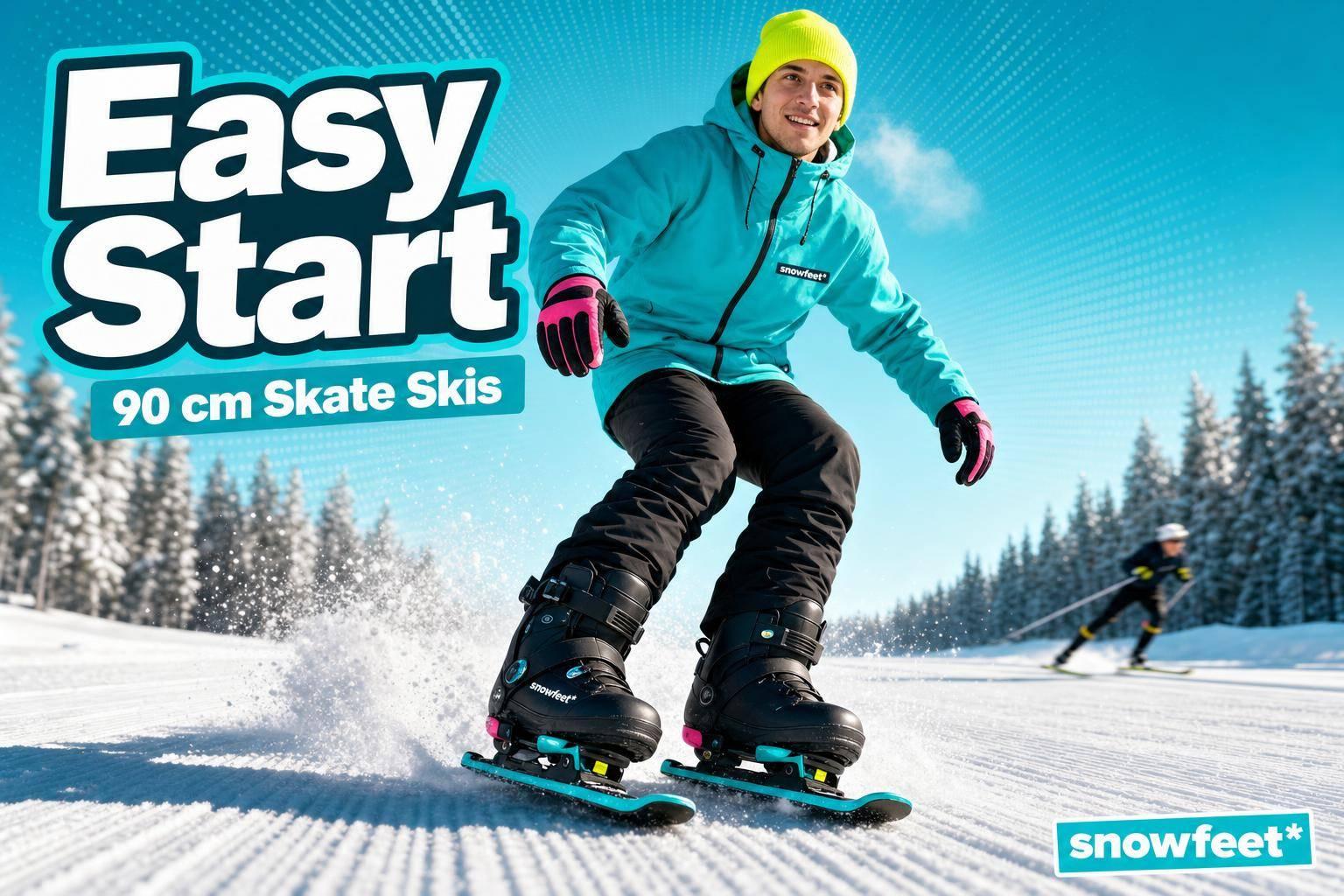
- 65 cm: best for playful laps, first 180s/360s, and mellow park days
- 99 cm: best all-around choice for most riders
- 120 cm: best if you want more support on faster in-runs and landings
- Full park skis: better for bigger features and high-speed freestyle
- Snowboards: still a smart call if you already ride one well
A lot of this comes down to one thing: how much stability you want vs. how loose you want the ride to feel. Shorter skiblades spin with less effort, feel less awkward on line fixes, and can help newer park riders build confidence with fewer sketchy moments. But there’s a catch: on faster approaches and larger landings, they give you less margin for error.
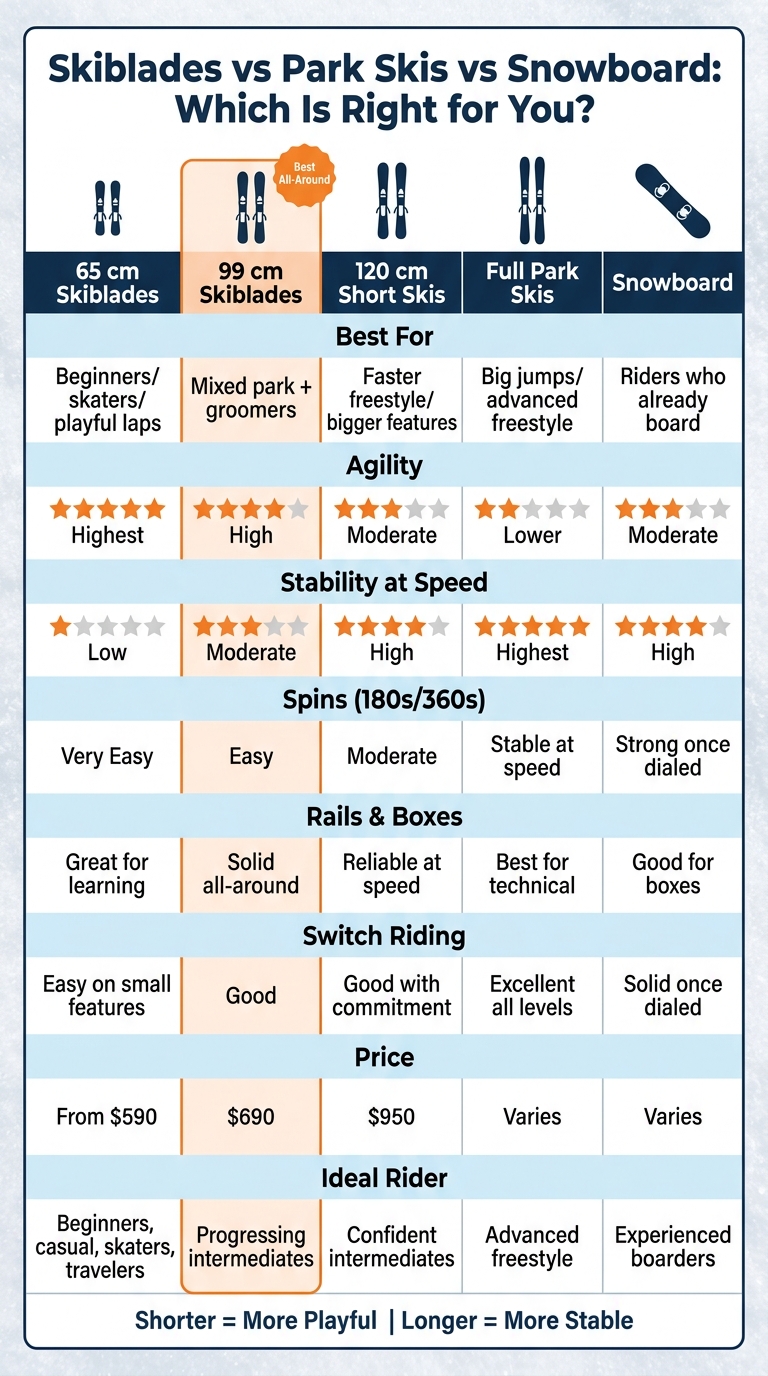
Skiblades vs Park Skis vs Snowboard: Which Is Right for You?
Snowboarder tries Snowfeet* | Which Snowfeet* Short Ski is the Best? | Snowblades 44, 65, 99 Review
Quick Comparison
| Option | Best for | Main upside | Main downside | Price |
|---|---|---|---|---|
| 65 cm skiblades | Beginners, skaters, snowboarders, playful park laps | Lowest swing weight, easy to toss around | Least stable at speed | From $590 |
| 99 cm skiblades | Mixed park laps and groomers | Best balance of agility and control | Still not ideal for big-jump riding | $690 |
| 120 cm short skis | Faster freestyle, firmer snow, bigger features | More support on landings | Takes more effort on tight jib lines | $950 |
| Full park skis | Big jumps, faster in-runs, advanced switch tricks | More stable at speed | More ski to manage | Varies |
| Snowboard | Riders who already board and want to stay with it | Strong park tool once dialed in | Fixed stance changes the feel | Varies |
Here’s the short version: if you want a playful setup that makes park riding feel less intimidating, skiblades are worth a look. If your goal is to send larger jumps and charge hard, stick with longer skis. Nice and simple :)
How skiblades perform in terrain parks
Snowfeet* skiblades in the 65–99 cm range make park laps feel simpler and more controlled for casual park riders. The short length cuts swing weight, which is just the ski’s urge to keep rotating once it starts moving. In plain English: they’re easier to whip around and easier to fix mid-approach. If you come into a rail or a small jump a bit off, you can clean it up without wrestling a bunch of extra ski.
Spins, quick turns, and small-to-medium jumps
That lower swing weight helps a lot with 180s and 360s, especially if you’re still learning to commit. Shorter skiblades are also less in the way. With full-length park skis, there’s more ski in front of and behind your boot, which can make it tougher to spot the landing early. Skiblades shrink that issue and let you pay more attention to your body position.
For hop tricks off rollers, side hits, or knuckles, the lighter feel usually means one thing: more tries per run. And that’s how freestyle starts to click. You try stuff, mess up, laugh a little, try again :) The short length also helps on rails and boxes, where small line fixes matter just as much as spin speed.
Rails, boxes, and switch riding
On boxes and rails, a fast skid or pivot to fix your line won’t mess up your whole approach the way it can on longer skis. The short platform is easier to stay centered on, which gives newer riders a better shot at holding balance through a 50/50.
Twin-tip skiblades also work well for switch riding on small features. There’s less tail behind you, so there’s less ski to catch by surprise when you roll in backward. That said, riders chasing tougher switch tricks or coming in with more speed will still lean toward park skis built for that job. They give you more edge hold when things get loaded up. And yeah, once speed climbs and jumps get bigger, that compact feel starts to become a tradeoff.
Where longer park skis and snowboards still do better
Longer park skis and snowboards still have the edge on speed, big landings, and choppy in-runs. Snowfeet* is at its best on low-to-moderate-speed park laps. Full park skis make more sense for riders hitting bigger features.
| Aspect | Skiblades (65–120 cm) | Park Skis (full length) | Snowboards |
|---|---|---|---|
| Spins (small/medium) | Very easy; low swing weight helps first 180s/360s | Stable at speed; better for larger spins on big jumps | Strong once rider is comfortable with fixed stance |
| Rails & Boxes | Great for learning 50/50s; easy approach corrections | Best for technical rails at higher speed | Good for boxes; rails need more commitment |
| Switch Riding | Twin-tip makes basic switch easy on small features | Excellent at all levels, including harder switch tricks | Solid once fundamentals are dialed in |
Next, the real question is how much stability you want versus how much playfulness you need.
sbb-itb-17ade95
The real trade-offs: when skiblades help and when they hold you back
Why many casual park riders progress faster on shorter skis
For casual park riders, skiblades make sense when fast learning and playful tricks matter more than top-end stability. That easy, loose feel is a big part of the appeal for park laps. It’s also where the limits show up.
A lot of casual riders pick up basic spins, pivots, and rail balance faster on skiblades. Why? The short platform feels easier to steer and less scary, so you can spend more attention on the trick instead of fighting the ski. That lower barrier helps skaters, snowboarders trying skis, and families who want a fun park day without a huge learning curve.
They’re also easy to carry, easy to pack, and simple to learn on. That sounds small, but it matters. If your gear feels like less of a hassle, you’re more likely to take a few laps and mess around a bit :)
The main limitations to plan around
The trade-off gets clearer once speed goes up or features get bigger. At higher speeds, skiblades leave you with less room for mistakes. They also feel less forgiving on bigger landings. For fast in-runs and larger features, longer park skis are the safer pick.
You’ll feel the limits even faster on icy runs, in powder, and outside the park. If you want one setup for a full all-mountain day with just a stop or two in the park, skiblades may not do everything you want. And before you show up at the lift, check resort rules. Some lifts or terrain parks restrict non-standard setups.
Shorter vs longer skiblades for park use
65 cm is the most playful. 99 cm hits the sweet spot between agility and stability. 120 cm feels closest to a short park ski.
| Feature | 65 cm Skiblades | 99 cm Skiblades | 120 cm Short Skis |
|---|---|---|---|
| Agility in park | Highest | High | Moderate |
| Rails & boxes | Good for learning | Solid all-around | Reliable at speed |
| Switch riding | Easy on small features | Good | Good with more commitment |
| Stability & landings | Lower | Moderate | Best of the three |
| Ideal rider | Beginners, casual, travel | Intermediate casual | Confident casual riders and intermediates |
Here’s the simple way to think about it:
- 65 cm: max play, easy to throw around, best for beginners and mellow park laps
- 99 cm: the best all-around park balance for most casual riders
- 120 cm: better if you want more speed support and steadier landings
Next, match that trade-off to the right Snowfeet* length for your riding style.
Best Snowfeet* options for tricks and park riding
Here’s how each Snowfeet* length lines up with the kind of park riding you want to do.
Snowfeet* Skiblades 65 cm for quick tricks and playful park laps
The 65 cm Skiblades are the easiest pick for playful laps in the park and learning new tricks. They work best on rollers, beginner boxes, side hits, and small kickers. Because they have low swing weight, spins and fast direction changes feel easier and less clunky.
They’re a strong match for beginners, skaters, snowboarders, and casual riders. They’re also easy to pack, which is nice if you don’t want to haul full-size skis around. Price starts at $590.
Snowfeet* Skiblades 99 cm vs Short Skis 120 cm
If you want a nice middle ground between playfulness and control, 99 cm is the sweet spot. The 99 cm model is the best all-around pick for mixed park laps and regular resort riding. If you’re moving past basic tricks and want more confidence on switch landings and small-to-medium jumps, this one gives you the most range without feeling like too much ski.
If your park laps have faster in-runs or bigger landings, 120 cm gives you more support. The 120 cm model brings more speed, stability, and edge hold for bigger jumps, longer rails, and firmer snow. The trade-off? Tight jib lines and fast pivots take more intent and a bit more skill. At $950, it’s the most expensive Snowfeet* option, and it fits riders who want more speed and bigger features.
| 65 cm Skiblades | 99 cm Skiblades | 120 cm Short Skis | |
|---|---|---|---|
| Primary use | Playful park laps, compact travel | Mixed park + groomers | Faster freestyle, bigger features |
| Park trick style | Jibs, butters, small spins | Balanced jibs + jumps | Jump-focused, speed-focused |
| Stability | Low at speed | Medium | High |
| Switch feel | Easiest to start | Best all-around | Most stable at speed |
| Slope conditions | Soft, mellow parks | Mixed U.S. resort conditions | Firm, fast, steeper terrain |
| Rider profile | Beginners, casual riders, skaters, snowboarders, travelers | Progressing intermediates and all-mountain park riders | Confident intermediates and advanced freestyle riders |
Final verdict: who should buy skiblades for parks
It comes down to what you want from the park: playful laps and fast progress, or more speed and a steadier feel.
Yes - skiblades are worth it for casual riders and people who are still getting better in the park, especially if they care more about easy learning, simple spins, and fun laps than top-speed stability. For some riders, that trade-off makes a lot of sense.
Best fit: beginners, casual riders, skaters, snowboarders, and travel-focused riders
Skiblades make the most sense for riders who want gear that feels easier to handle and lighter in the air. Beginners usually get through the learning phase faster. Skaters and snowboarders often click with the playful feel right away. And if you only hit the park a few times each season, skiblades can help you progress without going all-in on full-size gear.
They’re also a nice pick for travel-focused riders. Less bulk. Easier to pack. Less hassle at the car, the lodge, or the airport. Simple stuff, but it matters :)
How to choose between 65 cm, 99 cm, and 120 cm based on your park style
Once you know how you like to ride, picking a length gets pretty simple.
- 65 cm: best for max agility and quick, playful movement
- 99 cm ($690): the best all-around park balance
- 120 cm ($950): best for more speed support and steadier landings
Think of it like this: 65 cm is the nimble little setup that wants to mess around, 99 cm is the do-it-all middle ground, and 120 cm leans more toward support when things speed up.
When to stick with park skis or a snowboard
Go with longer park skis if you want big jumps, more speed, and advanced freestyle. Stick with a snowboard if you already ride one well and want to keep that regular stance.
For most casual park riders, Snowfeet* hits the sweet spot for fun, control, and portability.
FAQs
Are skiblades safe for terrain parks?
Yes. Snowfeet* skiblades are a safe choice for terrain parks. Their short, light build makes them easier to move than long skis, so spins, jumps, and rails feel more natural.
Their twin-tip shape also gives you better control in tight park spots. For setup, you’ve got two solid options:
- Non-release bindings for a freestyle feel
- Direct-mount release ski bindings for more security
That mix of easy handling and control is a big reason riders like them in the park.
What skiblade length should I choose for park riding?
For park riding, the best Snowfeet* skiblade length comes down to your skill level and what you want to do in the park.
- 65 cm: best for beginners, rail slides, fast spins, and tight moves
- 99 cm: the sweet spot for intermediate riders who want trick-friendly control with more stability on bigger jumps
- 120 cm: better for high-speed carving and all-mountain stability than pure park freestyle
Can skiblades handle jumps, rails, and switch riding?
Yes. Snowfeet skiblades work well in terrain parks. They’re a strong pick for jumps, rails, and switch riding.
Their short length, from 65 cm to 120 cm, gives you more agility than long skis. That means quicker spins, cleaner grabs, and sharper landings. The twin-tip shape and lightweight build also make switch riding feel more natural and easier to control.
So if you like park laps and want gear that feels quick underfoot, Snowfeet skiblades are a fun option :)











Lämna en kommentar
Denna webbplats är skyddad av hCaptcha och hCaptchas integritetspolicy . Användarvillkor gäller.