



















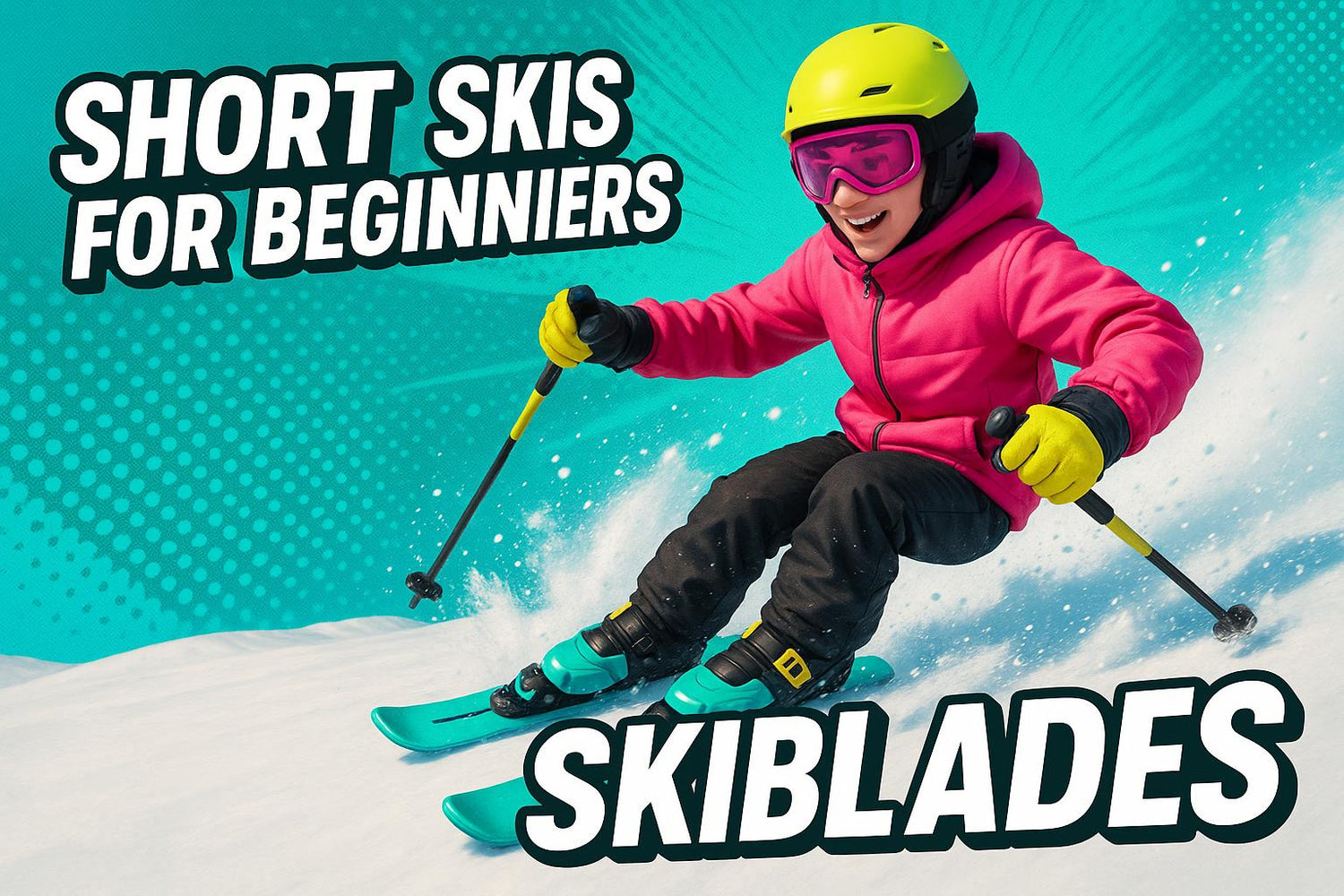
Skiblades (kortskidor) förändrar hur nybörjare lär sig åka skidor. Dessa kompakta skidor, från 26 till 47 tum, är lättare, enklare att kontrollera och mindre tröttande jämfört med längre skidor. De hjälper dig att lära dig snabbare, känna dig mer självsäker och njuta av skidåkningen utan kampen med tung utrustning. Dessutom är de budgetvänliga, portabla och fungerar med vanliga vinterstövlar.
Här är varför skiblades blir allt mer populära:
- Snabbare lärande: Lättare att hantera, särskilt för nybörjare.
- Lätt & portabel: Väger 2,3–3,6 kg och får plats i en ryggsäck.
- Prisvärd: Börjar på 635 $ jämfört med 800 $+ för traditionella set.
- Mångsidig användning: Perfekt för preparerade backar, tricks och snabba svängar.
- Mindre trötthet: Kräver mindre ansträngning, vilket gör skidåkningen roligare.
Om du är ny på skidåkning är skiblades ett smart val för att njuta av backarna utan den branta inlärningskurvan som långa skidor har.
Är kortskidor bättre för nybörjare?
1. Skiblades (Kortskidor)
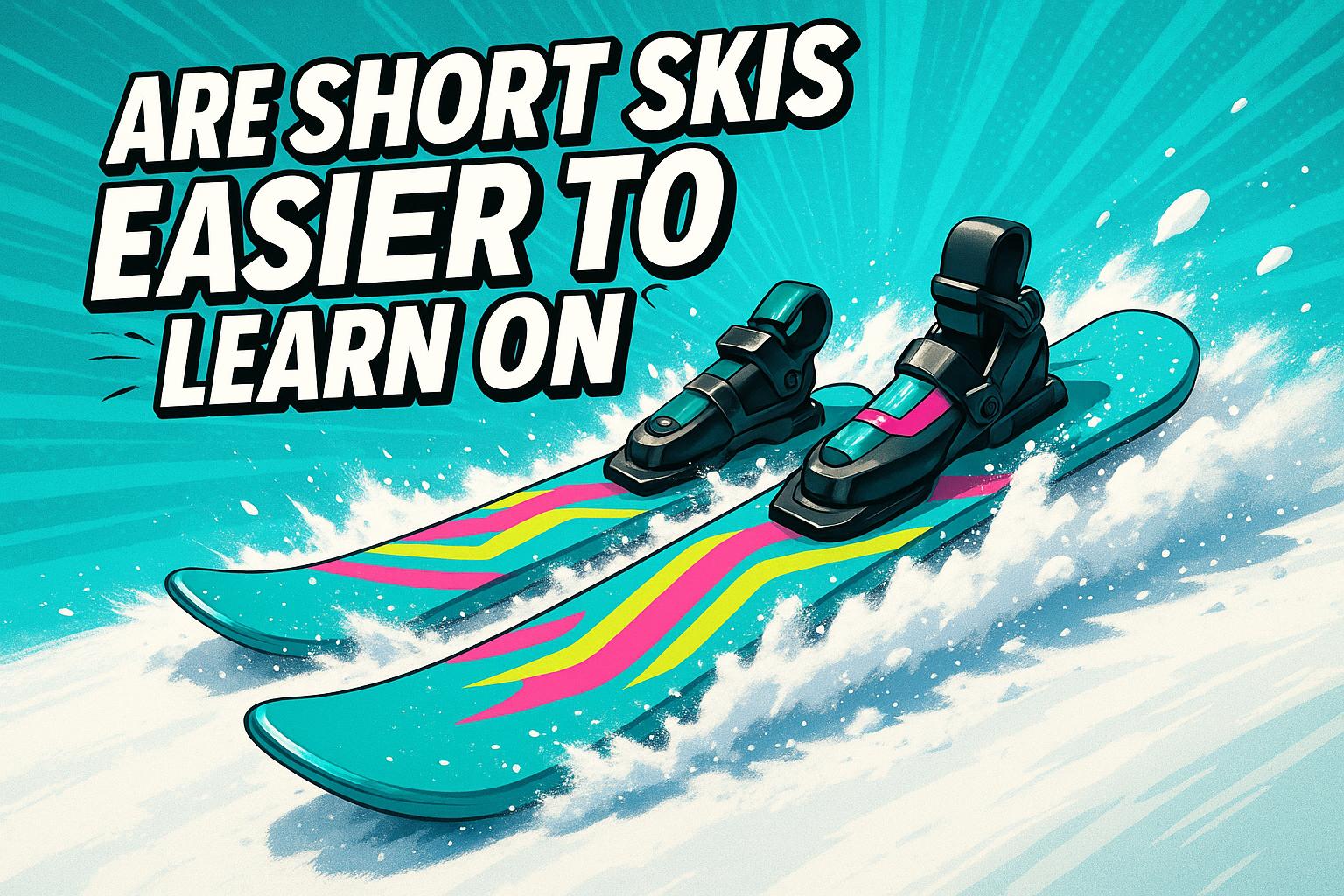
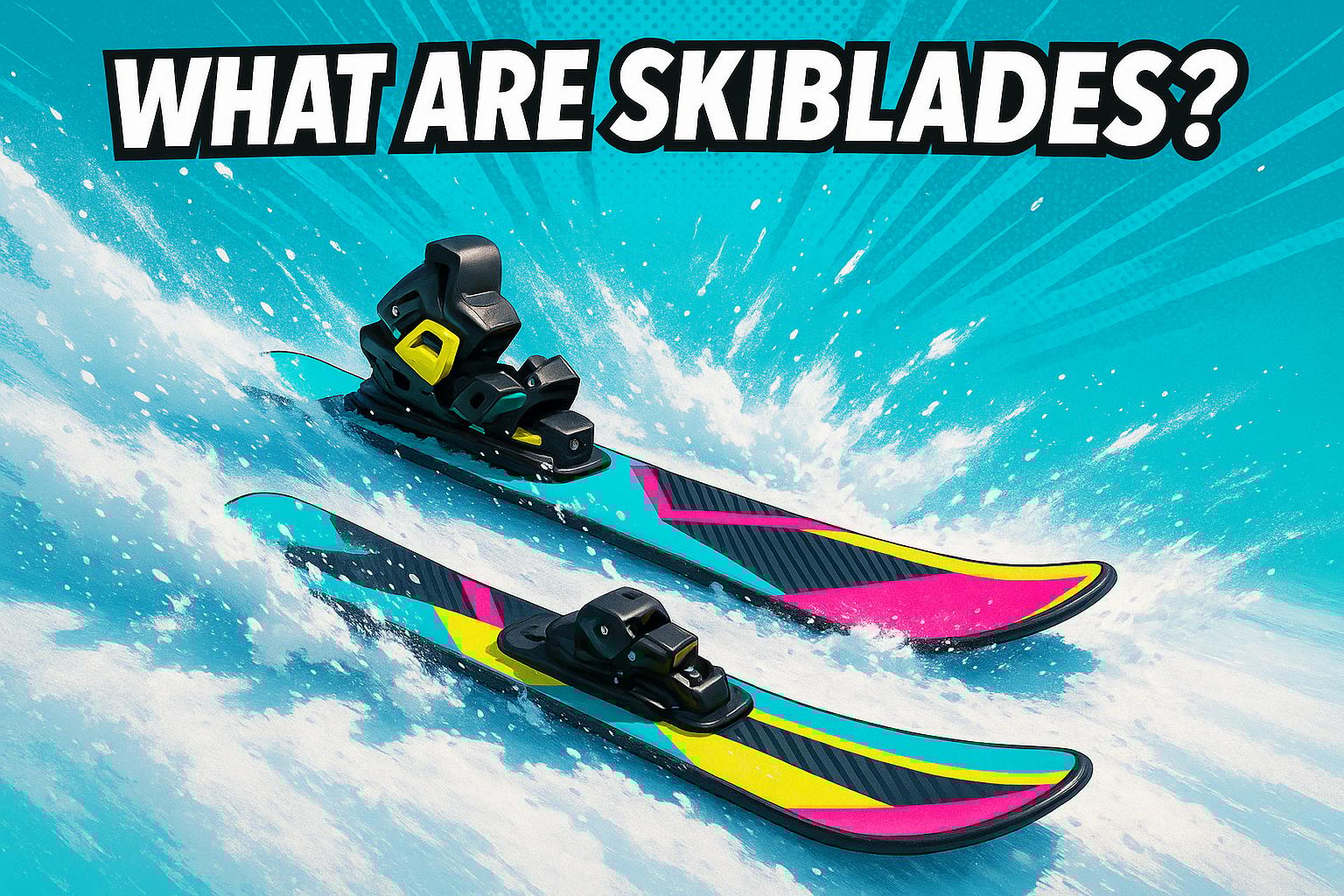
Skiblades gör skidåkning mindre skrämmande för nybörjare. Dessa kortskidor, vanligtvis 26 till 47 tum långa, tar bort komplexiteten hos traditionella skidor och gör dina första dagar i backen mer roliga och mindre kämpiga med klumpig utrustning. Denna enkelhet hjälper dig att lära dig snabbare och njuta av processen.
Inlärningskurva
En av de häftigaste sakerna med skiblades är hur snabbt de hjälper dig att få självförtroende. Långa skidor kan vara svåra eftersom deras längd gör det svårare att känna kontroll över spetsar och bakändar. Skiblades, å andra sidan, är kompakta, så du känner dig mer kopplad till vad som händer under dina fötter. Det gör att lärandet känns naturligt och mindre överväldigande.
Nybörjare tycker det är lättare att göra kontrollerade svängar med skiblades eftersom de skapar mindre ytfriktion. Det betyder att du kan byta riktning snabbt och stanna enkelt. Snowfeet* erbjuder modeller i tre storlekar:
- 65 cm (26 tum): Perfekt för absoluta nybörjare som vill ha maximal kontroll och snabba svängar.
- 99 cm (39 tum): Ger mer stabilitet för dem som behärskar grunderna.
- 120 cm (47 tum): En perfekt mellanväg för skidåkare som är redo att ta sig an mer avancerad terräng, mitt emellan skiblades och traditionella skidor.
Manövrerbarhet
Skiblades är inte bara fantastiska för att lära sig – de är också otroligt smidiga. Deras kortare längd låter dig svänga och byta riktning snabbt, vilket är en stor fördel när du navigerar på trånga backar, slingrar dig genom täta träd eller hanterar pucklar. Du kommer känna dig mer i kontroll och mindre skrämd av svåra partier.
En annan bonus? Skiblades låter dig använda en skridskoliknande rörelse för att glida över platta partier. Inga fler besvärliga av- och påklippningar och gång – bara tryck ifrån och glid, vilket gör berget till din lekplats.
Fysiska krav
Med en vikt på bara 5–8 pund är skiblades mycket lättare än traditionella skidor, som kan väga 10–15 pund och vara upp till 5 fot långa. Denna lägre vikt gör dem enklare att bära, förvara och kontrollera.
Eftersom de är mindre och lättare kräver skiblades mindre ansträngning att manövrera. Långa skidor kan trötta ut benen efter bara några åk, särskilt om du är nybörjare och fortfarande bygger upp skid-specifika muskler. Skiblades låter dig däremot njuta av mjukare svängar och stopp utan att bli utmattad, vilket gör dem idealiska för nybörjare.
Kostnad och tillgänglighet
Skidåkning kan bli dyrt, men skiblades erbjuder ett mer budgetvänligt alternativ utan att tumma på kvaliteten. En traditionell skidutrustning – inklusive skidor, bindningar, pjäxor och stavar – kan kosta mellan 800 och 1 500 dollar eller mer. Snowfeet* skiblades börjar på 635 dollar för 65 cm-modellen, 675 dollar för 99 cm och 775 dollar för 120 cm, vilket gör dem till ett mer prisvärt alternativ till premiumvarumärken som Rossignol, Atomic eller Salomon.
En annan fördel? Skiblades fungerar med olika typer av skor. Beroende på modell kan du använda dem med vanliga vinterkängor, snowboardboots eller skidpjäxor. Denna flexibilitet kan spara dig 200 till 400 dollar på specialiserade skidpjäxor, vilket är en stor fördel om du bara provar sporten.
Att hyra utrustning på amerikanska skidorter kostar vanligtvis 40 till 70 dollar per dag, vilket snabbt blir dyrt om du åker några gånger per säsong. Dessutom är skiblades tillräckligt kompakta för att packas med på resor utan att orsaka extra avgifter för övervikt hos flygbolag. Så oavsett om du planerar en snabb weekendresa eller en hel skidsemester, gör de spontana resor enklare – och billigare.
2. Traditionella långa skidor
Medan skiblades är kända för sin enkelhet, kan traditionella långa skidor vara svårare att bemästra för nybörjare. Deras storlek och vikt gör ofta skidåkningen mer utmanande – och ibland frustrerande – att lära sig.
Inlärningskurva
Långa skidor tar mer tid och ansträngning att lära sig. För nybörjare kan det kännas som en kamp uppför backen att hantera hastighet och behålla stabiliteten, vilket bromsar framstegen i grundläggande tekniker. Skidornas längd och klumpighet kan göra varje steg på inlärningsresan till en seg kamp. Även enkla rörelser i backen kan kännas som stora hinder i början.
Manövrerbarhet
Att svänga med långa skidor? Det är ett träningspass i sig. Deras extra längd innebär att du behöver använda mer medvetna rörelser och lägga extra tryck på knäna bara för att göra en sväng. Denna extra ansträngning gör inte bara svängandet svårare utan ökar också risken för att tappa balansen och ramla. För nybörjare kan detta göra backarna mer skrämmande och mindre inbjudande.
sbb-itb-17ade95
För- och nackdelar
När du väljer mellan skiblades och traditionella långa skidor är det bra att väga för- och nackdelarna med båda. Båda har sina fördelar, men de tjänar olika syften. Här är en närmare titt på hur de står sig, med utgångspunkt i tidigare punkter om inlärningslätthet och prestanda.
Skiblades: fördelarna
Skiblades gör inlärningen mer lekfull. Tack vare deras kortare längder – från 65 cm till 120 cm i Snowfeet*-modeller – är de mycket lättare att kontrollera, vilket gör svängarna mjukare och hjälper nybörjare att snabbt få självförtroende.
En annan stor fördel? De är superportabla. Skiblades får plats i en ryggsäck eller bagageutrymmet på din bil, och de fungerar med vanliga vinter- eller snowboardpjäxor. Det betyder att du slipper lägga extra pengar på specialutrustning.
När vi talar om kostnad är skiblades ett budgetvänligt alternativ. En komplett utrustning börjar runt 150 dollar, vilket är en bråkdel av vad du skulle betala för traditionella skidor. Nybörjarpaket från välkända märken börjar vanligtvis på 400 till 500 dollar, och det är innan kostnaden för pjäxor och bindningar läggs till. Som Snowfeet Team uttrycker det:
"På Snowfeet lägger vi vikt vid prisvärd utrustning för alla, så vi gör vårt bästa för att hålla priserna superlåga!" – Snowfeet Team
Skiblades: nackdelarna
Men skiblades är inte perfekta. De är utmärkta för avslappnad skidåkning och att lära sig grunderna, men de har sina begränsningar. Vid mycket höga hastigheter kan deras kortare design kännas mindre stabil. De är inte heller bäst för POWDER-förhållanden. Och om ditt mål är att bemästra traditionella alpina tävlingstekniker kommer du så småningom behöva prestandan hos fullängdsskidor.
Traditionella långa skidor: fördelarna
Långa skidor glänser i vissa områden. De erbjuder utmärkt flyt i djup POWDER och stabilitet i höga hastigheter på preparerade backar. För avancerade skidåkare som tar sig an utmanande terräng ger den extra längden en märkbar fördel.
Traditionella långa skidor: nackdelarna
För nybörjare kan dock traditionella skidor vara lite av en huvudvärk. De är klumpiga och tunga, vilket innebär att de kräver mer styrka och koordination. Det kan göra inlärningskurvan brantare. Dessutom orsakar de ofta mer knäbelastning och trötthet, särskilt för nya skidåkare. Och låt oss inte glömma kostnaden – skidor, pjäxor och bindningar säljs vanligtvis separat, vilket snabbt blir dyrt.
Jämförelse sida vid sida
Här är en snabb översikt över de viktigaste skillnaderna:
| Egenskap | Skiblades (Snowfeet*) | Traditionella långa skidor |
|---|---|---|
| Inlärningskurva | Lätt och snabb – perfekt för nybörjare | Brant och utmanande – tar tid att bemästra |
| Manövrerbarhet | Snabb och responsiv | Kräver mer styrka och medvetna rörelser |
| Fysiska krav | Låg belastning; skonsammare för knän och ben | Högre belastning; mer påfrestning på knän och trötthet |
| Bärbarhet | Kompakt; får plats i ryggsäck eller bilens bagageutrymme | Otymplig; kräver specialtransport |
| Kostnad (Utrustning) | 150 till 599,90 $ (bindningar ingår) | 400 till 2 500+ $ (skidor, pjäxor och bindningar säljs separat) |
| Pjäxkompatibilitet | Fungerar med vinter- eller snowboardpjäxor | Kräver specialiserade skidpjäxor |
| Hastighetsstabilitet | Mindre stabil vid mycket höga hastigheter | Mer stabil vid höga hastigheter |
| Powder-prestanda | Begränsad (utom POWDER-modeller) | Utmärkt i djup snö |
| Mångsidighet | Perfekt för parker, preparerade backar och avslappnad skidåkning | Bäst för varierad terräng och avancerade tekniker |
Traditionella nybörjarpaket för skidor börjar på 400 till 500 dollar, med pjäxor och bindningar som lägger till ytterligare 200 till 300 dollar. Högkvalitativa expert-skidor kan lätt kosta över 1 000 dollar. I kontrast håller Snowfeet* sina paket prisvärda och erbjuder stort värde med sin Basic-modell.
För alla som precis börjat och letar efter ett prisvärt sätt att ge sig ut i backen är skiblades ett fantastiskt alternativ.
Slutsats
Om du är ny på skidåkning är skiblades en riktig game-changer. De gör lärandet enklare, roligare och mycket mindre skrämmande än traditionella skidor. Borta är dagarna med klumpiga rörelser och oändliga fall - skiblades låter dig fokusera på att njuta av backarna.
För helt nybörjare är kortare skiblades (runt 65 cm) den perfekta startpunkten. De är superlätta att kontrollera, hjälper dig att göra snabba svängar och stopp, och ökar ditt självförtroende utan att tömma din energi. Det betyder färre vurpor och mer tid att ha roligt.
Om du redan har grunderna klara och vill ta dig an mer varierad terräng, mid-length skiblades (som 99 cm-modellerna) erbjuder en bra balans mellan stabilitet och lekfullhet. Och när du är redo att närma dig känslan av traditionell skidåkning - utan att offra enkel hantering - är 120 cm Snowfeet* Short Skis ett fantastiskt alternativ. Deras design gör dem till ett utmärkt val för alla som vill kombinera manövrerbarhet med en touch av klassisk skidåkning.
Utöver deras mångsidighet är skiblades helt enkelt praktiska. De är lätta och enkla att bära, vilket gör skidresor mindre besvärliga. Dessutom är de oftast snällare mot plånboken, vilket gör skidåkning mer tillgängligt för nybörjare.
Kort sagt, om du vill ge dig ut i backen snabbt, lära dig med självförtroende och få ut det mesta av din första säsong, är skiblades vägen att gå. Spara de längre skidorna till när du är redo att dyka in i avancerade tekniker eller djup POWDER. För nu är skiblades din biljett till snabbare lärande, enklare skidåkning och ren glädje i varje åk. Det är ett enkelt, smart val för alla som börjar sin skidresa.
Vanliga frågor
Är skiblades lättare för nybörjare att lära sig på jämfört med traditionella skidor?
Ja, skiblades är ett fantastiskt alternativ för nybörjare eftersom de är mycket lättare att hantera än traditionella skidor. Deras kortare längd ger dig bättre kontroll, vilket gör det enklare att svänga, stanna och hålla balansen. Det betyder att du kan bygga självförtroende snabbare och verkligen njuta av din tid i backen utan att känna att du är över din förmåga.
Ta skiblades som Snowfeets modeller på 65 cm, 99 cm och 120 cm som exempel – de är lätta och superlätta att manövrera. Det minskar den fysiska ansträngningen som krävs för att kontrollera dem. Till skillnad från traditionella skidor, som kan kännas klumpiga och, låt oss vara ärliga, lite skrämmande, erbjuder skiblades en roligare och mer förlåtande åktur. Det är ett utmärkt sätt att bemästra grunderna och ha kul samtidigt.
Finns det situationer där skiblades kanske inte är det bästa alternativet för skidåkning?
Skiblades är ett bra alternativ för många skidåkare, men de har några nackdelar. De kan ha svårt i djup POWDER, på isig eller mycket hårt packad snö, eller när du pressar gränserna i höga hastigheter. I dessa situationer erbjuder traditionella långa skidor bättre stabilitet och större yta för att hantera de svåra förhållandena.
Med det sagt, för de flesta fritidsskidåkare – särskilt nybörjare – är skiblades som Snowfeet Skiblades ett fantastiskt sätt att lära sig, bygga självförtroende och helt enkelt ha roligt i backen.
Kan jag använda mina vanliga vinterstövlar med Snowfeet skiblades, eller behöver jag speciella pjäxor?
Ja, du kan kombinera pjäxor eller snowboardpjäxor med Snowfeet skiblades, vilket gör dem superflexibla och lätta att använda – perfekt för både nybörjare och erfarna skidåkare. Till skillnad från traditionella skidor som ofta kräver specifika bindningar och pjäxor, är Snowfeet skiblades byggda för att fungera med olika typer av skor, så du har fler valmöjligheter när du ger dig ut i backen.
Denna mångsidighet gör inte bara livet enklare – den kan också spara dig pengar. Chansen är stor att du kan använda stövlar du redan äger, vilket minskar extra kostnader. Oavsett om du provar skidåkning för första gången eller bara vill ha ett roligt, kompakt alternativ till fullängdsskidor, låter Snowfeet skiblades dig kasta dig ut utan krångel med att köpa massor av extra utrustning.











Lämna en kommentar
Denna webbplats är skyddad av hCaptcha och hCaptchas integritetspolicy . Användarvillkor gäller.