



















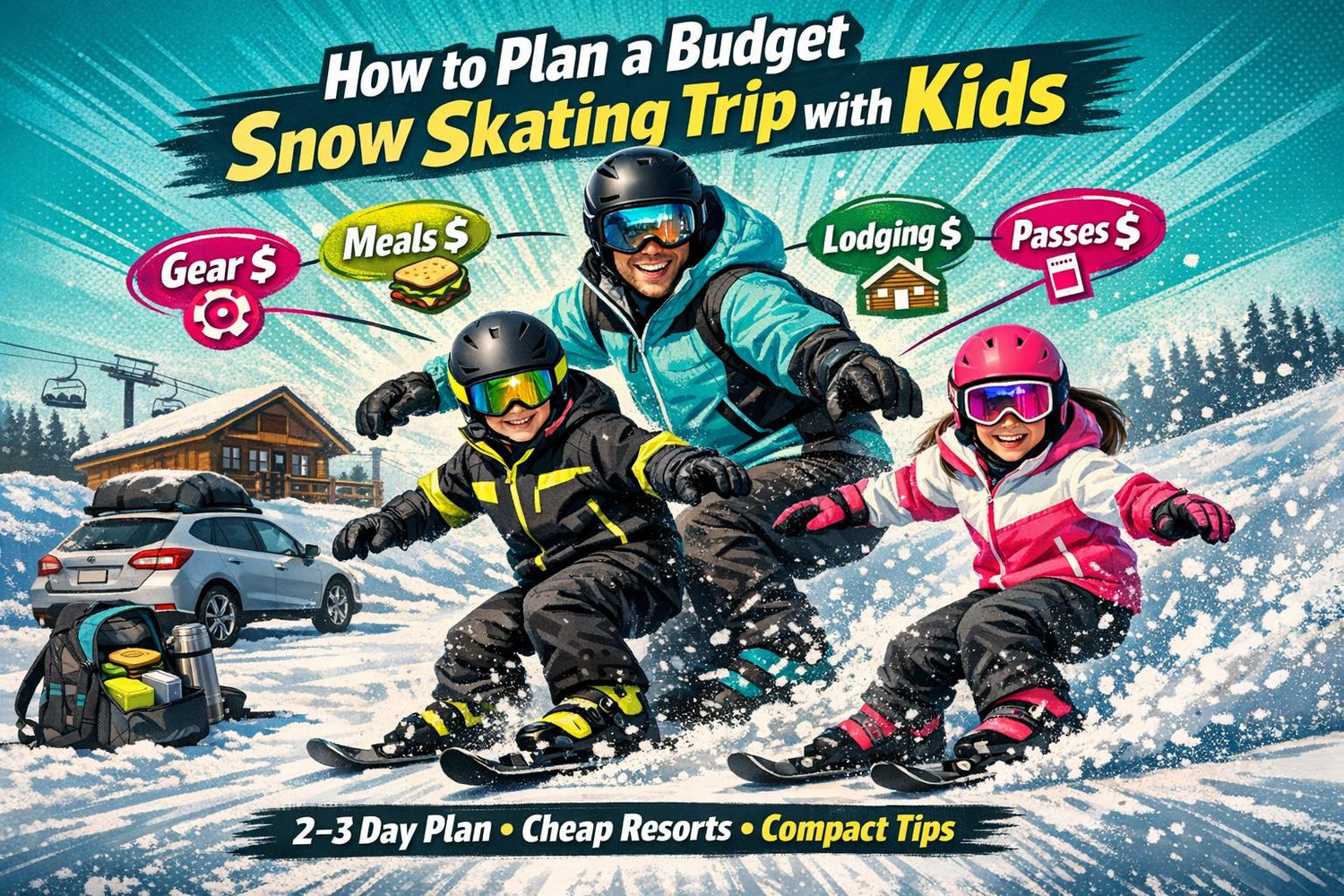
Planning a snow skating trip with kids doesn’t have to cost a fortune. Here’s the deal: with smart budgeting, off-peak travel, and the right gear, you can save big while still having a blast. Snow skating - using compact skis or skates - is perfect for families, especially if your kids are just starting out with snow sports.
Key Tips to Save Money:
- Set a Budget: Aim for $700–$1,500 for a 3-day trip if you’re driving and staying off-site.
- Book Early: Pre-purchase lift tickets online to save 30–80%. Midweek travel can cut lodging costs by 20–50%.
- Choose Smaller Resorts: Community hills charge $30–$90 for lift tickets compared to $200+ at big-name resorts.
- Gear Smarter: Compact options like Snowfeet mini skis save on rentals and are easy to transport.
- Stay Off-Mountain: Lodging 15–30 minutes away is much cheaper, often $120–$250 per night.
- DIY Meals: Cook your own food to keep daily costs under $60 for a family of four.
Why Snow Skating Rocks for Kids:
- It’s easier to learn than skiing or snowboarding.
- Compact gear like Snowfeet is lightweight and straps onto regular boots.
- Smaller hills and magic carpets make it less intimidating for beginners.
Bonus Hacks:
- Look for resorts with kids-ski-free programs or youth discounts.
- Practice balancing and basic moves at home before hitting the slopes.
- Pack snacks, water, and a sled for free off-slope fun.
With a little planning, you can enjoy a fun, budget-friendly snow adventure your kids will love - without breaking the bank. Ready to hit the snow? :)
How to Use Snowfeet* Skiskates 44 CM | Skates for Snow | Mini Ski | Snowblades | Snowskates
Setting a Realistic Budget for Your Trip
Budget Snow Skating Trip Cost Breakdown: Smart Savings vs. Big Resort Spending
Before diving into resort options or shopping for gear, it’s smart to set a clear budget for your trip. Having a specific number in mind - like "We’re capping our spending at $1,500 for three days" - helps you stay on track. Without a budget, it’s easy for small expenses to sneak up and blow your total. Once you’ve set your limit, break it down into categories to figure out where you can save.
Breaking Down Trip Costs
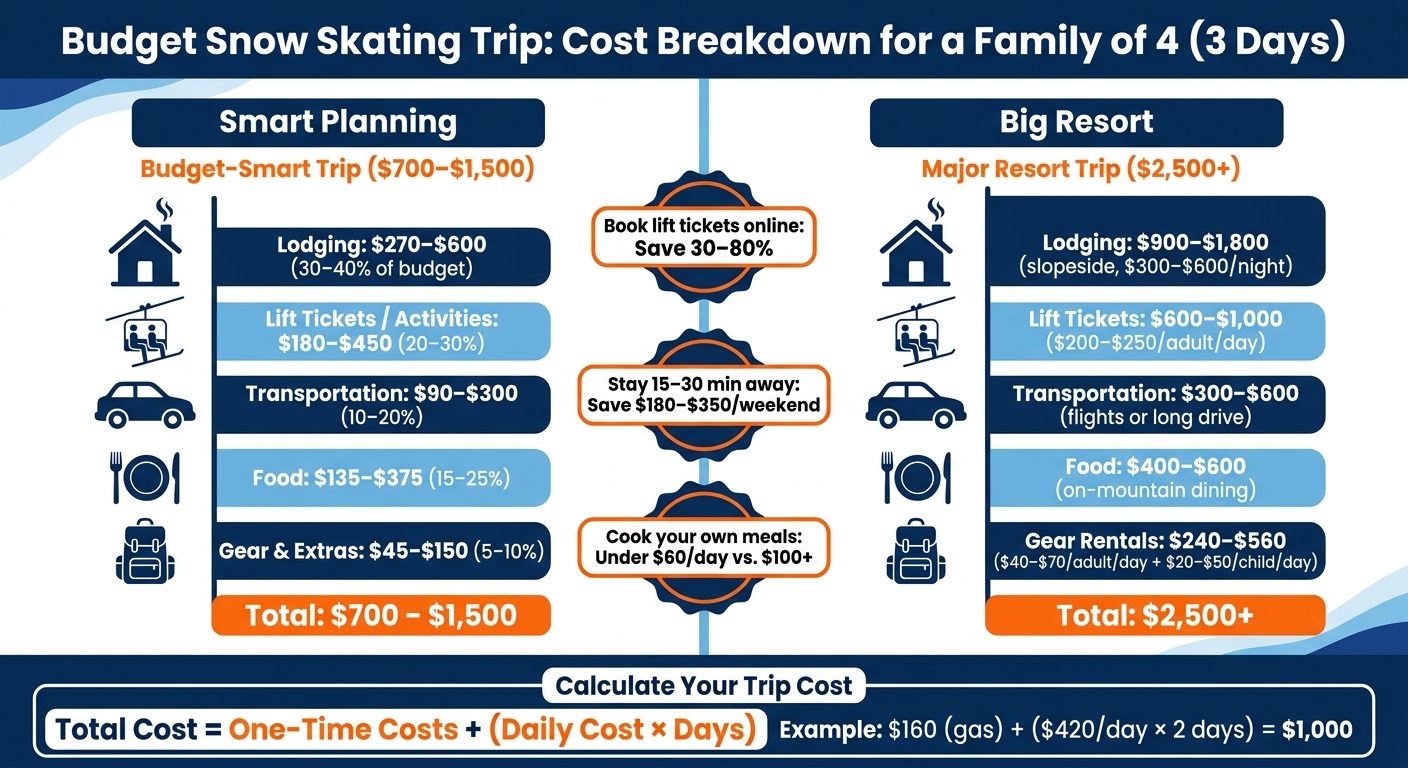
For a family of four, a 3-day snow skating trip can cost anywhere from $700 to $1,500 if you’re driving to a regional hill, staying off-site, and cooking meals yourself. If you’re heading to a major resort with slopeside lodging, you’re looking at a minimum of $2,500 for the same trip.
Here’s a quick breakdown of how to allocate your budget across the main expense categories:
| Category | Suggested Budget Share | Estimated Range (Family of 4, 3 Days) |
|---|---|---|
| Lodging | 30–40% | $270–$600 ($90–$200/night) |
| Lift tickets / activities | 20–30% | $180–$450 |
| Transportation | 10–20% | $90–$300 |
| Food | 15–25% | $135–$375 |
| Gear & extras | 5–10% | $45–$150 |
These percentages can shift depending on your choices. For instance, if you’re driving instead of flying, you’ll spend less on transportation, leaving more room in your budget for lodging or gear. Using compact equipment like Snowfeet can also save you money by cutting down on rental and transport costs - a major plus compared to lugging traditional skis or boards.
To calculate your total trip cost, use this formula: Total Cost = One-Time Costs + (Daily Cost × Days). For example, if you’re spending $160 on gas and parking, plus $420 per day on lodging, food, lift tickets, and rentals, a two-day trip would cost $1,000, while four days would run $1,840. Plug in your own numbers to figure out what works for you.
Once you’ve nailed down your budget, tweaking your trip dates can help you save even more.
Picking Off-Peak Dates and Trip Length
Timing is everything when it comes to cutting costs. Lift tickets, lodging, and package deals can be 20–50% cheaper during early December or late March compared to peak times like Christmas week or Presidents’ Day weekend. Midweek stays - from Tuesday to Thursday - are almost always less expensive than weekends at most mountain destinations.
For families with younger kids, a 2–3 day trip is often the sweet spot. Kids tend to run out of steam faster than adults, and paying for a fourth or fifth day might mean buying lift tickets for a child who’s done by lunchtime. A shorter, well-timed trip keeps your wallet happy and ensures everyone has a great time without feeling wiped out.
Choosing Affordable Snow Skating Destinations
With your budget in place, the next step is finding destinations that balance cost-effectiveness with family fun. Resorts can vary a lot when it comes to pricing and how family-friendly they are. Across the U.S., smaller regional hills often provide a much cheaper alternative to the big-name resorts in places like Colorado or Utah. These smaller spots are not only easier on your wallet but are often a better fit for families, especially if you’re introducing kids to snow skating.
What to Look for in a Kid- and Budget-Friendly Resort
To save money, pick a resort you can drive to instead of one that requires flying. At major destination resorts, walk-up lift tickets can cost $200–$250 per adult per day during peak season. In contrast, smaller community hills typically charge between $30–$90. Some resorts even have kids-ski-free programs, which can save you $50–$100 per child daily. Also, don’t forget to check for hidden costs like overpriced on-site food or parking fees.
When traveling with kids, prioritize resorts that offer wide green runs, magic carpets, and separate learning areas away from faster skaters. These features are far more beneficial for young families than a resort’s vertical drop or variety of terrain. Plus, smaller hills often mean shorter lift lines, giving you more time on the snow and less time dealing with cranky kids in the cold.
| Feature | Why It Matters for Families |
|---|---|
| Green/beginner terrain | Builds confidence and keeps kids safe |
| Magic carpets or slow surface lifts | Perfect for first-timers and younger kids |
| Kids-ski-free or youth discounts | Reduces overall ticket costs |
| Bring-your-own-food policy | Helps avoid pricey cafeteria meals |
| Free parking + resort shuttle | Keeps transportation costs down |
Once you’ve narrowed down your options, make sure your chosen resort allows the snow skating gear you plan to use.
Checking Resort Policies on Snow Skating Gear
After picking an affordable destination, double-check the resort’s gear policies to avoid any hiccups on the slopes. Not all resorts allow every type of snow skating equipment, so it’s smart to confirm these details ahead of time.
Start by visiting the resort’s website. Look under sections like "Mountain Safety", "Equipment Policy", or "Code of Conduct" for mentions of terms like "snow skates", "skiboards", or "short skis." If you can’t find clear answers, contact guest services directly via phone or email and request written confirmation about their gear rules. This step ensures you won’t run into surprises when you show up.
Smaller, family-focused hills are often more open to gear like Snowfeet* mini ski skates. These are a fun, simplified alternative to traditional skis and are frequently allowed at smaller resorts. However, keep in mind that most mountains require safety measures like leashes or retention devices for any gear without standard ski brakes. Sorting out these details before your trip means you can focus on having fun once you’re there.
Saving on Gear: Renting vs. Buying
When planning a snow trip, gear choices can have a big impact on your budget. For a family of four renting traditional skis or snowboards at a major U.S. resort, you might spend $40–$70 per day per adult and $20–$50 per day per child if you rent at the base. Booking through an in-town rental shop or reserving online ahead of time can save you 20–40%, but even with discounts, costs can add up fast - especially with multiple kids. This brings up an important question: should you rent or buy?
If you’re taking a short, one-time trip, renting is probably the way to go. It’s especially practical if your kids are new to skiing or snowboarding and you’re unsure if they’ll stick with it. But if you plan to visit the slopes more than once a season or for longer trips, buying gear can save you money in the long run.
Why Snowfeet* Gear Works Well for Families
Choosing the right gear can help cut costs even more. Traditional rentals often charge extra for specialized ski boots, which can quickly increase your daily expenses. Snowfeet* offers a clever alternative by strapping directly onto regular winter or snowboard boots, eliminating the need for boot rentals altogether.
"No more heavy ski boots or complicated gear - just strap these light carbon mini skis onto your child's regular winter boots and let them glide with ease." - Snowfeet*
Snowfeet* Kids Skis are priced at $199 (prototype pricing) and are made from ultralight carbon fiber, designed for kids aged 5–15. To put that into perspective, this is often less than the cost of a 4-day rental package for one child at many resorts. The Snowfeet* Mini Kids model is $250, and their 50 cm Ski Skates start at $299. Compared to spending $120–$200 per child for a long weekend of rentals, owning Snowfeet* gear can save you a lot over time.
Another bonus? Snowfeet* gear is compact - just 17 inches long and small enough to fit in a standard backpack. This makes it much easier to transport than bulky traditional skis, which often require extra equipment for hauling. Plus, Snowfeet* works on local sledding hills and smaller slopes, so you can get more use out of them even when you’re not at a major resort.
Gear Checklist for a Family Snow Skating Trip
Here’s a practical checklist to help you plan for a snow-skating trip, with tips to keep your spending in check:
| Category | Item | Budget Tip |
|---|---|---|
| Snow-skating gear | Snowfeet* short skis or skates | Great for frequent trips; rent if unsure |
| Footwear | Waterproof winter boots | Likely already owned - no extra expense |
| Head protection | Properly fitting helmet | Buy used or on sale; safety is a must |
| Eye protection | Goggles | One-time investment; reuse every season |
| Outerwear | Waterproof jacket + snow pants | Look for secondhand options |
| Base layers | Moisture-wicking long underwear | Athletic wear you already own works too |
| Hands | Waterproof gloves or mittens | Waterproofing is key for comfort |
| Extras | Neck gaiter, hand warmers, socks | Affordable items that add comfort |
Prioritize safety and warmth - helmets, quality outerwear, and gloves are essential for keeping your kids comfortable and protected. For other items, consider secondhand gear, hand-me-downs, or off-season sales to help stretch your budget.
sbb-itb-17ade95
Planning Lodging, Food, and Daily Activities
Lodging, food, and daily activities are big-ticket items when planning a ski trip. In fact, lodging alone can eat up 40–45% of your vacation budget, according to a 2023 comparison of U.S. family ski trips. Once your gear and budget are set, finding smart ways to manage these costs can make a huge difference.
Affordable Lodging Options
Want to save big on lodging? Stay off the mountain. Budget hotels, motels, or vacation rentals located 15–30 minutes from the resort typically cost $120–$250 per night for a family of four. Compare that to slopeside properties, which can easily run $300–$600+ per night. Over just a weekend, that choice could save you over $500.
Vacation rentals with kitchens are another game-changer. Cooking your own meals not only cuts food costs but also gives you flexibility. Look for rentals that include perks like in-unit laundry, free breakfast, parking, and shuttle services to the slopes. These extras can help stretch your dollar even further.
Cutting Food Costs
Dining at the resort can quickly drain your wallet. On-mountain meals often cost $15–$20 per adult and $10–$15 per child for lunch alone - not counting drinks. Even a simple hot cocoa can set you back $4–$7. For a family of four, daily on-mountain lunches could total $60–$80.
Instead, stock up on groceries at a regular supermarket before you arrive. Simple breakfasts like oatmeal or scrambled eggs cost about $1–$1.75 per person, while packed lunches of sandwiches, fruit, and cheese sticks run $2–$3 per person, compared to $10–$15 on the mountain. For dinner, meals like pasta or quesadillas can be whipped up for around $2–$3 per person. Using this strategy, a family of four can keep daily food costs between $30 and $60 instead of $100 or more. Don’t forget to bring a small cooler and reusable water bottles to avoid pricey on-slope drinks.
Low-Cost Family Activities
Not every moment of your trip needs to revolve around skiing. Free activities like sledding at public hills or visiting local parks can add variety while keeping costs down. A plastic sled costs just $10–$30 and can provide hours of fun for younger kids. Many mountain towns also host free winter events like fireworks, outdoor concerts, or holiday festivals - check the local calendar to see what’s happening during your trip.
For evenings, keep it simple with family games or movies. Grab some microwave popcorn from the grocery store, snuggle up, and enjoy a cozy night in. These quiet moments often become some of the most cherished memories from the trip.
Getting Kids Ready for Snow Skating
With some smart planning and budget-friendly gear like Snowfeet*, you can set your kids up for an awesome snow skating experience. A little practice at home can make that first day on the slopes a lot smoother - and more fun.
Practicing the Basics Before You Go
Start practicing 2–4 weeks before your trip with 2–3 short, playful sessions each week. The goal isn’t to make your child an expert but to help them get comfortable with the equipment. Have them strap on their Snowfeet* skates and practice standing with knees slightly bent, feet hip-width apart. From there, introduce small shuffles, gentle weight shifts, and balance drills. These are easy to do on a flat driveway with a light dusting of snow or even indoors on a soft surface.
The compact design of Snowfeet* makes learning much simpler compared to traditional skis. Parents often say their kids find the lightweight gear easy to control. Younger children (ages 4–7) usually do well with 5–10 minute sessions, while older kids can handle 15–20 minutes. You’ll know your child is ready when they can move around confidently on their own.
Once they’ve mastered the basics, a single lesson can help fine-tune their skills.
Saving on Lessons
A single group lesson can be a great, cost-effective way to build on your child’s progress. At smaller regional hills in the U.S., beginner half-day group lessons for kids typically cost between $80 and $130. At larger Western resorts during peak season, expect to pay $150 to $220. Booking a lesson on Day 1 is a good strategy, leaving the rest of the trip for parent-led practice.
After the lesson, take a moment to ask the instructor two quick questions: "What did they do well?" and "What one or two drills should we repeat?" Pay attention to the specific cues they use, like "Bring your big toes together to slow down", and use those same phrases when practicing later. Consistency in language helps reinforce what they’ve learned. Also, double-check with the resort’s ski school beforehand to make sure they allow short skis or Snowfeet*-style gear in beginner areas, as some programs may require standard rental equipment.
Keeping Kids Motivated and Comfortable
Once your child has the basics down, keep the momentum going by focusing on their comfort and motivation. Plan for 30–60 minute sessions with warm-up breaks indoors to keep things fun and engaging. Watch for signs of fatigue - like whining, clumsiness, or flushed cheeks - and wrap things up on a positive note before frustration kicks in.
When giving feedback, highlight their effort rather than their performance. Saying something like, "You balanced so well on that glide!" is much more encouraging than asking, "Why can’t you stop yet?" Small rewards can also go a long way. Letting your child pick the family movie for the evening or earning a sticker for trying something new can help keep their spirits high. According to the American Academy of Pediatrics, kids are more likely to stick with a sport when they feel successful and, most importantly, when they’re having fun.
Conclusion: Making Winter Memories on a Budget
You don’t need a luxury resort or pricey equipment to create a magical snow skating trip with your kids. Families who make it work on a budget follow a few key strategies: they plan ahead, pick the right dates, and spend their money where it counts most.
Start by planning early, choosing off-peak dates, and packing your own meals to cut costs. For gear, consider something compact and affordable like Snowfeet*. These mini ski skates are lightweight, fit in a backpack, and work with the boots your kids already own. Plus, they’re versatile enough for a sledding hill or a groomed slope, so you’re not tied to expensive lift tickets every time you want a day in the snow.
At the end of the day, it’s not the price tag but the memories that matter. Kids won’t remember how fancy the accommodations were - they’ll remember the giggles, the wobbly first attempts, and the joy of gliding over the snow together. Let this trip be the start of a special family tradition.
Keep it simple. See what your kids enjoy most, and build on that. Maybe next year, you’ll stay longer or invest in more gear once everyone’s hooked. There’s no rush to do it all at once. Each trip adds to your snow-filled adventures, paving the way for bigger plans down the road.
So, pick a date, stick to your budget, and embrace the fun of snow skating with gear like Snowfeet*. The snow is ready - are you?
FAQs
How do I choose the best off-peak dates for a family trip?
Choosing mid-week or non-holiday dates is a smart way to avoid crowds and enjoy quieter slopes - perfect for beginners. These off-peak times give you more room to practice and build confidence, especially when using compact, easy-to-handle gear like Snowfeet*. Unlike traditional ski equipment, Snowfeet* keeps things simple by ditching the bulky gear and rigid schedules. This makes it easier to plan a stress-free trip and skip the headaches of peak-season travel.
Will my local resort allow Snowfeet* or other short skis?
Most ski resorts welcome Snowfeet* and similar short skis because they meet safety standards, including having metal edges like traditional skis. If anyone questions your gear, just let them know it has the same metal edges as regular skis. Plus, Snowfeet* are super versatile! You can use them on sledding hills, hiking trails, or in snow parks - perfect if you’d rather skip the resort scene altogether.
Is it cheaper to rent gear or buy Snowfeet* for kids?
Snowfeet* is a wallet-friendly alternative to traditional ski gear. A full ski setup - skis, bindings, poles, and boots - can set you back anywhere from $200 to $600 upfront, with premium packages often surpassing $1,000. On the other hand, Snowfeet* starts at just $99 for kids.
What makes them even more cost-effective? They’re designed to work with your regular winter boots, eliminating the need for pricey, specialized ski boots. Families can save between $400 and $600 each season by skipping rental fees and avoiding uncomfortable ski gear. Snowfeet* offers a smarter, simpler way to hit the slopes without breaking the bank.












Lämna en kommentar
Denna webbplats är skyddad av hCaptcha och hCaptchas integritetspolicy . Användarvillkor gäller.