







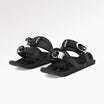












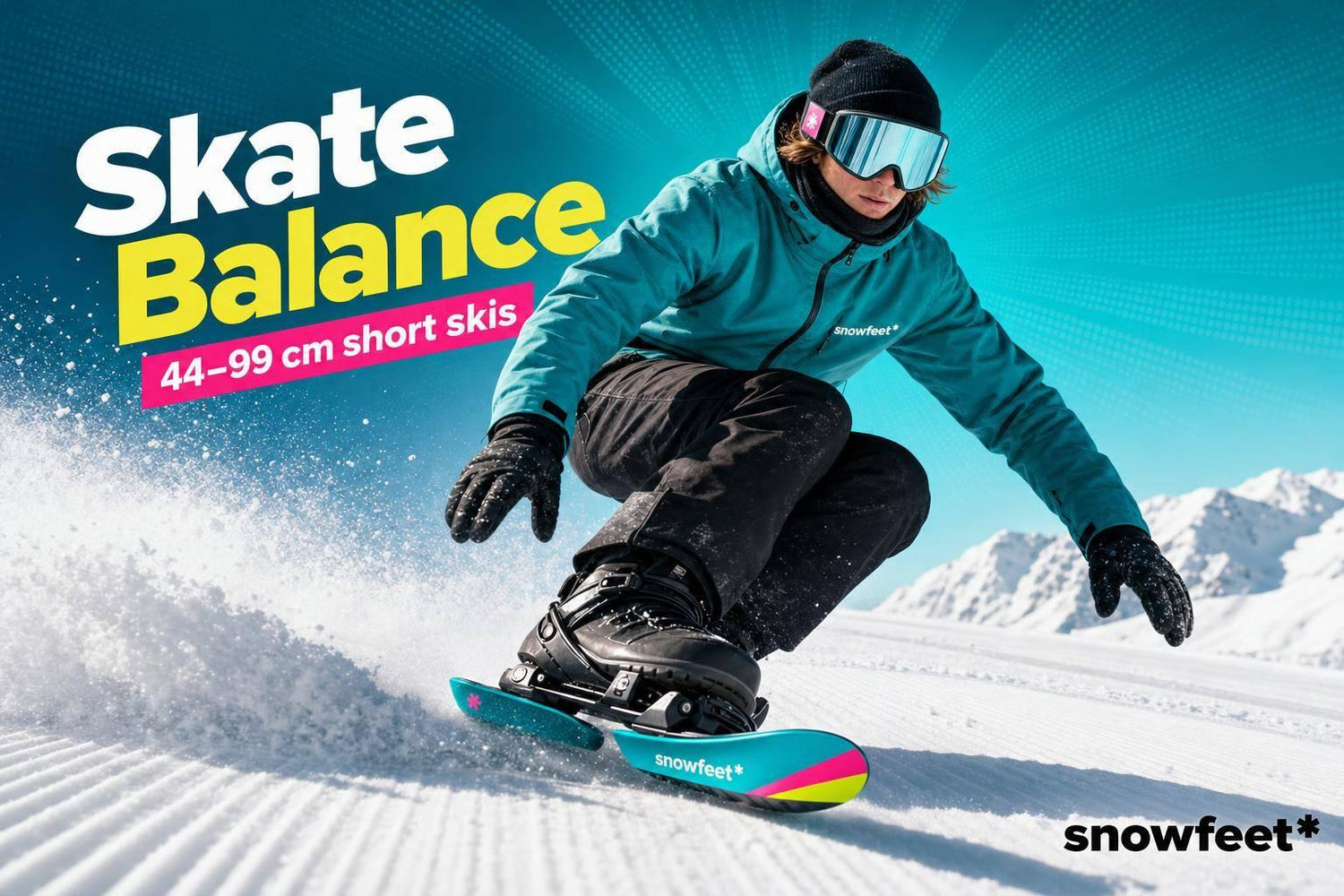
If you already skate, I’d keep it simple: go short if you want a skate-like feel, go longer if you want more calm at speed. In this lineup, 44 cm and 50 cm models feel closest to skates, 65 cm is the middle ground, 99 cm gives you more control on steeper runs, and all-mountain skis or a snowboard make more sense if speed or mixed terrain matters most.
Here’s the short version:
- Best skate-like pick: Snowfeet* Skiskates 44 cm - from $460
- Best if you use snowboard boots: Snowfeet* PRO 50 cm - from $299
- Best mix of play and carve: Snowfeet* Skiblades 65 cm - from $590
- Best compact pick for more stability: Snowfeet* Skiblades 99 cm - from $690
- Best compact pick for soft snow: Snowfeet* POWDER 99 cm - from $690
- Best for high-speed resort riding: standard all-mountain skis
- Best non-ski pick for skateboarders: snowboard
I’d look at four things first: skill transfer, turn feel, speed control, and portability. That’s the whole game here. If your balance already comes from hockey, inline skating, figure skating, or skateboarding, you’ll likely learn short snow gear fast - Snowfeet* even says some skaters get rolling in about 5 minutes on the 44 cm model.
Snowboarder tries Snowfeet* | Which Snowfeet* Short Ski is the Best? | Snowblades 44, 65, 99 Review
Quick Comparison
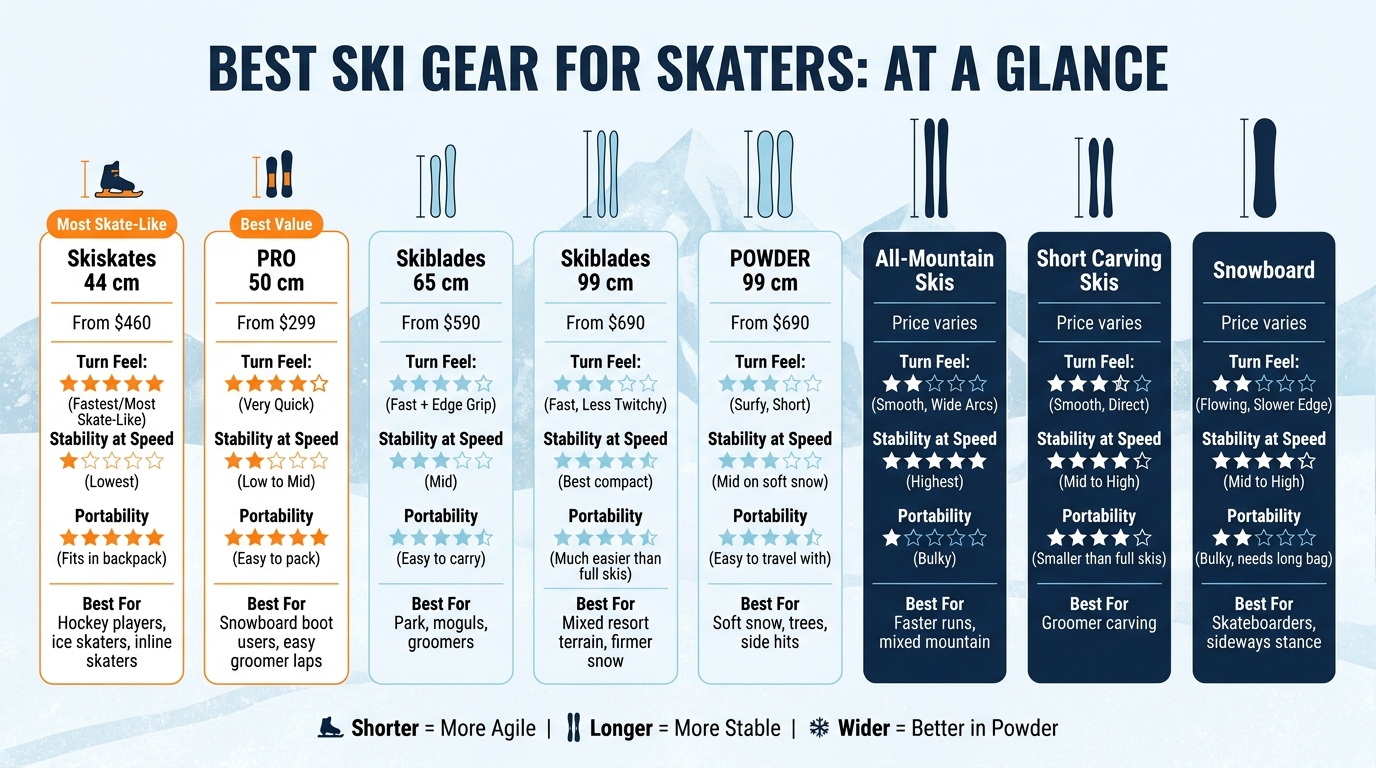
Best Ski Gear for Skaters: Quick Comparison by Length, Price & Ride Feel
| Gear | Starting Price | Best For | Turn Feel | Stability at Speed | Portability |
|---|---|---|---|---|---|
| Skiskates 44 cm | $460 | Hockey players, ice skaters, inline skaters | Fastest, most skate-like | Lowest in this group | Fits in a backpack |
| PRO 50 cm | $299 | Riders with snowboard boots, easy groomer laps | Very quick, slightly calmer than 44 cm | Low to mid | Easy to pack |
| Skiblades 65 cm | $590 | Park, moguls, groomers | Fast with more edge grip | Mid | Easy to carry |
| Skiblades 99 cm | $690 | Mixed resort terrain, firmer snow | Fast but less twitchy | Best of the compact group | Much easier than full skis |
| POWDER 99 cm | $690 | Soft snow, trees, side hits | Short, surfy feel | Mid on soft snow, less on hard ice | Easy to travel with |
| All-mountain skis | Varies | Faster runs, mixed mountain use | Longer, smoother arcs | Highest | Bulky |
| Short carving skis | Varies | Groomer carving in a shorter size | Smooth and direct | Mid to high | Smaller than full skis |
| Snowboard | Varies | Skateboarders, sideways stance | Flowing, slower edge change | Mid to high | Bulky |
So, if you’re a skater, I wouldn’t start with the longest setup unless you know you want speed. Most people do best with the shortest option that still feels stable where they ride. That’s the cleanest way to pick without overthinking it :)
1. Snowfeet* Skiskates 44 cm
The 44 cm Snowfeet* Skiskates start at $460 and use adjustable bindings that work with ski or snowboard boots. They have a wood core and full steel edges, so they don’t feel like a toy. They feel serious the second you click in.
For riders with strong skating balance, this is the format that tends to feel most familiar. Why? Because it rewards a centered stance, fast edge changes, and quick recovery. If you’ve spent years on hockey skates or rollerblades, that muscle memory shows up fast.
Skill Transfer
Hockey players and rollerbladers already bring a lot of what these Skiskates ask for: a centered stance and snappy edge-to-edge movement. Snowfeet* says the learning curve is about 5 minutes for riders with a skating background. That’s pretty wild, but it makes sense.
The main shift is snow. You need to manage speed on changing terrain and learn how edges bite on packed snow versus ice. Once that clicks, turn initiation starts to feel natural.
Turn Response
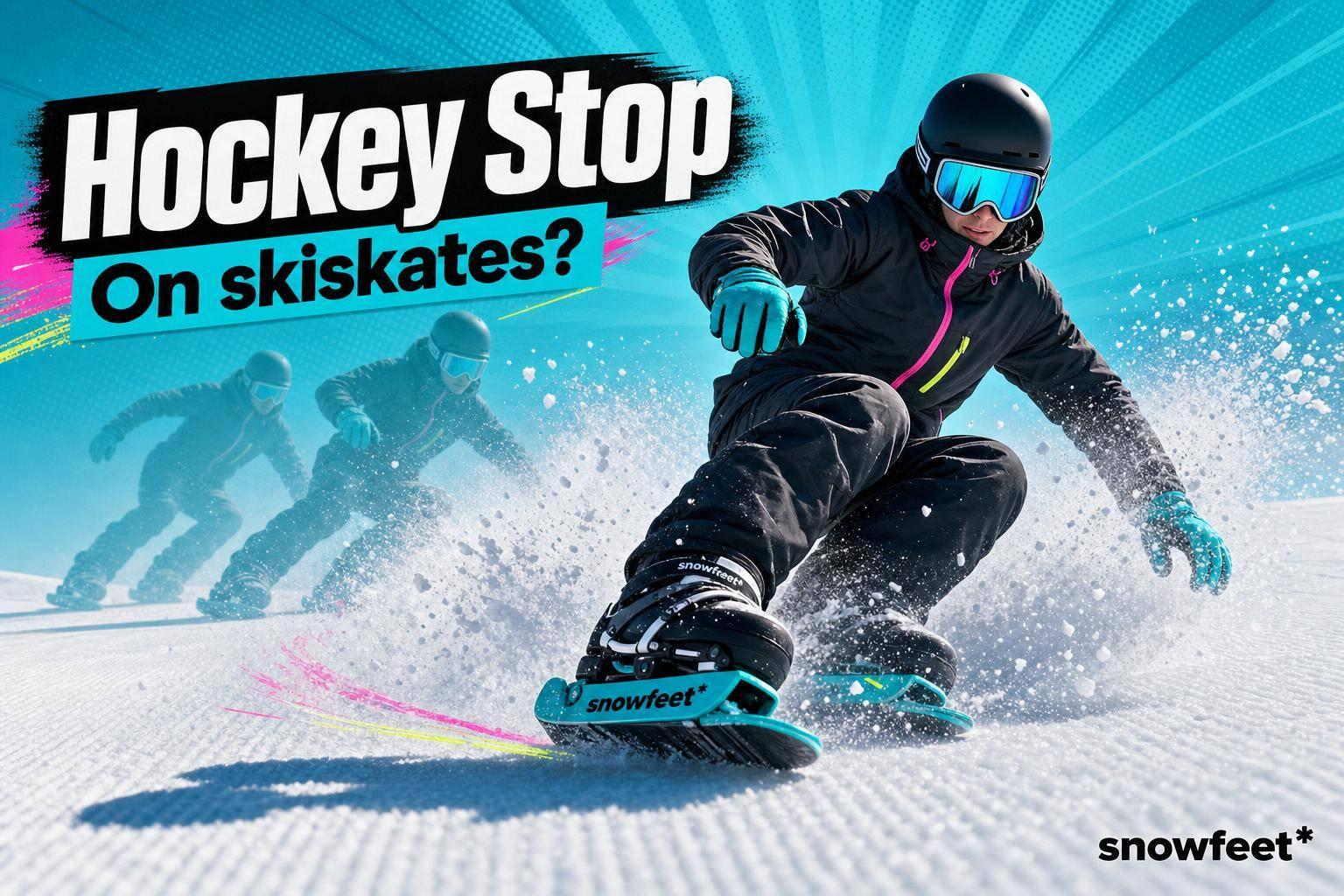
The 44 cm length makes turn initiation very fast. A small edge movement can send you into a new line in a split second. That makes slalom turns, pivots, and hockey stops feel smooth and familiar.
This setup shines in short, quick turns on groomed runs and in terrain parks. It’s not built for long, fast carves where you want to lock in and let it run.
Speed Stability
At moderate speeds on groomed green or blue runs, the Skiskates do well. But once you push into higher speeds, steeper terrain, or chopped-up snow, the short platform gives you less dampening and less tracking than longer skis.
So, yeah, they’re best at moderate speed. For a lot of skaters, that’s a fair trade. You give up some straight-line calm, but you get a ton of agility in return.
Portability
At about 2–3 lbs per pair, the Skiskates can fit in a standard backpack. That’s a huge plus if you hate hauling gear through parking lots, lodges, and hotel hallways.
A few perks stand out:
- Easy to carry
- Easy to store
- Easy to travel with
For weekend resort trips or riders who want less gear hassle, that small size is a big win.
If you want a little more platform without giving up that skate-like feel, the 50 cm PRO is the next step up.
2. Snowfeet* PRO 50 cm
The Snowfeet* PRO 50 cm costs $299 and comes with a fiberglass core plus adjustable bindings for ski or snowboard boots. At 50 cm, it gives you a bit more stability than the 44 cm Skiskates, but it still keeps that skate-like feel.
If the 44 cm Skiskates seem a little too twitchy, this model smooths things out. You get more balance and a calmer ride, without drifting into full mini-ski territory.
Skill Transfer
For skaters, the PRO 50s feel familiar right away. They’re narrow underfoot, quick from edge to edge, and easy to steer with lateral pressure. Hockey players tend to click with them fast because the stance and skid-stop feel carry over well.
Compared with the 44 cm Skiskates, the PRO 50s feel less twitchy and easier to balance on steeper terrain. That small bump in length makes a difference. Not night and day, but enough that you’ll notice it.
Turn Response
Turn initiation is fast, and the turning radius is short. That means they like tight, playful turns and quick direction changes.
Compared with the 44 cm Skiskates, the PRO 50s feel a little calmer. Compared with the 65 cm Skiblades, they’re quicker edge-to-edge and more fun in tight spaces. Think of it like this: still lively, just not quite as jumpy.
Speed Stability
On green runs and moderate blue groomers, the PRO 50s feel solid and controlled. They’re happy cruising and making short turns without much fuss.
At higher speeds or on steeper terrain, though, they don’t feel as planted as the 99 cm Skiblades. So if your goal is more speed and more confidence when things get steep, longer gear still has the edge.
Portability
At about 20 inches long, the PRO 50s are easy to toss in a car trunk, back seat, or checked bag. They’re also light enough to carry without dealing with the bulk of full-length skis.
They’re a good fit for riders who want more stability than the 44 cm Skiskates without giving up that skate-like ride. If you want to move one step farther toward stability, the 65 cm Skiblades are the next stop.
3. Snowfeet* Skiblades 65 cm
The Snowfeet* Skiblades 65 cm start at $590 and come with a wood core, steel edges, and a sintered base. At 65 cm, they hit a sweet spot. You still get that skate-like agility, but now you also get stronger carving grip. So if the 44 cm and 50 cm models feel a bit too loose, this is the first model that starts to feel like a true middle lane.
Skill Transfer
Compared with the 44 cm and 50 cm versions, the 65s keep that familiar skating feel but give you more edge hold. That matters fast on snow.
Hockey stops and lateral weight shifts carry over with little fuss, and a lot of skaters pick up parallel turns pretty fast. The sidecut and narrow waist help a ton here. Roll your ankles, tip the blades, and they react right away. It feels snappy, not sluggish.
Turn Response
The 65 cm length gives you a more secure grip on firm groomers. That extra edge length helps you set a clean arc instead of washing through each turn. You can still pivot fast and make tight direction changes, but now there’s more bite underfoot.
This model works well for:
- Slalom-style weaving
- Park laps
- Mogul lines
If you want longer, smoother, more settled carves, step up to the 99 cm Skiblades.
Speed Stability
At moderate speeds, they feel solid. But let’s keep it honest: these aren’t made for straight-line charging.
The wood core helps them feel more planted than the PRO 50, which smooths out the ride a bit. Still, on steep icy runs at high speed, you’ll feel more vibration than you would on full-length carving skis or even the 99 cm Skiblades. These are best for controlled carving, not all-out speed runs.
Portability
At about 26 inches, they’re still easy to live with. They fit in a trunk or a checked bag, and carrying them around the resort is no big deal. Compared with the PRO 50s, they take up a bit more space, sure, but the gain on groomed snow makes that trade feel pretty small.
If you want more stability and longer turns without jumping to full-length skis, the 99 cm Skiblades are the next step.
4. Snowfeet* Skiblades 99 cm
The Snowfeet* Skiblades 99 cm start at $690. They come with a wood core, full steel edges, and a sintered base. If the shorter Snowfeet models feel more like skate-style snow gear, the 99 cm version sits closer to a ski. It gives you the most ski-like stability in the Snowfeet line while still staying nice and compact.
Skill Transfer
If you play hockey, skate, or rollerblade, these feel familiar fast. The centered stance, one-leg balance, and quick edge-to-edge moves carry over well. The big shift is snow. You still need to learn how to read the surface and keep your speed in check.
Turn Response
These skiblades turn fast. The deep sidecut and narrow waist help them roll into turns with very little effort. Tip them, and they react right away.
That makes them a blast for slalom-style turns and fun laps on groomers. They feel agile, but not as twitchy as the 44 cm and 50 cm models. The tradeoff is simple: at high speed, they won’t feel as calm as longer skis.
Speed Stability
The 99s feel more planted at speed than the shorter Snowfeet models, most of all on firm groomers. The wood core adds stiffness, which helps on hardpack. They work best for moderate resort speeds and controlled carving.
They’re not built for flat-out, straight-line runs on steep ice. That’s not their lane.
Portability
At about 39 inches, the 99 cm Skiblades are much easier to carry than full-length skis. They’re simpler to store, easier to toss in the car, and less awkward when you’re walking through a resort. That’s a plain, everyday edge over standard ski gear.
If you want more stability at high speed and prefer longer turns, standard all-mountain skis are the next thing to look at.
5. Snowfeet* POWDER 99 cm
The Snowfeet* POWDER 99 cm is the soft-snow take on the 99 cm Skiblades. You get the same short length, but with a wider shape and more float. So if the 99 cm Skiblades already feel like your kind of ride, and you want more help in powder, this is the one to check out.
It starts at $690 and is made for riders who want to get off the groomers and roam more of the mountain.
Skill Transfer
A lot of what you already know from skating carries over right away. Edge control? Yep. Quick recovery? That too. The big change is your fore-aft balance in powder.
If you tend to lean back when braking on skates, you might notice some tip flap on steeper runs at first. That’s a common adjustment. Once you dial that in, things click fast.
Strong skaters often move past the usual beginner drills and get into parallel turns and playful off-piste riding pretty fast. Why? Because they already get edging, pressure control, and rhythm.
Turn Response
The POWDER 99 cm feels surfy in soft snow and easy to pivot. For a lot of skaters, that feels good from the first few turns. Tip it on edge, and the sidecut pulls into a clean arc. If you already know how to set and hold an edge, this ride pays you back right away.
These shine in spots like:
- Tight trees
- Side hits
- Soft bumps
In those zones, you can snap quick direction changes with far less effort than you’d need on longer skis.
On groomers, the feel stays playful and forgiving. The turn radius is short, so it likes short turns and quick moves. If you try to force long, fast sweepers, it won’t feel as calm as longer skis.
Speed Stability
The wood core gives it more stiffness and a steadier feel at moderate speed. In soft snow or boot-top powder, the added width helps you stay on top of the snow instead of punching through it. That means you can carry more speed than you likely could on the 44 cm or 65 cm models.
There is a limit, though. On hard, icy chop at high speed, the shorter effective edge starts to show. These work best at moderate resort speeds with controlled carving. They’re not built for all-out straight-line bombing.
Portability
At 39 inches, it’s still easy to carry and travel with. Same compact length as the standard 99 cm Skiblades, just wider, and without much extra hassle. That makes it a lot easier to move around than full-length powder skis.
If you want more calm and grip for straight-line speed than a compact powder setup can give, all-mountain skis are the next step.
sbb-itb-17ade95
6. Standard All-Mountain Skis
Standard all-mountain skis are the safe bet if you want speed and a mix of terrain. They’re less playful and less instinctive than Snowfeet* for riders with a skating mindset, but they start to make more sense when downhill stability matters more than quick, skate-like movement.
Skill Transfer
Skating balance still helps. But long skis don’t love an upright stance or sideways pushing, and they’ll let you know fast. So, expect a longer learning curve than with Snowfeet*, even though edge awareness still carries over well.
Turn Response
All-mountain skis make smoother, wider turns than Snowfeet* gear. They don’t snap from edge to edge as fast, but they do feel steadier and more predictable when you want calm, carved turns.
Speed Stability
This is where full-length skis pull ahead. They hold a line better, chatter less, and stay calmer at higher speeds. For skaters who like to let it run at bigger Western resorts, that added composure is tough to ignore.
Portability
Here’s the trade-off: full-length skis are bulky, awkward to carry, and tougher to travel with than any Snowfeet* model. If you want something between that bulk and Snowfeet* agility, short carving skis are up next.
7. Short Carving Skis
If full-length skis feel like a lot to deal with, but you still want that classic carved-turn feel, short carving skis land in a sweet spot. At 99–100 cm, they feel the most like actual skis in this compact group. You get more stability and a stronger carving feel than with shorter Snowfeet* Skiblades, but they’re still much easier to handle than full-length all-mountain skis.
Skill Transfer
If you come from skating, this setup tends to click fast. The stance feels natural, and if you already know how to use edges, you’ll likely settle in without much fuss.
Turn Response
The deep sidecut helps you get on edge fast and roll into a clean arc with little effort. They feel calmer than the 65 cm Skiblades, but they’re still far quicker than full-size skis. That means smoother, more settled carves than the shorter Snowfeet* models, without giving up that compact, easy-to-manage feel.
Speed Stability
These do best on groomers and still hold up well in mixed resort snow. Once speeds get very high, long skis still feel steadier. But for skaters who want controlled carving at a normal resort pace, short carving skis strike a nice middle ground.
Portability
Short carving skis are small enough to fit in a backpack. That’s a big win for travel, parking lots, lodge walks, and crowded resorts. Compared with full-length skis, they’re way less awkward to carry around.
Riders who want a sideways stance instead of skis should compare that feel next.
8. Snowboard
A snowboard is a better fit for skateboarders than hockey or ice skates. But for skaters, it still gives up one big thing: fast edge changes. That’s where Snowfeet* still feels more natural.
So, if you’re a skateboarder looking for a non-Snowfeet option, a snowboard is probably the closest match. It’s just not the top fit for most skaters.
Skill Transfer
A lot carries over here. Edge awareness and lower-body balance both help, especially if you come from skateboarding. That part feels familiar fast.
The catch? The fixed stance can feel a bit boxed in. Skaters who are used to moving each leg on its own may find a snowboard less free and less natural.
Turn Response
Snowboards carve in a smooth, flowing way. That’s fun. But they don’t react as fast as 44–65 cm Snowfeet* skiblades.
If you want quick edge-to-edge movement, the shorter Snowfeet* setups tend to make more sense. They feel more direct, kind of like the difference between steering a compact car and a long truck.
Speed Stability
At higher speeds, a properly sized all-mountain snowboard feels calmer than very short gear. That makes it a good pick for riders who want more confidence on fast, wide runs.
In plain English: if you like opening it up on big terrain, a snowboard will usually feel steadier.
Portability
This is where the snowboard starts to feel like, well, a snowboard. It needs a long bag. It’s awkward in tight spots. On flights, it can trigger oversized-bag fees. The good news is snowboard boots are easier to walk in than stiff ski boots.
Still, next to backpack-sized Snowfeet* gear, a snowboard is bulkier and slower to carry between runs. For a lot of riders, that tradeoff ends up being the main thing that tips the scale.
Next, the gear picks break down which setup fits each rider and terrain type best.
Gear Picks by Rider Type and Terrain
If you skate, a lot of that balance carries over to snow. That’s the good news. The trick is to match your setup to where you ride, then go with the shortest option that still feels stable enough.
Start with terrain first. Speed and confidence come second.
Here’s the quick match guide:
- Ice skater, rollerblader, or hockey player on green/blue groomers: start with Skiskates 44 cm.
- Already own snowboard boots: choose PRO 50 cm so you can skip ski boots.
- Want one setup for parks and groomers: choose Skiblades 65 cm.
- Want more stability at speed while staying compact: choose Skiblades 99 cm.
- Powder-first rider in Western resorts: choose POWDER 99 cm. Go with 95–105 mm powder skis only if float matters more than agility.
- East Coast hardpack or icy groomers: choose Skiblades 99 cm or short carving skis. They hold better on icy groomers than ultra-short skates.
- Snowboarders who skate: choose PRO 50 cm for the closest boot transition.
One more thing: PRO 50 cm is the easiest pick if you want to avoid ski boots. Some 65 cm and 99 cm Skiblades also work with snowboard boots. Standard skis and most short carving skis usually need ski boots.
Pros and Cons
The shortest, easiest gear isn’t always the best. Sometimes the tiny setup feels playful and quick. Other times it gives up too much control.
This table gives you the trade-offs fast: agility, stability, and portability in one place.
| Gear Option | Main Advantages | Main Drawbacks | Best For | Not Ideal For |
|---|---|---|---|---|
| Skiskates 44 cm (From $460) | Most skate-like; fastest edge changes; least stable at speed | Lowest stability at speed; poor float in deep snow; demands strong front-back balance | Ice skaters, hockey players, trick riders on groomed slopes | Deep powder, high-speed runs, absolute beginners |
| PRO 50 cm (From $299) | Works with ski or snowboard boots; slightly more stable than 44 cm | Fiberglass core is less stable than wood-core models; limited carving ability | Easy resort laps for skaters | Aggressive carving, steep icy terrain |
| Skiblades 65 cm (From $590) | Best blend of quick turns and usable carving grip | Less stable than the 99 cm model at speed | Moguls, terrain parks, groomed runs | Deep powder, high-speed cruising |
| Skiblades 99 cm (From $690) | Best compact choice for edge hold and control; handles bumps and soft snow well | Bulkier than shorter models; less freedom for pure skating moves | Skater-friendly resort laps, faster groomed runs, varied terrain | Riders who want the most compact or skate-like setup |
| POWDER 99 cm (From $690) | Best compact float for soft snow; stable feel | Weaker on hardpack or icy groomers | Off-piste days, soft snow, powder-focused laps | Groomed park tricks, icy slopes |
| Standard All-Mountain Skis | Most stable at speed; strong float in deep snow | Heavy, bulky; slower learning curve | Riders who prioritize speed stability and broad mountain coverage | Skaters who want agility; anyone prioritizing portability |
| Short Carving Skis | Closest traditional-ski compromise between carve feel and portability; quick edge engagement | Behave more like traditional skis than skate equipment | Groomed carving, intermediate resort riders | Riders who want the most compact or most skate-like setup |
| Snowboard | Strong edging on one board; comfortable soft boots | Both feet locked together; no independent leg movement | Best if you already prefer a sideways stance | Less natural for skaters than Snowfeet* |
A simple way to read this:
- Want the most skate-like feel? Go shorter.
- Want more control at speed? Go longer.
- Want better soft snow performance? Pick the setup with more surface area.
That’s the trade. Small gear feels lively and loose. Longer gear feels calmer when the hill gets fast, choppy, or icy.
Next: rider-type and terrain matches.
Final Verdict
If you come from skating - ice hockey, inline skating, figure skating, or skateboarding - you already have a head start. Your balance and edge control line up well with compact snow gear. So this choice isn’t so much about skill. It’s about what you want more of: stability, speed, or portability.
If you want the closest thing to a skating feel, go with the Skiskates 44 cm (from $460). Want that same feel, but with a bit more margin for error? Pick the PRO 50 cm (from $299).
Here’s the simple breakdown:
- For park laps and groomed runs, the Skiblades 65 cm (from $590) hits the sweet spot for agility and carving.
- For mixed-terrain resort riding, the Skiblades 99 cm (from $690) gives you the most stability and speed in the short-ski line.
- If you spend more time off-piste, your pick shifts. On powder days, the POWDER 99 cm (from $690) is the best Snowfeet* option.
Short version: a skating background pairs well with Snowfeet*. But if you ride more varied terrain, longer gear tends to make life easier. Pick the shortest model that still feels stable where you ride.
FAQs
Which length should I choose first?
It comes down to what you want on the snow and where you plan to ride.
If you want the most skate-like feel, start with 44 cm Skiskates. They’re the closest match to skating and feel quick, playful, and easy to throw around.
If you want something that blends skating with more classic carving, 65 cm Skiblades are the best middle ground. Think of them as the sweet spot: a bit more glide, a bit more stability, but still easy to handle.
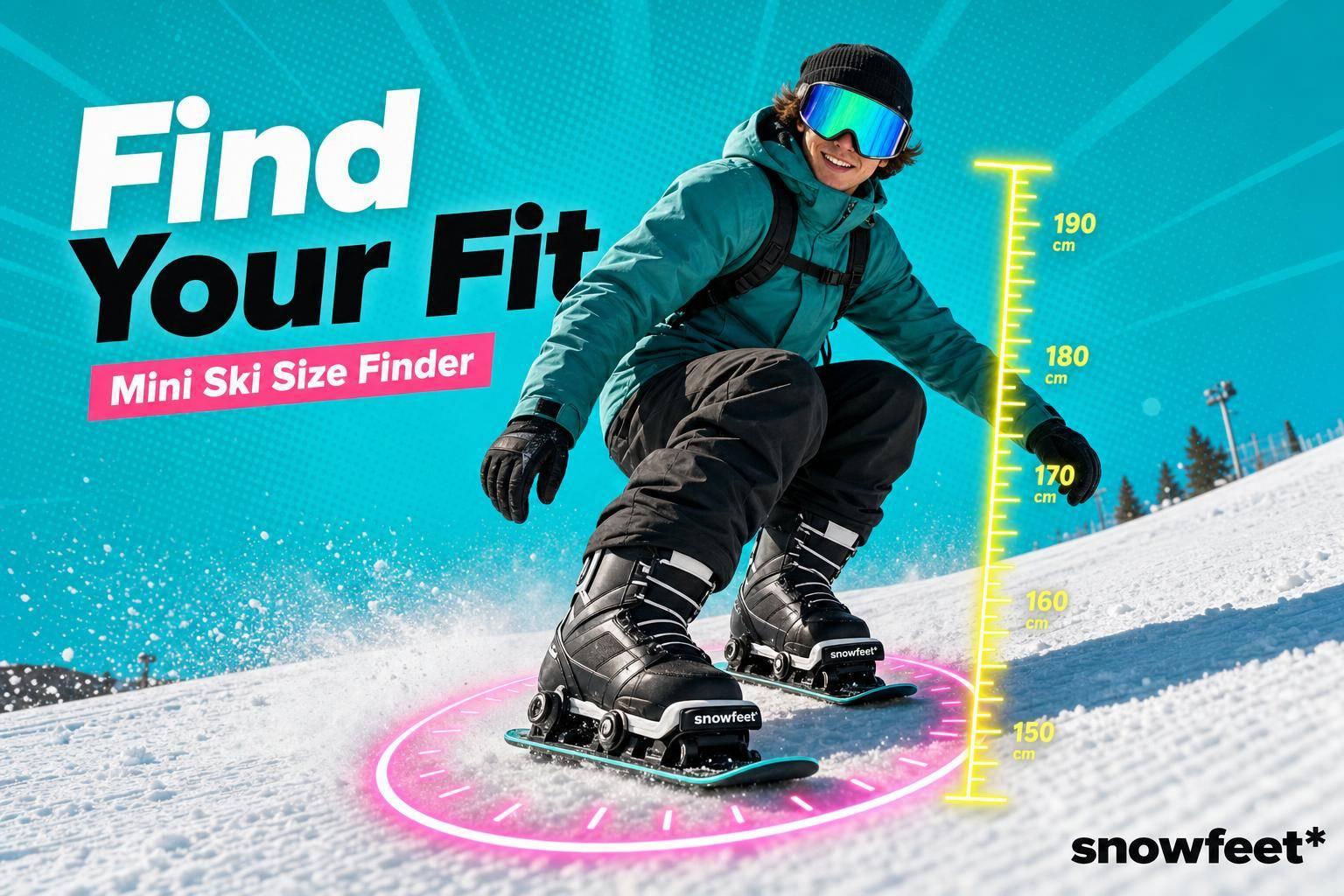
Not sure which way to go? Start shorter. Shorter gear is usually easier to learn on, which helps you build confidence without feeling like the skis are bossing you around :) Later, if you want more speed and stability, you can move up to 99 cm or 120 cm Skiblades.
Can I use snowboard boots with Snowfeet*?
Yes - snowboard boots work with most Snowfeet* models, and they’re often the better pick. They give you more ankle support and better control, which helps a lot with balance, stability, and edge control.
Some Snowfeet* models also work with regular winter boots. But snowboard boots tend to feel more responsive on snow, kind of like the difference between loose sneakers and a snug skate shoe.
Just check the binding setup before you buy. Some 99 cm Skiblades are made only for ski boots.
Are short skiblades good on icy runs?
Yes. Short skiblades and skiskates work very well on icy, hard-packed runs.
Their metal edges, much like ice skates, give you precise control and fast, snappy turns. That’s a big plus when the snow feels slick and firm.
The shorter 65 cm models are the most nimble. If you want more calm at higher speeds on ice, 99 cm and 120 cm options give you more stability.
Their small size can also help you spot and dodge icy patches with less fuss.











Lämna en kommentar
Denna webbplats är skyddad av hCaptcha och hCaptchas integritetspolicy . Användarvillkor gäller.