



















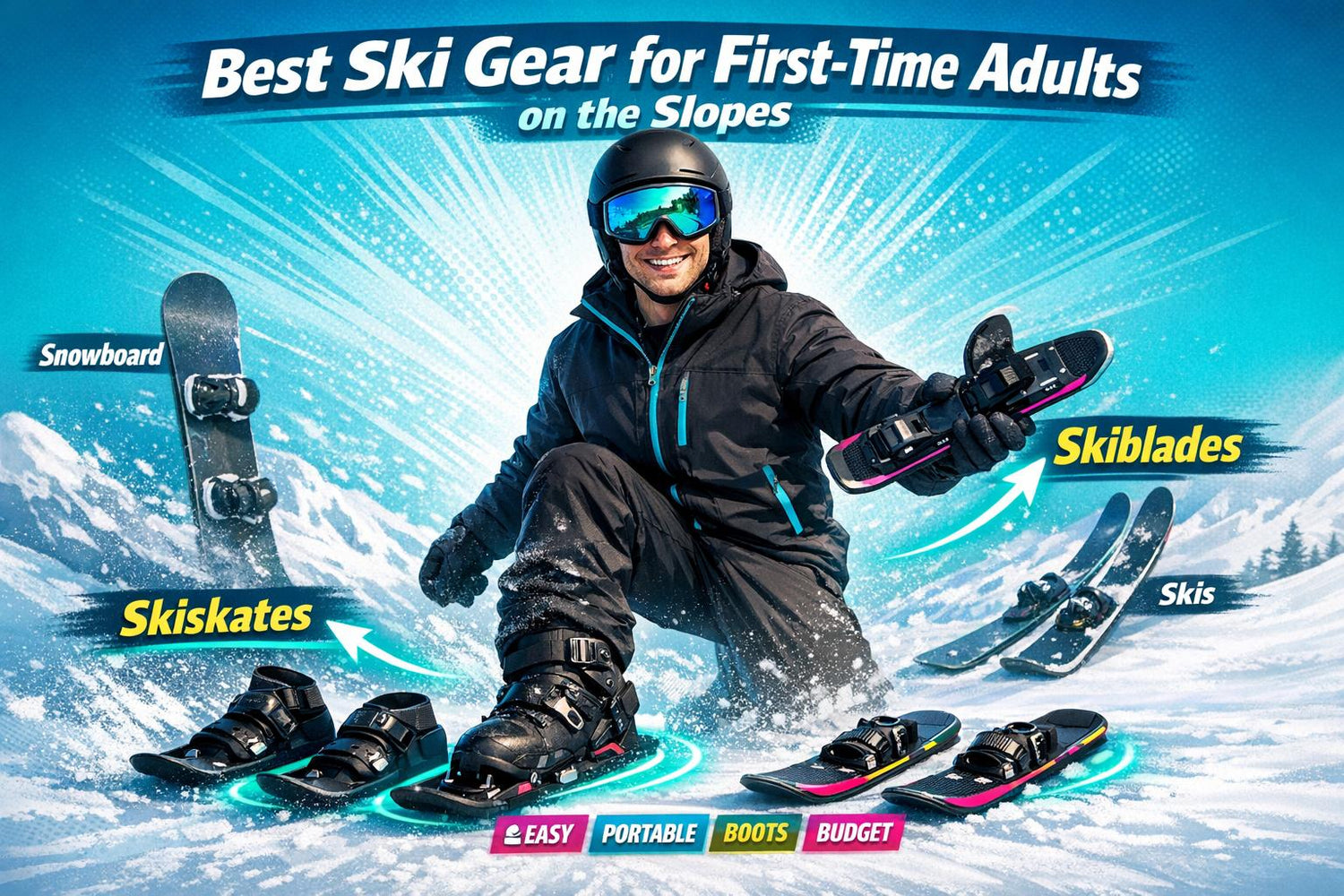
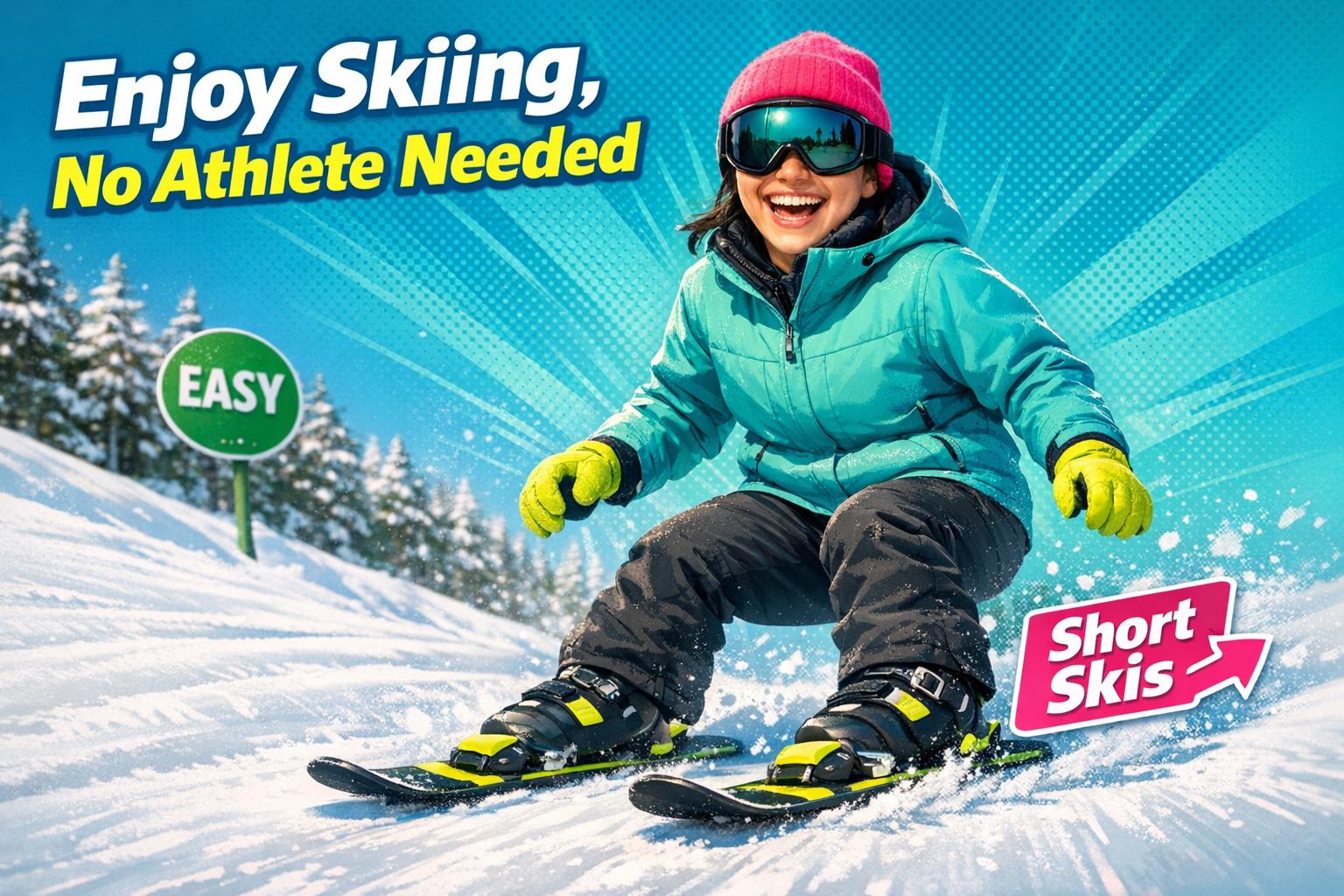
Your first day on the slopes can feel overwhelming, especially when choosing the right gear. Here’s the deal: if you’re new to skiing, lightweight and compact options like Snowfeet Skiblades or Skiskates can make learning easier, packing simpler, and the whole experience more fun. Traditional skis and snowboards are still solid choices, but they’re bulkier, harder to master, and often pricier when factoring in rentals or purchases.
Here’s a quick breakdown:
- Snowfeet Skiblades (65 cm, 99 cm, 120 cm): Easier to learn, portable, and great for groomed runs. Prices start at $635.
- Snowfeet Skiskates (44 cm): Perfect if you’ve skated before. Compact enough to fit in a backpack and priced from $575.
- Standard Beginner Skis/Snowboards: More stable at high speeds and versatile for progression, but bulkier and require specific boots. Rentals run $40–$60/day.
Need help deciding? If you want a fast learning curve and easy travel, go with Snowfeet gear. If you’re aiming for lessons and classic skiing, rentals might work better. Either way, choose what fits your comfort level and goals. :)
What You NEED to Go Skiing - A Beginners Gear Guide
What First-Time Skiers Should Look for in Gear
Choosing the right gear as a beginner comes down to five main factors: stability, ease of learning, portability, footwear options, and cost. Nail these, and your first skiing experience can be a whole lot smoother and more fun.
Stability doesn’t always mean going for longer skis. Shorter Snowfeet* Skiblades, with their parabolic sidecut and full steel edges, offer great grip on groomed slopes. They’re also easier to handle compared to traditional skis, which are usually 140–170 cm long. For beginners, shorter gear can feel more manageable and is gentler on your knees - something older skiers will especially appreciate.
When it comes to the learning curve, compact gear has a clear edge. Many people feel at ease with Snowfeet* products in just 5 minutes. The 44 cm Skiskates, for example, mimic movements similar to ice skating or rollerblading. This makes them intuitive for beginners and pairs nicely with their portability.
"These ski blades are a blast to use. Super easy to control, quick to turn, and way more forgiving than traditional skis." - Brad Tolin, Verified User
Portability is another big win for compact gear. Unlike traditional skis, which often require a roof rack or bulky travel bags, Snowfeet* Skiskates can fit into a standard backpack. Even the 65 cm Skiblades weigh less than 6 lbs with snowboard bindings, making them far lighter and easier to carry than a full ski setup.
For beginners, versatility and affordability are also key. Traditional skis require hard-shell ski boots, which not only add to the cost but are also awkward for walking. Snowfeet* gear, on the other hand, works with both ski boots and snowboard boots, depending on the binding. Many beginners find snowboard boots more comfortable. Snowfeet* prices range from $575 for the 44 cm Skiskates to $775 for the 120 cm model, with fiberglass options starting at around $299. Your choice will depend on your skiing goals and the terrain you’re planning to explore.
Here’s a quick look at how Snowfeet* gear stacks up against traditional skis and snowboards:
| Factor | Snowfeet* Skiblades/Skiskates | Traditional Skis/Snowboards |
|---|---|---|
| Portability | Fits in a backpack; lightweight | Requires large bags or roof racks |
| Learning Curve | ~5 minutes to basics | Multiple lessons typically needed |
| Footwear | Ski or snowboard boots | Dedicated boots required |
| Maneuverability | High; easy turns in tight spaces | Moderate; requires more effort |
| High-Speed Stability | Lower at peak speeds | Designed for high-velocity carving |
1. Snowfeet* Skiblades (65 cm, 99 cm, 120 cm)
Snowfeet* Skiblades are available in three lengths, each suited to different skill levels, riding styles, and terrain preferences. Picking the right size can make all the difference in your experience on the slopes.
Stability and Control
65 cm: The shortest option is perfect for beginners. Its compact size and 4-meter turn radius make it easier to maintain balance and reduce the chances of catching an edge. If you’re sticking to green runs or beginner zones, this size is your best bet.
99 cm: This mid-size option offers a step up in stability. It handles gentle carves well, tracks smoothly on blue runs, and still allows for quick pivots and stops. It’s a versatile choice that’s earned glowing feedback, with a 100% 5-star rating from 49 verified reviews.
120 cm: The longest model feels more like traditional skis. It’s great for moderate speeds and provides excellent directional stability, but it does require better weight transfer and edging skills. If you’re looking for a ski-like experience with reliable control, this is the one.
Learning Curve
All three sizes are easier to learn than standard beginner skis, which are typically 140–160+ cm long.
- 65 cm: The most beginner-friendly, this size allows many first-timers to start sliding, stopping, and shuffling on their very first run.
- 99 cm: It’s a bit more advanced, helping users transition from skidding to carving more smoothly.
- 120 cm: This size has a learning curve similar to short all-mountain skis, rewarding a balanced, slightly forward stance.
For those entirely new to snow sports, the 65–99 cm range is ideal for building confidence quickly.
Portability
One of the best perks of these skiblades is how easy they are to transport.
- The 65 cm model fits in a standard suitcase or duffel bag.
- The 99 cm model is still compact enough to slide across the back seat of most cars and light enough to carry around the lodge.
- Even the 120 cm model, while bulkier, is far more portable than traditional skis.
Whether you’re flying to a resort or hopping on a shuttle bus, these skiblades make travel a breeze.
Footwear Compatibility
Snowfeet* Skiblades are designed with flexibility in mind. They work with both ski boots and snowboard boots, depending on the binding you choose.
- 65 cm and 99 cm models: These pair well with supportive snowboard boots or stiff winter boots, making it easy to move around the resort.
- 120 cm model: This size benefits from stiffer boots, with snowboard boots being the top choice for better precision.
Bindings accommodate a wide range of sizes, from US 4.5–14.5 for ski boots and US 6–14.5 for snowboard boots, ensuring a comfortable fit for most adults.
"My wife HATED skiing but I convinced her to try these and she had a blast! In fact, she is ordering her own pair, now!" - Mike E
Cost
Snowfeet* Skiblades are a budget-friendly alternative to traditional skis.
- 65 cm model: $635
- 99 cm model: $675
- 120 cm model: $775
Considering that U.S. resort rentals typically cost $40–$60 per day, these skiblades can pay for themselves after just a few trips. With only a small price difference between sizes, your choice should focus more on fit and feel than budget.
2. Snowfeet* Skiskates (44 cm)
The Snowfeet* Skiskates are designed as a lightweight, easy-to-use option for those just starting out on the slopes. Unlike traditional skis, these have a unique skate-inspired design. Measuring just 44 cm (about 17 inches), they feel more like ice or inline skates than skis - and that’s exactly the idea.
Stability and Control
Thanks to their compact size, Skiskates are incredibly responsive. Even slight weight shifts allow for quick, precise turns, making them great for beginners learning to navigate the slopes. They’re equipped with full metal steel edges and a parabolic shape, which means you can stop much like you would with a hockey stop on ice. That said, their shorter length makes them less stable at higher speeds or in rough snow conditions. For this reason, they’re best suited for moderate speeds on well-groomed runs rather than steep downhill terrain or deep powder.
Learning Curve
Snowfeet* markets the Skiskates as easy to pick up, especially for people with experience in ice skating or hockey. Their short length takes away the overwhelming feeling of managing long skis, reducing the chances of crossing tips and making it easier to recover from small mistakes. This makes them a fantastic option for quick learning and building confidence on the snow.
Portability
One of the biggest perks of the Skiskates is how portable they are. At just 44 cm, they can fit into a regular backpack, so you don’t need to worry about lugging around heavy ski bags or using roof racks. This convenience is perfect for U.S. travelers heading to resorts like Park City, Breckenridge, or Mammoth.
Their compact design makes them a breeze to carry, whether you're traveling by car, plane, or even on foot.
Footwear Compatibility
Another user-friendly feature of the Skiskates is their compatibility with different types of boots. You can use them with either ski boots or snowboard boots, and they come with two binding options to ensure a secure fit for most users.
Cost
For occasional skiers, the Skiskates are a budget-friendly alternative. Priced between $619 and $690, they’re slightly less expensive than the entry-level 65 cm Skiblades, which start at $635. If you already own snowboard boots, you won’t need to invest in ski boots, making this an even more economical choice. Plus, considering that daily U.S. resort rental rates range from $40–$60, the Skiskates can quickly pay for themselves after a few trips.
"I had no muscle soreness after using these because I can change my leg position, unlike the snowboard which is set." - Sunshine Straiges, Verified User
sbb-itb-17ade95
3. Standard Beginner Skis and Snowboards
After looking at Snowfeet* Skiblades and Skiskates, let’s see how they stack up against traditional skis and snowboards. These setups are still the go-to choice for most first-time adult skiers in the U.S. But just because they’re popular doesn’t mean they’re the easiest option - especially when you factor in cost, size, and the physical effort required on day one.
Stability and Control
Beginner skis usually range from 140–165 cm in length and are designed with soft flex and rocker tips. This setup helps reduce edge-catching and makes turning at slow speeds a bit easier. With two skis, you get four contact points on the snow, which improves stability, especially on groomed green slopes. Snowboards, on the other hand, offer a single wide platform. While great for straight glides, they can be tricky when you start edging, as the heel-to-toe transitions tend to trip up beginners. Both options allow for steady, low-speed learning, but they don’t match the quick responsiveness you get with Snowfeet* Skiblades.
Learning Curve
Most adults can pick up basic skills like wedge-stopping and linking turns on skis within their first day. By day three, many are starting to parallel turn. Snowboarding, however, often takes longer. Beginners typically spend the first two days learning how to sideslip and, let’s be honest, just figuring out how to get off the lift without falling. The advantage of traditional gear is that U.S. ski schools are built around it, so lessons are tailored to help you learn. That said, Snowfeet* gear offers a faster learning curve, especially for those with skating experience - some users get the hang of it in just minutes.
Portability
A full ski setup can weigh anywhere from 20–30 lbs and usually requires extra transport solutions like a roof rack or oversized checked luggage. Snowboards are a bit simpler since they don’t involve poles, but they’re still bulky. Either way, traditional setups can be a hassle to carry around. Snowfeet* Skiblades and Skiskates completely sidestep this issue with their lightweight, compact design that fits easily into a backpack.
"A lot easier to haul around the hills & on vacation than traditional skis!" - heyjerz, Verified Customer
Footwear Compatibility
Standard skis and snowboards require specific boots - either hard-shell ski boots or soft snowboard boots. This adds to the cost and complexity, as you can’t use regular winter boots. First-timers often need to rent or buy these boots, which can be an extra hassle. Snowfeet* gear, however, works with both ski and snowboard boots, giving you more options right from the start.
Cost
Traditional gear can get pricey, especially if you’re just starting out. Renting ski gear at a resort typically costs $40–$60 per day, with peak-season rates at major Western resorts climbing to $60–$80. Buying your own beginner ski setup can run between $540–$980, while a snowboard setup costs about $450–$800. And don’t forget - you’ll also need a helmet, goggles, and outerwear, which aren’t included in those numbers. For occasional skiers, Snowfeet* gear offers a more budget-friendly alternative without the ongoing rental headaches.
When you weigh all these factors, Snowfeet* products stand out as a better option for first-time adult skiers who want something that’s easy to use, portable, and less of a financial commitment.
Pros and Cons of Each Option
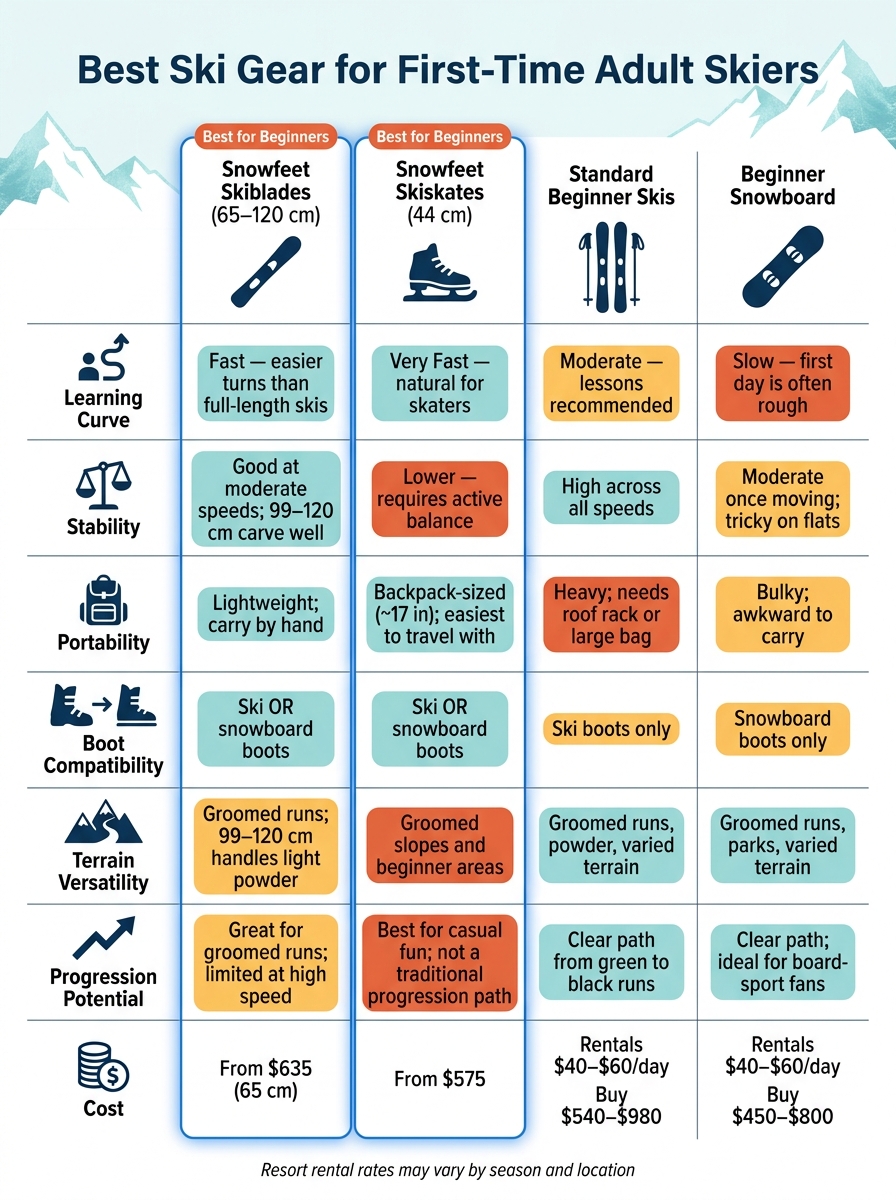
Best Ski Gear for Beginners: Snowfeet vs Traditional Skis & Snowboards
For first-time adult skiers, here's a quick comparison of gear options to show why Snowfeet* products stand out for their ease of use, comfort, and portability.
| Criteria | Snowfeet* Skiblades (65–120 cm) | Snowfeet* Skiskates (44 cm) | Standard Beginner Skis | Beginner Snowboard |
|---|---|---|---|---|
| Learning Curve | Fast - easier turns than full-length skis | Very fast - natural for skaters | Moderate - lessons recommended | Slow - first day is often rough |
| Stability | Good at moderate speeds; 99–120 cm models carve well | Lower - requires active balance | High across all speeds | Moderate once moving; tricky on flats |
| Portability | Lightweight; easy to carry by hand | Backpack-sized (~17 in); easiest to travel with | Heavy; needs roof rack or large bag | Bulky; awkward to carry |
| Boot Compatibility | Ski or snowboard boots | Ski or snowboard boots | Ski boots only | Snowboard boots only |
| Terrain Versatility | Groomed runs; 99–120 cm handles light powder | Groomed slopes and beginner areas | Groomed runs, powder, varied terrain | Groomed runs, parks, varied terrain |
| Progression Potential | Great for groomed runs; limited at high speed | Best for casual fun; not a traditional progression path | Clear path from green to black runs | Clear path; ideal for board-sport fans |
| Cost | Starting from $635 (65 cm) | Starting from $575 | Rentals ~$40–$60/day; buy ~$540–$980 | Rentals ~$40–$60/day; buy ~$450–$800 |
Let’s break it down a bit further to help you decide.
Snowfeet* Skiblades are a fantastic middle-ground option. They’re much easier to learn than traditional skis, portable enough to carry by hand, and stable enough for smooth turns on groomed runs. As user Brad Tolin pointed out, they’re simple to control, quick to turn, and forgiving compared to full-length skis.
Snowfeet* Skiskates are perfect if portability and fun are your top priorities. They’re compact enough to fit in a backpack and feel natural for anyone with skating experience. However, they require more active balance and are best suited for groomed beginner terrain.
Standard beginner skis are ideal for those looking to progress through formal lessons. They’re stable and versatile across various terrains but come with more bulk and a moderate learning curve.
Beginner snowboards are great for fans of board sports. But the early learning curve can be tough - expect a lot of sitting, strapping in, and falling during your first day.
One important note: before you buy, check if your resort allows Snowfeet* gear on lifts and runs. Most U.S. resorts do, thanks to their metal edges and standard bindings, but it’s always a good idea to double-check.
Conclusion
Your first day on the slopes should feel exciting and manageable - and the right gear can make all the difference.
For most first-time adult skiers, Snowfeet* Skiblades and Skiskates provide a smooth and forgiving way to ease into the sport. They’re lighter, shorter, and much easier to handle compared to traditional skis or snowboards. As one happy user shared:
"These ski blades are a blast to use. Super easy to control, quick to turn, and way more forgiving than traditional skis."
Here’s a quick guide to help you pick the right gear based on your needs:
- Feeling nervous or cautious? Go with 65 cm or 99 cm Skiblades (starting at $635). They’re perfect for green runs and are super easy to control.
- Have skating experience? The 44 cm Skiskates (starting at $575) offer a familiar, skate-like feel that’s great for beginners.
- Looking to grow into carving and faster speeds? The 99 cm or 120 cm Skiblades provide added stability while staying easier to manage than full-length skis.
- Thinking about formal lessons and a traditional skiing path? Renting beginner skis at the resort (around $40–$60 per day) is a practical and budget-friendly option.
These suggestions are designed to help you match your gear to your comfort level and goals.
Before hitting the slopes, make sure to wear a certified snow sports helmet, consider wrist guards if you’re trying Skiskates, and double-check that your Snowfeet* model is compatible with your boots. With the right preparation, you’ll be set for a fun and safe experience.
For a simple, portable, and budget-friendly introduction to skiing, Snowfeet* gear offers a hassle-free way to enjoy your first day on the mountain.
FAQs
Can I use Snowfeet* at my resort?
Yes, you can use Snowfeet* at most ski resorts in the U.S. Their design, featuring metal edges and secure bindings, meets the same standards as traditional skis. This usually means they’re allowed on chairlifts and groomed trails. If anyone questions their use, you can explain that Snowfeet* work just like skis. That said, it’s always a good idea to double-check the specific policies at your chosen resort before hitting the slopes. These compact skis provide a fun and nimble way to enjoy your time on the mountain!
Do I need poles with Snowfeet*?
No, you don’t need poles when using Snowfeet*. Unlike traditional skis, Snowfeet* are compact and lightweight, allowing you to maintain your balance naturally without extra equipment. This makes them great for beginners who want a simpler, less cumbersome way to hit the slopes. While some beginner bundles do offer poles for those who might feel more comfortable with them, they’re entirely optional and not necessary to enjoy Snowfeet*.
Which Snowfeet* size should I choose?
The right size depends on what you’re aiming to do and how experienced you are. If you’re new to the game, 38 cm or 44 cm Skiskates are a great pick - they’re easy to handle and feel a lot like inline skating, but on snow. Want to master quick turns? Go for 65 cm Skiblades. For added stability, 99 cm Skiblades are your friend, while 120 cm models are perfect if you’re chasing better carving and higher speeds.
What’s cool about Snowfeet* gear is that it’s super lightweight and easy to carry around. Plus, you’ll feel less strain on your legs compared to those heavy, traditional skis.











Lämna en kommentar
Denna webbplats är skyddad av hCaptcha och hCaptchas integritetspolicy . Användarvillkor gäller.