



















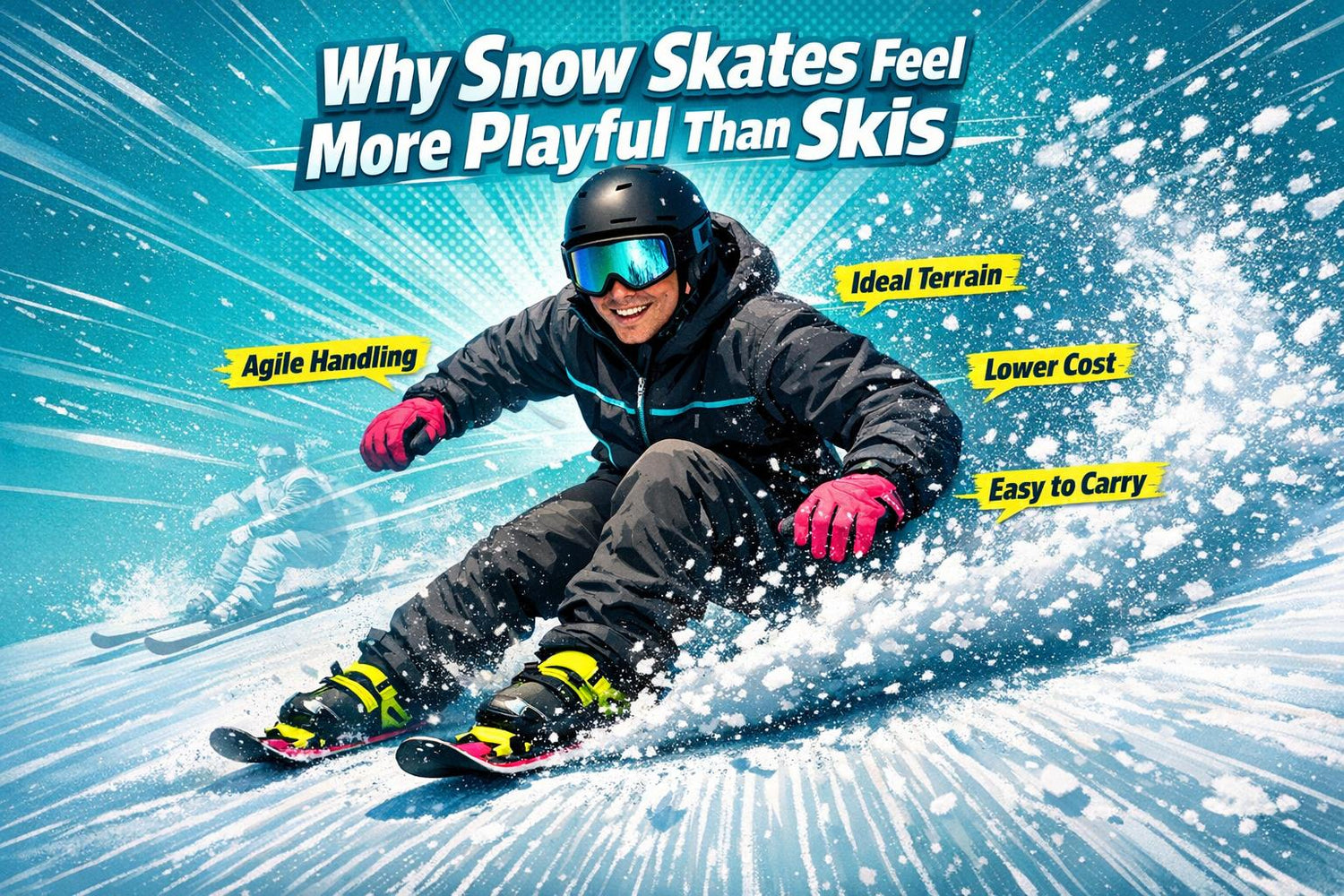
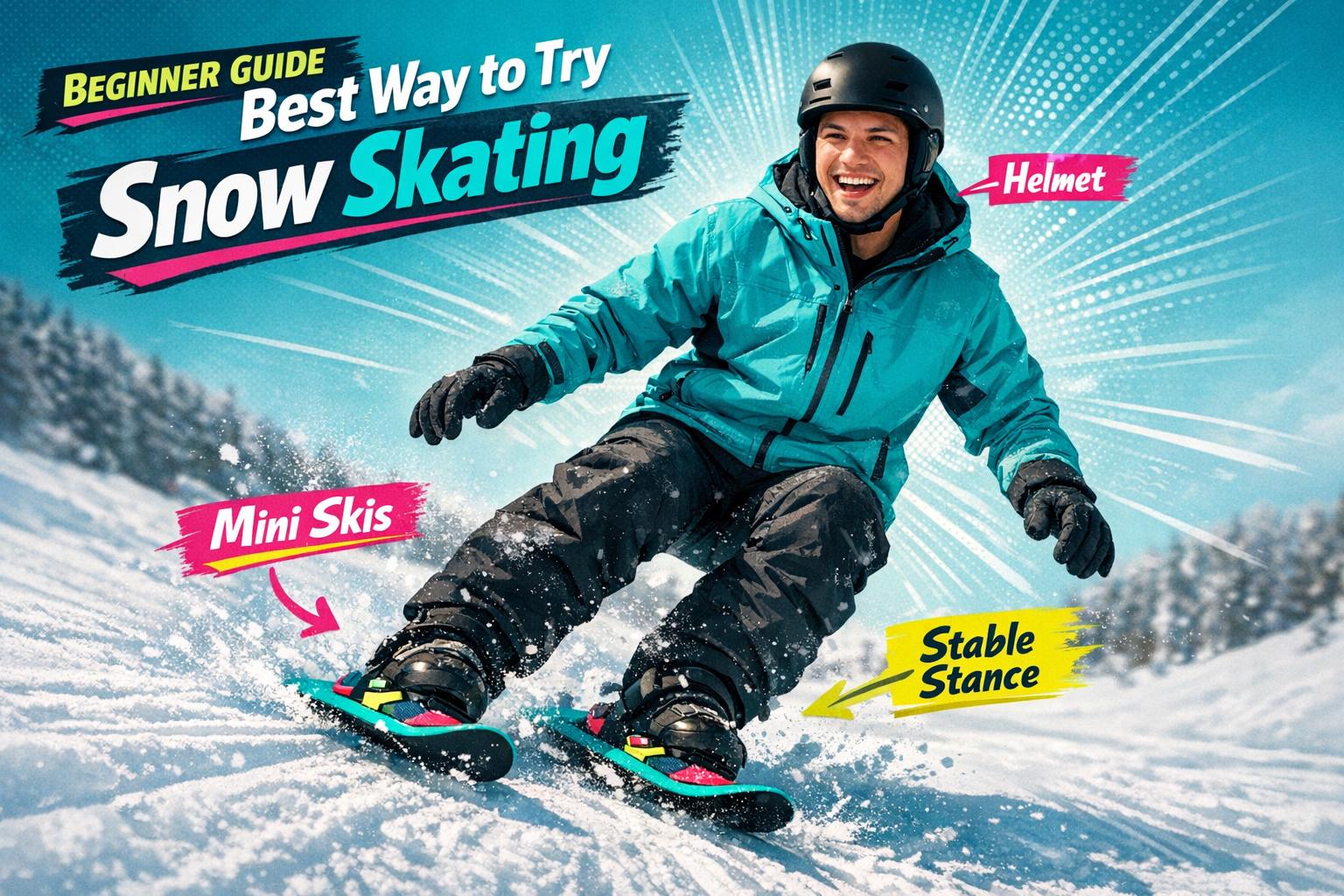
Snow skates, like Snowfeet* Skiskates, are compact, lightweight alternatives to skis that bring a fun, skate-like experience to the slopes. At just 17 inches long, they’re easy to maneuver, perfect for spins, quick turns, and small jumps. Unlike long skis, which prioritize speed and stability, snow skates focus on agility and making every run feel dynamic. They’re great for groomed trails, terrain parks, and casual riders who want something simple and portable. On the flip side, they’re not ideal for deep powder or high-speed carving, where traditional skis still excel.
Here’s the gist:
- Snow Skates: Short, portable, and playful. Best for groomed runs, tricks, and freestyle fun. Work with regular winter boots.
- Long Skis: Built for speed, stability, and varied terrain. Better for powder days and steep, icy slopes but require specialized boots and more gear.
Quick Comparison:
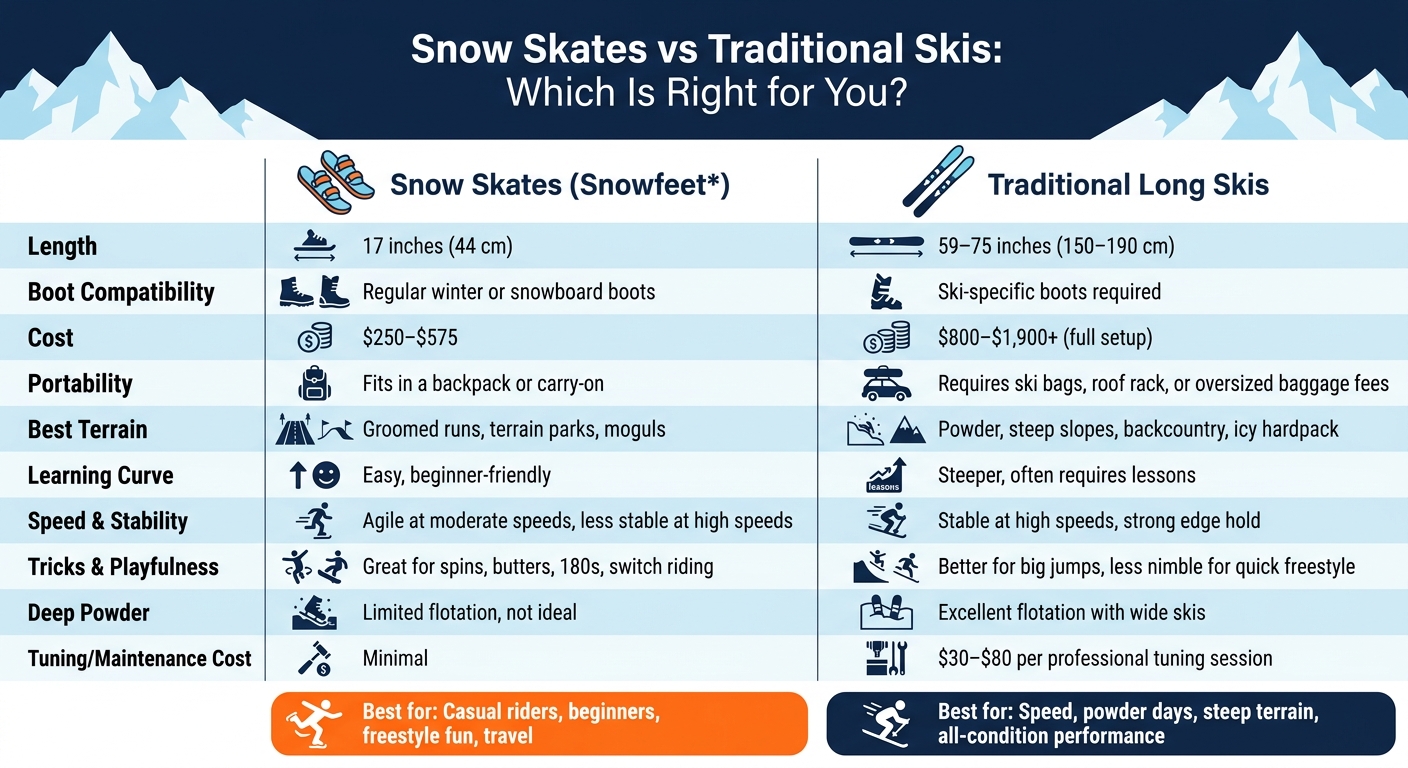
| Feature | Snow Skates (Snowfeet*) | Long Skis |
|---|---|---|
| Length | 17 inches (44 cm) | 59–75 inches (150–190 cm) |
| Boots Needed | Regular winter/snowboard boots | Ski-specific boots |
| Best Terrain | Groomed runs, parks, moguls | Powder, steep slopes |
| Portability | Fits in a backpack | Requires ski bags |
| Cost | $250–$575 | $800–$1,900+ (full setup) |
If you’re looking for a lightweight, playful option to shake up your time on the slopes, snow skates might be your next favorite thing. But for speed, control, and versatility in all conditions, long skis are still the go-to.
Snow Skates vs Traditional Skis: Full Comparison
1. Snowfeet* Snow Skates (Mini Ski Skates, Skiskates, Skiblades)
Design Features
Snowfeet* Skiskates are just 44 cm (17 inches) long, which completely changes how they handle on the slopes. Their compact size means less swing weight, making it easier to lift your feet, spin, or hop off small features compared to standard skis.
They’re built with lightweight composite materials and steel edges, giving you solid grip on hardpack without unnecessary bulk. Many models also come with twin-tip ends, so riding switch is a breeze - perfect for freestyle enthusiasts. The bindings are adjustable and work with regular winter boots or snowboard boots, so you don’t need to invest in specialized ski boots, making them a more budget-friendly option.
Control and Maneuverability
The short edge length gives these skates a super tight turning radius, making them incredibly nimble. You can weave through skiers, pivot in tight tree gaps, or throw quick tricks like a 180 even in small spaces. Beginners will appreciate the ease of making fast adjustments, while advanced riders can embrace a more playful, skate-like style. The reduced edge contact adds a loose, fun feel at higher speeds, making every run an opportunity to experiment and play.
Versatility and Terrain Adaptability
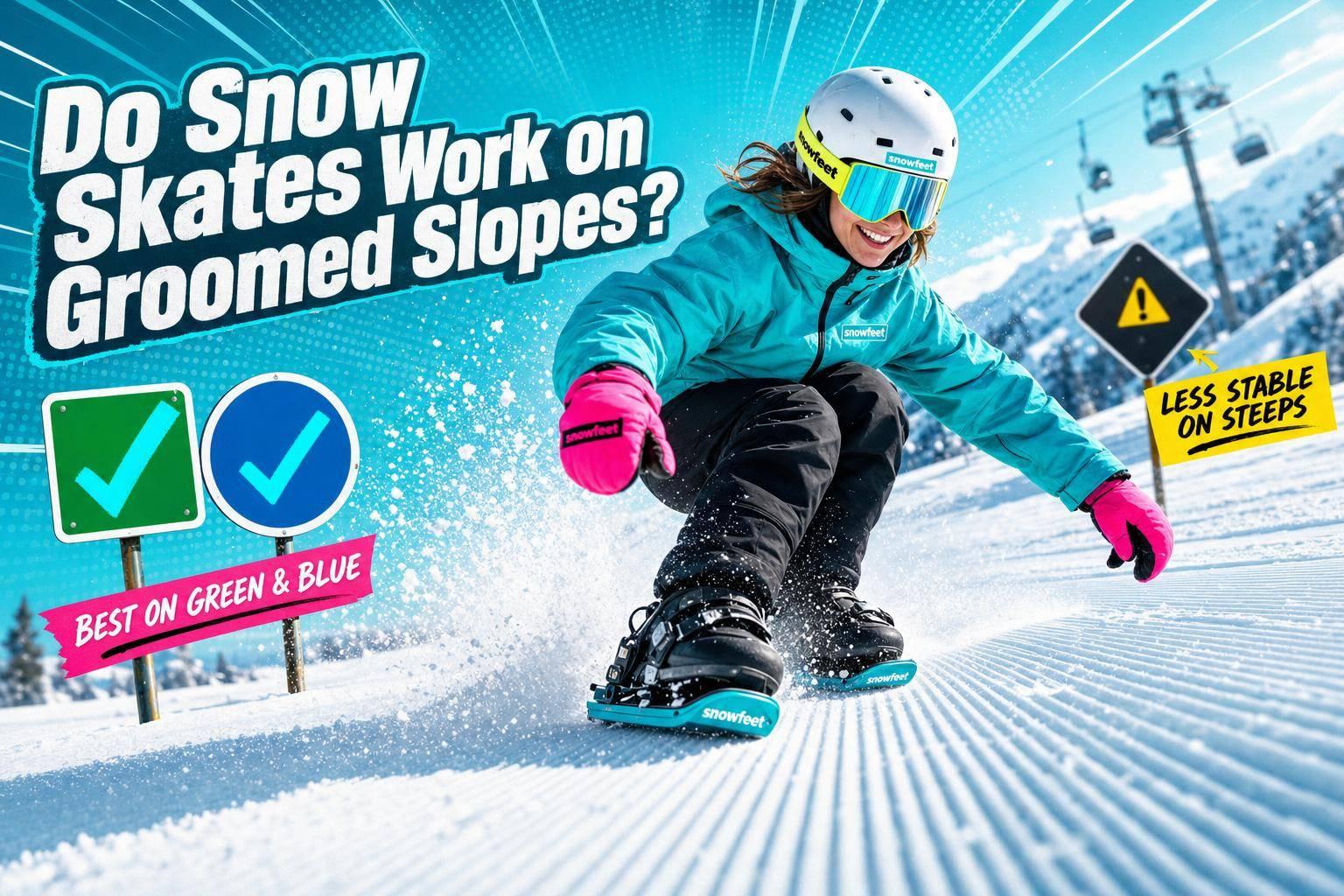
Thanks to their agility, Snowfeet* Skiskates shine on groomed runs, terrain parks, and moderate off-piste areas. On groomers, their short length makes it easy to link quick turns or hit side features. In the park, the low swing weight lets you pop off jumps, spin 360°, and ride switch on smaller features with ease. They’re also great for moguls, where their size helps you navigate tight bumps more effortlessly than full-length skis.
That said, deep powder isn’t their strong suit. The limited surface area means they don’t float as well in soft snow, so on those big powder days at resorts like Mammoth or Park City, traditional skis are still the better choice. But for resort days focused on groomers and park laps, these skates are a solid option.
Cost and Practicality
Snowfeet* Skiskates start at around $575, while Mini Ski Skates are available for about $250. Compared to traditional ski setups, which can run anywhere from $400 to $800+, they’re a more affordable and practical choice - especially since they work with boots you already own.
Their portability is another huge perk. At just 44 cm, they fit into a standard backpack or carry-on bag, saving you from oversized ski bag fees on flights or the hassle of a roof rack. If you’re looking for a second, more playful setup without the extra gear bulk, these skates are hard to beat.
2. Traditional Long Skis from Mainstream Brands
Design Features
Traditional long skis from top brands typically measure between 150–190 cm in length. They are built with laminated wood cores, reinforced with fiberglass, and sometimes include titanal for added stiffness. Most modern resort skis feature a rocker-camber-rocker profile. This means there's camber underfoot to improve edge grip and rebound, while the raised tips and tails make it easier to initiate turns, even on mixed snow conditions.
The width at the waist varies depending on the ski's purpose:
- 70–85 mm for frontside carving skis
- 88–100 mm for all-mountain models
- 100 mm+ for powder or freeride skis
This range of designs allows for specialized performance across different terrains. However, this also means that you'll likely need multiple pairs of skis if you want optimal performance in various conditions. These skis are all about stability and high-speed carving but aren't as playful or nimble as some of the newer, compact designs.
Control and Maneuverability
The longer length of traditional skis gives them a sidecut radius of about 12–21 meters, depending on the model. This makes them ideal for smooth, sweeping turns at high speeds. They excel when you're carving down groomed blue or black runs at resorts like Vail or Snowbird. The longer edge contact also distributes pressure evenly, which is especially helpful on icy or hard-packed snow where shorter skis might struggle.
However, the trade-off is reduced agility. Their higher swing weight makes quick tricks, spins, or rapid directional changes more difficult, particularly for lighter or less experienced skiers. This lack of quick maneuverability is one reason traditional skis can't match the playful, compact performance of Snowfeet* Skiskates.
Versatility and Terrain Adaptability
While traditional skis may not have the compact, nimble feel of Snowfeet* Skiskates, they excel in specific conditions thanks to their specialized designs. For example:
- On powder days at resorts like Mammoth or Jackson Hole, wide freeride skis with significant rocker provide unmatched flotation.
- On steep, off-piste terrain, the longer platform offers stability and edge security that shorter gear can't provide.
That said, their specialization means you'll need different skis for different conditions. A narrow 80 mm frontside carver won't perform well in deep powder, and a wide 110 mm powder ski will feel sluggish on groomed runs. While these skis shine in stability and deep-snow performance, they sacrifice the quick, creative moves that define a more playful ride.
Cost and Practicality
| Category | Typical MSRP* |
|---|---|
| Entry-level piste skis | $400–$600 |
| All-mountain skis | $500–$800 |
| High-end freeride/race models | $800–$1,200+ |
For beginners or intermediate skiers, packages that include skis and bindings usually cost between $500–$900 at major U.S. retailers. But that's just the start. Add boots (ranging from $300–$700), poles, and a bag, and the total investment climbs quickly. And don’t forget the ongoing costs - professional tuning can run $30–$80 per service. Transporting long skis also adds challenges, whether it's needing a roof rack, a large vehicle, or paying oversized baggage fees at the airport.
In comparison, Snowfeet* Skiskates offer a more affordable and portable solution. They eliminate many of the high costs and logistical headaches that come with traditional skis, making them a practical alternative for those looking for simplicity and convenience.
Freestyle Ride with Snowfeet* Mini Skiskates | Short Ski | Mini Ski | Snow Skates
sbb-itb-17ade95
Pros and Cons
Your riding style plays a big role in deciding the best setup for you.
| Category | Snowfeet* Skiskates | Traditional Long Skis |
|---|---|---|
| Portability | 44 cm (17 in) long; fits in a backpack or car trunk; no roof rack needed | 150–190 cm (59–75 in); needs ski bags, roof racks, or may incur oversized baggage fees |
| Learning Curve | Easier for beginners, especially skaters; quick to pick up | Steeper learning curve; more lessons often required |
| Terrain Range | Ideal for groomed runs, terrain parks, moguls, and moderate slopes | Handles everything from groomed runs to powder, steep chutes, backcountry, and icy hardpack |
| Speed & Stability | Agile at moderate speeds; less stable at high speeds downhill | Stable at high speeds; offers solid edge hold on steep or icy terrain |
| Tricks & Playfulness | Light and easy for spins, butters, and switch riding | Twin-tip skis are great for big jumps but less forgiving for quick freestyle moves |
| Deep Powder | Short length can cause sinking in deep snow; better for groomed runs | Longer, wider skis excel in deep powder with better floatation |
| Boot Compatibility | Many models work with regular winter or snowboard boots | Requires specific ski boots and compatible bindings |
| Cost | Affordable entry point; no poles needed | Full setup (skis, bindings, boots, poles) typically costs $800–$1,900+ in the U.S. |
Snowfeet* are a standout for riders who value portability and simplicity. These skiskates are small enough to stash in a backpack, making them perfect for quick trips to the slopes. They’re an excellent choice for casual riders or those who only get out a few times a season. Plus, their agility turns any slope into a playground, offering a fun, playful experience.
On the other hand, traditional long skis shine when it comes to performance in extreme conditions. Whether you’re carving at high speeds on icy groomers, floating through deep powder, or tackling steep black diamond runs, the added length and surface area provide stability, control, and safety. Each option has its strengths, depending on what kind of riding you’re after.
Conclusion
The choice ultimately depends on the kind of experience you're after on the slopes. Snowfeet* Skiskates, with their compact 17-inch design, bring a playful and nimble vibe, while traditional long skis focus on speed, stability, and versatility across various terrains.
Here's a quick way to decide which might suit you best:
- Just starting out? Snowfeet* are a great way to ease into snow sports. They're lightweight and less intimidating than traditional skis, making them ideal for groomed runs.
- Looking for something fun and versatile? Snowfeet* are perfect for freestyle moves, casual laps, or even as a second setup for quick spins and creative lines. They're easy to carry and ideal for resorts like those in Colorado or Vermont. That said, when performance and precision matter most, traditional skis still take the lead.
Both options have their strengths, but if you're chasing fun and freedom, Snowfeet* bring something refreshingly different to the mountain. They don't just change how you ride - they change how you experience the slopes.
FAQs
Are Snowfeet* skiskates allowed at most U.S. ski resorts?
Yes, most ski resorts in the U.S. welcome Snowfeet* skiskates. These skiskates come with metal edges, which meet the safety requirements for slopes. Their lightweight and compact design also makes them a breeze to use on trails, in terrain parks, or on resort slopes - without the hassle of lugging around traditional skis.
Do I need ski lessons to use Snowfeet*, or can I self-teach?
You don’t need formal ski lessons to start using Snowfeet*. Their lightweight, compact design and natural, skate-like motion make them super easy to pick up. Most beginners can get comfortable in just 5 to 30 minutes - or, if you’re taking it slow, maybe 1 to 2 hours. Unlike traditional skis that often take days to master, Snowfeet* let you strap in, find your balance, and hit the slopes almost right away.
What boot type works best with Snowfeet* for control and comfort?
Snowfeet* lets you hit the slopes in the footwear you prefer - whether that’s waterproof winter shoes, snowboard boots, or ski boots. For the best control and precision, snowboard or ski boots are the way to go, as they provide the firm support needed for sharper turns. Unlike traditional skis that demand stiff (and often pricey) boots, Snowfeet* gives you the freedom to find the perfect balance between comfort and performance.











Оставить комментарий
Этот веб-сайт защищается hCaptcha. Применяются Политика конфиденциальности и Условия использования hCaptcha.