



















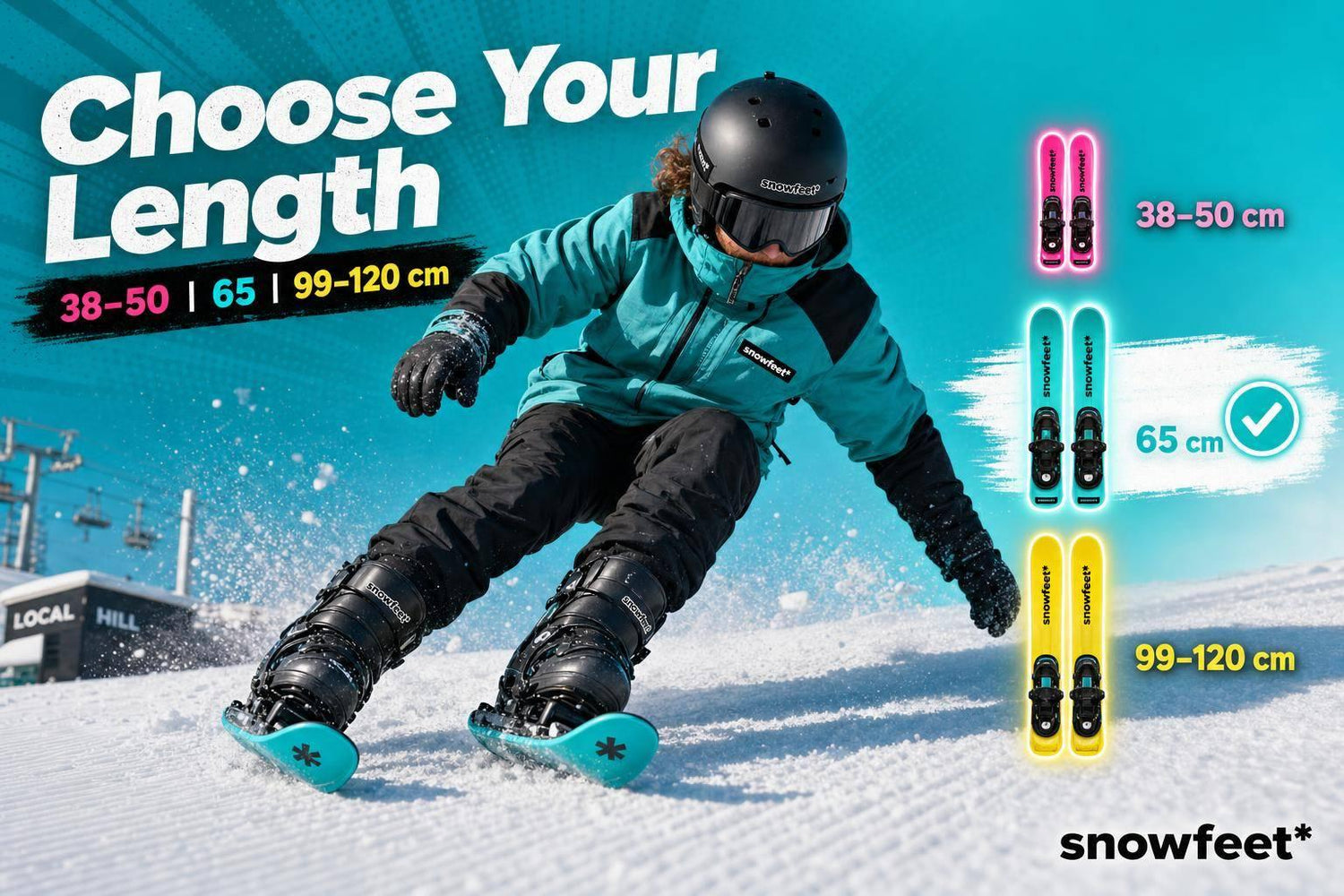
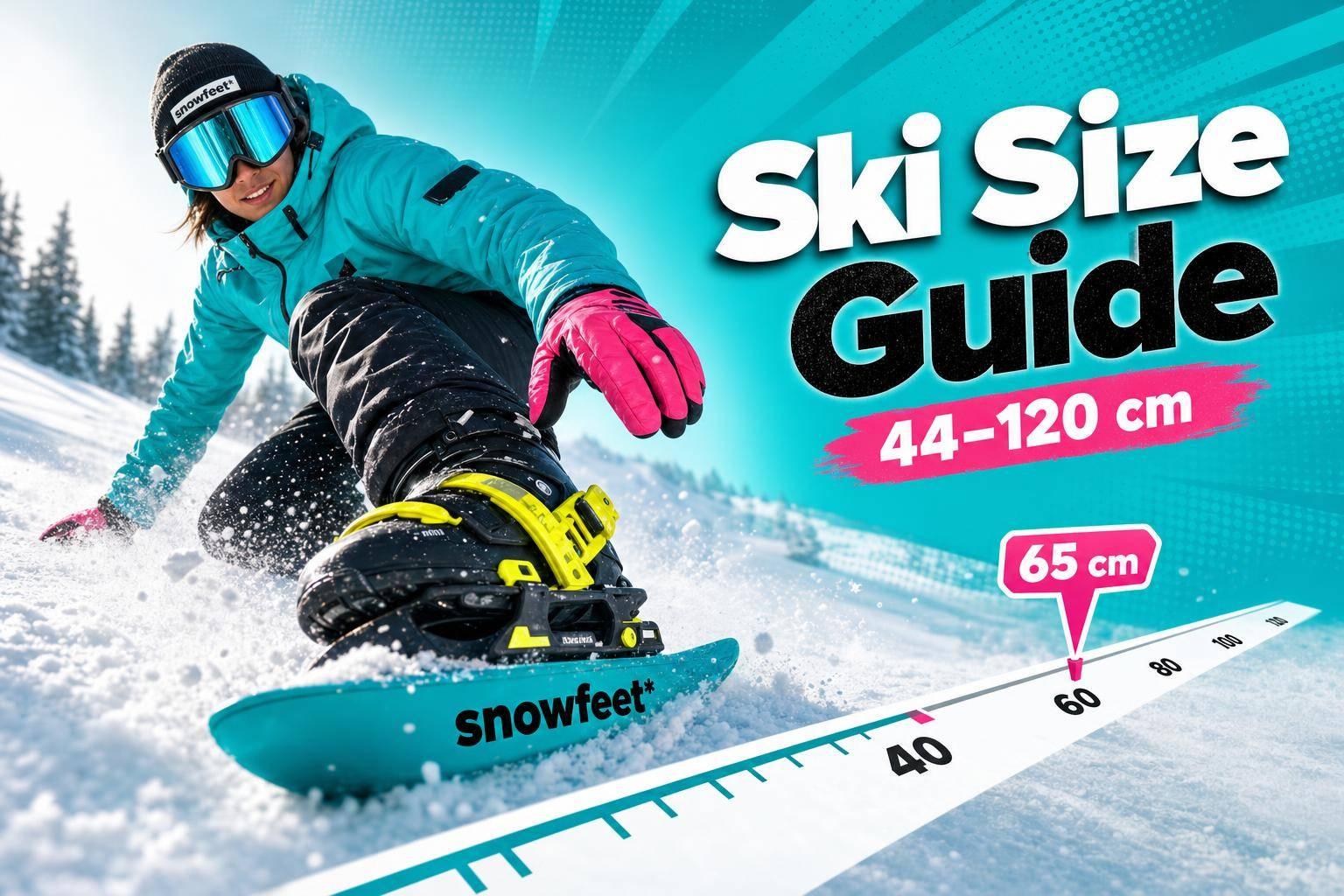
If you want the short answer: most people should start at 65 cm (26 in). It’s the safest middle ground for learning, casual resort laps, and shared family use. If you want more edge hold and a calmer feel at speed, look at 99–120 cm (39–47 in). If you want a skate-like ride and easy packing, stick with 38–50 cm (15–20 in).
I’d break it down like this:
- 38–50 cm: best for playful riding, travel, and small hills
- 44–65 cm: best for beginners, park laps, and easy control
- 99–120 cm: best for resort cruising, carving, and bigger riders
The big thing to know? Short skis aren’t picked the same way as full-size skis. With these, I’d focus less on height and more on skill level, body size, terrain, and boot type. That’s what changes how they feel on snow.
A few fast facts from the guide:
- Short skis usually run from 38 to 140 cm
- Full-size adult skis often start around 150–155 cm
- 120 cm is the most ski-like option in this lineup
- 38–44 cm works best with winter boots
- 65–120 cm works best with ski boots
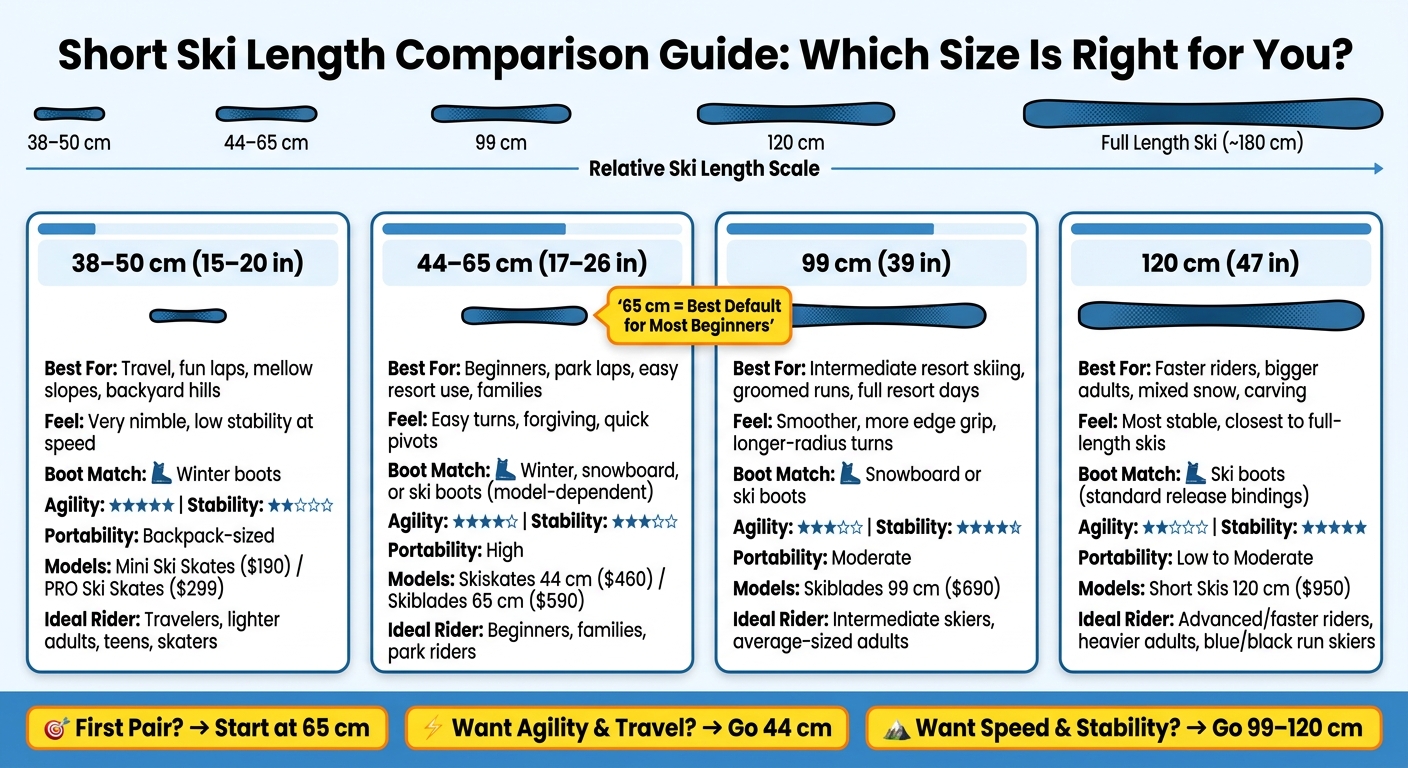
Short Ski Length Comparison Guide: Which Size Is Right for You?
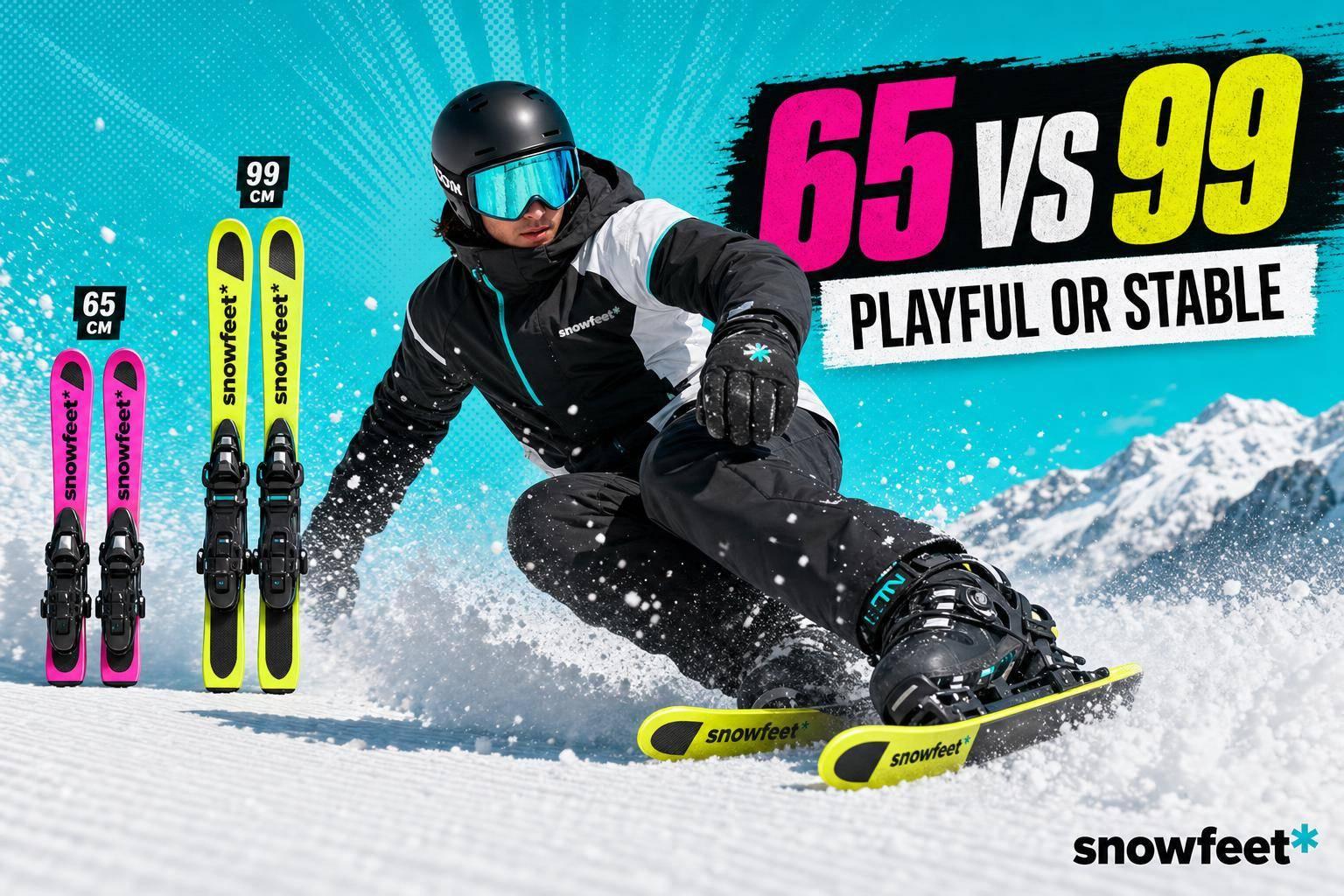
Snowboarder tries Snowfeet* | Which Snowfeet* Short Ski is the Best? | Snowblades 44, 65, 99 Review
Quick Comparison
| Length | Best For | Feel on Snow | Boot Match |
|---|---|---|---|
| 38–50 cm | Travel, fun laps, mellow slopes | Very nimble, low stability at speed | Winter boots |
| 44–65 cm | Learning, park, casual resort use | Easy turns, more forgiving | Winter, snowboard, or ski boots depending on model |
| 99 cm | Intermediate resort skiing | Smoother, more edge grip | Snowboard or ski boots |
| 120 cm | Faster riders, bigger adults, mixed snow | Most stable, closest to full skis | Ski boots |
So, if you’re stuck, here’s my plain-English take: pick 65 cm for your first pair, 99 cm if you already ski and want more support, and 44 cm if you want the most playful setup. Nice and simple :)
The 4 Factors That Determine Your Best Length
Four things narrow this down fast: skill level, body size, terrain, and boot type. Start with skill level. Then adjust for your size, where you ride, and what boots you plan to use.
Skill Level: Beginner, Progressing, or Advanced
If you're a beginner, start in the 44–65 cm range. Shorter skis are easier to pivot, easier to slow down on, and less punishing if you get a little off balance. That’s a big deal when you’re still getting your feet under you.
The Snowfeet* 44 cm Skiskates and 65 cm Skiblades are built with that kind of rider in mind. Snowfeet* says they take about five minutes to learn.
If you can already link turns and want more speed, the 99 cm range gives you better edge hold on groomed runs. And if you’re at ease riding faster or dealing with mixed terrain, 99–120 cm tends to feel more planted. Those lengths track in a more predictable way and hold a carve better.
So, here’s the simple version: if you're still building confidence, stay with 44–65 cm. Move up to 99–120 cm when you want more speed and a steadier feel.
Body Size and Terrain Type
With short skis, riding style and terrain matter more than height, but body size still plays a part. Lighter riders and kids usually do well on 38–65 cm. Bigger adults often get a steadier ride from 99–120 cm, especially on groomed runs, chopped-up snow, or mixed conditions.
Put another way, shorter lengths tend to suit lighter riders and casual laps. The 99–120 cm range makes more sense for bigger riders or rougher snow.
Boot Type
Boot choice matters more than a lot of people think. It can change how the ski feels right away.
Winter boots work best with the very short Snowfeet* models - 38 cm and 44 cm. Those are made for a skate-like feel and lower-speed riding. If you put winter boots on a 99 cm or 120 cm ski, you lose edge control and precision. Not ideal.
Ski boots give you the firmest connection to the ski. They work well with 65 cm, 99 cm, and 120 cm options. If you want the most control, this is the setup.
Snowboard boots sit in the middle. They pair well with the 65 cm and 99 cm Snowfeet* Skiblades, which makes sense for riders coming from snowboarding.
Here’s the fastest way to compare the common short-ski lengths:
| Boot Type | Best Length | Why |
|---|---|---|
| Winter boots | 38–44 cm | Skate-style, low speed, casual fun |
| Snowboard boots | 65–99 cm | Flexy, responsive |
| Ski boots | 65–120 cm | Maximum control, carving, resort speeds |
sbb-itb-17ade95
Short Ski Lengths Broken Down by Category
Here’s the simple way to think about it: pick the length based on how you want the ski to feel on snow.
38–50 cm: Maximum Agility and Easy Packing
This is Snowfeet*’s easiest-to-pack range. Snowfeet* Mini Ski Skates (38 cm) start at $190, while Snowfeet* PRO Ski Skates (50 cm) start at $299 and give you a bit more platform underfoot.
Both feel a lot like skates. You get fast edge changes, tight pivots, and a playful ride that works well on mellow slopes, backyard hills, and short resort runs.
The catch? On steep, icy, or fast terrain, these shorter lengths give you less grip. So they tend to work best at moderate speeds. Lighter adults, teens, and skaters with a bit of confidence will likely feel at home here.
44–65 cm: Best for Beginners and Park Riders
If you like that playful feel but want more support, step up to 44–65 cm.
Snowfeet* Skiskates (44 cm) start at $460. They keep that quick, skate-on-snow response but give you a longer platform. Turns feel fast and direct, which makes them a good match for park laps, tight spaces, and riders who already have some skating or skiing background.
Snowfeet* Skiblades (65 cm) start at $590 and are the most beginner-friendly size in the lineup. That extra length helps smooth out turn initiation, makes stopping feel more predictable, and gives new riders more support from tip to tail. Small weight shifts are easier to control. If a family plans to share one setup across different skill levels, 65 cm is the safer default.
99–120 cm: More Stability for Faster Resort Riding
If you care more about stability and longer turns than quick pivots, 99–120 cm makes more sense.
Snowfeet* Skiblades (99 cm) start at $690. They give you better edge grip on groomed runs, smoother longer-radius turns, and more confidence at resort speeds. At the same time, they’re still much shorter and easier to handle than full-length skis. This size fits average-sized adults and intermediate riders who want full resort days without the bulk of standard gear.
Snowfeet* Short Skis (120 cm) start at $950 and feel the closest to a standard ski in the Snowfeet* range. Bigger adults, faster riders, and anyone who spends a lot of time on blue or black runs will like the added edge hold at higher speeds. You give up some of that snap-fast pivoting, but you get a more planted feel that works better for carving in mixed snow conditions.
Use the table below for a quick side-by-side look.
| Length | Model | Starting Price | Best For |
|---|---|---|---|
| 38 cm | Mini Ski Skates | $190 | Travelers, backyard hills, fun laps |
| 50 cm | PRO Ski Skates | $299 | Playful riders wanting slightly more control |
| 44 cm | Skiskates | $460 | Park laps, skaters, agile resort riders |
| 65 cm | Skiblades | $590 | Beginners, families, groomed resort runs |
| 99 cm | Skiblades | $690 | Intermediates, full resort days, groomed terrain |
| 120 cm | Short Skis | $950 | Faster riders, bigger adults, carving |
Which Length Is Right for You?
Use this quick guide to match ski length to the kind of rider you are.
Beginners, Families, and Casual Resort Skiers
If you want one easy starting point, 65 cm is the safest bet. 65 cm is the default for most beginners and casual resort skiers. The Snowfeet* Skiblades (65 cm) are a good fit if one setup will be shared by a family. They also work well for mellow resort days and a mix of skill levels.
If you want a bit more room to improve and a smoother feel once you start going a little faster, 99 cm is the better long-term pick. Want the most playful, skate-like ride? Then take a look at the 44 cm Skiskates.
Kids, Teens, Park Riders, and Travelers
For smaller riders and people who care most about easy packing, shorter lengths usually make more sense. For small children, start with Snowfeet* MINI KIDS or other kids' models. The fit needs to match their smaller size and lower weight. Confident teens who already have basic slope experience usually do well on 65 cm.
Here’s the quick version:
- For park laps, quick spins, and side hits, 44 cm is best for park riders and maximum agility.
- For a mix of easy learning and control, 65 cm balances agility and stability.
- For travel, 38–50 cm is best because these models are the easiest to pack and carry.
Bigger Adults, Faster Riders, and Mixed Conditions
If stability matters more - maybe you ski faster, weigh more, or deal with mixed snow - go up to 99 cm or 120 cm. These lengths give you more snow contact and steadier edge hold when the surface gets rough or choppy.
The 120 cm Short Skis are the most stable Snowfeet* option for faster riders and mixed conditions. 120 cm uses standard release bindings.
Final Comparison and Conclusion
Most riders should start with 65 cm. It hits the sweet spot for control, comfort, and ease of use.
Go with 44 cm if you want max agility and easy travel. Pick 99 cm if you want more stability and smoother carving at speed. Choose 120 cm if you want the most ski-like feel.
Length Trade-Off Table: Agility vs. Stability
If you're stuck between two sizes, this is the trade-off that matters most.
| Length | Agility | Beginner Ease | Stability at Speed | Park Use | Portable | Best Snowfeet* Model |
|---|---|---|---|---|---|---|
| 38–50 cm | Maximum | High (for skaters) | Low | Excellent | Excellent (backpack-sized) | Skiskates 44 cm / PRO 50 cm |
| 44–65 cm | High | Very High | Medium-Low | Excellent | High | Skiskates 44 cm / Skiblades 65 cm |
| 99 cm | Moderate–High | Moderate | High | Good | Moderate | Skiblades 99 cm |
| 120 cm | Moderate | Moderate to Low | Very High | Fair | Low to Moderate | Short Skis 120 cm |
120 cm Short Skis give Snowfeet* its most stable, ski-like ride and work best with ski boots.
Snowfeet* vs. Full-Length Skis and Other Short Ski Brands
If you want the shortest path to the right setup, compare Snowfeet* with full-length skis below.
Full-length skis are flat-out better for one thing: aggressive big-mountain performance. If you're charging steep black runs, skiing deep powder, or dealing with technical off-piste terrain, old-school 150–200+ cm skis still have a clear edge. Their length, stiffness, and binding systems are built for that job.
That said, most U.S. recreational skiers aren't spending the whole day bombing expert terrain. Most are cruising groomed greens and blues, taking a few park laps, or heading out for a laid-back weekend resort trip at moderate speeds. For that kind of riding, Snowfeet* makes a lot more sense. It's simpler, easier to carry, and just more fun for how most people ski.
| Feature | Snowfeet* | Full-Length Skis | Other Short Ski Brands |
|---|---|---|---|
| Learning Curve | Very fast | Steep and long | Fast to moderate |
| Portability | Excellent (backpack-friendly at 44 cm) | Poor (bulky, need racks or bags) | Moderate |
| Boot Compatibility | Ski boots, snowboard boots, or winter boots | Ski boots only | Mostly ski boots |
| Resort Use | Great on groomed runs and parks | Best for all-mountain terrain | Good on groomed runs |
| Park Use | Excellent | Moderate | Good |
| High-Speed Stability | Moderate (better at 99–120 cm) | Excellent | Moderate to high |
Brands like Salomon snowblades and Bigfoot have offered short-ski options over the years, but most need dedicated ski boots and don't match the boot flexibility Snowfeet* offers across its lineup.
For most casual skiers, Snowfeet* is the easier and more fun pick. It's faster to learn, easier to pack, and more flexible than full skis.
FAQs
Should I choose short skis by height or weight?
Choose short skis mainly by skill level, riding style, and terrain, not just by height or weight. Height and weight still matter, but they come second.
Here’s the simple version:
- 44 cm and 65 cm Snowfeet* models work best for agility, beginners, and park riding.
- 99 cm and 120 cm give you more stability for all-mountain use, higher speed, and powder.
- Heavier riders may lean toward 120 cm for extra support.
Think of it like this: shorter skis feel more playful and easy to move around, while longer ones feel calmer when things pick up. So, if you want quick turns and a fun park setup, go shorter. If you want more control across mixed terrain, more float, and a steadier ride, go longer.
Can I use regular winter boots with any short ski length?
Yes. Snowfeet* short skis work with regular winter boots, unlike old-school skis that need ski boots.
Most Snowfeet* models come with universal, adjustable bindings. That means they can fit:
- regular winter boots
- snowboard boots
- ski boots
Just check one thing before you buy: your boot size needs to match the binding range for that model.
How do I choose between 65 cm, 99 cm, and 120 cm?
Choose based on your skill, size, and riding goals:
- 65 cm: best for beginners, park riders, and riders who want quick turns and easy tricks
- 99 cm: the all-mountain pick, with a nice balance of control and stability for intermediate riders
- 120 cm: best for advanced riders, taller or heavier skiers, and riders who want more stability at higher speeds
In general, shorter skis feel more playful. Longer skis feel more stable. Simple as that :)











Оставить комментарий
Этот веб-сайт защищается hCaptcha. Применяются Политика конфиденциальности и Условия использования hCaptcha.