



















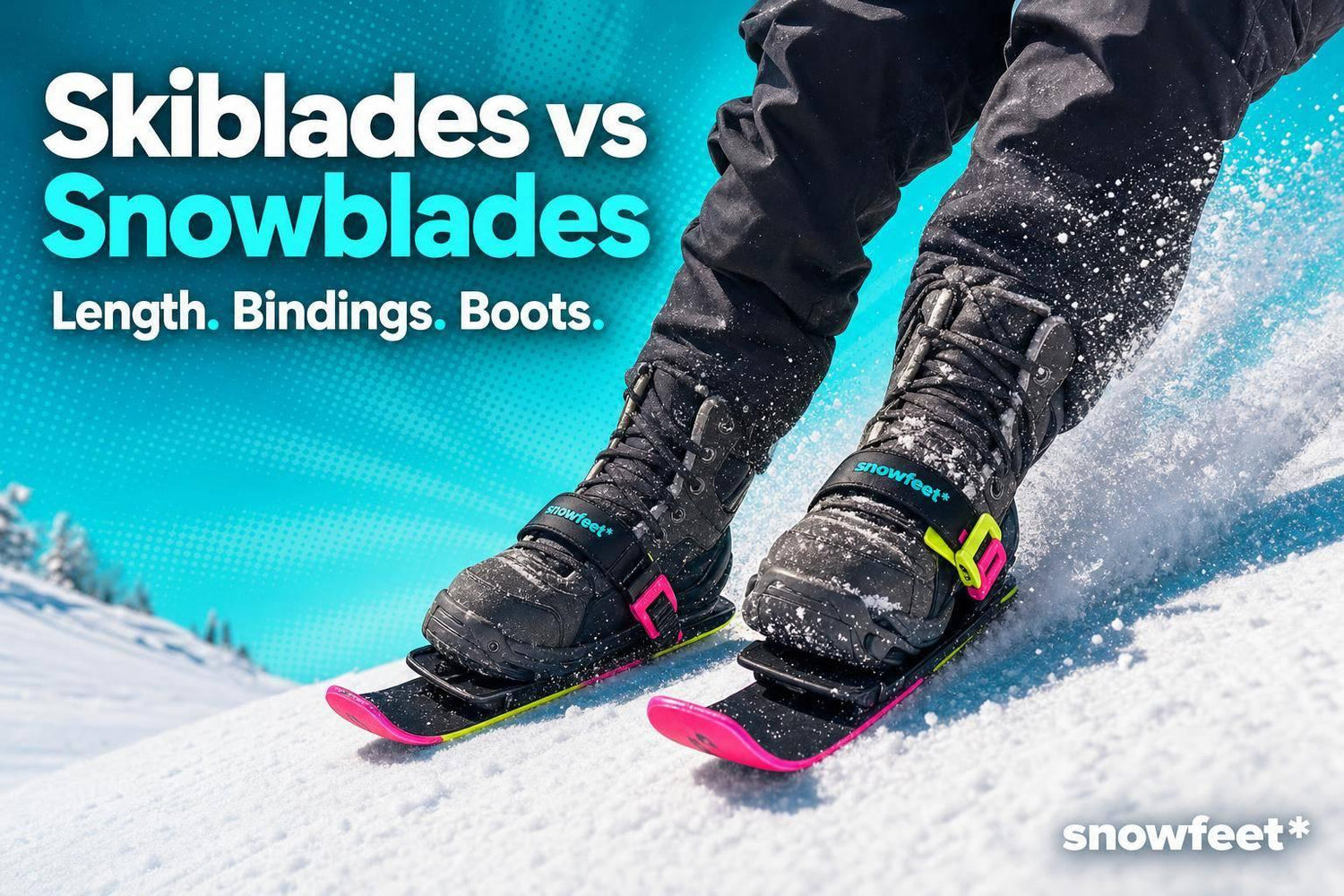
Short answer: yes - skiblades and snowblades usually mean the same thing. If you’re shopping on Jun 28, 2026, the name matters less than length, bindings, and boots.
Here’s the fast breakdown:
- 44 cm / 17 in: most skate-like, light, easy to pack
- 65 cm / 26 in: easy to learn, playful, backpack-friendly
- 99 cm / 39 in: more stable, better for carving and mixed resort use
- 120 cm / 47 in: closest to regular skis, best at higher speed
So, if you want the plain-English answer, it’s this:
- Pick 44 cm if you want a skate feel
- Pick 65 cm or 99 cm if you want the sweet spot for most resort days
- Pick 120 cm if you want a ride that feels more like full-size skis
One big thing people miss: boot setup can change the ride more than the label on the ski. Some short skis work with ski boots only. Others can work with snowboard boots or even winter boots, based on the binding.
A few quick facts from the article:
- “Snowblade” started as a Salomon product name in the late 1990s
- The lineup in this guide covers 4 lengths
- Only 2 lengths here are small enough to fit in a backpack: 44 cm and 65 cm
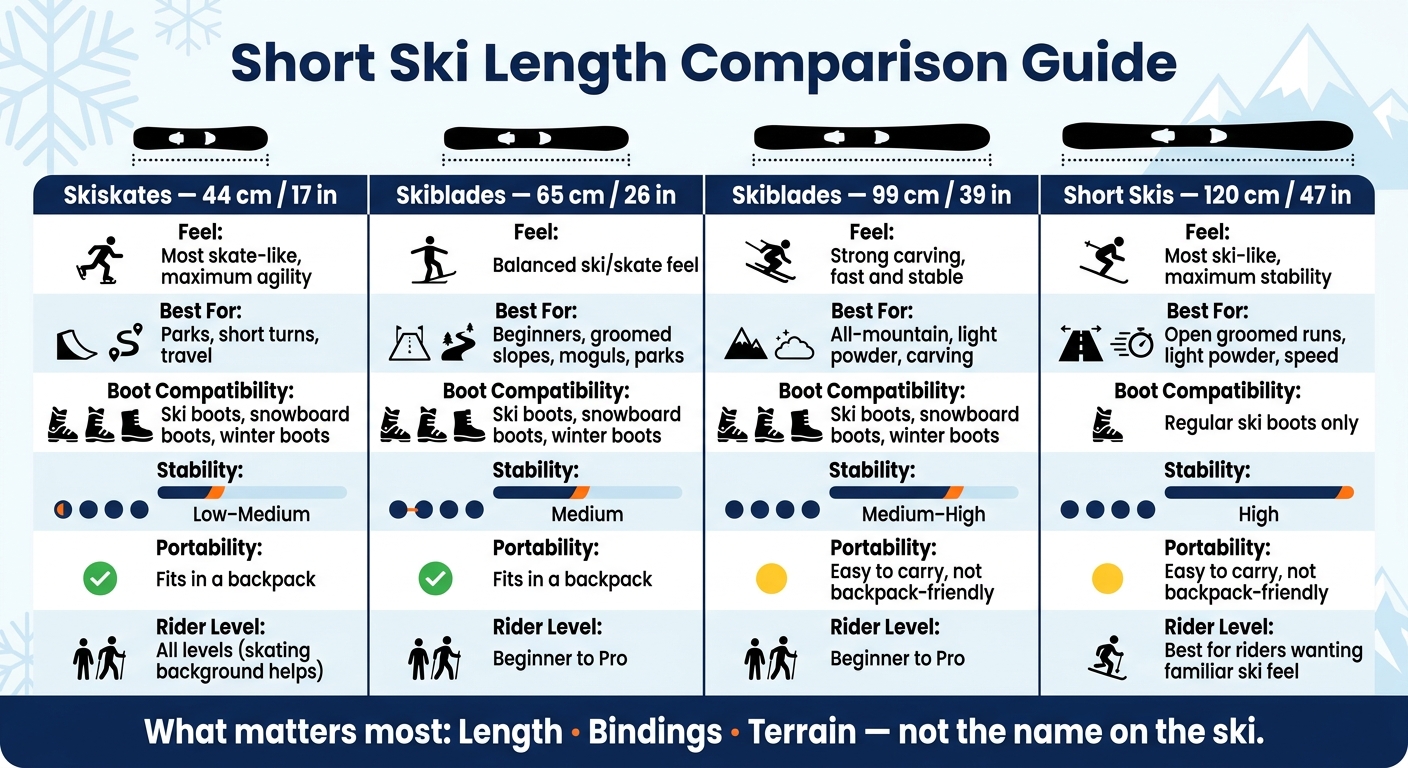
Skiblades vs Snowblades: Short Ski Length Comparison Guide
Snowboarder tries Snowfeet* | Which Snowfeet* Short Ski is the Best? | Snowblades 44, 65, 99 Review
Quick Comparison
| Type | Length | Feel | Best For | Portability |
|---|---|---|---|---|
| Skiskates | 44 cm / 17 in | Most skate-like | Parks, short turns, travel | Fits in a backpack |
| Skiblades | 65 cm / 26 in | Balanced | Beginners, casual resort laps, moguls | Fits in a backpack |
| Skiblades | 99 cm / 39 in | More stable, better carving | All-mountain, light powder | Easy to carry |
| Short skis | 120 cm / 47 in | Most like regular skis | Faster groomers, familiar ski feel | Easy to carry |
My take? Don’t get stuck on the name. Look at the size, the binding, and where you plan to ride. That tells you far more than “skiblade” vs “snowblade.” Kind of like arguing over fries vs chips while holding a burger :)
If you want a quick visual on short skis and skiblades, these YouTube searches can help:
Skiblades vs Snowblades: Names, History, and How They Are Used Today
Snowblade started as a Salomon product name in the late 1990s, then turned into a generic term for short skis. So when you shop, don’t get hung up on the name on the top sheet. Check the spec sheet instead.
How 'Snowblade' Became a Generic Term
Some riders use snowblade to mean narrower, ski-like short skis, and skiboard for wider, snowboard-like versions. But, well, the name by itself still doesn’t tell you exactly what you’re getting.
What These Terms Mean When You Shop Today
On product pages, the label matters less than the specs. For Snowfeet* and similar short skis, look at length and boot setup first. That’s where things get clear.
The part that changes how a short ski rides is pretty simple:
- Length
- Bindings
- Terrain
That’s where the real difference shows up, not in the name alone.
sbb-itb-17ade95
What Actually Changes the Ride: Length, Width, Bindings, and Terrain
Forget the name for a second. What changes the ride most is length, bindings, and terrain. Width plays a part too. Wider skis float better and feel more stable when you pick up speed. Narrower skis move edge to edge faster, so turns feel snappier.
Here’s how the main Snowfeet* lengths compare.
Short-Ski Lengths and How Each One Feels
Length is the biggest factor in how a short ski feels on snow. Small jump in size, big shift in ride.
| Length | Feel on Snow | Best Terrain | Rider Level |
|---|---|---|---|
| 44 cm (17 in) | Skate-like feel; maximum agility | Slopes, parks, hiking trails | All levels (skating background helps) |
| 65 cm (26 in) | Balanced ski/skate feel | Groomed slopes, moguls, parks | Beginner to Pro |
| 99 cm (39 in) | Strong carving; fast and stable | All-mountain, carving, light powder | Beginner to Pro |
| 120 cm (47 in) | Most ski-like feel; maximum stability | Open groomed runs, light powder | Best for riders who want a familiar ski feel |
As the skis get longer, you get more edge hold and more confidence at speed. The tradeoff? You lose some of that playful, easy-to-spin feel that makes shorter setups such a blast.
Bindings and Boot Compatibility Matter More Than the Name
This part gets overlooked all the time. Old-school snowblades often use ski boots. Snowfeet* gives you more choice, which makes walking, packing, and travel a lot easier.
Depending on the model, you can ride with:
- ski boots
- snowboard boots
- sturdy winter shoes
That’s a big deal if you don’t want to clomp around the lodge in hard boots all day. And yes, a pair of 65 cm Skiblades can fit in a backpack.
Release bindings work better for faster riding. Non-release bindings keep things lighter and simpler for casual use.
Boot setup matters. But where you ride matters just as much.
Where Short Skis Work Well and Where Long Skis Still Win
Short skis shine on groomed runs, moguls, and terrain parks. That’s where fast turns, quick reactions, and a playful feel matter more than top-end speed.
Long skis still win in a few clear spots. If you want deep backcountry powder, aggressive high-speed carving, or the most planted feel when things get fast, longer skis still have an edge. Their added length helps with flotation in soft snow and stability when the terrain gets rough or the pace climbs.
So, the main choice isn’t just the brand name. It’s the format. And that becomes much easier to see when you look at the 44 cm, 65 cm, 99 cm, and 120 cm options side by side.
Snowfeet* Skiblades vs Snowfeet* Skiskates: Which Short Format Fits Your Riding
Now that length is on the table, here’s how the Snowfeet* lineup plays out on snow. Each option has its own feel, and the differences show up fast once you start turning, carving, or messing around in the park.
| Model | Length | Boot Compatibility | Stability | Portability | Best Terrain |
|---|---|---|---|---|---|
| Skiskates | 44 cm (17 in) | Ski boots, snowboard boots, or winter boots | Low–Medium | Fits in a backpack | Slopes, parks, hiking trails |
| Skiblades | 65 cm (26 in) | Ski boots, snowboard boots, or winter boots, depending on the binding setup | Medium | Fits in a backpack | Groomed slopes, moguls, parks |
| Skiblades | 99 cm (39 in) | Ski boots, snowboard boots, or winter boots, depending on the binding setup | Medium–High | Easy to carry, but not backpack-friendly | All-mountain, light powder |
| Short Skis | 120 cm (47 in) | Regular ski boots | High | Easy to carry, but not backpack-friendly | Open groomed runs, light powder |
Snowfeet* Skiskates 44 cm: The Most Compact, Skate-Like Option
The 44 cm Skiskates give you the most skate-like ride in the lineup. They’re built for agility, with fast spins, tight direction changes, and park-style moves. That short length also makes them super easy to pack, carry, and travel with.
The catch? Stability takes a hit. At higher speeds or on rough, choppy snow, 44 cm gives you less support underfoot. These tend to click fast for people who already know that skate motion - hockey players, ice skaters, and rollerbladers often feel at home right away. If that’s not you, no big deal. Just expect a short learning curve.
Snowfeet* Skiblades 65 cm and 99 cm: The Best Fit for Most Casual Riders
If 44 cm sounds a bit too twitchy, these two move closer to a ski feel and give you more stability. A simple way to think about it: go with Skiblades if you want short-ski riding, and go with Skiskates if you want more of that skate feel.
The 65 cm Skiblades land right in the sweet spot. They’re long enough to carve, but still short enough to spin without much fuss. That mix of stability, carving, and portability makes them a solid pick for beginners, casual riders, and people who want gear that can still fit in a backpack.
The 99 cm Skiblades lean even more toward regular skiing. They use a deep parabolic sidecut, which helps make carving easier, and they give you more stability and speed for all-mountain riding and light powder. They’re also easy to get used to, especially if you already have some skating background.
Snowfeet* 120 cm Short Skis: The Closest Feel to Regular Skis
If you want the closest thing to a standard ski, move up to 120 cm. At 120 cm (47 in), these feel the most like regular skiing. They come with release ski bindings and are made for regular ski boots, so they’re the best match if you want more stability at speed and a ride that feels familiar.
They’re still easy to carry around, just not backpack material. For a returning skier who wants something easier to handle without giving up that known ski feel, the 120 cm option sits closest to the classic setup in the Snowfeet* lineup.
Conclusion: Skip the Label and Pick the Short Ski That Fits Your Goals
Now that the formats are clear, the choice comes down to fit, not the label. Skiblades and snowblades are mostly the same thing: short skis.
What matters most is length, bindings, and terrain. Those three picks shape how the ride feels way more than the name does.
Here’s the quick version based on your goals:
- Most portable, skate-like experience → Snowfeet* Skiskates 44 cm
- Casual resort riding, easy to learn, and more portable than full-length skis → Snowfeet* Skiblades 65 cm or 99 cm
- Closest feel to regular skis, more stability at speed → Snowfeet* Short Skis 120 cm
For most casual riders, the best pick is the 65 cm or 99 cm Skiblades. They hit the sweet spot between control, portability, and plain old fun.
So, skip the label. Pick the length, binding setup, and boot compatibility that match the way you ride.
FAQs
Are skiblades easier than skis?
Yes. Skiblades are usually easier to learn on and easier to move around in than standard skis.
Their short length - usually 26 to 47 inches - makes them lighter, less scary at first glance, and simpler to:
- turn
- stop
- recover if you get off balance
Compared with long skis, Snowfeet* skiblades feel more nimble and take less effort to control. That can help many beginners gain confidence fast.
Which length should I choose?
Choose based on skill level, terrain, and how you want to ride - not height or weight.
- 65 cm: best for beginners, terrain parks, and moguls. It feels agile and is easy to learn on.
- 99 cm: the best all-mountain middle ground. You get a nice mix of stability and control.
- 120 cm: best for advanced riders or people moving over from traditional skis. It feels the most stable and the most ski-like.
What boots do I need?
One of the biggest pluses of Snowfeet skiblades is their versatility: a lot of models work with snowboard boots, regular winter shoes, or standard alpine ski boots.
Here’s the simple version:
- 65 cm and 99 cm models fit snowboard boots or ski boots
- 120 cm models need traditional ski boots for proper safety, release function, and ankle support at higher speeds
That length part matters more than it may seem. Shorter skiblades give you more boot options. But once you get to 120 cm, you’re in a setup that needs the support and binding function of ski boots. It’s the safer call, plain and simple.











Оставить комментарий
Этот веб-сайт защищается hCaptcha. Применяются Политика конфиденциальности и Условия использования hCaptcha.