



















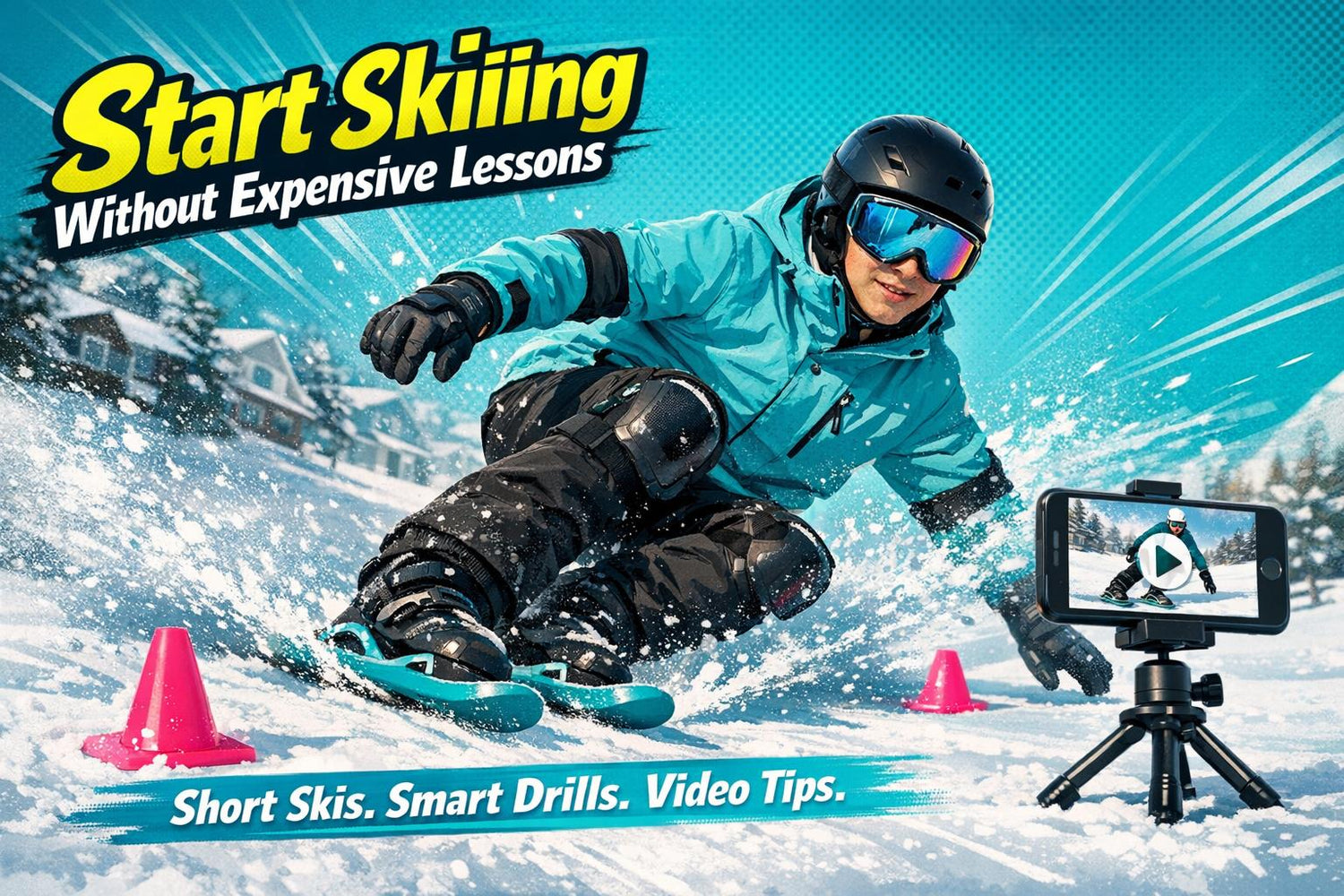
Skiing doesn’t have to cost a fortune or require pricey lessons. With the right gear and a bit of self-guided practice, you can learn the basics on your own. Here’s how to get started:
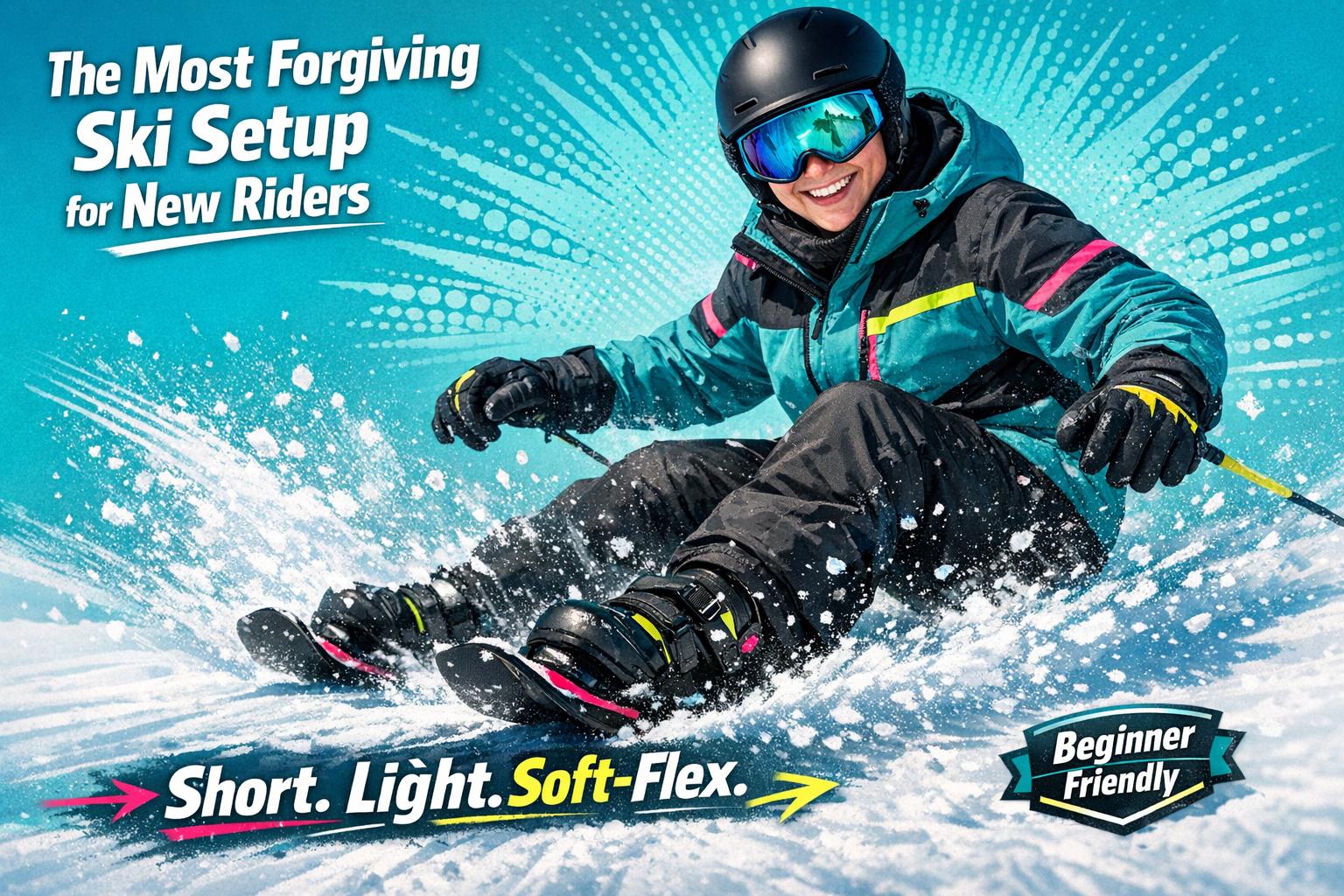
- Skip the long skis: Shorter options like Snowfeet* Skiskates (44 cm) or Skiblades (65–120 cm) are easier to control, slower, and perfect for beginners.
- Gear up smart: A helmet ($50–$150), goggles ($30–$100), and waterproof gloves ($20–$80) are must-haves. Dress in layers to stay warm and dry.
- Learn at home: Practice balance and stance indoors before hitting the snow. Snowfeet* offers free YouTube tutorials to guide you.
- Start small: Use beginner-friendly slopes with packed snow and no obstacles. Focus on gliding, stopping, and turning at your own pace.
Snowfeet* products make skiing more accessible, affordable, and fun, especially for first-timers. You’ll save money, build confidence, and decide if skiing is for you - all without breaking the bank.
The Basics of Teaching Yourself to Ski
Safety Rules and Beginner Guidelines
Before stepping onto any ski equipment, it's important to start on the right kind of slope. Look for gentle, open areas or beginner-designated hills with packed snow and no obstacles like trees, fences, or nearby roads. Ski resorts often have beginner zones that are perfect for learning. These areas are low-traffic and often come with magic carpet lifts, which are much less intimidating than chairlifts.
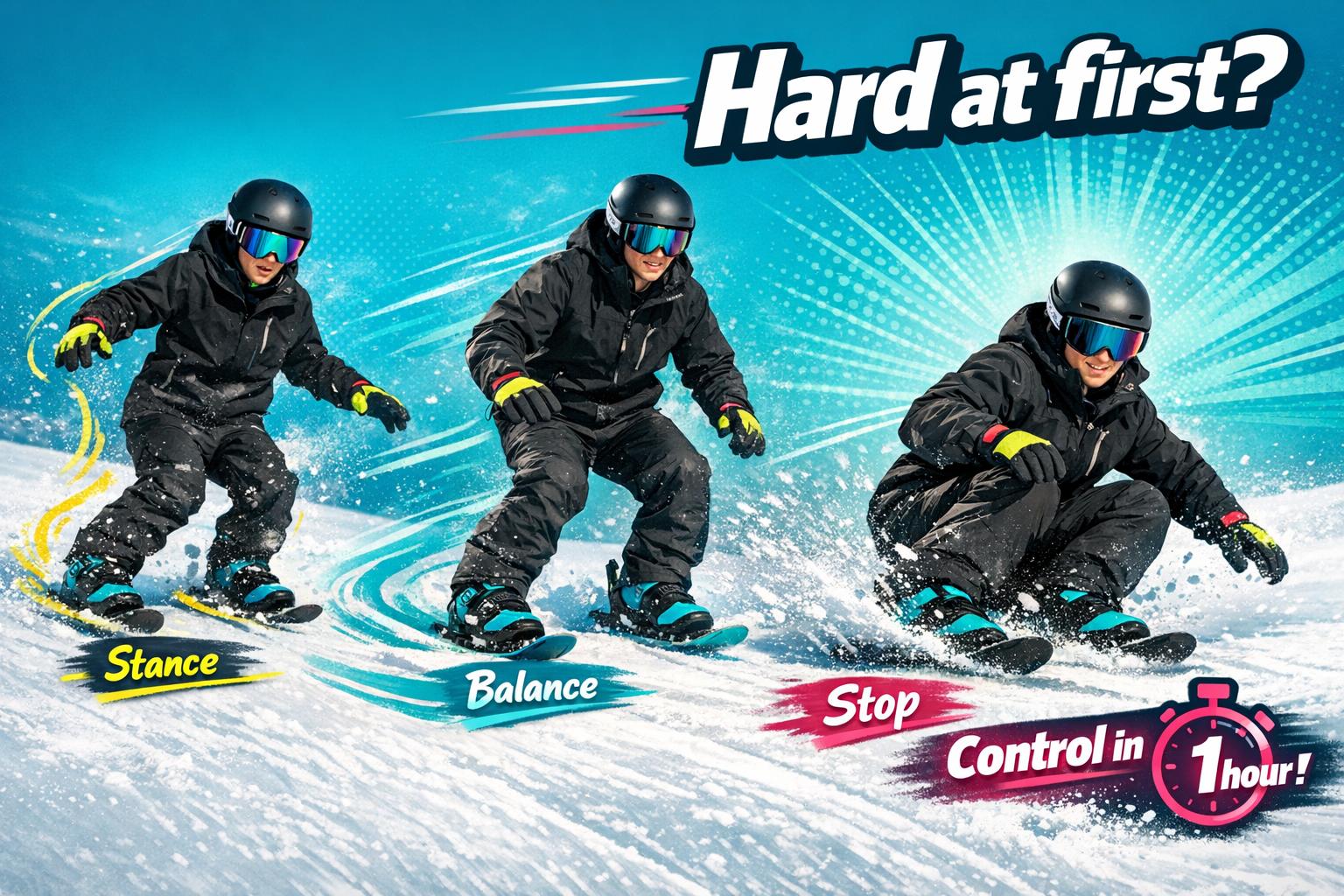
Your stance plays a huge role in maintaining balance and control. Stand with your feet about hip-width apart, keep your knees slightly bent, and center your weight over the middle of your feet. Your arms should be slightly forward and out to the sides. This centered position, with flexed knees, helps prevent falls and reduces the risk of knee injuries.
Stick to these essential safety rules every time you ski:
- Always wear a helmet.
- Ski during daylight when visibility is good.
- Avoid skiing alone, especially in areas you're unfamiliar with.
- Yield to skiers who are already downhill, and only stop in spots where others can see you.
Collisions are one of the top causes of serious ski injuries in the U.S., often happening when beginners attempt slopes that are too steep or crowded. Keep your progress steady - start slow, master the basics, and only move to more challenging terrain once you can stop and turn with confidence.
With these safety measures in place, you'll set yourself up for success and enjoy how beginner-friendly gear like Snowfeet* can help you build confidence on the slopes.
Why Short Skis and Skates Are Easier to Learn On
Pairing safe practices with beginner-friendly gear, like short skis and skates, makes learning to ski much easier. Using equipment designed for ease lets you focus on mastering skills like stopping and turning without being overwhelmed.
Traditional skis, which are often over 5 feet long, can feel unwieldy and make balancing tricky. Short skis, on the other hand, reduce the leverage working against you, making it easier to recover if you lose balance. Falls tend to be gentler, and getting back up is quicker. Plus, lighter, shorter gear - like Snowfeet* - reduces tip crossing and fatigue, helping you maintain proper form.
Take Snowfeet* products, for example. Their Skiskates, which are just 44 cm (about 17 inches) long, feel almost like ice skates. If you've ever ice skated, rollerbladed, or used inline skates, you'll find them incredibly intuitive. For a bit more glide but still plenty of control, the Skiblades at 65 cm (about 26 inches) are another great option. Their short running surface grips the snow easily when you edge, making it simple to control your speed on beginner-friendly slopes.
How to Use Snowfeet* Snowblades 99 CM | Short Skis | Skiblades | Tutorial
Picking the Right Gear on a Budget
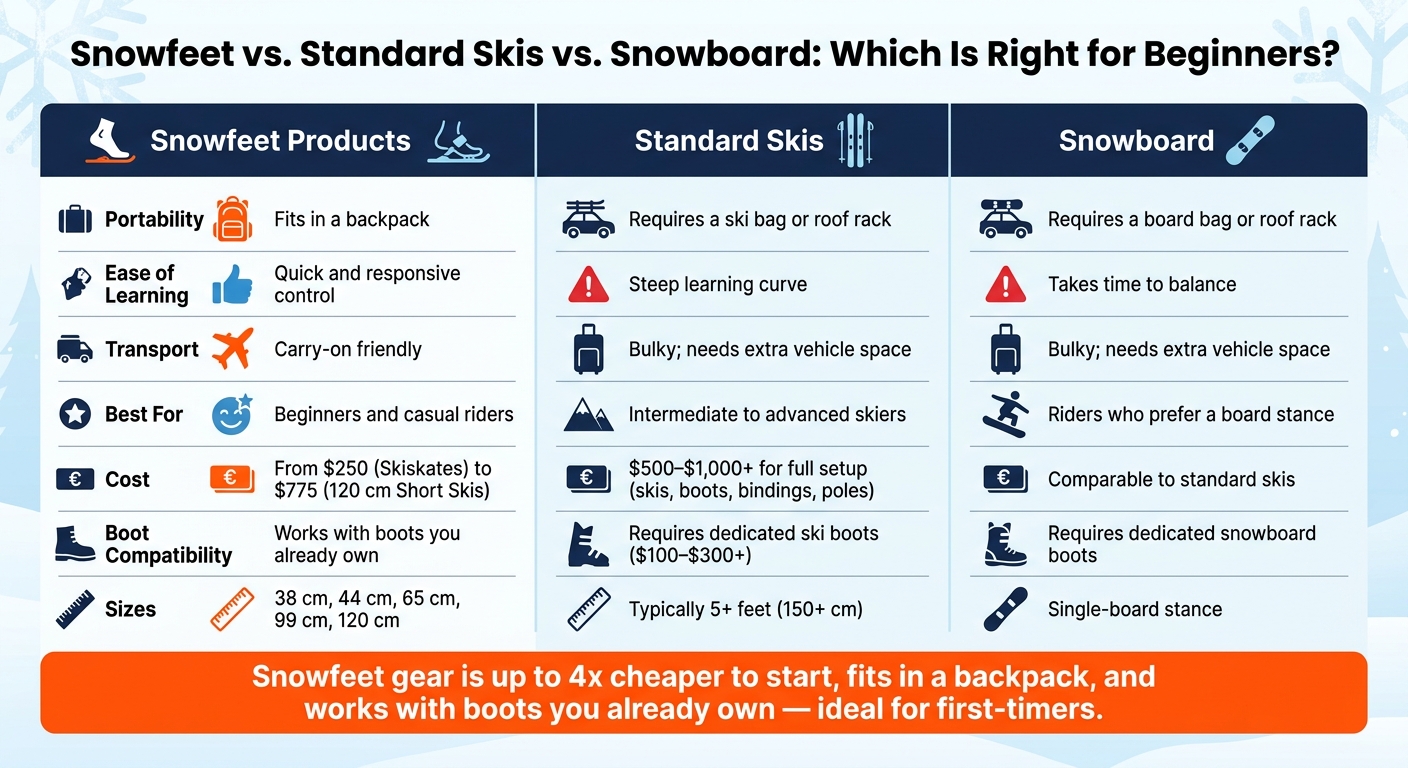
Snowfeet vs. Standard Skis vs. Snowboard: Beginner Gear Comparison
Once you've got the safety basics down and understand how short skis can help you learn, it's time to focus on gear that fits your budget while still making your experience enjoyable.
Safety and Comfort Gear You Will Need
Let’s start with the essentials: a helmet ($50–$150), goggles ($30–$100), and waterproof gloves or mittens ($20–$80). These are non-negotiable for staying safe and comfortable on the slopes.
When it comes to clothing, layering is your best friend. Here’s how to dress based on the weather:
- 20–32°F: Wear a moisture-wicking base layer, an insulating midlayer, and a waterproof outer shell.
- Below 20°F: Go for thicker insulation, warmer gloves, and add neck coverage.
- Above 32°F: Stick with a waterproof layer to stay dry - wet snow can soak through quickly.
Pro tip: Avoid cotton - it traps moisture and loses heat fast. A decent waterproof jacket and pants can cost anywhere from $80 to $250, but if you're just starting out, renting these from a resort shop can save you money while you figure out what works best for you.
Snowfeet* vs. Standard Skis and Snowboards
Snowfeet* gear offers a compact and beginner-friendly alternative to traditional skis or snowboards. Let’s break it down:
| Feature | Snowfeet* Products | Standard Skis | Snowboard |
|---|---|---|---|
| Portability | Fits in a backpack | Requires a ski bag or roof rack | Requires a board bag or roof rack |
| Ease of Learning | Quick and responsive control | Steep learning curve | Takes time to balance |
| Transport | Carry-on friendly | Bulky; needs extra vehicle space | Bulky; needs extra vehicle space |
| Best For | Beginners and casual riders | Intermediate to advanced skiers | Riders who prefer a board stance |
Traditional setups - skis, boots, bindings, and poles - can easily cost $500 to $1,000 or more. Snowboards aren’t far behind, and both require significant storage space. Snowfeet*, on the other hand, are lightweight, portable, and much easier on your wallet.
How to Pick the Right Snowfeet* Model
Snowfeet* products are all about simplicity and control, making them perfect for beginners or those looking for a fun, casual experience. Here’s how to pick the right model for your needs:
- Complete Beginners: Go for the Snowfeet* Short Skis (120 cm, $775). These offer extra surface area for better stability.
- Skaters or Those with Skating Experience: The Snowfeet* Mini Ski Skates (38 cm, from $250) are a great choice. They feel intuitive if you’ve done inline skating, ice skating, or hockey.
- Beginners Looking for a Balance: Try the Snowfeet* Skiblades (65 cm, from $635). They offer more glide than the skates but are still easy to maneuver on gentle slopes.
If you’re after more stability, consider longer models like the 99 cm or 120 cm options. No matter which one you choose, start on flat, gentle terrain to build confidence before tackling more challenging slopes.
sbb-itb-17ade95
A Step-by-Step Guide to Learning with Snowfeet* Products
Before You Hit the Snow: Practice at Home
Start your Snowfeet* journey with some at-home practice to get the hang of your stance and balance. Begin by adjusting your bindings on the floor to find a snug, comfortable fit. Follow the stance tips from the safety section, then work on shifting your weight side-to-side while holding onto something stable. These simple drills build the core balance you'll need since Snowfeet* gear reacts quickly to even small movements.
Before heading to the slopes, check out the Snowfeet YouTube tutorials. Watching these videos will help you understand the setup and basic movements, so you can better replicate them on snow. Once you've nailed the basics at home, you're ready to take on the real thing.
Your First Time on Snow: Gliding and Stopping
Find a gentle slope with a flat area at the bottom - this is the perfect spot for your first ride. Start by walking around in your Snowfeet* gear to get a feel for how they move. Then, practice short, straight glides followed by stopping. Repeat this glide-and-stop routine until you feel steady and in control.
Learn two key stopping techniques: the wedge stop, where you angle your toes inward, and the side-slip stop, which involves turning your feet sideways. Snowfeet* products, with their compact design (ranging from the 44 cm Skiskates to the 120 cm Short Skis), make these maneuvers easier compared to traditional skis. Once you're confident with gliding and stopping, you're ready to move on to turning.
How to Turn and Control Your Speed
After mastering the basics, it's time to tackle turning - something Snowfeet* gear makes surprisingly easy for beginners. The shorter length means you won’t need as much leverage, so turning takes less effort than with standard skis.
To practice, shift your weight to guide the skis into a turn. Start with gentle S-shaped turns on a mild slope, keeping your movements smooth and relaxed. Keep your knees slightly bent and your weight centered for better control. Linking these small turns not only helps you navigate the slope but also naturally manages your speed, making for a more seamless and enjoyable experience overall.
Staying Safe, Getting Better, and Caring for Your Gear
Safety Rules and Mountain Etiquette
Even though Snowfeet* gear is easier to handle than long skis, the mountain still requires caution. Always suit up with a properly fitted helmet, goggles, and gloves before hitting the slopes. Stick to marked green runs at first to build confidence, and avoid venturing onto closed trails.
One key rule on U.S. ski slopes: downhill skiers always have the right of way. If you're the uphill skier, it's your responsibility to steer clear of others. Before merging onto a run or starting after a stop, take a moment to look uphill. And never stop just below a hillcrest or in a blind spot - other skiers might not see you in time to react.
Snowfeet* gear is incredibly responsive, which might tempt you to make quick, sharp turns. But on crowded slopes, stick to smooth and predictable movements so others can anticipate your path. In beginner areas, be mindful of kids and new skiers - move forward promptly and give them extra space. Following these etiquette tips ensures a safer and more enjoyable experience for everyone.
How to Build Confidence and Keep Improving
Once you've got the basics down, focus on steady improvement with your Snowfeet*. Keep your sessions short and goal-oriented - around 60 to 90 minutes is ideal. Before and after each session, check out Snowfeet's YouTube tutorials to sharpen your technique. Pay attention to key tips like "keep your knees soft" and "look where you want to turn." Try these moves on the slopes, then compare your experience to what the instructor demonstrates in the videos. This watch–practice–review cycle is a simple and effective way to build skills without wasting time on guesswork.
How to Maintain and Upgrade Your Snowfeet* Gear
Taking care of your Snowfeet* gear is just as important as improving your skills. After each use, dry your equipment thoroughly to prevent rust on the bindings or base. Store them in a cool, dry spot - avoid placing them near radiators or other heat sources, as extreme heat can warp the materials.
If the base starts feeling sticky or less smooth on the snow, it’s time for a fresh wax. Snowfeet* offers wax and replacement straps, making maintenance easy and affordable. A properly waxed base ensures a smoother glide and better control, keeping your gear ready for action.
As you progress, you might want to explore other models in the Snowfeet* lineup instead of switching to traditional skis. Start with the 44 cm Skiskates or 65 cm Skiblades, and as your skills improve, consider moving up to the 99 cm or 120 cm models. Each step gives you more edge grip and stability, helping you grow your abilities without jumping straight to the challenges of full-length skis.
Conclusion: Why Snowfeet* Works Well for Beginner Skiers
Getting into skiing doesn’t have to mean shelling out big bucks for lessons or a full traditional setup. Snowfeet* gear is designed to simplify the process and lower the cost. With options like the 44 cm Skiskates and the 65, 99, and 120 cm Skiblades, beginners can ease into snow sports without the usual hurdles. The key advantage? Shorter gear is just easier to handle. Unlike traditional skis or snowboards, which often require more time, instruction, and investment, Snowfeet* lets you focus on the basics - like balance, gliding, stopping, and turning - without wrestling with bulky equipment. Many first-time users even say they feel comfortable after just one day, which is rare with standard ski gear.
Another big plus? Most Snowfeet* models work with the boots you already own. That means you can skip the $100–$300+ cost of renting or buying ski boots, a huge bonus for anyone planning just a few snow days a year. The combination of affordability and ease-of-use makes a big difference when you’re just starting out.
On top of that, Snowfeet* provides video guides to help you learn the basics, so you can skip formal lessons altogether. This makes the learning process faster and more accessible, allowing you to pick up the skills on your own.
In short, Snowfeet* offers a fun, low-commitment way to try skiing. It’s perfect for beginners who want to start small, build confidence, and decide later if they want to dive into the full traditional ski experience. It’s all about keeping things simple and accessible while you learn the ropes.
FAQs
Can I really learn to ski without lessons?
Yes, you can! With the right gear, such as Snowfeet Skiskates (measuring 44 cm) or Skiblades (ranging from 65–120 cm), beginners can pick up skiing much faster and with less hassle. Unlike traditional long skis, these options are lightweight, easier to handle, and work with regular winter boots. Most people can learn basic turns and stops within just 1–2 hours, skipping the expense and complexity of lessons or rentals.
Which Snowfeet* size should I start with?
For those just starting out, 44 cm Skiskates or 38 cm Mini Ski Skates are a solid choice. They’re simple to control and perfect for practicing balance and stopping on gentle slopes or even in your backyard. If you’ve got some skating experience, the 44 cm Skiskates will feel pretty natural. Looking for more stability on resort runs? Go for the 65 cm or 99 cm Skiblades. They’re much easier to manage compared to traditional skis that are over 150 cm long.
What boots work with Snowfeet*?
One of the standout perks of Snowfeet* is that you can use them with regular footwear - no need for the heavy, pricey boots that brands like Salomon or Rossignol require. Most Snowfeet* models (38–50 cm) pair perfectly with standard waterproof winter boots or snowboard boots. If you're going for the longer models (65 cm+), ski or snowboard boots might be a better choice for added stability. All in all, Snowfeet* gives you a more comfortable and budget-friendly alternative to traditional skis.











Оставить комментарий
Этот веб-сайт защищается hCaptcha. Применяются Политика конфиденциальности и Условия использования hCaptcha.