



















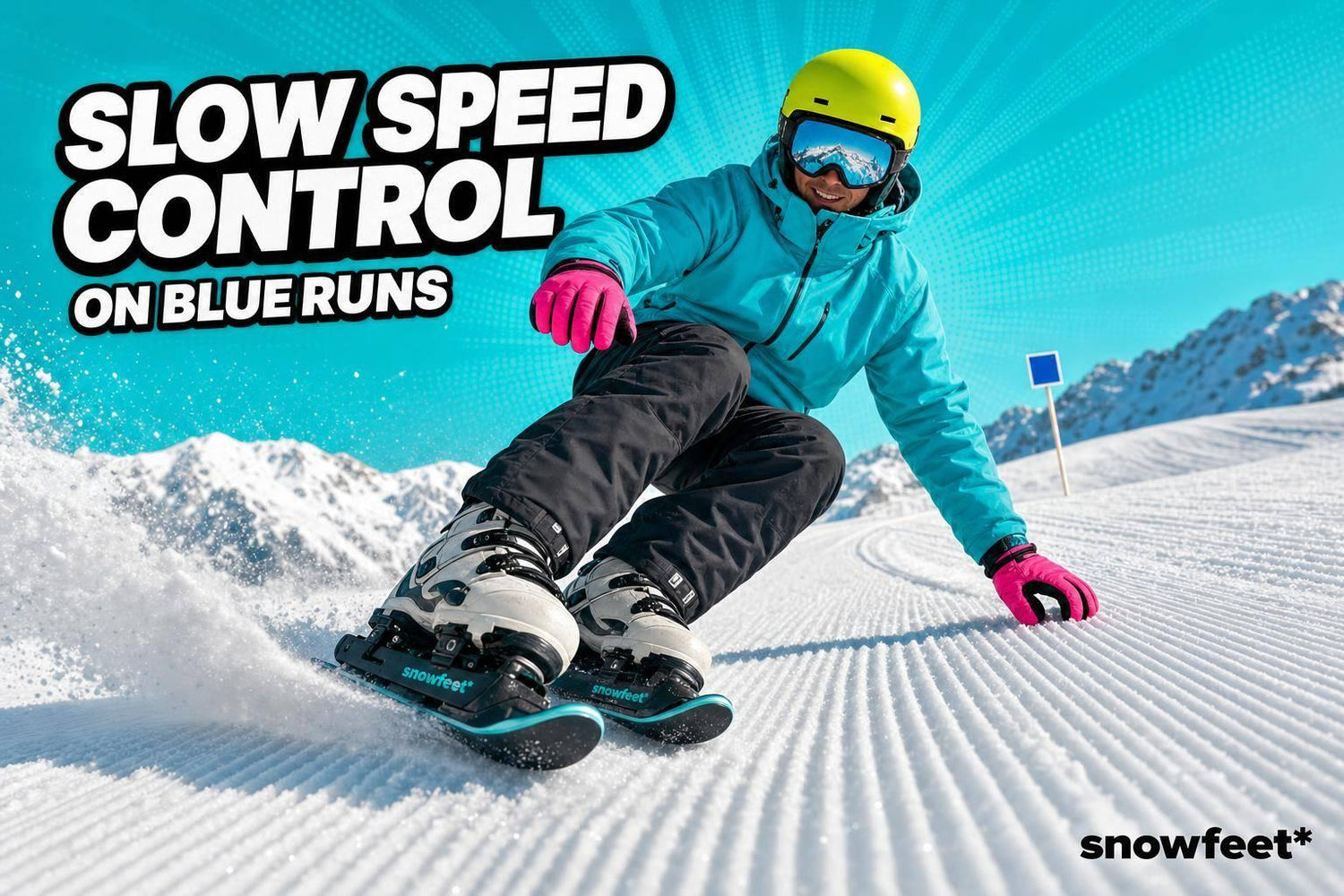
If you ski blue groomers at about 5–15 mph, short skis are usually easier to turn, stop, and carry than full-size skis. That’s the big takeaway.
Here’s my short answer:
- Best for the easiest low-speed control: Snowfeet* Skiblades 65 cm
- Best mix of control and calm feel: Snowfeet* Skiblades 99 cm
- Best for soft, chopped-up blue runs: Snowfeet* POWDER 99 cm
- Best if you want a more ski-like ride: Snowfeet* Short Skis 120 cm
- Best for stronger skiers who want more speed: Standard all-mountain skis, 165–175 cm
So, if your goal is simple turns, easy stops, and less stress on busy blue runs, I’d stay in the 65–120 cm range.
That’s because short skis:
- turn with less effort
- scrub speed fast
- feel less bulky than long skis
- fit better in a car trunk
- work well for cautious adults, returning skiers, and many kids
But there’s one catch: the shorter you go, the more balance matters. A 44 cm Skiskate can stop fast, but it asks more from your stance. A 99 cm or 120 cm ski gives you more room for error.
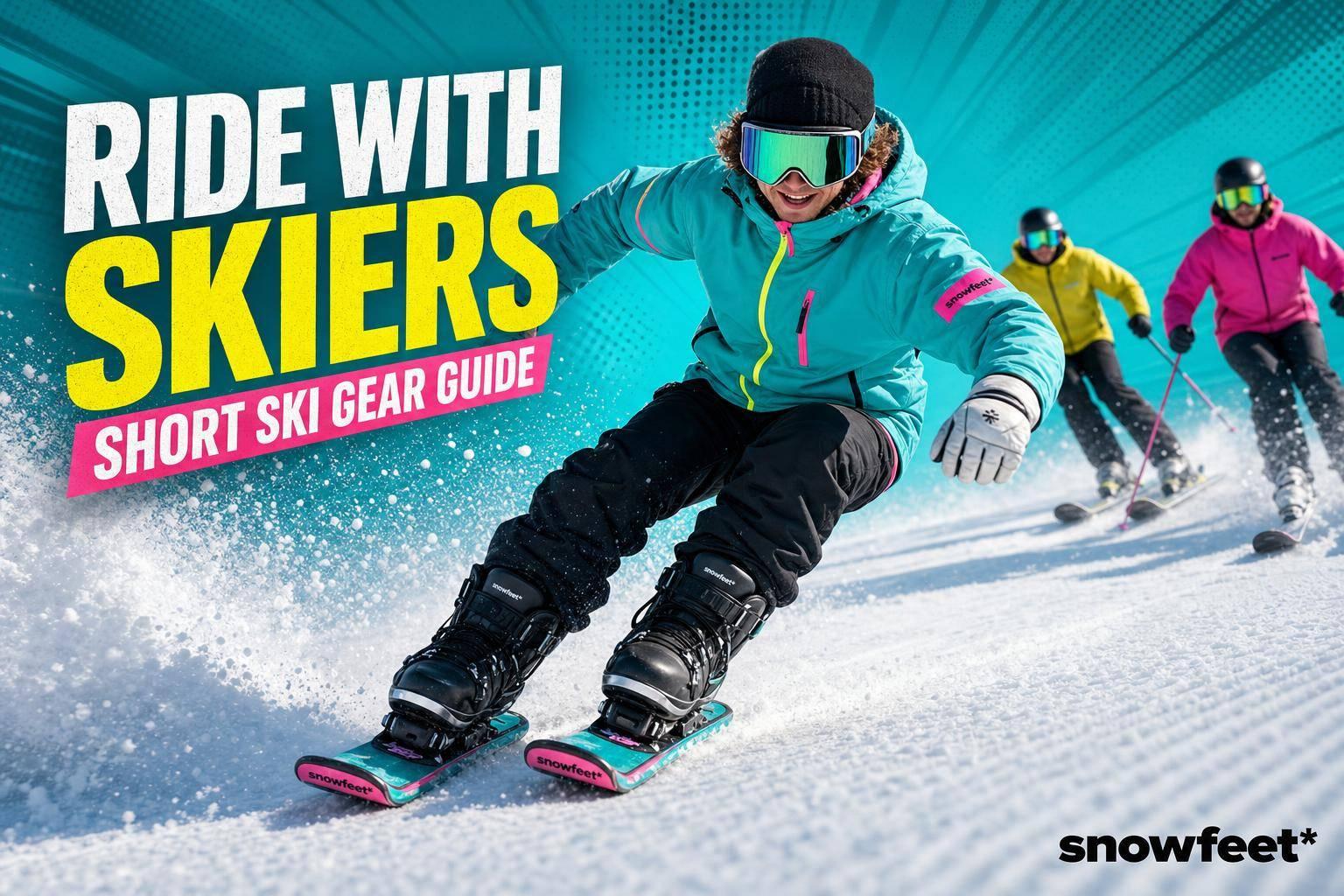
Snowboarder tries Snowfeet* | Which Snowfeet* Short Ski is the Best? | Snowblades 44, 65, 99 Review
Quick Comparison
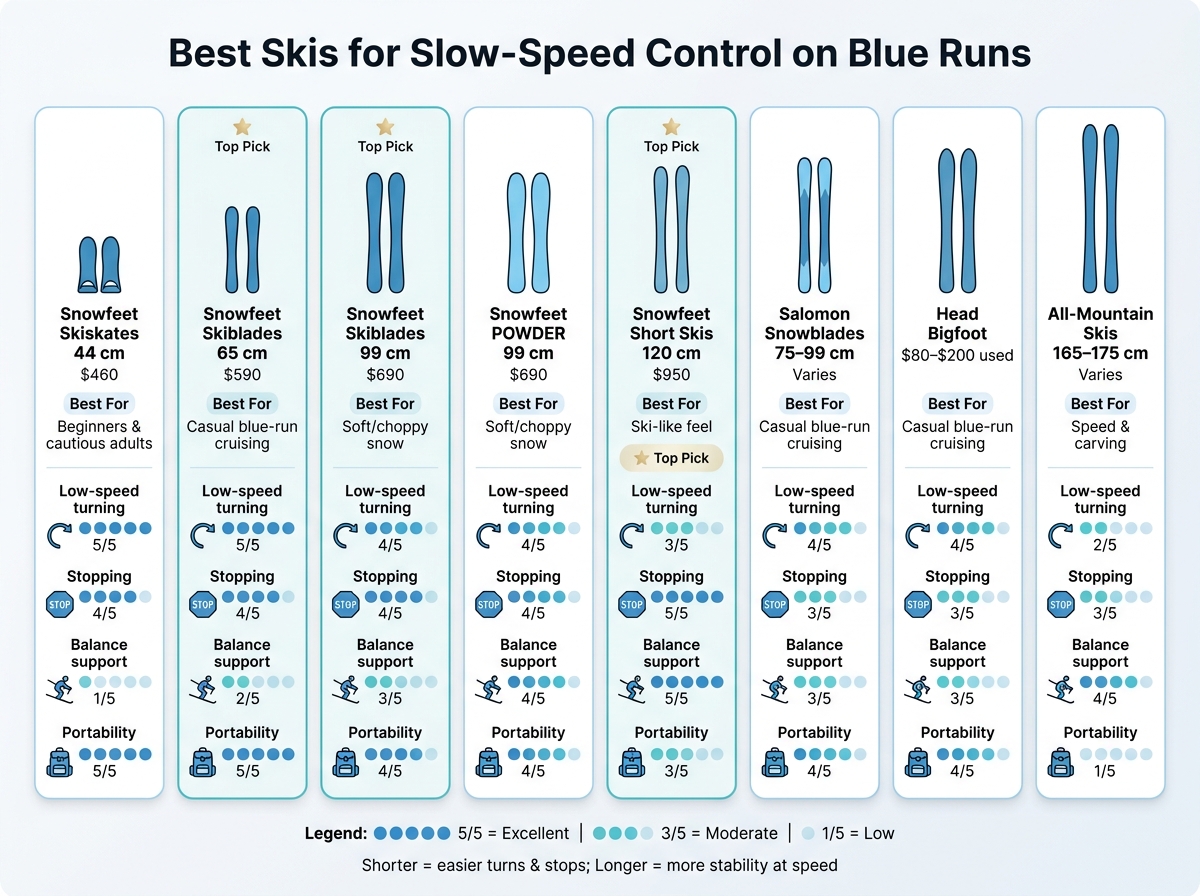
Best Short Skis for Blue Runs: Size vs. Control Comparison
| Ski | Best for | Low-speed feel | Stopping | Balance help | Portability |
|---|---|---|---|---|---|
| Snowfeet* Skiskates 44 cm | Very slow, tight turns | Fast pivot | Fast, but touchy | Least forgiving | Fits in a small bag |
| Snowfeet* Skiblades 65 cm | Beginners, cautious adults | Very easy | Easy and planted | Better than 44 cm | Backpack/trunk friendly |
| Snowfeet* Skiblades 99 cm | Casual blue-run cruising | Smooth and calm | Predictable | Sweet spot for many riders | Easy in most cars |
| Snowfeet* POWDER 99 cm | Soft snow, late-day chop | Calm | Planted in messy snow | More forgiving in rough snow | Easy in most cars |
| Snowfeet* Short Skis 120 cm | More ski-like feel | Smooth | Most forgiving among short skis | Best support in Snowfeet range | Easier than full skis |
| Salomon Snowblades | Old-school short-ski feel | Easy | Fine on groomers | Decent | Easy to carry |
| Head Bigfoot | Cheap used short skis | Easy | Fine at low speed | OK at low speed | Easy to stash |
| All-mountain skis 165–175 cm | Higher speed, longer turns | Needs more input | Strong once set | Calm at speed | Bulky |
A few price points stand out too: Head Bigfoot used pairs often run $80–$200, while Snowfeet* models start around $460 and go up to $950.
If I were helping a friend at the shop, I’d put it like this: go as short as you can without feeling shaky. That one rule gets most people to the right pick fast :)
If you want a bit more context before you buy, these videos can help:
- Short skis / skiblades basics on YouTube
- How to stop on short skis on YouTube
- Blue run ski tips for intermediates on YouTube
Below, I’ll walk through which option fits which kind of skier, without the fluff.
1. Snowfeet* Skiskates 44 cm
If easy control at low speed is the main goal, start with the shortest pick in the bunch. Snowfeet* Skiskates 44 cm are just 17 inches long, so they’re the most compact option here. There’s almost no tip or tail, which means they turn fast and feel super direct under your feet. For cautious adults, skating beginners, and teens, they’re often easier to handle than full-size skis. They shine in slow, confidence-first skiing, not long carved turns.
Low-Speed Turning
This is where they feel at home. Tight turns are easy, and the boot-centered shape makes direction changes fast. If you need to ski in a small space, they make that simple. Quick stops and skate-style pivots feel natural too, especially if you’ve done ice skating or inline skating before.
Stopping Confidence
At slow speeds, stopping feels pretty simple. Turn both feet sideways and you can scrub speed fast. The steel edges bite well on soft groomed snow. On firmer snow, though, the short edge asks for better balance and cleaner form. You’ll want to stay centered and deliberate.
If you like to use a long braking turn, you may feel safer on longer skiblades. But on most blue runs, these are a great match for slow, confidence-building skiing. On crowded or scraped-up blue runs, that quick speed control can feel like a lifesaver.
Balance Support
Side-to-side balance feels stable. Front-to-back balance is less forgiving, so, yeah, stay centered. The nice part is that if you catch an edge, there’s less leverage than on a long ski. That can help nervous riders feel calmer and less rattled.
Portability
At 44 cm, these are easy to carry around. They fit in a small bag, slide into a trunk without a roof rack, and are much less annoying to walk around with in a resort village. If you want gear that’s easy to transport and fast to set up, this is a big plus.
They start at $460. You should also plan for a ski shop to mount and adjust them, which will usually cost about $50–$100.
If you want a bit more stability but still want easy control, the next move is 65 cm.
2. Snowfeet* Skiblades 65 cm
If the 44 cm Skiskates feel a bit too bare-bones, the 65 cm Skiblades give you more support without taking away that easy, low-stress feel. Compared with the 44 cm Skiskates, they give you more stability and better edge grip, yet they still turn with very little effort on groomed blue runs.
That’s the sweet spot here. For beginners, cautious adults, and kids, they’re short enough to pivot fast and long enough to feel steadier underfoot. On blue groomers, that mix can make a big difference.
Low-Speed Turning
At slow speeds, these are easy to steer. A small shift in weight is often enough to start a turn, which helps a lot on busy blue runs when you need to change direction fast.
Compared with the 44 cm Skiskates, the 65 cm shape feels less twitchy and gives you more support. That makes them a strong pick for careful skiing on blue groomers, where control matters more than speed.
Stopping Confidence
Wedge stops and skid stops are easy to pick up. The shorter length makes it simple to bring the blades across the fall line, and the metal edges help them feel secure on groomed snow.
Stopping feels more planted and more predictable than on the 44 cm model. It also feels easier than on full-length skis, which is a big plus when you’re still getting comfortable.
Balance Support
Front-to-back balance is more forgiving than on the 44 cm model. The extra length gives you a slightly longer platform underfoot, and that can help beginners and cautious adults feel steadier during slow, deliberate turns.
Side to side, they stay responsive without feeling too twitchy. That said, they still work best when you stay centered.
Portability
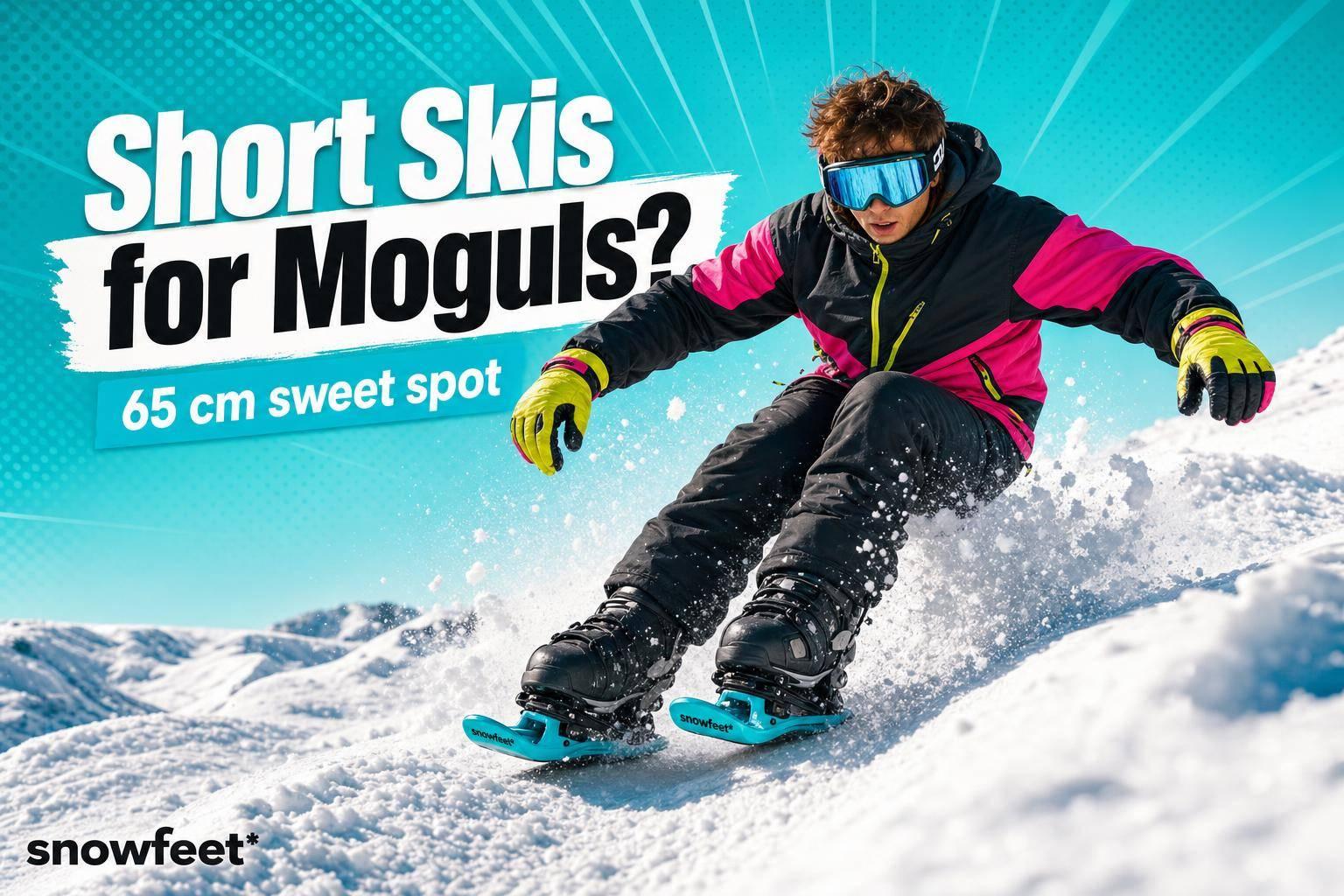
This is one of the best parts of the 65 cm Skiblades. They fit right into a standard backpack, which makes them easy to carry through a lodge, store inside, or toss into a car trunk. Starting at $590, they’re simple to travel with and quick to set up at the mountain.
They’re not made for fast carving, powder, or high-speed stability. If you want more support on blue runs, the 99 cm Skiblades are the next step.
3. Snowfeet* Skiblades 99 cm
If the 65 cm Skiblades feel a bit too zippy, the 99 cm version gives you a calmer, steadier ride. You still get the easy feel of a short ski, but with more support underfoot. That makes them a good match for careful adults and people getting back into skiing who want less twitchiness at slow speed.
Low-Speed Turning
These track straighter and more calmly than the 65 cm model, then roll into turns with a small shift of weight. You don’t need much input to connect short, skidded turns and keep your speed under control on a mellow blue run.
And here’s the nice part: the 99 cm length doesn’t trap you in a long carving arc. So if a turn starts to build too much speed, you can break out of it early and reset.
Stopping Confidence
A quick skid stop works well here and feels more settled on firmer groomed snow than it does with the shorter models. On hard snow, it’s smart to start slowing a bit sooner and use a smooth, gradual skid. That gives you the most control without that “whoa, that got away from me” feeling.
Balance Support
The added length brings more calm under your feet and makes small balance errors less punishing. That’s a big deal if you’re rusty or still building trust in your stance. At the same time, the platform stays short enough to feel quick when you need to fix your line.
Portability
At 99 cm, these skis fit easily in compact cars and SUVs without a roof rack. They’re also easy to carry through the base village, which, honestly, your arms will thank you for :) Off-season storage is simple too. They can stand in a closet or slide into a small gear corner.
Starting at $690, they’re a solid step up for skiers who want more stability without losing the easy convenience of a short ski.
If you want a similar easy-control feel with a more directional shape, the next step is the 99 cm POWDER model.
4. Snowfeet* POWDER 99 cm
Snowfeet* POWDER 99 cm takes the 99 cm platform and adds more width plus a rockered tip. The result? A steadier, more forgiving ride for blue-run skiers than the regular 99 cm Skiblades. You give up a bit of snap, but you get more calm when groomers turn choppy. If the standard 99 cm model feels a touch too lively, this is the middle ground.
Low-Speed Turning
At slow speeds, the wider platform feels calmer and less grabby. That helps a lot when you get a bit off balance. You can link short, controlled S-turns without picking up much speed, and the skis are less likely to catch if your weight moves at the wrong moment. That’s a nice little safety net, especially on a day when your legs aren’t fully awake yet :)
Stopping Confidence
A progressive wedge stop works well here. So does a hockey stop. The wider platform gives you more edge contact when you set the skis across the fall line, which makes stopping on firm groomers feel more planted and less twitchy than the standard 99 cm version.
That added width also helps later in the day, when the snow gets scraped up and a bit messy.
Balance Support
This wider platform helps most on rougher groomed snow. Cautious riders will feel it. Heavier riders will feel it too. And if you like a calmer stance at low speed, this model makes that easier. Another plus: small balance mistakes are less likely to pull you off line, which can make the whole run feel less tense.
Portability
It’s still small next to full-length skis, though it’s not as easy to carry as the 65 cm option. Starting at $690, it lands in the same price range as the standard 99 cm Skiblades, but leans more toward stability and forgiveness for blue runs.
If you want this same kind of control with a longer, more ski-like feel, the 120 cm Short Skis are the next step.
5. Snowfeet* Short Skis 120 cm
The 120 cm Short Skis are the longest Snowfeet* model in this group. That means they feel the closest to a regular ski, but they’re still easier to manage than full-length skis. They’re also the premium pick here - and the priciest Snowfeet* option in this lineup at $950 - for riders who want the most stability.
Low-Speed Turning
At 120 cm, these skis give you enough length to make turns feel smooth without feeling clunky. The sidecut helps them start a turn with less effort, so on groomed blue runs, you don’t have to fight the edges to get them moving.
Stopping Confidence
The extra length gives you more edge on the snow, which helps a lot when it’s time to slow down or stop. Snowplows feel easier here than on longer skis, and parallel stops come more naturally too. That’s a nice combo if you want control without a lot of drama.
Balance Support
This is where the 120 cm model shines. It feels more stable and more familiar than the 65–99 cm models, but it doesn’t ask for the same level of balance and precision as a full-length ski. That middle ground is a sweet spot for a lot of riders.
These also use standard release ski bindings. That adds an extra safety layer the shorter non-release models don’t have, which is a big deal.
Portability
These are the least portable Snowfeet* model, no doubt. Still, they’re easier to pack and carry than full-length skis. Next up, it helps to stack them against mainstream short-ski picks like Salomon Snowblades and Head Bigfoot.
sbb-itb-17ade95
6. Salomon Snowblades
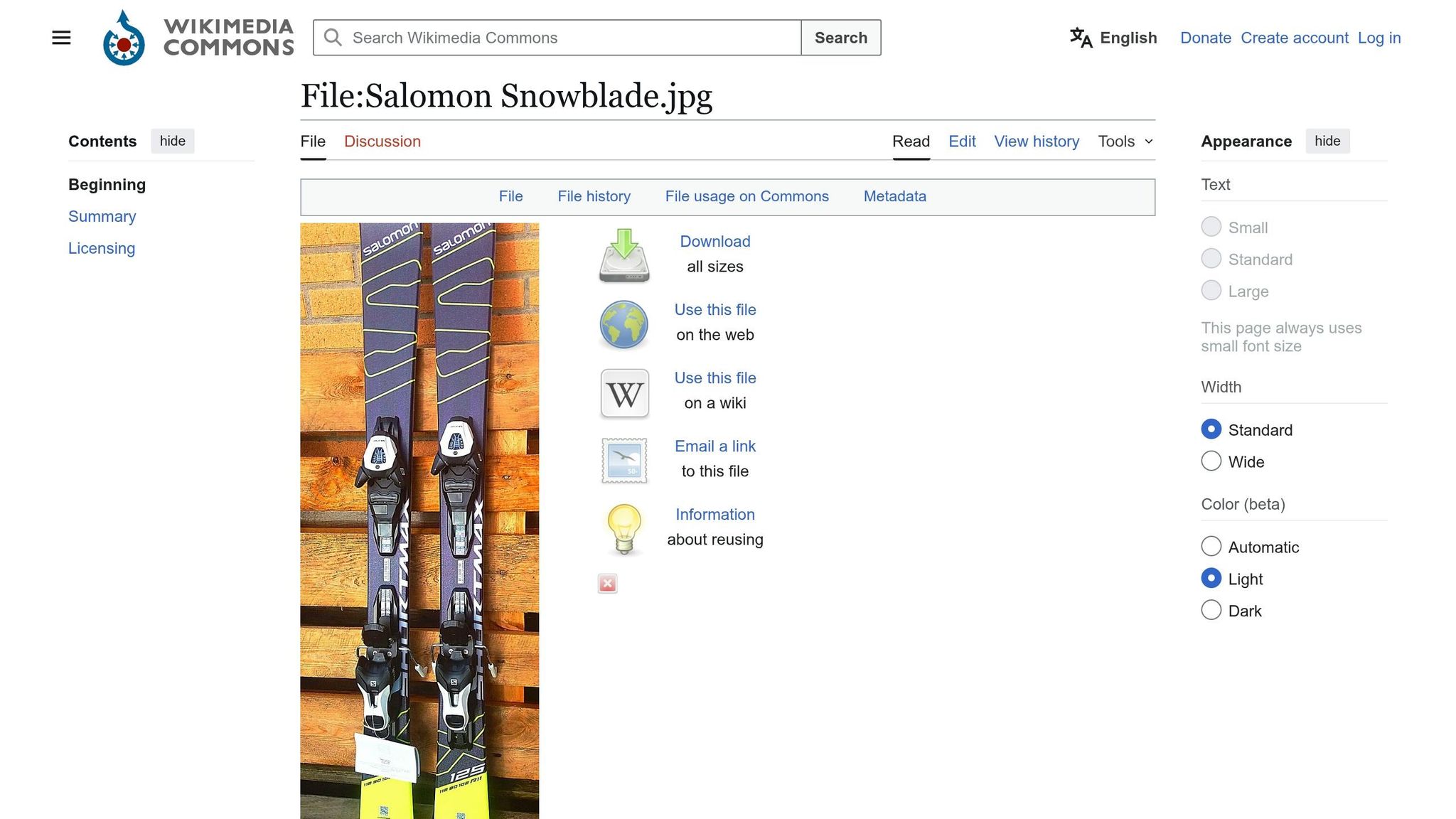
Salomon Snowblades are a classic short ski, usually 75–99 cm long. On groomed blue runs, they do well at slower speeds and feel more like regular skis than many ultra-short options. So if you want that familiar ski vibe, they make sense. Still, they lean much closer to standard ski gear than Snowfeet*.
Low-Speed Turning
Their deep sidecut helps the skis start turns with little effort on groomed blue runs. Short, controlled turns feel natural. They also move edge to edge fast enough for narrow connectors and cat tracks.
That said, the feel is still more like a normal ski. You get that classic turning style, but not the same small, easy-to-carry setup that Snowfeet* gives you.
Stopping Confidence
Skidded stops and wedge turns tend to feel easier than they do on full-length skis. That’s a nice plus, especially if you want something less demanding.
But firm snow is where the short edge starts to show its limits. On hardpack or icy groomers, there’s less edge in contact with the snow, which means less grip than the Snowfeet* 99 cm or 120 cm models.
Balance Support
They’re fairly forgiving if you make small mistakes with tip or tail pressure. That helps.
Still, you need to stay centered. If you get in the back seat, the short tail gives you less room to recover. In plain English: these won’t bail you out as much when your stance slips.
Portability
They’re much easier to carry than full-length skis. No doubt about that.
But they’re still far less compact than Snowfeet* models. If small size and tight control matter more to you than that standard ski feel, Snowfeet* Skiskates 44 cm are the next step down.
7. Head Bigfoot
Head Bigfoot is a short, wide, twin-tip ski with a deep sidecut. It turns with very little effort at low speed. But let’s be honest: it feels more like a throwback than a modern ski built around easy control. Used pairs are still easy to find, and they usually sell for $80–$200. That low price is a big part of the appeal, and it’s also where Bigfoot starts to shine.
Low-Speed Turning
Bigfoot is easy to pivot on mellow blue groomers. The short length and deep sidecut make it feel quick from edge to edge, and you don’t have to fight it to change direction. That kind of easy turning is nice when you’re still getting the hang of speed control.
Stopping Confidence
At slow speeds, snowplows and skid turns feel simple and predictable. That’s the good news. Once speed picks up, the ski starts to feel less sure on firm snow, and control can slip away faster than you’d like.
Balance Support
The short platform can feel less intimidating than a longer ski. You’re not stuck in a long arc, which helps when you want to make small, quick corrections. At the same time, once you move faster, it gives you less directional support than a longer all-mountain ski.
Portability
This is one area where Bigfoot is just plain convenient. Its short length makes it easy to carry, stash in a car, or tuck away in storage. For families and occasional skiers, that’s a nice little bonus.
Bigfoot still has a place for skiers who want that playful short-ski feel. But once you compare it with standard all-mountain skis, you start to see the tradeoff: easy low-speed turning, less control as things speed up.
8. Standard All-Mountain Skis (165–175 cm)
Standard all-mountain skis are the do-it-all option most people picture first. They can handle a lot, but they lean more toward speed and longer turns than slow, easy control on blue runs. So this is the baseline: solid when you pick up pace, less forgiving when you want to take it easy.
Low-Speed Turning
At slow speeds, shorter and softer skis usually feel easier to turn. Full-length all-mountain skis can still turn well, but they tend to ask for more speed and a bit more work before they feel smooth.
Stopping Confidence
Long skis stop well once you get them on edge. But shorter skis are often easier to pivot into wedge stops and skid stops, which tends to feel simpler for beginners. Shorter tools like Snowfeet* skiblades and skiskates can also pivot into a stop faster at lower speed, and that often feels more natural early on.
Balance Support
A longer ski gives you more fore-aft support once you're moving. Small wobbles, icy patches, and chopped-up afternoon snow usually feel calmer on a 165–175 cm ski than on Snowfeet* skiblades or skiskates.
Still, there’s a catch. If your stance gets off, those longer tails can make it harder to recover. For kids, smaller adults, and careful skiers, full-length skis can feel like a lot of ski at slow speed.
Portability
This is where full-length skis can be a pain. They’re heavy, long, and awkward to carry around the parking lot or pack for a trip. Most people need a roof rack or ski bag, while Snowfeet* models fit in a trunk or are just plain easier to carry.
Standard all-mountain skis make the most sense for skiers who already ski parallel and want to move into higher speeds, longer carving runs, and tougher terrain. For careful adults, beginners, or anyone who just wants easy, low-stress cruising on groomed blues, that extra length can work against them more than it helps.
| Factor | Standard All-Mountain Skis (165–175 cm) |
|---|---|
| Low-speed turning | Better with more speed and effort |
| Stopping | Strong once edged, slower to pivot |
| Balance support | Calmer at speed and in rough snow |
| Portability | Heavy and awkward to carry |
Next up, it helps to put these trade-offs side by side so you can see what fits your pace, balance, and carry needs best.
How Each Option Performs on Blue Runs
Put them side by side and the pattern is pretty clear: shorter Snowfeet models are easier to turn and stop on blue runs. Shorter skis react faster. Longer skis feel calmer and steadier. That one trade-off shapes every pick here.
Low-Speed Turning
Snowfeet* Skiskates 44 cm and Skiblades 65 cm turn the fastest. They feel a bit like skating, so you can pivot with very little effort. That’s handy near lift exits or when you want tight, linked turns on narrower blue trails.
The 99 cm, 120 cm, Snowblades, and Bigfoot turn in a slower, smoother way. Even so, they’re still much easier to steer than full-length skis. By comparison, full-length skis need more speed and more input before they start to feel smooth.
That’s why the 65 cm, 99 cm, and 120 cm Snowfeet models fit most blue-run needs better than long skis.
Stopping Confidence
The 44 cm stops the fastest, but it also asks more from your balance. The 65 cm feels easier and a bit more planted.
The 99 cm and 120 cm feel the calmest and most predictable. The longer edge helps them stay more planted through the stop. For most casual blue-run riders, Snowfeet 65 cm to 120 cm gives the best mix of easy control and low stress.
Balance Support
The 44 cm is the least forgiving. You need active ankle control, and yeah, it keeps you honest.
The 65 cm gives you more stability. The 99 cm and 120 cm land in the sweet spot for cautious adults. They give you enough platform that a slightly off stance won’t cause an instant problem.
Salomon Snowblades and Head Bigfoot are in a similar zone to the 99 cm models. They’re shorter and wider than full-length skis, with a forgiving platform. But they’re older short-ski options, not designs built with easy control as the main goal.
Full-length skis feel the calmest at speed once your technique is solid.
Portability
Control matters. But let’s be honest: gear is a lot nicer when it’s easy to carry too :)
The 44 cm is backpack-sized. The 65–99 cm range fits in most car trunks without a roof rack. The 120 cm is still easy enough to manage without one. 165–175 cm skis usually need a roof rack or a ski bag.
| Criterion | Skiskates 44 cm | Skiblades 65 cm | Skiblades / POWDER 99 cm | Short Skis 120 cm | Salomon Snowblades / Head Bigfoot | All-Mountain 165–175 cm |
|---|---|---|---|---|---|---|
| Low-speed turning | Instant pivot | Very quick | Smooth and flowing | Traditional short-ski feel | Playful, gradual | Needs speed and effort |
| Stopping confidence | Fast stop, demands balance | Easy, more planted | Calm and predictable | Most forgiving stop | Reliable on groomed snow | Strong once edged, slow to pivot |
| Balance support | Minimal platform | Compact, improved | Fore-aft sweet spot | Best among short formats | Forgiving, stable platform | Most stable at speed |
| Portability | Backpack-sized | Trunk-friendly, no rack | Trunk-friendly for most cars | Manageable without a rack | Similar to short skis | Roof rack or ski bag usually required |
Those trade-offs make more sense once you look at the pros and cons next.
Pros and Cons
Here’s the fast way to trim the list: what each ski does well, where it falls short, and who should pick it.
| Item | Pros | Cons | Best fit | Skip if |
|---|---|---|---|---|
| Snowfeet* Skiskates 44 cm | Very easy to pivot at low speed; easy to carry and pack | Can feel shaky on icy morning corduroy; short edge makes steeper sections harder | Adults or teens with a skating background who want slow-speed control on mellow blue groomers | You’re a total beginner, or you ski icy and steeper blue runs |
| Snowfeet* Skiblades 65 cm | Starts turns fast; naturally keeps speed down | Can feel twitchy on hard snow or in small ruts | Careful adults or confident kids moving from green to easy blue runs | You want to ski fast or build toward advanced carving |
| Snowfeet* Skiblades 99 cm | More edge grip than shorter blades; still easy to turn; good for easy cruising | Less stable at higher speeds; front-to-back balance takes more care | Casual resort skiers cruising blue runs at easy speeds | You want strong, high-angle carving on steeper terrain |
| Snowfeet* POWDER 99 cm | Extra width helps with stability and gives more room for error in soft or slushy afternoon snow | Doesn’t hold as cleanly on firm ice | Riders skiing softer, slushier blue-run snow | You mostly ski firm Eastern hardpack or icy morning groomers |
| Snowfeet* Short Skis 120 cm | Better edge hold on firmer groomers while still feeling friendly at slow speeds | Heavier and less portable than shorter models | Adults working on solid technique on blue groomers | Portability is your top goal |
| Salomon Snowblades | Easy to pivot and start turns on groomed terrain | Can lead to too much skidding; limited once you leave groomed runs | Casual skiers who want that old-school short-ski feel and easy pivoting on groomed blues | You want to build strong carving skills or ski beyond groomed runs |
| Head Bigfoot | Forgiving; helps low-speed skiing and short turns feel less scary | Older binding setup; not a great pick for heavier skiers or hard charging | Easy, low-pressure skiing on moderate blue groomers where confidence matters most | You’re a heavier skier or want to move into solid carving |
| Standard All-Mountain Skis (165–175 cm) | Most stable at moderate speed; best edge grip on wide groomers and chopped-up snow | Tougher to pivot at very low speeds; can feel more intimidating for nervous learners | Stronger intermediates who are already at ease on blues and want longer carving turns | Slow-speed maneuvering and easy stops are your main goals |
Think of it like this: shorter skis feel more like a go-kart. Easy to steer, easy to slow down, kind of a blast. Longer skis feel more like a sedan on the highway. Smoother, calmer, and better once speeds climb.
Use these trade-offs to narrow the field before the final verdict.
Final Verdict: Which Ski Fits Your Needs
After looking at turning, stopping, balance, and portability, the answer is pretty simple. In most cases, the best pick is the shortest ski that still feels stable.
If you want the option that feels least intimidating, start with 44 cm or 65 cm. Go with 99 cm Skiblades for groomed blue runs, POWDER 99 cm for soft or chopped-up snow, and 120 cm Short Skis if you want something that feels more like a ski while still staying short and easy to handle.
Choose 165–175 cm all-mountain skis only if speed, long carving turns, and firm-snow stability matter more to you than easy control at low speeds. For most casual riders, Snowfeet* makes more sense. Longer skis pull ahead only when speed and bigger turns matter more.
Use this quick guide to match ski length with your style:
| Rider type | Best match | Why it works | Choose a longer ski instead if… |
|---|---|---|---|
| Nervous beginner or cautious adult | Snowfeet* Skiskates 44 cm or Skiblades 65 cm | Easiest to control at low speed | You're already comfortable and want to ski faster |
| Casual intermediate on groomed blues | Snowfeet* Skiblades 99 cm | Good mix of control and stability | You want long carved turns or higher speeds |
| Soft-snow or variable-condition rider | Snowfeet* POWDER 99 cm | Most forgiving in soft, chopped snow | You mostly ski firm groomers |
| Rider wanting ski-like control in a short platform | Snowfeet* Short Skis 120 cm | More ski-like feel, still forgiving at slow speeds | You're ready to move to steeper terrain and more speed |
| Progressing intermediate or advanced skier | Standard all-mountain skis (165–175 cm) | Best for speed and longer turns | Slow-speed maneuvering and easy stops are your priority |
FAQs
How short is too short for me?
The right length comes down to your skill level and what matters most to you. If you go too short, you can lose stability when you pick up speed or head onto mixed terrain.
Snowfeet* Skiskates (44 cm) and Mini Ski Skates (38 cm) feel nimble and fun on groomed runs, but they give you less support. For most riders, 65 cm or 99 cm hits the sweet spot. You get a nice mix of control and stability. If you want something that feels more planted and closer to regular skis, 120 cm is the better pick, especially on steeper runs.
Are short skis harder to balance on?
No. Short skis are often easier to control and learn on than long skis because they’re compact and less intimidating.
The ultra-short 44 cm Skiskates feel the most nimble. They turn fast and react right away. Snowfeet models in the 65 cm to 120 cm range give you more stability and a smoother, more forgiving ride, which makes them a solid pick for beginners and casual riders.
Do I need regular skis if I want to improve?
No. You don’t need long, standard skis to build control and feel more sure of yourself on the slopes.
Regular skis can feel big, heavy, and a bit awkward at first. By contrast, Snowfeet gear like 65 cm, 99 cm, and 120 cm Skiblades is made to help you pick up turning, stopping, and balance with less effort and less leg burn.
Shorter skis are easier to move around and more forgiving, so progress can feel a lot less like a fight and a lot more like, “Okay, I’ve got this.” :)











Оставить комментарий
Этот веб-сайт защищается hCaptcha. Применяются Политика конфиденциальности и Условия использования hCaptcha.