



















If you want to hit the slopes without spending hours in lessons, Snowfeet has you covered. Their gear - like Skiskates and Skiblades - is designed for quick learning and easy control. Unlike longer, more traditional skis or snowboards, Snowfeet products are shorter, lighter, and more forgiving, making them perfect for beginners or casual skiers. Plus, many models work with regular winter boots, saving you money and hassle.
Here’s the breakdown:
- Skiskates (44 cm): Feels like skating on snow. Quick to learn, compact, and budget-friendly ($150–$250).
- Skiblades (65 cm): Great for tight turns and green runs. Slightly pricier ($635+).
- Skiblades (99 cm): Adds more stability for blue runs. Costs start around $675.
- Short Skis (120 cm): Closer to traditional skis but easier to handle. Priced at $775.
- Beginner Skis & Snowboards: Longer learning curve, bulkier, and often require lessons. Costs range from $400–$700+.
Quick Comparison
| Product | Length | Learning Curve | Price Range (USD) | Footwear Compatibility | Best For |
|---|---|---|---|---|---|
| Snowfeet Skiskates | 44 cm | 1–2 sessions | $150–$250 | Winter/snowboard boots | Easy green runs, portability |
| Snowfeet Skiblades | 65 cm | 5 mins–1 day | $635+ | Ski/snowboard boots | Green runs, quick turns |
| Snowfeet Skiblades | 99 cm | 1–2 days | $675+ | Ski/snowboard boots | Green/blue runs |
| Snowfeet Short Skis | 120 cm | 1 session | $775 | Ski boots | Blue runs, carving |
| Beginner Skis | 140–170 cm | 3–6 days | $400–$700+ | Ski boots | All-mountain skiing |
| Beginner Snowboards | 140–160 cm | 3–6 days | $350–$450+ | Snowboard boots | Green runs, carving |
Snowfeet gear is portable, easy to use, and skips the steep learning curve of traditional setups. If you’re looking for a simple, fun way to enjoy the snow, these are solid options.
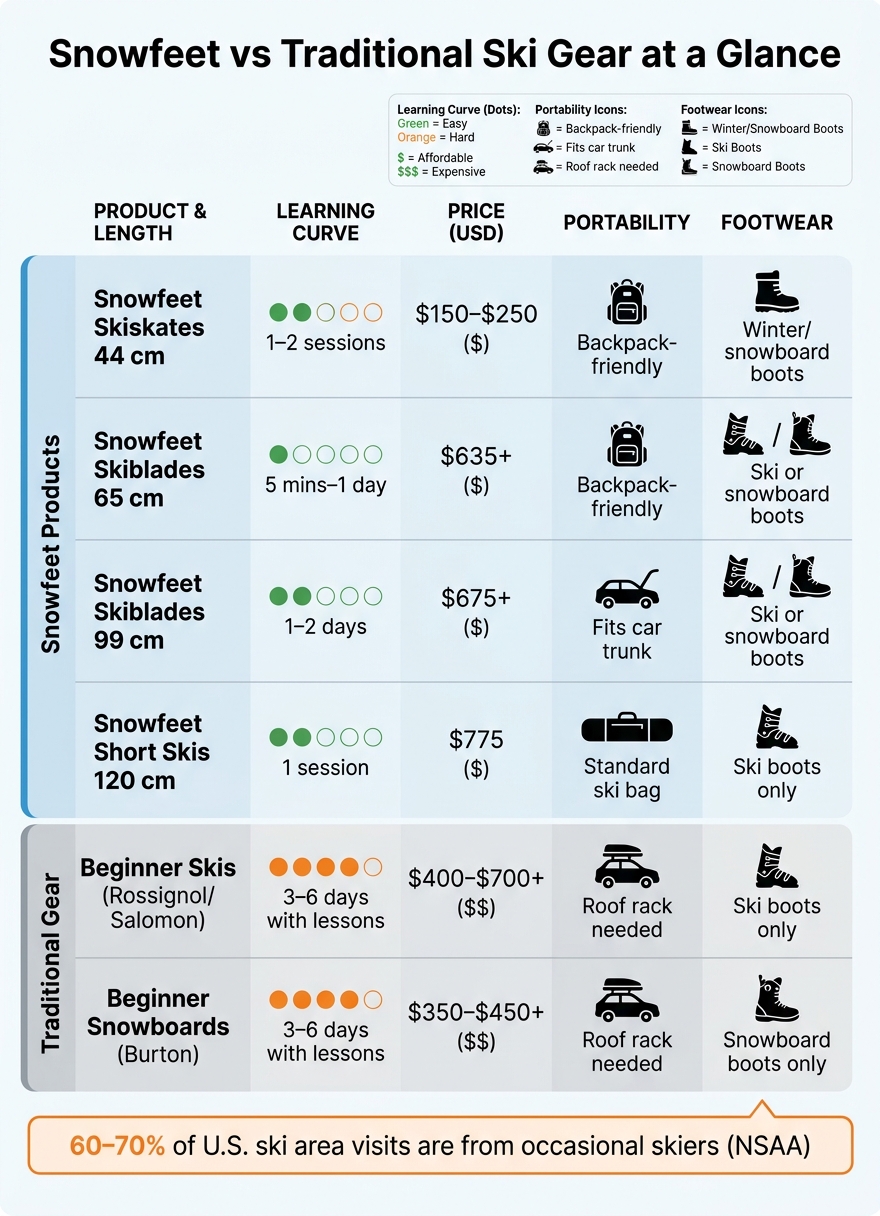
Snowfeet vs Traditional Ski Gear: Learning Curve, Cost & Portability Compared
1. Snowfeet* Skiskates 44 cm
Quick Learning Without Lessons
At just 17 inches (44 cm) long, Snowfeet* Skiskates make it easy to get started on the slopes, even without formal lessons. Many users find they can pick up basic gliding and simple turns in just one afternoon - especially if they have experience with ice skating or rollerblading. For complete beginners, it typically takes one or two half-day sessions on a gentle green slope to feel comfortable and in control. This quick learning process makes them ideal for anyone looking for a fast and fun way to enjoy the snow.
Smooth Control at Moderate Speeds
These skates shine on groomed green and mellow blue runs, where they respond quickly to subtle movements. Even small shifts of your ankles or knees are enough to steer them. Stopping feels natural too, as most riders instinctively use a sideways sliding stop. However, at higher speeds or on rough, uneven snow, the shorter edges provide less stability. For the best experience, stick to well-maintained, less crowded slopes. Snowfeet* Skiskates are all about keeping things simple and fun.
Compact and Easy to Store
Weighing just 2–3 pounds, these skates are incredibly portable. They fit easily into a backpack or carry-on, so there’s no need for bulky ski bags. This makes them a great option for anyone with limited storage space, like apartment dwellers or families.
Works with Common Winter Footwear
Snowfeet* Skiskates attach to winter boots, hiking boots, or snowboard boots, as long as they provide good ankle support and have solid soles. Avoid using soft fashion boots or low-top shoes. It’s a good idea to test your setup on flat ground before heading up the lift.
Affordable Price Tag
Priced between $150 and $250 (with bundles costing $250–$300), Snowfeet* Skiskates are a budget-friendly alternative to traditional skiing. Compared to beginner ski packages, which can cost $350–$600+, and lessons that range from $100–$200 per group day (or $400+ for private lessons), these skates offer a more economical way to enjoy the slopes. Their affordability is a big draw for first-timers and casual snow enthusiasts.
| Feature | Snowfeet* Skiskates 44 cm (~17 in) | Typical Beginner Ski Package |
|---|---|---|
| Length | 44 cm (~17 in) | 140–160 cm (55–63 in) |
| Footwear Needed | Winter or snowboard boots | Dedicated ski boots |
| Portability | Backpack-friendly | Requires a ski bag |
| Typical U.S. Price | $150–$250 | $350–$600+ |
| Avg. Time to Basic Control | 1–2 half-day sessions | Several days with coaching |
2. Snowfeet* Skiblades 65 cm
Learning Curve Without Lessons
At just 25.5 inches long, the Snowfeet* Skiblades 65 cm sit comfortably between ultra-compact Skiskates and traditional skis. According to Snowfeet*, it takes only about 5 minutes to get the hang of these skiblades. While that claim might be a bit ambitious, the shorter length definitely makes learning easier for beginners. With less ski underfoot, there’s a lower chance of catching an edge or crossing tips - a big relief for first-timers. Once you’ve got the basics, these skiblades provide great maneuverability, making them a solid choice for low to moderate speeds on the slopes.
"Strap in and ride - no lessons needed." - Snowfeet*
If you’ve ice skated, rollerbladed, or played hockey before, you’ll probably catch on quickly. The movements feel pretty natural, and most people can teach themselves how to handle green runs without much trouble.
Control at Low to Medium Speeds
The Snowfeet* Skiblades are best suited for groomed slopes, moguls, and terrain parks. Their full metal steel edges provide solid stopping power on packed snow, while the compact size allows for quick, short-radius turns that help control speed. That said, they’re not built for high-speed runs or icy conditions - longer skis offer better stability in those scenarios.
Portability and Storage
One of the biggest perks of the 65 cm Skiblades is how portable they are. They’re small enough to fit in a backpack, so you don’t need a roof rack or a bulky ski bag. Toss them in your car trunk, and you’re good to go. This makes them ideal for city dwellers or casual skiers who don’t want to deal with the hassle of traditional ski gear.
Footwear Compatibility
The Skiblades come in two binding options: one for standard ski boots (sizes US 4.5–14.5) and another for snowboard boots (sizes US 6–14.5). The snowboard binding version is designed to be less clunky than typical setups, making it easier to walk around the resort. Whichever option you choose, a snug fit ensures better responsiveness and control. This dual-binding system highlights Snowfeet*’s focus on ease of use and accessibility.
Price Range (USD)
The Snowfeet* Skiblades 65 cm start at $635 on their official website, with premium wood-core models priced at $690. While the cost is similar to beginner ski-and-binding packages from brands like Rossignol or Salomon, these skiblades offer a compact, hassle-free way to enjoy skiing without lessons.
| Feature | Snowfeet* Skiblades 65 cm | Traditional Beginner Skis (e.g., Rossignol, Salomon) |
|---|---|---|
| Length | 65 cm (~25.5 in) | 140–160 cm (55–63 in) |
| Best Terrain | Groomed runs, moguls, parks | Groomed runs, varied terrain |
| Footwear Options | Ski boots or snowboard boots | Dedicated ski boots only |
| Portability | Backpack-friendly | Requires ski bag or roof rack |
| Starting Price (USD) | From $635 | $400–$700+ (skis + bindings) |
| Avg. User Rating | 4.89/5 (2,297 reviews) | Varies by model |
3. Snowfeet* Skiblades 99 cm
Learning Curve Without Lessons
The 99 cm Skiblades take the foundation of the 65 cm version and add more fore-to-aft stability. What does that mean for beginners? Less wobbling and fewer unexpected spills. Adults with experience in skating sports (like ice skating or rollerblading) often feel at ease with straight gliding and basic wedge turns within a couple of hours on a mellow green run. By the end of the first day, most can link wedge turns, and after a couple of days, they’re confidently exploring easy blue runs. This added stability makes turning smoother and stopping safer, even on more varied terrain.
"I had a lot of fun with the 99s. They are easier to turn than skis. The kids tried them as well and boasted about them." - MindySue
Control at Casual Speeds
At slower speeds, these skiblades are responsive without feeling unstable. Unlike traditional skis, which often require hours of lessons to master, these blades make it easy to pivot and steer right from the get-go. This quick responsiveness is especially handy on crowded green runs, where sharp turns and quick stops are often necessary. The wedge stop is simple to execute, thanks to the shorter edges compared to the 150–160 cm skis typically used for beginners. That’s why they shine brightest on groomed trails.
"These ski blades are a blast to use. Super easy to control, quick to turn, and way more forgiving than traditional skis. They're great for carving and navigating crowded slopes without feeling bulky." - Brad Tolin
Portability and Storage
Just like the 65 cm version, the 99 cm Skiblades are incredibly portable. Their compact size means they can slide into most car trunks without needing to fold down seats and can easily be tucked away in a closet or small apartment. If you’re flying to ski destinations like Colorado, Utah, or Vermont, they fit snugly into small ski bags or even oversized luggage. No need to wrestle with full-length skis or roof racks!
Footwear Compatibility
The 99 cm Skiblades come with two binding options: ski boots (US sizes 4.5–14.5) or snowboard boots (US sizes 6–14.5). The snowboard binding option is perfect for those who want extra comfort and flexibility when walking around the resort, while the ski boot binding integrates seamlessly with standard rental boots at most ski areas.
Price Range (USD)
Starting at $675 on the official Snowfeet* website, these skiblades offer a lot of bang for your buck. For comparison, beginner ski packages from brands like Rossignol or Salomon typically cost $400–$700 just for skis and bindings. Add $150–$300 for boots, and you’re looking at a much higher total. With the 99 cm Skiblades, you get an all-in-one binding solution, a shorter learning curve, and no need for lessons - making them a smart, budget-friendly way to hit the slopes.
| Feature | Snowfeet* Skiblades 99 cm | Traditional Beginner Skis (e.g., Rossignol, Salomon) |
|---|---|---|
| Length | 99 cm (~39 in) | 150–170 cm (59–67 in) |
| Best Terrain | Groomed runs, easy blues, parks | Groomed runs, varied terrain |
| Footwear Options | Ski boots or snowboard boots | Dedicated ski boots only |
| Portability | Fits in most car trunks, smaller bags | Requires full-length ski bag or roof rack |
| Starting Price (USD) | From $675 | $400–$700+ (skis + bindings) |
| User Rating | 5.0/5 | Varies by model |
Snowboarder tries Snowfeet* | Which Snowfeet* Short Ski is the Best? | Snowblades 44, 65, 99 Review
4. Snowfeet* Short Skis 120 cm
The Snowfeet* 120 cm Short Skis strike a balance between the compact feel of the 99 cm Skiblades and the traditional skiing experience. At 47 inches long, they’re still much shorter than the standard 150–165 cm skis commonly found at rental shops, making them a great middle ground for those who want something more like classic skis without the extra bulk.
Easy to Learn Without Lessons
These 120 cm skis are designed to make learning straightforward. Their forgiving length helps beginners feel confident while still offering enough control for carving turns. Most people can master basic turns on green runs after just one session. Plus, their shorter size reduces common beginner issues like tip crossing, making it easier to pivot and maintain balance.
"Short skis provide more fun and freedom of movement, they are playful, responsive, lightweight on your feet, easier to stop, and for many skiers easier to ride as opposed to cumbersome long skis." - Snowfeet*
Perfect for Low to Medium Speeds
With a soft-to-medium flex and a slightly rockered tip, these skis are built for casual cruising. They’re responsive and easy to maneuver, especially at speeds between 5 and 20 mph, which is great for beginners sticking to groomed runs. Stopping and side-slipping are a breeze, but keep in mind that their shorter edges won’t provide as much stability for high-speed descents or steeper slopes. These skis are all about fun and control on mellow terrain.
Compact and Convenient
At just 120 cm, these skis are incredibly portable. They fit into most car trunks, making them ideal for quick trips to resorts in places like Colorado or Vermont. Storage is simple too - they can stand upright in a closet, which is a big plus for apartment dwellers. If you’re flying, their compact size means they’ll slide into a standard ski bag with ease, saving you the hassle of lugging around oversized gear in crowded airports.
Works with Standard Ski Boots
The 120 cm Short Skis come equipped with alpine ski bindings that are compatible with regular ski boots (US sizes 4.5–14.5). Unlike some shorter skis that work with snowboard boots or winter shoes, these require proper ski boots, which provide the ankle support and edge control beginners need. Just make sure a ski technician adjusts the DIN settings to match your weight, height, and skill level for optimal safety.
Price and Value
The Snowfeet* Short Skis 120 cm are priced at $775 on the official website. While this is more than the 99 cm Skiblades, it’s still competitive compared to entry-level all-mountain ski packages from brands like Rossignol or Salomon, which typically cost $350–$600+ for skis and bindings alone. Add in the cost of new ski boots ($200–$400) and lessons, and the 120 cm Short Skis start to look like a solid deal, especially since they’re easier to learn on, potentially cutting down your need for professional instruction.
| Feature | Snowfeet* Short Skis 120 cm | Traditional Beginner Skis (e.g., Rossignol, Salomon) |
|---|---|---|
| Length | 120 cm (≈47 in) | 150–165 cm (59–65 in) |
| Best Terrain | Groomed greens and easy blues | Groomed runs with varied terrain |
| Footwear Options | Standard ski boots only | Standard ski boots only |
| Portability | Fits in most car trunks; standard ski bag | Typically require full-length ski bags or roof racks |
| Starting Price (USD) | $775 (bindings included) | $350–$600+ (skis + bindings) |
| Brand Rating | 4.89/5 (2,297 reviews) | Varies by model |
sbb-itb-17ade95
5. Standard Beginner All-Mountain Skis (e.g., Rossignol Experience, Salomon QST)
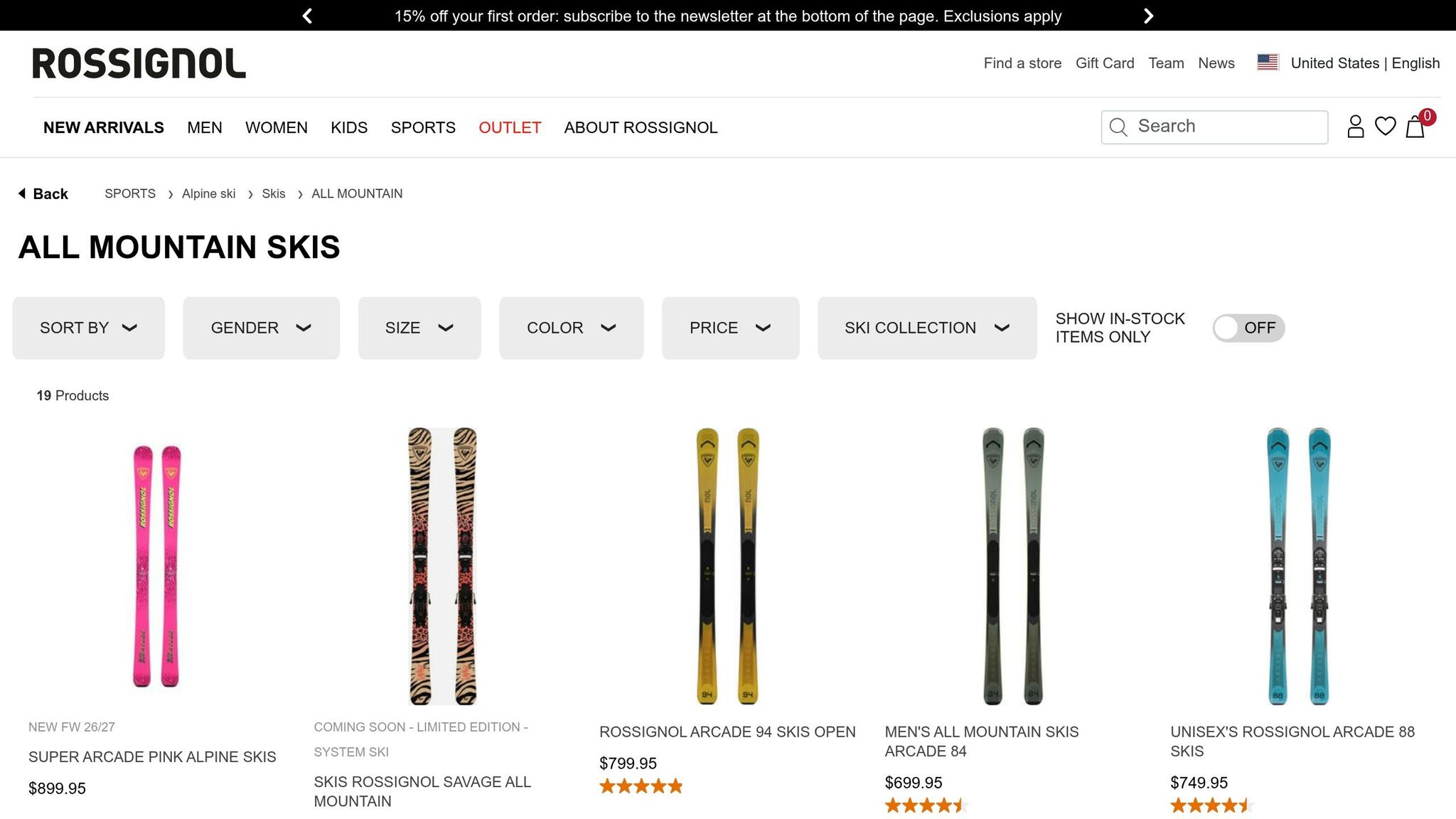
Classic all-mountain skis like the Rossignol Experience 76 and Salomon QST 94 are a common sight at resorts in places like Colorado or Vermont. But if you're thinking about skipping lessons, these skis might not be your best bet. Their design and functionality require a bit more know-how, which is where Snowfeet* products offer a simpler, more beginner-friendly option.
Learning Curve Without Lessons
The Experience 76 is designed with a soft, forgiving flex to make turning easier, but according to expert tester Justin Park, it's not ideal for someone learning on their own from day one. Meanwhile, the QST 94, with its stiffer build, works better for those who already have some skiing experience. Without proper training, both models can feel tricky to handle because they demand good balance and precise weight distribution. In contrast, Snowfeet* gear is built for an intuitive, jump-right-in approach.
"While the QST 94s are slightly stiffer and heavier than some dumbed-down beginner skis, we found them easy to initiate turns with and very stable and predictable." - Justin Park, Expert Tester
Control at Low to Medium Speeds
Both the Experience 76 and QST 94 perform well on groomed runs, but their longer lengths make them harder to manage for beginners teaching themselves. With lengths ranging from about 136 cm (53.5 inches) to 188 cm (74 inches), they can feel bulky, especially on tight trails or in crowded areas. Snowfeet*, on the other hand, offers compact designs that are easier to control in these scenarios.
Portability and Storage
Traditional skis, especially those up to 188 cm long, can be a hassle to store or transport. You'll likely need a roof rack or extra storage space, which isn't an issue with the compact and travel-friendly Snowfeet* options.
Footwear Compatibility
These skis require specific downhill ski boots. The Experience 76 is compatible with both Alpine (ISO 5355 A) and GripWalk (ISO 23223 A) boot soles.
Price Range (USD)
| Model | Price (USD) | Bindings Included? | Skill Level |
|---|---|---|---|
| Rossignol Experience 76 | $450–$480 (sale: ~$247) | Yes | Beginner to Intermediate |
| Salomon QST 94 | ~$700 | No | Advanced Beginner to Intermediate |
When you add in the cost of ski boots ($200–$400) and lessons to safely build your skills, the total investment can grow quickly. For beginners, this makes traditional setups a bigger commitment in both time and money compared to the more accessible and budget-friendly Snowfeet* alternatives.
6. Beginner Snowboards (e.g., Burton Beginner Models)
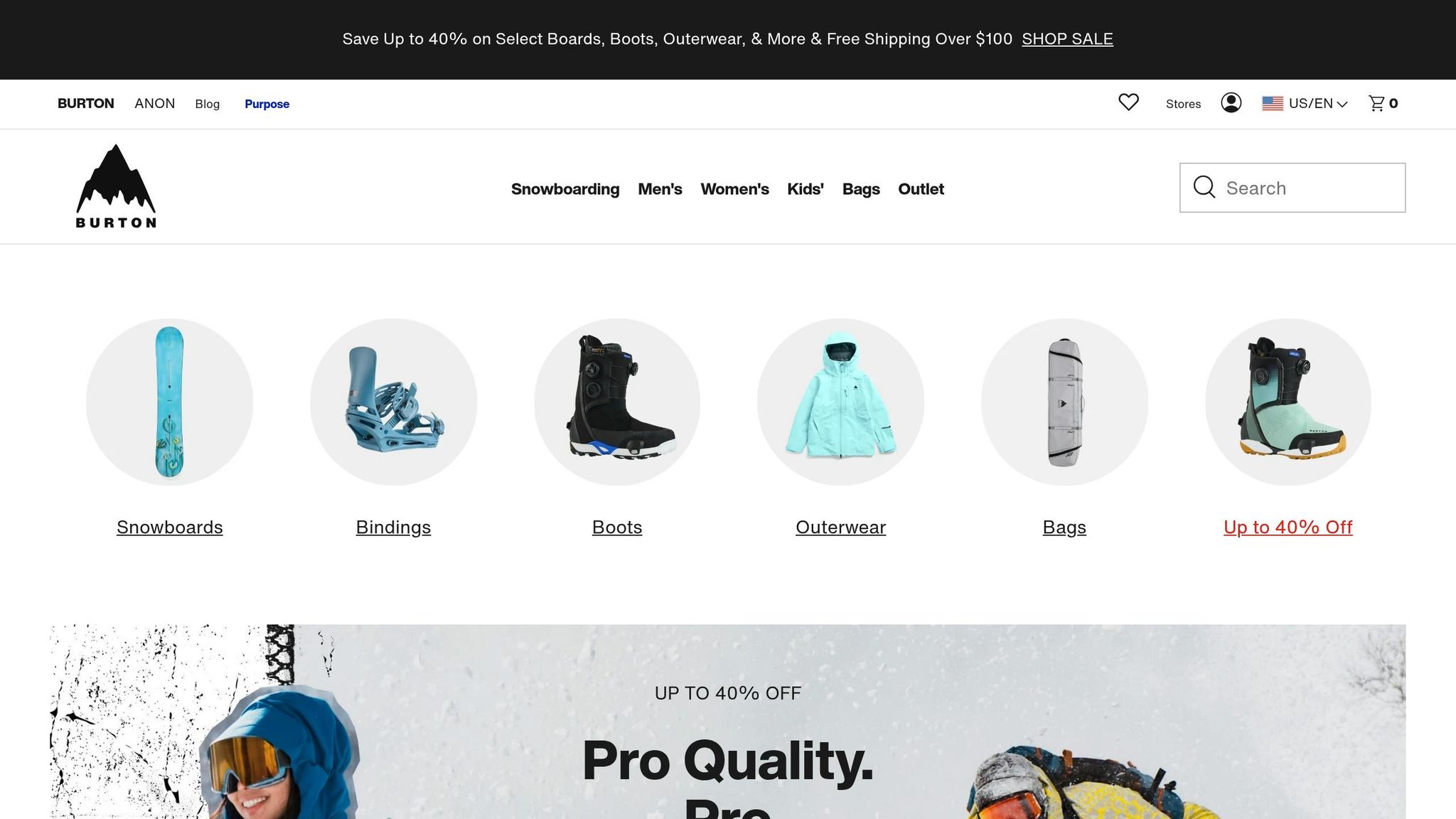
Many people dive into snowboarding hoping for an easy, no-lesson experience. But when it comes to hassle-free slope access, Snowfeet* gear often takes the spotlight.
Big names like Burton, Salomon, K2, and Ride offer beginner-friendly boards designed to make learning smoother. Burton, for example, has models like the Ripcord, Instigator, and Stylus (for women). These boards feature soft flex, rocker profiles, and Burton’s "Easy Bevel" technology, which raises the edges slightly to help avoid those frustrating edge catches and unexpected spills.
Learning Curve and Control
Snowboarding has a reputation for a steep learning curve. It can take some practice to feel confident. In fact, surveys from ski schools and rental shops show that moving from beginner to intermediate skill levels usually takes about 3–6 days with modern beginner gear.
Beginner snowboards with soft flex and rocker profiles are more forgiving and offer smoother control on groomed green runs. However, mastering the basics still takes effort, especially when transitioning between heel-side and toe-side edges. This can feel tricky if you’re self-taught. On the other hand, Snowfeet* short skis simplify things. They allow for easier, more intuitive control right out of the gate, skipping much of the coordination challenges traditional boards require.
Portability and Storage
A beginner snowboard for adults typically measures between 140–160 cm (about 55–63 inches). Transporting one often requires a roof rack or a spacious trunk. Compare that to Snowfeet* gear, which is compact enough to fit in a backpack or the backseat of your car. For anyone with limited storage space or a busy, on-the-go lifestyle, this portability is a huge plus.
Footwear Compatibility
Snowboarding requires specialized boots and bindings, which can be pricey and less versatile. In contrast, Snowfeet* products are designed to work with the boots you already own. This makes them a more flexible and budget-friendly choice for slope enthusiasts who want to keep things simple.
Price Range (USD)
Beginner snowboard packages can be a significant investment, especially when you factor in the cost of rentals or purchasing all the necessary gear. Rentals alone typically run between $40–$70 per day. For casual riders who only hit the slopes occasionally, the cost and commitment of snowboarding gear can feel like a lot. Snowfeet*, on the other hand, offers a more affordable alternative that works with gear you likely already have, making it an appealing option for occasional adventurers.
Pros and Cons
Here’s a breakdown of the key factors to consider when skipping lessons with different gear options:
| Option | Learning Curve | Control & Stability | Portability | Footwear | Price (USD) |
|---|---|---|---|---|---|
| Snowfeet Skiskates 44 cm | Very fast – feels like skating | Nimble at low speeds; less stable at higher speeds | Ultra-portable – fits in a backpack | Works with regular winter boots | ~$200–$250 |
| Snowfeet Skiblades 65 cm | Fast – quick confidence on green runs | Agile with tight turns; slightly less stable at high speeds | Very compact – no roof rack needed | Adjustable bindings (some models work with regular boots) | ~$250–$300 |
| Snowfeet Skiblades 99 cm | Moderate – more ski-like feel | Better edge grip than shorter models | Manageable size – shorter than full-length skis | Typically requires ski boots | ~$300–$350 |
| Snowfeet Short Skis 120 cm | Moderate – involves a bit of trial and error | Best stability in the Snowfeet lineup | Requires a ski bag; fits most SUVs | Standard ski bindings paired with ski boots | ~$350+ |
| Standard Beginner Skis (Rossignol, Salomon) | Slow without lessons | High stability once proper technique is developed | Bulky – often requires a roof rack | Ski boots required | ~$400–$700 (with bindings) |
| Beginner Snowboards (Burton) | Steep on day one; faster once basics are grasped | Stable on green runs once edge control clicks | Similar bulk to full-length skis (single board) | Snowboard boots required | ~$350–$450 (board only) |
Why Snowfeet Stands Out
Snowfeet products are designed to simplify the learning process and reduce costs, making them a standout option for beginners. Their shorter length means you gain control faster, often eliminating the need for lessons. Plus, many models work with regular winter boots, saving you from the added expense of specialized footwear.
Compare this to traditional skis, which often require at least a half-day of lessons to avoid issues like excessive speed or crossed tips. Beginner snowboards, like those from Burton, also come with a steeper learning curve as you master heel-to-toe transitions in a sideways stance.
Another bonus? Snowfeet gear is lightweight and portable. Skiskates and Skiblades easily fit in a backpack, unlike traditional skis or snowboards that often require roof racks or extra storage.
Cost Considerations
Traditional setups can easily exceed $700 when you factor in bindings, boots, and accessories. Snowfeet models, on the other hand, keep costs lower while offering quick mastery. Whether you’re looking to save time, money, or both, Snowfeet redefines beginner skiing with simplicity and convenience.
Conclusion
Snowfeet* products provide a simple, hassle-free alternative to traditional ski gear. They’re all about getting you on the slopes quickly, with less equipment to carry and no lessons needed.
For occasional skiers looking for fun: The Snowfeet* Skiskates 44 cm or Snowfeet* Skiblades 65 cm are great options. Their compact design and easy control mean you can toss them in your car trunk, pair them with regular winter boots, and be confidently cruising green runs in no time. Considering that 60–70% of U.S. ski area visits are from occasional skiers (according to the National Ski Areas Association), this kind of low-commitment gear makes a lot of sense.
For casual skiers who return each season: The Snowfeet* Skiblades 99 cm strike a great balance. They offer improved edge grip and are capable on groomed blue runs, all while being much easier to handle than traditional skis.
For learners ready to step up to intermediate terrain: Start with the Snowfeet* Short Skis 120 cm. Once you're ready for more advanced runs, you can transition to standard all-mountain skis like the Rossignol Experience or Salomon QST series.
When it comes to snowboarding, beginner boards like entry-level Burton models tend to have a steeper learning curve compared to any Snowfeet* product. Unless you're specifically drawn to the surf or skate feel, Snowfeet* options are an easier way to start.
FAQs
Which Snowfeet* length should I choose?
Choose the right Snowfeet length by considering your skill level, weight, and the type of terrain you'll be riding:
- For Beginners: Go with the 38 cm Mini Ski Skates. They’re compact and offer great control, making them perfect for learning the basics.
- All-Around Use: The 44 cm Skiskates are a solid choice if you want agility and flexibility across different slopes.
- For Stability on Green Runs: Opt for the 65 cm Skiblades. They provide extra stability, making them great for easy, smooth runs.
- For Experienced Riders: If you're after speed and performance, the 99 cm or 120 cm Skiblades are your best bet. They’re faster but still easier to manage compared to traditional skis.
Do I need ski boots, or can I use my winter boots?
You don’t need to splurge on heavy, pricey ski boots. Snowfeet* gear is made to pair with the waterproof winter boots or snowboard boots you probably already have. Thanks to their adjustable bindings, you can save some cash while keeping your feet cozy and comfy. Unlike standard ski boots, these are lightweight, easier to walk in, and won’t leave your legs feeling like jelly. Whether you’re navigating stairs or strolling around the lodge, they let you move naturally.
Are Snowfeet* safe on steeper or icy runs?
Snowfeet* work best on gentle slopes, groomed trails, parks, and hard-packed snow. They aren’t the best choice for steep or icy black runs, where traditional skis provide better grip and stability thanks to their longer edges. If you’re using Snowfeet*, stick to smoother terrain, take it slow, and focus on building your confidence before trying more difficult conditions.











Оставить комментарий
Этот веб-сайт защищается hCaptcha. Применяются Политика конфиденциальности и Условия использования hCaptcha.