



















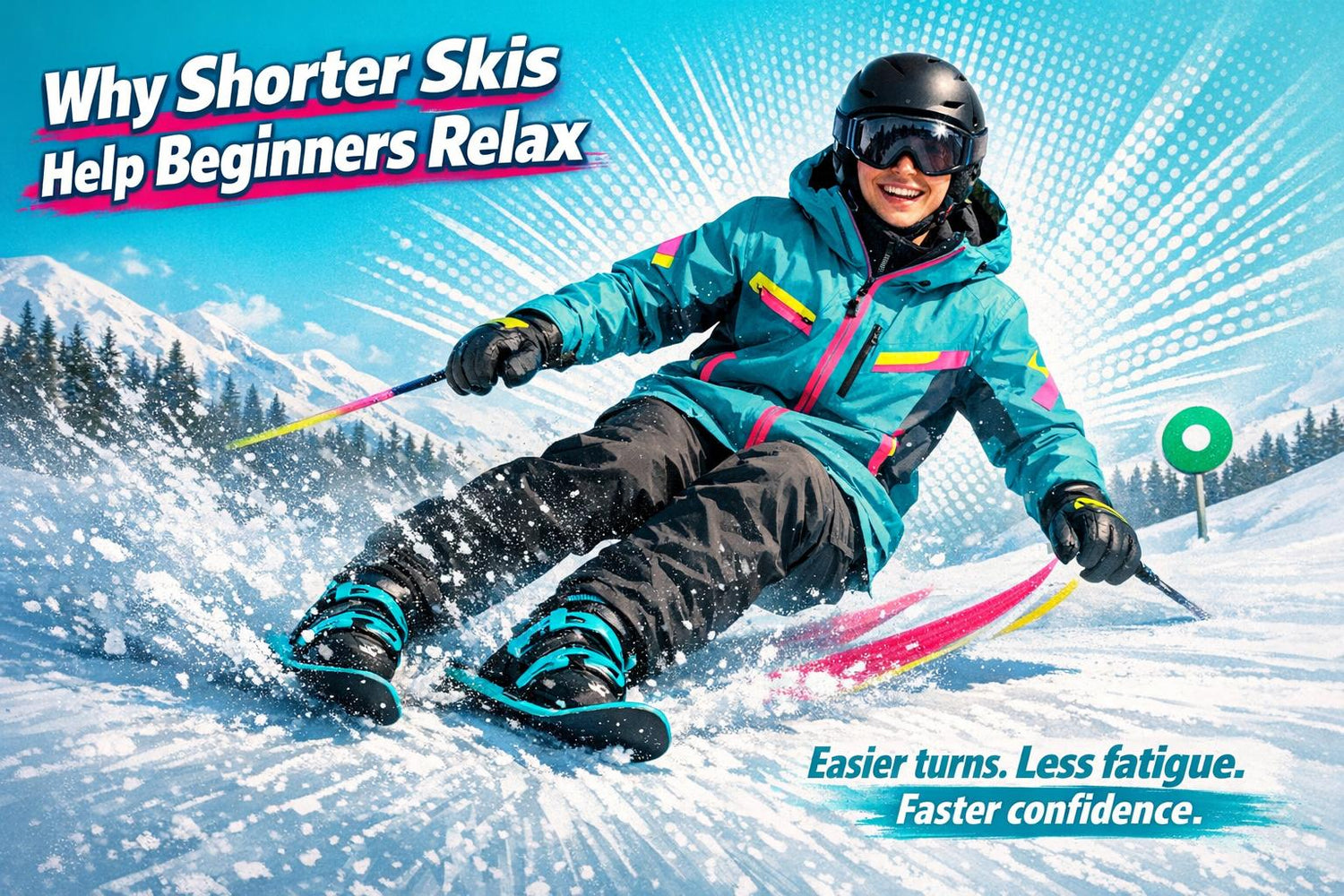
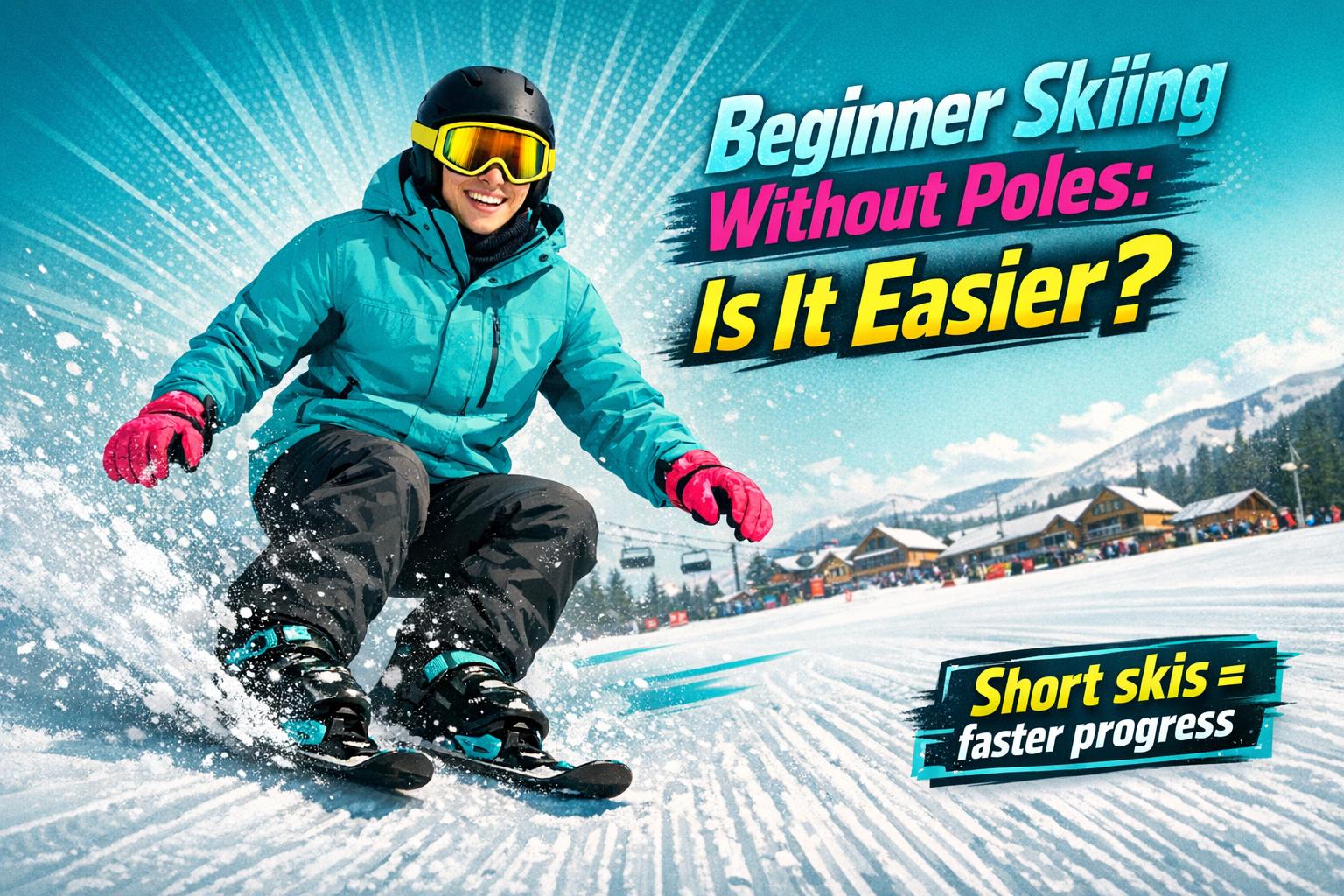
Shorter skis make skiing easier for beginners. They’re lighter, simpler to turn, and less tiring to use. This means fewer falls, faster progress, and more fun on the slopes. Here's why:
- Better Control: Short skis respond quickly, so turning and steering feel natural, not like a struggle.
- Less Fatigue: They reduce strain on your knees and legs, letting you ski longer without feeling wiped out.
- Confidence Boost: Their forgiving design makes learning smoother, helping you stay motivated.
- Convenience: Short skis are easy to carry, store, and manage in lift lines.
For first-timers, products like Snowfeet Skiskates (44 cm) or Skiblades (65–120 cm) are great options. They’re compact, beginner-friendly, and feel more like skates than traditional skis. This makes learning to ski less intimidating and way more enjoyable.
If you’ve struggled with long skis before or are nervous about starting, shorter skis are the way to go.
Key Benefits of Shorter Skis for Beginners
Easier Control and Steering
Shorter skis make turning a breeze. Their smaller turning radius and reduced edge contact let you make quick, precise turns without needing a lot of strength or advanced technique. For beginners cruising down a green run, this is a game-changer. Instead of being forced into wide, sweeping arcs, you can navigate tighter turns to control your speed and direction with ease.
Take a 65 cm ski, for example - just a small shift in your weight or a slight ankle movement gets an immediate response. This kind of responsiveness not only makes skiing smoother but also helps reduce the physical effort involved, which we’ll dive into next.
Less Physical Strain
Full-length skis can be tough on your body. They create a long lever arm around your boots, putting extra torque on your knees and hips with every turn. Over time, this strain can wear you out, leading to sloppy technique and more falls. Shorter skis, on the other hand, ease that pressure. They’re easier to pivot, which means your knees, hips, and quads don’t have to work as hard.
Options like Snowfeet* Skiskates or shorter Skiblades are also a lot easier to handle off the slopes. They’re lightweight to carry, simpler to manage in lift lines, and far less tiring during repeated practice runs. This is especially helpful for adult beginners or anyone with sensitive knees. With less fatigue, you can spend more time practicing and improving your skills on the snow.
Building Confidence Faster
Short skis are forgiving, and that forgiveness helps beginners build confidence quickly. Why? Because small wins keep frustration low and motivation high. By addressing common beginner struggles, short skis make it easier to transition from cautious snowplowing to smooth, controlled parallel turns.
For instance, someone using Snowfeet* Skiblades often masters parallel turns faster than someone struggling with full-length skis. Short skis feel more like an extension of your feet rather than bulky equipment dragging you downhill. This lets beginners relax, breathe, and actually enjoy the learning process.
Are Short Skis Better for Beginners?
Why Snowfeet* Products Work Well for Beginners
Snowfeet* products are specially designed to make skiing less intimidating for beginners. Their shorter lengths compared to traditional rental skis make them easier to control, helping new skiers build confidence right from the start.
Snowfeet* Skiskates (44 cm)
At just 44 cm, Snowfeet* Skiskates are incredibly compact. This eliminates common beginner frustrations like crossing ski tips or catching an edge.
Skiskates feel a lot like skating, offering natural pivots, quick turns, and tight control. For first-timers - whether kids or adults feeling nervous on the slopes - this responsiveness can make learning smoother and less stressful.
Snowfeet* Skiblades (65 cm, 99 cm, 120 cm)
Snowfeet* Skiblades come in three lengths, each tailored to a specific stage of learning. This makes them a great option for progressing at your own pace:
| Length | Best For | Advantage |
|---|---|---|
| 65 cm | Absolute beginners | Easy to maneuver on gentle terrain |
| 99 cm | Beginners gaining confidence | Stability on soft or uneven snow |
| 120 cm | Confident beginners or cautious intermediates | Smooth tracking on steeper green slopes |
The 65 cm Skiblades are perfect for starting out, offering quick turns and low speeds for a forgiving ride. Once you're ready, the 99 cm version provides extra stability, which is especially helpful on uneven or slightly steeper terrain. The 120 cm option is a natural next step, bridging the gap between beginner gear and traditional skis while still being lighter and shorter than standard rentals.
Portability and Ease of Use
Snowfeet* gear doesn’t just perform well on the slopes - it’s also incredibly convenient off them. Traditional skis, often over 150 cm long, can be a hassle to carry, store, or manage in lift lines. Snowfeet* Skiskates and Skiblades, on the other hand, are compact enough to fit in a regular bag or even a large backpack. This portability means less fuss and more time enjoying your day on the slopes.
sbb-itb-17ade95
Short Skis vs. Long Skis: A Direct Comparison
Short Skis vs. Long Skis: Beginner's Guide to Ski Length
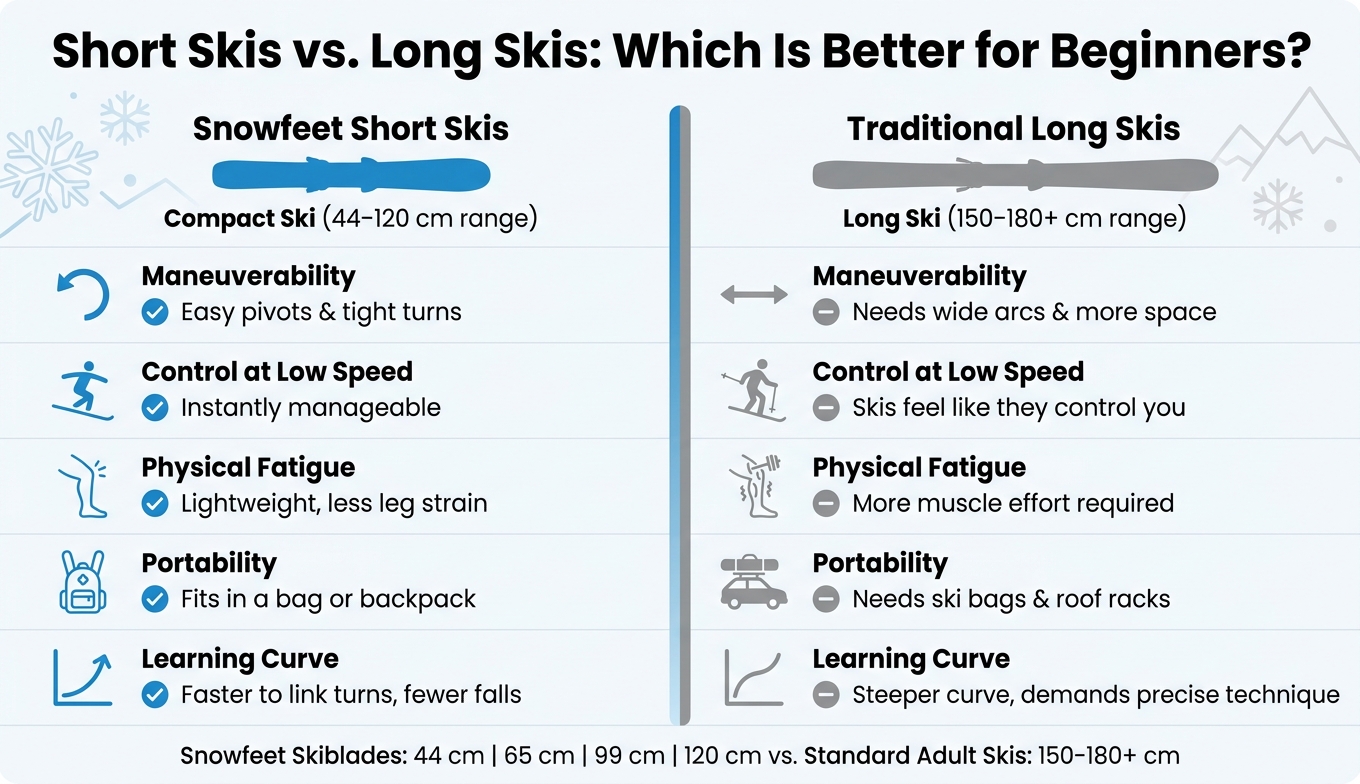
When you're starting out, the length of your skis can make or break your experience. Most adult skis fall between 59 and 71 inches (150–180+ cm) in length. For beginners, these long skis can feel unwieldy, especially when learning to stop or change direction. Snowfeet* Skiblades and Skiskates, on the other hand, range from just 17 inches (44 cm) to 47 inches (120 cm), making them a game-changer for new skiers.
Comparison Table: Key Factors
| Factor | Snowfeet* Short Skis | Traditional Long Skis |
|---|---|---|
| Maneuverability | Easy to pivot and turn in tight spaces | Needs more room and commitment for each turn |
| Control at low speed | Instantly feels manageable | Can feel like the skis are controlling you |
| Physical fatigue | Lightweight design reduces leg strain | Longer skis demand more muscle effort |
| Portability | Fits in a bag or car trunk without extra gear | Requires ski bags, roof racks, and two-hand carrying |
| Learning curve | Faster to link turns and fewer falls | Steeper learning curve, demands precise technique |
These differences make Snowfeet* short skis an excellent choice for beginners.
Why Snowfeet* Is the Better Starting Point
The biggest challenge with long skis for beginners is leverage. Long skis amplify small weight shifts, often causing balance problems. This can lead to crossed tips, catching edges, and a lot of frustration. Beginners tense up, and their confidence takes a hit.
Snowfeet* Skiblades and Skiskates eliminate this issue. With their compact design, the ski stays close to your foot, minimizing the tip and tail that extend beyond your boots. This means small weight adjustments stay small, giving you more control. That control helps beginners relax and enjoy their time on the snow.
And let’s talk convenience. If you’ve ever driven to a resort in the U.S., you know the hassle of hauling long skis - roof racks, oversized bags, and awkward trips through the parking lot. Snowfeet* Skiskates (44 cm) and shorter Skiblades fit easily into a standard bag. No roof rack needed, no awkward carrying. Just grab your gear and go.
How to Pick the Right Ski Length as a Beginner
Choosing the right ski length is all about finding what feels comfortable and supports your skiing goals. Snowfeet* products, with their lightweight and compact design, are a great starting point because they help reduce fatigue and make skiing more approachable for beginners.
Matching Length to Your Comfort and Balance
Your sense of balance plays a big role in picking the right ski. If the idea of sliding on snow makes you uneasy, the Snowfeet Skiskates (44 cm) are a great choice. These short skis feel like an extension of your boots, offering a familiar and less intimidating experience for first-timers.
If you’ve done activities like rollerblading or ice skating before, you might feel more at ease with the 65 cm or 99 cm Skiblades. The 65 cm model is forgiving and easy to turn, while the 99 cm option provides better stability as you gain confidence on green runs. For beginners who are athletic and already comfortable with balance sports, the 120 cm Skiblades offer a feel closer to traditional skis but are still easier to handle than standard-length skis (which range from 150–180 cm). Choosing equipment that matches your comfort level sets you up for a successful start on the slopes.
Here’s a quick guide to help you decide:
| Your Comfort Level | Recommended Model | Why It Works |
|---|---|---|
| Completely new to skiing | Skiskates (44 cm) | Maximum maneuverability, feels like skating |
| Some prior balance experience | Skiblades (65–99 cm) | Easy to turn and control, great for building confidence |
| Athletic and confident | Skiblades (99–120 cm) | More stability and closer to traditional skiing |
Your body size also matters a bit. Smaller or lighter skiers often do best with the 44 cm or 65 cm models, while taller or heavier beginners may prefer the 99 cm or 120 cm Skiblades for added edge grip and stability.
Recommendations for First-Time Skiers
For your first day on the slopes, go for skis that give you control and help you build confidence. Shorter skis are easier to handle, making it simpler to focus on the basics like stance, stopping, and gentle turns.
The 44 cm Skiskates or 65 cm Skiblades are perfect for small hills or beginner lifts. These models allow you to practice the fundamentals without feeling overwhelmed. Once you’re comfortable managing your speed and direction on green slopes, you can move up to the 99 cm Skiblades. From there, the 120 cm model offers a natural progression toward traditional skiing if that’s your ultimate goal.
The key is to start with playful, easy-to-maneuver skis and gradually work your way up to more stable, ski-like models as your skills grow. Most beginners find they can get comfortable with their starting length in just one day on the slopes.
Conclusion: Why Shorter Skis Are the Right Choice for Beginners
Shorter skis make learning to ski less intimidating and way more fun from the start. They’re easier to turn, lighter to carry, and much more forgiving when mistakes happen. This helps beginners stay relaxed and focus on mastering the basics.
Because shorter skis are easier to steer, they take less effort, saving your energy and keeping fatigue at bay. Instead of feeling wiped out by noon, you’ll have the stamina to enjoy more runs - a big deal when lift tickets at major U.S. resorts can easily cost $150 or more per day. This ease of use is one reason Snowfeet* products shine.
Snowfeet* Skiskates (44 cm) and Skiblades (65 cm, 99 cm, and 120 cm) take full advantage of these benefits, offering a smoother learning experience that gets you from your first run to controlled, confident skiing. No more wrestling with heavy, traditional skis. Opting for shorter skis is a smart move to get the most out of your time on the slopes.
Starting with shorter skis also sets you up for a lasting love of the sport. When your first day feels manageable instead of overwhelming, you’re much more likely to return for another season. Plus, the muscle memory and confidence you build now will make transitioning to longer skis a natural next step when you’re ready to level up.
FAQs
Can I use short skis on chairlifts?
Yes, you can absolutely use short skis like Snowfeet on chairlifts. Thanks to their compact and lightweight design, they’re much easier to handle compared to traditional skis. You can either keep them on your feet or carry them without any trouble while riding the lift. No more struggling with bulky gear - just a smooth, hassle-free ride.
Do short skis work on icy or choppy snow?
Snowfeet work well on groomed trails or gentle slopes, offering a stable and easy-to-use experience. However, they’re not ideal for icy or rough terrain. Because their edges are shorter, they don’t provide the same grip or stability as traditional long skis. For beginners looking to enjoy calm, easy-going runs, Snowfeet are a great choice. But if you’re tackling steep, icy slopes or need more control at high speeds, traditional skis are the way to go, thanks to their stronger braking ability and better edge contact.
When should I switch to longer skis?
Snowfeet* products are a great choice for beginners because they’re easy to use and offer excellent control. Once you’ve nailed the basics and feel ready to chase high-speed thrills or tackle deep powder, you might want to try longer skis. Traditional long skis (160–190 cm) provide stability at high speeds but demand more strength and precision. On the other hand, Snowfeet* Skiblades offer a more comfortable and flexible option for most riders, making them a solid pick for various conditions.











Lasă un comentariu
Acest site este protejat de hCaptcha și hCaptcha. Se aplică Politica de confidențialitate și Condițiile de furnizare a serviciului.