



















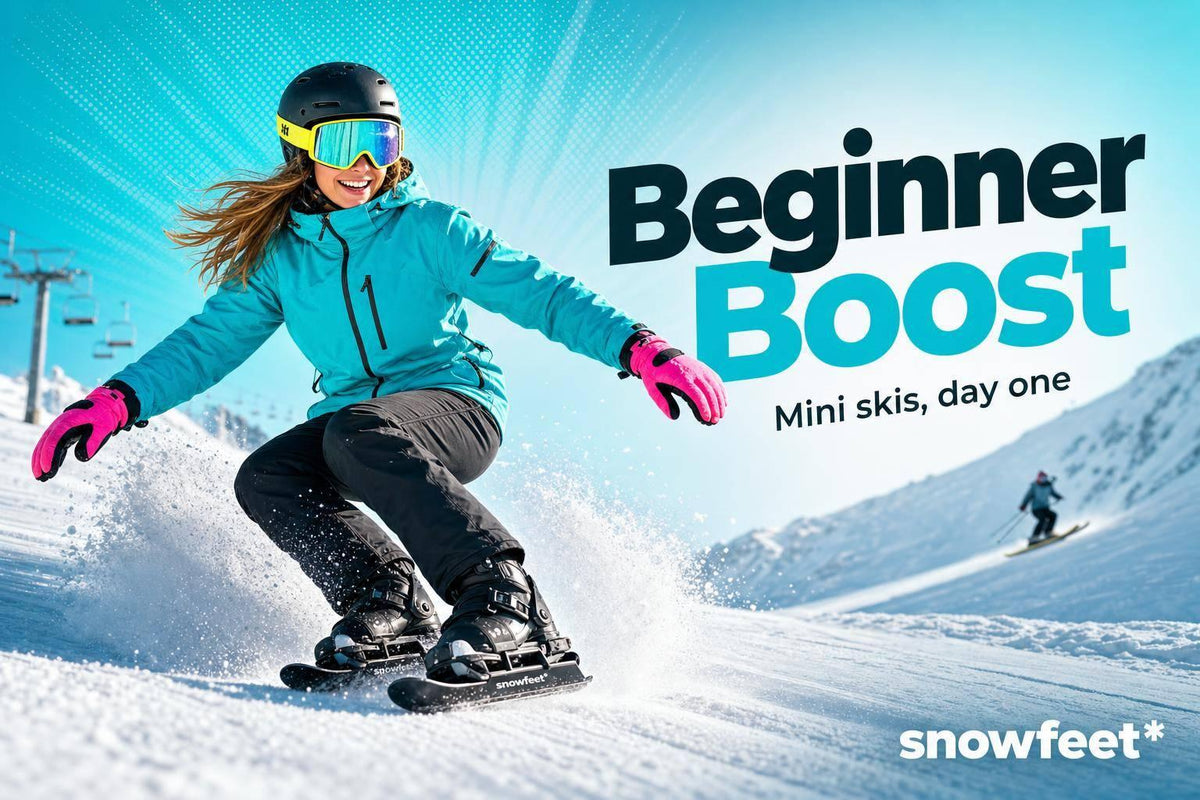
Yes - for many first-time skiers, mini skis are the easier first pick. They’re shorter at 17–26 in. (44–65 cm), lighter to carry, and less awkward to turn than rental skis that are often 55–67 in. (140–170 cm) long.
If I had to sum it up fast, here’s the deal:
- Mini skis are easier for day-one balance, low-speed turns, and simple stops
- Long skis do better once speed goes up or snow gets steep, icy, or deep
- For most new skiers, the best choice depends on one thing: do you want the easiest first day, or a setup closer to full alpine skiing?
I’d look at it like this: mini skis help you get moving with less gear drama. Long skis give you more support later, but they can feel like a lot on trip one. Think small hatchback vs. bus :)
Are Short Skis Better for Beginners?
Quick Comparison
| Option | Best for | Main upside | Main trade-off |
|---|---|---|---|
| Mini skis 44 cm / 17 in. | Absolute beginners, skaters, travelers | Easiest to pivot and carry | Less stable as speed goes up |
| Mini skis 50 cm / 20 in. | Adult beginners who want more balance | Smoother feel than 44 cm | Still not built for deep snow or high speed |
| Mini skis 65 cm / 26 in. | Beginners who want a more ski-like feel | More stability and more classic feel | Less nimble than shorter mini skis |
| Long skis 140–170 cm / 55–67 in. | Skiers planning to move into steeper terrain | Better edge hold and support at speed | Harder first-day learning curve |
So, if you want less intimidation, less bulk, and easier first runs on groomers, mini skis make a lot of sense. If your main goal is to learn on gear that matches standard ski lessons from the start, long skis still have a clear place.
A few key takeaways I’d keep in mind:
- Stopping and turning at low speed matter more on day one than top-end stability
- Portability is a big plus if you’re flying or packing light
- Price starts around $299 for the Snowfeet PRO, with other beginner options at $460, $590, and $250 for MINI KIDS
- Metal edges on these models help with control on groomed slopes
If you want a simple cheat sheet:
- Go 44 cm if you want the easiest learning curve
- Go 50 cm if you want a bit more balance
- Go 65 cm if you want a feel closer to standard skiing
And if you want to watch mini skis in action before you buy, I’d check a few demo clips on YouTube:
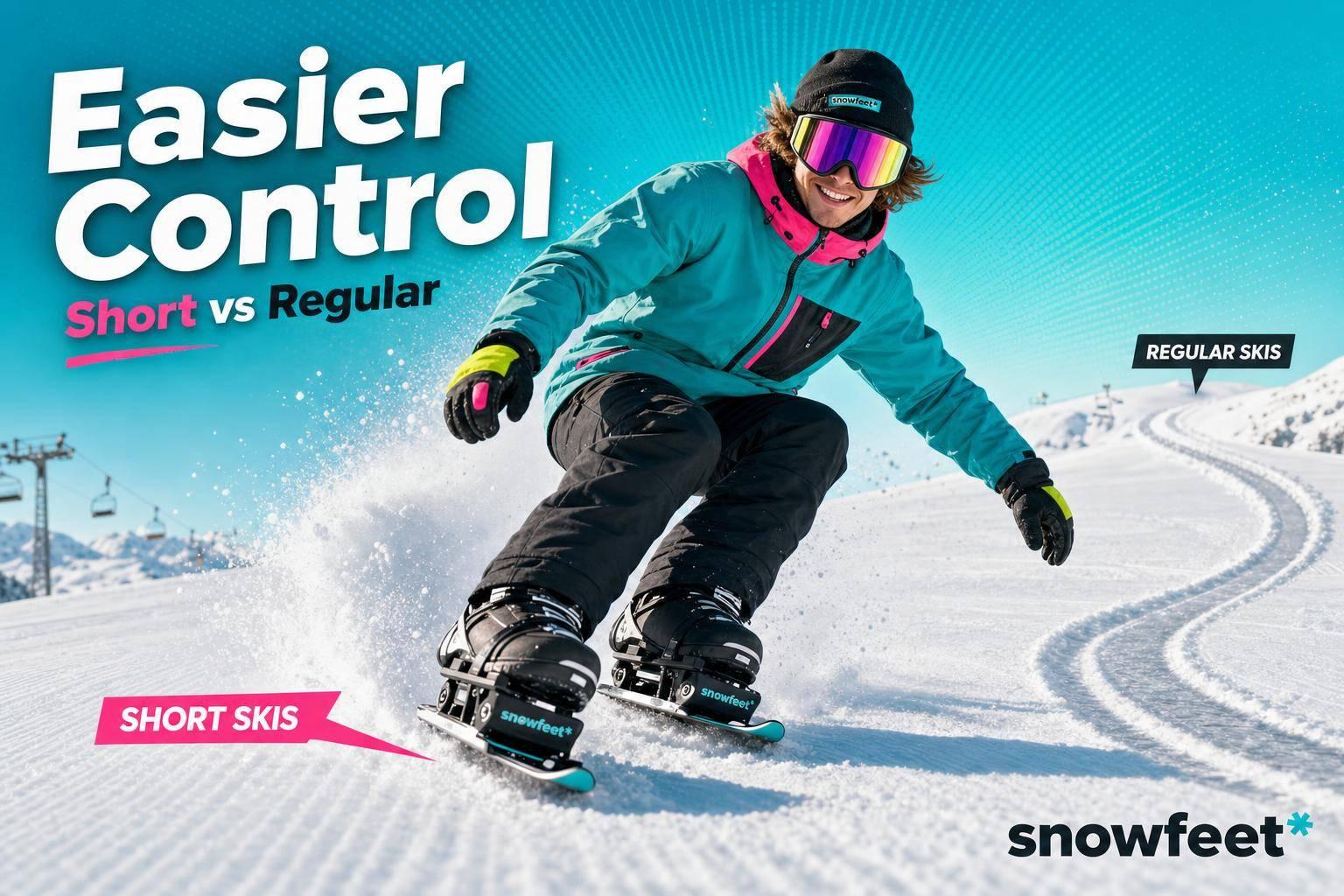
Mini Skis vs Long Skis for Beginners
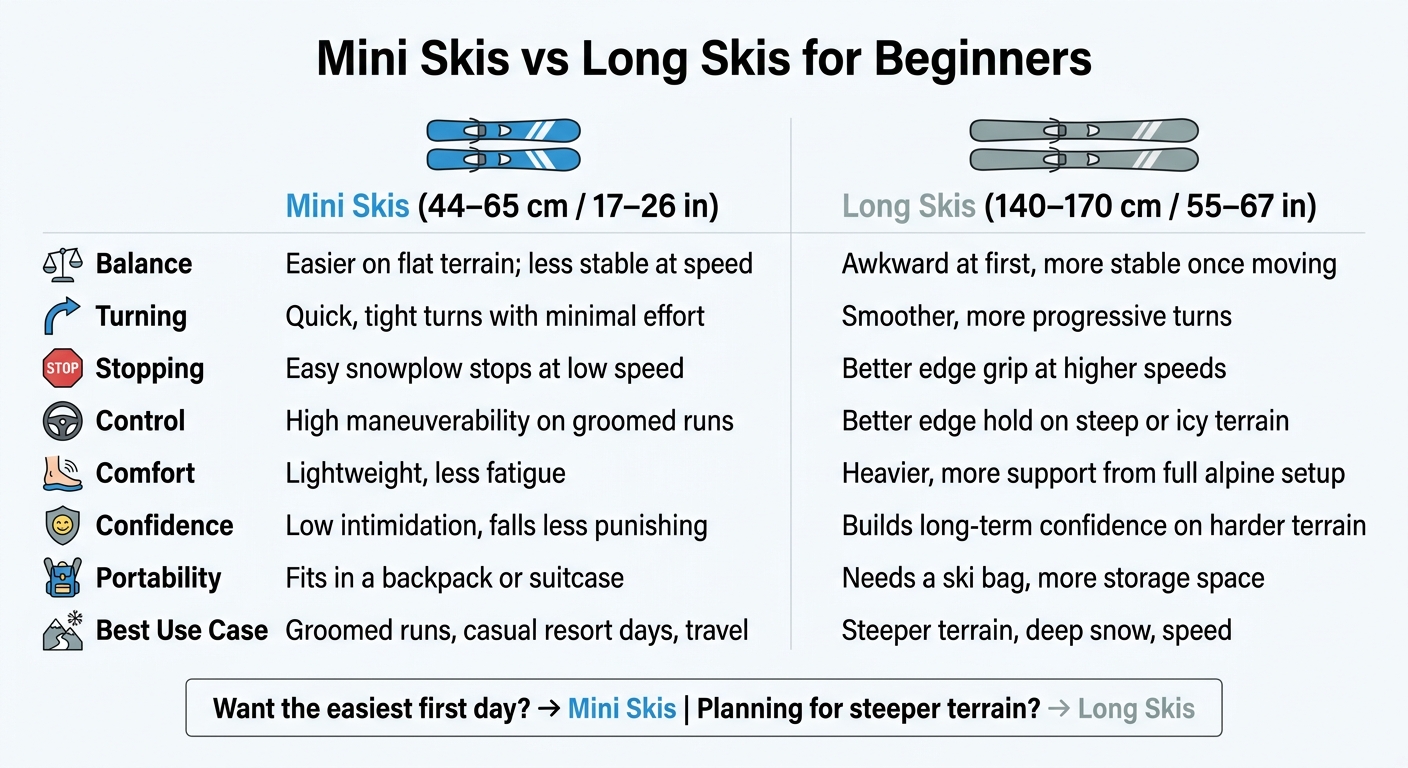
Mini Skis vs Long Skis for Beginners: Side-by-Side Comparison
Mini skis feel easier on day one. Long skis start to make more sense as speed picks up and the terrain gets tougher.
Most adult rental skis are about 140–170 cm (55–67 in). Snowfeet* models are much shorter: 44 cm (17 in), 50 cm (20 in), and 65 cm (26 in).
| Factor | Mini Skis (44–65 cm) | Long Skis (140–170 cm) |
|---|---|---|
| Balance | Easier on flat terrain; less stable as speed rises | Awkward at first, more stable once moving |
| Turning | Quick, tight turns with minimal effort | Smoother, more progressive turns as skills develop |
| Stopping | Easy snowplow stops and fast direction changes at low speed | Better edge grip and braking power at higher speeds |
| Control | High maneuverability on groomed runs | Better edge hold on steeper or icy terrain |
| Comfort | Lightweight, less fatigue, easier to carry | Heavier setup, more support from full alpine boot-binding setups |
| Confidence | Low intimidation, falls feel less punishing | Builds long-term confidence on harder terrain |
| Portability | Fits in a backpack or standard suitcase | Usually needs a ski bag and more storage space |
| Best-Use Case | Groomed runs, casual resort days, travel | Steeper terrain, deep snow, speed |
So, the best pick comes down to this: do you want the easiest first day, or more room to build skills over time?
Why Mini Skis Feel Easier on Day One
Mini skis help new skiers get comfortable fast. They cut down on tip crossing, turn with a small twist of your feet or legs, and feel much lighter when you're walking through parking lots or standing in lift lines.
That can make a big difference early on. Instead of fighting your gear, you get that nice little moment of, “Oh, hey, I can do this.” And for a beginner, that matters a lot.
Where Long Skis Still Have the Edge
Long skis do better once you start going faster. They hold an edge better on firm or icy snow, and they handle deeper snow much better than mini skis under 65 cm.
They also line up more closely with the technique taught in ski lessons. If your plan is to carve on steeper runs and move into more advanced terrain, full-length skis still make more sense.
Next: which Snowfeet* length fits your first days on snow.
sbb-itb-17ade95
Best Snowfeet* Options for First-Time Skiers
If mini skis feel like the easier way in, these three Snowfeet* models make the choice a lot simpler. The big things that set them apart are stability, how fast they turn, and how much control they give you. All three come with metal edges, which help with control and stopping on groomed slopes.
Snowfeet* Skiskates 44 cm: Best for Absolute Beginners
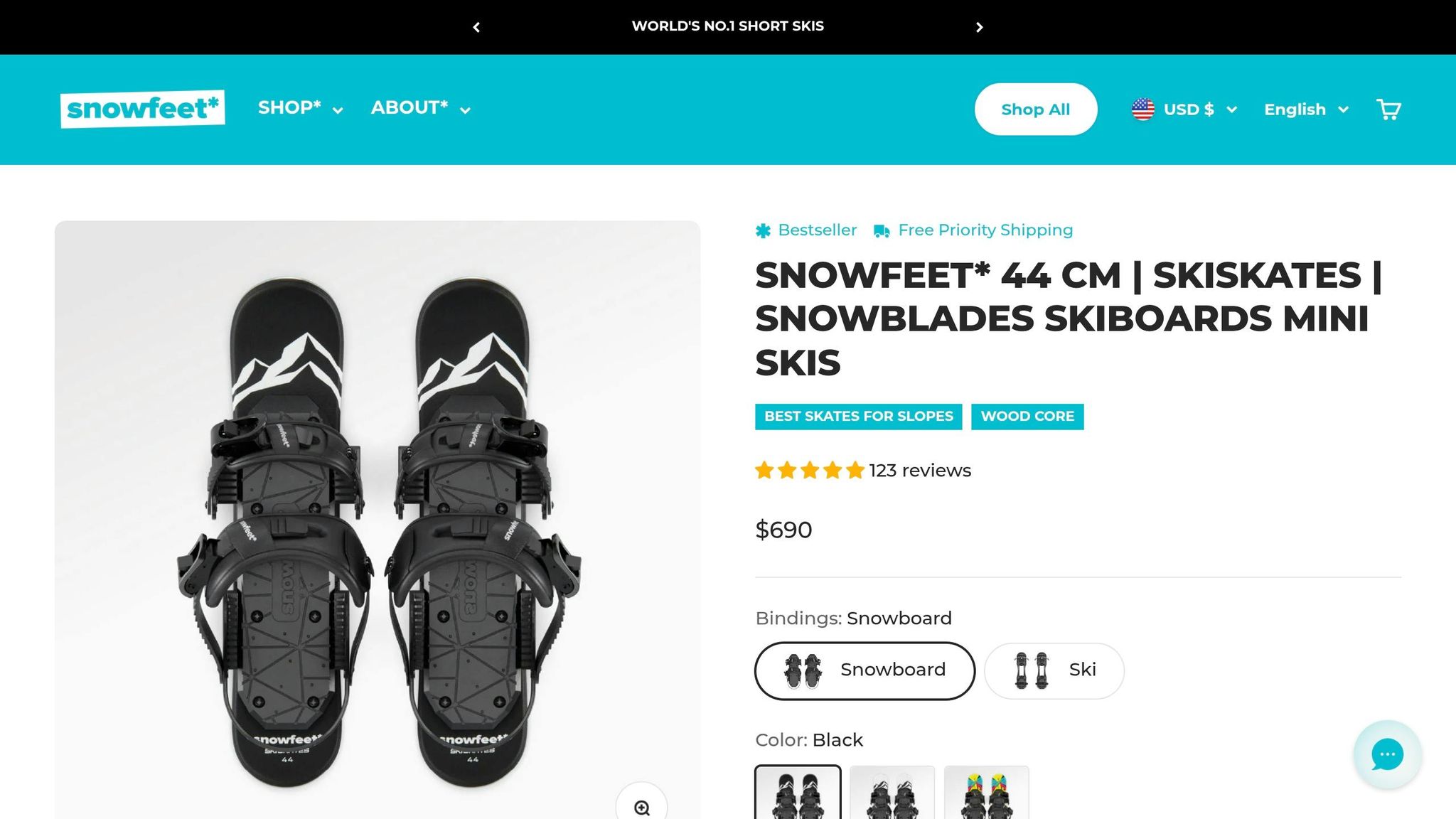
At about 17.3 inches long, the Skiskates are Snowfeet's shortest model. That short length makes them quick, nimble, and easy to pivot. The feel is closer to rollerblading or ice skating than to classic skiing.
They’re also the most agile and most portable option in the lineup. You can toss them in a backpack, which is kind of wild when you’re used to hauling around full ski gear. Pricing starts at $460, and they come with adjustable bindings for ski or snowboard boots.
That makes them a smart pick for skaters, travelers, and first-timers who want the smallest setup possible.
Best for: First-timers with skating or inline-skating experience, casual vacationers sticking to beginner and lower-intermediate groomed slopes, and travelers who want the smallest setup possible.
Snowfeet PRO 50 cm: Best for Beginners Who Want More Stability
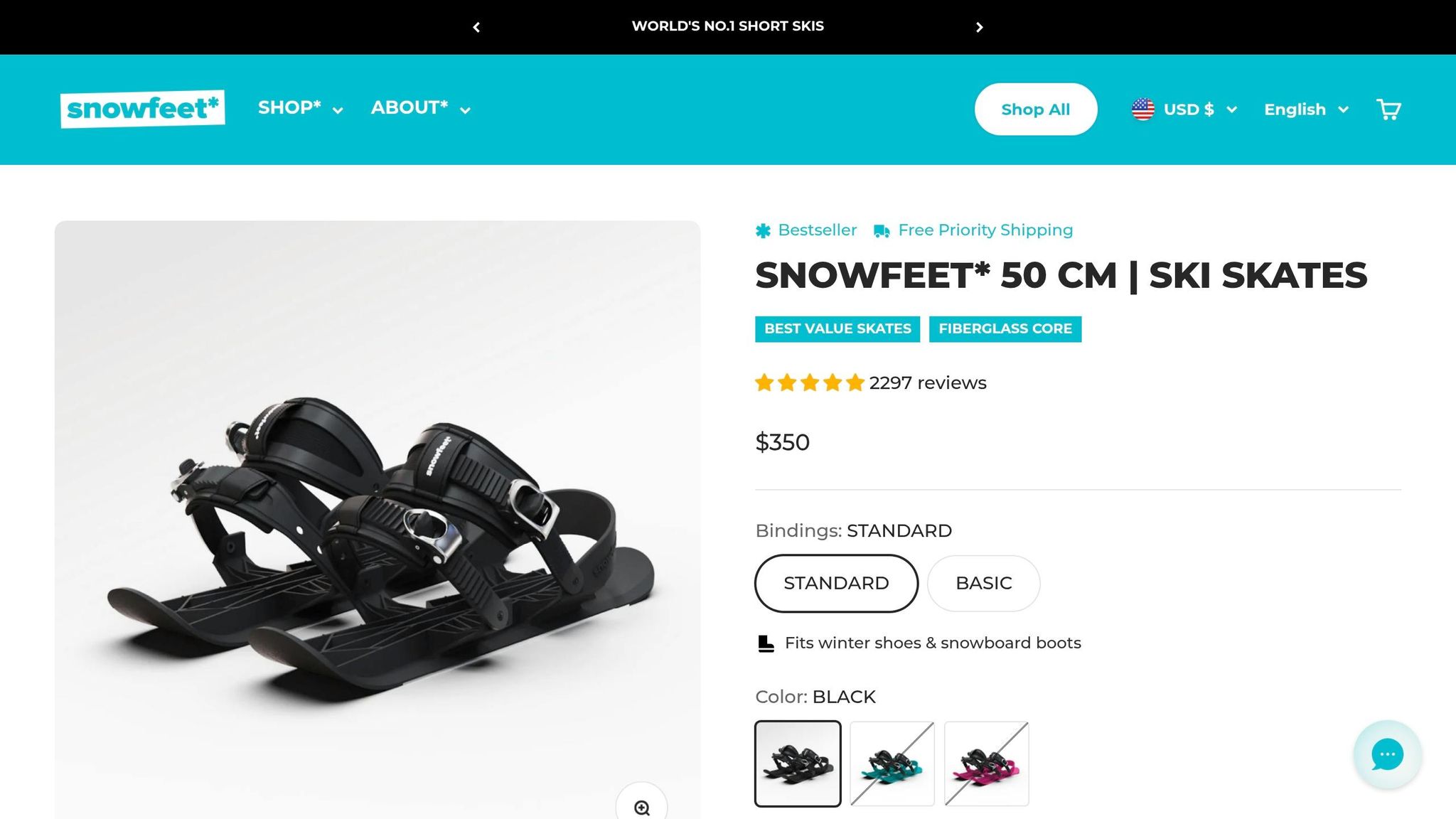
The Snowfeet PRO is 6 cm longer than the Skiskates, and that extra length gives it a more planted feel underfoot. In plain English: it feels smoother and steadier in turns. That can be a big help if you're new and want a bit more balance without moving all the way to long skis.
It has a fiberglass core and starts at $299, which makes it the lowest-priced option of the three.
The PRO fits adult beginners who want compact gear with more stability than the 44 cm model, while still being much easier to handle than full-length skis. It’s a good match if you plan to build toward steeper green runs and mellow blue terrain.
Best for: Adult beginners who want a compact setup with more stability, skiers planning to spend several days on snow each season, and anyone who wants room to improve without jumping to a longer ski.
Snowfeet* Skiblades 65 cm: Best for a More Classic Ski Feel
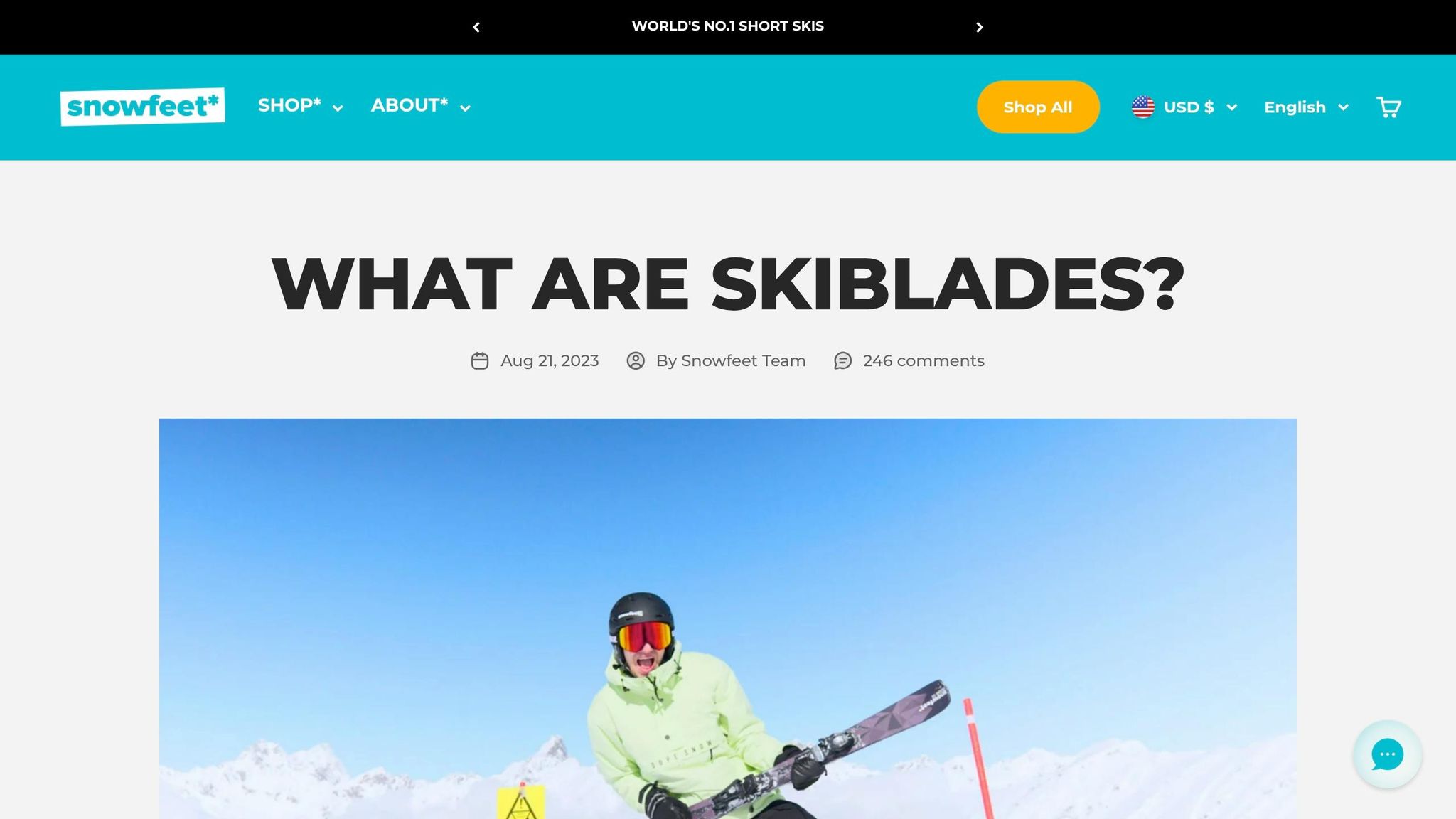
At 65 cm, the Skiblades are the longest option in the Snowfeet* beginner lineup. They still turn much more easily than standard skis, but they give you more stability underfoot and more of that classic ski feel on groomed resort runs.
They start at $590 and use a wood core. If you want something that feels closer to skiing as most people picture it, but without committing to full-length skis, this is the one to look at. They’re a strong fit for athletic beginners and for people with board-sports experience who may move past basic snowplow turns pretty fast.
Best for: Beginners who want a classic ski feel, faster learners, and resort riders who want more range on groomed runs without going straight to full-length skis.
Next, match each model to beginner types so you can pick the easiest first-day setup.
Which Mini Ski Should You Choose for Your First Days on Snow?
These Snowfeet* options fit different people, so the best one depends on where you are right now, not where you hope to be in a few trips.
Here’s the simple version for your first days on snow.
Best Match by Rider Type: Beginners, Kids, Casual Riders, and Travelers
| Rider Type | Best Model | Why It Fits |
|---|---|---|
| Absolute beginner, no ski experience | Snowfeet* Skiskates 44 cm | Most maneuverable and easiest to turn |
| Adult beginner wanting more balance | Snowfeet PRO 50 cm | A more stable feel while staying compact; from $299 |
| Beginner who wants a more classic alpine feel | Snowfeet* Skiblades 65 cm | Better if you want a classic ski feel and a setup that feels closer to carving |
| Kids (US shoe size under 6) | MINI KIDS ($250) | Sized for smaller feet and easier to control |
| Traveler or casual rider | Skiskates 44 cm or PRO 50 cm | Compact and easier to travel with than full-length skis |
| Mixed-skill group trip | PRO 50 cm | Easy to learn, but steadier than the 44 cm model |
If you’re flying or tossing gear in the back of a car, the shorter Snowfeet* models are just easier to deal with. Less bulk. Less hassle. More room for the rest of your stuff.
What to Buy First and What to Skip
If you want one simple rule, use this:
Start with the shortest model that fits your goal. Go with Skiskates 44 cm if you want the easiest learning curve. Pick PRO 50 cm if you want a bit more balance underfoot.
If you already know you want something closer to the feel of alpine skiing, Snowfeet* Skiblades 65 cm are a smart pick.
For a first trip, stick with 65 cm or shorter. Longer skis feel more stable once you’re moving fast, but they also take more work to turn. On green runs and easy blue runs, at low to moderate speeds, that extra length usually doesn’t help much. It’s a bit like learning to park a bus before you’ve driven a hatchback :)
Conclusion: The Best Beginner Choice Depends on How You Want to Learn
For most new skiers, mini skis are the easiest way to start. They’re simpler to turn, less intimidating, and faster to get used to - especially when you’re working on balance, turning, and that first bit of confidence on snow.
That’s why this isn’t just a question of comfort. It’s a question of easy learning now versus better long-ski performance later.
Long skis still come out on top when you ski faster, head into mixed terrain, or deal with deeper snow. But when you're just starting, it makes sense to begin with gear that helps the learning process feel smoother, not harder.
That trade-off is exactly why Snowfeet* gives beginners three clear options:
- Skiskates 44 cm for absolute beginners
- PRO 50 cm for more stability
- Skiblades 65 cm for a more classic ski feel
Pick the gear that fits how you want to learn. If your goal is to make those first days on snow feel easier, mini skis - especially Snowfeet* - are the most beginner-friendly choice.
FAQs
Do mini skis work in beginner ski lessons?
Yes. Mini skis and skiblades work very well for beginner ski lessons because they’re short, light, and easier to handle than long skis.
That shorter length makes a big difference on snow. New skiers can learn turns, stops, and balance with less hassle. It’s a bit like learning to ride a small bike before jumping on a big one - you feel more in control right away.
Snowfeet gear is also more forgiving, which helps beginners manage their center of gravity with less stress. And that means fewer of the classic long-ski problems, like crossing tips or catching an edge at the worst time. More control usually means smoother progress through basic moves, and that’s a nice win for anyone just starting out :)
Are mini skis safe for adults with no ski experience?
Yes. Mini skis like Snowfeet are generally safe for adults with no ski experience, and they tend to feel less intimidating than long, standard skis.
Their short, light build makes balance and control feel more natural. They’re also less likely to catch an edge in a way that leads to an awkward spill. That can make the first day on snow feel a lot less stressful.
They work best on gentle slopes and groomed runs. And yeah, you should still wear a ski helmet.
When should I choose 44 cm, 50 cm, or 65 cm mini skis?
Choose based on your experience, goals, and the kind of terrain you plan to ride:
- 44 cm: best if you come from hockey, inline skating, or rollerblading and want max agility. These feel quick, playful, and easy to whip around.
- 50 cm: gives you more stability on groomed trails, but still doesn’t feel like a full-size ski. Nice middle ground.
- 65 cm: best for beginners or smaller riders. This size has the most natural, stable feel when you’re learning.
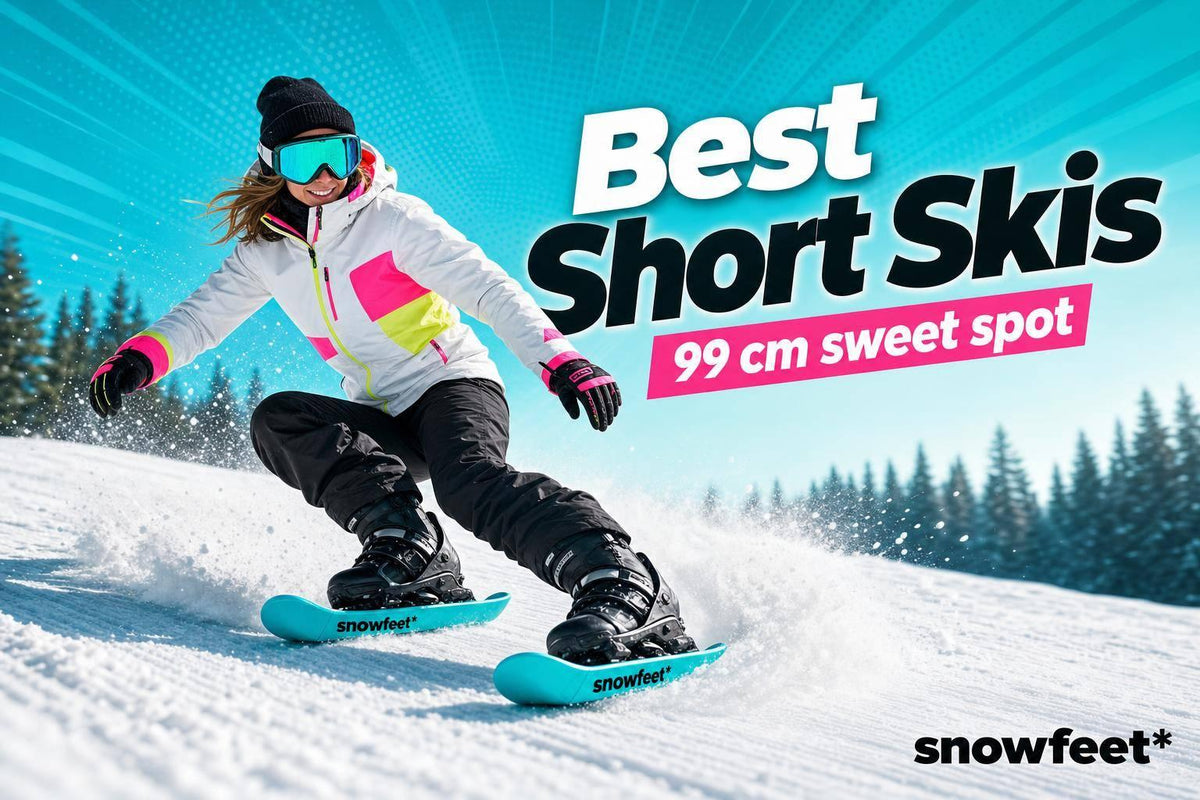
As your skills grow, Snowfeet also has 99 cm and 120 cm options if you want more speed and stronger on-snow performance.











Lasă un comentariu
Acest site este protejat de hCaptcha și hCaptcha. Se aplică Politica de confidențialitate și Condițiile de furnizare a serviciului.