



















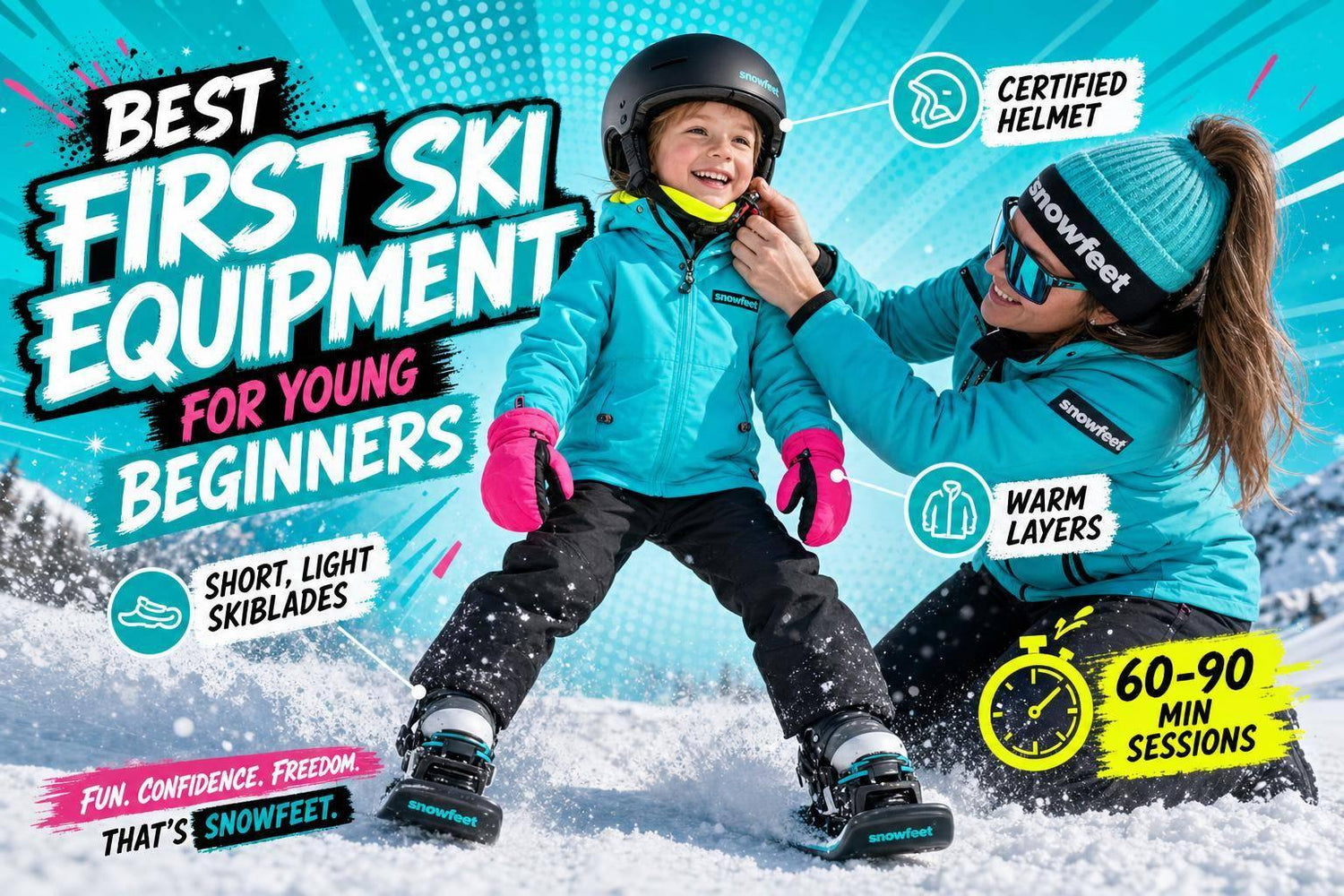
If I were setting up a young beginner today, June 16, 2026, I’d start short, keep the gear light, and make day one about stopping and smiling.
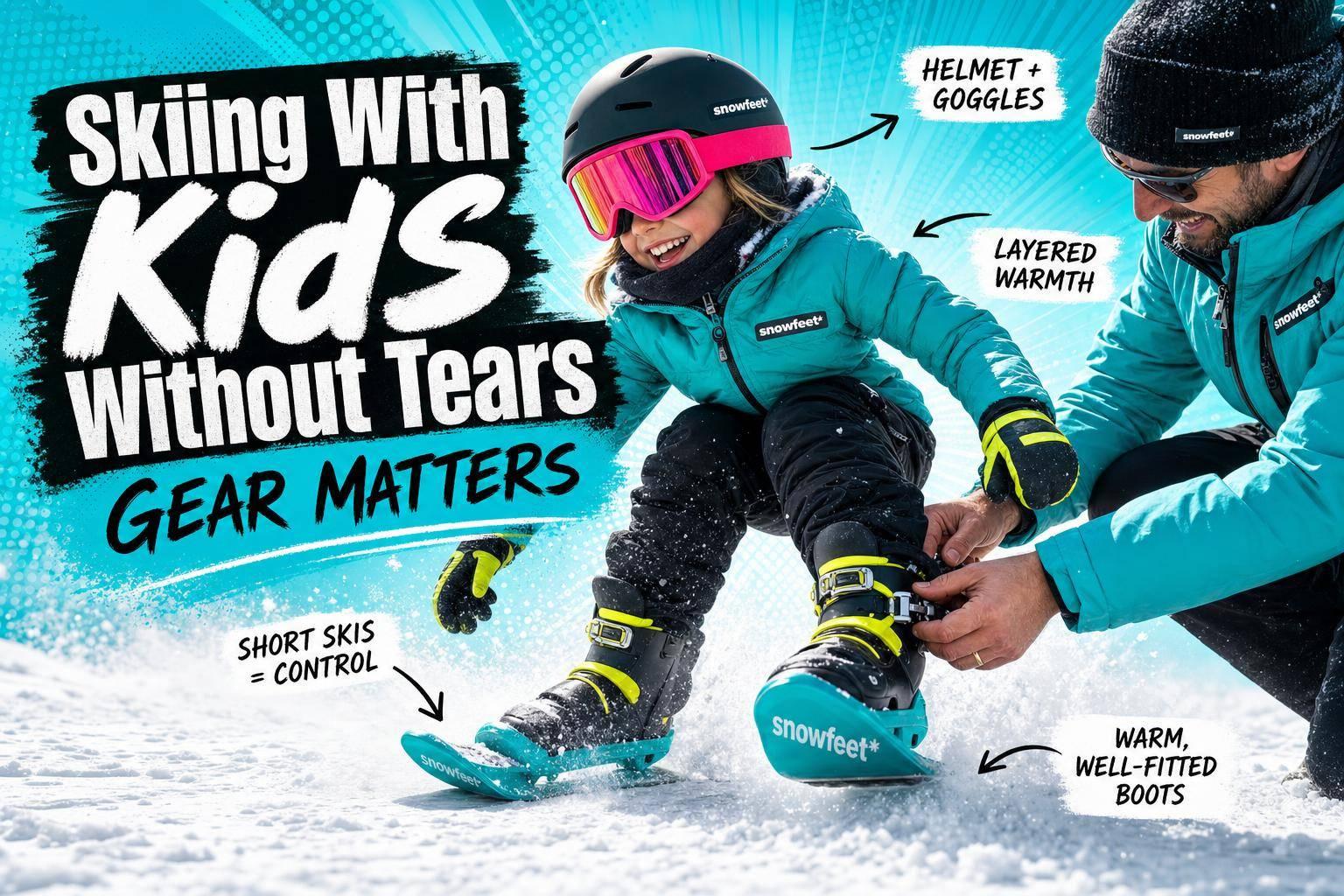
Here’s the short version: for most kids, the best first setup is the shortest Snowfeet* model they can use with confidence, plus a certified helmet, goggles, waterproof boots, and warm layers. Short gear in the 15–20 in. (38–50 cm) range is often easier for first turns than junior skis in the 28–47 in. (70–120 cm) range.
What I’d focus on first:
- Control over speed
- Warmth over style
- Simple gear over lots of gear
- A 60–90 minute first session, not an all-day marathon :)
Kids usually do better when the setup feels less bulky and less awkward. That’s why the article leans toward:
- MINI KIDS for first-timers
- 38 cm Mini Ski Skates for flat snow and mellow slopes
- 44–50 cm models for kids who can already stop and steer
- 65 cm Skiblades for older kids ready for longer turns
How to Choose the Best Skis for Kids
Quick Comparison
| Gear | Best for | Boot type | Main idea |
|---|---|---|---|
| Snowfeet* MINI KIDS | First day on snow | Winter boots | Small, simple, easy to start with |
| Mini Ski Skates 38 cm | Flat areas, gentle slopes | Winter boots | Light setup for first glides |
| Skiskates 44 cm | Kids with better balance | Ski or snowboard boots | More grip on groomed runs |
| PRO 50 cm | Next step after 38 cm | Winter or snowboard boots | More ski-like feel, still short |
| Skiblades 65 cm | Older kids moving toward skiing | Ski or snowboard boots | Longer turns and edging |
| Junior skis | Later step for many kids | Ski boots | More length, more to manage |
| Kids’ snowboard | Kids set on snowboarding | Snowboard boots | Harder first-day learning curve |
A few gear facts matter a lot here:
- Helmet safety labels to look for: ASTM F2040 or CE EN 1077
- Use one pair of ski socks, not two
- Pick goggles with 100% UV protection and anti-fog double lenses
- Bring backup gloves and socks if you want to save the day after one wet fall
So, this article boils down to one simple idea: start shorter than you think, keep the kid warm, and end the first day while they still want “one more run.”
Need a quick visual on beginner Snowfeet* gear? These videos may help:
How to Choose the Right First Ski Length and Type
Age, Size, and Skill Guidelines for Young Beginners
Pick ski length based on the child’s height, weight, and comfort level on snow. For young beginners, it’s smart to start short. Begin with MINI KIDS or 38 cm models, then move to 44–50 cm and later 65 cm as balance and control get better.
Why start short? Because shorter gear is easier to handle. A child can shift weight, turn, and catch themselves after a wobble without feeling like the skis are bossing them around. That matters a lot on day one.
Snowfeet* MINI KIDS fits shoe sizes US Kids 10 through US Adult 6 (EU 27–38).
Light gear that works with regular winter shoes or boots is also easier for kids to carry, put on, and control right away. Less struggle, more sliding. That’s a good trade :)
Here’s a quick guide to match each Snowfeet* model to a child’s first stage on snow:
| Snowfeet* Model | Length | Best Starting Point |
|---|---|---|
| MINI KIDS | Short | First time on snow |
| Mini Ski Skates | 38 cm | Flat snow and gentle slopes |
| PRO | 50 cm | More balance, more control |
| Skiskates | 44 cm | Beginners ready for easy runs |
| Skiblades | 65 cm | Kids ready for a longer, more stable step up |
The idea isn’t to start big. It’s to move up only when control feels easy.
When Snowfeet* Makes More Sense Than Junior Skis
For most kids, ultra-short options make more sense before jumping to 100–120 cm junior skis. Snowfeet* ultra-short models help kids learn front-to-back balance and a side-to-side stepping motion first. That’s a smoother way to learn and a lot less intimidating.
Longer junior skis can wait until the child can stop, turn, and recover after a slip with confidence.
With the right length picked out, the next step is protective gear and warm clothing.
Best Snowfeet* Equipment for Young Beginners
Snowfeet* makes beginner gear short, light, and easy to steer. For a kid’s first turns, that usually feels a lot less scary than standard junior skis. Once you’ve picked the shortest safe length, the next job is simple: match the model to the child’s skill level.
Snowfeet MINI KIDS and Mini Ski Skates 38 cm
The MINI KIDS and 38 cm Mini Ski Skates are the easiest place to start. They attach to regular winter boots, so kids can slide on snow without dealing with stiff ski boots right away. That alone can make day one a lot smoother.
The MINI KIDS model also has a built-in heel brake for added safety. That matters because little kids need to learn one thing first: how to slow down before they get too brave :) .
Snowfeet PRO 50 cm and Skiskates 44 cm
Once a child can steer and stop on 38 cm gear, it makes sense to move into the 44 to 50 cm range.
The Snowfeet PRO at 50 cm is a natural next step after those first glides. It gives kids more stability and more of a ski feel, but it still stays easy to turn. It also works with winter or snowboard boots, which keeps things simple.
Skiskates 44 cm fit kids who already have decent balance and want more grip and a bit more speed on groomed runs. They use metal edges and a wood core, so they handle hardpack better. They also fit ski or snowboard boots.
"Super easy to control, quick to turn, and way more forgiving than traditional skis." - Brad Tolin, Customer
For kids who are ready for longer turns and stronger edge hold, 65 cm skiblades are the next move.
Snowfeet* Skiblades 65 cm as a Step Toward Regular Skiing
The 65 cm Skiblades work well as a bridge to regular skiing for older kids and early teens. The extra length helps with edge hold and carving, so kids can start to feel what a carved turn should be like. Shorter gear doesn’t teach that as well.
That’s the big draw here. Skills like parallel turns and edging transfer straight to longer skis later.
| Model | Length | Starting Price | Best Boot Type | Best Use |
|---|---|---|---|---|
| MINI KIDS / Mini Ski Skates | 38 cm | ~$250 | Regular winter boots | First time on snow |
| Snowfeet PRO | 50 cm | ~$275 | Winter or snowboard boots | Gentle slopes, small resorts |
| Skiskates | 44 cm | ~$575 | Ski or snowboard boots | Groomed resort runs |
| Skiblades | 65 cm | ~$635 | Ski or snowboard boots | Resort carving, progression |
Once you’ve picked the model, the next thing to sort out is boots, a helmet, goggles, and warm layers.
sbb-itb-17ade95
Supporting Gear for Safety and Comfort
Boots, Helmet, and Goggles
Once the skis are picked, keep the rest of the setup simple: safe, warm, and comfortable.
Start with boots. Fit matters a lot here. Kids need waterproof boots with solid ankle support, so skip soft fashion boots. For the MINI KIDS and 38 cm Mini Ski Skates, a sturdy winter hiking boot works well and keeps that first setup nice and simple.
As kids move up to ski or snowboard boots for the 44 cm Skiskates or 65 cm Skiblades, use this easy fit check: toes should lightly touch the front when standing, with about a finger of space behind the heel.
A helmet is non-negotiable. Look for one certified to ASTM F2040 or CE EN 1077. It should sit level on the head, feel snug, and still let you fit one or two fingers under the chinstrap. If your child needs more warmth, use a thin helmet-compatible liner.
For goggles, keep it simple too. Go with 100% UV protection and anti-fog double-layer lenses. Amber or light tint lenses work well for many U.S. resort days, mainly when visibility gets messy. And here’s a small thing that makes a big difference: the goggles should meet the helmet with no gap. No one wants a cold strip of forehead all day :)
Warm Layers, Gloves, and Small Extras That Prevent Early Meltdowns
Dress kids in three layers:
- A moisture-wicking base layer
- A fleece mid-layer
- A waterproof shell
For young kids, snow bibs are worth the money. They stay in place better and keep snow out when kids fall, sit, or decide the ground is suddenly a great place to hang out.
Use one pair of medium-weight ski socks. Don’t stack socks. It sounds smart, but it can cut circulation and make feet colder. Kind of annoying, but that’s how it goes.
For hands, mittens usually beat gloves for younger kids since fingers share heat. Look for:
- Waterproof outer material
- Insulated lining
- Long cuffs that go over jacket sleeves
On very cold days at U.S. resorts, toss a couple of hand warmers into the mittens. It also helps to pack a neck gaiter or balaclava. A neck warmer protects the lower face and neck much better than a loose scarf, and scarves can be a safety issue around lift equipment.
One more tip: always bring a backup pair of dry gloves and an extra pair of socks. That dry swap can save the whole day.
When kids stay warm and dry, they focus on balance instead of fighting their gear. With the basics set, the next step is looking at how these setups feel on snow.
Snowfeet* vs Kids' Skis and Snowboards
After you pick the right length, the next step is simple: choose the setup that helps a child feel in control fast.
Learning Curve, Control, and Confidence on Snow
This is where the biggest gap shows up.
With junior skis or a snowboard, kids have to handle more length and more weight from the first run. That can make turning harder. It also takes more strength and a bit more patience. Snowboards can be even tougher at the start, since beginners spend more time learning edge control and dealing with early falls.
Snowfeet* flip that first-day feel. At 38 cm or 50 cm, they move with the child instead of against them. A lot of kids pick it up like skating, which many already get on a gut level. Kids' models also use a double-blade design for better balance.
And when falls happen - and yeah, they happen - getting back up is less of a production. The gear is short and light, so kids deal with:
- fewer frustrating tumbles
- easier turns
- quicker stops
That matters a lot. A kid who feels in control tends to relax, and a relaxed kid usually learns faster.
Cost, Transport, and Fewer Gear Headaches for Parents
Parents aren't just picking based on learning speed. They also have to think about cost, packing, and the whole how much stuff do we need to drag to the hill? issue.
Snowfeet* strap onto regular winter boots, so you skip the ski-boot headache. That's a big win for families. No stiff boots, no extra clunky gear, no wrestling match in the parking lot.
Transport is easier too. Regular skis need roof space or room in the car. Snowfeet* fit in a standard backpack and are light enough for a kid to carry on their own. In day-to-day use, that's a pretty big deal.
| Gear Type | Typical Length | Required Boots | Portability | Learning Curve |
|---|---|---|---|---|
| Snowfeet Kids* | 15–20 in (38–50 cm) | Regular winter boots or waterproof shoes | Fits in a backpack | Very fast - about 5 minutes |
| Junior Skis | 28–47 in (70–120 cm) | Specialized ski boots | Requires rack or cargo space | Moderate - days to weeks |
| Kids' Snowboard | 31–47 in (80–120 cm) | Snowboard boots | Bulky gear bag | Steep - high early fall rate |
One more nice touch: Snowfeet* bindings can be adjusted at home with a screwdriver.
Putting It All Together for the First Day on Snow
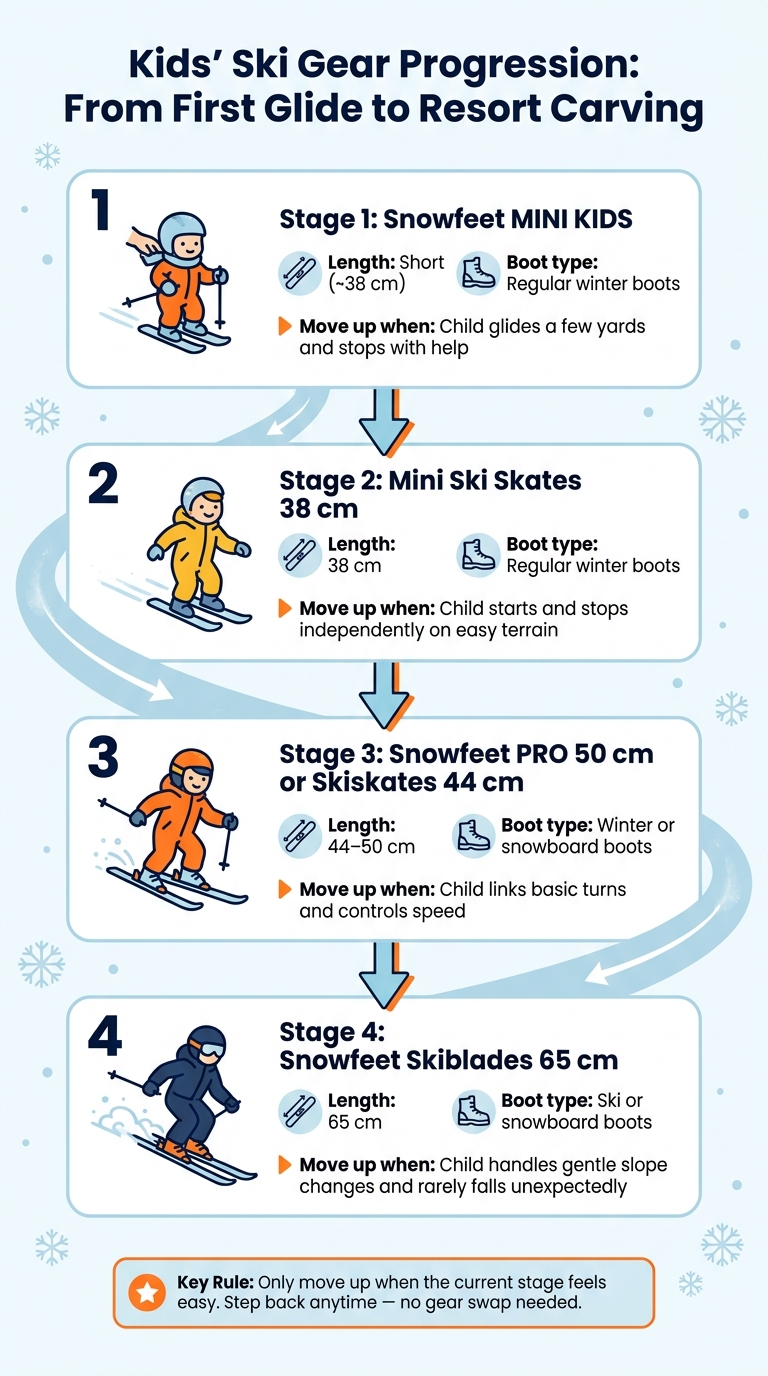
Kids' Ski Gear Progression: From First Glide to Resort Carving
Once you’ve picked the gear, keep day one simple. Go with the shortest Snowfeet* model your child can control, check boot fit at home, and keep that first session to 60–90 minutes on flat terrain.
Set just two goals:
- glide and stop
- still want one more run
That’s it. If a kid ends the day feeling good, chances are high they’ll want to come back. And honestly, that’s a big win on day one :)
A Simple Progression from MINI KIDS to Skiblades
Use this progression only when the stage before it feels easy.
| Stage | Model | Move Up When… |
|---|---|---|
| 1 | Snowfeet MINI KIDS | Child glides a few yards and stops with help |
| 2 | Snowfeet 38 cm Mini Ski Skates | Child starts and stops independently on easy terrain |
| 3 | Snowfeet PRO 50 cm or Skiskates 44 cm | Child links basic turns and controls speed |
| 4 | Snowfeet Skiblades 65 cm | Child can handle gentle slope changes and rarely falls unexpectedly |
The key is to size for success. Start shorter than you think you need. If moving up one stage leads to a lot more falls or frustration, just step back and give it another day. That’s one of the nice things about short gear: there’s no big gear swap and no rental desk headache.
FAQs
How do I know when my child is ready to move up to a longer Snowfeet* model?
It’s usually time to size up when your child has the basics down on their current Snowfeet* and feels good trying harder moves or going a bit faster.
For example, they might move from the 15-inch MINI KIDS to the 26-inch Skiblades or a longer model. Longer options, like 99 cm or 120 cm, give them more edge control and better stability at higher speeds, which helps with a more performance-focused ride.
Can my child really start with Snowfeet* using regular winter boots?
Yes - Snowfeet* work with regular winter boots. That’s one of the biggest differences from standard skis, which need ski boots.
Snowfeet* strap onto sturdy, waterproof winter boots with solid ankle support. They use adjustable straps and buckles, so setup is pretty simple.
The upside? Less gear, lower cost, and an easier start. No stiff ski boots. No extra hassle. Just a more comfortable, low-stress way to get going.
What should I bring to keep a young beginner warm and comfortable all day?
Use a three-layer system:
- a moisture-wicking base layer
- an insulating mid-layer
- a waterproof outer shell
That setup helps you stay warm without turning into a sweaty mess. And skip cotton. It holds moisture, which is bad news once you’re out in the cold.
Bring tall ski socks and a balaclava or neck gaiter to help block wind. For outerwear, look for jackets and pants with features like adjustable cuffs, gaiters, or snow skirts. Those small details do a lot of work when snow starts sneaking in.
It’s also smart to pack a few backup items:
- extra dry socks
- extra gloves
- hand warmers











Lasă un comentariu
Acest site este protejat de hCaptcha și hCaptcha. Se aplică Politica de confidențialitate și Condițiile de furnizare a serviciului.