



















Yes - for many casual skiers, skiboards make more sense than full-length skis.
If I ski a few days a season, stick to groomers, and care more about easy turns than top speed, I’d put skiboards high on my list. They’re easier to turn, easier to pack, and less of a hassle in lift lines, parking lots, and small apartments. The trade-off is simple: you lose some calm at higher speeds and in deep snow.
Here’s the short version:
- Best for: beginners, weekend skiers, family trips, and travel
- Main upside: easier control and less bulky gear
- Main downside: less planted feel when skiing fast
- Best lengths for most casual riders: 65 cm to 120 cm
- Typical full ski length: 150–190 cm
- Short-ski range in this article: 44–120 cm
- Price range mentioned: about $460 to $950
If I had to boil it down even more:
- Choose shorter skiboards if I want easy learning, light gear, and playful turns.
- Choose longer skiboards or short skis if I want more balance underfoot.
- Choose full-length skis only if I care most about speed, steeps, or deep snow.
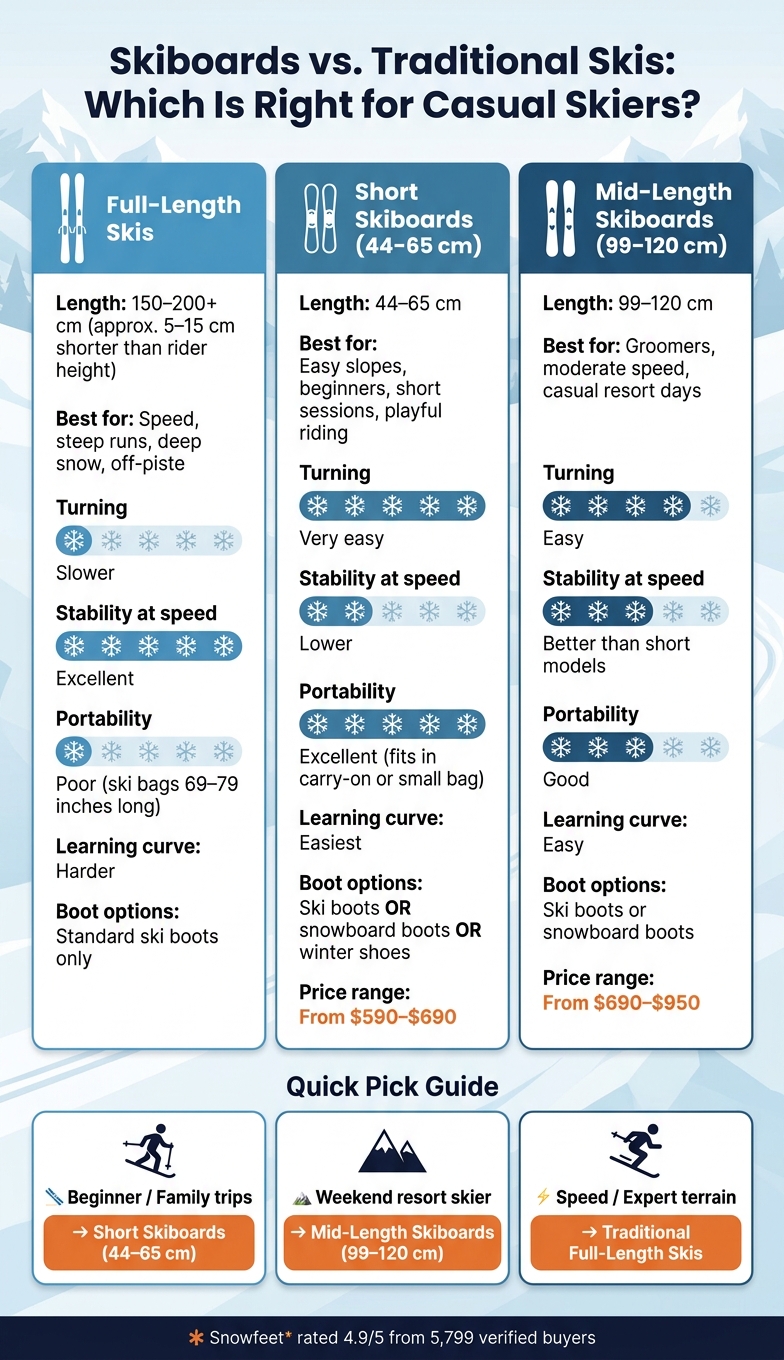
Skiboards vs. Traditional Skis: Which Is Right for Casual Skiers?
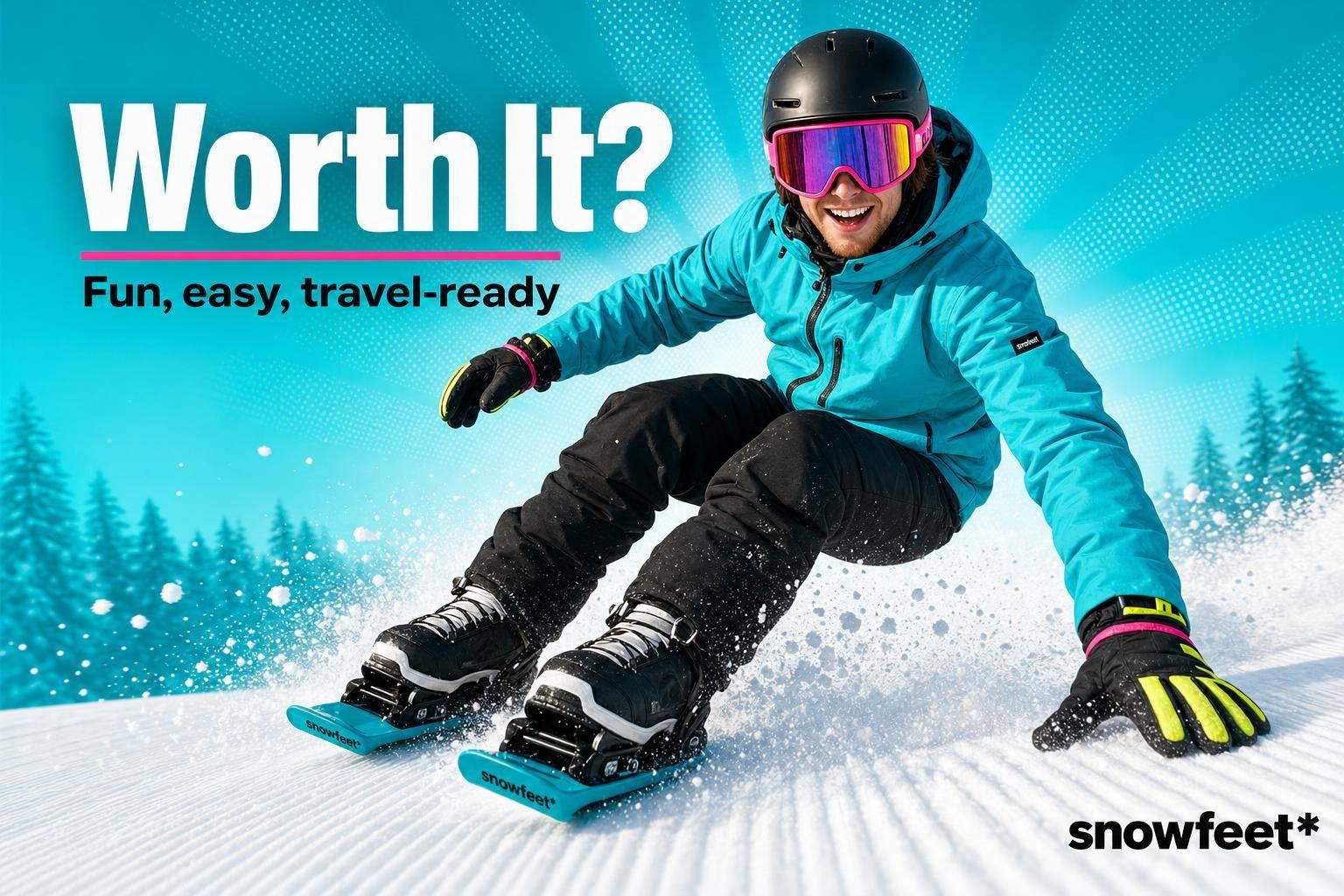
Snowfeet* Review: Are the Skiboards Worth It? | Short Ski | Skiblades | Snowblades
Quick Comparison
| Option | Best For | Turning | Stability at Speed | Travel/Storage | Learning Feel |
|---|---|---|---|---|---|
| Full-length skis | Faster skiing, steeper runs, deep snow | Slower | Higher | Poorer | Harder |
| Short skiboards (44–65 cm) | Easy slopes, short sessions, playful riding | Very easy | Lower | Better | Easiest |
| Mid-length skiboards (99–120 cm) | Groomers, moderate speed, casual resort days | Easy | Better than very short models | Good | Easy |
A few numbers stand out. Full skis often run about 5 to 15 cm shorter than your height, while ski bags can stretch 69 to 79 inches long. That’s a lot of gear for a short day on the hill. By contrast, short skis cut down the bulk and keep the learning curve simpler.
So, if I’m skiing mellow runs, traveling light, or just want snow gear that doesn’t feel like a wrestling match, skiboards are often worth it. Simple as that :)
Why long skis can be a poor fit for casual use
Why long skis feel like too much for short resort days
Standard adult alpine skis are often 150 to 200+ cm long. That’s about the length of a grown adult. For casual skiers, that much ski can feel like overkill.
Longer skis take more effort to turn. So if you’re out for a few easy laps, you may spend more energy steering than you want to. That can work well for stronger skiers. In a busy beginner zone, though, it’s often a pain.
In crowded learning areas, long skis are easier to catch on the snow, cross at the tips, or bump into other people in the lift line. Salomon suggests groomed-run skis that are about 5 to 15 cm shorter than your height, but rental shops often lean on basic height charts instead. So a skier who’s 5'9" may still walk out with 165 to 170 cm skis, even if they feel a bit long. That’s one big reason casual skiers start looking at shorter gear.
Travel, storage, and comfort drawbacks
Getting long skis to the hill can be its own little mission. Most ski bags are 69 to 79 inches (175 to 200 cm) long, which makes them awkward to fit in a normal car trunk. You’re often stuck with a roof rack, a ski-friendly SUV, or folded-down rear seats. Fine for a big trip, maybe. Less fun for a quick weekend run.
Flying doesn’t help. Ski bags often land in oversized baggage territory, which can mean extra fees and the joy of dragging a long, clunky bag through the airport. It’s not exactly smooth.
Back at home, storage can be just as annoying. In an apartment or smaller house, a 6-foot pair of skis doesn’t hide well. They end up against a wall, in front of a closet, or jammed into a corner where someone bumps them every other day.
Boot comfort adds to the issue. Traditional ski boots are stiff, so even a short day can mean shin bang, squeezed toes, and that stiff-legged walk through the parking lot. Short skiboards keep your stance more relaxed at low speed, which can make quick sessions feel easier. That’s where Snowfeet* starts to look like a better match for casual skiers. And that leads straight into the next part: do skiboards handle these problems better than regular skis?
sbb-itb-17ade95
Skiboards vs. traditional skis: pros and cons for casual riders
For short resort days, local hills, and family trips, the big choice is pretty simple: do you want max stability or max ease? Once you stop thinking about travel and start thinking about how things feel on snow, it comes down to control vs. high-speed calm.
For casual skiers, the trade-offs look like this:
| Feature | Traditional Long Skis | Generic Skiboards | Snowfeet* Short Skis |
|---|---|---|---|
| Best for | Speed, steep runs, off-piste | Playful casual use | Casual resort days, family runs, parks |
| Ease of learning | Steeper curve | Easier, more intuitive | Easiest; very quick to pick up |
| Stability at speed | Excellent | Limited | Stable at moderate speeds; 99–120 cm closes the gap |
| Maneuverability | Lower | High | Extremely high |
| Portability | Bulky | Compact | Very compact |
| Boot options | Standard ski boots and bindings | Varies | Ski boots, snowboard boots, or winter shoes |
| Best terrain | All-mountain, steep runs, powder | Easy groomed runs, parks | Groomers, family runs, parks, light to moderate powder |
| Value for casual riders | Best if you ski fast, steep, or off-piste often | Good for playful casual use | Strong value for casual riders |
So, the best pick depends less on skill level by itself and more on how you ski in real life. If you like mellow laps, easy turns, and a playful feel, short skis make a lot of sense. If you ski fast and push hard, long skis still have the edge.
Where skiboards make skiing easier and more fun
Short skis cut out a lot of the little annoyances that can make skiing feel like work. On easy groomed runs and family terrain, they help you spend less time fighting your gear and more time just enjoying the hill.
Turns come around with less effort. New skiers often feel less intimidated on shorter gear, which helps them build confidence faster. That part matters more than people think. If your skis feel easy, you’re more likely to relax, and relaxed skiers usually learn faster.
Snowfeet* reviews average 4.9/5 from 5,799 verified buyers, with riders calling out control, turning, and portability most often. That’s a strong fit for casual resort days, especially when you want gear that feels simple and fun instead of long and bossy.
Where traditional skis still come out ahead
Long skis still do a better job staying planted at high speed, on steep runs, and in deep snow. That’s their lane, and they’re still very good at it.
If your idea of a good day is aggressive carving, expert off-piste terrain, or straight-up charging black diamonds, a full-length ski is the better tool. No sugarcoating it. That extra length helps when the mountain gets steep, fast, or soft.
For casual skiers, though, that edge only matters if speed and deep snow are part of the plan. If not, you may be hauling around more ski than you need.
How much stability do casual skiers actually need?
Skiboards work best at moderate speeds and in tight turns, which is where most casual riders spend their time anyway. That’s the sweet spot.
One thing to know: very short skiboards can punish small front-to-back balance mistakes. In plain English, if you get too far forward or too far back, they can feel a bit twitchy. It’s a little like driving a short go-kart instead of a big sedan - super fun, but you notice your movements more.
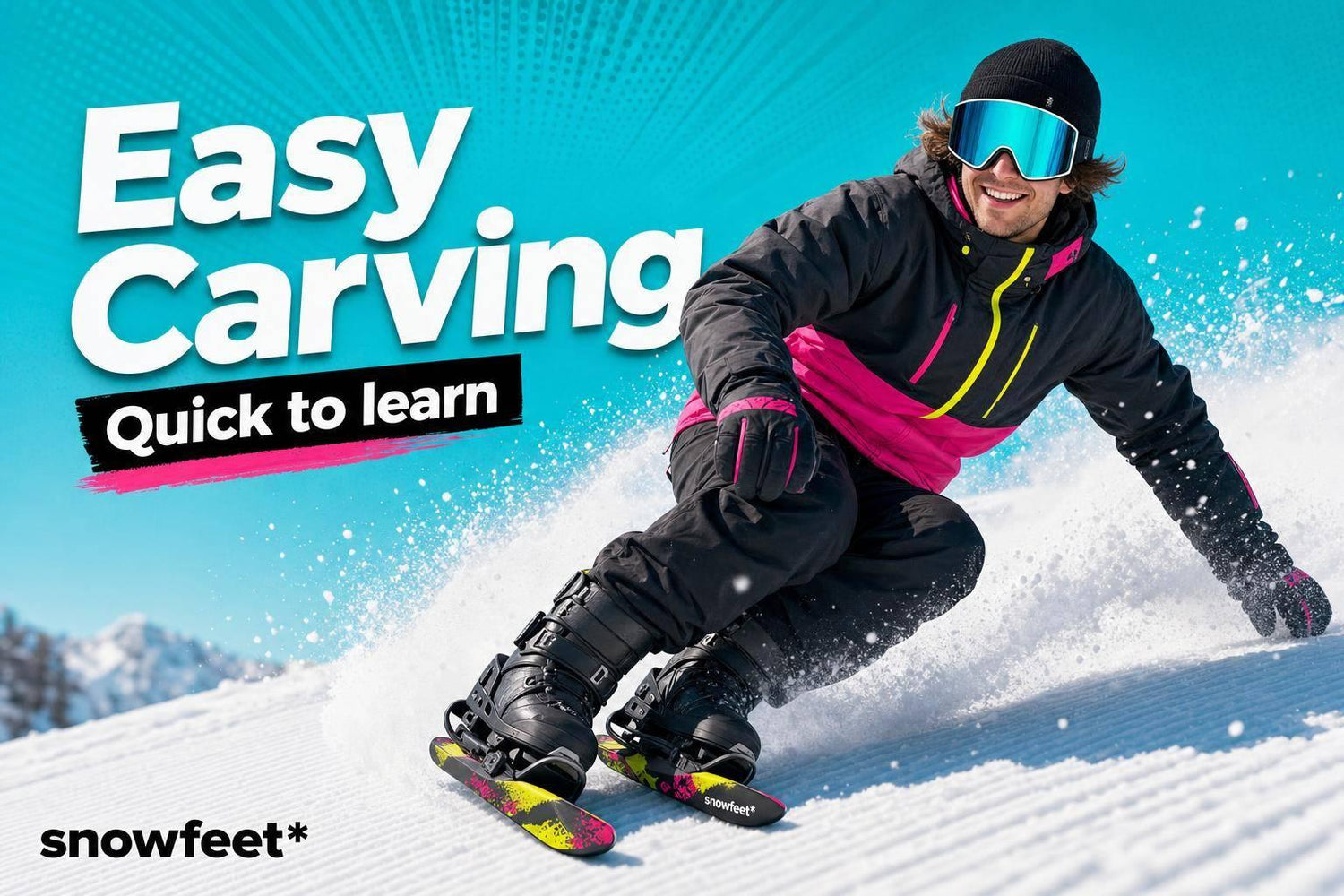
The 44 cm and 65 cm Snowfeet* models lean toward fun and simplicity. The 99 cm and 120 cm Skiblades are a better match for riders who want more balance and a calmer feel, while still keeping the perks of short skis. That trade-off is what shapes the product choice in the next section.
Best Snowfeet* models for different types of casual skiers
Pick based on how often you ski, how fast you like to go, and how much you care about easy carry. That’s the whole game.
| Model | Skill Level | Best Use | Stability | Maneuverability | Portability | Compatible Footwear | Price (USD) |
|---|---|---|---|---|---|---|---|
| Skiskates 44 cm | Beginner–Intermediate | Groomed runs, playful cruising | Low | High | High | Ski boots (US 4.5–14.5), snowboard boots (US 6–14.5) | $690 |
| Skiblades 65 cm | Beginner–Intermediate | Easy resort runs, family slopes | Moderate | High | High | Ski boots, snowboard boots | From $590 |
| Skiblades 99 cm | Intermediate | Groomers, moderate-speed resort days | Moderate | Moderate | Moderate | Ski boots, snowboard boots | From $690 |
| Short Skis 120 cm | Intermediate | All-resort casual riding, faster groomed runs | High | Moderate | Moderate | Ski boots | $950 |
The chart gives you the big picture. The notes below make the choice a lot easier.
Snowfeet* Skiskates 44 cm and Skiblades 65 cm: best for fun and easy learning
The 44 cm Skiskates are the smallest option in the lineup. That means super quick turns and easy transport. Toss them in the car, carry them with little fuss, and get moving. Snowfeet offers both ski-boot and snowboard-boot binding options, which is nice if you’d rather use boots you already have. On groomed slopes, they feel playful and snappy, especially for short turns.
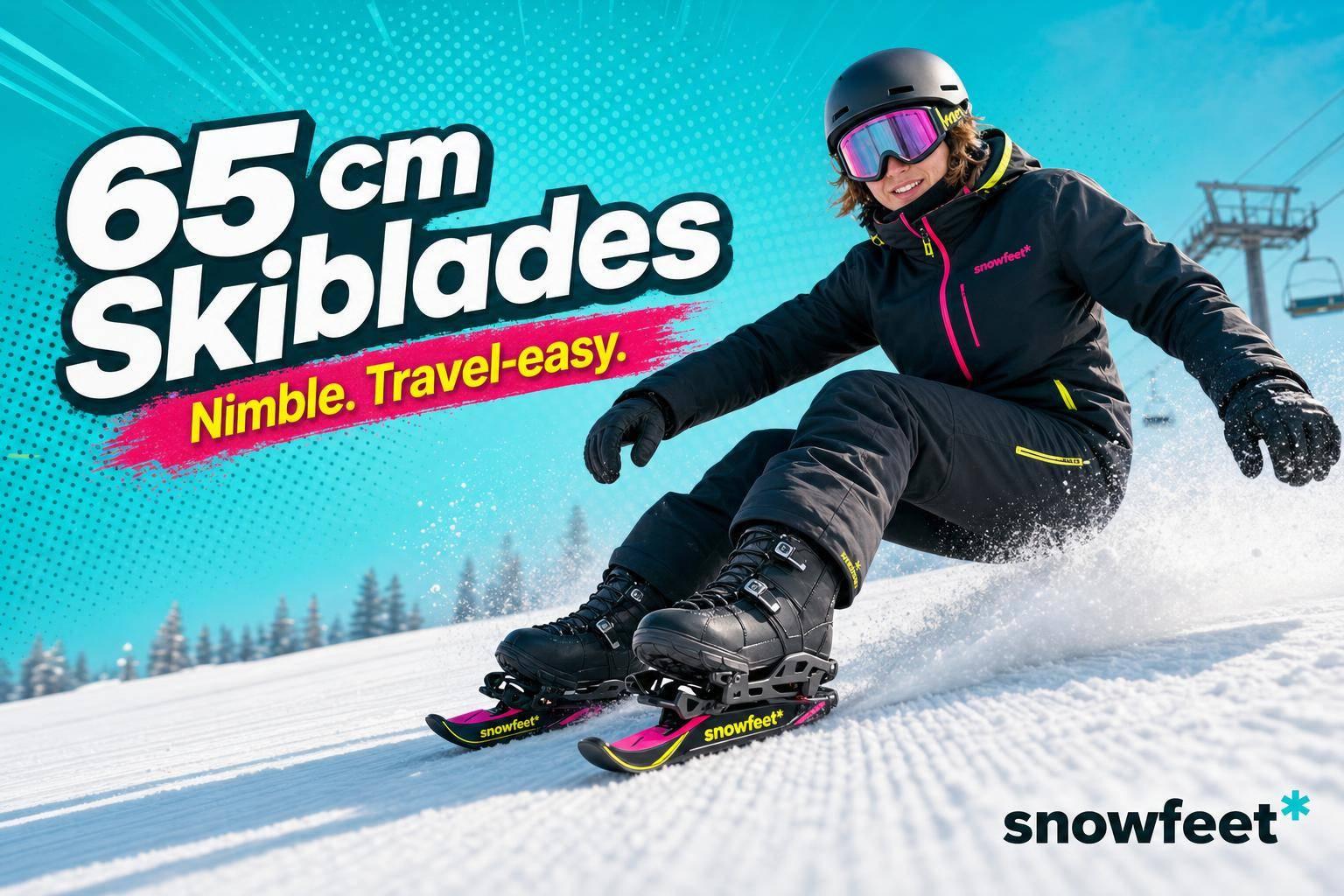
The 65 cm Skiblades give beginners and intermediate riders a bit more room to breathe. They still turn fast and keep that short-ski feel, but they’re less twitchy than the 44 cm model. If the 44 cm setup sounds a little too spicy, the 65 cm version is often the easier starting point.
Snowfeet* 99 cm and 120 cm: more stability without going full-length
The 99 cm Skiblades sit in a nice middle zone. They feel more planted than the shorter models, but they still stay nimble enough for groomers and moderate-speed resort days. They’re a good fit for riders who want a calmer ride without jumping to full-length skis. They also work well for people who already own ski boots or snowboard boots.
The 120 cm Short Skis are the most stable casual option in this group. They’re still shorter and easier to manage than standard skis, but they give you more confidence on faster groomed runs. If you like a steadier feel underfoot, this is probably the one that’ll make the most sense.
How Snowfeet* compares to other short-ski brands
If you’re stacking Snowfeet* up against brands like Bigfoot, Figl, and Salomon Snowblades, the biggest difference is the size range and how easy it is to move up as your comfort grows. Snowfeet* covers more lengths, from 44 cm to 120 cm, while those older short-ski brands leaned on ski-boot-only bindings and more limited use cases.
That gives casual riders a simpler path: start small, then size up within the same setup style as your riding changes. Nice and simple. No need to jump all over the map.
Next, the buying guide breaks down which Snowfeet* model fits each casual skier best.
Final verdict: when skiboards are worth it for casual skiers
For most casual skiers, skiboards are worth it.
On groomed runs and local hills, they’re easier to learn, lighter to carry, and way less awkward to deal with than full-length skis. That alone makes a big difference, especially if you ski a few times a year and just want to have fun without wrestling your gear in the parking lot.
Traditional skis still have the edge if your main goal is speed, steep terrain, or mixed snow.
So, the better pick comes down to a few simple things: how you ski, how often you travel, and how much stability you want under your feet.
Best pick by skier profile
| Skier Profile | Terrain & Speed | Best Pick | Why It Fits |
|---|---|---|---|
| After-work laps at a small Midwest or East Coast hill | Short groomed runs, low speed | Snowfeet Skiskates 44 cm* (from $460) | Best for short, low-speed sessions |
| Weekend trip to Colorado or Utah, mostly groomers | Blue runs, moderate speed | Snowfeet Skiblades 99 cm* (from $690) | More stable feel for longer resort runs without going full-length |
| Family vacation on green and easy blue slopes | Low to moderate speed | Snowfeet Skiblades 65 cm* (from $590) | Easiest learning curve; less intimidating for adults keeping up with kids |
| Traveler flying to a ski destination, limited luggage | Any groomed terrain | Snowfeet Skiblades 65 cm or 99 cm* | Packs into carry-on or checked bag far more easily than full-length skis |
| Confident intermediate on blues, occasional blacks | Moderate to faster groomed runs | Snowfeet Short Skis 120 cm* ($950) | Closest to a traditional ski feel while staying shorter and more manageable |
| Skier focused on speed, steeps, or expert terrain | Fast, variable, off-piste | Traditional skis | Best only for speed, steeps, and off-piste |
Use the quick guide below to match the right Snowfeet* length to your riding style.
The short buying guide
- Go shorter (44 cm or 65 cm) for easy learning, tight storage, or light travel.
- Go mid-length (99 cm or 120 cm) for a steadier ride on longer groomed runs.
- Choose traditional skis only if speed and expert terrain are your main focus.
Value matters too. If you plan to ski several days over the next few seasons, buying a Snowfeet* model will likely cost less than renting again and again.
FAQs
Do skiboards feel too unstable for adult beginners?
No. For adult beginners, skiboards often feel easier to control than long skis. Their shorter length makes them less awkward and helps stop tip crossing, which is a common newbie headache.
They also respond fast, so you feel what the gear is doing right away. That quick feedback can help you build balance and confidence sooner.
If you want a bit more stability as you improve, longer Snowfeet options like the 99 cm Skiblades offer a smoother, more balanced ride.
Can I use my current boots with Snowfeet* skiboards?
Yes. Snowfeet* skiboards work with a wide range of footwear, including regular winter shoes, snowboard boots, and ski boots.
The exact binding depends on the model. But the whole setup is made to give you options. So in many cases, you can use the boots you already own, which makes things more comfortable and a lot more practical.
Which skiboard length is best for my height and skill level?
Skiboard length has more to do with how you ride than how tall you are. That’s the nice part with Snowfeet. The lineup is simple, and each length has a clear feel on snow.
- 44 cm Skiskates: best for total beginners or anyone who wants a skating-style ride
- 65 cm Skiblades: a great pick for learning the basics and making easy turns
- 99 cm Skiblades: a sweet middle ground between agility and stability
- 120 cm Short Skis: the most stable option if you want more speed and cleaner carving
Compared with old-school skis, all of these are easier to control and more forgiving. That means less fighting the gear and more time having fun :)











Zostaw komentarz
Ta strona jest chroniona przez hCaptcha i obowiązują na niej Polityka prywatności i Warunki korzystania z usługi serwisu hCaptcha.