



















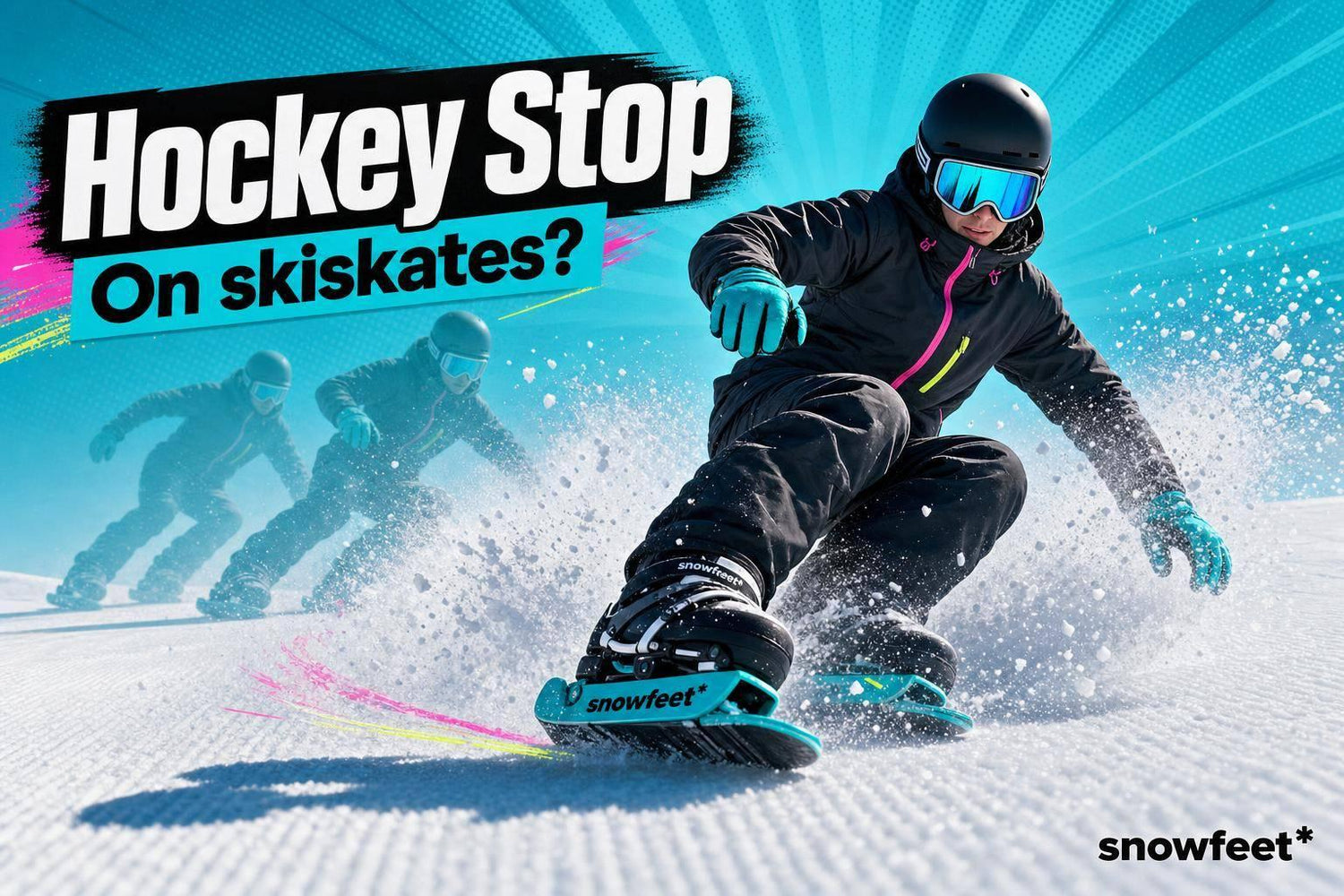
Yes - you can do hockey stops on Skiskates. But here’s the short version: it works best on firm, groomed snow, at moderate speed, with solid edge control. If the snow is deep, slushy, or icy, the move gets a lot less reliable. Think smooth corduroy = good. Think mashed potatoes = nope.
If I had to boil the whole thing down, it’s this:
- 44 cm (17.3 in) Skiskates stop fast and pivot fast
- 65 cm Skiblades give you more balance and are easier to learn on
- 99 cm Skiblades give you the most stability and the most room for mistakes
- A hockey stop on snow is pivot + edge + skid
- For most people, the stop won’t feel clean on day one - and that’s normal :)
My take: if your top goal is snappy stops, go shorter. If your top goal is easier control, go longer.
Here’s the part that matters most before you click away:
- On 44 cm Skiskates, small balance errors show up fast
- On 65 cm and 99 cm Skiblades, you get more support during the stop
- The best learning zone is usually green to easy blue runs
- Safety gear like a helmet and wrist guards is a smart move
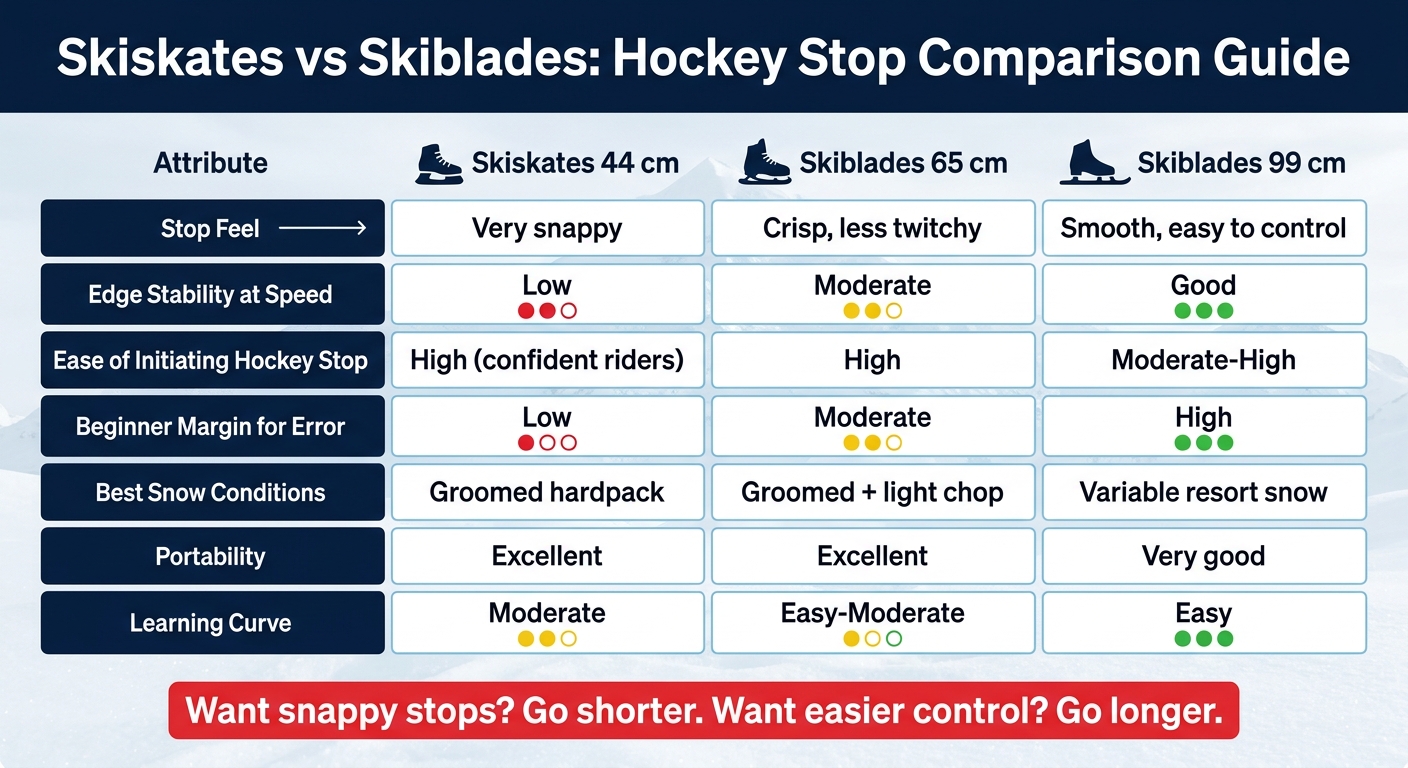
Skiskates vs Skiblades: Hockey Stop Comparison Guide
How to Stop with Skiskates and Snowfeet? 🛑 Check out our video!

Quick Comparison
| Setup | Stop feel | Stability | Best for |
|---|---|---|---|
| Skiskates 44 cm | Very snappy | Low | Riders who want fast pivots and playful stops |
| Skiblades 65 cm | Crisp but less twitchy | Medium | Most casual riders |
| Skiblades 99 cm | Smoother and easier to control | High | Beginners and people who want more margin for error |
So, if you’re coming from hockey, skating, skiing, or just winter curiosity, the answer is simple: yes, hockey stops on Skiskates are possible - but the snow, the length, and your balance decide whether it feels smooth or like a yard sale with style.
If you want, I can also turn this into a SEO-ready intro, a product review intro, or a shorter affiliate-style opening.
How a Hockey Stop Works on Snow
A hockey stop on snow means turning both feet sideways, tipping onto the edges, and skidding to cut speed fast. It looks a lot like a hockey stop on ice, but snow gives you more grip, so the stop feels shorter and heavier. It’s a quick, handy move, but it only works well when your speed and the snow line up.
The Basic Movement: Pivot, Edge, Skid
The move comes down to three parts. Start at a manageable speed. Then unweight a bit, turn both legs and hips at the same time, and tip the Skiskates onto the uphill edge so the edges can skid. On short Skiskates, this happens fast - almost in a blink.
Why Skiskates React Fast in This Maneuver
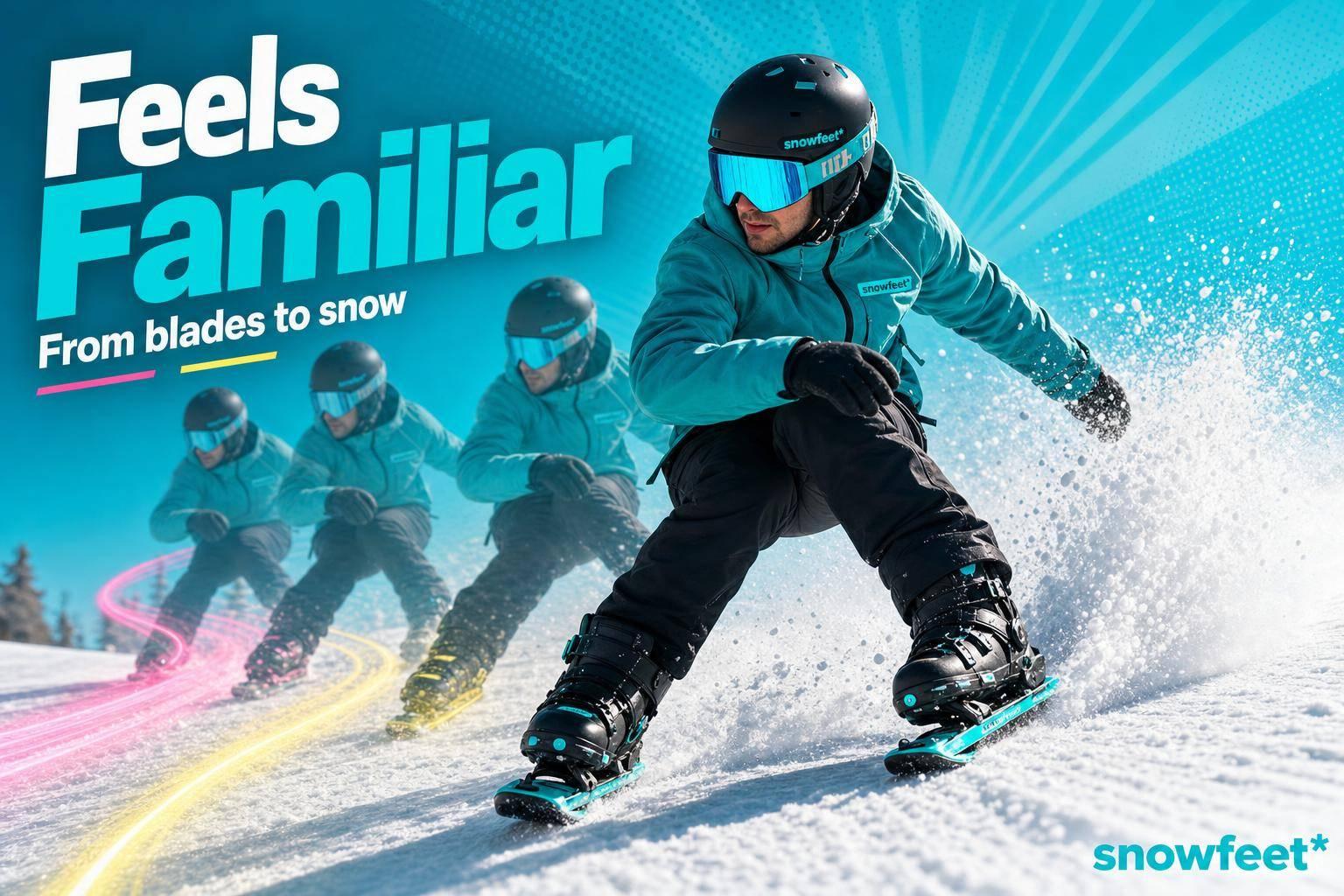
On Snowfeet* Skiskates at 44 cm (17.3 in), the short platform turns almost at once when you start the pivot. The feel is immediate, more like a skate blade than a full ski. If you play hockey or spend time on skates, the timing will likely feel familiar.
"You have to keep the front-back balance, so it feels very natural to those who play ice hockey, ice skate, or even use inline skates." - Snowfeet*
That quick response is the big plus. But the snow texture, your stance, and your timing decide whether the stop feels clean or turns into a bit of a yard sale.
sbb-itb-17ade95
When Hockey Stops Work and When They Do Not
Best Conditions for Clean Stops
A hockey stop only works when the move happens in the right sequence: pivot, set the edge, then skid.
The sweet spot is firm, groomed snow. That kind of surface lets your edges bite, then release, without sinking or locking up. On gentle to moderate slopes, you get enough speed to slide sideways, but not so much that every mistake turns into a yard sale. The short platform also means your stance has to be dialed in. You can’t muscle your way through it.
On Skiskates, balance errors show up fast. A clean stop depends on the snow giving your edges something steady and predictable to bite into.
Conditions That Make Stopping Harder
Some snow just doesn’t play nice.
Powder makes the Skiskates sink. Ice does the opposite. Your edges may wash out, or they may catch too hard. Either way, it gets sketchy fast. Because the platform is short, every little wobble matters. A small shift in your knees or hips can change the edge angle right away.
Steep terrain adds another problem: speed builds faster than you can fix mistakes. In those cases, it’s smarter to use a softer skid instead of trying to force a full hockey stop. Once the surface gets rough, stance and edge timing matter even more.
Common Mistakes That Ruin the Stop
Three things tend to wreck a hockey stop on Skiskates:
- Poor balance
- Bad edge timing
- Not enough speed
The most common mistake is leaning back. When your hips drift behind your feet, the Skiskates shoot forward and the edges lose contact. Keep your ankles and knees soft, and stay centered over your feet.
The next big one is setting the edge too hard, too soon. Don’t slam it. Roll onto the edge as the Skiskates come across the fall line, then let the skid start before you add more pressure. On 44 cm Skiskates, even a tiny knee or hip movement changes the edge angle right away.
And then there’s speed. Too little speed kills the stop. A hockey stop needs enough momentum to let the Skiskates slide sideways.
Those tradeoffs stand out even more when you compare 44 cm Skiskates with 65 cm and 99 cm Skiblades.
Snowfeet* Skiskates 44 cm vs. Skiblades 65 cm and 99 cm
Length changes how the stop feels. Shorter setups snap around faster. Longer ones give you more room to stay centered and recover if the move gets a little sloppy.
44 cm Skiskates: Fastest Pivot and Most Playful Stops
The 44 cm Skiskates feel the most like skating. They pivot the fastest and make playful, snappy stops feel natural. But there’s a catch: they ask for clean balance and a controlled, moderate pace on groomed hardpack.
The wood cores and steel edges help them grip well on groomed snow. That edge bite matters when you want the stop to feel crisp instead of sketchy. The downside is speed. With less edge in contact with the snow, they can get twitchy once you start pushing past a moderate pace. Best fit for confident riders who want quick, fun stops on groomed runs.
65 cm and 99 cm Skiblades: More Stability and Easier Learning
The 65 cm Skiblades still turn fast enough for quick hockey stops, but the extra length gives you more balance and more time to recover during the pivot-edge-skid sequence. That little bit of extra platform can make a big difference. If you’re still building confidence, the 65 cm model is much more forgiving than the 44 cm setup.
The 99 cm Skiblades do a better job in variable resort snow and light chop than the shorter models. For beginners, that extra length helps a lot during the full stop. You get more balance without giving up too much agility. They’re still easier to move around than long skis, so you keep that short-ski feel while gaining a bigger cushion for mistakes.
Comparison Table: Stopping Feel, Stability, and Beginner Margin for Error
| Skiskates 44 cm | Skiblades 65 cm | Skiblades 99 cm | Long Skis (150–180 cm) | |
|---|---|---|---|---|
| Edge stability at speed | Low | Moderate | Good | Best at high-speed stability, not quick hockey stops |
| Ease of initiating a hockey stop | High (for confident riders) | High | Moderate-High | Low |
| Beginner margin for error | Low | Moderate | High | Moderate |
| Best snow conditions | Groomed hardpack | Groomed + light chop | Variable resort snow | Fast, rough, or steep terrain |
| Portability | Excellent | Excellent | Very good | Poor |
| Learning curve | Moderate | Easy-Moderate | Easy | Steep |
Products like Bigfoot and Salomon Snowblades often use older foam or composite cores. Snowfeet* uses wood cores and steel edges, which help give cleaner edge engagement and more controlled stops across all three lengths.
So, once you know how much margin for error you want, picking a length gets a lot easier. After that, it comes down to stance and edge angle. Length shapes how easy the stop feels. Technique is what makes it clean.
Technique Steps and Final Takeaway
A Simple Progression for Learning the Stop Safely
Start on a wide, groomed run with lots of space and light traffic. Keep speed low at first. Before each run, do a quick body check: knees bent, hips over your feet, chest a bit forward, hands relaxed in front, eyes up - not staring down at your skiskates. Set your feet about shoulder-width apart and keep your weight centered over the balls of your feet.
Then move through this simple progression:
- Side-slip both directions. Point your feet across the hill, flatten the edges a bit, and let yourself slide sideways. Then tip the edges more to stop the slide. Practice on both sides until it feels automatic. This builds the same skid and edge control you use in a hockey stop.
- Half-stops. At slow speed, turn both feet across the fall line and use the uphill edges to slow down, but don’t come to a full stop yet. Go left, then right, until the move feels smooth.
- Full hockey stops at moderate speed. When half-stops feel easy, go for the full move: quick pivot, firm edge, hold the skid until you stop. A simple cue helps: bend, pivot, edge, hold.
Stay centered over the balls of your feet the whole time. Leaning back is one of the biggest mistakes. It kills edge grip and can make the skates shoot forward. On the 44 cm Skiskates, don’t over-rotate past 90 degrees. Let your hips, chest, and feet finish together.
This is the fastest way to see whether hockey stops on skiskates feel controlled or chaotic for you. And yeah, with short gear, small mistakes show up fast. That’s the whole game here.
That order matters because the shorter the setup, the more each little balance error changes the stop.
Conclusion: Which Snowfeet* Setup Makes the Most Sense
Once the stop starts to feel repeatable, length becomes the big choice. Hockey stops do work on skiskates - but clean stops depend on groomed, packed snow and solid edge control.
For quick, snappy stops and playful riding, the Snowfeet* Skiskates 44 cm are the most responsive. But they’re best for riders who already have decent balance. The Snowfeet* Skiblades 65 cm sit nicely in the middle: fast enough to stop with a crisp feel, with a bit more forgiveness than the 44 cm. The Snowfeet* Skiblades 99 cm give you the most stability and the easiest learning curve for beginners, with the biggest margin for error while still feeling far more nimble than long skis.
For most casual riders who want fun, quick stops and easy transport, any of the three Snowfeet* setups can work well. If your main goal is to learn the stop with the most room for mistakes, the 99 cm Skiblades make the most sense.
FAQs
Do I need ski poles to learn hockey stops on Skiskates?
No - you don’t need ski poles to learn hockey stops on Snowfeet Skiskates.
In fact, poles can get in the way. They can throw off the natural skating rhythm and balance this move needs. Snowfeet Skiskates are made so you can stop and turn with your body weight, edge control, and core balance - much more like ice skates than standard skis.
Can beginners learn hockey stops faster on 99 cm Skiblades than on 44 cm Skiskates?
It depends on what the beginner wants to learn first. But for hockey stops, Snowfeet Skiskates usually give you the easier path.
Why? They’re built for fast edge grip and short, skate-like moves. That makes the stopping motion feel more natural, especially if you want to learn the specific mechanics of a hockey stop.
Here’s the simple breakdown:
- 44 cm Skiskates: More agile and easier to turn
- 99 cm Skiblades: More stable, but closer to the feel of regular skis
So, if the goal is to learn hockey stops, 44 cm Skiskates are usually the better pick.
What should I do if my Skiskates keep washing out during a stop?
You’re likely not using enough edge angle. Push your knees farther into the turn and keep your weight centered over the middle of your feet.
Don’t lean back on your heels. That can lift the tips and make the Skiskates shoot forward. Keep a shoulder-width stance, bend your knees a bit, and don’t over-rotate your upper body.











Zostaw komentarz
Ta strona jest chroniona przez hCaptcha i obowiązują na niej Polityka prywatności i Warunki korzystania z usługi serwisu hCaptcha.