



















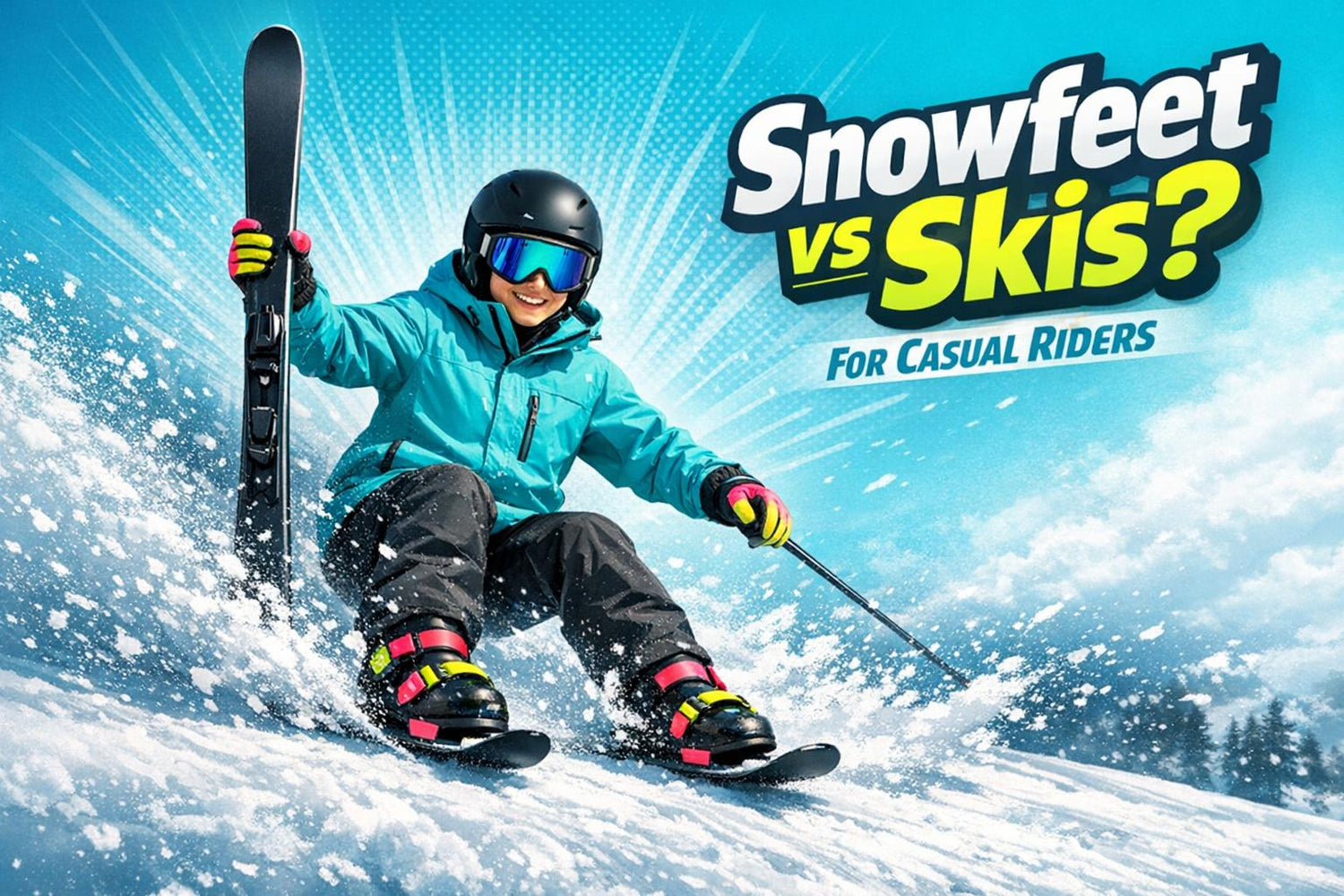
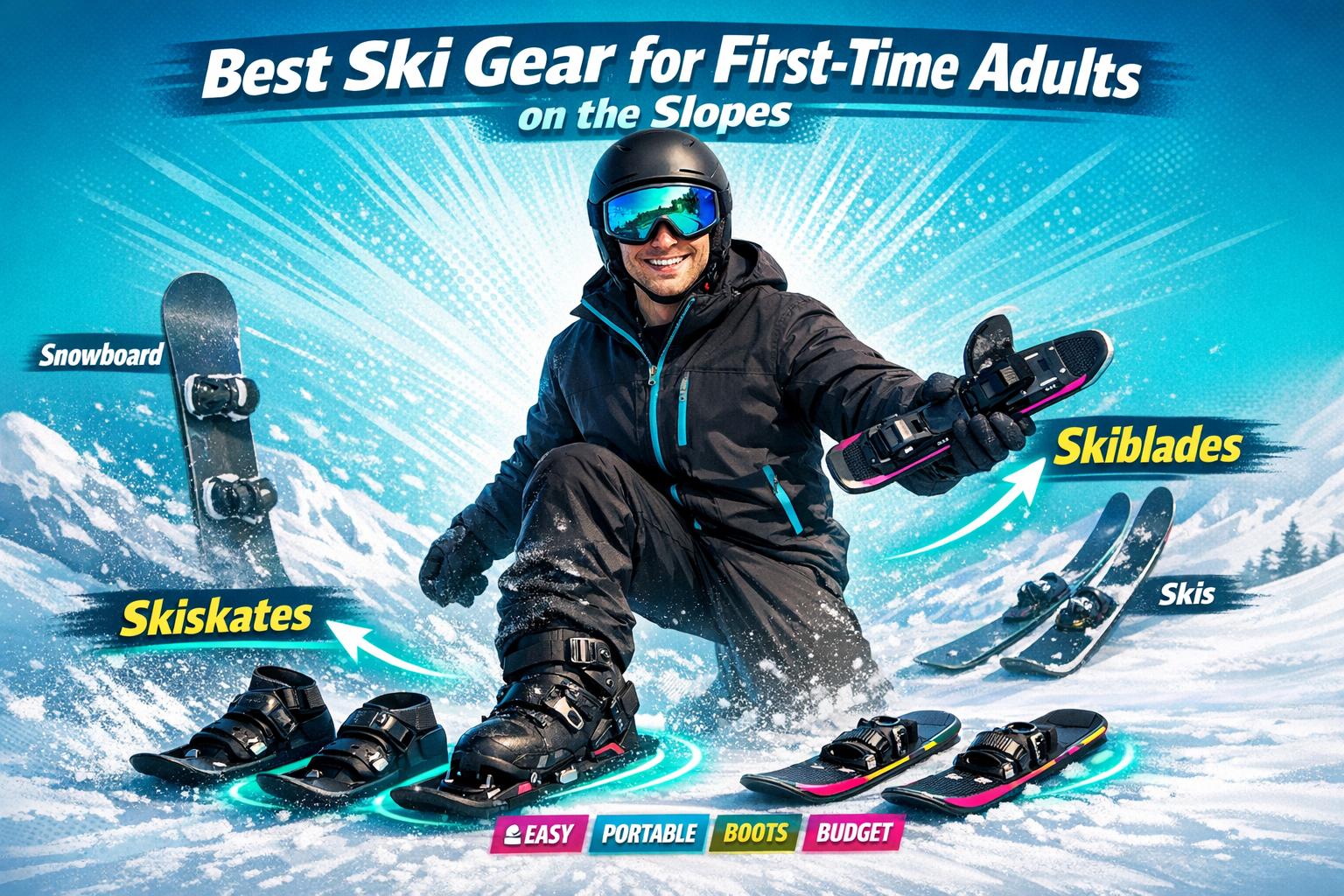
Snowfeet might just be the ski gear you didn’t know you needed. Imagine ditching bulky 6-foot skis for lightweight, compact gear that fits in a backpack. That’s the promise of Snowfeet. These mini skis come in three sizes - 17-inch Skiskates, 26-inch Skiblades, and 39-inch Skiblades - designed for casual skiers who want a simpler, more portable way to enjoy the slopes.
Here’s why they’re worth considering:
- Portability: Fits in a backpack or suitcase - no need for roof racks or oversized luggage.
- Ease of Use: Works with your regular winter boots or snowboard boots - no special gear required.
- Beginner-Friendly: Shorter length makes turning easier and limits speed, which helps new skiers feel more in control.
- Cost-Effective: Starting at $250, they’re cheaper than a full ski setup and can save you money on rentals.
Snowfeet are ideal for groomed slopes, small resorts, backyard hills, and even city parks. They’re perfect for casual skiers who prioritize fun and convenience over high-speed carving or tackling advanced terrain. However, if you’re chasing powder or steep black runs, longer skis are still the better choice.
In short, Snowfeet are a fun, hassle-free option for casual skiing. But if you’re all about speed and challenging lines, you might want to keep your regular skis handy too.
Design and Portability: Snowfeet vs. Regular Skis
Snowfeet Product Overview
The size difference between Snowfeet and traditional skis is striking. Regular adult all-mountain skis typically measure between 5 and 6 feet, depending on the skier's height and skill level. In contrast, Snowfeet offers a much more compact lineup. The 44 cm (17 in) Skiskates are about the size of a skateboard deck, the 65 cm (26 in) Skiblades are comparable to a carry-on suitcase, and the 99 cm (39 in) Skiblades deliver a short ski experience while still being far smaller than anything you'd find at a typical U.S. ski rental shop.
This shorter length offers some clear perks. It allows for quicker turns and reduces the chances of crossing ski tips, making Snowfeet an excellent option for beginners. Their agility and forgiving nature are perfect for casual skiers sticking to groomed runs. But Snowfeet's advantages don't stop there - let's talk about how their boot and binding setup makes them even more appealing.
Bindings and Boot Compatibility
One standout feature of Snowfeet is their user-friendly approach to boots and bindings. Unlike traditional skis, which require specific alpine ski boots and precise binding adjustments, Snowfeet keeps things simple. Most models feature adjustable bindings that work with regular winter boots or snowboard boots - gear you probably already own.
This flexibility means no need for boot rentals or dealing with the stiff, often uncomfortable feel of alpine ski boots. For someone who only skis a few days each season, this design is a game-changer, cutting both costs and hassle. Now, let’s see how this simplicity translates to easier travel and storage.
Portability and Travel Ease
Snowfeet's compact size makes them incredibly portable. Whether it’s the 44 cm Skiskates or the 65 cm Skiblades, they can fit snugly in a backpack or car trunk, eliminating the need for bulky roof racks or long ski bags. On the other hand, traditional skis - measuring 150 to 180 cm - almost always require a roof-mounted carrier or a dedicated bag, adding extra expense and setup time.
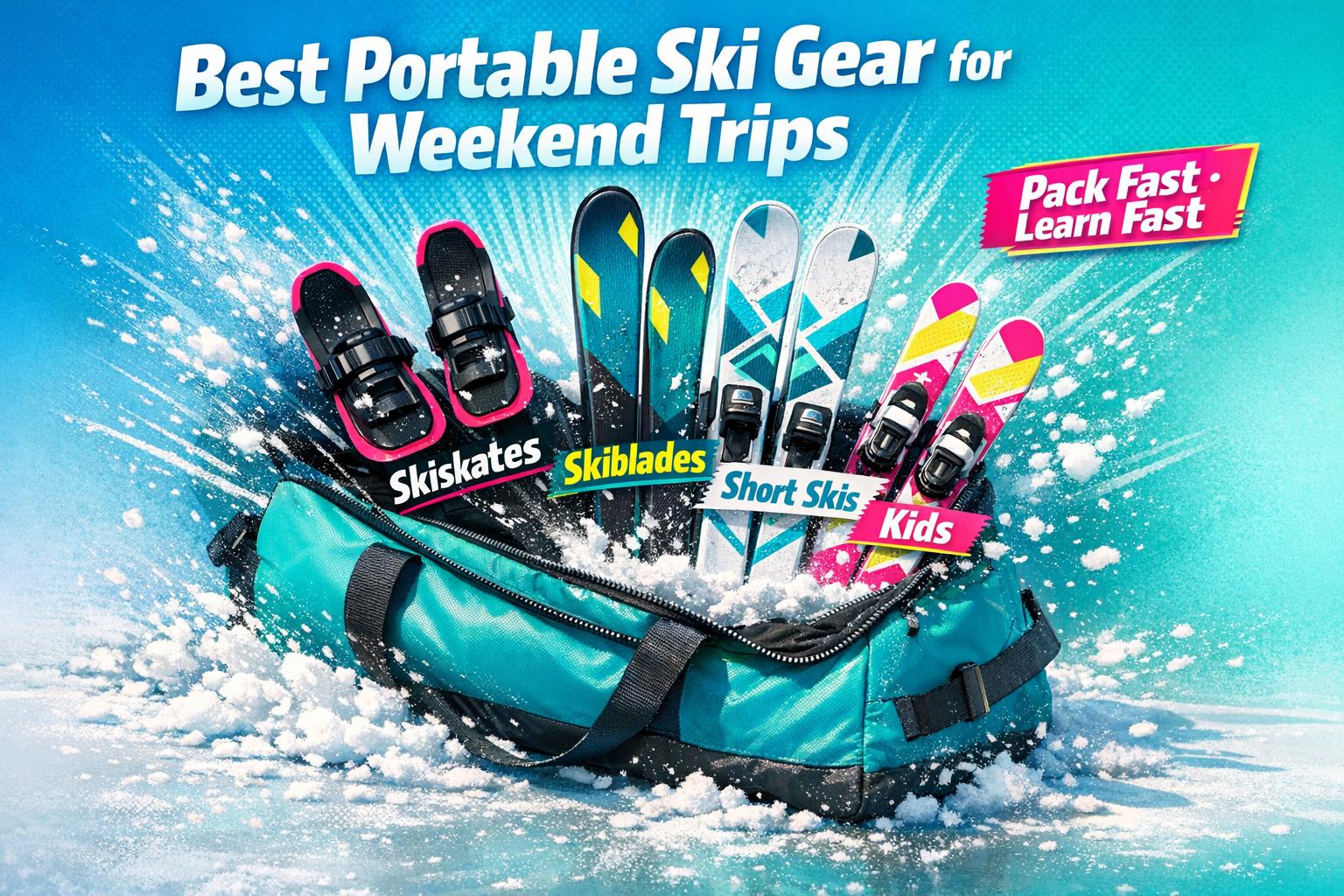
For air travel, the difference is even more pronounced. Snowfeet’s shorter models can fit in standard suitcases, avoiding oversized baggage fees and the need for extra boot bags. This means you can pack for a ski trip without jumping through hoops - a major win for casual or infrequent skiers in the U.S. who value simplicity.
| Feature | Snowfeet (Skiskates / Skiblades) | Regular Skis (Adult All-Mountain) |
|---|---|---|
| Typical length | ~17 in (Skiskates), 26–39 in (Skiblades) | ~59–71 in depending on skier |
| Boot compatibility | Regular winter boots or snowboard boots | Dedicated alpine ski boots only |
| Car transport | Fits in trunk or backpack | Usually needs roof rack or long ski bag |
| Air travel | Often fits in standard checked luggage | Typically counts as oversized sports equipment |
| Home storage | Closet shelf or under a bed | Requires garage, basement, or wall rack |
Learning Curve and Control: Why Snowfeet Work Well for Beginners
Ease of Learning
Traditional skis, typically 59–71 inches long, require a lot of control, especially for beginners. In contrast, Snowfeet Skiskates, at just 17 inches, and Skiblades, at 26 inches, are far shorter - less than a third of the length of standard skis. This compact design means fewer chances of catching a tip or crossing skis, which is a common struggle for newcomers.
What’s more, the movement with Snowfeet feels familiar to anyone who’s tried inline skating or ice skating. The stance, weight shifts, and quick pivots are similar, making the learning curve much smoother. Many users report being able to link turns and stop confidently within a single day - a stark contrast to the multi-day learning process typically required with full-length skis. This quick progress builds confidence and sets up beginners for enjoying responsive, fast turns on groomed slopes.
Control and Fun on Groomed Slopes
Snowfeet truly shine on groomed green and blue runs. Thanks to their short length, they allow for tight, quick turns with minimal effort. Instead of committing to long, sweeping carves, you simply point your toes and pivot. This makes speed control feel much more natural and manageable, especially for casual skiers who prefer moderate speeds.
The responsiveness of Snowfeet also makes skiing more playful. You can weave through other skiers, hop over small rollers, or make sharp direction changes - all things that might feel clunky or awkward on longer skis. For someone who skis just a few days a year and is out to enjoy themselves on a blue groomer, this nimble, energetic style is often more fun than trying to master traditional parallel turns. Plus, this added control boosts both confidence and safety.
Confidence and Safety for Casual Skiers
Snowfeet’s design naturally limits speed, which is a big plus for beginners and casual skiers. The shorter platform feels less stable at high speeds, encouraging riders to stick to a comfortable, moderate pace. For anyone who’s ever felt the panic of accelerating too quickly on long skis, this built-in speed control is a game-changer.
Falls are also less intimidating with Snowfeet. Their compact size reduces the leverage on your joints during a fall and minimizes the risk of tangling. Plus, getting back up is quicker and easier. Combined with the familiar skating-like movements, these features make new skiers feel more relaxed, which in turn improves balance and control. All in all, Snowfeet provide a beginner-friendly experience that helps skiers feel safe and confident while learning.
| Factor | Regular Skis | Snowfeet Skiskates / Skiblades | Beginner Benefit |
|---|---|---|---|
| Length | ~59–71 in | ~17 in / ~26 in | Shorter = easier to turn, less tip crossing |
| Turning style | Long carves, requires technique | Quick pivots, skate-like | Faster to learn, more intuitive |
| Speed range | Can accelerate quickly | Naturally moderate | Less intimidating, easier to control |
| Fall impact | More leverage on joints | Less torque, easier recovery | Lower injury risk, faster confidence |
Use Cases: Where Snowfeet Beat Regular Skis
Groomed Slopes and Small Resorts
On groomed green and blue runs, the 65 cm (26 in) Skiblades shine. They're long enough to hold an edge on packed snow but short enough to make quick, effortless turns. Meanwhile, the 44 cm (17 in) Skiskates are perfect for learning zones and playful laps near the lodge, where agility is key. Snowfeet’s design makes them approachable for casual skiers, even on their first run.
At smaller, family-friendly ski hills - those with just a couple of lifts and shorter runs - Snowfeet are a natural fit. Their compact size makes navigating tight spaces and crowded areas a breeze. You can walk from your car to the lift without wrestling with bulky gear, easily handle crowded lift lines, and transition between the lodge and slopes without hassle. Plus, most ski resorts allow Snowfeet since they’re equipped with metal edges and standard bindings that meet safety standards. Their agility isn’t just limited to resorts; they’re just as practical on everyday hills.
Backyard Hills and City Parks
Snowfeet are a game-changer for backyard hills and snowy parks. The 38 cm (15 in) Mini Ski Skates and 50 cm (20 in) PRO models are tailor-made for short runs, like those found in local sledding spots or neighborhood hills. Perfect for 50–100 foot runs, they let you strap in, enjoy the ride, and walk back up without needing to remove your gear.
City parks bring their own challenges - icy patches, uneven snow, and footprints everywhere. Snowfeet’s compact size makes it easy to dodge obstacles and adjust quickly, something traditional skis struggle with in shared spaces full of sledding kids or roaming dogs. This flexibility adds to their appeal, blending performance with convenience. Whether you’re hitting groomed slopes or a snowy park, Snowfeet deliver a hassle-free, playful experience.
Travel Scenarios
For travelers, Snowfeet solve the problem of lugging around oversized ski equipment. The 44 cm Skiskates, for example, pack neatly into a regular duffel bag or backpack, saving you from hefty airline fees and simplifying packing for quick day trips. A satisfied customer, heyjerz, put it best:
"A lot easier to haul around the hills & on vacation than traditional skis!"
Road trips? Even better. Snowfeet are compact and lightweight enough to live in your car trunk all winter. That means you’re always ready for an impromptu stop at a local hill or snowy park. Unlike full-size skis, they’re the kind of gear you can keep on hand for any snowy adventure.
| Scenario | Snowfeet Advantage | Best Model |
|---|---|---|
| Groomed resort runs | Quick turns, easy to carry between lifts | 65 cm Skiblades |
| Learning areas / base slopes | Fun and low-pressure riding | 44 cm Skiskates |
| Backyard hills & local parks | Handles short runs and uneven terrain | 38 cm Mini / 50 cm PRO |
| Air travel | Fits in standard luggage, avoids extra fees | 44 cm Skiskates |
| Road trips | Compact and always ready in your trunk | Any model |
sbb-itb-17ade95
Snowboarder tries Snowfeet* | Which Snowfeet* Short Ski is the Best? | Snowblades 44, 65, 99 Review
Cost and Practicality: Snowfeet's Value for U.S. Skiers
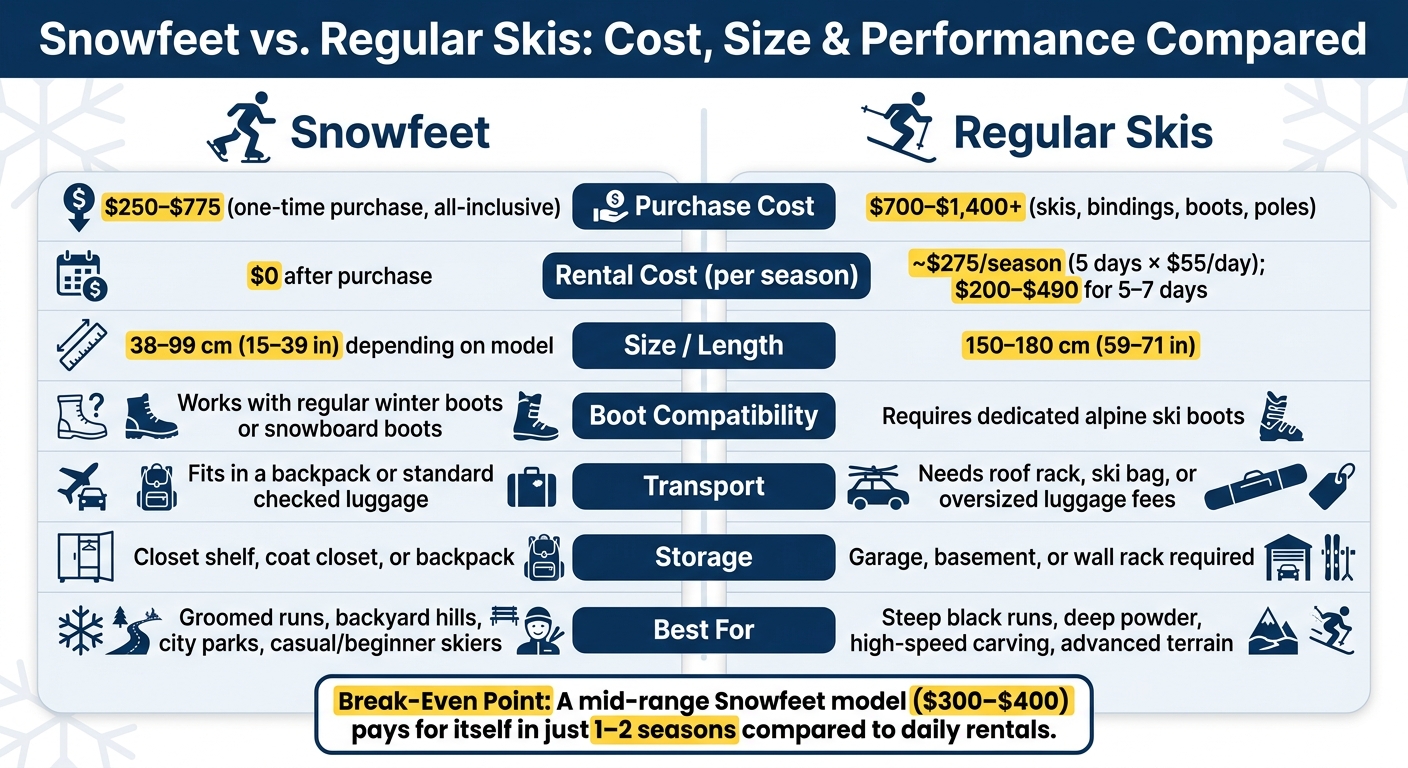
Snowfeet vs. Regular Skis: Cost, Size & Performance Compared
Pricing Comparison
When it comes to cost, Snowfeet have a clear edge. A full traditional ski setup - including skis, bindings, boots, and poles - typically costs $700–$1,400 at popular U.S. retailers like REI or Dick's Sporting Goods. In comparison, Snowfeet models start at just $250 and go up to around $775, with everything you need included. That means no extra spending on additional gear, making them a budget-friendly option for casual skiers.
Rentals don’t offer much relief either. U.S. resorts usually charge $40–$70 per day for a standard ski package. If you ski 5–7 days a season, that adds up to $200–$490 annually. With a mid-range Snowfeet model priced between $300–$400, you could break even in just one or two seasons.
| Setup | Estimated Cost |
|---|---|
| Snowfeet (one purchase) | $250–$775 |
| Traditional ski setup (new) | $700–$1,400+ |
| Resort rentals (5 days × $55/day) | ~$275 per season |
On top of the savings, Snowfeet bring extra convenience and comfort to the table.
Convenience and Comfort
Traditional ski boots can be a pain - literally. They’re bulky, force an awkward forward lean, and leave your feet cold and cramped after a few hours. Snowfeet, on the other hand, are designed to work with regular winter boots or snowboard boots you already own. This means no stiff, awkward boots. Instead, you get natural ankle movement, familiar cushioning, and no more sore feet after standing in long lift lines.
Picture this: you drive to the slopes, walk from your car, ride the lift, and even grab a coffee afterward - all in the same comfortable boots. Just clip Snowfeet on when you’re ready to ski and unclip them when you’re done. Many users rave about how much they enjoy using their everyday boots with Snowfeet.
This ease of use also extends to storage and travel, making Snowfeet especially practical for city dwellers.
Storage and Transport
Snowfeet’s compact design is another huge plus. Traditional skis are 150–180 cm (roughly 5–6 feet) long, which can be a headache for storage, especially if you’re a family of three or four. Without a garage or basement, you’re often stuck investing in bulky racks or sacrificing precious space.
Snowfeet, by contrast, are much smaller - ranging from 38–65 cm (15–26 in), about the size of a large pair of boots. They can fit on a closet shelf, in a coat closet, or even inside a standard backpack. No special storage solutions needed.
And when it’s time to travel, Snowfeet easily pack into regular checked luggage. This means you can skip the oversized baggage fees that airlines charge for ski bags, saving you even more money and hassle.
Conclusion: Are Snowfeet the Right Pick for Casual Skiers?
For most casual skiers in the U.S., Snowfeet offer a solid alternative to traditional skis. If your ski days usually involve groomed green and blue runs at a local resort, quick backyard hill sessions, or light weekend trips where packing efficiently is key, Snowfeet are worth considering. They’re easier to learn, more affordable, and incredibly convenient with their grab-and-go design.
This compact setup is ideal for those who ski occasionally. With Snowfeet, you can skip the hassle of rental fees, bulky gear, and specialized boots. Models like the 44 cm Skiskates or 65 cm Skiblades are great options for casual skiing, offering a fun and manageable experience.
That said, Snowfeet aren’t perfect for all skiing situations. While they shine on everyday slopes, traditional skis still have the upper hand in specific scenarios. If you’re tackling steep black runs, carving through deep powder after a Rocky Mountain storm, or hitting high speeds, the stability of longer skis is hard to beat. For skiers aiming to conquer advanced terrain, sticking with a conventional setup makes more sense.
"Only trade-off is at higher speeds, where longer skis still feel more stable - but for overall fun and maneuverability, these are hard to beat." - Brad Tolin, Snowfeet customer
So, if most of your skiing happens on groomed trails and casual terrain, Snowfeet could easily replace your regular skis. But if you’re chasing powder, speed, or challenging lines, traditional skis might still earn a spot in your gear lineup next to your Snowfeet.
FAQs
Which Snowfeet size should I choose?
Your perfect Snowfeet size hinges on your skill level and the type of terrain you prefer. If you're just starting out or sticking to groomed trails, the 44 cm Skiskates or 65 cm Skiblades are great for their quick maneuverability. Want something more versatile? The 99 cm Skiblades strike a nice balance between stability and performance, making them ideal for carving. For advanced riders craving speed and control, go with the 120 cm Skiblades - they offer a feel similar to traditional skis but are much easier to carry around.
Do ski resorts let you use Snowfeet?
Yes, you can use Snowfeet products at most ski resorts. Their metal edges meet the safety standards required for groomed slopes, snow parks, and other resort-maintained areas. With more than 50,000 users globally, Snowfeet provide a lightweight and easy-to-carry alternative to traditional skis, making them a fun option for casual skiers looking for something different.
What terrain should I avoid with Snowfeet?
Snowfeet gear works best on groomed snow, in snow parks, and on mild slopes. But steer clear of using them on very steep terrain, rough ungroomed areas, or in deep powder. Some advanced models can manage light powder up to about 4 inches (10 cm), but if you're into deep-snow adventures or high-speed carving on tough black runs, traditional long skis might still be your go-to choice.











Legg igjen en kommentar
This site is protected by hCaptcha and the hCaptcha Privacy Policy and Terms of Service apply.