



















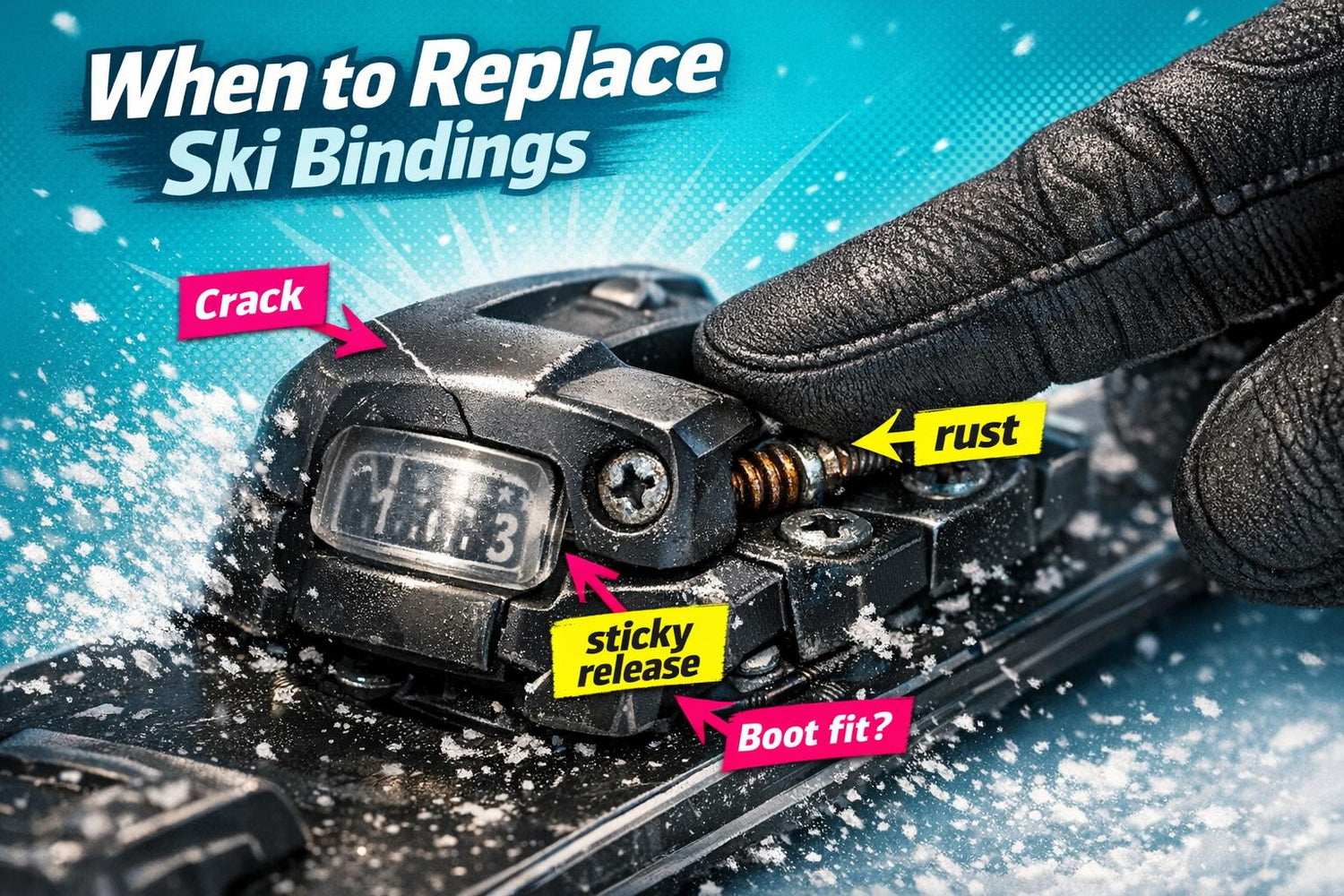
Bindings are the unsung heroes of your ski gear. They keep you safe by holding your boots to your skis and releasing them during a fall. But old or damaged bindings can fail, putting you at risk. Here’s the quick rundown on when to replace them:
- Visible Damage: Cracks, rust, or worn-out parts like straps or screws are bad news.
- Performance Issues: If your boots pop out unexpectedly or don’t release during a fall, it’s time for an upgrade.
- Age: Most bindings should be replaced every 5–7 years, even if they look fine. Shops won’t service bindings older than 10–12 years.
- Boot Compatibility: New boots or worn soles may not work with your current bindings.
For Snowfeet*, replacing worn straps or buckles is easy and affordable. Traditional ski bindings, however, often require full replacement if they’re too old or damaged. Regular inspections and proper storage can help extend the life of your bindings, but don’t ignore the warning signs. Stay safe and enjoy the slopes!
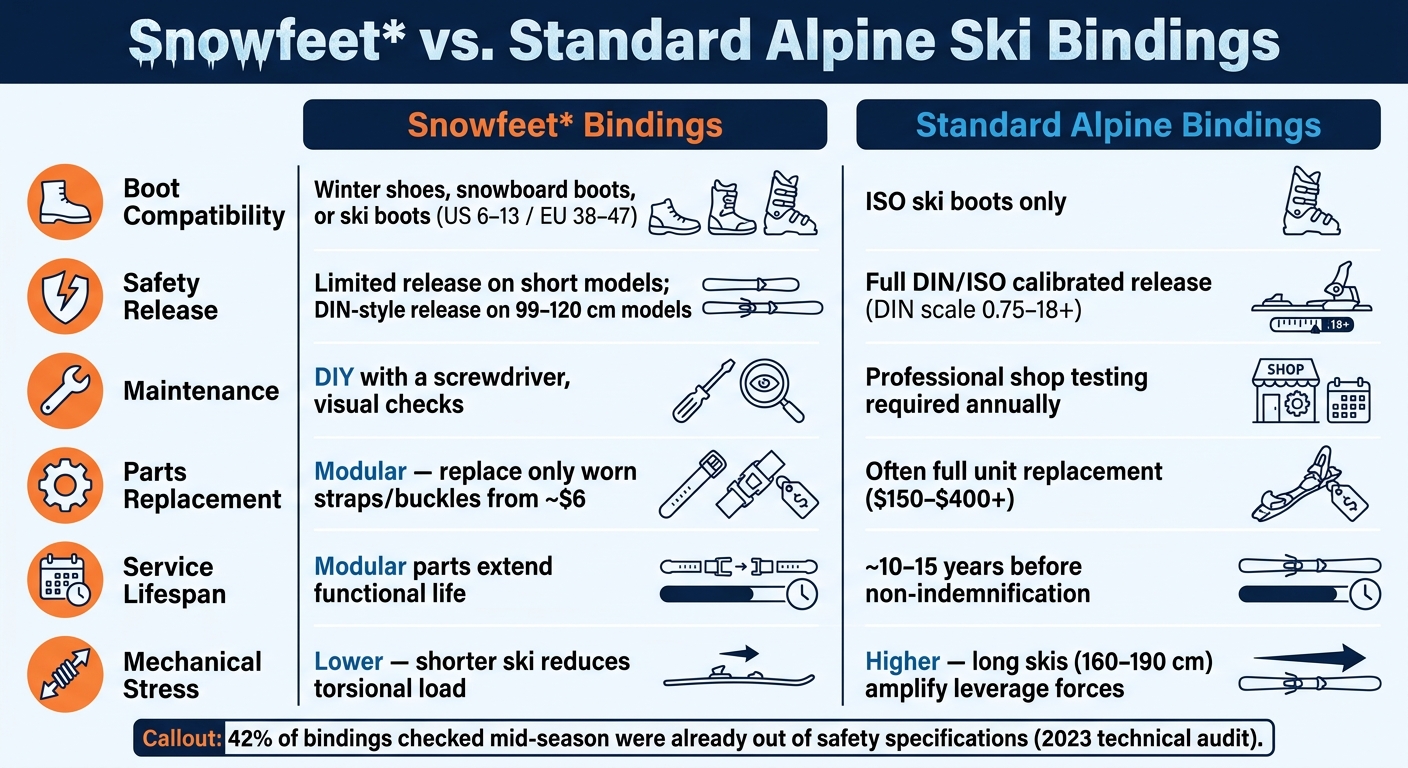
Snowfeet vs. Standard Alpine Ski Bindings: Full Comparison
Bindings for Short Skis | All You Need to Know
What Are Ski Bindings and How Do They Work
Ski bindings are the mechanical connection between your boots and skis. They keep your feet securely in place but are designed to release your boots when excessive force is applied, reducing the risk of injuries like fractures or ligament tears.
"The bindings are the connection between you and your skis; transmitting your movements to the skis. Quite simply, without bindings you can't ski." - Absolute Snow
Most alpine bindings consist of two parts: a toe piece and a heel piece. These work together to handle twisting (horizontal) and forward (vertical) forces - two of the most common scenarios that lead to falls. The release sensitivity of bindings is set using the DIN scale (short for Deutsches Institut für Normung), which ranges from 0.75 for small children to 18+ for professional racers. For most recreational skiers, the sweet spot is between DIN 4 and 10. This system ensures both performance and safety, setting the standard for traditional ski bindings.
How Bindings Affect Safety and Control
Bindings that are too loose might release unexpectedly mid-turn, while overly tight bindings may not release during a crash - both situations can lead to injury. That’s why proper calibration is so important. Even seasoned skiers can find themselves in trouble if their bindings are worn out or incorrectly set. Reliable bindings give you the confidence to trust your skis, commit to your turns, and enjoy the slopes safely.
How Snowfeet* Bindings Are Different

Snowfeet* bindings take a different approach compared to traditional setups. Instead of relying on mechanical release systems, they use an adjustable strap system that works with winter shoes or snowboard boots. No need for specialized ski boots or DIN-certified adjustments. You can fine-tune the fit yourself at home with just a screwdriver - no trip to the ski shop required.
This design makes Snowfeet* products - like the Mini Ski Skates, Skiskates, and Skiblades - more accessible and convenient. Their bindings fit a wide range of sizes, from US 6–13 (EU 38–47), with some models offering options for ski boots (EU 36–49 / US 4.5–14.5) or snowboard boots (EU 38–49 / US 6–14.5). For users with smaller feet, snowboard boots often provide a more secure fit. Unlike traditional bindings, Snowfeet* prioritizes portability and agility, making them ideal for the quick, low-speed movements that skiskating involves.
| Feature | Standard Alpine Bindings | Snowfeet* Bindings |
|---|---|---|
| Footwear Required | Specialized ski boots | Winter shoes or snowboard boots |
| Release Mechanism | Mechanical toe/heel (DIN-rated) | Strap-based (manual) |
| Adjustability | Professional or tool-based | User-adjustable with a screwdriver |
| Size Range | Boot-specific | US 6–13 (varies by model) |
| Primary Advantage | Multi-directional release safety | Greater portability and agility |
Signs Your Ski Bindings Need Replacing
Visible Wear and Damage
Take a close look at your bindings for any obvious signs of wear. Start with the toe and heel pieces - if you spot deep cracks, stress marks, or warping, that's a red flag. These aren't just cosmetic flaws. Over time, cold temperatures and age can make plastic brittle, and what looks like a minor stress mark today could turn into a full-on fracture when you're out on the slopes.
Rust is another concern. Salt and moisture can eat away at the internal springs and metal edges, weakening their integrity. Don’t forget to check the Anti-Friction Device (AFD) - this is the small plate under the ball of your foot. If it’s scratched up, dirty, or worn smooth, it might not let your boot release properly during a lateral fall. And that’s exactly when you need it to work.
If you’re using Snowfeet* bindings, pay special attention to the strap-and-buckle system. Look for frayed straps, rounded-off ladder teeth, or ratchets that stick.
"Any significant fraying, especially near the buckles or attachment points, is a sign the material's core strength is failing." - Wildhorn Outfitters
Even if your bindings look fine, performance issues can still indicate trouble.
Performance and Function Problems
Sometimes, bindings can look perfectly fine but still perform poorly. One major warning sign? Pre-release - when your boot unexpectedly pops out during a turn. This suggests the retention system isn’t as reliable as it should be. On the flip side, if your binding won’t release during a fall, that’s equally dangerous. A 2023 technical audit revealed that 42% of bindings checked mid-season were already out of safety specifications due to environmental wear.
Other signs include difficulty stepping in or out, a mushy or unresponsive feel during turns, or new creaks and pops. These could mean there’s ice, debris, or corrosion affecting the springs and mechanisms inside. A sharp popping sound when you flex your skis might even indicate a structural crack forming.
For Snowfeet* users, a loose fit is a clear sign that the straps need adjusting. Luckily, their modular design makes it easy. You can move the strap to a different hole with a screwdriver or swap in longer straps for bigger boots - no need to visit a shop.
But visual and performance issues aren’t the only things to watch out for. Mounting and fit problems can also create safety risks.
Mounting and Boot Fit Issues
Loose or stripped mounting screws can compromise how securely your bindings are attached to your skis. Even small changes - like a new boot with a slightly different sole length or heel height - can throw off your binding settings and affect safety. If you’ve switched to new boots, it’s essential to have your bindings professionally recalibrated before hitting the slopes.
Snowfeet* bindings handle boot fit changes a bit more flexibly. Their strap-based design allows for manual adjustments, so you can easily swap between different boot sizes or styles without needing a technician. Just make sure to double-check the straps and mounting screws after any adjustments to ensure everything’s secure before you ski.
What Affects How Long Ski Bindings Last
Age and Industry Safety Standards
Time takes a toll on ski bindings, even if they look fine on the surface. Over the years, plastic parts can become brittle, and the internal springs - key to their function - lose tension. The kicker? These changes often happen without any visible signs.
"The springs inside lose their tension over time. Most manufacturers recommend replacing them after 5–7 years, regardless of use." - Marlee Knight, Content & Event Coordinator, Teton Gravity Research
Manufacturers generally stop backing their bindings after 10–12 years. Here’s why that matters:
"Manufacturers only guarantee (or indemnify) bindings for a certain number of years - typically 10–12 years from production. Once they're off the indemnification list, most shops can't legally adjust or service them." - Kris Steigerwald, Alpine Base & Edge
Once bindings hit this age, certified shops won’t service them due to safety and liability concerns. And if you’re skiing hard or on tough terrain, the wear and tear can speed this process up even more.
How Often and Where You Ski
Bindings don’t last forever - especially if you’re out on the slopes a lot. The general rule? Around 150 days of skiing before they need a serious inspection or replacement. For most casual skiers, that’s about five years.
But where and how you ski also matters. Icy conditions, hardpack snow, and aggressive riding on rocky terrain put extra stress on bindings, wearing them out faster than sticking to groomed runs.
Snowfeet* products are a bit of a game-changer here. Their simpler, modular design skips the traditional internal springs that tend to fatigue over time. Instead, wear is limited to external parts like straps, buckles, and mounting hardware. These are easy to spot and replace individually, making it simpler to keep them in good shape.
Regular Maintenance and Inspections
Taking care of your bindings can extend their life. For alpine bindings, it’s smart to get a professional DIN calibration check at the start of every season. Also, if you take a hard fall, have your bindings inspected - internal parts can shift even if everything looks fine on the outside.
Off-season storage matters too. Avoid leaving your skis in hot areas or tightly strapped for long periods. Heat and compression can weaken plastic and mess with spring tension faster than regular skiing ever would.
Snowfeet* bindings make maintenance easier. Thanks to their modular design, you can handle most upkeep yourself with basic tools. Tighten screws, check straps, and replace worn buckles as needed - no need to replace the entire binding. It’s a cost-effective way to keep them in action for longer.
sbb-itb-17ade95
When You Must Replace Your Ski Bindings
Some problems can wait, but others need immediate attention to keep you safe on the slopes.
Release and Retention Failures
Ski bindings have one job: hold your boot securely during normal skiing and release it when you fall. If they fail at either, you're at risk. Signs like rounded or slipping ratchet teeth or straps that won’t lock mean the binding isn’t doing its job. If you feel soft or unstable feedback while turning, it could mean the binding isn’t transferring power properly, putting your safety in jeopardy.
Another red flag? Ovalized mounting holes. These are the screw holes that attach the binding to your ski. If they lose their circular shape, no amount of tightening will secure the binding - this calls for an immediate replacement.
Visible damage and these performance issues are clear signs it’s time to replace your bindings.
Broken or Deformed Parts
Keep an eye out for cracks, whitening, or signs of material fatigue in straps - they’re all signals that replacement is needed. Even small cracks in the baseplate, especially near the forward-lean adjusters, can quickly turn into major problems under pressure. If one strap shows discoloration or damage, it’s best to replace both to maintain consistent performance and safety.
Snowfeet* bindings, made from fiberglass-reinforced materials, are built to endure regular wear and tear. That said, even these tough components should be replaced if you notice cracks or any structural deformities.
Beyond visible damage, changes in boot standards can also affect how your bindings perform.
Boot and Sole Compatibility Issues
Traditional ski bindings are designed to work with specific boot sole standards, like Alpine or GripWalk. Over time, changes in boot brands or excessive sole wear can disrupt the release mechanism, leading to premature releases or failures during a fall.
Snowfeet* bindings, however, are designed to fit a wide range of footwear, from US sizes 6–13 (EU 38–47). They’re compatible with everything from winter shoes to snowboard boots. Unlike traditional bindings, Snowfeet* offers an adjustable fit, so you can reposition straps as needed. If you’re using large snowboard boots that don’t fit the Basic model, upgrading to the Standard or Pro X models can solve the issue.
Before your first run of the season, take time to adjust your Snowfeet* bindings with the exact boots you plan to wear. Properly fitted bindings mean fewer worries and more fun on the slopes.
Snowfeet* Bindings vs. Standard Ski Bindings
Design and Function
Standard alpine ski bindings are intricate systems designed to work with ISO-certified ski boots. On the other hand, Snowfeet* bindings take a much simpler approach. They use a strap-and-buckle platform with far fewer moving parts. This design allows them to work with regular winter shoes, snowboard boots, or ski boots, depending on the model.
This streamlined setup changes how they perform on snow. Because the platform is shorter, it reduces the lever arm between your foot and the ski tip. The result? Easier, quicker turns and a skate-like, playful feel - very different from the locked-in, edge-focused feedback you get with traditional alpine bindings.
Upkeep and Replacement Costs
Alpine ski bindings often require professional maintenance. Certified technicians perform annual DIN testing, forward pressure checks, and mounting adjustments. And if a critical part breaks? You’re usually looking at replacing the entire binding. Plus, many U.S. ski shops won’t even service bindings older than 10–15 years.
Snowfeet* bindings are much easier to maintain. Thanks to their modular design, you can replace individual parts - like straps, buckles, or mounting hardware - at home with just a screwdriver. If a strap breaks, you don’t need to buy a whole new setup. Replacement parts are available directly from Snowfeet* and are much cheaper than replacing alpine bindings.
"Other brands amateurly mount the clunky and overpriced snowboard bindings on the skiboard. At Snowfeet we developed a unique snowboard binding specifically designed for skiboards. They are affordable and easily adjustable." - Snowfeet Team
This approach not only saves money but also extends the life of your gear.
Lifespan and Safety
When it comes to long-term performance and safety, here’s how the two systems stack up:
| Aspect | Snowfeet* Bindings | Standard Alpine Bindings |
|---|---|---|
| Boot compatibility | Winter shoes, snowboard boots, or ski boots | ISO ski boots only |
| Safety release | Limited release functionality in short models; release bindings on 99–120 cm models | Full DIN/ISO calibrated release |
| DIY upkeep | Screwdriver and visual checks | Professional shop testing required |
| Parts replacement | Modular design replaces only worn components | Often full unit replacement |
| Service lifespan | Modular parts extend functional life | ~10–15 years before non-indemnification |
| Stress on binding | Lower - shorter ski reduces torsional load | Higher - long skis amplify leverage forces |
Because Snowfeet* skis and skates are shorter, they put less mechanical stress on the bindings. Long alpine skis (160–190 cm) create significant torsional force, especially during hard turns or falls. This increased stress can wear out mounting points and hardware faster. Snowfeet* gear avoids this issue by keeping leverage forces minimal.
That said, Snowfeet* bindings are best for resort slopes, moderate speeds, and all-mountain fun. They’re not designed for high-speed racing or extremely steep terrain, where a fully calibrated DIN release system is crucial. Choosing the right gear for your riding style is key to staying safe.
How to Maintain Your Ski Bindings
Pre-Season and In-Season Checks
Before hitting the slopes, give your bindings a thorough inspection. For standard alpine bindings, check the chassis, baseplate, and mounting holes for any cracks or deformities. Use a #3 Phillips screwdriver along with blue Loctite on the mounting screws to avoid stripping. If you notice whitening on ladder straps, replace both straps - even if only one shows wear - to ensure consistent performance.
If you're using Snowfeet* gear, take the time to adjust your bindings at home with the exact boots you'll be wearing. Smaller boots might need a different strap hole, while larger snowboard boots could benefit from the optional extra-long toe straps. Snowfeet* gear's modular setup makes it easy to swap straps or tweak settings for the perfect fit. While you're out on the mountain, applying liquid wax daily can help maintain glide speed and keep snow from building up.
When the season wraps up, don’t forget about proper storage to keep your bindings in top shape.
Off-Season Storage and Care
For Snowfeet* skis and skates, keeping the metal edges rust-free is crucial. After use, dry the edges thoroughly and apply a light layer of oil to protect them. Store your bindings in a cool, dry place away from direct sunlight, as heat and UV exposure can weaken plastic and rubber parts over time.
"Make sure you dry the edges so they don't get rusty before you put them into your backpack and store them. You can also wipe the edges using oil before storage." - Snowfeet Team
Lastly, consider putting together a simple repair kit for emergencies. Include spare screws in different lengths and an extra ladder strap. Trust me, having these on hand can save your day if something breaks while you're on the mountain!
Conclusion: Keep Your Bindings Safe and Working
Bindings are your most critical safety link between you and your skis. You should replace them if you notice any of these four issues: visible damage, performance problems, compatibility issues, or age. Cracks, inconsistent release, incompatibility with your boots, or bindings older than 10–15 years are all clear signs it’s time for an upgrade. Skiing with faulty bindings puts you at risk for injuries, especially since knee injuries make up about one-third of all recreational ski injuries - and binding performance plays a big role in preventing them.
Routine inspections are just as important as checking for visible damage. A quick look over your bindings before hitting the slopes takes under two minutes and can save you from bigger problems later. If you ski often, it’s a good idea to get a professional inspection and release test at the start of each season. Many U.S. ski shops offer these tests for a small fee, making it an easy way to ensure your bindings are in great shape. Even if you don’t ski much, bindings can degrade over time, so don’t skip this step.
For those using Snowfeet*, their modular design allows you to replace individual parts for as little as $6, compared to the $150–$400+ price tag for a complete set of traditional bindings. This approach keeps costs low without compromising safety. Just remember the golden rules: inspect your bindings regularly, replace worn parts right away, and always double-check that your boots are properly matched to your bindings. Safety first!
FAQs
Can I ski safely on bindings that look fine but are 10+ years old?
Ski bindings generally have a lifespan of 8 to 10 years. Even if they appear to be in good shape, older bindings can have worn-out components or safety mechanisms that might let you down when you need them the most. Unlike the traditional setups that require a professional for adjustments and maintenance, Snowfeet bindings are designed with simplicity in mind. You can easily adjust them at home, and they work seamlessly with your own winter or snowboard boots. This means more flexibility, convenience, and peace of mind for a safer and more fun time on the slopes.
How do I know if my boots still match my bindings?
Snowfeet* bindings are designed to keep things simple and flexible. They easily adjust to fit a variety of footwear, including winter shoes, snowboard boots, or ski boots - no rigid systems to deal with here. All you need is a screwdriver to tweak the bindings for your boots.
Need a snugger fit? Just choose a different strap hole. Got larger boots? Add an extra strap for extra security. Snowfeet* models cater to US sizes 6–13 (EU 38–47+), ensuring a comfortable and controlled fit without unnecessary hassle.
Can Snowfeet* bindings be fixed with replacement parts instead of replacing everything?
Yes, Snowfeet bindings are designed to be easily repaired using replacement parts, so you don’t have to replace the entire setup. For example:
- You can swap out the front toe straps to accommodate larger boots.
- Back ankle straps can be replaced for smaller sizes.
- If needed, you can even replace the buckles.
This is a big plus compared to traditional ski systems, which often require replacing large, bulky equipment. Snowfeet offers these replacement parts to help you get a perfect fit. You can check out all the options directly on their website.












Legg igjen en kommentar
This site is protected by hCaptcha and the hCaptcha Privacy Policy and Terms of Service apply.