



















If I wanted the short answer, I’d say this: go to Lake Louise for the safest, easiest day, head to Abraham Lake for wild bubble ice, and pick Vermilion Lakes, Lake Winnipeg, or Kilcona Park Lake if you expect more snow than smooth ice.
This list covers 10 lakes across Alberta, Manitoba, Ontario, and Saskatchewan. The big split is simple:
- Maintained ice: more predictable, smoother, easier for families
- Wild ice: bigger views, more risk, more work on your end
Before I go anywhere, I’d check three things first:
- Ice thickness: at least 6 inches (15 cm) for one person and 8 inches (20 cm) for a group
- Surface type: clear ice vs. snow-covered or rough patches
- Access: parking, rentals, warming spots, and park pass rules
And gear matters more than people think. Ice skates work best on smooth, clear ice. Short snow gear like Snowfeet* works better when the lake has packed snow, rough edges, or mixed snow-and-ice sections. Simple.
Here’s the full lineup in this article:
- Lake Louise, Alberta
- Vermilion Lakes, Alberta
- Two Jack Lake, Alberta
- Johnson Lake, Alberta
- Lake Minnewanka, Alberta
- Abraham Lake, Alberta
- Lake Winnipeg, Manitoba
- Lake Simcoe, Ontario
- Kilcona Park Lake, Manitoba
- Wascana Lake, Saskatchewan
Is Cross-Country Skiing Possible with Mini Ski Skates? | Snowfeet*
Quick Comparison
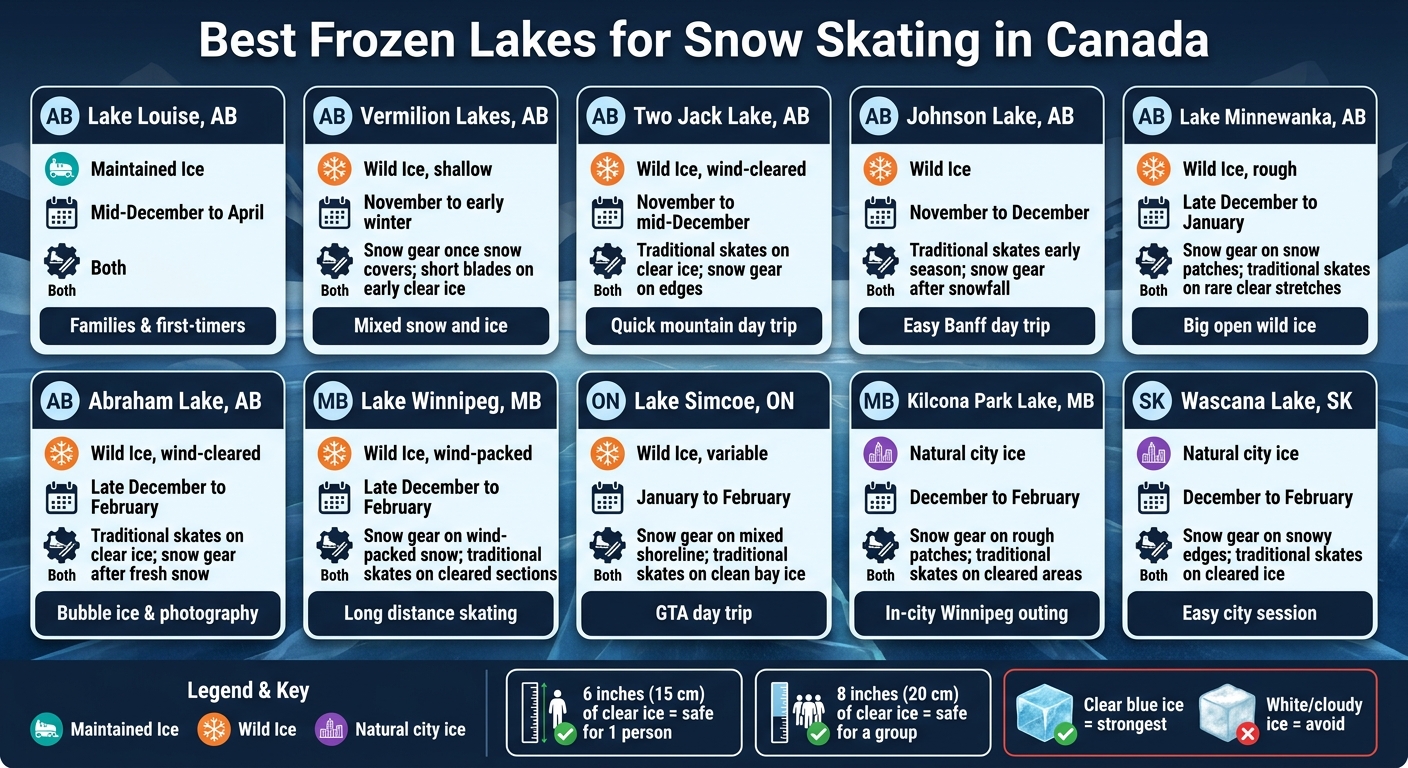
Best Frozen Lakes for Snow Skating in Canada: Quick Comparison Guide
| Lake | Best For | Ice Type | Best Time |
|---|---|---|---|
| Lake Louise | Families, first-timers | Maintained | Mid-December to April |
| Vermilion Lakes | Mixed snow and ice | Wild | November to early winter |
| Two Jack Lake | Clear early-season wild ice | Wild | November to mid-December |
| Johnson Lake | Easy Banff day trip | Wild | November to December |
| Lake Minnewanka | Big open wild ice | Wild | Late December to January |
| Abraham Lake | Bubble ice and photos | Wild | Late December to February |
| Lake Winnipeg | Long snow-skating runs | Wild | Late December to February |
| Lake Simcoe | GTA day trip | Wild | January to February |
| Kilcona Park Lake | In-city Winnipeg outing | Natural city ice | December to February |
| Wascana Lake | Easy city session | Natural urban ice | December to February |
So, if you want a low-stress skate, stick with maintained ice. If you want mountain views, bubble ice, or big open space, wild lakes can be unreal - but you need to do your homework first. No shortcuts on ice safety :)
What Makes a Frozen Lake Worth Visiting for Snow Skating
Reliable Ice and Seasonal Timing
Good ice comes from the weather, not the calendar. Wild ice usually forms best after several nights of steady below-zero temperatures, calm weather during the first freeze, and no snowfall before the surface sets. That clean first layer makes a big difference.
The sweet spot is often late fall through early winter, before heavy snow piles up. That said, bigger or deeper lakes can take longer to freeze safely. Some may not be ready until late December or January.
Maintained ice is a different story. It tends to follow a more predictable rhythm because crews clear snow each day and resurface with a Zamboni. If you want the most reliable skate, maintained ice is the safer pick. Simple as that.
Maintained Ice vs. Wild Ice
Maintained ice is smoother and checked by staff. Wild ice can be stunning, but no one’s out there babysitting it.
On maintained surfaces, staff monitor thickness and keep the ice clear. On natural ice, Parks Canada does not monitor lake ice thickness. So, if you head onto wild ice, the call is on you.
The Canadian Red Cross recommends:
- At least 6 inches (15 cm) of clear ice for one person
- At least 8 inches (20 cm) of clear ice for a group
Ice color matters too. Clear blue ice is the strongest. White or cloudy ice can be about half as strong. That’s not a small detail. It’s the kind of thing that can turn a fun day into a bad one fast.
Scenery, Access, and Trip Value
The lake itself matters, sure. But access can make or break the day.
Parking, restrooms, and warming areas all shape the trip. Some lakes come with the full setup: rentals, warming huts, and easy access. Others are remote wild-ice spots with no services at all. Beautiful? Yes. Forgiving? Not always.
For lakes inside Banff National Park, you’ll need a National Park Pass. And if you’re heading somewhere remote, check cell service and local conditions before you leave. A little prep goes a long way, especially when you’re chasing ice in the cold.
Using those filters, the lakes below offer the best mix of safety, scenery, and access.
1. Lake Louise, Alberta
Among Canadian lakes, Lake Louise gives you the best blend of big mountain views and ice that feels like a proper rink. It sits below Mount Victoria and the Victoria Glacier, with peaks around 10,000 feet all around. A lot of lakes are pretty. This one is pretty and skateable.
Ice Type and Seasonal Timing
The Fairmont Chateau Lake Louise clears snow every day and resurfaces part of the lake with a Zamboni, which means steadier skating conditions from mid-December through mid-April. If you want ice that feels less like a gamble and more like a sure thing, this is the safest pick on the list.
Scenery and Atmosphere
The shoreline has fire pits and an ice castle, which gives the whole place that postcard feel without trying too hard. At night, the rink lights up, so you can skate under the stars. Hard to beat that :)
Access and Pricing
The lake is about 40 minutes from Banff town and you can get there 24/7. Skating itself is free, but you’ll need a Parks Canada pass. Rentals are available in Lake Louise Village, starting at about $19 CAD per day. It also gets colder here than in Banff, so layers aren’t optional unless you enjoy turning into a human popsicle.
Traditional Skates vs. Snowfeet*
Because the surface changes from one area to the next, your gear matters. The main rink is best for traditional ice skates. If you want to move past the rink and head onto snowier edges or packed paths, Snowfeet* Mini Ski Skates make more sense since you can use them with regular winter boots.
| Zone | Best Gear | Surface Condition |
|---|---|---|
| Fairmont maintained rink | Traditional ice skates | Zamboni-smoothed, cleared daily |
| Snowy lake edges & paths | Snowfeet* or snow-skating gear | Packed snow or snowy wild ice |
2. Vermilion Lakes, Alberta
Vermilion Lakes is the more wild, easy-to-reach wild-ice spot near Banff. It’s only a 5-minute drive from downtown, which gives it a very different feel from Lake Louise. Less polished. More natural. A better fit for skaters who want actual wild ice.
Ice Type and Seasonal Timing
These lakes are shallow, so they often freeze earlier than deeper water nearby. In some years, that means a skating window can open as early as November.
That early stretch is usually your best shot at usable clear ice. After that, mid-winter snow tends to pile up and cover the surface. Since the lakes aren’t maintained or cleared, that usually makes them a poor match for standard blades.
Scenery and Atmosphere
Mount Rundle steals the show here. It’s the main backdrop, and the lakes are a favorite for sunrise and sunset. In winter, the frozen surface gives the whole place a quiet, open feel.
If you want that mountain-and-lake setting but with a bit more setup around it, the next Alberta stop brings a different kind of day on the ice.
Access and Pricing
Skating is free, but you’ll need a valid Banff National Park pass to get in. There are no rentals on site.
Traditional Skates vs. Snowfeet*
Traditional skates make sense during the short clear-ice window. Once snow covers the surface, Snowfeet Mini Ski Skates* are the better pick.
This is wild ice, so don’t treat it like a managed rink. Check the ice thickness yourself before you step out.
For another Banff-area option with a different ice profile, see Two Jack Lake.
3. Two Jack Lake, Alberta
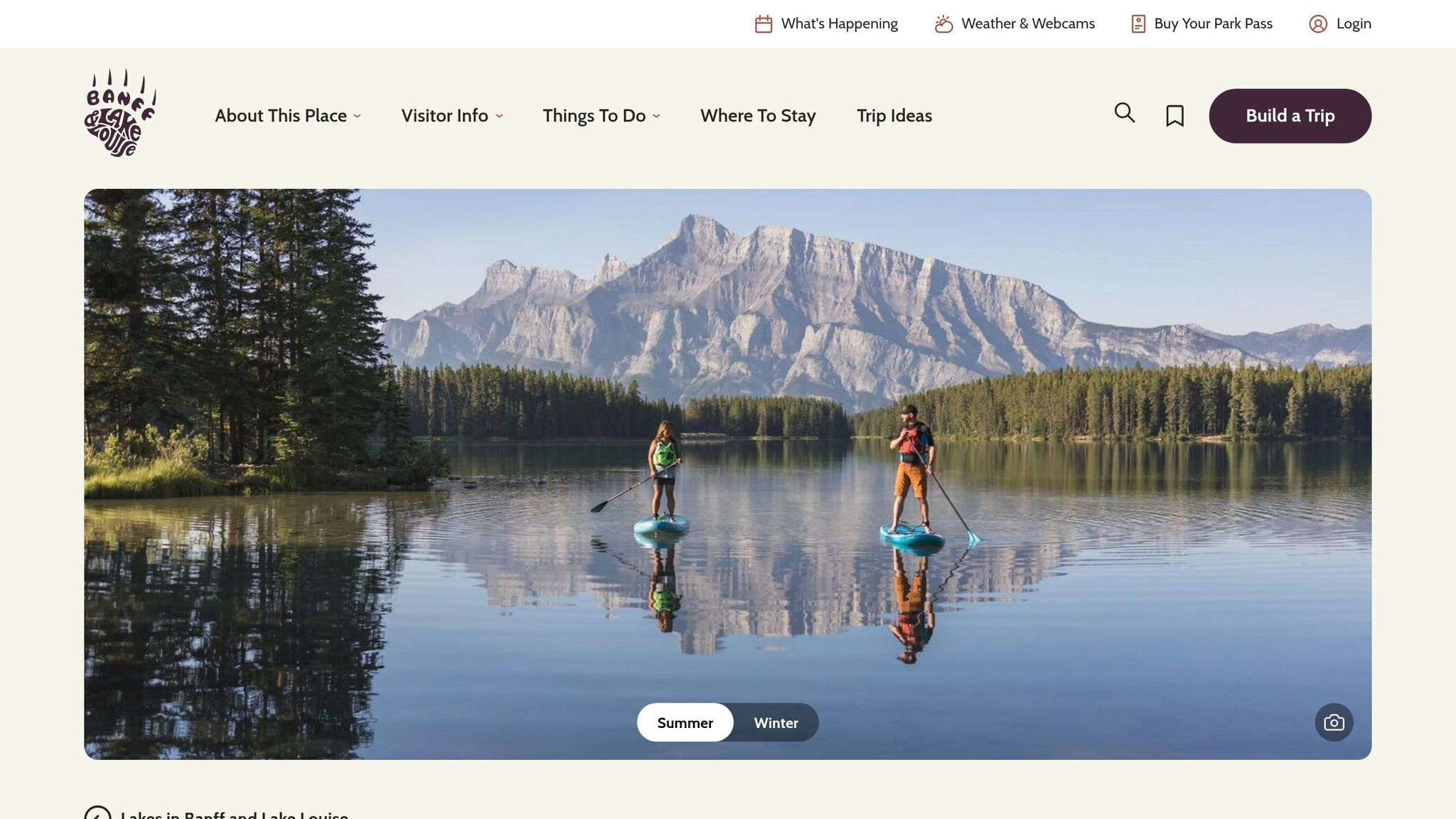
Two Jack Lake sits about a 15-minute drive from Banff townsite, so it’s an easy day trip. A lot of locals like it because it’s quieter and feels a bit more raw than Lake Louise.
Ice Type and Seasonal Timing
Wind is a big part of the story here. It often blows snow off the surface, which can leave Two Jack with clearer wild ice than other lakes nearby. Nice for skating, sure, but that same wind can make the lake feel MUCH colder. Bring extra layers and something to cover your face unless you enjoy feeling like a human popsicle.
Best skating conditions usually show up from November to mid-December, before heavier snow covers the ice. Some shallow sections can freeze even earlier.
Scenery and Atmosphere
The views are a huge draw. You get 360-degree mountain scenery, with open ice and peaks all around you. Compared with busier spots near Banff, Two Jack feels more quiet and less built up.
Access and Pricing
Skating is free, but you’ll need a valid Parks Canada Discovery Pass or day pass to enter Banff National Park. Parking is smaller than at Johnson Lake, so it can fill up fast. There are also no rentals here, so bring your skates from Banff.
Traditional Skates vs. Snowfeet*
On wind-cleared ice, traditional skates are a good fit. Snowfeet* Mini Ski Skates make more sense along snowy edges and patchy shoreline areas.
Parks Canada does not monitor ice thickness at Two Jack, so you need to check it yourself. Use these minimums:
- 6 inches (15 cm) for one skater
- 8 inches (20 cm) for a group
If you want a larger Banff-area lake with easier access, Johnson Lake is next.
4. Johnson Lake, Alberta
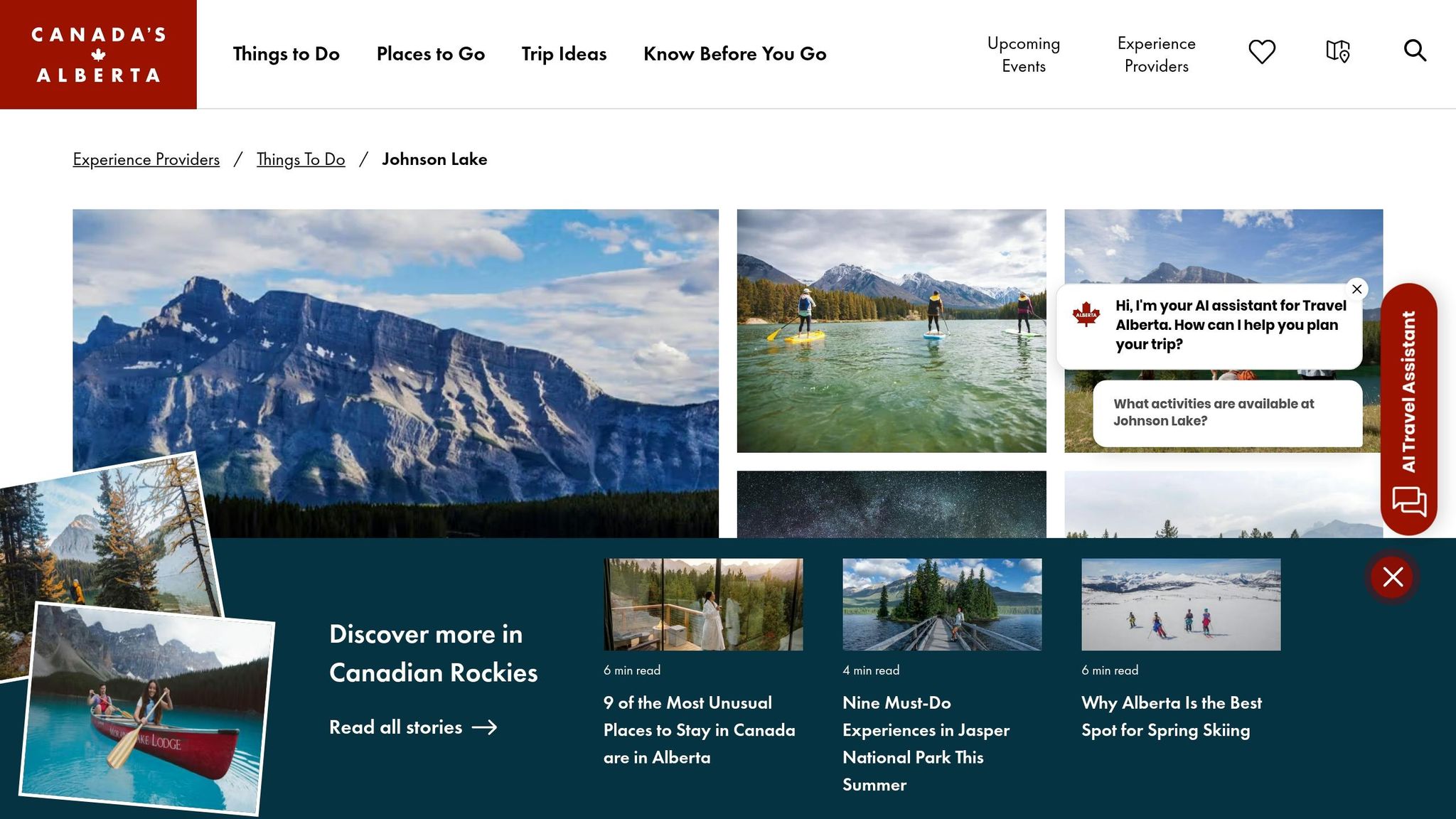
Johnson Lake sits just east of Banff, about a 15-minute drive from town, so it’s an easy pick for an early-season skate.
This is wild ice, which means conditions can change fast. Johnson Lake tends to freeze earlier than the bigger lakes nearby, so it’s a better early-season bet than deeper spots like Lake Minnewanka. That early freeze matters. Add in the wide, flat sections that skate well, and you can see why it made the list.
The clear-ice window can be short, sometimes just a day or two before snow covers the surface. A shovel can help if you need to clear a patch.
Scenery and Atmosphere
Johnson Lake sits in a mountain-framed setting, and early morning light can bring out sharp reflections of the peaks on the ice. It’s also quieter than Lake Louise or Two Jack Lake, which is a nice bonus if you want a calmer session.
Access and Parking
The parking area at Johnson Lake is larger than the ones at nearby lakes, which helps a lot on busy weekends.
Check ice thickness before skating.
Traditional Skates vs. Snowfeet*
If you hit that early-season glassy stretch, traditional skates are the better fit for open ice. Once snow starts creeping across the lake, Snowfeet* Mini Ski Skates do better in mixed snow-and-ice conditions than standard blades.
For a bigger Banff-area lake that freezes later, Lake Minnewanka comes next.
5. Lake Minnewanka, Alberta
Lake Minnewanka is the biggest lake in Banff National Park. It stretches 13 miles (21 km) and sits about a 15-minute drive from Banff. That big scale gives you huge open space to skate on. But there's a catch: the skating window is shorter, and the ice can be less predictable.
Why? Size and depth. Lake Minnewanka freezes later than smaller lakes nearby, like Johnson Lake and Vermilion Lakes. And because the lake is so large, timing matters more here than at those smaller spots.
Ice Type and Conditions
This is wild, unmaintained ice. A lot of the time, it's covered in snow. Because the lake is large and deep, it usually doesn't get to safe skating thickness until late December. The best window is often late December through January.
When things line up, though, it can be pretty special. You may get long stretches of clear ice, and sometimes you can see frozen methane bubbles under the surface. It's one of those sights that makes you stop for a second and just stare.
A few things can change conditions fast:
- Snow can cover the ice in a hurry
- Reservoir level changes can crack the shoreline ice
- Parks Canada does not monitor ice thickness here, so you need to check it yourself before going out
Scenery and Atmosphere
This lake feels huge. The ice sits below 10,000-foot mountain peaks, which gives the whole place a big, open feel. In winter, elk often show up near the access road too.
Access
Skating is free, but you still need a valid Parks Canada pass. There are no winter services close by, so come prepared. Bring food, water, and ice rescue picks.
Wind matters here. On a lake this big, it can work for you or against you. Sometimes it blows snow off the surface, which helps. Other times, it turns the skate back to shore into a grind.
Traditional Skates vs. Snowfeet*
Go with traditional skates during the late-December-to-January clear-ice window. Snowfeet* do better on snow-covered shoreline sections than standard blades, so they're the better pick once snow starts covering the lake.
Next up is a different prairie-style lake with a very different skating feel: Lake Winnipeg.
6. Abraham Lake, Alberta
For the most iconic wild-ice scenery in Alberta, Abraham Lake stands out. It sits in David Thompson Country, about two hours from Banff, and it’s Alberta's largest reservoir. The lake usually becomes skateable in late December or January.
What draws people here? Two things: long, wind-cleared ice and the bubble fields below the surface. It’s the kind of place that makes you stop, look down, and say, “Okay, that’s wild.”
Ice Type and Conditions
Abraham Lake is VERY windy. That’s a big part of why people love it. The wind often blows snow off the surface and leaves long stretches of clear, glassy ice, even after heavy snowfall.
The lake is also famous for its frozen methane bubbles. They’re most visible from late December through January. If that’s the main thing you want to see, that window gives you the best shot.
There is one catch: this is a reservoir. Water levels can change, and that can leave shore ice unsupported in some spots. By late January, Cline Landing and the Ice Bubbles Parking Lot tend to have thicker, more reliable ice and better bubble visibility.
Scenery and Access
There are no on-site facilities, so you need to show up prepared. Bring:
- food and water
- ice rescue picks
- warm layers
- windproof outerwear and face protection
That same wind that clears the ice can make the lake feel brutally cold, fast. If you dress for a calm winter day, Abraham Lake may humble you a little. Fast.
Traditional Skates vs. Snowfeet*
Abraham Lake is best for traditional skates. The wind-smoothed, clear ice is a great match for blades, and the frozen methane bubbles are the main attraction.
Snowfeet* Mini Ski Skates make more sense on snow-covered shoreline sections or if you get there right after a heavy snowfall, before the wind has cleared the surface.
For a broader, flatter prairie-lake feel, Lake Winnipeg is next.
sbb-itb-17ade95
7. Lake Winnipeg, Manitoba
Lake Winnipeg is the wild card of prairie ice. It’s huge, open, and almost never smooth. But that big, exposed surface has a payoff: once the wind packs down the snow, you can get long, open stretches that feel made for cruising.
Ice Type and Conditions
Don’t expect glassy ice here. Lake Winnipeg usually gives you pressure ridges, ice heaves, and wind-packed snow. It’s rough around the edges, and that’s part of the deal.
Snow skating tends to work best from late December through February, when the surface gets firm and more stable.
Scenery and Access
The best access points are along the western shore, especially:
- Gimli
- Winnipeg Beach
- Matlock
Gimli Harbour is the easiest launch point. If you want the simplest way onto the ice, start there.
Traditional Skates vs. Snowfeet*
Snowfeet* Mini Ski Skates are a better match for Lake Winnipeg than traditional skates because they handle wind-packed snow and mixed surfaces better. Traditional skates make more sense only on cleared sections.
So, if you want distance and a mix of terrain, this spot leans hard toward Snowfeet* over polished-ice skating.
8. Lake Simcoe, Ontario
For readers in southern Ontario, Lake Simcoe is the easiest big-lake option on this list. It’s a simple day trip from the Greater Toronto Area, and you can usually get there in 1 to 1.5 hours via Highway 400 or Highway 404.
Ice Type and Conditions
Lake Simcoe is the easiest big-lake day trip from the GTA, and Kempenfelt Bay gives you the most accessible setup for skating.
Scenery and Access
Barrie’s Kempenfelt Bay blends urban waterfront views with easy parking right by the water. That means less time hauling gear around and more time getting out on the ice. Nice and simple.
Traditional Skates vs. Snowfeet*
That easy access comes with one small catch: shoreline conditions can change a lot. You might hit clean ice in one spot, then run into rough snow, slush, or uneven patches a few steps later.
That’s where shorter gear makes more sense. On mixed shoreline snow and ice, Snowfeet* Mini Ski Skates are the better choice than traditional skates because they work with winter boots and handle variable surfaces more easily.
9. Kilcona Park Lake, Manitoba
If you want a Winnipeg-area skate without leaving the city, Kilcona Regional Park is an easy pick. It earns its spot here for convenience and mixed-surface use, not for long stretches of smooth lake ice. The park is in the northeast corner of Winnipeg.
Ice Type and Conditions
Kilcona uses natural ice, so conditions shift with the weather. The city clears some skating areas, but the surface can still feel rough and uneven in places. One minute it’s decent. The next, it’s a bit bumpy. That’s just part of the deal with outdoor city ice.
Scenery and Access
The rolling hills give you higher views and make the park feel more open than you’d expect inside city limits. The connected ponds and lakes also help it feel less cramped, which is nice when you want a little room to move.
Traditional Skates vs. Snowfeet*
Because the surface is a mix of snow and ice, Snowfeet* Mini Ski Skates make more sense here than standard skates. You can wear them with regular winter boots, and they let you move from snow to ice without changing gear. That’s a big plus at Kilcona, where the ground conditions can shift fast.
For a broader prairie-lake feel, the next stop brings a different kind of open ice.
10. Wascana Lake, Saskatchewan
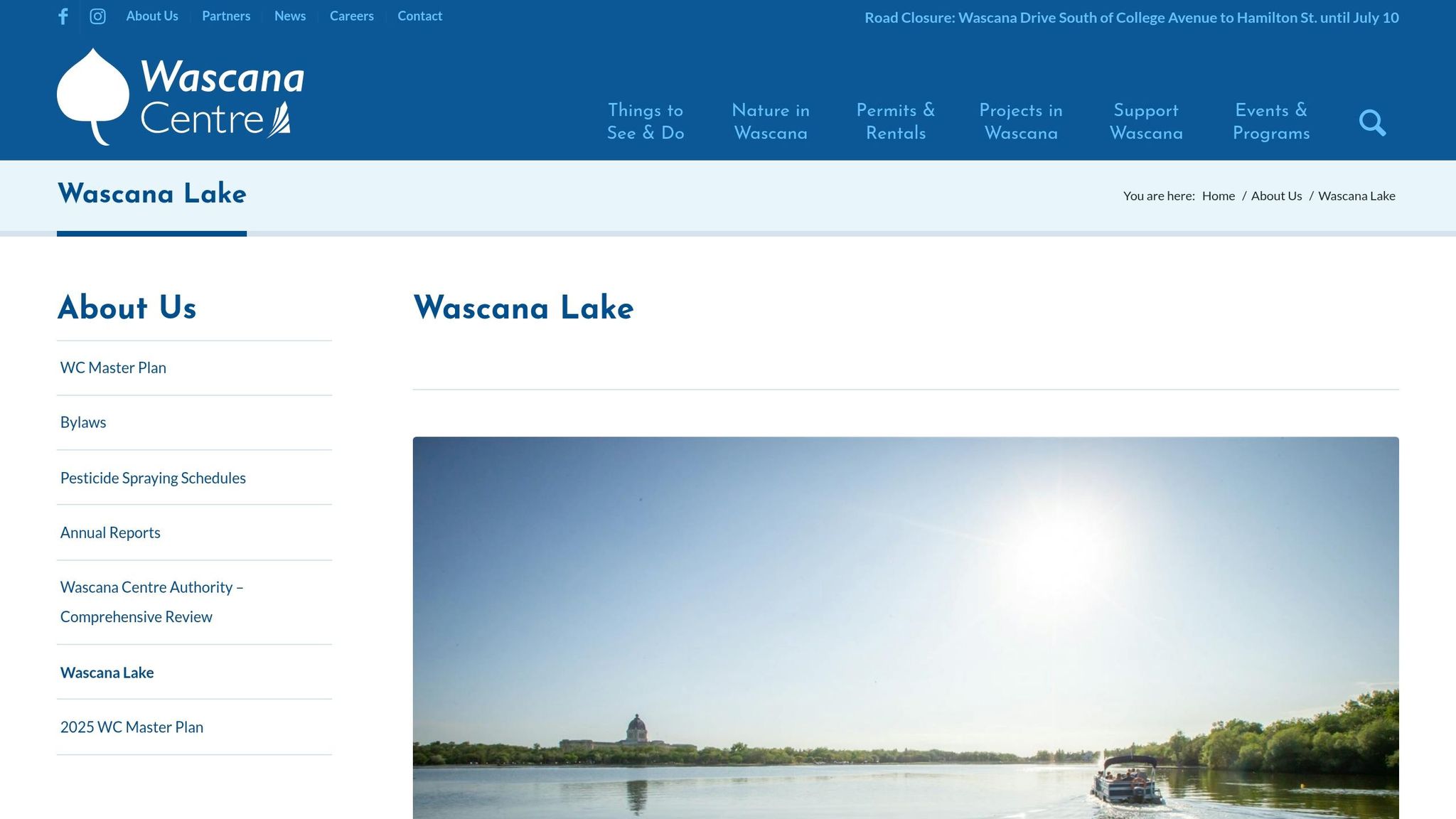
For a simple prairie skate, Wascana Lake has the most urban setup on this list. It sits right in downtown Regina, inside Wascana Centre, a 2,300-acre urban park. That makes it the easiest city pick here for skaters who want low-drama access and a short outing. If a remote wild-ice trip sounds like too much work, Wascana is the easy in-town option.
Scenery and Access
You’ll find ample parking throughout Wascana Centre, including spots near major landmarks. Since it’s so central, Wascana works well for casual skaters, quick laps, and short sessions when you don’t want to turn the day into a whole expedition.
For mixed snow-and-ice edges, shorter skates tend to work better than long blades. And when the edges get a bit snowy and the city ice turns rough, Snowfeet* Mini Ski Skates are a better fit than old-school skates. They work with winter boots and handle uneven surfaces with less fuss.
How to Pick the Right Lake for Your Style
Not every lake works for every skater. The best pick comes down to three things: how much control you want, what kind of scenery you’re after, and who you’re going with. Some lakes feel smooth and easy. Others feel wild, huge, and a bit rough around the edges.
Best for Beginners and Families
Choose Lake Louise. It’s maintained and more predictable, which makes it the safest starting point on this list.
If you want less control and more raw mountain scenery, head to the wild-ice options below.
Best for Wild-Ice Scenery
Choose Abraham Lake or Lake Minnewanka for wild-ice scenery. Abraham Lake gives you the most dramatic bubble-ice views. Lake Minnewanka feels bigger, rougher, and more untamed.
If you want a lake that handles both snow and ice better, the next option makes more sense.
Best for Mixed Snow and Ice Use
Vermilion Lakes is the best mixed-surface pick. It’s shallow, often dusted with snow, and easier to cover with Snowfeet* Mini Ski Skates than with long blades.
Here’s the quick cheat sheet:
| Lake | Best For | Ice Type |
|---|---|---|
| Lake Louise | Beginners and families | Managed ice |
| Abraham Lake | Wild-ice scenery | Wind-cleared ice |
| Lake Minnewanka | Late-season wild ice | Unmonitored ice |
| Vermilion Lakes | Mixed snow and ice | Shallow, variable surface |
Comparison Table
Here are the strongest picks from the full list. This table makes the choice a lot easier. You can scan by ice type, access, and gear, then match the lake to how you like to skate.
| Lake | Province | Best Season | Ice Style | Scenery Type | Accessibility | Best Use Case | Gear Note |
|---|---|---|---|---|---|---|---|
| Lake Louise | AB | Mid-December to April | Maintained (Zamboni) | Alpine/Glacier | High - hotel, bus, rentals on-site | Beginners | Traditional skates on the rink; Snowfeet* on snowy edges |
| Vermilion Lakes | AB | November to early winter | Wild, shallow | Mountain backdrop | High - 5 min from Banff | Mixed snow and ice | Snowfeet* once snow covers the ice; short blades on early clear ice |
| Two Jack Lake | AB | November to mid-December | Wild, wind-cleared | Open mountain | High - 15 min from Banff | Quick day trip | Traditional skates on wind-cleared ice; Snowfeet* on snowy edges |
| Johnson Lake | AB | November to December | Wild ice | Forest/Mountain | High - 15 min from Banff | Quick day trip | Traditional skates on early clear ice; Snowfeet* once snow moves in |
| Lake Minnewanka | AB | Late December to January | Wild, rough | Open alpine lake | High - 15 min from Banff | Wild-ice days | Snowfeet* on snow-covered patches; traditional skates on rare clear stretches |
| Abraham Lake | AB | Late December to February | Wild, wind-cleared | Methane bubbles | Moderate - 2 hrs from Calgary | Photography | Traditional skates on clear ice; Snowfeet* after fresh snowfall |
| Lake Winnipeg | MB | Late December to February | Wild, wind-packed | Open prairie | High - Gimli shore access | Distance skating | Snowfeet* on wind-packed snow; traditional skates on cleared sections |
| Lake Simcoe | ON | January to February | Wild, variable | Urban waterfront | High - 1–1.5 hrs from Toronto | Day trip from GTA | Snowfeet* on mixed shoreline; traditional skates on clean bay ice |
| Kilcona Park Lake | MB | December to February | Natural, city-cleared | Rolling urban park | High - city access, Winnipeg | City skate | Snowfeet* on rough or mixed patches; traditional skates on cleared areas |
| Wascana Lake | SK | December to February | Natural, urban | Prairie/urban | High - downtown Regina | Casual city skate | Snowfeet* on snowy edges; traditional skates on cleared ice |
Pick the lake that fits your ice style, then check ice thickness and gear before you head out. Simple move, and it can save your day.
Safety and Gear Tips Before You Go
Before you pick a lake, do a few checks first. The goal is simple: match the surface to your gear.
Ice Safety Basics
Natural-lake ice isn’t checked or managed for you. So, once you step out there, you’re making the call.
Here are the minimums:
- 6 inches (15 cm) of clear ice for one person
- 8 inches (20 cm) for a group
Clear blue ice is the one to trust. White, cloudy, or gray ice? Skip it.
Don’t just test one spot and call it good. Check thickness near shore and farther out with an auger or ice screw and a tape measure. Ice can change fast, even on the same lake, so test several spots before you skate.
Stay clear of:
- inlets and outlets
- cracks
- pressure ridges
- logs or rocks frozen into the ice
Those are all weak-spot zones.
What to Pack
Cold, wind, and distance can hit just as hard as bad ice.
Dress in layers: wool socks, thermals, fleece, insulated snow pants, and a down jacket or parka. Mountain lakes often feel much colder than nearby towns, so plan for wind chill.
A smart pack list includes ice rescue picks worn around your neck, a satellite communicator like a Garmin inReach for remote lakes, a headlamp if you’ll be out after dark, a small shovel for clearing wild-ice patches, and a thermos with something hot. Nothing fancy. Just the stuff that can save your day.
Skates vs. Short Snow Gear
Surface decides gear.
The easiest rule here: match the surface, not the lake name.
| Surface Condition | Best Gear Choice |
|---|---|
| Cleared, Zamboni-maintained ice | Traditional ice skates |
| Glassy wild ice, early season, no snow | Traditional ice skates |
| Packed snow or mixed snow-and-ice | Snowfeet* Skiskates or Mini Ski Skates |
| Rough, snow-covered wild ice | Snowfeet* short snow gear |
Smooth ice calls for blades. Packed snow or mixed snow works better with Snowfeet*.
Conclusion
Canada's frozen lakes give you two very different skating trips: smooth, cleared rinks and raw, wild ice. From Lake Louise to Abraham Lake, some spots are managed and more predictable. Others are scenic, remote, and a lot less forgiving. After looking at the full list, your pick comes down to surface type and trip style.
Choose based on scenery, access, and how dependable the ice tends to be. Pick the lake that fits your skill and comfort level, not just the postcard view. And once you’ve picked your spot, treat ice checks as non-negotiable - wild ice isn’t monitored, and conditions can change fast.
Use traditional skates on cleared ice. Use Snowfeet* Skiskates or Mini Ski Skates on snow-covered or mixed terrain. That’s why the best lake is the one that matches both your route and your gear.
FAQs
Which lake is best for beginners?
Sylvan Lake and Lake Louise are great picks for beginners.
Sylvan Lake is a strong choice for families. It’s the kind of place where kids often step onto the ice for the first time, a bit wobbly at first, then smiling five minutes later.
Lake Louise is another solid option. The skating tracks are well kept and clear, and you can rent gear right onsite, which makes the whole day a lot easier.
If you want to mix things up a little, not just stick to standard skating, Snowfeet* mini ski skates and skiblades are an easy option for first-timers. They’re simple to get the hang of and can make the ice feel a lot less intimidating.
When is the best time to skate on wild ice?
The best time to go is that short, hard-to-predict window after a lake freezes and before heavy snow covers the ice. In most years, that means November or mid-December, but it shifts from year to year.
If you want better odds, focus on lakes that freeze sooner. Good bets include the shallow parts of Two Jack Lake or Johnson Lake.
If you want a more reliable option, managed spots like the Lake Windermere Whiteway are often open from December to early March.
Should I bring ice skates or Snowfeet*?
For a groomed, maintained ice rink like Lake Louise, ice skates are still the standard pick.
But once you move onto snow-covered trails or areas beyond groomed ice, Snowfeet* make more sense. They slide over icy patches and light snow, and you don’t need specialized footwear. That small, easy-to-carry design is also handy when the weather shifts fast or the surface changes halfway through your outing.











Legg igjen en kommentar
This site is protected by hCaptcha and the hCaptcha Privacy Policy and Terms of Service apply.