



















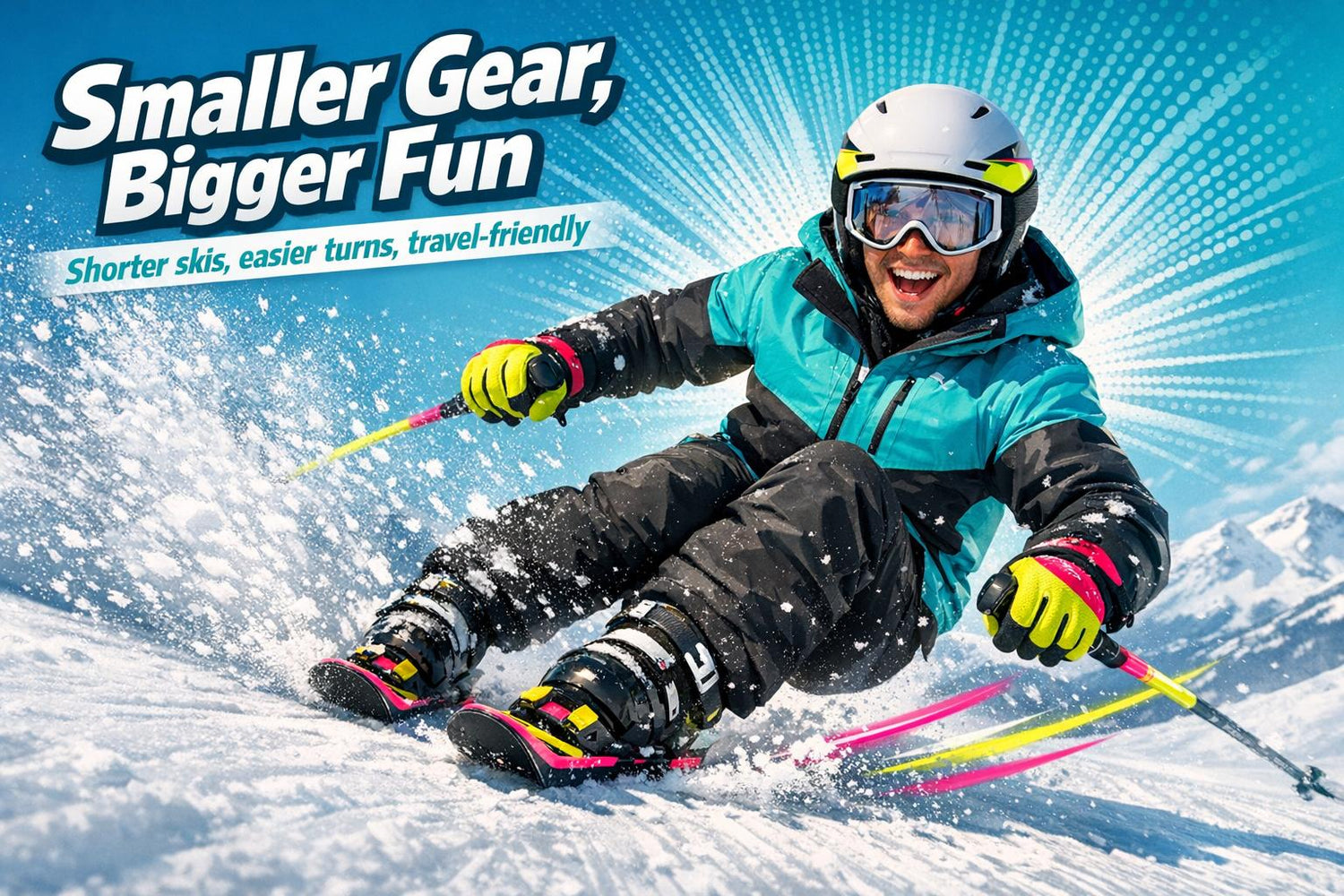
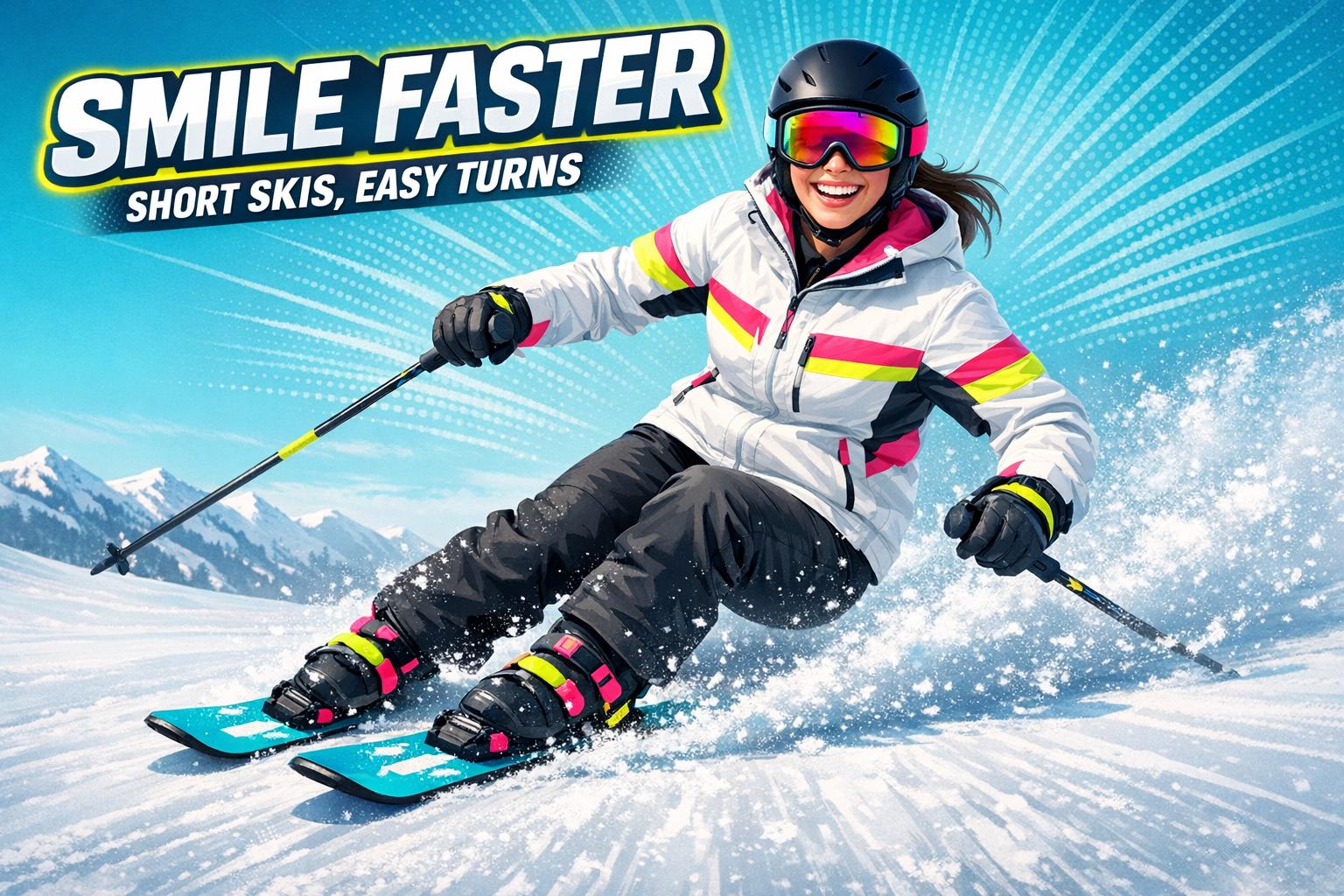
When it comes to skiing, smaller gear can make a big difference. Compact options like Snowfeet's mini skis and skiblades are easier to control, quicker to turn, and way less hassle than traditional long skis. Whether you're a beginner, a casual skier, or someone who loves playful rides, shorter gear offers a lighter, more approachable way to hit the slopes. Plus, they’re travel-friendly and don’t require bulky equipment.
Here’s the gist:
- Easier to use: Shorter skis are less intimidating and more forgiving, especially for beginners.
- More fun: They’re perfect for tight turns, tricks, and playful rides.
- Travel-ready: Compact enough to fit in a backpack, saving you from oversize baggage fees.
- Affordable options: Starting at $250, they’re a budget-friendly way to enjoy the snow.
Want skiing to feel less like a workout and more like a good time? Smaller gear might just be your new best friend. Let’s break it down further.
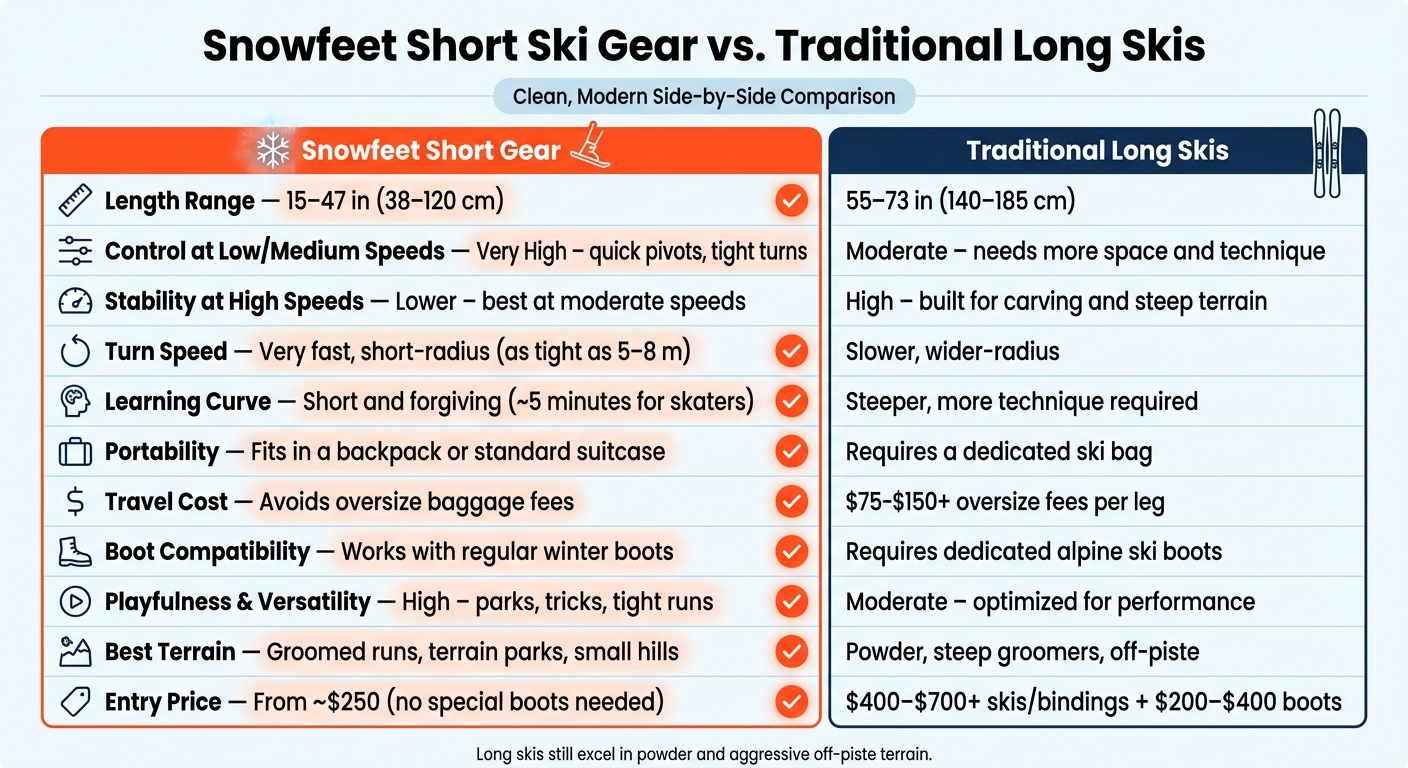
Snowfeet Short Ski Gear vs. Traditional Long Skis: Full Comparison
Ultimate Short Skis for Any Mountain ⛷️🤩
The Problems with Long Skis
Traditional skis - usually between 155 to 185 cm (about 5 to 6 feet) long - can take some of the joy out of skiing, especially for beginners, casual skiers, or those who only hit the slopes occasionally.
Harder to Handle and Control
Long skis are built for speed and wide, sweeping turns, but that comes at a cost. They can feel clunky when navigating tight spots, making quick moves like pivoting, stopping, or changing direction a challenge. With more edge contact on the snow, they demand greater effort to maneuver. Imagine trying to steer a longboard in a crowded space - that’s what skiing on long skis can feel like. This often leads to frustrations like crossed tips, caught edges, or speeds that feel out of control, especially for those still honing their skills.
"Extremely responsive, lightweight on your feet, and easy to ride as opposed to cumbersome long skis." - Snowfeet* Store
But it’s not just about control. Long skis also come with logistical headaches that can make them a hassle to own.
Bulky and Difficult to Travel With
Let’s face it: long skis are not travel-friendly. They need roof racks for road trips, often come with extra transport fees, and storing them at home can be a nightmare. Flying with long skis? Be ready for oversize baggage fees on top of the standard checked-bag costs. And once you’re home, they tend to take up a lot of space, requiring wall mounts, racks, or a dedicated garage corner. For anyone living in an apartment or with limited storage, this can be a real pain.
"A lot easier to haul around the hills & on vacation than traditional skis!" - heyjerz, Verified Customer
These storage and travel challenges make long skis a tough sell for those who only ski occasionally.
Too Much Commitment for Casual Skiers
Long skis don’t just demand space and effort - they also require a hefty commitment. The gear itself can feel overwhelming, both in terms of cost and practicality. Once you’ve invested in them, there’s often a sense of pressure to ski frequently to make it all worthwhile. For casual skiers, this can take the fun out of what should be a carefree experience. That’s where alternatives, like Snowfeet*, offer a more playful and portable option that’s much easier to embrace.
Why Shorter Gear Is Easier and More Fun to Use
Shorter gear changes the way you ski. It’s lighter, more responsive, and just plain fun. It turns skiing into something playful and approachable, even for beginners.
Faster Turns and Better Control
With Snowfeet* gear, you get tight, precise turns and control right out of the gate. The shorter length means a smaller turning radius, making it easy to carve sharp turns. For instance, Snowfeet* Skiblades can carve with turning radii as tight as 5–8 meters. That’s a game-changer when weaving through a crowded slope or navigating narrow trails. You don’t need to bomb down a black diamond to feel the difference - they shine even at moderate speeds. The parabolic shape and slim waist of these skiblades make carving quick and responsive.
"These mini-skis are light, stable and with excellent grip on every snow. Perfect for fast carving and fluid turns." - Nat, Verified Customer
This level of control isn’t just about performance - it’s a confidence booster, especially for beginners.
Easier for Beginners to Pick Up
Snowfeet* gear makes skiing feel approachable from the start. Long skis can be intimidating for new skiers, with their tips and tails catching on uneven snow and causing wipeouts before they even get the hang of it. Shorter skis, on the other hand, feel more natural. Turning becomes as simple as shifting your weight, which makes the learning curve much less steep. Many people report getting the hang of it in just five minutes. That instant feedback - where you feel the skis respond right away - keeps beginners excited and motivated to keep going.
More Playful and Flexible on the Snow
Once you’ve got the basics down, shorter gear opens up a whole new world of fun. It’s light and compact, which makes it perfect for experimenting. You can try quick spins, little hops off snowbanks, or tight slalom moves. Snowfeet* describes it best:
"Snowfeet turn every slope into a playground. Slide, carve, and have fun like never before."
This playful vibe is especially great in terrain parks. Shorter skis make tricks like 180s and 360s feel smoother and more controlled. But you don’t need a full-blown park to enjoy them - your local hill or even a backyard slope can become a mini playground. For weekend skiers in the U.S., this kind of gear can completely change how you experience a day on the snow. It’s less about technical performance and more about having a blast.
Snowfeet* Products: Short Gear for Every Type of Skier
Snowfeet* has created a lineup of compact ski gear that breaks away from the bulkiness of traditional skis. Whether you’re looking for something portable enough to toss in your backpack or gear that delivers a sharp, ski-like ride, Snowfeet* has something for everyone. Let’s dive into their offerings and see how they cater to different skiing styles.
Snowfeet Mini Ski Skates and PRO (38–50 cm)
These are the smallest and most portable options in the Snowfeet* range. The Mini Ski Skates, measuring just 15 inches (38 cm) and starting at $250, are lightweight and easy to carry, even in a backpack. They work with your regular winter shoes, making them perfect for quick trips to the slopes.
The Snowfeet PRO, slightly longer at 20 inches (50 cm) and priced at $275, includes a fiberglass flex core, which improves balance on soft snow and light powder (up to 4 inches deep). Both models are great for casual outings or short hill runs when you want to skip the hassle of heavy equipment.
"Snowfeet are incredible! I loved how easy they are to carry in a backpack with their handy waterproof bag!" - Michele, Verified Customer
Snowfeet Skiskates (44 cm)
At 17 inches (44 cm), the Skiskates are built for durability and performance, thanks to a sturdy wood core. Starting at $575, these are designed for skiers who enjoy a playful, responsive ride. If you’ve got experience with ice skating, inline skating, or hockey, you’ll feel right at home with these. They’re perfect for tricks, quick movements, and dynamic riding on groomed slopes.
For those wanting a mix of compact convenience and traditional skiing, Snowfeet* also offers the Skiblades series.
Snowfeet Skiblades (65–120 cm)
The Skiblades combine the compact nature of Snowfeet* products with the performance of traditional skis. The 65 cm model (starting at $635) offers a hybrid experience that’s ideal for carving and skating-style movements. Moving up the range, the 99 cm Skiblades ($675) are built for speed and stability, making them ideal for all-mountain skiing. They’re often described as "carving machines" that bring precision and fun to the slopes.
At the top end, the 120 cm Skiblades ($775) are designed for high-speed carving and deeper snow conditions. Shorter lengths in this series are perfect for quick turns and agility, while the longer ones provide more stability and confidence for riders who want a smooth, fast ride without the steep learning curve of traditional skis.
| Model | Length | Starting Price | Best For |
|---|---|---|---|
| Mini Ski Skates | 38 cm | $250 | Casual use, maximum portability |
| Snowfeet PRO | 50 cm | $275 | Versatility, soft snow balance, travel |
| Skiskates | 44 cm | $575 | Tricks, skating movements, agility |
| Skiblades | 65 cm | $635 | Hybrid skiing/skating, easy carving |
| Skiblades | 99–100 cm | $675 | Carving, speed, all-mountain stability |
| Short Skis | 120 cm | $775 | High-speed carving, stability in deeper snow |
sbb-itb-17ade95
Who Gets the Most Out of Shorter Ski Gear
Different skiers have different needs, and Snowfeet* products cater to all kinds of riders. Whether you're a beginner looking for confidence, a freestyle enthusiast chasing tricks, or a traveler who values convenience, there's something here for you.
Beginners and Casual Skiers
Shorter skis can make a world of difference for those just starting out. Long skis can feel unwieldy and demand precision, often leading to spills and frustration. Snowfeet* mini skis (38 cm and 50 cm) or the 44 cm Skiskates keep things simple, offering better control with less ski in front of and behind your boots. This design helps beginners feel more in control and less overwhelmed. In fact, many instructors use shorter skis as a go-to tool for teaching because they allow learners to quickly get a feel for their edges.
"These ski blades are a blast to use. Super easy to control, quick to turn, and way more forgiving than traditional skis." - Brad Tolin
For casual skiers, the ease of use means less time in lessons and more time enjoying the slopes. And while beginners appreciate the simplicity, experienced freestyle riders and travelers also find these compact skis incredibly useful.
Terrain Park Skiers
Freestyle riders get a major boost from shorter skis. Long skis can slow down spins or even snag on rails and jumps, making tricks harder to pull off. Snowfeet* Skiblades, especially the 65 cm and 99 cm models, are perfect for spinning 180s or 360s, adjusting balance mid-air, and tackling terrain park features like boxes and rails. Plus, their skate-like feel is a natural fit for anyone with experience in inline skating or similar sports.
Travelers and On-the-Go Skiers
Traveling with traditional skis can be a hassle - bulky ski bags, oversized baggage fees, and the struggle of dragging six-foot skis through an airport. Snowfeet* mini skis (38 cm) solve all that. They’re compact enough to fit in a standard backpack, making them ideal for spontaneous ski trips. Whether you're heading out for a quick road trip or navigating public transit in the city, having gear that’s lightweight and portable is a game-changer. Imagine packing your skis on Friday, hitting a nearby hill Saturday morning, and being back home by the afternoon - no oversized bags needed.
| Skier Type | Ideal Snowfeet* Option | Key Advantage |
|---|---|---|
| Beginners & Casual Skiers | Mini Ski Skates (38–50 cm) | Easier turns, less intimidating, more forgiving |
| Terrain Park & Freestyle | Skiblades (65–99 cm) | Great for spins, agile maneuvers |
| Travelers & On-the-Go | Mini Ski Skates or Skiskates | Compact, backpack-ready, perfect for travel |
Snowfeet* vs. Long Skis: A Direct Comparison
When you put Snowfeet* gear side by side with traditional long skis, the differences are striking. Long skis typically measure 55–73 inches (140–185 cm), often matching or exceeding your height. In contrast, Snowfeet* products are much shorter, ranging from 15 to 47 inches (38–120 cm). This difference in length dramatically impacts how each performs on the slopes.
Snowfeet* shines when it comes to everyday maneuverability. The shorter length makes them easier to pivot, requiring less effort to edge and allowing quick redirection - perfect for navigating crowded blue runs. On the other hand, long skis are designed for stability, excelling at high speeds and in deep powder. But that stability can feel cumbersome for casual skiers sticking to groomed trails. For most U.S. resort visitors who spend their days on green and blue runs, long skis' high-performance features often go unused.
Portability is another big win for Snowfeet*. Traveling with long skis can be expensive - most major U.S. airlines consider ski bags oversized, charging $75–$150 or more per leg for bags over 62 linear inches. Snowfeet* mini skis (38–50 cm) and Skiskates (44 cm) fit easily into a standard checked suitcase, saving you from those extra fees. Even Skiblades (65–120 cm) only require a small bag, unlike the bulky, dedicated ski bags needed for traditional skis.
Here's a quick breakdown of how they compare:
Comparison Table: Snowfeet* vs. Long Skis
| Factor | Snowfeet* Short Gear | Traditional Long Skis |
|---|---|---|
| Length range | 15–47 in (38–120 cm) | 55–73 in (140–185 cm) |
| Control at low/medium speeds | Very high - quick pivots, tight turns | Moderate - needs more space and technique |
| Stability at high speeds | Lower - best at moderate speeds | High - built for carving and steep terrain |
| Turn speed | Very fast, short-radius | Slower, wider-radius |
| Learning curve | Short and forgiving | Steeper, more technique required |
| Portability | Fits in a backpack or standard suitcase | Requires a dedicated ski bag |
| Travel cost | Avoids oversize baggage fees | Oversize fees of $75–$150+ per leg possible |
| Boot compatibility | Some models work with regular winter boots | Requires dedicated alpine ski boots |
| Playfulness & versatility | High - great for parks, tricks, tight runs | Moderate - optimized for performance |
| Best terrain | Groomed runs, terrain parks, small hills | Powder, steep groomers, off-piste |
| Price entry point | From ~$250 (with regular boots) | $400–$700+ skis/bindings, plus $200–$400 boots |
That said, long skis aren’t obsolete. They’re still the go-to choice for skiers chasing powder days, carving at high speeds, or tackling aggressive off-piste terrain. If you’re heading to Jackson Hole for a week of steep chutes and deep snow, full-length skis are the way to go. But for most U.S. resort visitors, Snowfeet* gear offers a fresh take on skiing - emphasizing fun, ease, and convenience over raw performance.
How to Pick the Right Snowfeet* Product
Snowfeet* products bring a fresh twist to skiing, but finding the right fit depends on your experience level and the terrain you plan to tackle. The table above highlights that Snowfeet* gear isn't universal - your choice should reflect your skills, preferred environment, and goals for the day. Let’s break down the options to help you pick the perfect match for your style.
Matching Gear Length to Your Needs
If you're just starting out or want a simple, portable option, the Mini Ski Skates and PRO (38–50 cm) are a great choice. These are designed for quick turns and ease of use, and they work with standard winter boots. Plus, they’re small enough to fit in a backpack and start at $250. They're especially intuitive for those with ice or inline skating experience. However, they’re less stable at higher speeds, so they’re best suited for groomed beginner and intermediate slopes.
For something with a bit more versatility, Skiskates (44 cm) strike a balance between agility and grip. They provide enough edge length for better traction on mild terrain while remaining easy to control and pivot.
"In my opinion, Skiskates is the best product for slopes we developed so far. I love how easy they are to ski and skate and how many different kinds of tricks I can perform without much effort."
With a 4.9/5 rating from 123 reviews and a learning curve of about 5 minutes for skaters, Skiskates are a fun and accessible option for resort adventures.
For wider mountain areas or steeper slopes, go for Skiblades (65–120 cm). Models in the 65–99 cm range offer a mix of agility and stability, while the 99–120 cm versions excel at carving, moderate speeds, and light powder (up to 4 inches deep). Many users find them easier to adapt to and more forgiving than traditional skis. Prices start at $675 for the 99 cm model and go up to $775 for the 120 cm version.
To make your decision easier, here’s a quick guide to match your profile with the ideal Snowfeet* gear:
| Profile | Pick | Price |
|---|---|---|
| First-timer, traveler, skater | Mini Ski Skates / PRO (38–50 cm) | From $250 |
| Beginner, resort fun, tricks | Skiskates (44 cm) | From $575 |
| Intermediate, all-day resort skiing | Skiblades (65–99 cm) | From $635 |
| Confident rider, speed, varied terrain | Skiblades (99–120 cm) | From $675 |
Conclusion: Smaller Gear, More Fun on the Snow
Shorter ski gear takes the hassle out of your day on the mountain. With less length, you get quicker turns, easier stops, and a smoother learning curve. Instead of wrestling with oversized equipment, you can focus on what matters most - having fun.
This compact design works for everyone, from beginners to seasoned park enthusiasts. For terrain park riders, gear like Skiskates and Skiblades makes tricks feel more doable and less intimidating. Plus, smaller gear is a breeze to travel with and store.
Shorter skis shift the focus from technical mastery to pure enjoyment. Many experienced skiers even grab Snowfeet* for relaxed, playful days on the slopes. By addressing the bulk and complexity of traditional skis, Snowfeet* gear offers a fun and accessible way to ride for skiers of all levels.
The versatility of shorter gear is hard to beat - it suits every skiing style. The Snowfeet* lineup has something for everyone: compact Mini Ski Skates (38–50 cm) for playful rides, Skiskates (44 cm) for all-around resort fun, and Skiblades (65–120 cm) for those craving more stability and carving precision. And the best part? They take up just a fraction of the space traditional skis need.
Curious to see the difference? Pick your Snowfeet* setup and make your next mountain day unforgettable.
FAQs
Can I use Snowfeet* with regular winter boots?
Yes, Snowfeet* work perfectly with your regular waterproof winter boots or snowboard boots. Unlike traditional ski gear that demands stiff and expensive ski boots, Snowfeet* simply strap onto the shoes you already have. This eliminates the hassle of renting or lugging around bulky equipment. Depending on the model, you can pick options designed for either winter shoes or snowboard boots, offering both comfort and freedom to move easily around the resort.
Which Snowfeet* length should I choose for my skill level?
When picking the right Snowfeet*, it’s all about matching the length to your goals and the terrain you’ll tackle. If you’re into agility and pulling off tricks at parks or sledding hills, go for the 44 cm Skiskates or the 50 cm Snowfeet PRO. Want something that’s easy to turn on slopes or moguls? The 65 cm Skiblades are a solid choice and work well for all skill levels. If speed and stability across all-mountain terrain are your thing, the 99 cm or 100 cm models are your best bet.
Are Snowfeet* safe on steeper or icy runs?
Snowfeet* products come with durable metal edges, giving you solid grip on hard-packed snow. They’re great for groomed slopes, terrain parks, and cruising at moderate speeds. That said, if you’re tackling steep or icy black diamond runs, traditional long skis are better. They provide more edge contact, stability, and control for braking. For steeper terrain, the 120 cm Snowfeet* Skiblades offer the most stability in the lineup. However, they’re best for seasoned riders who value quick maneuvering over carving aggressively.











Laat een reactie achter
Deze site wordt beschermd door hCaptcha en het privacybeleid en de servicevoorwaarden van hCaptcha zijn van toepassing.