



















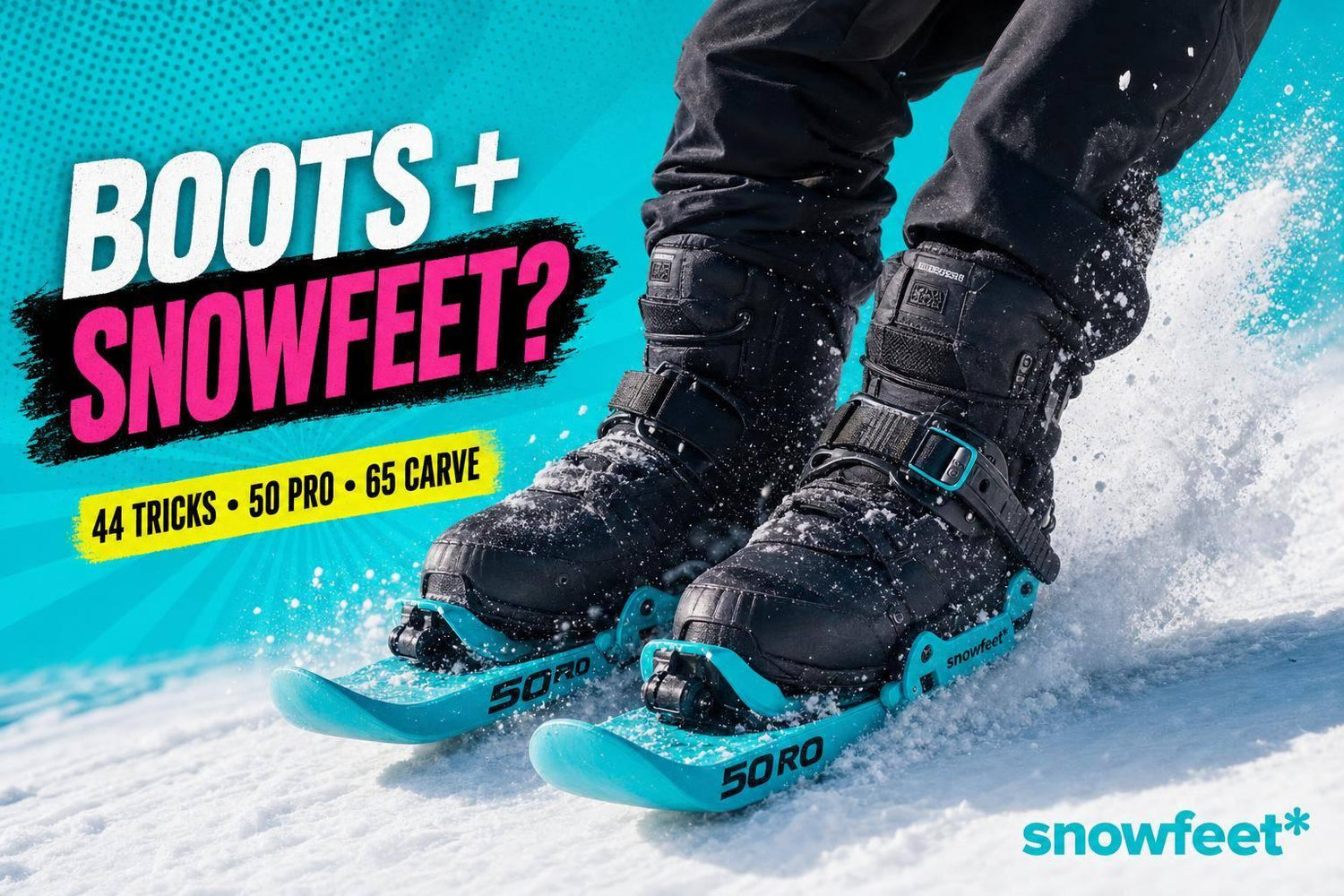
Yes - you can use snowboard boots with Snowfeet*. If your boots fit the binding range and you tighten the straps well, you’re good to go.
Here’s the short version:
- 44 cm Skiskates feel the most playful
- 50 cm Snowfeet PRO feels the most balanced
- 65 cm Skiblades feel the most like skis
- Snowboard boots are more comfortable and easier to walk in
- Ski boots give you more edge control on hard snow and at higher speed
- The 50 cm PRO has a 4.89/5 rating from 2,295 reviews
- Prices in the article start at $299 and go up to $590
If I already had snowboard boots, I’d see this as the easy way to try short skis without buying a full ski setup. The big thing is not extra boot bulk. It’s fit. If the boot sits snug and centered, the ride feels solid. If it moves around, well… it gets weird fast :)
Best pick for most people: the 50 cm Snowfeet PRO.
Best pick for tricks and playful laps: the 44 cm Skiskates.
Best pick for a more ski-like feel: the 65 cm Skiblades.
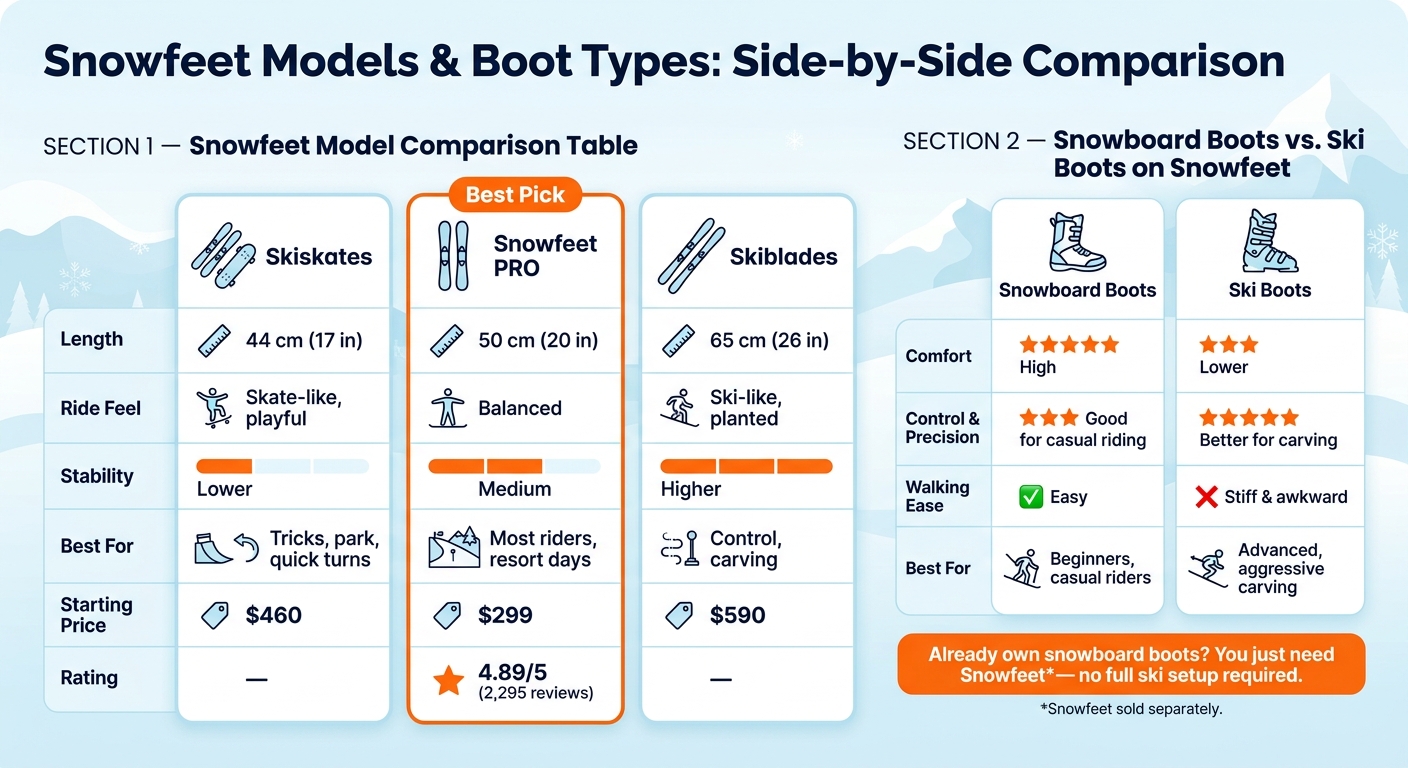
Snowfeet Models & Boot Types: Side-by-Side Comparison
Short Skis with Snowboard Bindings | Must-Have of This Winter
Quick Comparison
| Model | Length | Ride feel | Best for | Starting price |
|---|---|---|---|---|
| Skiskates | 17 in (44 cm) | Loose, playful | Quick turns, park, fun laps | $460 |
| Snowfeet PRO | 20 in (50 cm) | Balanced | Most riders, easy resort days | $299 |
| Skiblades | 26 in (65 cm) | More planted | More control, more ski-like use | $590 |
So, if you want the plain answer: snowboard boots work fine on Snowfeet* for casual riding, green and blue runs, and learning. If you want sharper carving on icy or steep runs, ski boots still have the edge.
Best Snowfeet* Models for Snowboard Boots
All three Snowfeet* models work with snowboard boots. The main difference is how they ride. Some feel loose and playful. Others feel more planted and calm. So the best pick comes down to your style.
Snowfeet* Skiskates 44 cm
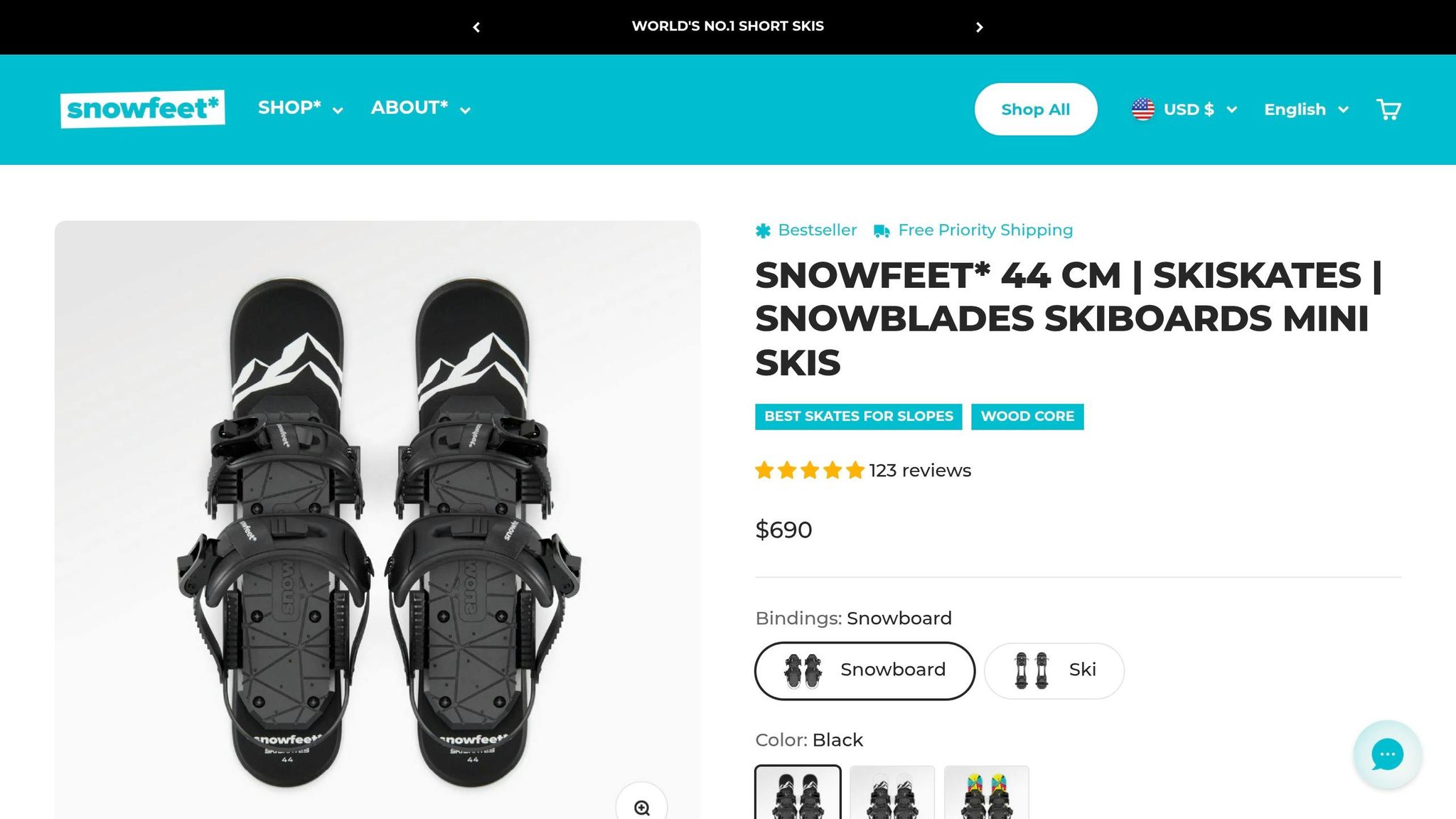
At 44 cm, Skiskates are the most agile option. Their wood core helps them feel quick and snappy on groomed runs and in snow parks. They’re also easy to learn.
With snowboard boots, they feel a lot like skating on snow. That softer, more flexible boot feel works well here, especially if you like speed, quick moves, and messing around with tricks.
If that sounds fun but you want a bit more balance, the PRO is the next step up.
Snowfeet PRO 50 cm
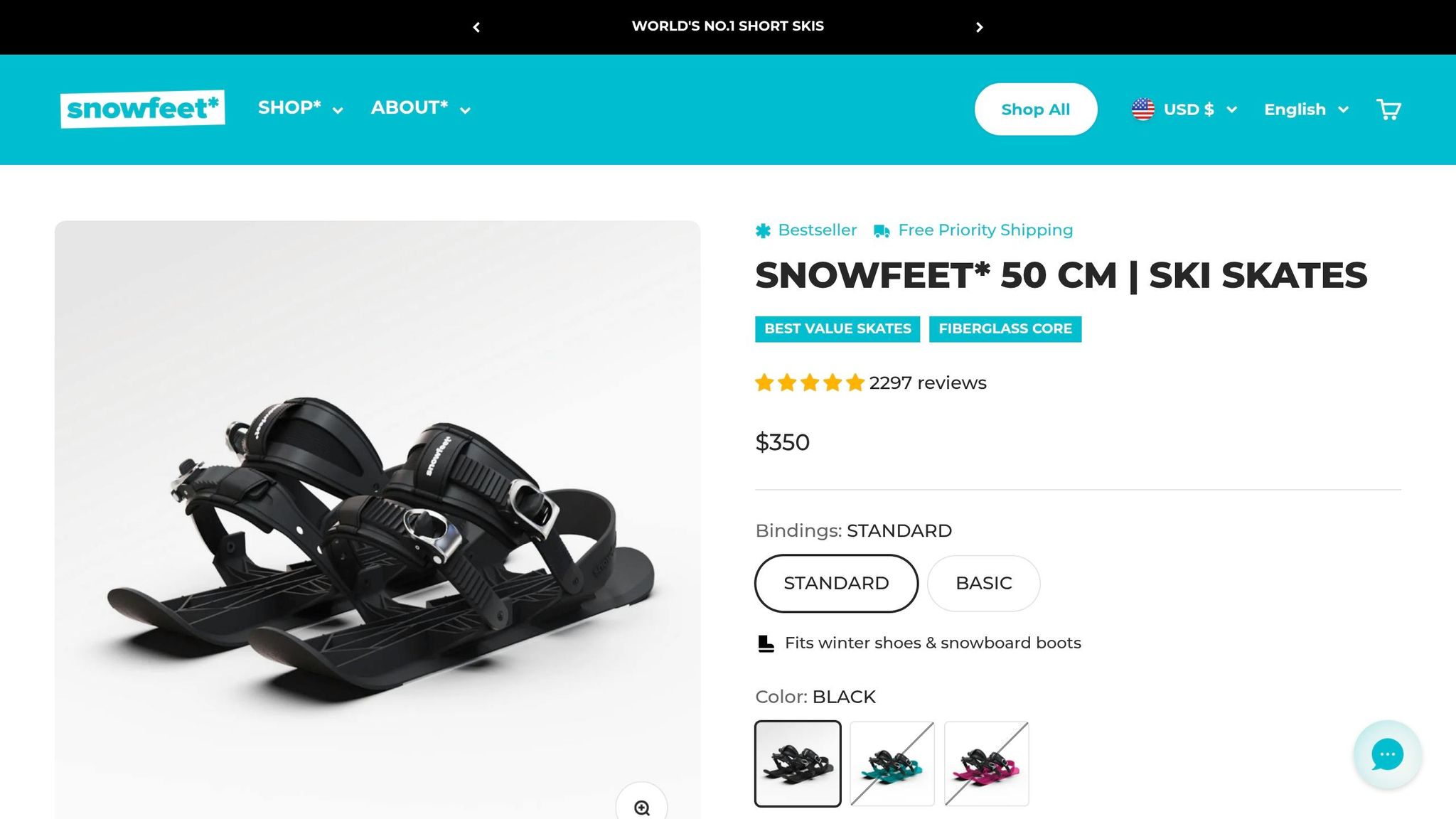
The Snowfeet PRO 50 cm is the most forgiving of the three. That extra length gives you more balance and a steadier ride, which makes it a strong pick for laid-back resort days. The fiberglass-reinforced composite core adds a smooth feel, and it can handle light powder.
It’s also the top-rated model in the lineup, with a 4.89/5 rating based on 2,295 reviews.
If you want something that feels closer to regular skiing, the 65 cm Skiblades make more sense.
Snowfeet* Skiblades 65 cm
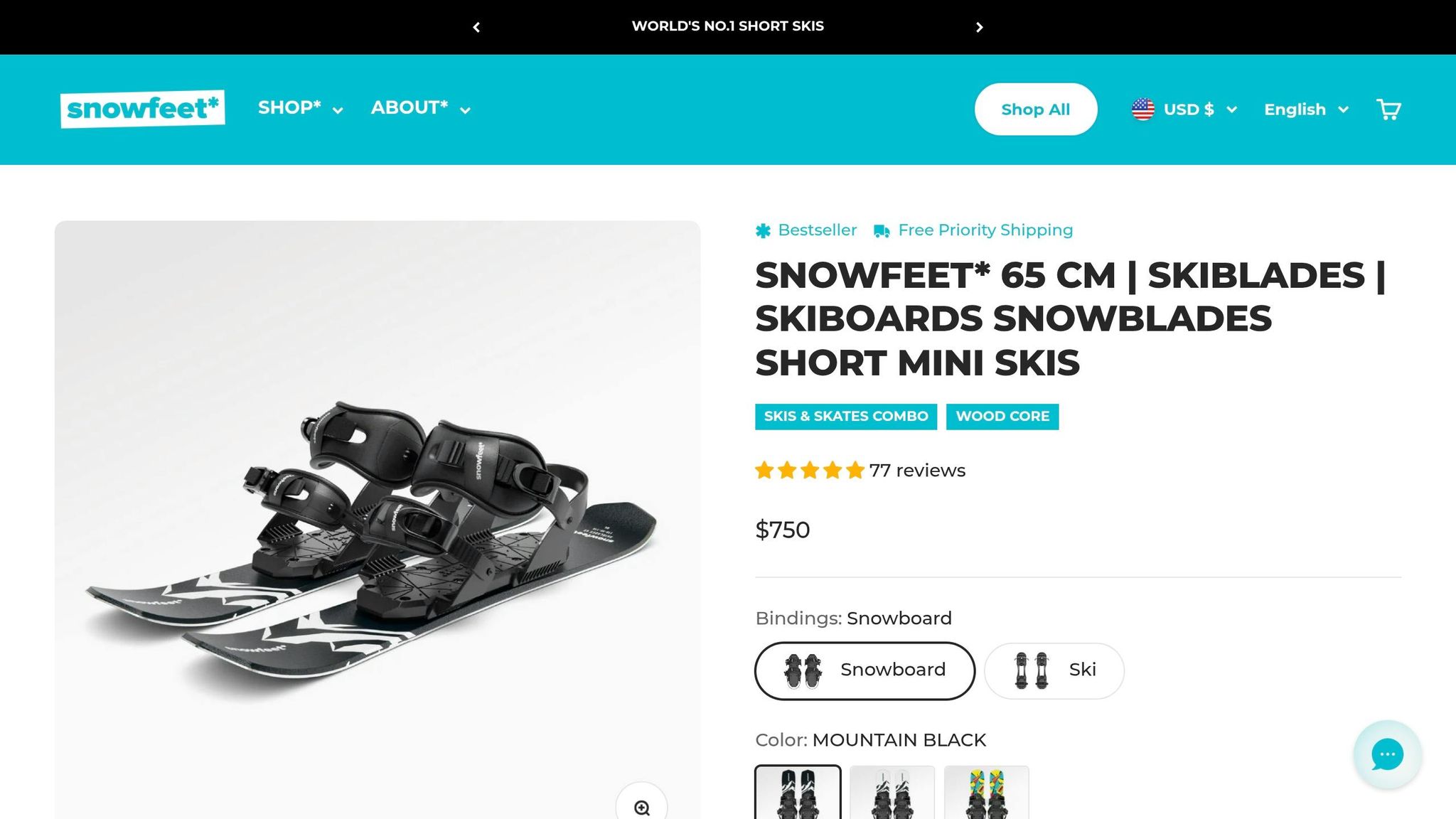
The Skiblades 65 cm feel the most like skis. They stay more planted and carve with more confidence than the shorter models, which is great if you want more control. Snowboard boots fit these bindings with no fuss, and the wood core keeps the ride lively and quick to respond.
This quick comparison makes the tradeoffs easy to see.
| Model | Length | Feel | Stability | Starting Price |
|---|---|---|---|---|
| Skiskates | 44 cm (17 in) | Skate-like | Lower | $460 |
| Snowfeet PRO | 50 cm (20 in) | Balanced | Medium | $299 |
| Skiblades | 65 cm (26 in) | Ski-like | Higher | $590 |
sbb-itb-17ade95
Fit, Sizing, and Binding Setup
Once you’ve picked a model, fit is the big thing that shapes how well Snowfeet* works with snowboard boots. You can have the right setup on paper, but if the boot sits loose or off-center, the ride will feel off.
Boot Size Range and Secure Fit
Skiskates 44 cm and Snowfeet PRO 50 cm usually fit US 6–13 (EU 38–47), while the Skiblades 65 cm cover a bit more ground at US 6–14.5 (EU 38–49). That gives snowboard boot users a nice perk: you may be able to ride with the gear you already have.
If you wear a US 12 or 13, slow down and check boot bulk. Some US 12–13 boots are just plain chunky, and the straps may not play nice with every shell shape.
What matters most is a snug, centered fit. Getting the boot into the binding isn’t enough. If it shifts around, edging will feel sloppy, and your response on snow will lag a bit. That’s the kind of thing you notice fast, usually at the worst time :)
How to Adjust Bindings Correctly
If your boot falls within the size range, the next job is to lock it down so it stays centered and steady.
Snowfeet* bindings use a two-strap setup - one strap over the ankle/instep and one over the toe - and both adjust without tools. Start by centering the boot on the baseplate. Tighten the toe strap first so the boot lines up well, then tighten the ankle strap. After that, flex forward and side to side to check for movement. If the boot still shifts, tighten a little at a time until it feels secure without getting pinched.
One small tip that saves headaches: check the straps again after your first run. Cold weather can compress padding, so a setup that felt dialed in at the top might loosen up by the bottom.
Why Waterproof Boots With Ankle Support Work Best
Even if your straps are set right, the boot itself still has a huge effect on control.
Waterproof, medium-flex snowboard boots with firm ankle support tend to work best. Wet feet get cold fast, and once that happens, balance and edge feel can go downhill in a hurry.
Ankle support matters just as much. A boot with a higher cuff and firmer sides passes your movements to the edges with less mush when you turn or stop. Softer boots can feel vague, most of all on hard snow or when you pick up speed. For most casual riders, a medium-flex snowboard boot hits the sweet spot: enough support for control, while still staying comfortable and forgiving.
Snowboard Boots vs. Ski Boots on Snowfeet*
Comfort, Control, and Ease of Use: A Side-by-Side Look
If you already own snowboard boots, this comes down to comfort vs. precision on Snowfeet*. The good news? Both work. But they don’t feel the same once you’re on snow.
Snowboard boots feel softer and more forgiving. They’re also much easier to walk in between runs, which, honestly, is a nice perk when you’re heading to the lift or shuffling around the lodge. Ski boots, on the other hand, are stiffer and more rigid. That means they send your movements to the snow with less give. You get more exact input, but you also give up some all-day comfort.
Here’s the side-by-side view:
| Aspect | Snowboard Boots | Ski Boots |
|---|---|---|
| Comfort | High - soft flex and a cushioned feel | Lower - stiffer and less forgiving over a full day |
| Control & Precision | Good for relaxed riding, moderate speeds, and playful turns | Better for stronger edge hold and faster, more precise carving |
| Walking Ease | Easier to walk around in between runs | Stiff and awkward off the snow |
| Best For | Casual riders, beginners, snowboarders crossing over | Advanced riders who want more aggressive carving and speed |
For most casual Snowfeet* riders, snowboard boots make a lot of sense. They’re easier on your feet and simpler to live with through the day. Ski boots lean more toward riders who care most about tight control and sharper response.
Where Ski Boots Have an Edge
Ski boots come out ahead when your top goal is precise carving, stability at speed, and firm edge hold on harder snow. That’s where the extra stiffness pays off. If you already like how ski boots feel, they can be a strong match for a more responsive setup, especially on Skiblades 65 cm.
Still, if you already own comfortable snowboard boots, they’ll do the job well for most Snowfeet* use. Ski boots start to make more sense when you want the most exact feel possible, mainly on firm snow and at higher speeds.
Limits, Best Use Cases, and Final Verdict
When Snowboard Boots Are Not the Best Choice
This tradeoff shows up most when speed and edge control matter more than comfort. Snowboard boots can work, but they give up some precision on hard-packed snow and at higher speeds.
You’ll feel that softer flex most on:
- hard snow
- steep runs
- fast turns
It stands out even more on the Skiblades 65 cm during deep carves and quick edge changes. If your goal is technical carving, ski boots are the better call.
Best Setup for Most Casual Riders
For day-to-day resort laps, the math changes. Comfort and ease matter more than top-end precision. That’s where snowboard boots and Snowfeet* make a lot of sense.
For most casual riders, this is the practical setup:
- Snowfeet PRO 50 cm: the best all-around pick
- Skiskates 44 cm: the most playful option
- Skiblades 65 cm: the most ski-like feel
There’s a money angle too. If you already own snowboard boots, you just need Snowfeet*. No ski boots. No full ski setup. That can save you a decent chunk of cash. Plus, they pack small, which makes travel and storage way less of a pain.
Conclusion: The Short Answer
If you already have snowboard boots, Snowfeet* is the easiest way to get on snow without piling on more gear. Yes, snowboard boots work with Snowfeet* if the fit is snug and the model lines up with how you like to ride.
You won’t get race-level precision. But for green and blue runs and casual laps, this setup gets the job done without the cost or hassle of a full ski kit.
FAQs
How tight should snowboard boots fit in Snowfeet* bindings?
Aim for a snug, secure fit so you get good control and direct weight transfer. If the boot feels too loose, your foot can slide around. That kills response and can lead to hot spots or cramping.
Tighten the straps until the boot feels firmly held in place, but don’t crank them down so much that your feet go numb. You want the boot to sit right within the binding’s adjustable range so you keep solid edge control.
Are snowboard boots good enough for beginners on Snowfeet*?
Yes. Snowboard boots are a great pick for beginners using Snowfeet* because these products are built to work well with the comfort and flex that snowboard boots give you.
They usually feel more natural than old-school ski boots, which is a big plus when you're just starting out. You can often use boots you already own, too, so you may not need to spend extra money right away. And unlike ski boots, they’re much easier to walk in, which means less awkward shuffling and fewer “why do I feel like a robot?” moments :)
Most Snowfeet* models also come with adjustable, tool-free bindings that help keep the fit snug and secure for U.S. boot sizes 6–14.5.
Which Snowfeet* model is most stable with snowboard boots?
For the most stable ride with snowboard boots, the 99 cm Snowfeet* model is the best pick.
It gives you more edge contact than the shorter 44 cm and 50 cm models. That added length helps the ski hold an edge better, feel more planted, and stay balanced when you’re carving at higher speeds or riding mixed terrain.
It also has a deeper parabolic sidecut, which helps with support and control through turns. So if you want the steadiest option, 99 cm is the one to go with.











Laat een reactie achter
Deze site wordt beschermd door hCaptcha en het privacybeleid en de servicevoorwaarden van hCaptcha zijn van toepassing.