



















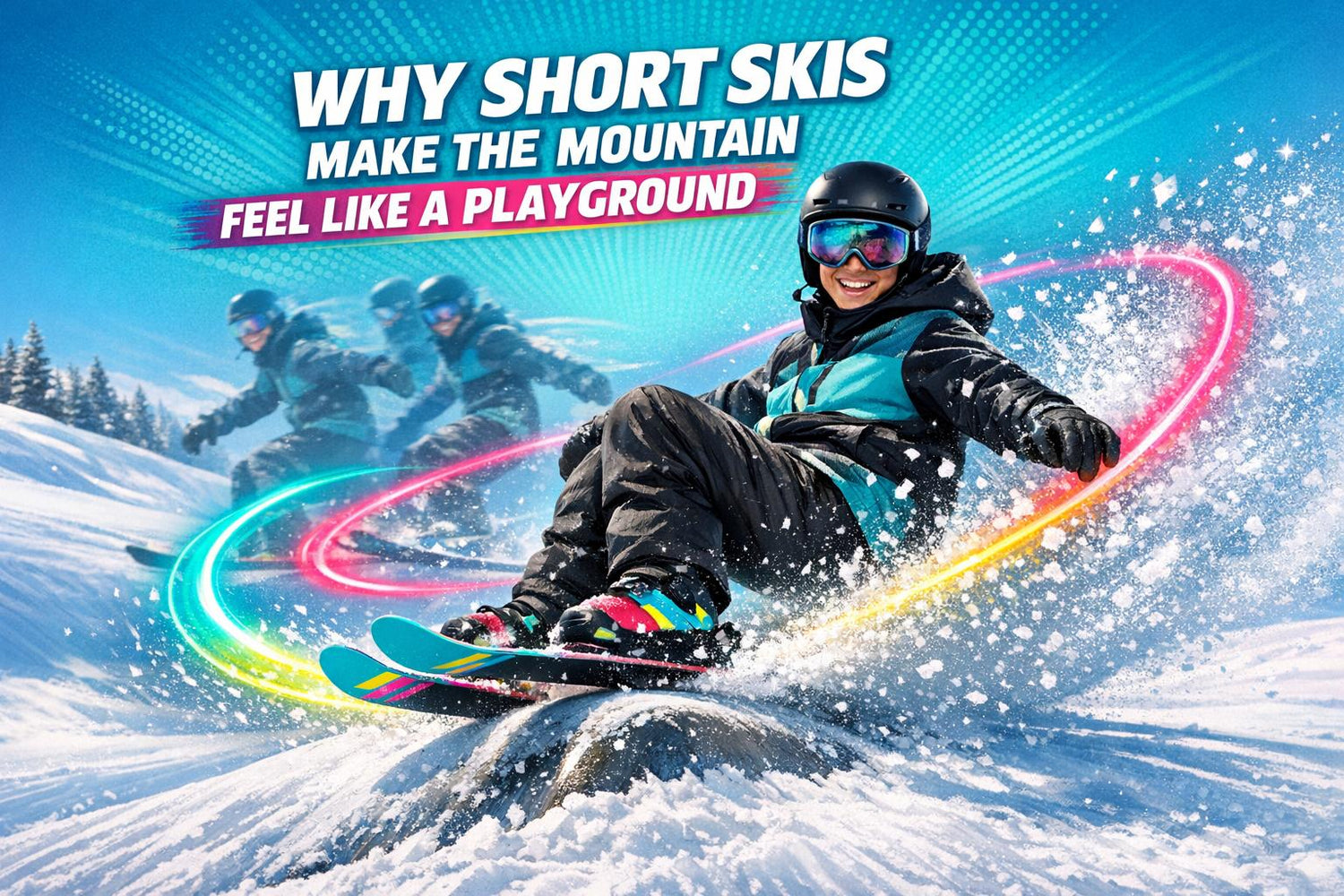
Short skis are changing the way people hit the slopes. Unlike long, heavy skis that prioritize speed and stability, short skis (44–120 cm) focus on agility, control, and fun. They’re easier to handle, perfect for beginners, and great for tricks or tight turns. Think of them as the inline skates of the ski world - light, fast, and intuitive.
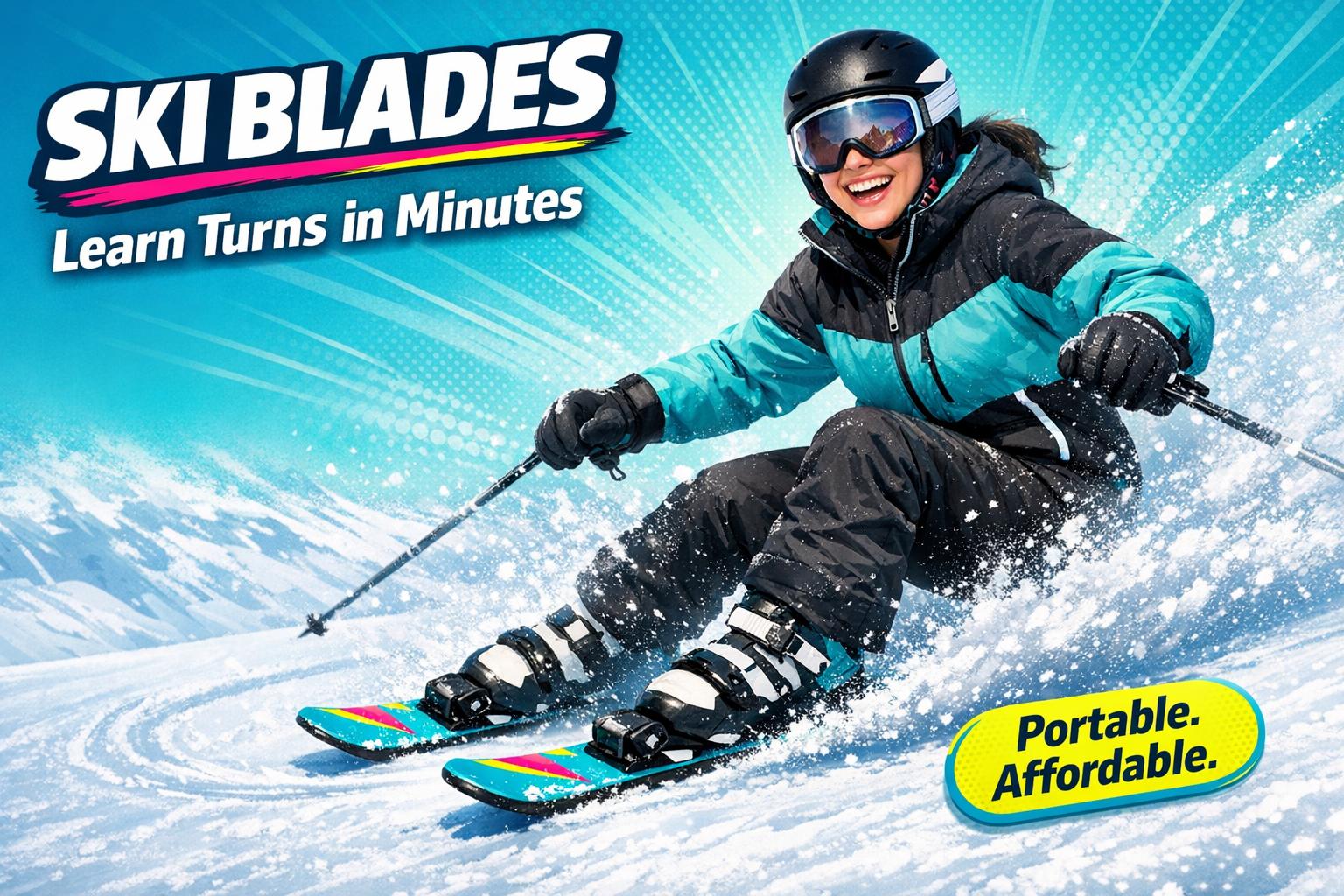
Snowfeet’s lineup of short skis includes models like Skiskates (44 cm) and Skiblades (65–120 cm), designed for playful runs, freestyle tricks, or all-mountain cruising. They’re compact, simple to carry, and work with regular winter boots or traditional ski gear. Whether you’re weaving through trees, hitting the terrain park, or just learning, short skis make skiing feel less like work and more like play.
Key Benefits:
- Easier for Beginners: Quick learning curve, better control.
- Freestyle Ready: Great for spins, jumps, and park tricks.
- Portable: Fits in backpacks or small bags - no oversized gear.
- All-Mountain Fun: Perfect for tight terrain and creative riding.
If you’re tired of lugging long skis or want to try something new, short skis might be your next favorite gear. They bring a fresh, playful vibe to the slopes while keeping things simple and lightweight.
Are Short Skis Better for Beginners?
The Problem With Long Skis and Snowboards
Traditional skis and snowboards are all about speed. But here's the catch: focusing on speed often comes at the expense of fun and versatility. Unlike Snowfeet* short skis, which prioritize agility, long skis can feel limiting in a lot of ways.
Bulky and Hard to Handle
Long skis, usually between 160 and 190 cm, are a hassle even before you hit the slopes. Lugging them through crowded parking lots, squeezing them through lodge doors, or navigating lift lines can feel like a workout. If you're using public transit or driving a compact car, you'll need roof racks or oversized bags to transport them.
Once you're on the mountain, their extra length adds swing weight, making quick movements - like pivoting through tight trees, tackling moguls, or hitting the terrain park - much harder.
Challenging for Beginners
If you're new to skiing, long skis can make the learning curve steeper. They require better edge control, and even small balance mistakes can lead to spills. Stopping is another challenge - wedge turns demand more strength and precision, making it harder for beginners to feel confident. Shorter skis, on the other hand, are easier to manage, helping newcomers learn faster and enjoy the ride sooner.
"Short skis will make you feel like a kid again. They're super fun for doing tricks like riding backwards, spinning, and jumping in snow parks." - Snowfeet*
Less Playful for Experienced Riders
Long skis are built for stability at high speeds, which is great if you're all about carving and straight-line runs. But that same stability can work against you when you're looking to have fun. Tricks like nose butters, quick 180s, or spins take more effort because of the added swing weight. And in terrain parks, longer skis are less forgiving - they’re more likely to catch on rails or boxes, making technical moves trickier.
"Only trade-off is at higher speeds, where longer skis still feel more stable - but for overall fun and maneuverability, these [short skis] are hard to beat." - Brad Tolin
Long skis tend to lock you into big, committed carves, which can feel limiting. That’s why many riders are turning to Snowfeet* short skis for a more playful, free-flowing experience on the mountain.
How Short Skis Make the Mountain More Fun
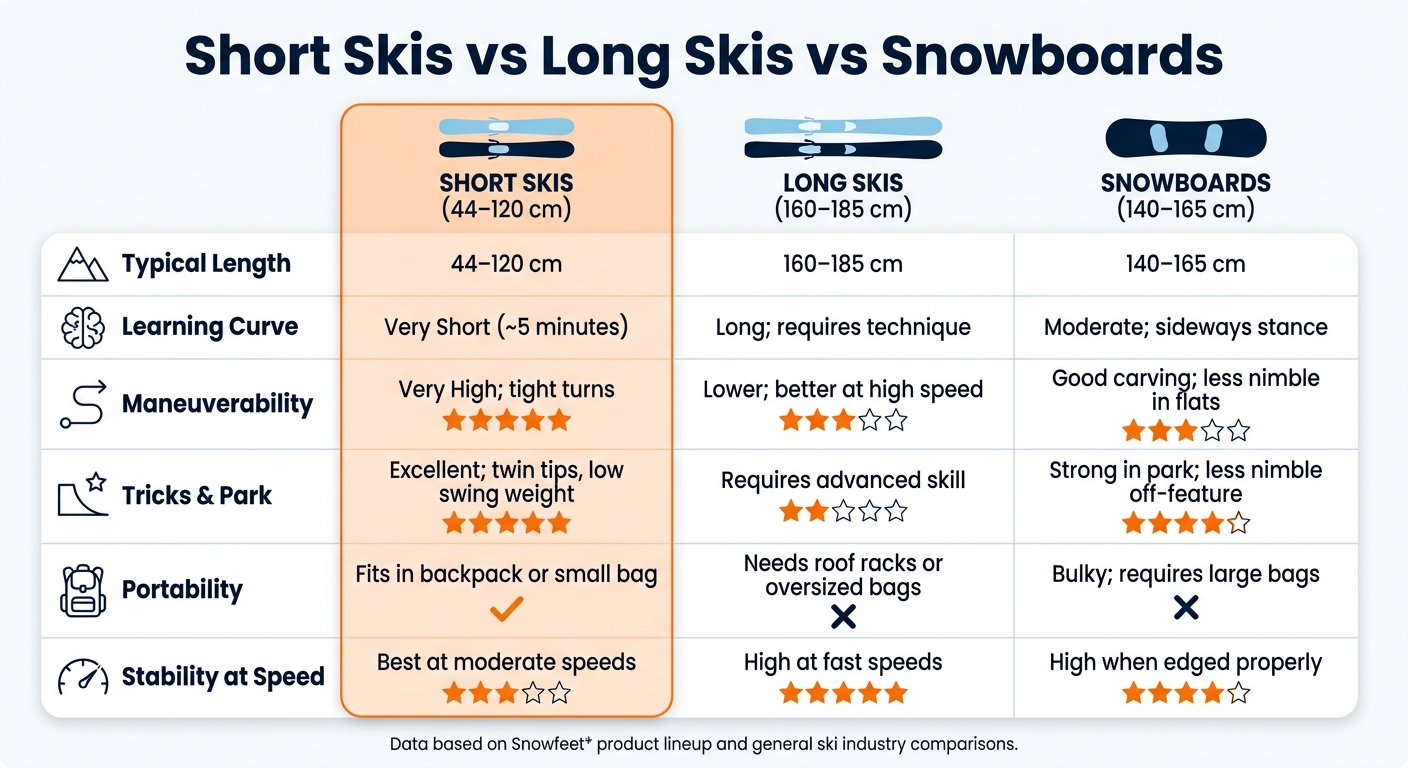
Short Skis vs Long Skis vs Snowboards: Which Is Right for You?
Long skis can feel like a chore, but short skis? They’re all about cutting loose. With less gear to handle, you’ll feel freer to explore every corner of the mountain.
What Makes Short Skis Different?
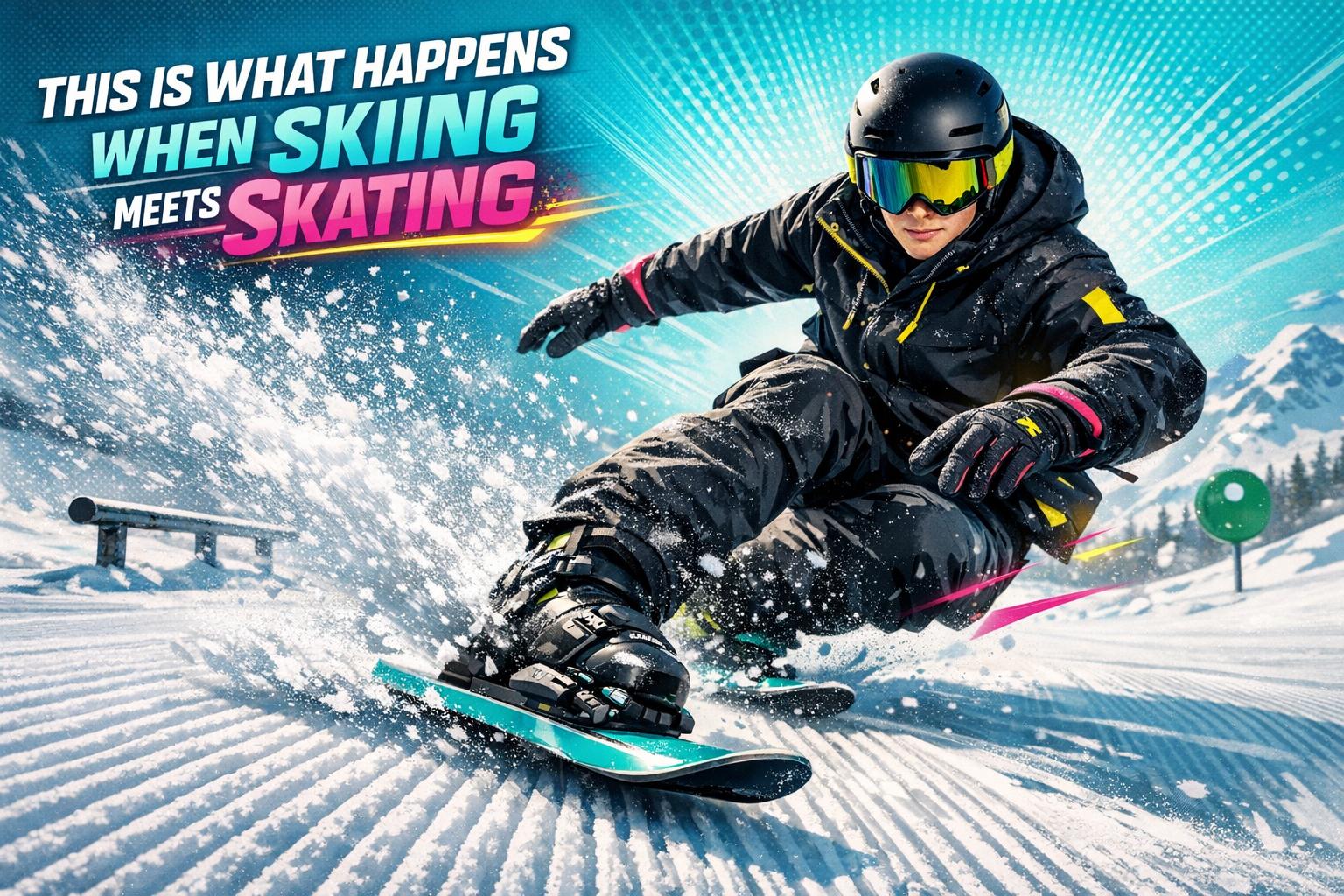
The magic of short skis lies in their design. By cutting down on length, they reduce weight and boost agility. This means less swing weight, making turns feel quicker and more effortless. Riding them feels less like traditional skiing and more like inline skating or ice skating on snow - fluid, fast, and fun.
For many U.S. riders, this skating-like experience feels second nature. If you’ve ever zipped around on hockey skates or cruised through a skate park, short skis will click with you instantly. They’re intuitive, not overly technical.
Snowfeet* has taken this concept and run with it, creating short skis designed to amplify the fun factor.
Why Snowfeet* Short Skis Stand Out
Snowfeet* doesn’t just shrink traditional skis; they reimagine them. Their lineup includes Skiskates (44 cm) and Skiblades (65 cm, 99 cm, and 120 cm), each tailored for playful, creative riding. These models feature asymmetrical high twin tips for tricks like spinning, jumping, and riding switch. Plus, they’re built with sustainable wood cores, metal edges, and graphite bases - materials tough enough for icy groomers, hard-pack snow, and park features.
The Skiskates take it a step further by ditching the need for alpine ski boots. Instead, they work with regular winter boots, making them a grab-and-go option for those who want to skip the full gear setup.
"These short mini skis are the greatest fun you can possibly have on a mountain as a skier, plus they're readily accessible for all skill levels!" - Snowfeet*
Short Skis vs. Long Skis and Snowboards
Here’s how Snowfeet* short skis compare to traditional skis and snowboards for everyday mountain fun:
| Aspect | Snowfeet* Short Skis | Long Skis | Snowboards |
|---|---|---|---|
| Typical Length | 44–120 cm | 160–185 cm | 140–165 cm |
| Learning Curve | Very short (~5 minutes) | Long; requires technique | Moderate; sideways stance |
| Maneuverability | Very high; tight turns | Lower; better at high speed | Good carving; less nimble in flats |
| Tricks & Park | Excellent; twin tips, low swing weight | Requires advanced skill | Strong in park; less nimble off-feature |
| Portability | Easy to carry; fits in smaller bags | Needs roof racks or oversized bags | Bulky; requires large bags |
| Stability at Speed | Best at moderate speeds | High at fast speeds | High when edged properly |
While long skis and snowboards excel in specific areas like deep powder or high-speed carving, Snowfeet* short skis dominate when it comes to playful, creative riding on groomers, terrain parks, and side hits. They bring a fresh energy to skiing, prioritizing agility and fun over pure speed.
sbb-itb-17ade95
Key Benefits of Snowfeet* Short Skis
Snowfeet* short skis tackle the challenges of traditional long skis by offering a fun, portable, and highly responsive alternative. They’re not just about performance - they bring a whole new level of excitement to hitting the slopes.
Easier Turns and Better Control
Short skis are all about quick reactions. Snowfeet* models, ranging from 17 inches (44 cm) to 47 inches (120 cm), are designed for tight turns and effortless maneuvering. This makes them ideal for navigating crowded slopes at resorts like Park City or Killington.
Their agility is a game-changer. You can weave through slower skiers, dodge moguls, or glide through narrow tree lines with ease. For beginners, this means fewer tangled skis and a smoother learning curve. And for more experienced riders? It’s the perfect setup for trying out creative tricks and jumps.
Perfect for Tricks, Jumps, and Terrain Parks
If you’re into freestyle, these short skis are a dream. Their lightweight design makes spins and jumps feel easier, whether you’re just starting out or already experienced. Plus, the twin-tip design allows for riding switch, buttering off rollers, and pulling off spins with minimal effort.
Snowfeet* short skis perform just as well on natural features as they do in terrain parks. They’re built tough, with steel edges and graphite bases, so they can handle icy park features and hard-packed slopes without breaking a sweat.
"In my opinion, Skiskates is the best product for slopes we developed so far. I love how easy they are to ski and skate and how many different kinds of tricks I can perform without much effort." - Zbyněk, Snowfeet* Founder
Lightweight and Travel-Friendly
Unlike traditional skis, which can be a hassle to carry and transport, Snowfeet* short skis are compact and easy to handle. The smallest model, Skiskates (44 cm), fits in a standard backpack, while the longer Skiblades are compact enough to avoid oversize baggage fees on U.S. airlines.
Their lightweight design also makes them a breeze to carry from the parking lot to the lift. One happy customer summed it up perfectly:
"A lot easier to haul around the hills & on vacation than traditional skis!" - heyjerz, Verified Reviewer
This portability makes them an excellent choice for quick trips, spontaneous night skiing, or as a second set of skis for days when you just want to hit the park or cruise through some quick laps.
Which Snowfeet* Model Is Right for You
If you're considering Snowfeet* to elevate your mountain adventures, picking the right model is key. Your choice will depend on your riding style, where you like to explore, and how much stability you prefer. Let’s break it down:
For Beginners and Casual Riders
If you're just starting out or enjoy an occasional trip to the slopes, check out the 65 cm Skiblades or the 120 cm Short Skis. The Skiblades are budget-friendly and great for quick, easy control. They’re forgiving, making them ideal for smooth, confident turns on green and blue groomed runs. The Short Skis ($775) offer a more traditional ski feel and are perfect for those transitioning from standard skis. Both options are more maneuverable than traditional skis, which makes them a fantastic pick for casual riders.
For Freestyle and Park Riders
Freestyle fans and park riders will love the 44 cm Skiskates ($775). Their compact size makes tricks like spins, 180s, and quick direction changes feel effortless. Plus, they eliminate the bulk and swing weight that can make traditional skis or snowboards harder to manage in the park.
"Super fun for riding backwards, spinning, jumping and all kinds of tricks you can do on the slopes and in snow parks." - Snowfeet*
If you want a little extra carving ability between park features, the 65 cm Skiblades ($635) are a solid choice. For park riders, going with snowboard-style bindings can make tricks easier and improve mobility when you're moving between runs.
For All-Mountain Riding
For those who like to explore the whole mountain, the 99 cm Snowfeet POWDER ($675) is a great option for navigating tight terrain, like trees or mixed conditions. If you prefer a more stable ride that feels closer to traditional skiing, the 120 cm Short Skis are the way to go. Both models ditch the bulk of longer skis, giving you better control whether you're weaving through trees, hitting side features, or cruising on groomed trails.
Here’s a handy table to summarize the options:
| Model | Length | Best For | Starting Price |
|---|---|---|---|
| Skiskates | 44 cm (17 in) | Tricks, park, skating movements | $575 |
| Skiblades | 65 cm (26 in) | Beginners, freestyle, casual riding | $635 |
| Snowfeet POWDER | 99 cm (39 in) | All-mountain, trees, mixed terrain | $675 |
| Short Skis | 120 cm (47 in) | Stability, groomers, familiar ski feel | $775 |
Conclusion: Try Snowfeet* Short Skis on Your Next Trip
Sure, long skis and snowboards have their perks, but let's face it - they can be a hassle. They're tougher to maneuver in tight spots, exhausting to lug around, and can feel restrictive when you're just out to enjoy yourself. Snowfeet* short skis flip the script, making them perfect for beginners finding their groove on blue runs or experienced riders looking to play around with spins, hops, and side hits.
Ranging from 44 to 120 cm (17 to 47 in), these compact skis are a game-changer for travel. They fit easily in your car trunk or checked luggage, which is a huge bonus whether you're jetting off to Colorado or Utah or just driving to your local hill. No oversized ski bags, no extra baggage fees, and no wrestling with bulky gear in tight spaces. More time shredding, less time stressing.
Picture this: Spend your morning carving groomed runs with your usual setup, then switch to Snowfeet* in the afternoon for park laps or playful side hits. Or pack the 65 cm Skiblades for a spring weekend at your local hill, where you'll glide seamlessly between terrains and have fun with creative maneuvers. Even smaller mountains feel like an adventure playground when you're not stuck in one riding style.
"These ski blades are a blast to use. Super easy to control, quick to turn, and way more forgiving than traditional skis. I felt comfortable on them within just a few runs." - Brad Tolin, Customer
Once you experience the agility and hassle-free portability of Snowfeet*, you'll see why they're the ultimate choice for mountain fun. Before your next trip, check out the Snowfeet* lineup to find the perfect match for your riding style. The slopes are calling - Snowfeet* lets you explore them with ease, creativity, and a whole new level of freedom. Who said skiing had to be complicated?
FAQs
Are short skis allowed at most U.S. ski resorts?
Yes, short skis are absolutely permitted at U.S. ski resorts. Their smaller size and lightweight build make them ideal for weaving through crowded slopes, narrow trails, or tackling terrain parks. Unlike traditional skis from brands like Rossignol or K2, which can sometimes feel unwieldy, Snowfeet* gear is all about agility and convenience. Plus, you can toss them in a backpack - no need for bulky ski racks or complicated storage options.
What boots and bindings do Snowfeet* Skiskates and Skiblades use?
Snowfeet* Skiskates and Skiblades feature adjustable, tool-free bindings that are compatible with most winter or snowboard boots. This setup gives you more flexibility compared to traditional ski gear. Plus, these skates can also work with ski or snowboard boot bindings. Snowboard boots provide extra ankle movement, making them great for tricks, while ski boots give you better control for carving. The best part? You don’t need to invest in pricey, specialized boots - just use the ones you already have!
How do short skis handle ice, moguls, and powder compared to long skis?
Short skis bring a unique experience to various types of terrain, thanks to their compact size. On icy slopes, they shine with agility and quick responsiveness, making tight turns and playful tricks a breeze. That said, they can be a bit trickier to control at higher speeds, demanding a bit more skill from the skier.
In moguls, their nimbleness makes them perfect for navigating tight, twisty lines. You’ll find them easy to maneuver, which is a huge plus in bumpy conditions. But when it comes to deep powder, short skis can struggle. Their smaller surface area means they’re more likely to sink instead of floating effortlessly. For soft, fluffy snow, longer skis offer better stability and keep you gliding on top.











Laat een reactie achter
Deze site wordt beschermd door hCaptcha en het privacybeleid en de servicevoorwaarden van hCaptcha zijn van toepassing.