







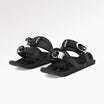












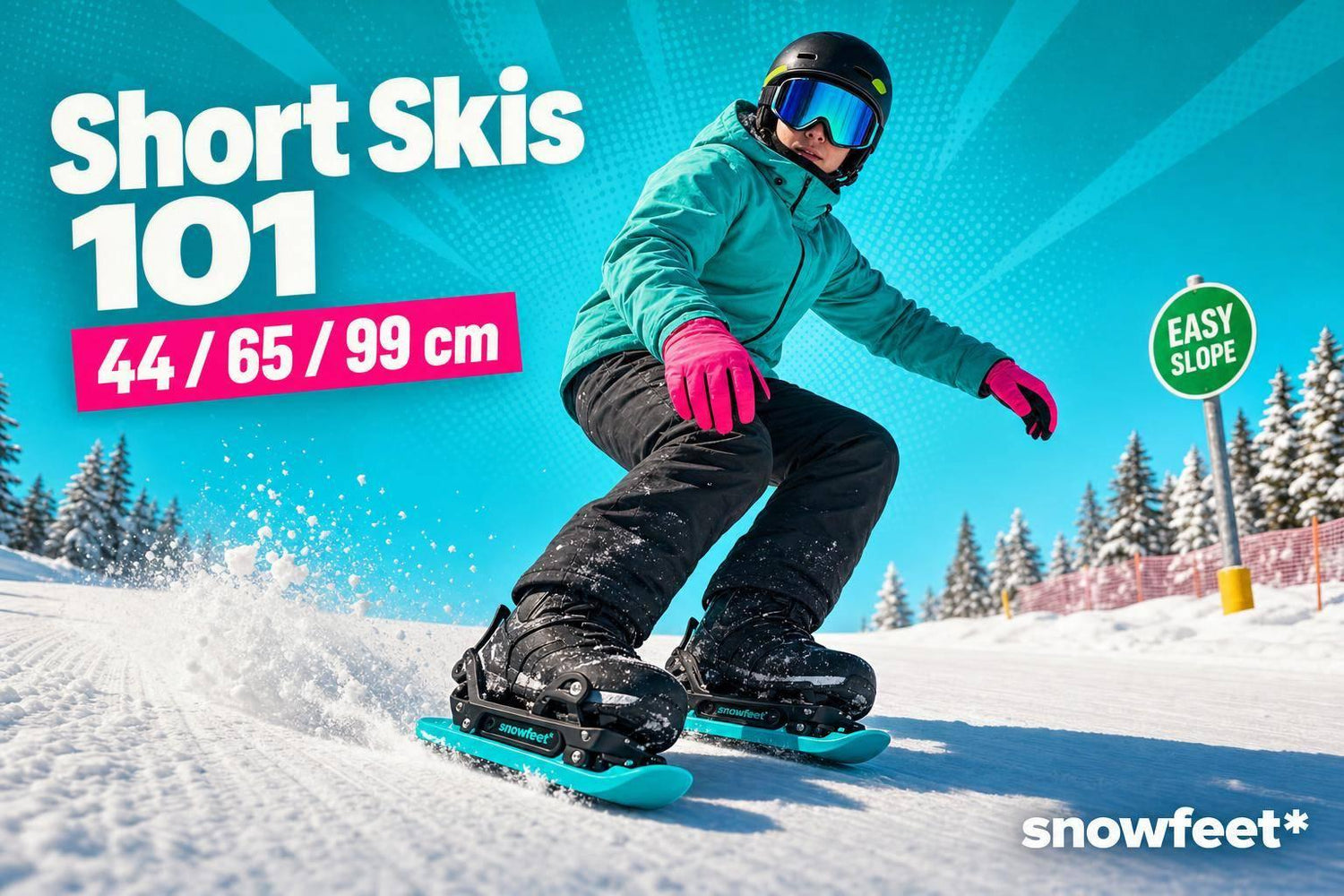
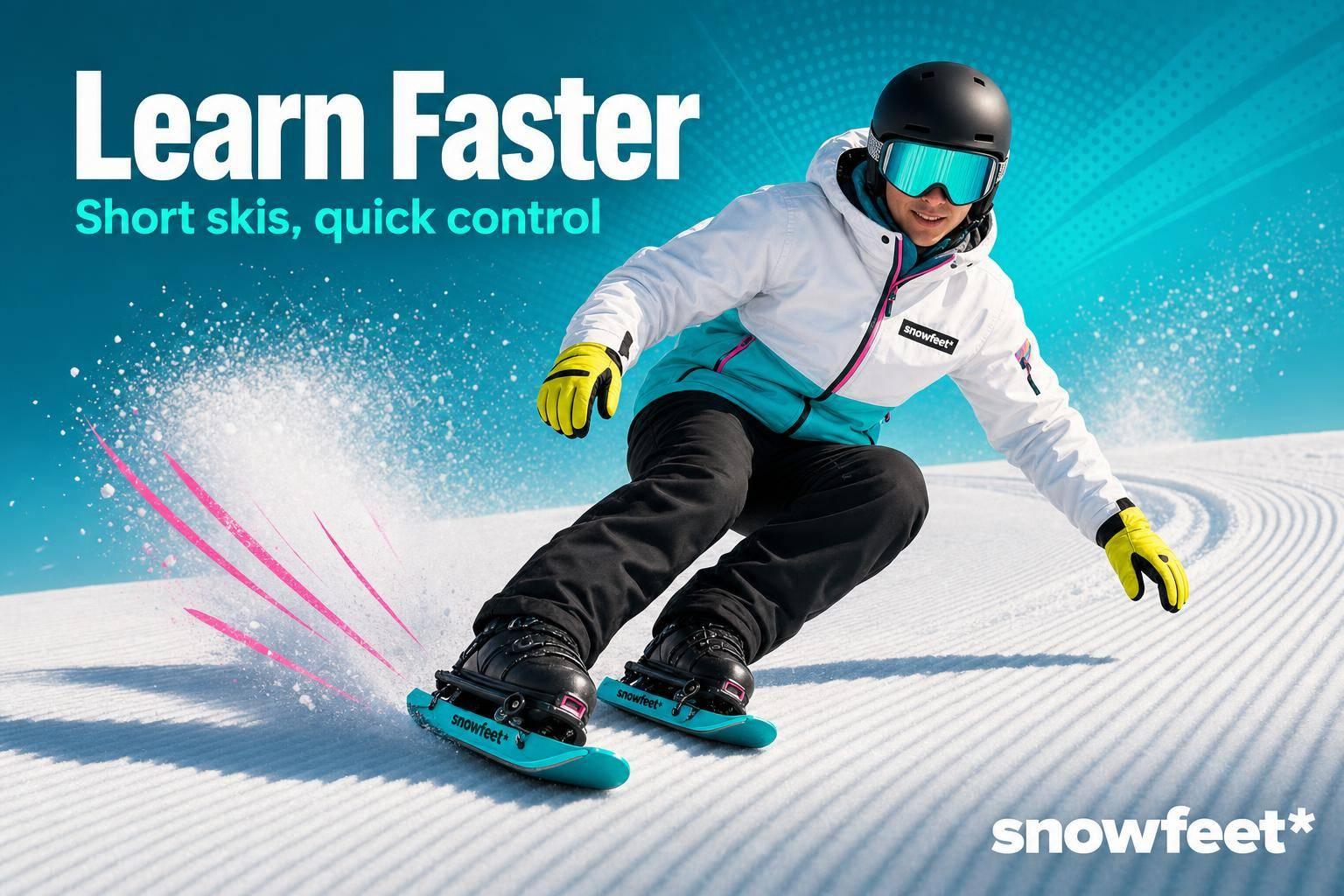
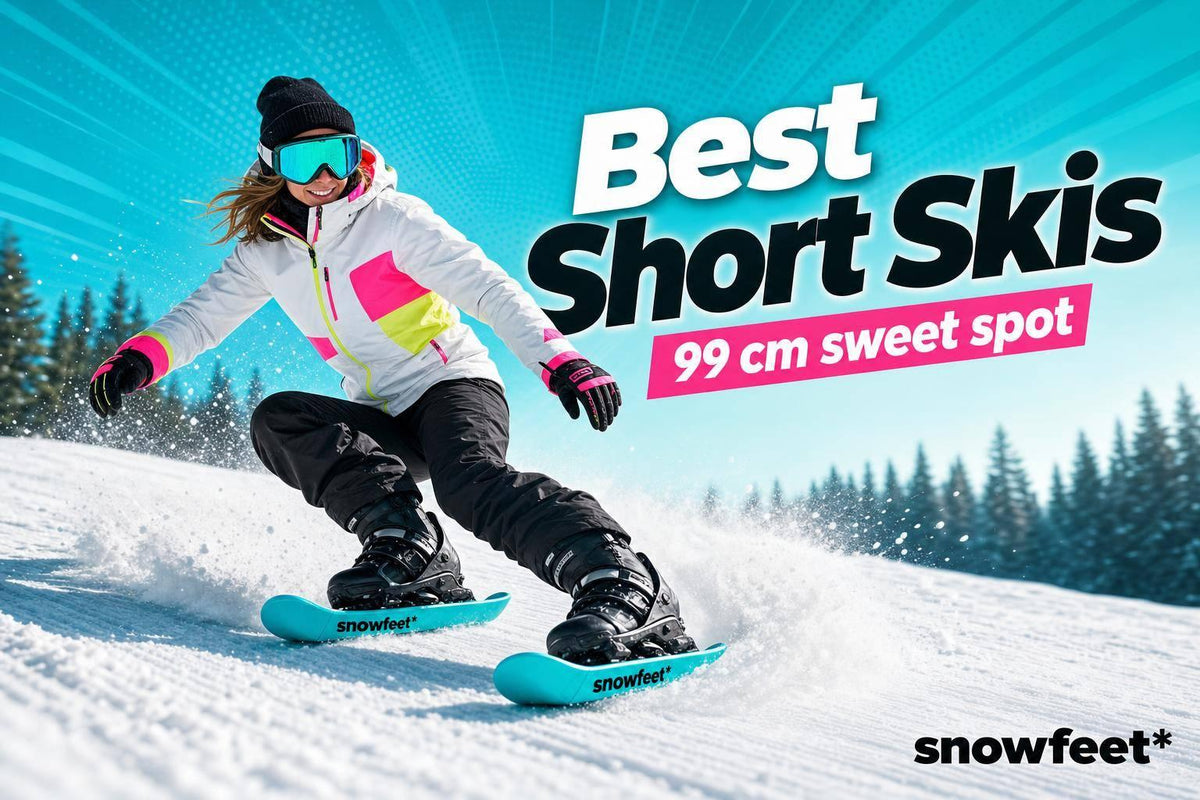
If you're new to skiing, short skis can feel less scary and easier to control than full-size skis. For most beginners, the best pick is simple: 65 cm for most people, 99 cm if you want more stability, and 44 cm only if you already feel at home on skates or blades.
Here’s the short version:
- Short skis turn fast and feel lighter on your feet
- Longer skis feel steadier once speed picks up
- 65 cm is the best starting point for many first-time buyers
- 99 cm fits heavier riders, cautious beginners, and snowboarders trying skis
- 44 cm works best on mellow slopes and for people with solid balance
- Boot setup matters: ski boots, snowboard boots, and winter shoes do not swap freely
- Short skis are best on groomed green runs and easy blues, not deep powder or steep black runs
If I were helping a friend in the shop, I’d put it like this: short skis make learning feel less like wrestling with yardsticks on ice. That’s the upside. The downside? They get less calm when you ski fast or hit rough snow.
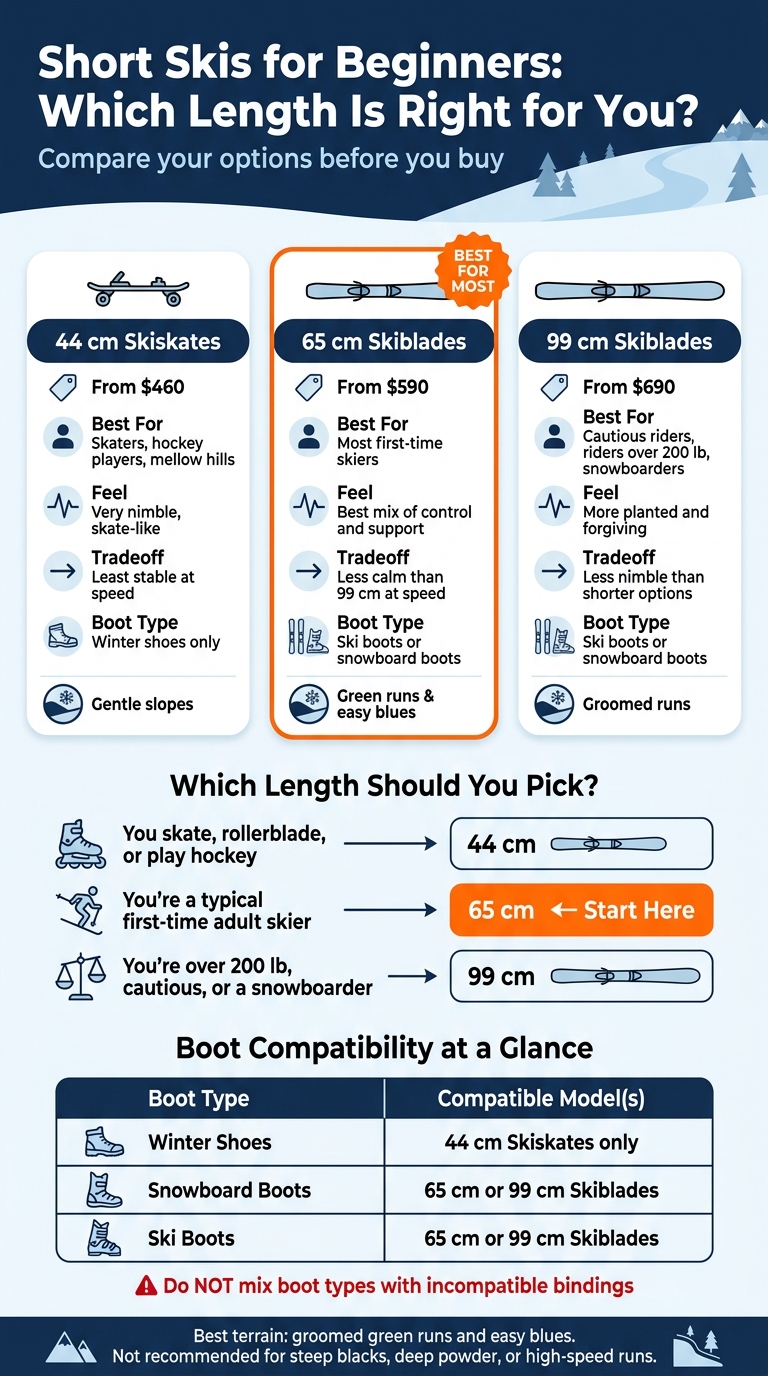
Short Skis for Beginners: Which Length Is Right for You?
Snowboarder tries Snowfeet* | Which Snowfeet* Short Ski is the Best? | Snowblades 44, 65, 99 Review
Quick Comparison
| Option | Best For | Feel on Snow | Main Tradeoff | Price |
|---|---|---|---|---|
| 44 cm Skiskates | Skaters, hockey players, mellow hills | Very nimble, skate-like | Least steady at speed | From $460 |
| 65 cm Skiblades | Most first-time skiers | Best mix of control and support | Less calm than 99 cm at speed | From $590 |
| 99 cm Skiblades | Cautious riders, riders over 200 lb, snowboarders | More planted and forgiving | Less nimble than shorter options | From $690 |
| 150–160 cm skis | People who want the standard ski path | Better at speed and mixed snow | Harder for many beginners at first | Varies |
A few numbers help here too: adult beginner skis often run around 150–160 cm (59–63 in), while these short options range from 44 cm to 99 cm (17–39 in). That’s a huge drop in length, and yes, you’ll feel it on your first turn.
My bottom line: if you ski a few weekends a year on groomed resort runs, short skis can be a smart first buy. Just match the length to your comfort level, match the binding to your boots, and don’t expect tiny skis to love high speed, deep powder, or wild terrain. That’s where the article below helps you sort the details.
Helpful video if you want to see short skis in action:
Step 1: Decide If Short Skis Match Your Needs
Before you open a single product page, take a minute and be honest about how you’ll actually ski. That one step can save you a pile of wasted cash and a lot of on-hill frustration.
When Short Skis Are a Good Fit for First-Time Buyers
Short skis make a lot of sense for beginners who want easy speed control. If you’ll ski mostly at small or mid-size resorts, stick to groomed green runs and mellow blue trails, or lap your local hill, short skis are a natural fit.
They also work well if you want low commitment. Maybe you ski a few weekends each season. Maybe it’s a quick after-work lap. Maybe it’s just a fun day out with friends. That’s the kind of use short skis handle well.
They’re easy to carry, easy to stash, and easy to bring along. Many models can work with standard winter boots or snowboard boots, based on the binding setup. That makes them handy for casual use. Toss them in the trunk and go - no giant roof box, no gear puzzle, no headache.
If you’ve played ice hockey, gone ice skating, or rollerbladed, short skis may feel more natural than you’d expect. The balance and edging can feel familiar, so skaters and snowboarders often get the hang of them fast.
If that sounds like your plan, the next step is picking between 44 cm, 65 cm, or 99 cm.
Where Long Skis Still Have an Edge
Long skis (150+ cm) make more sense in a few cases. If you already know you want to ski fast, charge steep runs, or follow a standard ski-school path at a big Western or Rocky Mountain resort, longer skis give you better grip and more stability in rough or mixed snow.
For most casual beginners, though, that tradeoff matters less than simple handling and easy turns.
You’ll see that tradeoff more clearly when you compare ski length, boot setup, and the terrain you plan to ride.
Short Skis vs. Long Skis for Beginners: Side-by-Side
| Factor | Snowfeet* Short Skis (44–99 cm) | Long Skis (150+ cm) |
|---|---|---|
| Beginner control and learning curve | Fast to feel in control; easy to steer and stop early on | Good once learned, but more effort up front; better for long-term standard progression |
| Turning ease | Very quick; great for tight areas and crowded slopes | Slower to pivot; better for long carved turns |
| Stability at speed | Less stable at higher speeds; best at moderate pace | More stable as speed increases |
| Portability | Light and compact; easy to carry and travel with | Bulkier and heavier; awkward off the snow |
| Storage | Fits in a car trunk or small apartment | Requires more storage space and longer transport options |
sbb-itb-17ade95
Step 2: Choose the Right Length and Boot Setup
How 44 cm, 65 cm, and 99 cm Feel on Snow
The Snowfeet* Skiskates 44 cm feel the closest to skating. Your feet stay close together, and turns happen fast. They’re made for easy runs, mellow slopes, and tight spots near the base area. On the flip side, they feel the quickest and the least steady at speed, so they’re best for mellow terrain and riders with solid balance. Once you’ve picked the length, the next step is simple: match the binding to the boots you already own.
The Snowfeet* Skiblades 65 cm give you a bit more length underfoot, and that changes the feel in a good way. You get more front-to-back support and edge hold that feels easier to trust. For most beginners, this length hits the sweet spot between control and stability without the bulk of full-size skis. It’s a strong starting point for most first-timers.
The Snowfeet* Skiblades 99 cm are the steadiest of the three. They track straighter and hold better on groomed snow, which gives cautious riders more room for error while they get used to stance and speed. They’re also a good fit for snowboarders who want a steadier way to learn skiing.
How to Pick Based on Your Skill, Size, and Terrain
Here’s the simple rule: shorter means more nimble; longer means more stable.
Or, put another way: the more cautious you are, the more length you’ll want.
If you’re a first-time adult riding at a small local hill and you already feel at home on ice skates or rollerblades, the 44 cm Skiskates can be a fun way in. If you’re an average beginner who wants to learn basic turns and stop with control on groomed green runs, the 65 cm Skiblades are the most forgiving place to start for many U.S. riders. That’s extra true on the icy, crowded evening slopes you’ll often see at Midwest and East Coast hills.
If you weigh over about 200 lb, feel more cautious, or come from a snowboard background, the 99 cm Skiblades give you more room for error while you sort out stance and speed control.
Boot Compatibility: What to Check Before You Buy
This is where a lot of first-time buyers get tripped up. And yeah, it’s easy to see why.
Snowfeet* models usually come in two practical setups:
- The shortest skiskates can work with regular winter shoes
- Skiblades come with either ski-boot or snowboard-boot bindings
Bindings are adjustable, but they’re still made for a specific boot type. Don’t mix them. Snowboard boots won’t work right in ski boot bindings, and ski boots won’t work right in snowboard boot bindings.
The rule here is pretty clean:
- Ski boots = firmer control and better power transfer
- Snowboard boots = softer comfort for casual days
- Winter shoes = only with the 44 cm Skiskates
The table below lines up common beginner profiles with the right boot choice and model.
| Rider Type | Boot Choice | Recommended Model | Starting Price (USD) |
|---|---|---|---|
| First-time adult, local hill | Winter shoes / snowboard boots | Snowfeet* Skiskates 44 cm | From $460 |
| Cautious beginner, groomed runs | Ski boots | Snowfeet* Skiblades 65 cm | From $590 |
| Heavier or very cautious rider | Ski boots | Snowfeet* Skiblades 99 cm | From $690 |
| Snowboarder trying skis | Snowboard boots | Snowfeet* Skiblades 99 cm | From $690 |
Use the included safety leashes so the skis don’t slide away after a release. Next, match that setup to the slopes you plan to ride most.
Step 3: Know Your Terrain, Learning Curve, and Stability Limits
Once you’ve got your ski length and boot setup sorted, the next step is simple: match that setup to the terrain you’ll actually ride.
Best Terrain for Beginner Short Skis
Start on groomed green runs. That’s the sweet spot.
Snowfeet* also work on mellow moguls, snow parks, and up to about 4 inches (10 cm) of fresh snow. But if you’re still learning, skip deep powder, steep expert runs, and unmarked off-piste areas. That stuff can get sketchy fast.
Here’s the simple breakdown:
- 44 cm: easiest to handle on gentle slopes
- 65 cm: best all-around pick for most beginners
- 99 cm: more stable on groomed runs
Terrain sets the outer limit. Then speed and snow texture decide how planted, or twitchy, the skis feel.
What Feels Easier and What Feels Less Stable
Short skis feel easiest at low speed and on smooth snow. As speed goes up, or the snow gets rough, stability drops.
That’s the deal with Snowfeet*: they’re light, quick to pivot, and easy to stop. For beginner terrain, that’s a big plus. They help you make short turns without fighting the skis.
On choppy, icy, or rutted snow, though, they can get knocked around more than longer skis because they have less edge in contact with the snow. They deflect more easily than full-length skis.
So, in plain English: you get more control and less leg burn at a moderate pace, but less calm when things get fast or bumpy.
How to Start Safely on Day One
On day one, keep it easy. No hero runs. No “I saw this on YouTube” stuff :)
Before your first run:
- Check your boots and bindings
- Warm up
- Wear a properly fitted helmet
Start on the gentlest green run you can find. First, stand still and shift your weight from side to side. Get a feel for how the skis react. Then move to short, slow turns on a flat section.
Keep your knees bent and your weight centered. That part matters more on short skis than many people expect. They react more to front-to-back weight shifts than longer skis, so a centered stance helps a lot.
Build speed little by little. Make your turns longer as you get more comfortable. Then, and only then, move to steeper terrain.
Also, follow the same mountain rules everyone else does:
- Yield to downhill skiers
- Look uphill before merging
- Follow posted resort signs
Short skis don’t get a special rulebook. Standard U.S. resort right-of-way rules apply here too.
Step 4: Pick the Right Snowfeet* Model and Make Your Decision
Now that you’ve seen how short skis act on snow, it’s time to match the model to where you’ll ride, how confident you feel, and what boots you plan to use.
Best Snowfeet* Models for Different Beginner Goals
Use the table below to choose the model that fits how you’ll ski in real life, not just what sounds cool on paper.
| Your Goal | Best Model | Why |
|---|---|---|
| Fast, skate-like feel on small hills | 44 cm Skiskates ($460+) | Ultra-light, fits in a backpack; best for riders with skating or hockey experience |
| Learn basic turns on green runs and stay in control | 65 cm Skiblades ($590+) | Balances easy control with enough stability for most beginners |
| Most stable short-ski option for beginners | 99 cm Skiblades ($690+) | More stable on groomed runs and easier to trust at slightly higher speed |
For most first-time buyers, 65 cm is still the safest default. It stays quick to respond without feeling too twitchy. Put simply, it’s the best all-around pick for most beginners.
If you already have solid balance from ice skating, rollerblading, or hockey, the 44 cm Skiskates make a lot of sense. They feel quick and playful. On the other hand, if you’re the kind of beginner who wants a more planted ride, go straight to 99 cm.
If you’re weighing your options, this is where Snowfeet* pulls ahead.
How Snowfeet* Compares to Long Skis and Other Short-Ski Brands
| Feature | Snowfeet* (44–99 cm) | Traditional Long Skis (150–200+ cm) | Older short-ski brands like Bigfoot, Figl, and Salomon Snowblades |
|---|---|---|---|
| Portability | Fits in a backpack or car trunk | Requires a roof rack or large ski bag | Usually needs a carry bag |
| Beginner learning curve | Very fast - turns come quickly at low speed | Steeper - requires more technique early on | Moderate |
| Boot options | Flexible by model; ski boots or snowboard boots | Ski boots only | Mostly ski boots |
| Terrain | Groomed runs, parks, moguls | All-mountain, deep powder, high-speed runs | Groomed runs, parks |
| Storage at home | Minimal space - closet or under a bed | Significant space needed | Moderate space needed |
Long skis still do better at high speed, in deep powder, and on aggressive terrain. But for casual beginners, Snowfeet* 65 cm and 99 cm are often the better day-to-day pick. You get less gear to deal with, faster progress, and no need for a roof rack. That alone is a pretty sweet deal :)
Older short-ski designs like Salomon Snowblades and Bigfoot are fun, but they’re often tied to ski-boot bindings. Snowfeet* keeps the short-ski idea going with modern, adjustable bindings.
For most casual beginners, Snowfeet* gives the best mix of control, portability, and ease of use.
Conclusion: Key Things to Check Before You Spend
Before you buy, line up the model with your terrain, confidence level, boots, and storage space.
- Terrain: 44 cm or 65 cm for local groomers; 99 cm for more stability
- Confidence: 65 cm for most beginners; 44 cm for skaters
- Boots: Match the binding type before checkout; if you plan to rent boots at a resort, choose a model made for standard alpine ski boots
- Storage: 44 cm or 65 cm for easy transport
One red flag is worth saying again: short skis are not built for steep black runs, deep powder, or high-speed charging. If that’s where you think you’ll ski in your first season, the 99 cm is the safer floor.
For most beginners in the U.S. who ski a few weekends a year on groomed terrain, the Snowfeet* 65 cm or 99 cm is a smart first buy. You skip the rental line, save space at home, and keep things simple.
FAQs
Should I rent first or buy short skis right away?
Buying your own Snowfeet short skis right away can be the simpler move. Renting often means lugging around heavy skis and dealing with ski boots that feel stiff, pricey, and kind of miserable.
With Snowfeet, you can use your own winter boots or snowboard boots. That alone makes the whole setup feel less like a chore. And because they’re light and compact, turning tends to feel more natural. For a lot of people, that means building confidence faster and skipping the rental line circus :)
Can I use short skis at any ski resort?
Yes - at most ski resorts, most of all on groomed runs and marked beginner areas.
Snowfeet products work well on resort terrain, but they’re usually the best fit for beginner zones, mellow slopes, and terrain parks where their quick, nimble feel stands out.
Their small size also makes them handy for local sledding hills or snowy trails. When you’re starting out, stick to well-groomed beginner areas so you can build confidence and muscle memory without making things harder than they need to be.
How do I know if 65 cm or 99 cm is better for me?
It comes down to one thing: agility vs. stability.
The 65 cm Snowfeet Skiblades feel shorter, lighter, and easier to swing around. That makes them a strong pick for absolute beginners, smaller riders, or anyone who wants max maneuverability on groomed runs. They’re easy to turn and feel less intimidating right out of the gate.
The 99 cm model feels more balanced. You get better stability when your speed picks up, plus more range across mixed terrain, including light powder. For most average-height adults, it’s the better blend of control and confidence.











Laat een reactie achter
Deze site wordt beschermd door hCaptcha en het privacybeleid en de servicevoorwaarden van hCaptcha zijn van toepassing.