



















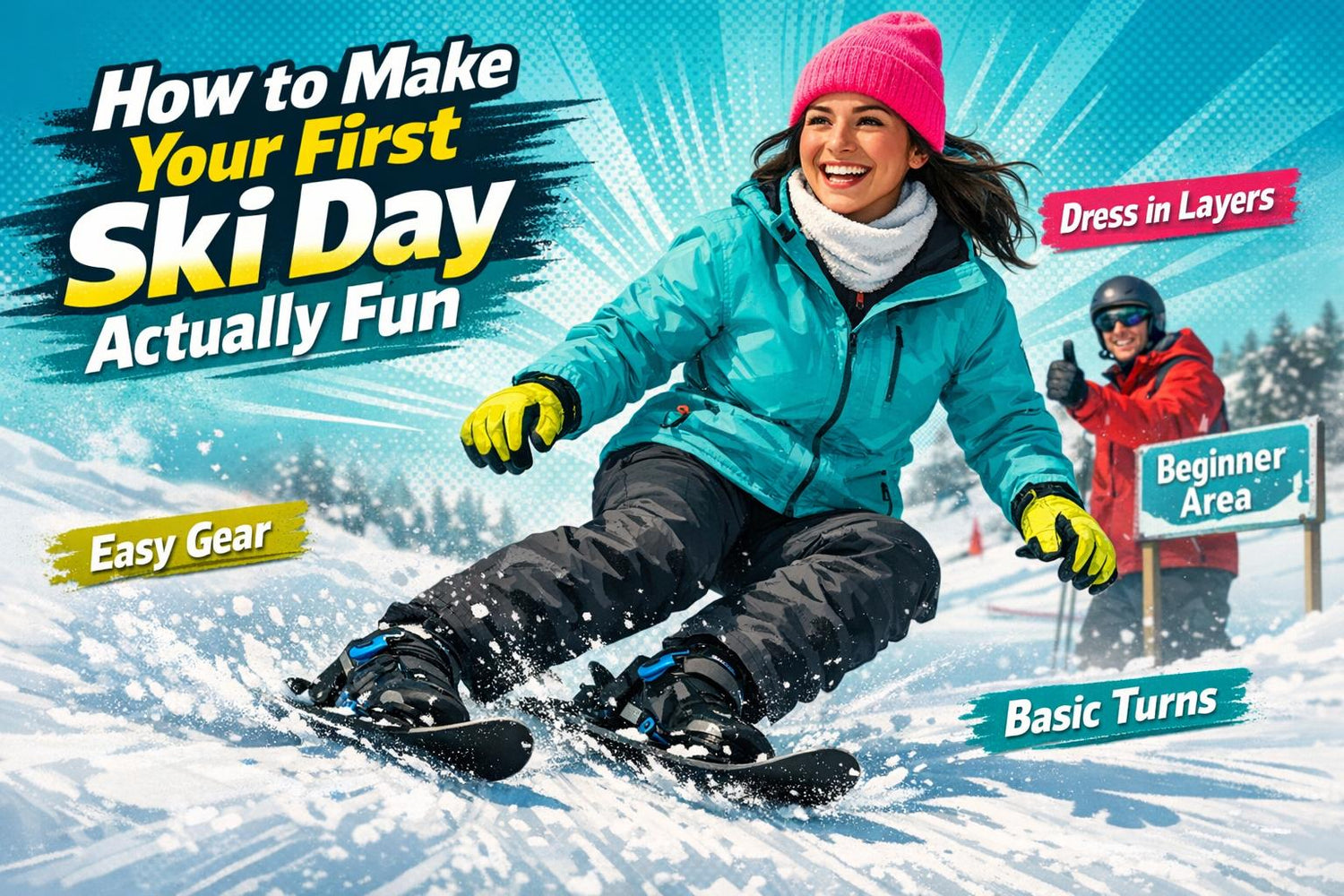
Your first ski day doesn’t have to be stressful. With the right preparation, gear, and mindset, you can have a blast - even as a beginner. Here’s a quick rundown to help you hit the slopes with confidence:
- Keep it simple: Stick to beginner-friendly green runs and take breaks often. The goal is to have fun, not conquer the mountain.
- Choose the right resort: Look for places with wide, gentle slopes, beginner areas, and easy-to-use magic carpet lifts.
- Gear up smart: Shorter, lightweight options like Snowfeet Mini Skis or Skiskates are easier to control and more portable than long skis.
- Dress warmly: Use layers - base, mid, and waterproof outer - and skip cotton. Don’t forget gloves, a helmet, and goggles.
- Take it slow: Practice basic movements on flat ground, learn simple turns, and focus on stopping safely.
Snowfeet vs Traditional Skis: Beginner Gear Comparison Guide
Getting Ready Before You Hit the Slopes
Set Realistic Expectations
Your first day on the slopes isn’t about showing off - it’s about staying safe and having fun. A great first ski day means you stayed warm, learned how to stop, managed a few easy runs, and left feeling positive. That’s it. Keep your goals simple.
Falling and feeling awkward? Totally normal. Those skiers zipping by? They’ve been at it for years. You’re just starting out, so take it slow and enjoy the process.
Make a plan to stick to green runs and the beginner area all day, no matter what. This takes a lot of the pressure off. And when picking a resort, look for one that supports beginners with the right terrain and amenities.
Pick the Right Resort and Terrain
Not all resorts are created equal, especially for beginners. What makes a resort beginner-friendly? Think wide, gentle green runs, a dedicated learning area near the base, and magic carpet lifts (those conveyor belts that save you from the stress of a chairlift). These features can make your first day so much smoother.
Check if the resort offers first-timer packages. Many U.S. ski areas bundle a beginner lift ticket, rental gear, and a group lesson for around $120–$250 per person. If you’re looking for a shorter day, half-day packages are often cheaper, ranging from $80–$160, and might be a better fit for your first outing. Before booking, pull up the trail map online to ensure there are multiple green runs accessible from the beginner lifts. You don’t want to accidentally end up on a blue run before you’re ready.
For beginners on gentle, groomed slopes, Snowfeet* can be a great gear option. Their shorter length and tighter turning radius give you more control, making those first runs far less intimidating compared to handling long, traditional skis on a bunny slope.
Plan a Relaxed Day Schedule
How you plan your day can make or break the experience. Fatigue increases the risk of injury, so it’s smart to schedule plenty of breaks.
Arrive early to settle in, grab your gear, and get comfortable without rushing. Once you’re on the slopes, alternate between one or two short runs and 10–15 minute breaks to hydrate and rest. Take a proper lunch break around midday, and set a stop time well before the lifts close. Wrapping up while you still feel good - not completely wiped out - will leave you excited to return.
Once your schedule is in place, the next step is making sure you’ve got the right gear to keep your day running smoothly.
Short Skis vs. Long Skis
The Right Gear: Comfort and Fun with Snowfeet*

Getting your gear ready before hitting the slopes is key to having a smooth and enjoyable experience. The right setup can make all the difference for beginners.
How to Dress for Warmth and Comfort
Layering is your best friend. Use a three-layer system:
- Base Layer: Go for a snug, moisture-wicking option like synthetic fabric or merino wool.
- Mid-Layer: A fleece or lightweight insulated layer will keep you warm.
- Outer Layer: Choose a waterproof jacket and pants (look for a waterproof rating of 10,000 mm or more) to shield you from wind and snow.
One rule you can’t ignore: ditch the cotton. Wet cotton can make you lose heat up to 25 times faster than dry clothing. For socks, stick to a single pair of ski-specific wool or synthetic socks - doubling up can restrict blood flow and leave your feet cold. Mittens are often warmer than gloves, especially if you’re spending time on lifts or recovering from falls.
Don’t forget the extras: a certified helmet for safety, goggles to protect against wind and UV rays, and a neck gaiter to keep exposed skin warm on those frosty days.
Once you’re bundled up, let’s look at why Snowfeet* gear is a game-changer for beginners.
Why Snowfeet* Beats Traditional Skis and Snowboards for Beginners
Traditional ski rentals often come with bulky, heavy gear that can be intimidating for first-timers. Snowfeet* gear, on the other hand, is designed to make learning easier and more fun. Their products, like the Snowfeet Mini Ski Skates (starting at $250) and Skiblades (starting at $635), are shorter, lighter, and built for maneuverability at slower speeds.
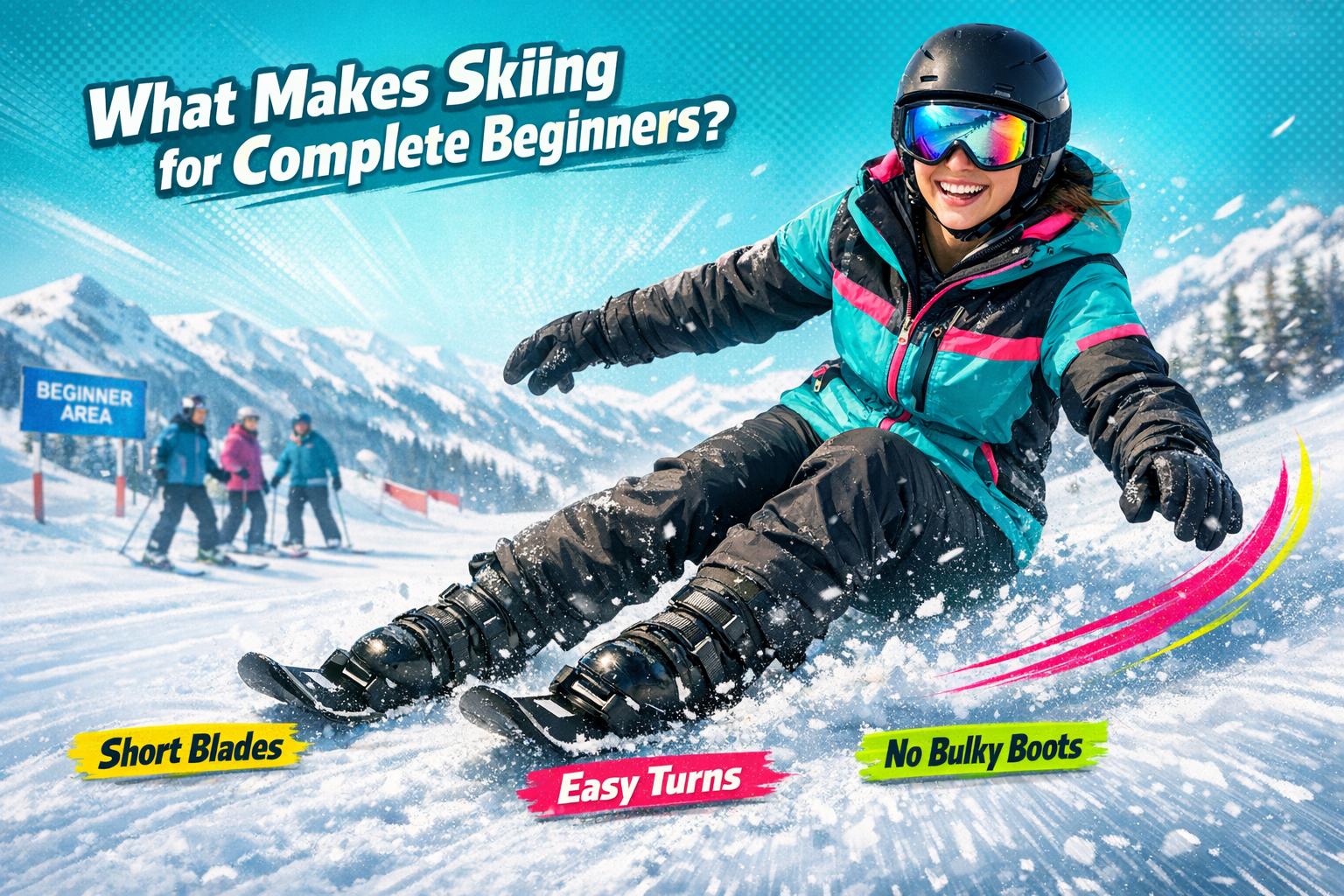
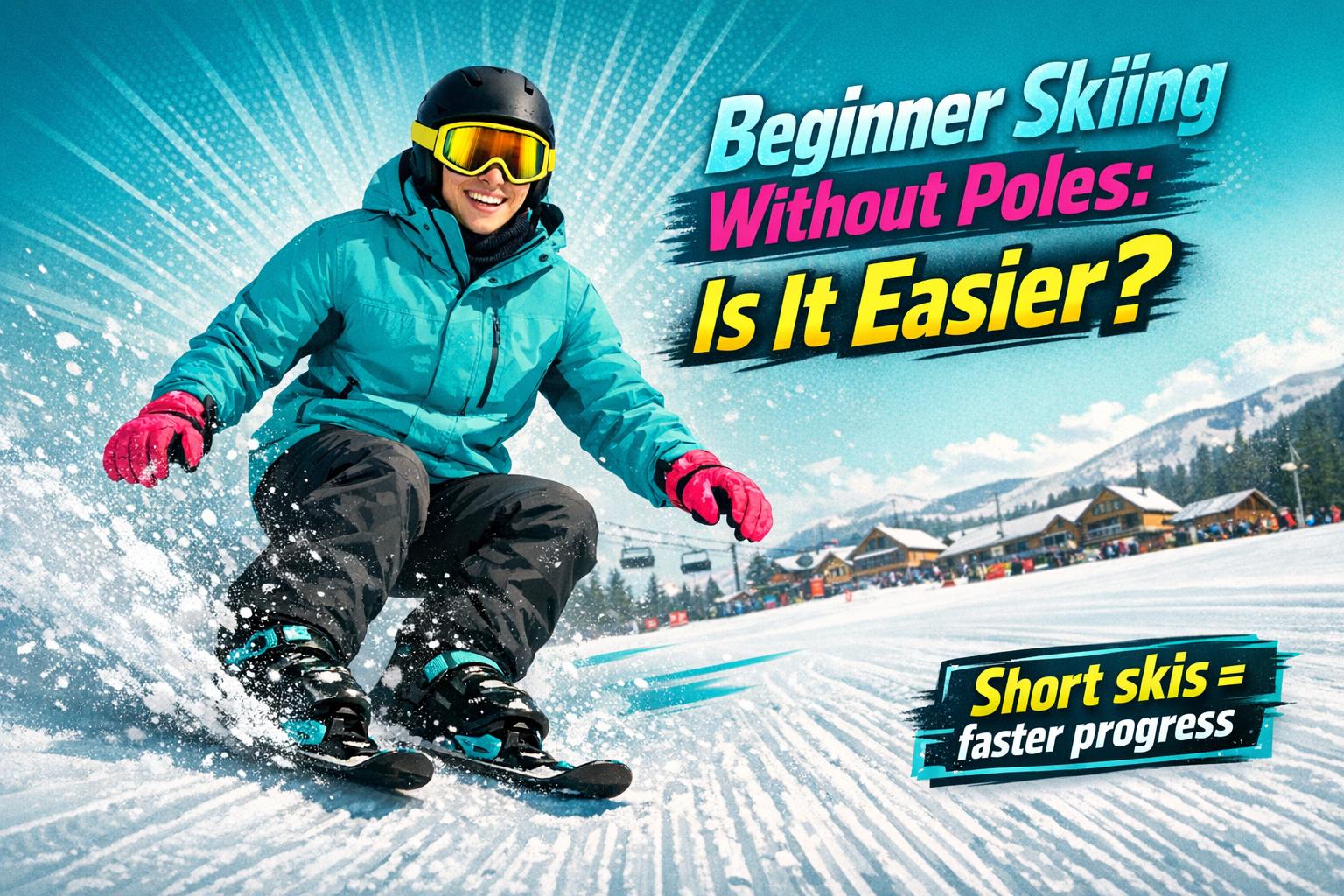
Short skis make it easier to turn and reduce common beginner mishaps like crossing ski tips or catching an edge. Plus, if you’ve ever tried inline or ice skating, the movement will feel natural and intuitive.
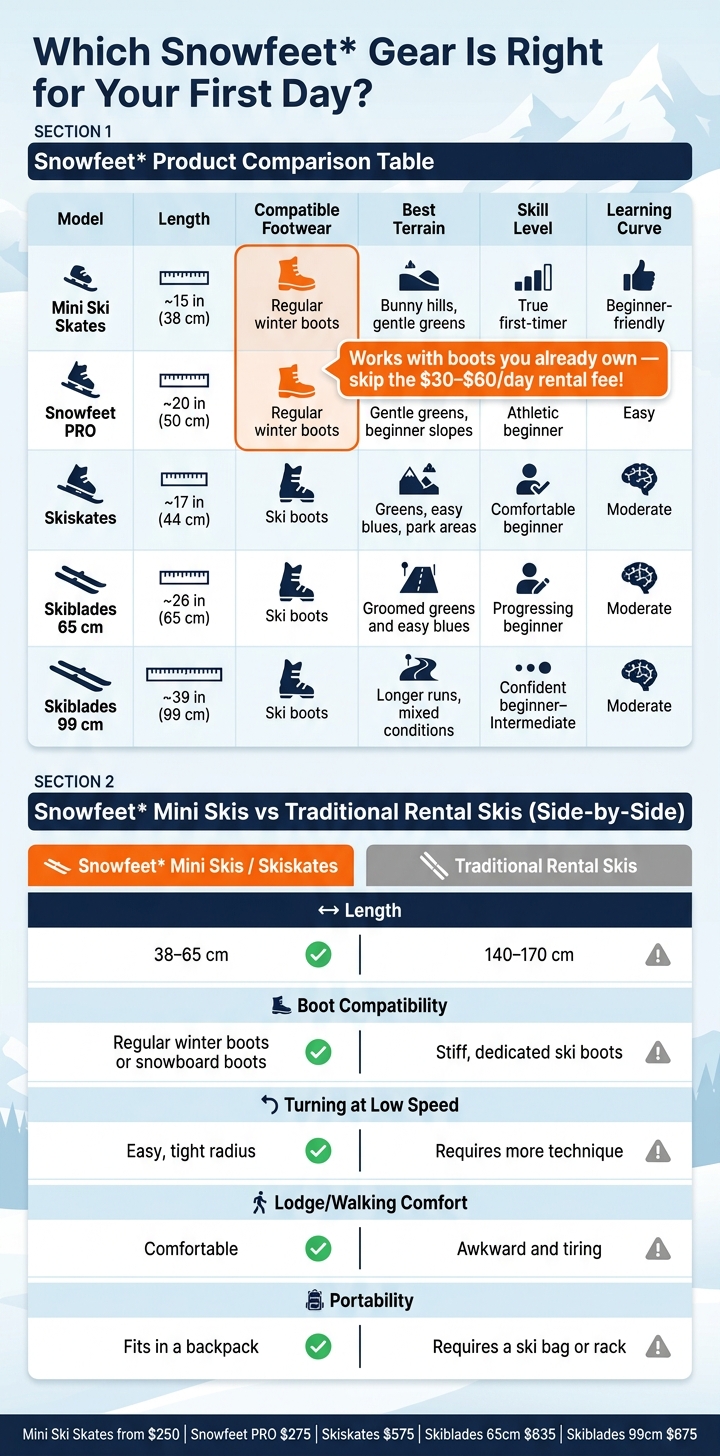
Here’s a quick side-by-side comparison:
| Feature | Snowfeet* Mini Skis / Skiskates | Traditional Rental Skis |
|---|---|---|
| Length | 38–65 cm | 140–170 cm (typical beginner) |
| Boot Compatibility | Regular winter boots or snowboard boots | Stiff, dedicated ski boots |
| Turning at Low Speed | Easy, tight radius | Requires more technique |
| Lodge/Walking Comfort | Comfortable | Awkward and tiring |
| Portability | Fits in a backpack | Requires a ski bag or rack |
One of the best perks? Many Snowfeet* models work with regular winter boots or snowboard boots, so you can skip the rental lines and avoid the discomfort of traditional ski boots. It’s a more comfortable and approachable way to enjoy your first day on the slopes.
Now, let’s make sure you’re packing everything you need to round out your ski day.
What to Pack for Your First Ski Day
In addition to your Snowfeet* gear and clothing, bring these essentials:
- A water bottle and energy-packed snacks to stay hydrated and fueled.
- Hand warmers and an extra pair of gloves or liners in case your first pair gets wet.
- SPF 30+ sunscreen and SPF lip balm to protect your skin.
- Goggles or sunglasses for eye protection.
- A zip-top bag to keep your phone safe from moisture and cold.
- Your health insurance card and the resort’s emergency number - just in case.
Packing these items ensures you’re ready for anything, so you can focus on having fun and learning the ropes.
sbb-itb-17ade95
How to Make Your First Runs Easy and Enjoyable
Start with Basic Movements on Flat Ground
Before tackling any slopes, spend a few minutes on flat snow to get familiar with your gear. Strap on your Snowfeet* and stand in an athletic position: feet hip-width apart, knees slightly bent, and hands relaxed at your sides. Start by practicing small weight shifts - rock gently from one foot to the other while keeping both feet on the ground. Then, try pushing off with one foot, like you're riding a scooter, and glide forward about 3–6 feet before stepping to a stop. Since Snowfeet* are much shorter than traditional skis, even small shifts in your balance will make them respond quickly.
Learn Simple Turns and Stops
On a gentle slope, use the "look–lean–roll" method to start turning. Look in the direction you want to go, shift your weight onto the outside foot, and roll your ankles so the edges of your Snowfeet* grip the snow. Hold this position for a moment, then return to center. Start with wide "S" turns to gradually build your control and confidence.
For stopping, avoid forcing a hard brake. Instead, turn gradually across the slope. As you angle yourself more sideways, your speed will naturally decrease until you come to a stop. On flatter terrain, you can also create a slight wedge by pointing your toes inward and keeping your heels apart, which adds friction. According to the U.S. National Ski Areas Association (NSAA), beginners who focus on controlling their speed through turning techniques often feel more confident and are more likely to return for another day of skiing.
Add Playful Elements to Your Runs
Make your early runs more enjoyable by turning practice into a game. Try the "airplane arms" drill: stretch your arms out wide as you guide smooth, sweeping turns. Sure, it might feel a little goofy, but it helps with balance and keeps your upper body aligned. Another fun drill is "touch the snow." While gliding slowly, reach down to lightly tap your knees or boots. This encourages a forward-leaning stance and helps you stay centered.
If you're skiing with friends or family, consider playing "follow the leader." Take turns leading the group with gentle zigzags or loops around markers in the snow. You can also set small goals for each run, like completing a series of smooth, even turns. These playful exercises not only make the experience more fun but also boost your skills and confidence. Once you're comfortable, it's time to explore which Snowfeet* gear will best support your first ski adventure.
Which Snowfeet* Gear Is Right for Your First Day
Choosing the right Snowfeet* gear depends on your comfort, footwear, and what you’re hoping to achieve on the slopes. Let’s break down the best options for beginners and those looking to step up their game.
Best Snowfeet* Options for First-Time Skiers
For absolute beginners, Snowfeet Mini Ski Skates ($250) are a fantastic starting point. These attach directly to your regular winter boots, making it super easy to transition from the parking lot to the slopes. They feel more like skating than traditional skiing, so turning and stopping come naturally. If you’ve got some skating experience, the Snowfeet PRO ($275) could be a better fit. They offer a snug, performance-focused design with improved edge control, perfect for active beginners who want to quickly build confidence on gentle green runs.
Good Picks for Beginners Ready to Progress
Once you’ve nailed speed control and stopping, it might be time to upgrade. Skiblades at 65 cm ($635) are a solid choice, with their longer edges providing smoother turns and greater stability at moderate speeds. They’re great for tackling longer green runs and easy blue slopes. If you’re feeling more adventurous, Skiblades at 99 cm ($675) are designed to handle a variety of conditions, from choppy snow to mild bumps, and they’re still easier to maneuver than full-length skis. For those who want something playful and agile - perfect for small jumps or quick direction changes - Skiskates ($575) hit the sweet spot. They work with ski boots, giving you better ankle support and edge precision, but still maintain the compact, nimble feel that makes short skis so approachable.
Snowfeet* Product Comparison Table
Here’s a quick comparison to help you pick the right gear for your first day on the slopes:
| Model | Length | Compatible Footwear | Best Terrain | Skill Level | Learning Curve |
|---|---|---|---|---|---|
| Mini Ski Skates | ~15 in (38 cm) | Regular winter boots | Bunny hills, gentle greens | True first-timer | Beginner-friendly |
| Snowfeet PRO | ~20 in (50 cm) | Regular winter boots | Gentle greens, beginner slopes | Athletic beginner | Easy |
| Skiskates | ~17 in (44 cm) | Ski boots | Greens, easy blues, park areas | Comfortable beginner | Moderate learning curve |
| Skiblades 65 cm | ~26 in (65 cm) | Ski boots | Groomed greens and easy blues | Progressing beginner | Moderate |
| Skiblades 99 cm | ~39 in (99 cm) | Ski boots | Longer runs, mixed conditions | Confident beginner–Intermediate | Moderate |
One thing to keep in mind: Mini Ski Skates and Snowfeet PRO work with boots you probably already own. That means you can skip renting ski boots, which typically costs $30–$60 per day at most U.S. resorts. So not only are these options beginner-friendly, they’re also a budget-friendly way to dip your toes into snow sliding for the first time.
How to End Your Ski Day on a Good Note
Stop Before You Get Tired
Knowing when to call it a day can make all the difference. If your legs are screaming for mercy, it’s time to wrap things up. Fatigue messes with your balance, turning even the easiest runs into a challenge - not the kind of memory you want to leave with. Aim to ski for about 3–4 hours total. For example, you could hit the slopes from 9:30–11:00 a.m., grab an early lunch, squeeze in a short afternoon session, and then finish around 2:30–3:00 p.m.
End with a run that feels like a win. Pick a green trail you’ve already mastered, where you’re confident and in control. Stick with the Snowfeet* gear that gave you the best ride, keep your speed nice and easy, and focus on smooth, steady turns. Once you’ve nailed that final run, call it a day and head inside feeling accomplished.
Reflect and Plan Your Next Trip
After you’ve packed up, take a few minutes to think about how your day went. Ask yourself three quick questions: What felt easier by the end of the day? What was the most fun? What was tricky but something you can improve on with practice? These reflections help you stay focused on enjoying the process while building your skills.
Also, think about how your Snowfeet* gear performed. Did the Mini Ski Skates, Skiblades, or Skiskates feel the most comfortable? Which setup was easiest to handle in lift lines or carry around? Your answers will guide your next trip, whether that means sticking to what worked, trying new goals, or heading back to a favorite resort. With Snowfeet*, every trip gets a little easier and a lot more fun.
FAQs
Can I use Snowfeet* at most U.S. ski resorts?
Yes, you can use Snowfeet products at plenty of ski resorts across the U.S. They’re perfect for groomed slopes and trails, making them a great choice for resort skiing. Thanks to their compact design and beginner-friendly feel, they’re less intimidating than traditional skis. They work best on green and blue runs with smooth terrain but aren’t the right pick for tackling steep black diamond runs or deep powder. What’s also great? They’re super portable and work with regular winter boots, adding a whole lot of convenience to your ski day.
Do I need lessons if I’m using Snowfeet*?
Snowfeet products are built to be easy to use, even for beginners. Most people can start gliding within just minutes or a few hours. While taking lessons isn’t a must, they can give you a confidence boost if you’re feeling unsure. Unlike traditional skis, Snowfeet gear works with movements you already know - like walking or skating - so you skip many of the tricky techniques. That also means you can avoid the time and expense of the multiple lessons that traditional skiing often requires.
What boots should I wear with Snowfeet* on my first day?
One of the best things about Snowfeet* is that you don’t need to invest in bulky or pricey ski boots. You can pair them with sturdy winter boots, snowboard boots, or even regular ski boots. If you’re just starting out, snowboard boots are a great choice - they provide ankle support, keep your feet warm, and offer good flexibility. For lighter use, like cruising around backyard hills or easy trails, waterproof winter boots can do the job. Just make sure the soles are thick enough to fit securely in the bindings.











Laat een reactie achter
Deze site wordt beschermd door hCaptcha en het privacybeleid en de servicevoorwaarden van hCaptcha zijn van toepassing.