



















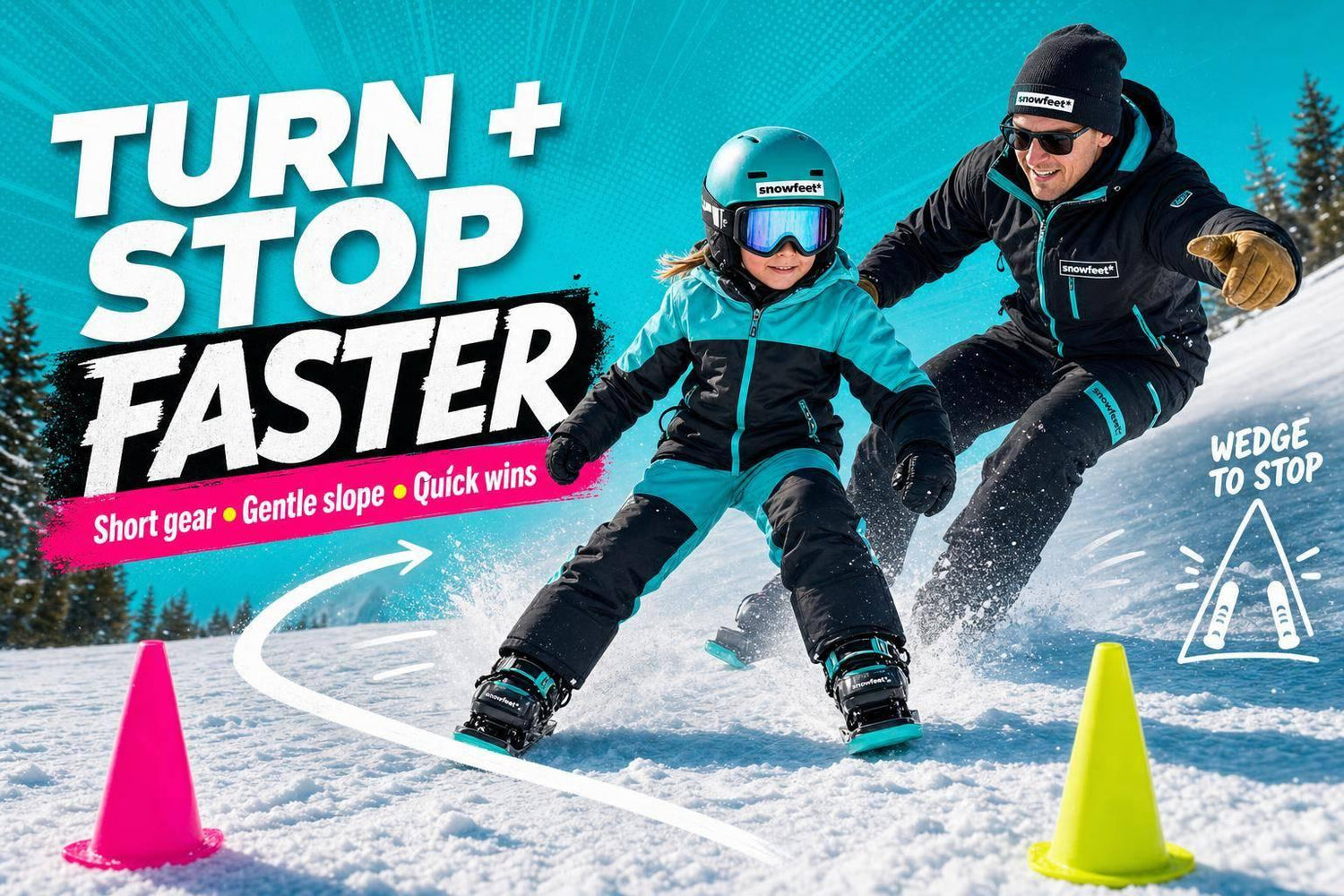
If a kid can turn and stop, the day gets safer, calmer, and way more fun. From what I’ve seen, the fastest path is simple: use short, light gear, stick to gentle slopes, and practice short runs with lots of repeats.
Here’s the short version:
- Teach control first. Start with balance, a wedge, and easy direction changes.
- Keep gear short and light. It’s easier for kids to pivot and stop when they’re not fighting long skis.
- Use easy terrain. A mellow slope with a flat runout helps kids relax and learn.
- Watch posture. If they lean back, turning and stopping get much harder.
- Keep sessions short. Many kids learn more in 20 minutes than in a long, cold hour.
- Build up in order. Go from flat-ground balance work to glides, wedge turns, wedge stops, side slips, then hockey stops.
A few product picks in the article stand out for beginner use:
- Snowfeet MINI KIDS for the smallest kids
- Snowfeet Skiskates, 17.3 in (44 cm) from $575
- Snowfeet Skiblades, 25.6 in (65 cm) from $635
The big idea? Shorter gear can make first turns and stops feel less hard, especially at low speed where most kids learn. And that matters, because kids don’t need more speed at first. They need more control. Nobody wants a tiny missile in a puffy jacket :)
Are Short Skis Better for Beginners?
Quick comparison
| Gear | Length | Boot setup | Best use | Feel at slow speed |
|---|---|---|---|---|
| Snowfeet MINI KIDS | Very short | Winter boots | Small beginners | Easy to turn and stop |
| Snowfeet Skiskates | 17.3 in | Winter or snowboard boots | Fast response | Strong stop control |
| Snowfeet Skiblades | 25.6 in | Ski or snowboard boots | More stable feel | Easy turn start |
| Standard junior skis | 27.6–47.2 in+ | Ski boots | More stable at higher speed | Harder for first reps |
A few simple cues do a lot of the work:
- Hands forward
- Eyes where they want to go
- Shins to boot tongues
- Short runs, then stop and reset
If you want a simple plan, I’d do this:
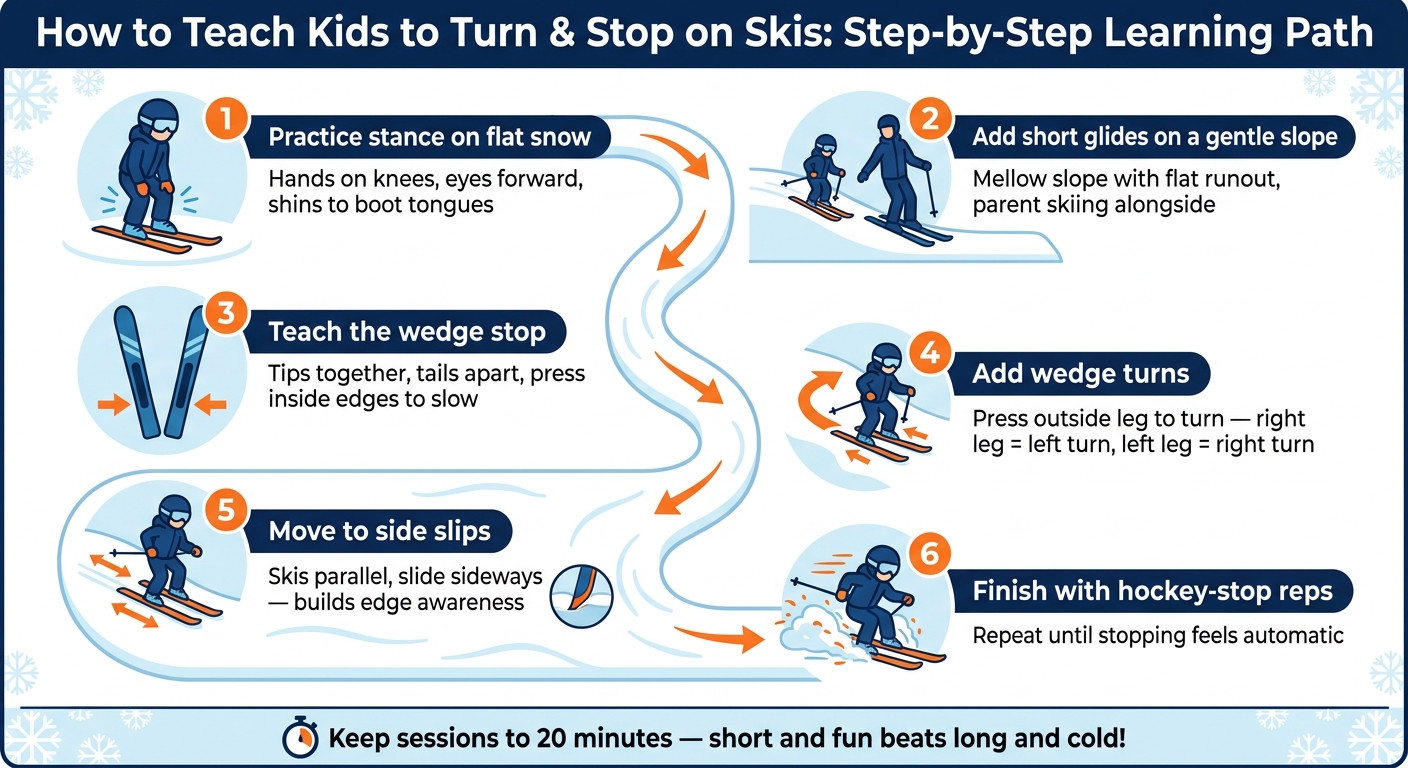
- Practice stance on flat snow
- Add short glides
- Teach the wedge stop
- Add wedge turns
- Move to side slips
- Finish with hockey-stop reps
For a visual demo, these can help:
- YouTube: kids wedge turn lesson
- YouTube: kids wedge stop ski lesson
- YouTube: side slipping for ski beginners
So, if I had to sum it up in one line: make the setup easy, keep the slope easy, and let the kid stack small wins. That’s usually how turning and stopping click.
Choose Gear That Makes Turning and Stopping Easier
Short, light gear helps kids turn sooner and stop with less work. That matters a lot when they’re just starting out. With the right setup, they can focus on balance and movement instead of wrestling with gear that feels too big or too stiff.
Best Snowfeet* options for young beginners

Snowfeet MINI KIDS - Best for the smallest beginners. The ultra-short length makes turning and stopping easier to control on gentle slopes.
Snowfeet Skiskates (44 cm / 17.3 in), starting from $575 - Best for kids who already skate or want gear that turns fast. They give quick turn response and strong stopping control at low speed.
Snowfeet Skiblades (65 cm / 25.6 in), starting from $635 - Best for kids who want more stability but still want easy control. The extra surface area helps them feel steadier underfoot while keeping turns easy to start.
How to pick the right size, boots, and setup
One big issue with standard junior ski setups is boot stiffness. Stiff boots can push kids into a backseat stance, which makes turning and stopping harder. If a child can’t flex forward, they lean back, lose control, and have a tough time starting turns.
Here’s a simple test: have your child stand in their boots and crouch like they’re about to jump. If they can’t get into that athletic position with ease, the setup is making things harder than they need to be.
Snowfeet Skiskates and MINI KIDS work with regular winter boots. Skiblades can pair with ski or snowboard boots. That keeps things simpler and helps avoid the stiffness problem you often get with standard ski boots.
Shorter gear also keeps the ski more under the child, which makes steering feel more natural. Less tip out front. Less fuss. More “okay, I’ve got this.”
Snowfeet* vs. standard junior skis: side-by-side comparison
| Product | Length | Boot Type | Turning | Stopping | Stability | Confidence |
|---|---|---|---|---|---|---|
| Snowfeet* MINI KIDS | Very short | Winter boots | Best for easy turning | Best for easy stopping | Good at slow speed | Highest |
| Snowfeet* Skiskates | 44 cm (17.3 in) | Winter/snowboard | Fast turn response | Strong low-speed control | Good at slow speed | High |
| Snowfeet* Skiblades | 65 cm (25.6 in) | Ski/snowboard | Easy to initiate | Reliable at low speed | High | High |
| Standard junior skis | 70–120 cm+ | Ski boots | Less friendly at slow learning speed | Less friendly at slow learning speed | High at speed | Moderate |
Standard junior skis do offer stability, but that tends to show up more at higher speeds, not where most beginners spend their time. For slow-speed practice, Snowfeet lines up better with how kids actually learn.
Once the gear feels easy, you can move on to simple balance drills and first glides.
sbb-itb-17ade95
Build Balance and Confidence Before Real Turns
Balance comes first. It makes turning and stopping much easier to learn. A good warm-up trick is to let kids wear their boots and gear indoors first. That centered stance is the same one they’ll use for wedge turns and wedge stops.
Flat-ground drills that fix stiff posture early
On flat snow, keep things simple: balance and a relaxed stance. Have your child place their hands on bent knees while gliding to help prevent lean-back posture. Also remind them to look where they want to glide. That small cue helps a lot. Kids tend to go where their eyes go.
This stance gives kids the centered position they need for wedge turns and wedge stops.
Snowfeet*’s short length helps kids stay centered and fix balance mistakes faster. Once that starts to feel normal, move to short glides on a gentle slope.
First glides on a gentle slope with simple stops
Pick a gentle slope with a clear runout. Nice and mellow wins the day here. Let them do short, controlled glides while you ski just ahead or beside them to set the pace and help control speed.
Once they feel at ease, practice slowing with a wedge stop. After a few controlled glides, they’re ready for simple turning drills.
Short sessions and games that keep kids engaged
Keep practice short instead of dragging out long sessions. Kids usually learn more in a fun 20-minute stretch than in an hour where they’re cold and over it.
End while your child is still having fun and before they get cold or tired so they want to come back for more.
Snowfeet* can help reduce fatigue, so kids can repeat more controlled runs. When glides stay relaxed, move into wedge turns and stops.
Teach Turning and Stopping Step by Step
How to Teach Kids to Turn & Stop on Skis: Step-by-Step Learning Path
Start with the wedge turn for direction and speed control
Once your child can balance and glide a bit, it’s time for wedge turns. This is where skiing starts to click :) The wedge helps kids steer and slow down at the same time.
Set up the wedge like this: ski tips together, tails apart, knees bent and relaxed. When they press more into the inside edges, they slow down. When they ease off, they pick up speed. To turn, have them press on the outside leg. Pressure on the right leg turns them left. Pressure on the left leg turns them right. Keep their hands in front at chest level.
When that starts to feel steady, add short traverses so the movement starts to feel natural instead of forced.
Simple drills to make turning more automatic
A short traverse is a nice bridge between straight gliding and actual steering. Have your child move 15 to 25 feet across a gentle slope while controlling speed by putting pressure on the lower leg. Also, have them look where they want to go. That little cue helps more than most people expect.
A few easy reps usually do the trick:
- Traverse across the slope for 15 to 25 feet
- Control speed with pressure on the lower leg
- Look toward the direction of the turn
Once wedge turns start to feel normal, you can move on to side slipping and then hockey stops.
Move from wedge stops to side slipping and hockey stops
When wedge stops feel solid, bring in side slipping. In this drill, the skis stay parallel and slide sideways down the slope. It may look simple, but it teaches edge awareness in a very direct way. That’s a big part of getting ready for parallel turns.
After that, introduce the hockey stop.
Fix the Problems That Slow Kids Down
When kids know the basics but still lock up or blow past their stops, start with the common blockers first. Most of the time, it’s not a big mystery. It’s posture, fear, or too much speed too soon.
Fear, speed, and leaning back
Keep the run short. Stay on gentle terrain. Use the cue "shins to boot tongues." That small reminder can help a lot.
Go back to short runs on an easy slope where stopping feels simple. That matters. When kids feel like they can stop, they relax. And once they relax, they move better.
Don’t hold them from behind. It makes them lean back.
Snowfeet* MINI KIDS, Skiskates 44 cm, and Skiblades 65 cm give quicker feedback, which helps kids stay centered.
If posture is the issue, fix stance first. If control is the issue, slow the slope down and make the drill simpler.
Going straight only and struggling to stop on command
If they keep pointing straight downhill and miss their stops, don’t push harder. That usually makes things worse. Reset to easier terrain and use a wider wedge. Pick a target and have them look at it.
Then repeat:
- Short side slips
- Slow hockey-stop reps
Keep going until the stop starts to feel automatic.
Snowfeet* products - especially the 44 cm Skiskates and 65 cm Skiblades - give quicker edge feedback than standard junior skis, so kids can fix stopping technique faster.
Conclusion: The fastest path to control and fun on snow
Once posture, fear, and speed control get better, turning and stopping tend to click faster. Snowfeet* MINI KIDS, Skiskates 44 cm, and Skiblades 65 cm are easier to pivot than traditional junior skis, which lowers the learning curve and helps kids get in control sooner.
FAQs
What age can kids start learning to turn and stop?
Kids can usually start learning to turn and stop at around 3½ to 4 years old. That’s the point when many have enough balance, coordination, and muscle control to pick up beginner ski skills without it feeling like total chaos :) .
At that age, they can begin working on the snowplow, or pizza slice, to slow down and stop with control. Kids who are younger than that can still have a great time in the snow and get used to wearing ski gear first.
How do I know if my child’s gear is too big or too stiff?
Watch for a few clear signs: trouble linking turns, a stiff stance, or skiing too upright with very little ankle bend.
If your child can’t flex their ankles well or keeps drifting out of the front seat, the boots may be too stiff or just too big for where they are right now.
Stiff gear can wear kids out fast and make good form harder to hold, especially if they start leaning back. If they look rigid in turns, can’t get the skis to grip and work well, or their hips stay behind their feet, the gear may be part of the problem.
When should a child move from wedge stops to hockey stops?
A child should move from wedge stops to hockey stops only after they’ve mastered wedge stops and can control their speed with ease.
The snowplow comes first for a reason. It gives kids the control and confidence they need before they try a faster, sharper stop.
Once they can stop safely and consistently on gentle slopes, they’re ready to start practicing hockey stops for a more controlled, faster way to stop.











Laat een reactie achter
Deze site wordt beschermd door hCaptcha en het privacybeleid en de servicevoorwaarden van hCaptcha zijn van toepassing.