



















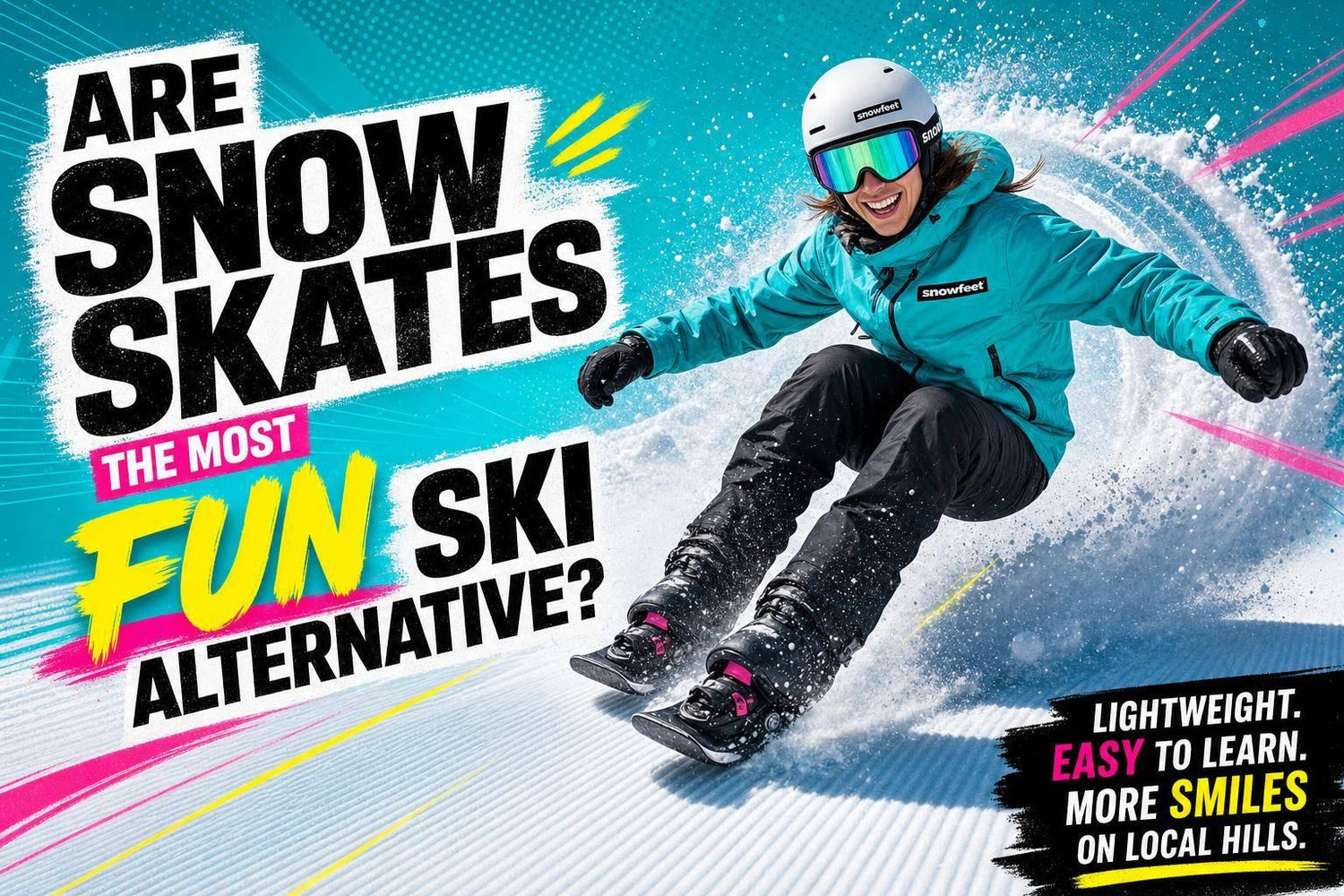
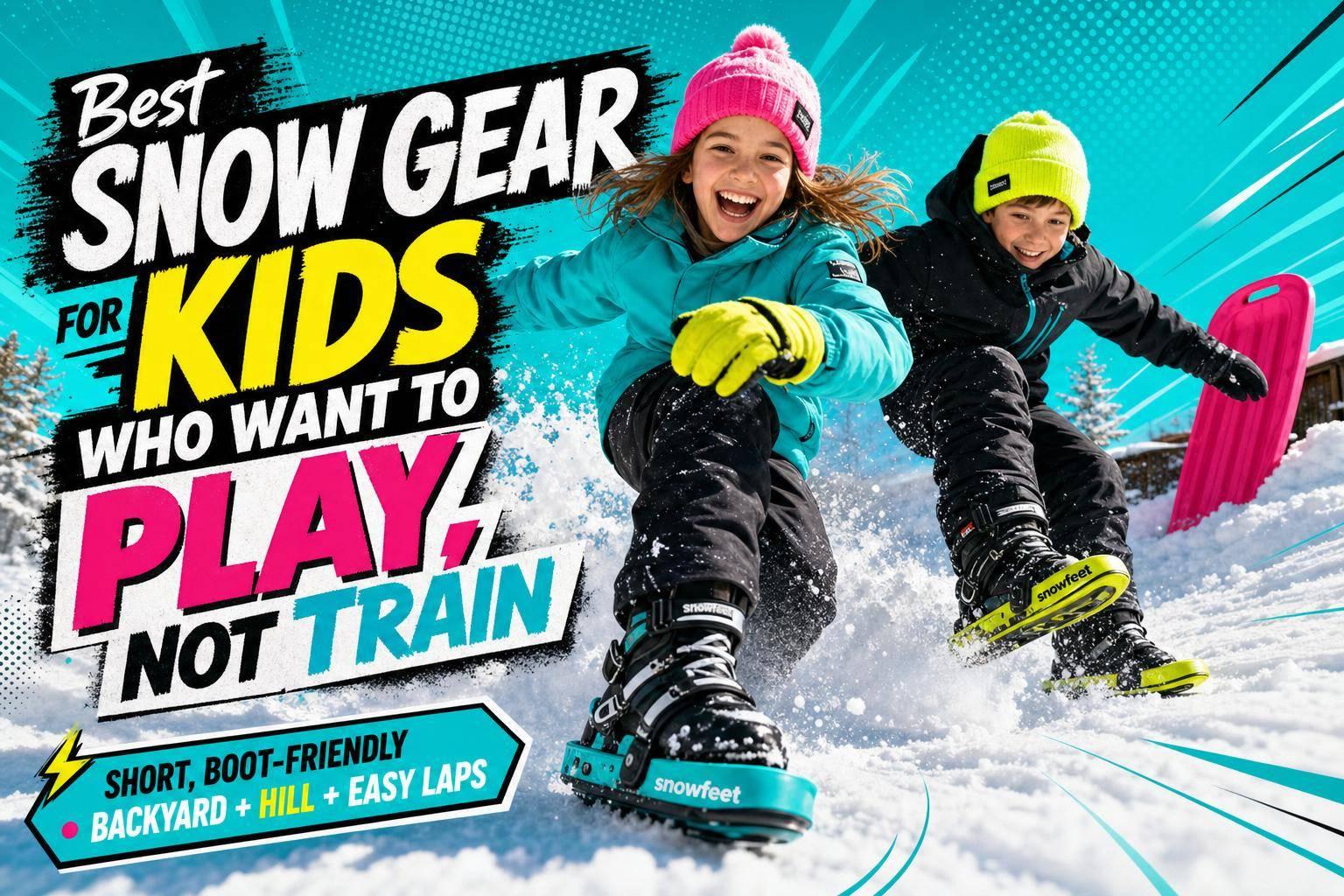
Yes - if you ride groomers, parks, or small local hills, snow skates and short skis can be more fun than skis or a snowboard. From what I see in this piece, the big win is simple: less gear, less hassle, and a shorter learning curve.
Here’s the short answer:
- Snowfeet* products feel more playful and easier to turn on day one
- 38 cm and 50 cm models fit in a backpack and work with winter boots
- 44 cm to 120 cm models give you more control for resort laps
- Long skis and snowboards still do better in deep powder and at high speed
- Best fit: beginners, families, casual riders, travelers, older adults, and returning skiers
So if you want a setup that’s light, simple, and fun, this article leans hard toward Snowfeet* over skis or snowboards for most casual use.
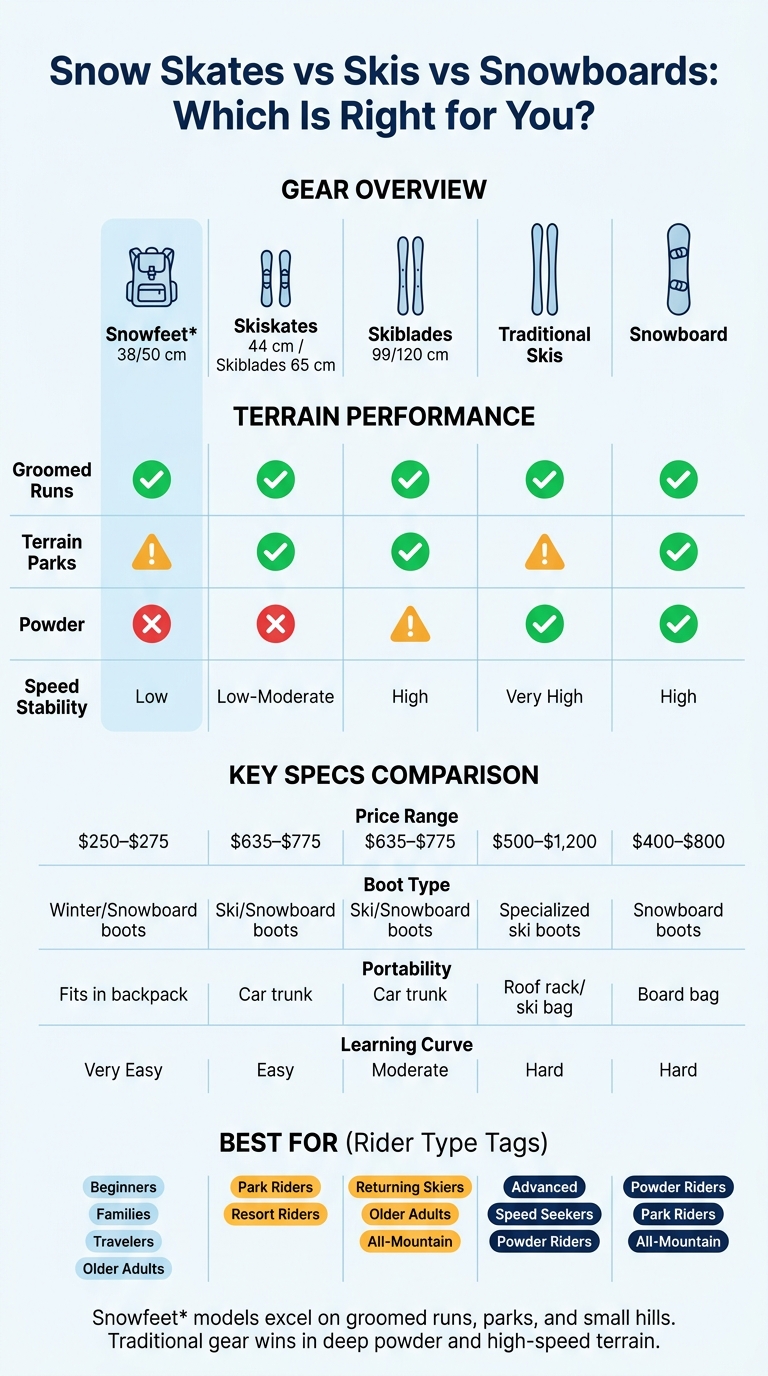
Snow Skates vs Skis vs Snowboards: Which Is Right for You?
Snowfeet* Review: Are Skiskates Worth It? | Mini Ski | Skates for Snow | Skating Ski | Short Ski
Quick Comparison
| Gear | Length | Boots | Best For | Main Trade-Off |
|---|---|---|---|---|
| Snowfeet* Mini Ski Skates | 38–50 cm | Winter or snowboard boots | Small hills, groomers, easy park use | Weak in powder and at speed |
| Snowfeet* Skiskates | 44 cm | Ski boots | Resort groomers, park laps | Less stable than longer setups |
| Snowfeet* Skiblades | 65–120 cm | Ski or snowboard boots | Groomers, parks, light powder, all-day resort use | Still not the top pick for deep powder |
| Skis | 150 cm+ | Ski boots | Steeps, carving, powder, speed | More gear, harder first day |
| Snowboards | 140 cm+ | Snowboard boots | Powder, parks, all-mountain riding | Sideways stance can take more time to learn |
What stood out to me most is the mix of low entry cost and simple setup. The smallest Snowfeet* models start at $250 to $275, while longer Skiblades run $635 to $775. By comparison, skis often cost $500 to $1,200, plus boots and more stuff to carry.
If your goal is to have fun fast - not win a downhill race - this article makes a strong case for short snow gear :)
Riding Feel, Control, and Learning Curve
Snowfeet* tends to feel fun right away because the shorter platform is easier to control from your first run.
Why Snowfeet* Feels More Playful and More Maneuverable
Skiing often feels more natural at first since your body faces forward. Snowboarding can take longer because the sideways stance feels less familiar. Snowfeet* keeps things simple and shortens that early learning phase.
The feel changes a bit by model:
- Mini Ski Skates and PRO feel the most loose and free-form
- Skiskates add more structure
- Skiblades bring the most stability in the short-ski lineup
That short, light feel makes turning and stopping seem less scary on day one. And, well, that’s a big deal when you’re new and just trying not to yard-sale your gloves on the slope :)
How Shorter Length Makes Turning, Stopping, and Building Confidence Easier
This shows up fast once you start turning and stopping. Snowfeet* makes balance, turning, and stopping feel more direct, so beginners can spend less time fighting the gear and more time having fun.
Shorter length also helps the whole setup feel less awkward. You’re not wrestling with long skis. You’re making small moves and getting quick feedback. That can help confidence build faster, especially in those first few runs.
Best First Picks for Beginners, Families, and Older Adults
For beginners, families, and older adults, the best place to start is usually the 38 cm Mini Ski Skates or 50 cm PRO. If you want a more resort-ready feel, go with the 44 cm Skiskates.
If you want more stability, move up to 65 cm, 99 cm, or 120 cm Skiblades. Those are a smart next step when you want more control without jumping to full-length skis.
Once the learning curve gets easier, the next advantage is how little gear Snowfeet* requires.
sbb-itb-17ade95
Portability, Gear Simplicity, and Cost
Once the learning curve gets easier, another big plus shows up: you need less stuff.
Backpack-Sized Gear vs. Roof Rack Gear
The Snowfeet* Mini Ski Skates (38 cm) and PRO (50 cm) fit right into a backpack. That’s a big deal for flights, road trips, and small apartment closets. No wrestling with long skis. No trying to strap gear to the roof like you're packing for a polar mission.
Traditional skis and snowboards take up far more space. Most of the time, you’ll need a roof rack, a ski bag, or extra airline handling. And with less gear comes one more perk: fewer boot choices to sort through.
Boot Compatibility and What You Do Not Need to Buy or Rent
The 38 cm and 50 cm models work with regular winter boots or snowboard boots, so you can skip ski boots altogether. That changes the whole setup.
No ski boots means:
- lower cost
- easier walking
- less trouble when traveling
- faster setup on the mountain
The tool-free bindings also make sharing easier. That cuts down on hassle and helps keep the full setup cost lower.
What You Get for the Price
Here’s how the full Snowfeet* lineup compares with more common gear:
| Gear | Price Range | Boot Requirements | Portability |
|---|---|---|---|
| Snowfeet* Mini Ski Skates (38 cm) | From $250 | Winter or snowboard boots | Fits in a backpack |
| Snowfeet* PRO (50 cm) | $275 | Winter or snowboard boots | Fits in a backpack |
| Snowfeet* Skiblades (65 cm, 99 cm, 120 cm) | $635–$775 | Ski or snowboard boots | Fits in a car trunk |
| Traditional skis | $500–$1,200 | Specialized ski boots | Roof rack or ski bag |
| Snowboard gear | $400–$800 | Snowboard boots | Board bag required |
At $250 and $275, the entry models leave out ski boots, poles, and a ski bag. That can make a real difference for families, apartment dwellers, and people who only ride now and then. Less gear means less money out the door and less junk to lug around.
And yeah, sometimes that’s the whole game: easier setup, less clutter, more time on snow.
The next question is where that simple setup works best once you’re out there.
Terrain, Trade-Offs, and Which Snowfeet* Model Fits Which Rider
If fun matters most, the next step is simple: pick the Snowfeet* model that matches the snow you ride most.
Where Snowfeet* Works Best: Groomers, Parks, Small Hills, and Casual Snow
Snowfeet* shines on groomers, in parks, and on local hills. The 38 cm and 50 cm models are made for local hills and easygoing snow days. They work best on packed snow and light fresh snow up to about 4 inches deep.
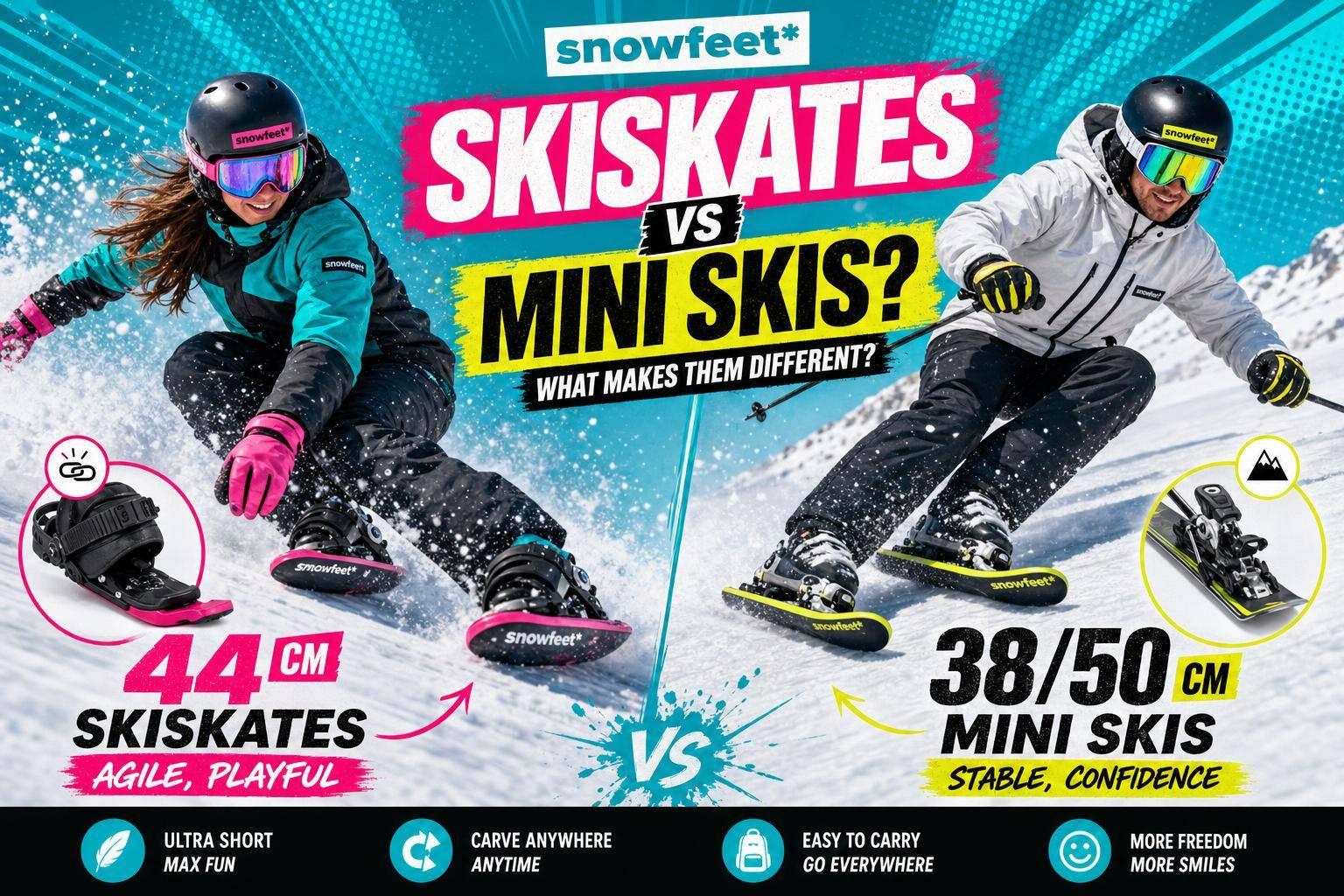
Skiskates 44 cm are the top short pick for resort groomers and park laps. They feel quick, loose, and playful. The 65 cm Skiblades are nimble enough for jumps and twists.
If you want more range, the Skiblades 99 cm are a smart middle ground. They handle groomed runs, light powder, and some off-piste use while still feeling easy to turn.
On groomers, in parks, and on small hills, that short and snappy feel is the whole point. It’s what makes Snowfeet* feel more fun than long skis or a snowboard.
Where Traditional Skis or Snowboards Still Have an Edge
Snowfeet* takes the win for playfulness. Long skis and snowboards still take the win for speed and soft snow.
Long skis still do better in two spots:
- High-speed carving on steep runs
- Deep powder float
A lot of riders also like snowboards in deep powder. The shortest Snowfeet* models aren’t made for that kind of terrain. They’re best on groomed snow, in snow parks, and on local hills.
Here is how the lineup stacks up:
| Gear | Groomed Runs | Terrain Parks | Powder | Speed Stability |
|---|---|---|---|---|
| Snowfeet* 38/50 cm | ✅ Great | ⚠️ Limited | ❌ Poor | Low |
| Skiskates 44 cm | ✅ Great | ✅ Good | ❌ Poor | Low |
| Skiblades 65 cm | ✅ Great | ✅ Good | ❌ Poor | Moderate |
| Skiblades 99/120 cm | ✅ Great | ✅ Good | ⚠️ Fair | High |
| Traditional Skis | ✅ Great | ⚠️ Moderate | ✅ Excellent | Very High |
| Snowboard | ✅ Great | ✅ Good | ✅ Excellent | High |
Best Snowfeet* Model by Rider Type
Start with terrain. Then look at skill level.
Shorter models turn faster and usually feel easier to handle. Longer models give you more stability. Pretty simple trade-off.
| Rider Type | Best Snowfeet* Model | Main Benefit | Ideal Terrain | Advantage Over Traditional Gear |
|---|---|---|---|---|
| Beginners / Families | 38 cm, 50 cm, or Skiblades 65 cm | Best for groomed slopes and local hills | Groomed slopes, local hills | Less intimidating; easier to stop and turn |
| Park Riders | Skiskates 44 cm or Skiblades 65 cm | Maximum agility for tricks | Terrain parks, groomed runs | Better for jumps, twists, and switch riding |
| Travelers / City Dwellers | 38 cm or 50 cm | Ultra-portable | Casual snow, small hills | Fits in a backpack; no roof rack needed |
| Older Adults | Skiblades 99 cm or 120 cm | Stability with easier turning | All-mountain, groomed slopes | Easier on joints; less weight to manage |
| Returning Skiers | Skiblades 99 cm | Traditional ski feel without the weight | Groomed slopes, light powder | More fun and less restrictive than long skis |
If you want the short version, it goes like this: the smaller Snowfeet* models are best for messing around on groomers, parks, and small hills. The longer Skiblades give you more confidence when the terrain opens up. And if your dream day is bombing steep runs or floating through deep powder, long skis or a snowboard still make more sense.
Conclusion: Who Should Pick Snow Skates Over Traditional Gear
After looking at feel, control, portability, and terrain, the takeaway is pretty simple: for most casual resort riders, Snowfeet* is the more fun, simpler pick. If you spend most of your time on groomed runs or small local hills, Snowfeet* gives you more enjoyment with less hassle than full-length skis or a snowboard.
That said, your best choice still comes down to where and how you ride. Traditional skis and snowboards still come out on top for deep powder, steep high-speed runs, and race-level performance. Those situations call for the extra float, grip, and stability that longer gear gives you. On groomed green and blue runs, Snowfeet* is the easier, more playful option.
Key Points Before You Buy
Match the model to what you’ll use it for.
- Snowfeet* 38 cm or 50 cm are best if you want the easiest, most portable setup. They fit in a backpack and work well on casual slopes with very little setup.
- Skiskates 44 cm or Skiblades 65 cm are the most playful picks for resort groomers and park features.
- Skiblades 99 cm or 120 cm give you the most stability and confidence on steeper terrain, while still turning more easily than full-length skis. They’re a strong all-day resort option for older adults, returning skiers, and anyone who wants less weight and commitment than standard gear.
For casual riders, Snowfeet* is the most fun and least demanding way to get on snow.
FAQs
Are snow skates hard to learn?
Usually not. Snowfeet snow skates are made for beginners, so they tend to feel easier to pick up than skis or a snowboard.
Models like the 44 cm Skiskates and 38 cm or 50 cm Snowfeet put a lot of focus on control and ease of use. That means new riders can build confidence faster and start having fun on the snow sooner.
Which Snowfeet* model should I choose?
The best Snowfeet* model comes down to three things: your skill level, the terrain you like, and how much control you want.
For most beginners and casual riders, _Snowfeet PRO (50 cm)_* is the sweet spot. It gives you a nice mix of control, easy turning, and a short learning curve.
Here’s the simple breakdown:
- Choose Skiskates (44 cm) if you want a more playful, skate-like feel and easy rides with regular winter boots.
- Pick Skiblades (65 cm or 99 cm) if you want more control and more range on intermediate slopes and mixed snow.
So, if you want the safest all-around pick, _Snowfeet PRO (50 cm)_* is hard to beat :)
Can snow skates handle powder?
Not very well. Snow skates are usually better on groomed runs or packed snow than in deep powder.
Traditional skis and snowboards work better in powder because they’re built for that kind of terrain.











Laat een reactie achter
Deze site wordt beschermd door hCaptcha en het privacybeleid en de servicevoorwaarden van hCaptcha zijn van toepassing.