



















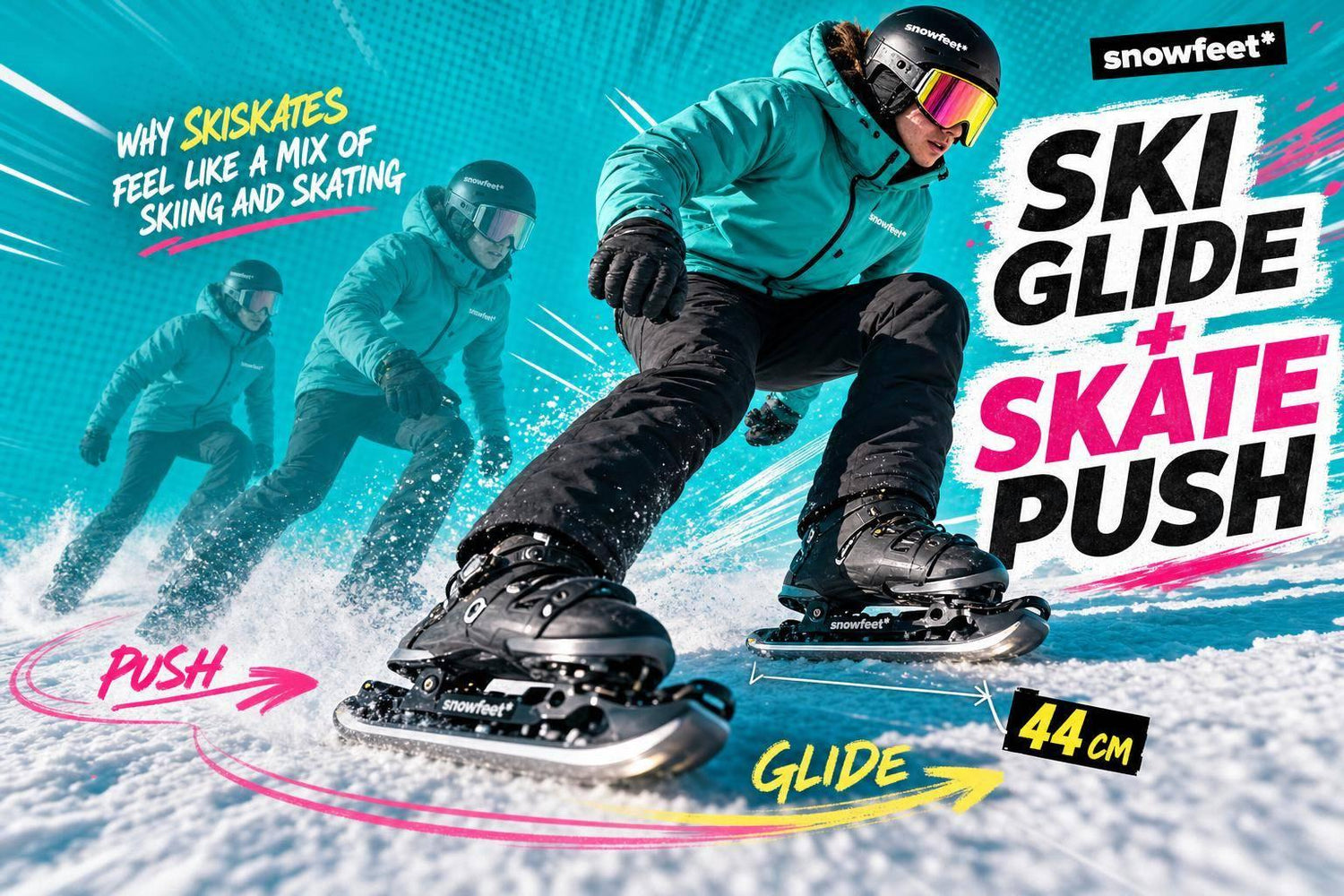
Short answer: skiskates feel like both because they put ski edges and ski glide almost right under your boots. At 44 cm (17.3 inches), they’re far shorter than adult skis, which often run about 59 to 71 inches. That short platform makes turns, stops, and side-to-side moves feel much closer to skating.
If I had to sum it up in plain English, I’d say this:
- You push and shift like you do on skates
- You glide on snow like you do on skis
- You get fast edge changes
- You can hockey stop with less fuss
- You feel less tip and tail in the way
So, if you’re a skater, snowboarder, or skier who wants a lighter, more playful ride, that’s the whole story right there :)
What changes the feel most is length:
- 44 cm skiskates feel closest to skates
- 65 cm skiblades sit in the middle
- 99 cm skiblades feel closer to short skis
A few ride facts stand out from the article:
- The 44 cm model weighs about 2.6 lb per pair
- The 65 cm model weighs about 6.6 lb per pair
- The 99 cm model weighs about 8.4 lb per pair
- Best use is groomers, park laps, small jumps, and resort features
- Not the right tool for deep powder, racing, or big-mountain lines
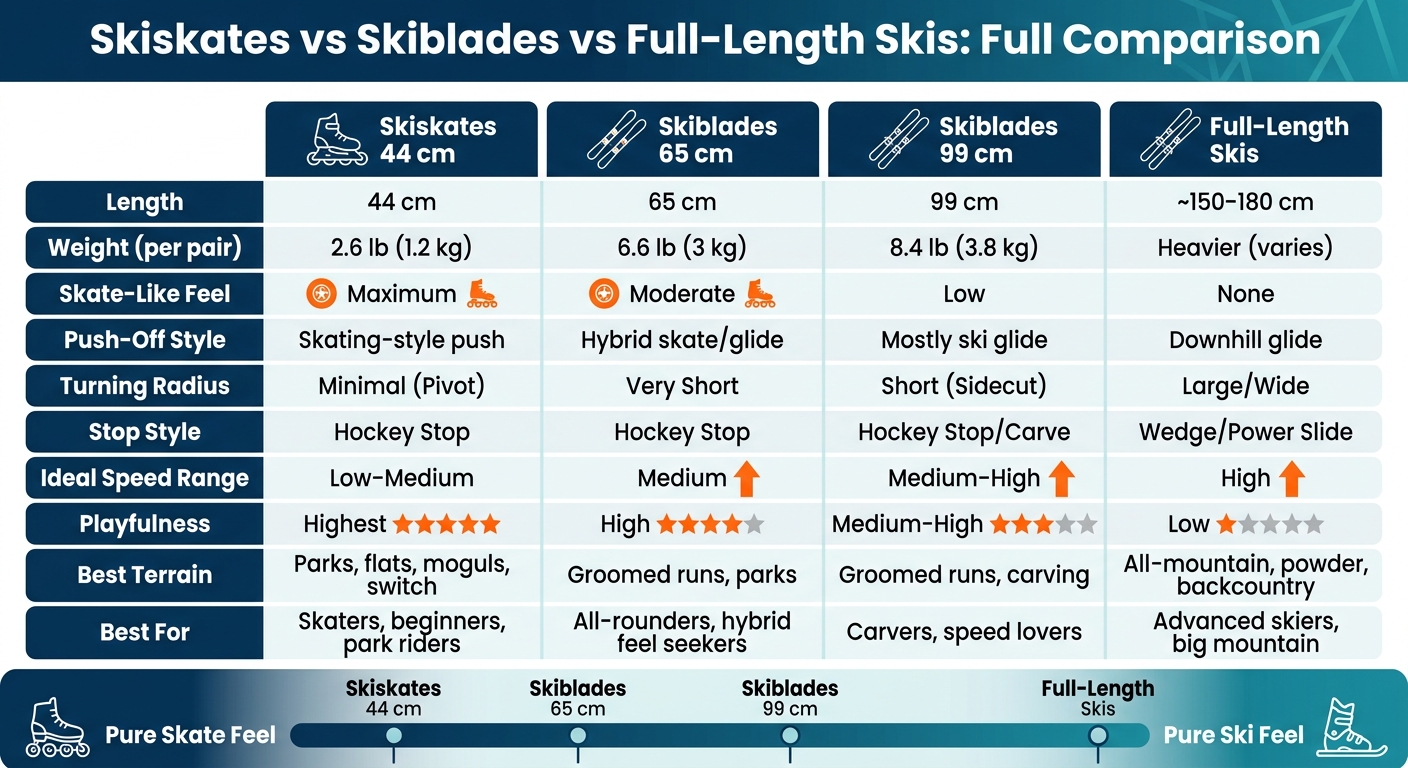
Skiskates vs Skiblades vs Full-Length Skis: Full Comparison
Snowfeet* & Skiskates Tutorial - How to Become a PRO Skiskater
Quick Comparison
| Model | Main Feel | Best For | Speed Feel | Turning Feel |
|---|---|---|---|---|
| 44 cm Skiskates | Most skate-like | Parks, flats, tight runs, switch | Low to medium | Very short, pivoty |
| 65 cm Skiblades | Mix of skate and ski | Groomed runs, mellow park laps | Medium | Short, smooth |
| 99 cm Skiblades | Most ski-like | Groomers, carving, more speed | Medium to high | Longer carved arcs |
| Full-Length Skis | Pure ski feel | Big runs, speed, powder | High | Wider turns |
What I like about the article is that it keeps the answer simple: less ski in front of and behind your boot means less bulk, less swing weight, and more of that skate-style footwork. You still get steel edges and a sintered base, so it’s not just “skating on snow.” It’s more like a mash-up of both.
And that’s why skiskates click fast for a lot of people. They don’t feel like giant planks. They feel like your feet can just go where you want them to go.
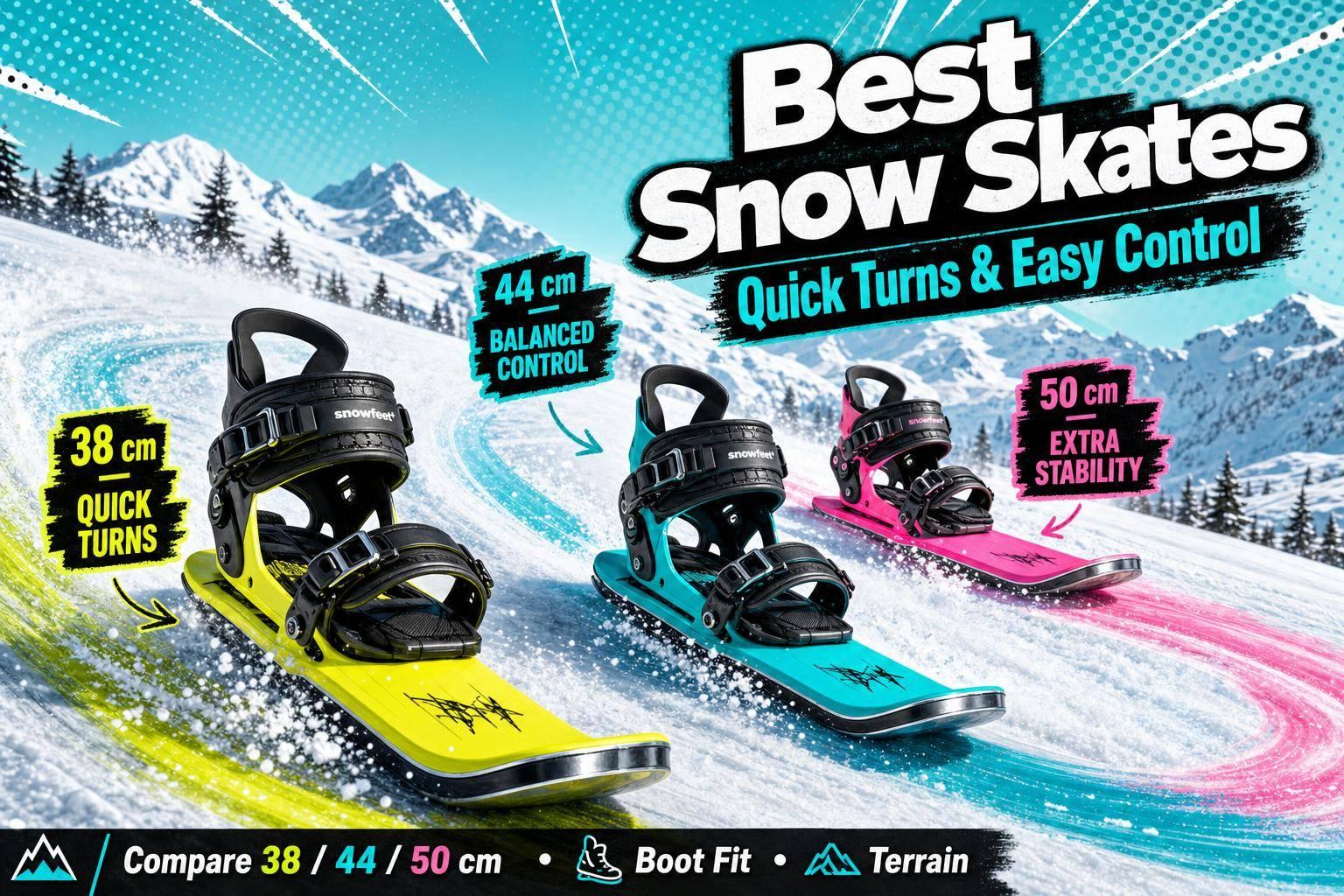
If you want the skate feel most, pick 44 cm. If you want a middle ground, go 65 cm. If you want more glide and carving, go 99 cm.
For a visual feel, these YouTube searches can help:
How Snowfeet* Skiskates Move Compared to Skis and Skates
Push-Off, Glide, and Cruising Speed
Once you get used to the short length, the way you move changes too. The Snowfeet* Skiskates 44 cm use a short push-glide stride that feels much closer to ice skating than alpine skiing. On a flat connector or mellow slope, you push off one foot, glide for a moment, shift your weight, and do it again on the other side.
The different Snowfeet* lengths change that feel in a pretty clear way. Shorter models keep more of that quick skating pop. Longer models glide more and feel closer to skis.
The Skiblades 65 cm still feel nimble and easy to swing around. The Skiblades 99 cm hold speed longer and smooth out small movements, which makes them the most ski-like of the three Snowfeet* options. Put simply: more length means more glide and less of that skate-style snap.
Full-length alpine skis are built for downhill riding, speed, and stability. They depend more on momentum and a longer platform than on short, repeated stride-like movement. That tradeoff between glide and snap is a big reason the stance and edging feel so different from long skis.
Where the Skating Feel Shows Up Most on the Mountain
You notice the skating feel most on smooth terrain where you're changing direction a lot. Groomed green and blue runs make it stand out the most. The surface is smooth and predictable, so you can push, glide, and redirect without battling rough snow.
Short flat connectors between runs are where the stride pattern can feel almost the same as inline skating.
Terrain parks and banked turns are also where the 44 cm model stands apart. You can change direction fast around other skiers or pop off a small feature without the tail of a long ski hanging up in the turn. That quick push-glide rhythm is also why turns and edge changes feel so instant.
Comparison Table: Movement, Speed, and Control
| Feature | Skiskates 44 cm | Skiblades 65 cm | Skiblades 99 cm | Full-Length Skis |
|---|---|---|---|---|
| Push-Off Feel | Skating-style push-off | Hybrid skate/glide | Mostly ski glide | Downhill glide |
| Glide Length | Short | Medium | Long | Maximum |
| Ideal Speed Range | Low to medium | Medium | Medium to high | High |
| Control | Tight, highly agile | Balanced | Stable | Wide, high-speed stable |
| Skate-Like Feel | Maximum | Moderate | Low | None |
| Best Terrain Fit | Parks, flats, moguls | Groomed runs, parks | Groomed runs, carving | All-mountain, powder |
sbb-itb-17ade95
Stance, Edging, and Turning on Snowfeet* Gear
Why the Stance Feels More Natural Than on Long Skis
After movement, stance is the next big reason Snowfeet* feels like a ski-skate hybrid. Long skis often pull you into the backseat. Snowfeet* does the opposite. It keeps your weight centered over your boots.
Because the platform sits almost right under your feet, it’s easy to bend your knees and stack your shoulders over your hips. That puts you in a relaxed, ready stance that doesn’t take much work to hold. It feels less like fighting the gear and more like just standing in balance. That’s a big deal.
The Skiblades 65 cm keep that same centered feel, but give you a bit more front-to-back support underfoot. The Skiblades 99 cm add more tip and tail, so the stance starts to feel a little more directional. Think closer to a short carving ski, but still much smaller and easier to manage than full-length skis.
Once your weight settles over the boots, edge changes feel almost instant.
How Edge Changes and Turns Feel on Short Snowfeet* Models
On the 44 cm Skiskates, rolling from one edge to the other takes only a small ankle shift. That means you can link short “S” turns in a tight corridor without much room to set up each arc. It’s quick. Snappy. Almost playful. That fast edge roll is a big reason the ride feels more like skating than skiing.
The Skiblades 65 cm keep that fast response, but smooth it out a bit. Turns feel more connected and arcing instead of pure pivots. That makes them a strong middle ground between skate-style agility and ski-like carving.
The Skiblades 99 cm use a curved sidecut that helps produce longer, cleaner carved arcs. They also need less effort and less space to start each turn than full-length alpine gear. So if you want a more ski-like feel without lugging around big planks, this is where things start to click.
The short format changes how you slow down too. A hockey stop, where you rotate your feet sideways across the slope and engage the edges, feels natural and easy on the 44 cm Skiskates because the short length doesn’t fight the rotation. On full-length skis, beginners often lean on wide wedge brakes or long sweeping turns to slow down. Snowfeet* models make short, sharp speed checks feel closer to stopping on skates.
Here’s the difference at a glance.
Comparison Table: Stance, Edging, and Maneuverability
| Feature | Skiskates 44 cm | Skiblades 65 cm | Skiblades 99 cm | Full-Length Skis |
|---|---|---|---|---|
| Body Position | Athletic / Skate-like | Centered | Stable / Natural | Less Agile |
| How Fast It Reacts | Instant / Reactive | Very Fast | Smooth / Effortless | Slower / Heavy |
| Turning Radius | Minimal (Pivot) | Very Short | Short (Curved Sidecut) | Large / Wide |
| Stop Style | Hockey Stop | Hockey Stop | Hockey Stop / Carve | Wedge / Power Slide |
What the Ride Actually Feels Like
Quick Direction Changes, Stops, and Playful Terrain
Once you get past the mechanics, the big difference is simple: it feels easier to move exactly how you want.
On a crowded blue run, Skiskates 44 cm let you pivot fast and pick a new line with ankle pressure instead of long, drawn-out ski turns. If you need to shut it down, a hockey stop on the 44 cm feels almost instant. The 65 cm version feels smoother in that same move, while the 99 cm rides more like a short ski turn.
Small terrain features are where Snowfeet* gear gets fun fast. Rollers, side hits, and banked edges don’t feel like stuff you pass by. They feel like stuff you use.
- The 44 cm Skiskates let you pop off a small lip at low speed without a big run-in.
- The 65 cm Skiblades work well for mellow park laps, small boxes, and side hits while staying calm under you.
- The 99 cm Skiblades can handle those same features, but they also give you more confidence when you carry speed between them.
That centered stance helps with switch, too. On the 44 cm Skiskates, riding backward feels a lot like skating in reverse on ice. Your feet stay close, your weight stays centered, and small ankle and hip moves do most of the steering. You don’t need huge body movements to make it work. The short length also cuts down the chance of catching a tip or tail, which makes switch practice on a mellow green run feel less intimidating.
The 65 cm Skiblades keep that easygoing switch feel for small hits or relaxed backward cruising. The 99 cm Skiblades still feel good in switch if you’ve got some time on snow, but they lean more toward a ski feel - steady, though you need a bit more awareness of the longer tail.
Why Snowfeet* Feels Less Bulky Than Full-Length Gear
The weight tells part of the story. The 44 cm Skiskates weigh about 2.6 lb (1.2 kg) per pair. The 65 cm Skiblades come in at about 6.6 lb (3 kg) per pair, and the 99 cm Skiblades at about 8.4 lb (3.8 kg) per pair. That’s still much shorter, and often lighter, than many full-length skis with bindings.
And you feel that on snow right away. A lighter, smaller setup is easier to swing, save, and point somewhere else when things get messy. It doesn’t feel like you’re steering a long platform. It feels more like the gear is right under you, ready to move.
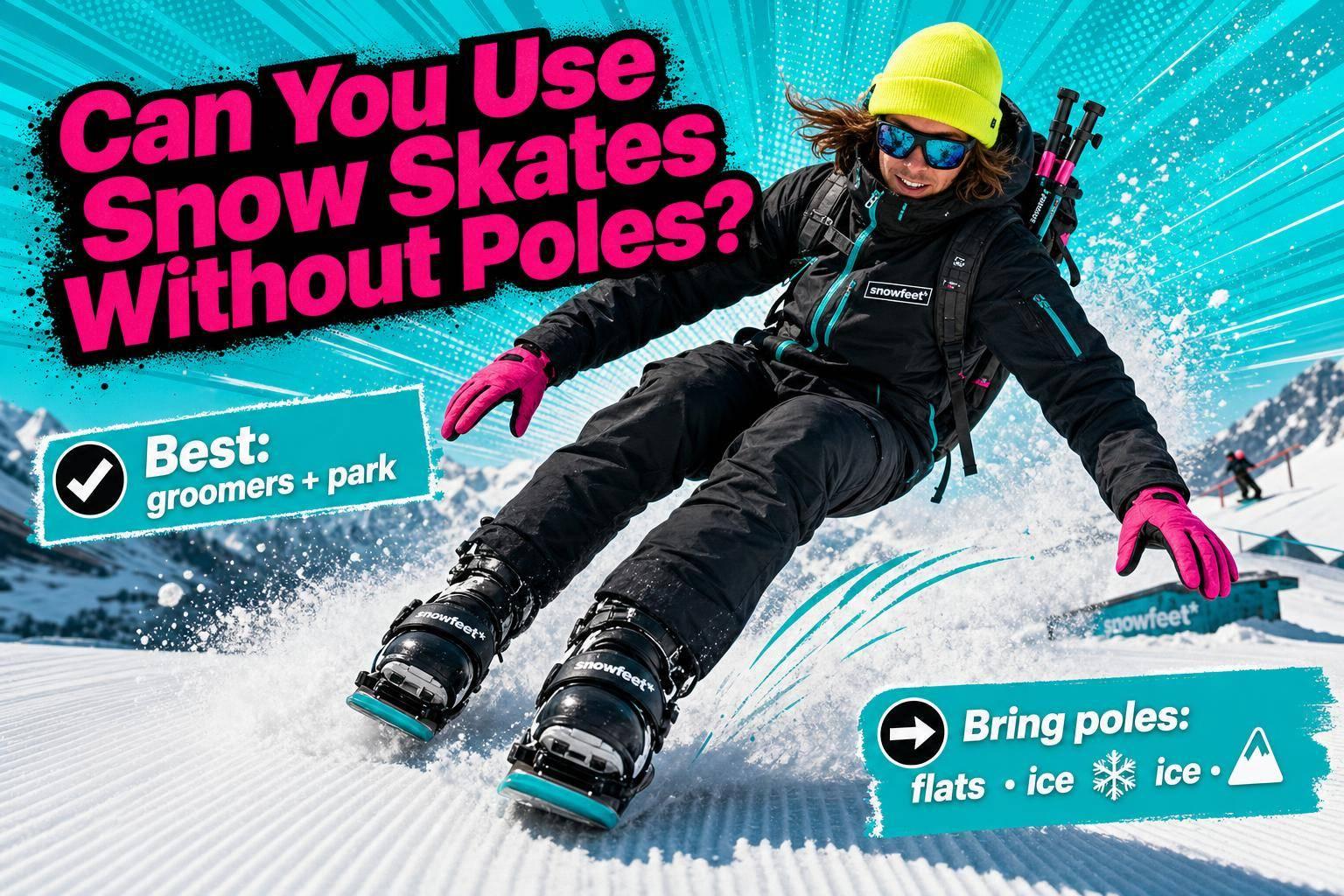
No poles changes the vibe too. Your upper body stays looser. Your hands aren’t tied up with pole plants. On full-length skis, your body often tips forward more, and your turns take up more space down the fall line. Without poles, your shoulders can relax, your arms stay free, and more of the movement comes from your ankles and knees. It feels less like managing equipment and more like messing around on the hill - in a good way :)
That hands-free stance also helps when you want to try small spins, grab a ski in the air, or just use your arms for balance while learning.
The skate-like feel changes by model. The 44 cm feels the closest to skates. The 65 cm and 99 cm move step by step toward a ski feel.
Comparison Table: Playfulness, Freedom of Motion, and Terrain Fit
| Feature | Skiskates 44 cm | Skiblades 65 cm | Skiblades 99 cm | Full-Length Skis |
|---|---|---|---|---|
| Playfulness | Highest | High | Medium-High | Low |
| Agility in Tight Spaces | Extreme | Very High | High | Low |
| Freestyle Suitability | Best for skating/tricks | Great for parks | Good for jumps | Limited |
| Best Terrain | Slopes, Parks, Moguls | Slopes, Snow Parks | Groomed Slopes, Carving | High-speed, Backcountry |
Which Snowfeet* Model Matches the Feel You Want
Best Pick for Skaters, Beginners, and Skiers
Pick the model that fits how you already move on snow or skates. That’s the easiest way to land on the right feel.
- Skiskates 44 cm - the most skate-like feel, with fast edge-to-edge moves and a ride that feels closest to ice skates or inline skates
- Skiblades 65 cm - a middle ground, still nimble but with more glide and more edge support underfoot
- Skiblades 99 cm - the most ski-like option, with longer carving turns and the most grip when you pick up speed
How Snowfeet* Differs From Full-Length Ski and Snowboard Brands
This short-platform feel is the big thing that sets Snowfeet* apart from full-length skis and snowboards. Standard skis and snowboards are built more for speed and stability. Snowfeet* leans into quick turns, easy carrying, and less leg burn. So you get ski glide mixed with skate-like agility, in gear that’s way easier to handle than full-length setups.
Conclusion: The Main Reason Skiskates Feel Like Skiing and Skating at Once
It comes down to how much skate feel you want. Go with the 44 cm if you want the most skate response. Pick the 65 cm if you want a balanced mix. Choose the 99 cm if carving and speed are higher on your list.
FAQs
Are skiskates good for beginners?
Yes - especially Snowfeet Skiskates 44 cm*. Their short length, balance-focused design, and skating-like feel can make them easier to get into than regular skis or snowboards.
They can help beginners build confidence with quick turns, carving, and playful movement on snow. So, for a lot of new riders, they offer a fun, less intimidating way to start snow sports.
Do skiskates work well on icy or uneven snow?
The available search results don’t clearly explain how skiskates handle icy or uneven snow.
So, based on those results, there’s no clear answer on that point.
How do I choose between 44 cm, 65 cm, and 99 cm?
44 cm Skiskates are the best pick for beginners or anyone who wants the most playful, skate-like feel. They turn fast, feel lively, and make movement easy and fun.
65 cm Skiblades hit a nice middle ground. You get agility and stability, which makes them a solid choice for mixed terrain.
99 cm Skiblades are a better fit for advanced riders who want more glide, more stability, and a feel that’s closer to regular skis - while still keeping some of Snowfeet*’s quick, playful style.











댓글 남기기
이 사이트는 hCaptcha에 의해 보호되며, hCaptcha의 개인 정보 보호 정책 과 서비스 약관 이 적용됩니다.