



















Ski Binding DIN Calculator
Understand Your Estimated Release Setting
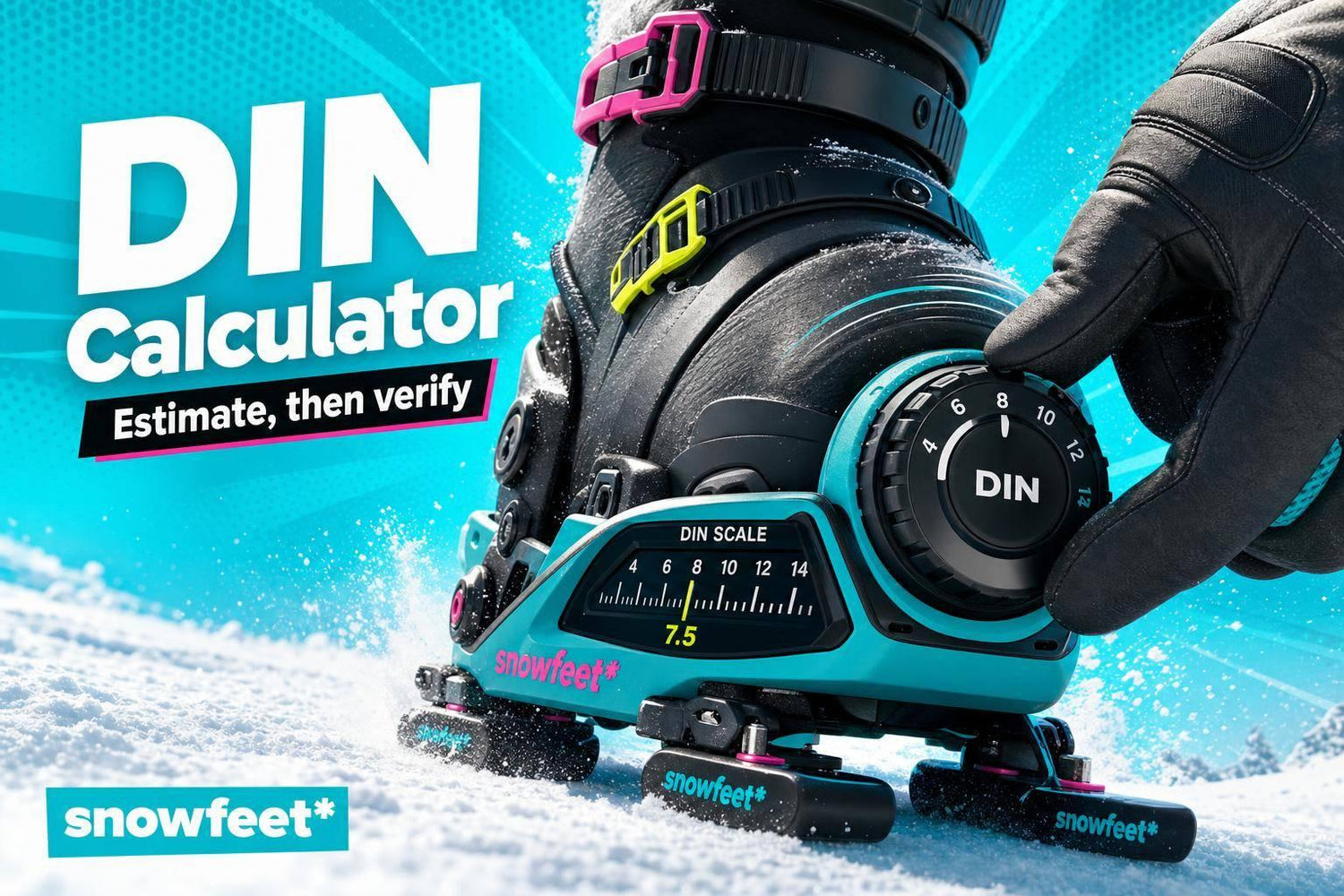
A ski binding DIN calculator can help you understand the basic factors that influence a binding release setting before you head to the shop. Weight, height, age group, skier type, and boot sole length all play a role in the estimate. This tool follows a familiar chart-based approach used in recreational skiing education: it compares height and weight ranges, starts from the lower code, applies age and skier-type adjustments, and then matches that result to boot sole length.
Why the Estimate Matters
A DIN setting estimate can be helpful for context, but it should never be used as a final adjustment value. If the setting is too low, a ski may release when you don’t want it to. If it’s too high, the binding may not release as expected during a fall, which can raise injury risk.
Safety Comes First
This ski release value tool is designed for informational use only. It does not replace a certified ski technician, binding inspection, or mechanical release test. If your measurements or skiing profile fall outside normal recreational ranges, the safest answer is caution—not a confident number. Use this page to learn how the estimate is formed, then have your bindings professionally set and tested before skiing.
FAQs
Is this DIN calculator enough to set my ski bindings myself?
No. This calculator is for informational use only and should never be treated as a final binding setting. Ski bindings need to be set, inspected, and release-tested by a qualified ski technician using your actual equipment, boot condition, skiing profile, and manufacturer specifications. An estimated number online can help you understand the process, but it cannot verify whether your bindings are functioning safely.
What does skier type mean, and why does it change the result?
Skier type reflects how cautiously or aggressively you ski, and that affects how easily a binding should release. A Type I skier is generally more cautious and may need a lower setting, while a Type III skier skis faster, harder, or on steeper terrain and may trend higher. This matters because release settings are a balance: too low can cause unwanted release, while too high can make a binding less likely to release when it should.
Why does the calculator ask for boot sole length instead of just shoe size?
Boot sole length is the millimeter measurement printed on the outside of your ski boot shell, and it’s more precise than shoe size for binding estimation. Two boots with the same mondo or street size can still have different sole lengths depending on brand and model. Because binding charts use boot sole length as part of the final step, entering the correct millimeter value helps produce a more realistic estimate.












댓글 남기기
이 사이트는 hCaptcha에 의해 보호되며, hCaptcha의 개인 정보 보호 정책 과 서비스 약관 이 적용됩니다.