



















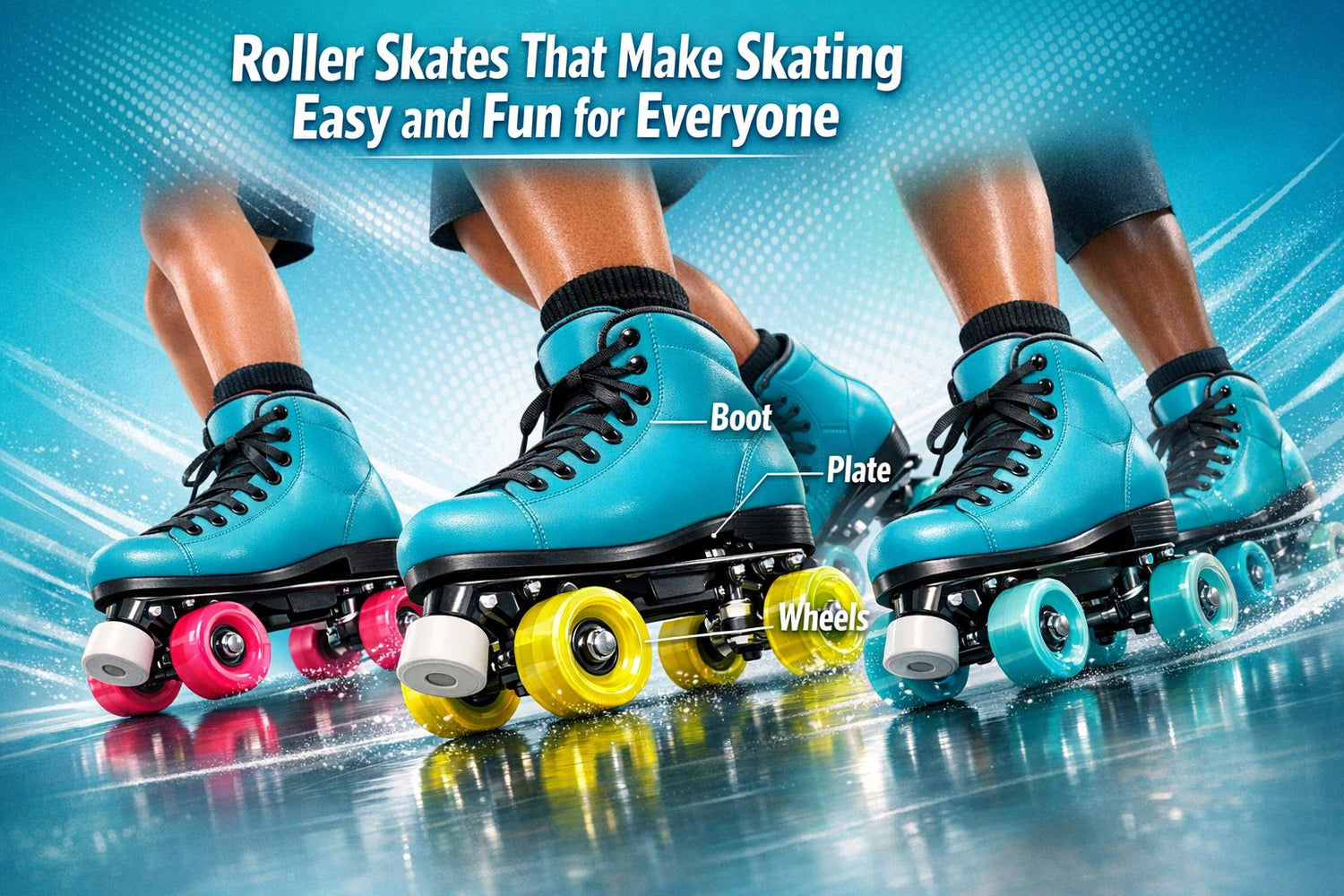
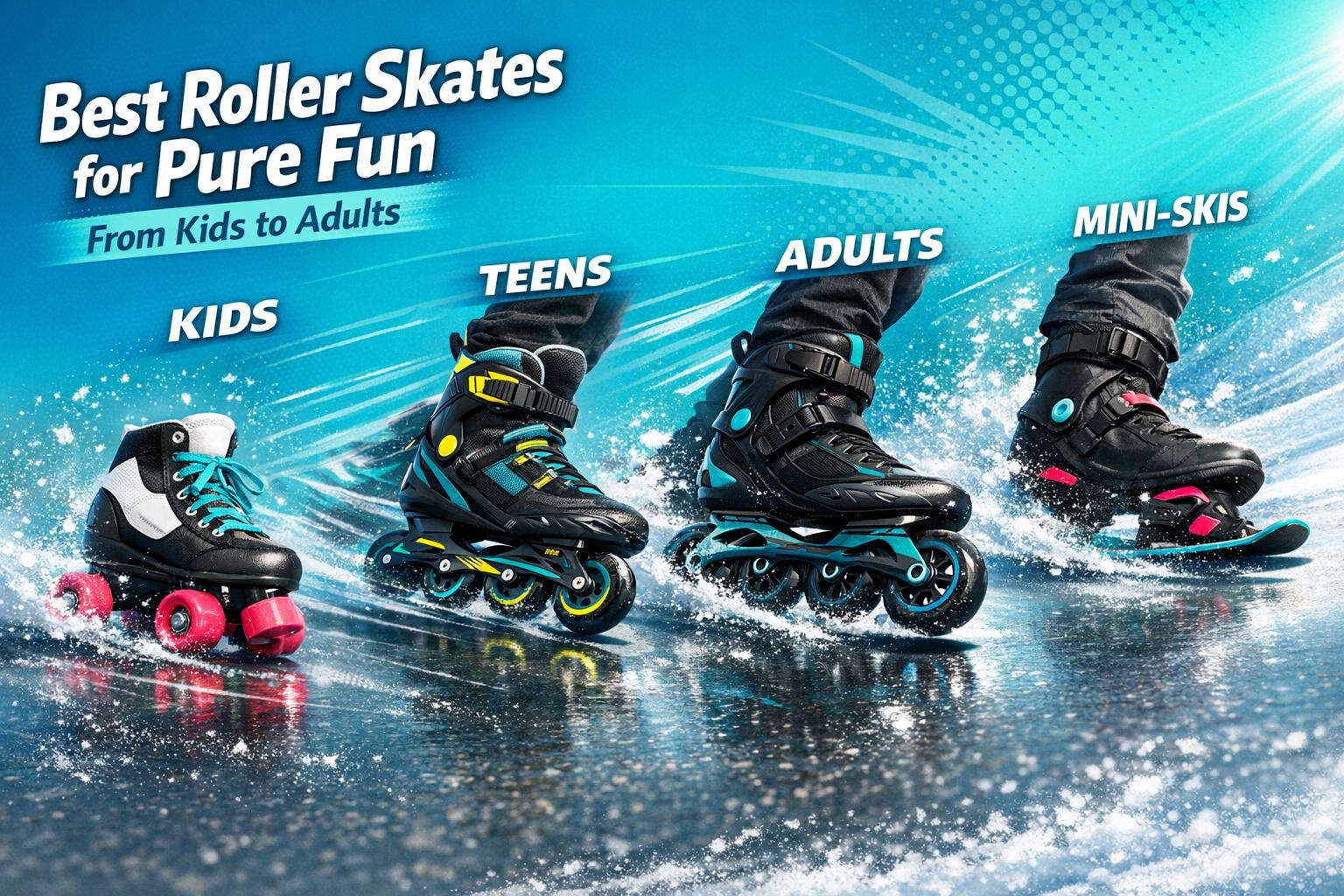
Roller skating is a fun activity for all ages and skill levels. Whether you're a beginner or an experienced skater, finding the right pair of roller skates can make all the difference. Here's a quick breakdown of what you need to know:
- Beginners: Quad skates with a wide base and soft wheels (78A–82A) offer stability and grip for smooth learning. Look for models with secure fastening systems like laces, straps, and buckles.
- Kids: Adjustable skates that grow with their feet (up to 4 sizes) are ideal. Tri-wheel designs offer extra stability for younger children.
- Adults: High-top boots provide ankle support for casual skating, while low-cut boots allow greater mobility for advanced moves.
- Outdoor Skating: Opt for soft wheels (78A–85A) to handle uneven surfaces and absorb shocks.
- Indoor Rinks: Harder wheels (88A–103A) deliver speed and smooth performance on polished floors.
Key features to consider include boot fit, wheel material, and plate weight. A snug fit ensures comfort and control, while the right wheels and plates improve your overall skating experience. If you're skating in different settings, swapping between indoor and outdoor wheels is a cost-effective solution.
Want to keep rolling in winter? Consider Snowfeet short skis. They’re compact, easy to use, and perfect for snowy terrain. Think of them as roller skates for the slopes!
Ready to skate? Let’s dive into the details.
Learn to Roller Skate in less than 24 Hours | Ultimate beginners guide
What Makes Roller Skates Easy to Use
The ease of using roller skates depends on a mix of factors: boot support and fit, the materials and weight of the plate, and the performance of the wheels.
Boot Support and Ankle Hold
A good skate boot offers stability for your ankle while ensuring comfort. Beginner-friendly skates often feature a triple fastening system - laces, a 45° power strap, and a durable buckle. This combo keeps your foot secure, reduces the chance of ankle rolling, and gives you better control. For those just starting out, hard-shell boots provide firm support, which is helpful as you work on your balance. As you improve, soft-shell boots with memory foam liners can add a snug, comfy fit.
"A skate that's too loose will offer poor support, increasing the risk of ankle injuries, while a skate that's too tight will be uncomfortable and restrict movement." - Joseph E. Bogle, Founder and Lead Writer, SkateToScoot.com
Plate Material and Skate Weight
The plate, which connects the boot to the wheels, impacts how much effort you need to skate. Lightweight materials like nylon or fiberglass composites are strong and flexible, making them great for casual skating. High-performance plates can weigh as little as 364g per plate, while traditional aluminum ones might weigh up to 490g. For heavier skaters, a sturdy metal plate is a safer choice to avoid flexing or breaking under pressure.
Wheel Size, Softness, and Stoppers
Wheels play a big role in how smooth and grippy your ride feels. Softer wheels (lower durometer ratings) offer better grip and absorb shocks, making them ideal for outdoor surfaces like uneven or cracked pavement. Harder wheels, on the other hand, are faster and work best on the smooth floors of indoor rinks. Many beginners start with 82A polyurethane (PU) wheels, which perform well both indoors and outdoors.
Bearings also matter. ABEC-7 bearings are a solid choice for recreational skaters, delivering smooth and consistent rolling without needing much upkeep. When it comes to stopping, most beginner skates include a heel brake, and some even have brakes on both skates for extra control. If you're skating indoors, non-marking stoppers are ideal to avoid leaving scuff marks on the floor.
"Urethane wheels are a good all-around choice, offering a balance of grip and smoothness. Softer wheels (lower durometer) provide more grip and a smoother ride, ideal for rougher surfaces, while harder wheels are faster but offer less grip." - Joseph E. Bogle, Founder and Lead Writer, SkateToScoot.com
These elements ensure you can pick a pair of skates that matches your skill level and where you plan to skate.
Best Roller Skates by Skill Level
Let’s break down some top roller skate recommendations based on skill level, so you can find the perfect pair to match your needs.
Best Roller Skates for Beginners
If you're just starting out, stability is your best friend. Quad skates, with their classic four-wheel design, offer a broader base and a lower center of gravity, making them easier to balance on compared to inline skates.
Look for skates with a "tractor-style" chassis. This design provides a wide base that helps reduce the risk of ankle rolls. A triple-fastening system is also a must - it keeps your foot secure without cutting off circulation, giving you more control as you learn. A great example is the Roller Derby Fun Roll, often praised as the "Best Overall" beginner skate thanks to its sturdy build and wide chassis.
"The 'tractor skate' chassis remains a standout, delivering unmatched stability for wobbly beginners, while the extra-cushy padded liner adds comfort during extended wear." - Joseph E. Bogle, Founder and Lead Writer, SkateToScoot.com
When it comes to wheels, opt for 78A–82A urethane wheels. They grip well on both indoor and outdoor surfaces. Steer clear of plastic (PVC) wheels - they don’t provide enough traction and can be slippery, especially on smooth floors. These features work together to make your first skating experience smooth and enjoyable.
Best Roller Skates for Kids
Kids need skates that grow with them, so look for models with 4-size adjustability. This feature saves you from having to buy new skates every year. High-cut boots and a wide base are also essential for safety as kids work on their balance.
For younger children, especially those aged 3–7, the ZOOBLISS Dino is a great option. Its tri-wheel design helps prevent sideways tipping, giving little ones more stability while they build confidence. As kids advance, the SULIFEEL Rainbow Unicorn offers an upgrade with its reinforced aluminum frame and ABEC-7 bearings, ensuring a smoother and more durable ride.
Quick tip: Always check the wheels! Polyurethane wheels with an "A" hardness rating (like 80A) are ideal. For kids, softer wheels provide better grip and a more forgiving ride.
| Model | Best For | Standout Feature |
|---|---|---|
| Roller Derby Fun Roll | Absolute beginners | Wide "tractor" chassis, low center of gravity |
| ZOOBLISS Dino | Toddlers (ages 3–7) | Tri-wheel layout prevents sideways tipping |
| SULIFEEL Rainbow Unicorn | Premium performance | Aluminum frame, ABEC-7 bearings |
| Sportneer Kids Skates | Safety-focused parents | Includes 6-piece protective gear set |
| Roller Derby Falcon | Growing skaters | Converts from quad to inline |
Best Roller Skates for Adults
Adult skates balance comfort and performance, catering to a variety of skating styles. If you’re a casual skater, high-top boots with raised heels are a great choice for ankle support. The Sure-Grip Boardwalk Plus, priced at $249, is a standout in this category, offering a rolled collar and plenty of padding for all-day comfort.
For seasoned skaters, low-cut boots provide extra mobility for speed and agility. The Riedell R3, priced at $199, is a favorite among experienced skaters. As Joshua Batsmoke Smith, an elite skater and stuntman, explains:
"When new skaters get into lessons, they wonder why they're not able to do certain movements. It's because the boot is not allowing them to."
Roller skating isn’t just fun - it’s a fantastic workout, burning between 300–600 calories per hour while putting about 50% less strain on your joints compared to running. Whether you’re skating for fitness or fun, the right pair of skates can make all the difference.
Best Roller Skates by Skating Location
Different skating surfaces call for specific types of wheels. Outdoor skating requires softer wheels for grip and shock absorption, while indoor skating benefits from harder wheels for smoother performance.
Best Roller Skates for Outdoor Use
Outdoor terrains like asphalt or uneven sidewalks need soft wheels (78A–85A) to handle vibrations. Larger wheels (62–65mm) are also ideal since they can roll over cracks and small obstacles with ease.
"This type of big, soft wheel rolls over grass, rocks, gravel and outdoor debris easily, just like big, soft mountain bike tires. If you use hard indoor wheels outdoors, they're going to catch on small pebbles and cause you to fall." - Dirty Deborah Harry, Founder, Dirty School of Skate
For 2026, the Moxi Lolly ($329–$399) was crowned "Best Overall" for outdoor skating. Its 65mm/78A wheels and suede boot offer a smooth ride and a custom fit as the boot molds to your foot over time. If you're looking for a more affordable option, the Moxi Beach Bunny ($149) is a solid choice with high-rebound outdoor wheels and a durable aluminum plate.
When it comes to boot material, vinyl boots provide extra ankle support, which is helpful for newer skaters tackling uneven ground. On the other hand, suede boots like the Moxi Lolly are more comfortable right out of the box but offer less ankle structure.
Best Roller Skates for Indoor Rinks
Indoor skating surfaces, such as polished wood or rink floors, require hard wheels (88A to 103A) for better speed and precision. These wheels don’t grip too much, allowing for smoother gliding and sharper spins. Smaller wheels (55mm to 65mm) are preferred for quick turns and agile movements.
The Riedell R3 is a favorite among beginners for indoor skating, known for its balance of comfort and durability. For rhythm and jam skating, many skaters swap out the toe stops for jam plugs, which sit flush with the boot and don’t interfere with dance moves.
Comparison Overview
| Feature | Outdoor Skates | Indoor Skates |
|---|---|---|
| Wheel Hardness | Soft (78A–85A) | Hard (88A–103A) |
| Wheel Diameter | Large (62mm–65mm) | Smaller (55mm–65mm) |
| Plate Material | Nylon (absorbs vibration) | Aluminum (precision & response) |
| Toe Stop | Large rubber stop for braking | Jam plugs for dance/footwork |
| Common Surfaces | Asphalt, sidewalks, trails | Polished wood, rink floors |
Pro Tip: If you want to skate both indoors and outdoors, you don’t need two pairs of skates. Instead, invest in two sets of wheels - a soft set for outdoor use and a hard set for indoor rinks. Swapping them out is quick and saves you money.
sbb-itb-17ade95
How to Choose the Right Roller Skates
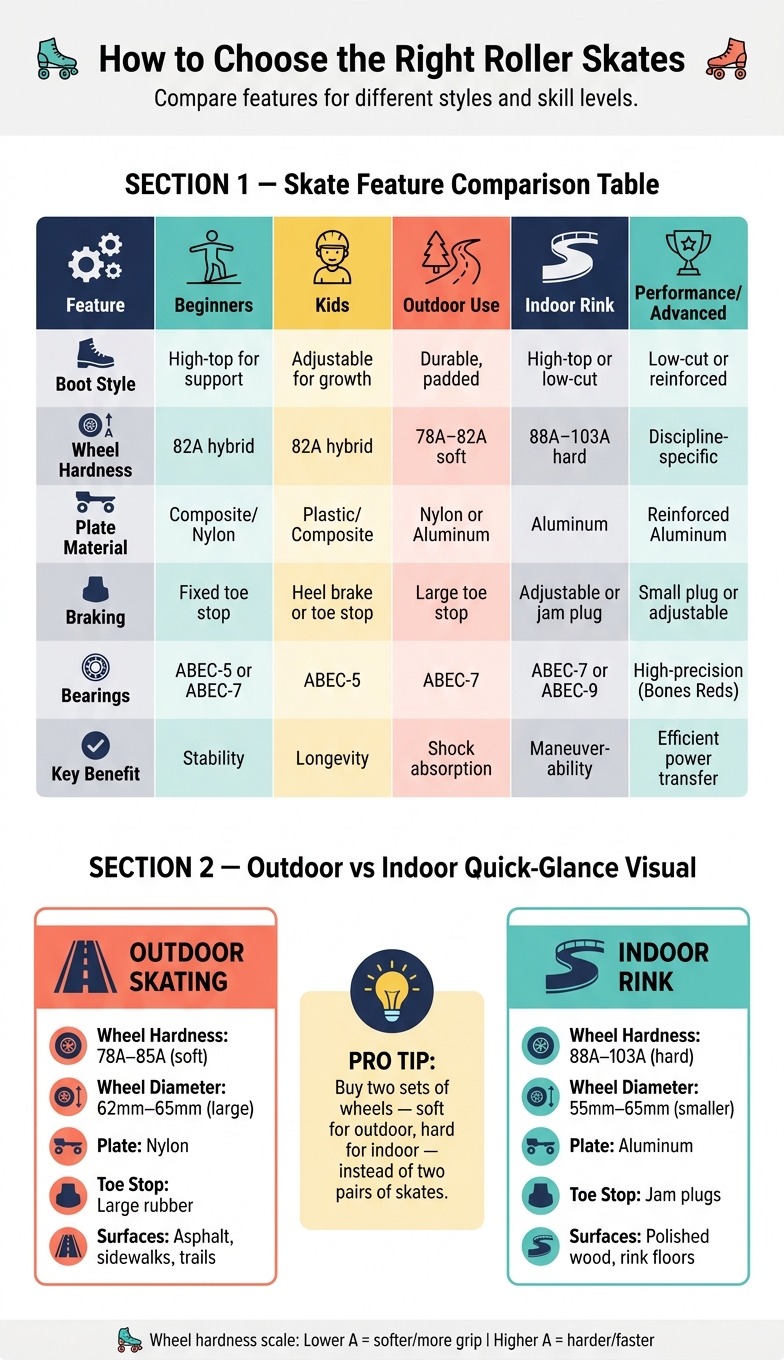
Roller Skates Comparison Guide: Skill Level, Surface & Key Features
Key Factors to Consider
Picking the right roller skates boils down to two main things: where you’ll skate and your skill level. As mentioned earlier, features like boot support and wheel type are crucial, but they only work for you if they match your skating environment. For instance, if you’re hitting outdoor sidewalks or trails, you’ll want softer wheels and a sturdy boot. On the other hand, indoor rink skaters benefit from harder wheels and a more responsive plate. Get this wrong, and even the best features won’t save you from a frustrating ride.
Skill level matters, too. Beginners should prioritize stability and control. High-top boots, a composite or nylon plate, and a fixed toe stop are ideal for those just starting out. A budget of $150–$175 usually gets you a solid pair of skates that won’t disappoint.
Fit is everything. A snug fit ensures better control. There should be minimal heel lift - just a few millimeters at most. For kids, adjustable skates that grow with them (up to 4 shoe sizes) are a smart choice.
"Strong and supportive boots are essential for ankle stability, helping to prevent injuries." - Joseph E. Bogle, Founder and Lead Writer, SkateToScoot.com
If you’re looking for something lightweight and responsive, Snowfeet* skates are a standout option. Their design makes it easier to switch between indoor and outdoor skating while keeping control in check.
Don’t overlook bearings. High-quality bearings are key for a smooth ride. For casual skaters, ABEC-5 or ABEC-7 bearings are plenty. If you’re into performance or derby skating, consider higher-rated bearings like ABEC-9 or Bones Reds. Just keep in mind that these might be overkill for everyday use.
Here’s a quick table to break down the features you’ll want for different types of skating, including how Snowfeet* designs stack up.
Skate Feature Comparison Table
| Feature | Beginners | Kids | Outdoor Use | Indoor Rink | Performance/Advanced |
|---|---|---|---|---|---|
| Boot Style | High-top for support | Adjustable for growth | Durable, padded | High-top or low-cut | Low-cut or reinforced |
| Wheel Hardness | 82A (hybrid) | 82A (hybrid) | 78A–82A (soft) | 88A–103A (hard) | Discipline-specific |
| Plate Material | Composite/Nylon | Plastic/Composite | Nylon or Aluminum | Aluminum | Reinforced Aluminum |
| Braking | Fixed toe stop | Heel brake or toe stop | Large toe stop | Adjustable or jam plug | Small plug or adjustable |
| Bearings | ABEC-5 or ABEC-7 | ABEC-5 | ABEC-7 | ABEC-7 or ABEC-9 | High-precision (Bones Reds) |
| Key Benefit | Stability | Longevity | Shock absorption | Maneuverability | Efficient power transfer |
If you’re shopping for kids or first-timers, look for "ready-to-roll" bundles that include protective gear like knee, elbow, and wrist guards. These bundles make it easy to get started safely.
Roller Skates vs Snowfeet* Short Skis: A Side-by-Side Look
When winter rolls in and the streets turn snowy, Snowfeet* short skis step up to keep your skating spirit alive. Let’s compare the practicality of traditional roller skates with the clever design of Snowfeet* short skis.
Snowfeet* are essentially skates made for snow. They’re compact, easy to attach to your everyday winter boots, and work great on groomed slopes, snow parks, and sledding hills. Compare that to traditional long skis, which need special plastic ski boots, roof racks for transport, and a steeper learning curve. The convenience factor alone makes Snowfeet* stand out.
"Short skis provide more fun and freedom of movement, they are playful, responsive, lightweight, and offer simpler stopping and riding compared to traditional long skis." - Snowfeet Store
For roller skaters, the transition to Snowfeet* feels pretty natural. The balance and movement patterns are similar to inline skating or ice hockey, so all that muscle memory you’ve built up on wheels translates easily to the snow.
Here’s a quick side-by-side breakdown to highlight the key differences:
| Feature | Roller Skates | Snowfeet* Short Skis | Traditional Long Skis |
|---|---|---|---|
| Portability | Moderate (carry bag) | High (fits in a backpack) | Low (requires roof racks or large ski bags) |
| Footwear | Dedicated skate boots | Winter boots or snowboard boots | Specific plastic ski boots |
| Learning Curve | Moderate | Easy for skaters | Steep for beginners |
| Terrain | Pavement, rinks, smooth surfaces | Groomed slopes, parks, trails | Open slopes, deep powder |
| Maneuverability | Excellent | Excellent for quick turns | Lower; better for long carves |
| Season | Year-round (dry surfaces) | Winter only | Winter only |
One standout feature of Snowfeet* is their metal ski edges, just like traditional skis. This means you can pull off hockey stops and maintain control on icy surfaces. Plus, most ski resorts allow them because of these edges. They’re designed to fit US shoe sizes 6 to 13, and if you order from snowfeetstore.com, shipping to the US usually takes just 3 to 5 business days.
For roller skaters looking to stay active during the colder months, Snowfeet* offer a simple solution. They eliminate the need for bulky ski gear or rentals, making it easy to hit the slopes without the hassle.
Conclusion: Pick the Right Skates and Start Skating
From understanding boot support and wheel performance to considering your skating location and safety, choosing the right pair of skates can completely transform your experience. A proper fit is key - well-fitted skates not only improve control and comfort but also make skating safer and more enjoyable.
Don’t forget to maintain your skates regularly and ease into them with shorter sessions to let the boots mold to your feet naturally. Moisture-wicking socks can also make a big difference, keeping you comfortable for longer sessions.
Much like Snowfeet* short skis, which smoothly shift between groomed slopes and snow parks, the right skates can grow with your skills and adapt to different environments. And let’s face it, they’re a lot easier to handle than bulky skis or snowboards!
Take what you’ve learned here, pick a pair that suits your needs, and start skating. The pavement (or rink) is waiting!
FAQs
How do I know if my skates fit correctly?
To get the right fit for your skates, aim for a snug but comfortable feel - no pain or pinching allowed. Your heel should stay firmly in place without slipping, while your toes should gently touch the front without feeling squished. Make sure to wear your skating socks when trying them on, and watch for minimal heel lift. If they’re too tight or too loose, it might be time to adjust the size.
What wheels should I get if I skate both indoors and outdoors?
For skating both indoors and outdoors, go for wheels with a softer durometer (78A-82A). These provide better grip and absorb shocks, making them ideal for different surfaces. Larger wheels, typically between 58mm and 62mm, are a great choice - they handle outdoor terrain smoothly while still working well indoors. Snowfeet products are built with comfort and adaptability in mind, making them a solid pick for a variety of skating conditions.
Are Snowfeet* easier than traditional skis or snowboards?
Snowfeet are a great option for anyone looking for a simpler way to enjoy winter sports. Their small, lightweight design makes them easy to strap on and control, which is especially helpful for beginners. Unlike traditional skis or snowboards that often come with a steep learning curve, Snowfeet feel intuitive and straightforward. They’re a fun and accessible choice for all ages - whether you’re a kid, an adult, or even a senior.











댓글 남기기
이 사이트는 hCaptcha에 의해 보호되며, hCaptcha의 개인 정보 보호 정책 과 서비스 약관 이 적용됩니다.