







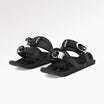












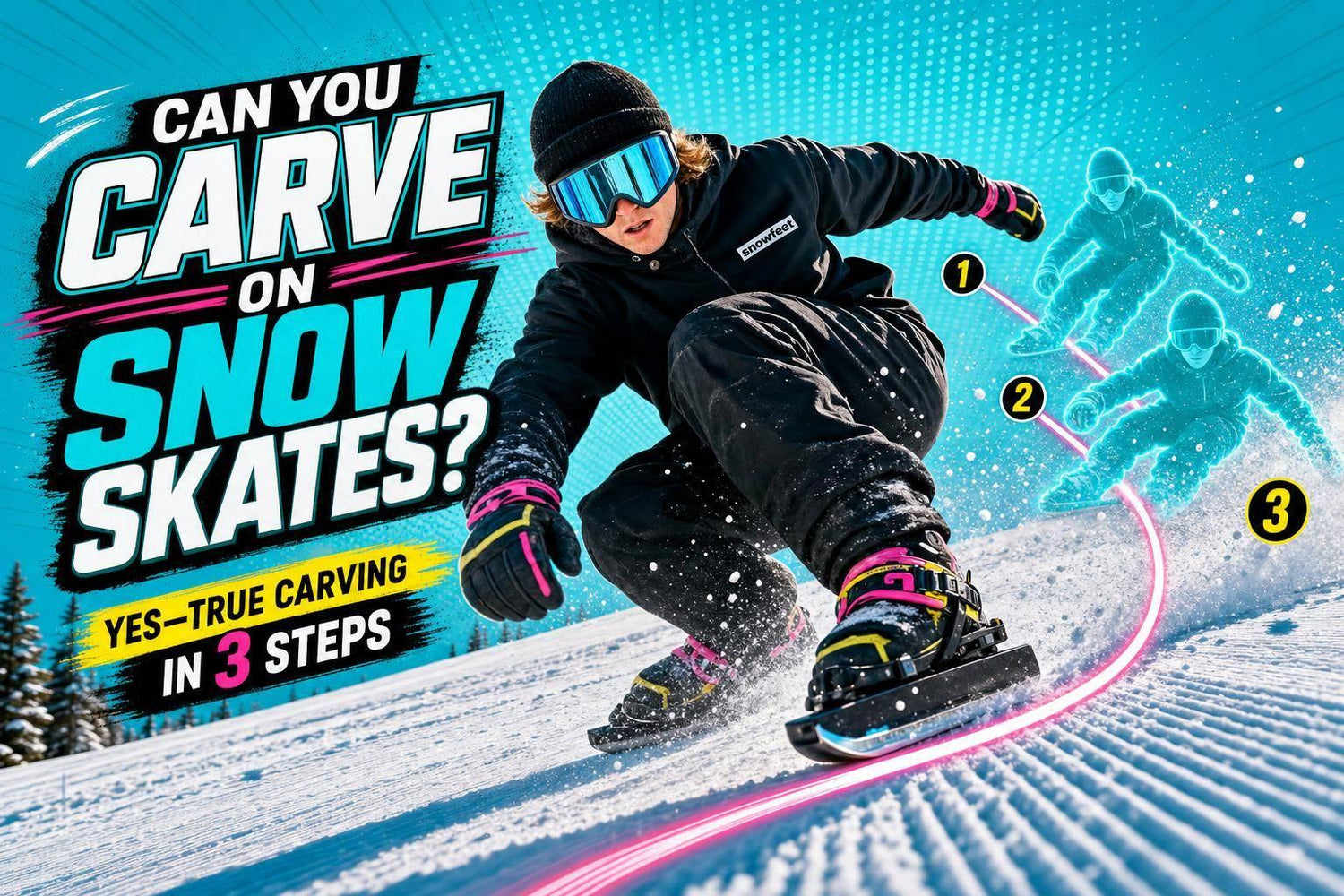
If you’ve ever thought carving on snow requires long, heavy skis, think again. Snowfeet* Skiskates - just 17 inches long - are proving that even compact gear can deliver smooth, controlled turns. These mini skis are equipped with metal edges, secure bindings, and ski-like construction, making carving not only possible but easier for many riders.
Why Snowfeet* Skiskates Work for Carving:
- Short Length: At 44 cm, they make tight turns and quick edge transitions effortless.
- Ski Construction: Metal edges and wood cores provide grip and flex for clean arcs.
- Boot Compatibility: Adjustable bindings work with ski or snowboard boots for better edge control.
Compared to full-length skis and snowboards, Snowfeet* offer agility, portability, and a much lower learning curve. Perfect for groomed runs and weaving through crowds, they’re a fun, lightweight option for carving enthusiasts. Whether you’re a beginner or a seasoned skier, these skates bring a fresh twist to the slopes.
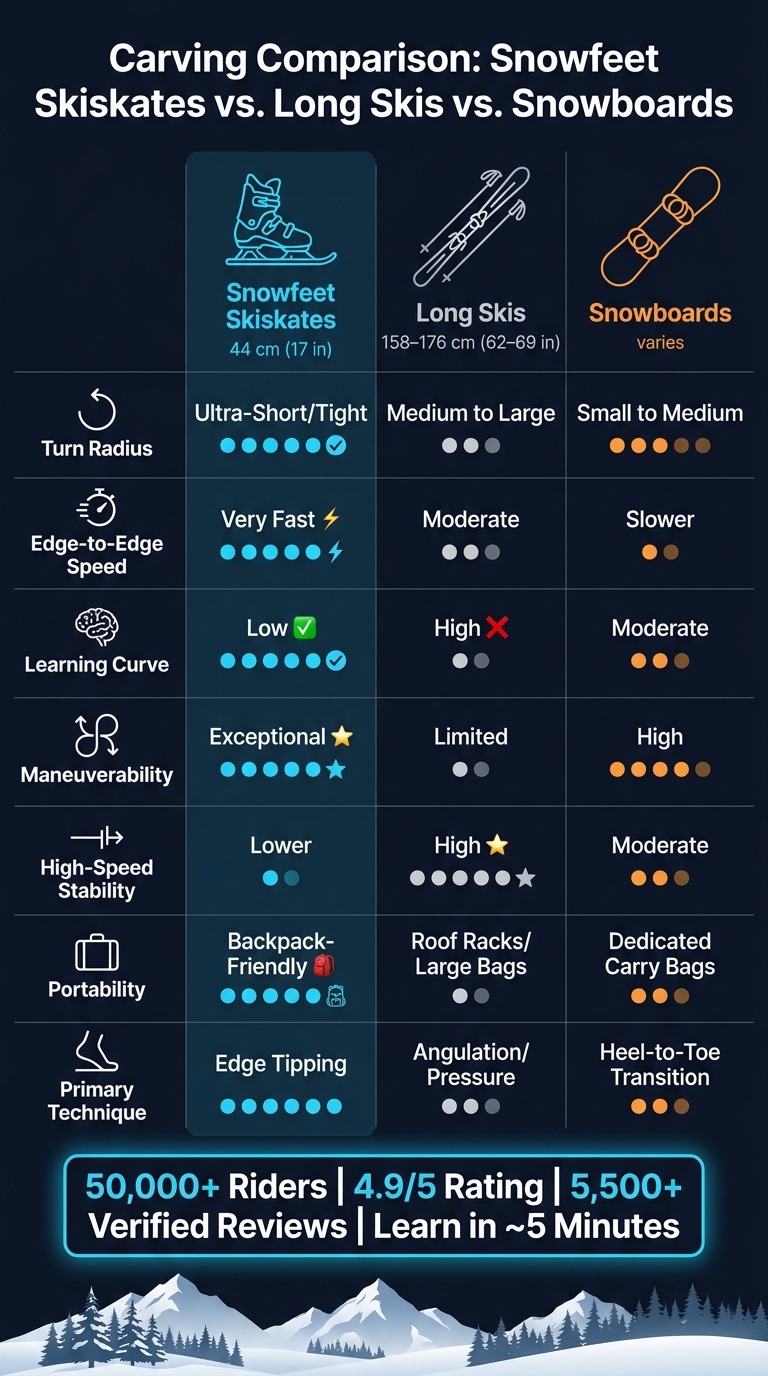
Snowfeet Skiskates vs. Long Skis vs. Snowboards: Carving Comparison
Carving and Snow Skates: The Basics
What Is Carving?
Carving is a snow-turning technique that’s all about precision. Instead of skidding or scraping sideways, you tip your ski or snowboard onto its edge, letting it naturally arc through the turn. The result? A clean, thin "pencil line" track where the tail follows the exact path of the tip.
Laurie Todd, a CSIA Level 4 ski instructor, sums it up perfectly:
"A carved turn is where the ski is bent against its natural camber into an arc, and that arc shape guides the skis along a curved path."
No snow spray, no sliding - just smooth, efficient turns. This is what most skiers mean when they talk about "real skiing." Once you grasp this concept, it’s easier to understand how Snowfeet* make carving possible.
Why Snow Skates Can Carve
People often confuse snow skates with bindingless park snowskates - essentially a skateboard deck designed for snow. Those are great for tricks and flat-ground fun, but they can’t carve. Without a secure connection to your boots, you can’t apply the edge pressure needed to grip the snow.
Snowfeet* Skiskates are a whole different story. They’re built like miniature skis, complete with metal edges and secure bindings that attach to your ski boots. This connection lets you tilt the skate onto its edge and shift your weight, mimicking the mechanics of traditional skiing.
Laurie Todd explains the science behind it:
"The more you tip the ski, the further the foot has to go to dig into the snow, so the more the ski bends."
That bending action is what creates the arc, and Snowfeet* Skiskates are designed to do just that. Their blend of ski construction and innovative design is what sets them apart - a concept we’ll explore further.
Snowfeet* Skiskates vs. Standard Skis and Snowboards
Carving skis like the Nordica Multipista DC74 Ti or the Stöckli Laser WRT are built for high performance. They’re long - typically between 158 cm and 176 cm (62–69 inches) - and have turn radii of 12 to 15 meters. But they come with challenges: a steep learning curve and a price tag often over $1,000.
Snowfeet* Skiskates, on the other hand, are just 44 cm (17 inches) long. This compact size means a much tighter turning radius, so you don’t need high speeds or wide-open groomers to carve cleanly. They’re perfect for linking turns on narrower runs, weaving through crowded slopes, and feeling that edge-to-edge control - all without the hassle of mastering bulky gear.
While traditional setups demand both time and money, Snowfeet* make carving more approachable, giving riders the chance to enjoy smooth, arcing turns with less effort and expense.
Design Features of Snowfeet* That Make Carving Work
Short Length for Tighter Turns
The standout feature of Snowfeet* Skiskates is their compact size. Measuring just 44 cm (17 inches), they offer a much tighter turn radius compared to standard skis, which typically run 150 cm or longer and have turn radii of 12–16 meters.
Tom Gellie, an APSI Level 4 ski instructor, highlights the challenges of longer skis:
"Many skiers are on skis that are simply too wide... and with a long turn radius. They might feel versatile, but the trade-off is they're much harder to carve. Instead of the ski pulling you into the turn, you're forced to skid."
With Snowfeet*, carving feels effortless. The shorter length allows the edges to engage the snow almost instantly, making edge-to-edge transitions lightning-fast compared to traditional skis. This compact design is key to Snowfeet*'s ability to redefine the carving experience.
Ski-Style Construction
Snowfeet* Skiskates aren’t just about size - they’re built with premium materials for performance. Their certified sustainable wood core provides controlled flex, letting the skiskates naturally arc during turns. Add to that steel edges for grip and sintered graphite bases for speed and durability, and you’ve got a setup that performs exceptionally well on groomed runs. The sintered base helps maintain momentum through turns, which is crucial for keeping edges locked into the snow.
The skates also feature a parabolic shape with a narrow waist, encouraging smooth arcs instead of skidding. These thoughtful design elements, combined with advanced bindings, ensure every movement translates directly into precise carving.
Bindings and Boot Compatibility
A secure connection between your foot and the skate is essential for performance, and Snowfeet* deliver with tool-free, adjustable bindings. These bindings have an anti-slip surface and are compatible with both ski and snowboard boots.
If you use ski boots, you’ll benefit from maximum ankle stiffness, which translates to excellent edge control - perfect for carving. Prefer snowboard boots? No problem. They offer a secure fit while allowing for a bit more natural movement. As Tom Gellie explains:
"Think of your ankles as your suspension. If your boots block that movement, everything feels harder: balance, edging, flow."
The bindings ensure your foot stays locked in, so every shift in weight goes straight to the edge, optimizing your carving performance.
Snowfeet* & Skiskates Tutorial - How to Become a PRO Skiskater
How to Carve on Snowfeet* Skiskates: A Step-by-Step Guide
Now that you know why Snowfeet* Skiskates are great for carving, let’s dive into how to actually do it.
Getting Your Stance Right
Start with a low, wide stance. Bend your ankles and knees deeply to gain better edge control. Keep your weight centered over the skiskates, and position your hands forward to stay balanced. A steady upper body is key to letting your legs steer with precision. Laurie Todd, a CSIA Level 4 instructor, puts it perfectly:
"You need a lot of bend in the ankles and knees to unlock your lateral range of motion."
Once your stance feels solid, you’re ready to engage those edges.
Using Your Edges
Instead of leaning your entire body, focus on rolling your ankles and knees. This subtle movement shifts the skiskates onto their edges, allowing them to cut smoothly through the snow. Snowfeet* Skiskates respond quickly, so small adjustments make a big difference.
"The edging movement comes from the feet and legs, so the ankles and knees tip, not the hips and shoulders." - Laurie Todd, CSIA Level 4
Start practicing on a gentle slope. Try a simple J-turn: build a bit of speed, roll your ankles to one side, and carve a clean J-shaped track in the snow. If you see snow spraying out, it means you’re skidding rather than carving - adjust your technique to ensure the edges are doing the work.
Linking Turns Together
Once you’ve nailed individual turns, it’s time to connect them smoothly. At the end of one turn, shift your weight to the outside leg, which will become the new inside leg for the next turn. Let your body follow the natural motion as you switch edges - don’t overthink it.
Control your speed by tweaking the shape and angle of your turns. Rounder, more complete turns help slow you down, while shallower turns keep your momentum up. If you want sharper, more aggressive turns, increase your edge angle. Thanks to their compact size - just 17 inches (44 cm) long - Snowfeet* Skiskates make quick edge-to-edge transitions feel natural once you get the hang of it.
sbb-itb-17ade95
Snowfeet* Skiskates vs. Long Skis and Snowboards for Carving
How do Snowfeet* Skiskates compare to traditional skis and snowboards when it comes to carving? The simple answer: they trade high-speed stability for something most casual skiers rarely get to experience - instant, intuitive edge control. Snowfeet* bring a whole new level of agility and responsiveness to recreational carving, making them a standout choice for anyone looking for a fun and dynamic ride.
Let’s break it down. Traditional skis require more technical skill and rely on their length to engage the sidecut for carving. This means you need deliberate body angulation and precise pressure control to achieve those clean arcs. Snowfeet* Skiskates, on the other hand, skip all that complexity. At just 17 inches long, they lock onto an edge with a simple weight shift - much like ice skates. Their shorter length and reduced swing weight make tipping into a carve effortless, and transitions from edge to edge are lightning-fast.
Snowboards? They’re decent for carving too, but the fixed sideways stance can slow things down. Moving from heel to toe edge takes more time and effort compared to the independent movement Snowfeet* allow. With Snowfeet*, your feet work independently, making quick, linked carves feel smooth and natural.
Snowfeet* are all about agility and precision, not high-speed racing. While full-length skis (160 cm and longer) excel at high-speed, large-radius turns, Snowfeet* are built for tight, controlled moves on groomed runs. They’re perfect for riders who value maneuverability and fun over sheer speed. Check out the table below to see how they stack up against the competition.
Carving Comparison Table
| Factor | Snowfeet* Skiskates | Long Skis | Snowboards |
|---|---|---|---|
| Turn Radius | Ultra-short / Tight | Medium to Large | Small to Medium |
| Edge-to-Edge Speed | Very Fast | Moderate | Slower |
| Learning Curve | Low | High | Moderate |
| Maneuverability | Exceptional | Limited | High |
| High-Speed Stability | Lower | High | Moderate |
| Portability | Backpack-friendly | Roof racks or large bags | Dedicated carry bags |
| Primary Technique | Edge Tipping | Angulation / Pressure | Heel-to-Toe Transition |
For most recreational skiers and riders, the key factors - tight turn radius, quick edge response, and an easy learning curve - are where Snowfeet* Skiskates truly shine. If you’re looking for something light, portable, and ridiculously fun, these might just be your next favorite winter gear.
Picking the Right Snowfeet* Model for Carving
Not all Snowfeet* models are built the same when it comes to carving. Choosing the right one depends on your skill level, riding style, and where you prefer to shred. Here's a quick breakdown of how each model performs and the conditions they're best suited for.
How Each Model Performs When Carving
The Mini Ski Skates (~38 cm) are the shortest and most agile option. They respond instantly to edge pressure, making them perfect for quick, playful turns and learning basic edge control at slower speeds. However, their shorter edges struggle to grip on steeper or icy terrain. Priced at $250, they’re a great entry-level pick for beginners.
The Skiskates (44 cm) step things up with more stability while keeping that nimble, fun feel. Designed with a parabolic shape and narrow waist, they excel at carving on groomed runs. Snowfeet* founder Zbyněk sums it up well:
"Skiskates is the best product for slopes we developed so far. I love how easy they are to ski and skate and how many different kinds of tricks I can perform without much effort."
Starting at $575, these are a solid choice for riders looking for smooth, effortless turns without a steep learning curve.
The Skiblades (65 cm, from $635) bring a more "ski-like" carving experience. Their longer edges provide better grip on hardpack, allowing for cleaner, more defined turns. They're ideal for intermediate riders ready to move from quick slashes to more precise carves. The Skiblades (99 cm, from $675) take it a step further, offering excellent edge hold at higher speeds while staying more compact and maneuverable than full-length skis. As customer Brad Tolin puts it:
"Super easy to control, quick to turn, and way more forgiving than traditional skis. They're great for carving and navigating crowded slopes without feeling bulky."
The Short Skis (120 cm, $775) are the closest to traditional skis. Built for advanced riders, they deliver the strongest edge hold and are perfect for long, confident arcs on open groomers and steeper runs.
To help you decide, here’s a look at the best terrain and snow conditions for each model:
Best Terrain and Snow Conditions for Each Model
| Model | Best Terrain | Best Snow Conditions |
|---|---|---|
| Mini Ski Skates (38 cm) | Green runs, narrow trails, small hills, parks | Soft groomers, packed powder |
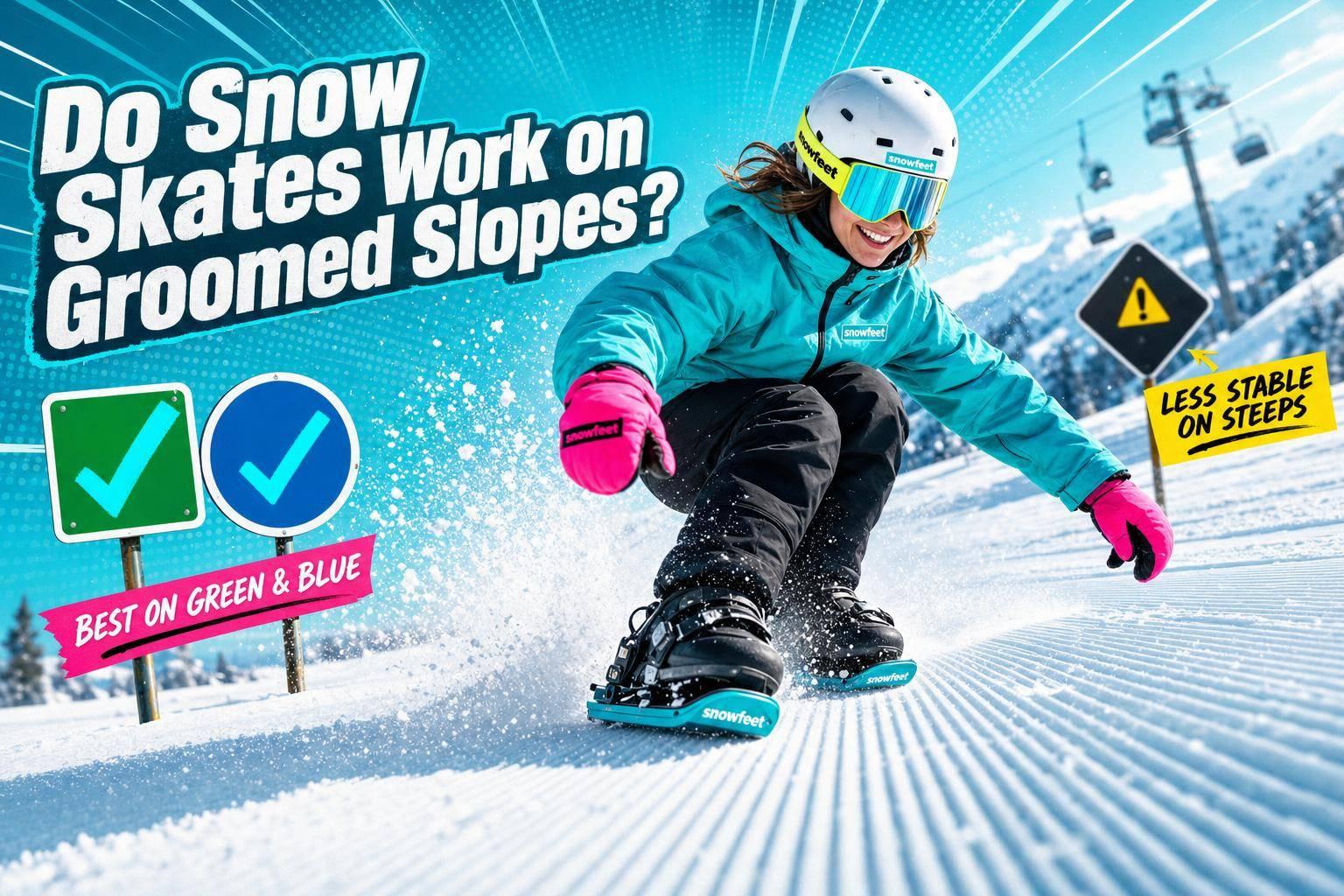
| Skiskates (44 cm) | Groomed blue runs, narrow trails, resort terrain | Soft to firm groomers |
| Skiblades (65 cm) | Groomed slopes, moguls, park features | Firm groomers, mild hardpack |
| Skiblades (99 cm) | Wide groomers, moderate steeps, mixed resort terrain | Hardpack, spring slush, mixed snow |
| Short Skis (120 cm) | Open groomers, faster blue/black runs | Hardpack, firm groomers |
This breakdown highlights how Snowfeet* models make carving more accessible and enjoyable compared to traditional skis or snowboards. But don’t forget - your boots play a big role too.
A Note on Boot Choice
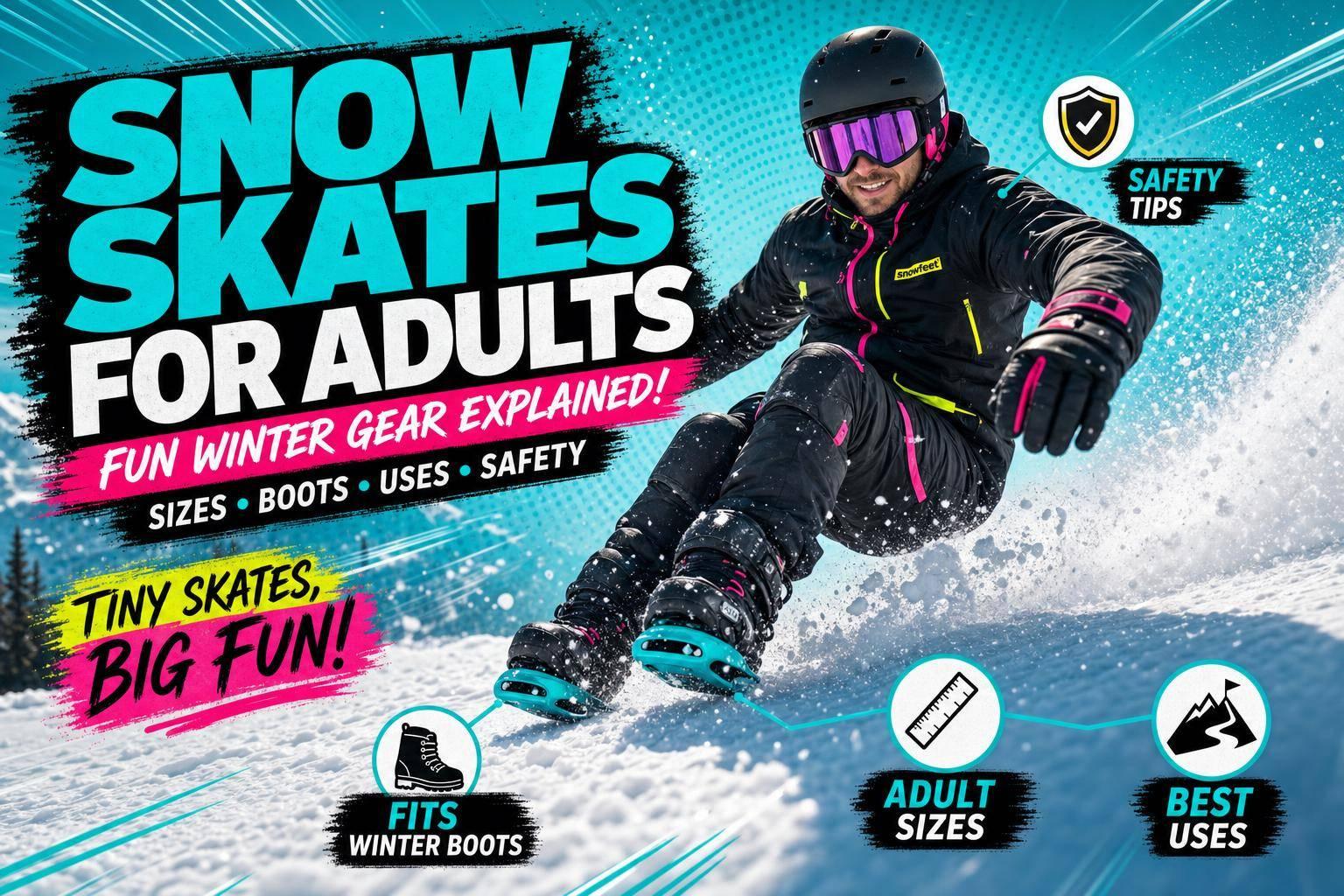
If you don’t have ski boots, don’t worry. Many models, like the 38 cm and 44 cm options, come with universal bindings that work with regular winter boots. This makes them great for beginners and casual riders. That said, for the best edge control - especially with the 65 cm and longer models - pairing them with ski boots gives you sharper, more precise turns.
Conclusion: Why Snowfeet* Work Well for Carving
Carving on snow skates isn’t just doable - it’s a blast. Snowfeet* products are designed with features like metal ski edges, a narrower base, and an elevated deck, all of which make turning feel smooth and intuitive. Whether you’re cruising down a groomed blue run or weaving through tighter trails, their design makes carving straightforward and fun.
What makes Snowfeet* stand out isn’t just their compact size - it’s the whole experience. They’re lightweight, pair with regular winter boots, and let you start carving confidently in just minutes. No need for bulky, expensive gear or hours of lessons. Most riders feel at ease within about 5 minutes.
"Absolute game-changer! They're light, fast, and incredibly fun to ride." - Nathan F.
With a variety of models, there’s something for everyone. Beginners can start with the Mini Ski Skates (starting at $250) and eventually upgrade to the Short Skis ($775) as they build confidence. Each step up offers better edge control and speed, delivering a carving experience that competes with - and often surpasses - traditional skis. With over 50,000 riders and a 4.9/5 rating from more than 5,500 verified reviews, Snowfeet* has proven itself as top-tier gear for anyone looking to carve with ease and freedom. It’s clear why they’ve become a favorite for modern carving enthusiasts.
FAQs
Do Snowfeet* Skiskates carve on icy snow?
Yes, Snowfeet Skiskates* can handle carving on icy snow quite well. They perform best on groomed slopes or when there's up to about 4 inches of light powder. Their design makes them incredibly versatile, giving you great control and smooth maneuverability in different snow conditions.
Are ski boots required to carve well on Snowfeet*?
No, you don’t need ski boots to carve effectively on Snowfeet* Skiskates. These skiskates are made to work with regular winter shoes, snowboard boots, or ski boots. This gives you the freedom to use them without investing in specialized footwear. Plus, they still deliver great carving performance, making them a versatile option for all kinds of users.
What speed do you need to carve on Snowfeet* Skiskates?
Carving on Snowfeet Skiskates* doesn’t demand a particular speed. However, keeping a steady, moderate pace works best for smooth and controlled movements. Much like traditional skis, Snowfeet* are designed to be easy to handle and versatile, which means you can carve comfortably even at slower speeds.











댓글 남기기
이 사이트는 hCaptcha에 의해 보호되며, hCaptcha의 개인 정보 보호 정책 과 서비스 약관 이 적용됩니다.