



















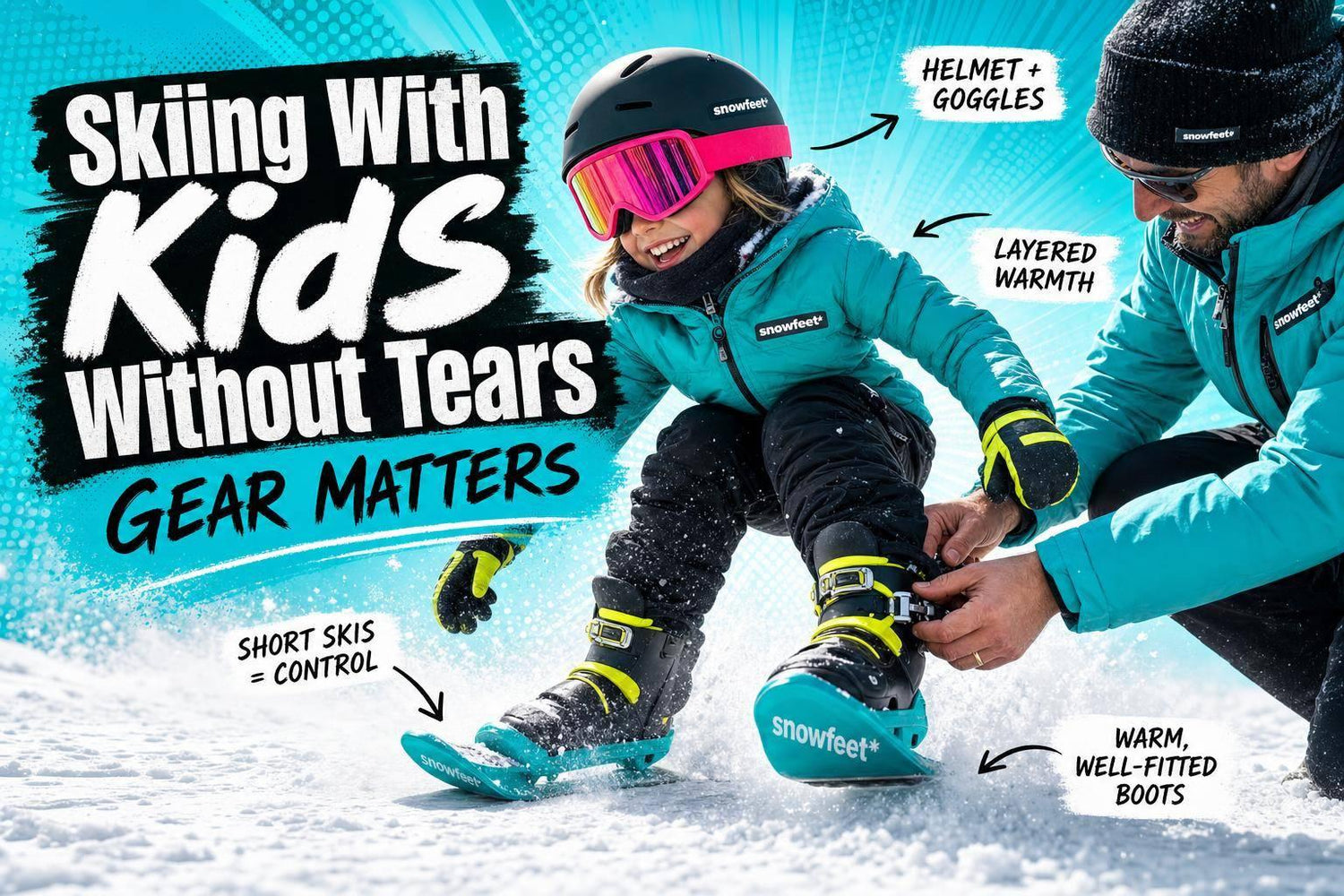
Most kid ski meltdowns start with gear that’s too big, too stiff, or too cold. If I want a smoother family ski day, I keep it simple: short skis, warm hands, dry feet, and gear my kid can handle without a fight.
Here’s the short version:
- Shorter skis are easier for kids to steer, stop, and carry
- Boot comfort matters just as much as ski length
- Warm mittens, proper socks, and dry layers can add more runs
- I match gear to my child’s skill and attention span, not my dream of an all-day trip
- For many families, compact Snowfeet* options make the day less of a circus :)
A few facts back this up:
- Children lose heat faster than adults
- Helmet fit works best when it sits about 1–2 finger widths above the eyebrows
- A jacket or pant waterproof rating around 5,000–10,000 mm is a solid target for most resort days
- One pair of merino or synthetic ski socks is usually better than two
If I had to boil the whole thing down, it’d be this: buy for control now, not growth later. Long skis and stiff boots may look like the “next step,” but for many kids, they just mean more falls, more carrying, and more “I’m done.”
Quick Comparison
| Gear option | Best for | Main upside | Watch for |
|---|---|---|---|
| Snowfeet MINI KIDS | Young beginners, cautious kids | Small, simple, less scary | Best for short, easy sessions |
| Snowfeet* Mini Skis | First bunny hill days | Easy first turns | Kids may outgrow them as speed climbs |
| 44 cm Snowfeet* Skiskates | Older kids with balance, skating background | Fast turns, playful feel | Less ideal for kids who want a long-ski feel |
| 65 cm Snowfeet* Skiblades | Confident kids who want more stability | More support at higher speed | Still needs good balance and control |
So, if I want fewer tears and more laps, I start with the shortest setup my child can use well, then build the rest of the kit around warmth, fit, and a short attention span.
How to Choose the Best Skis for Kids
Choose shorter, lighter skis kids can actually control
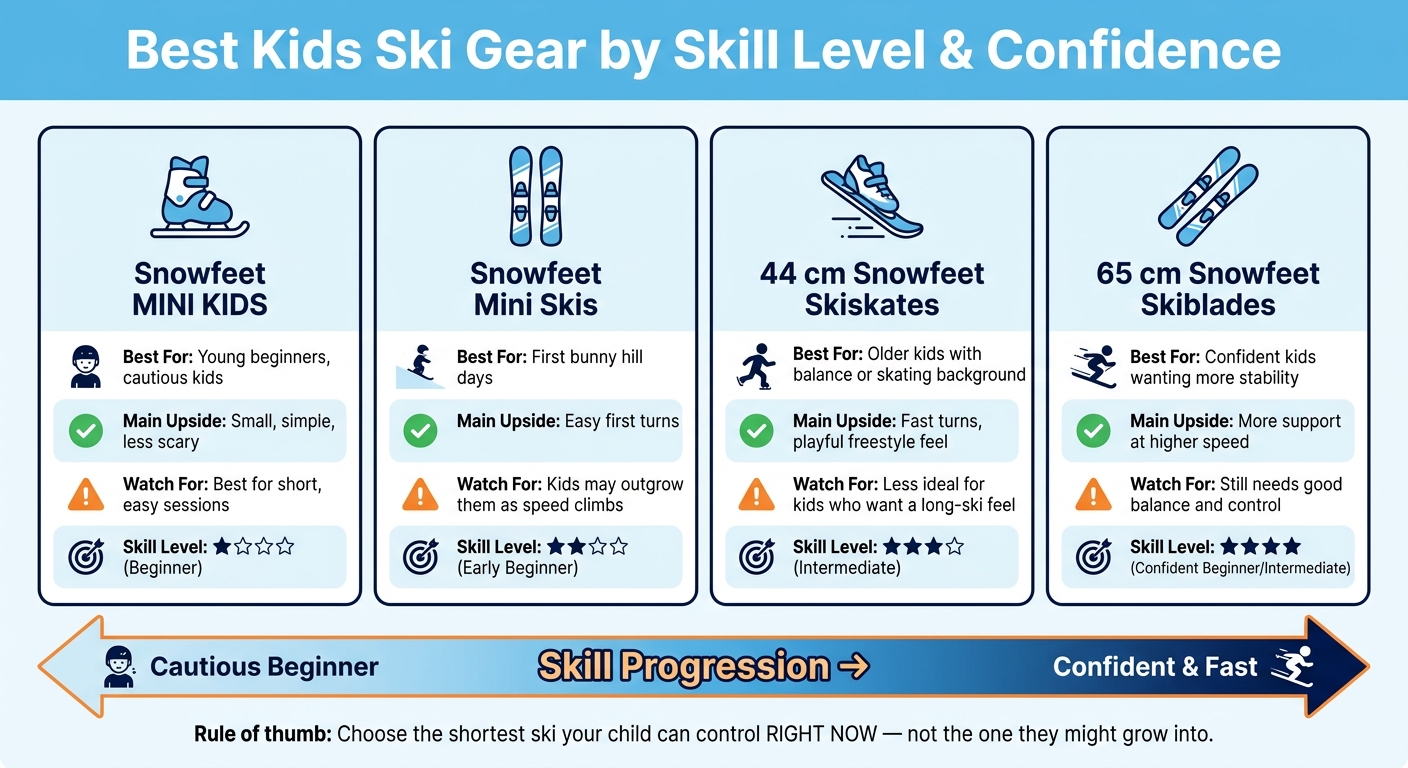
Kids Ski Gear Comparison: Best Snowfeet Options by Skill Level
Pick the shortest ski your child can control right now. That usually makes the whole day go better.
Short skis are easier to steer, stop, and carry. And for kids, that matters a lot. They feel in control sooner, take fewer spills, and spend less time getting upset on the snow. More smiles, less drama. That’s a win for everyone :)
Best Snowfeet* options by stage and confidence level
Snowfeet* makes the choice simpler because the lineup matches different stages, not just height or age.
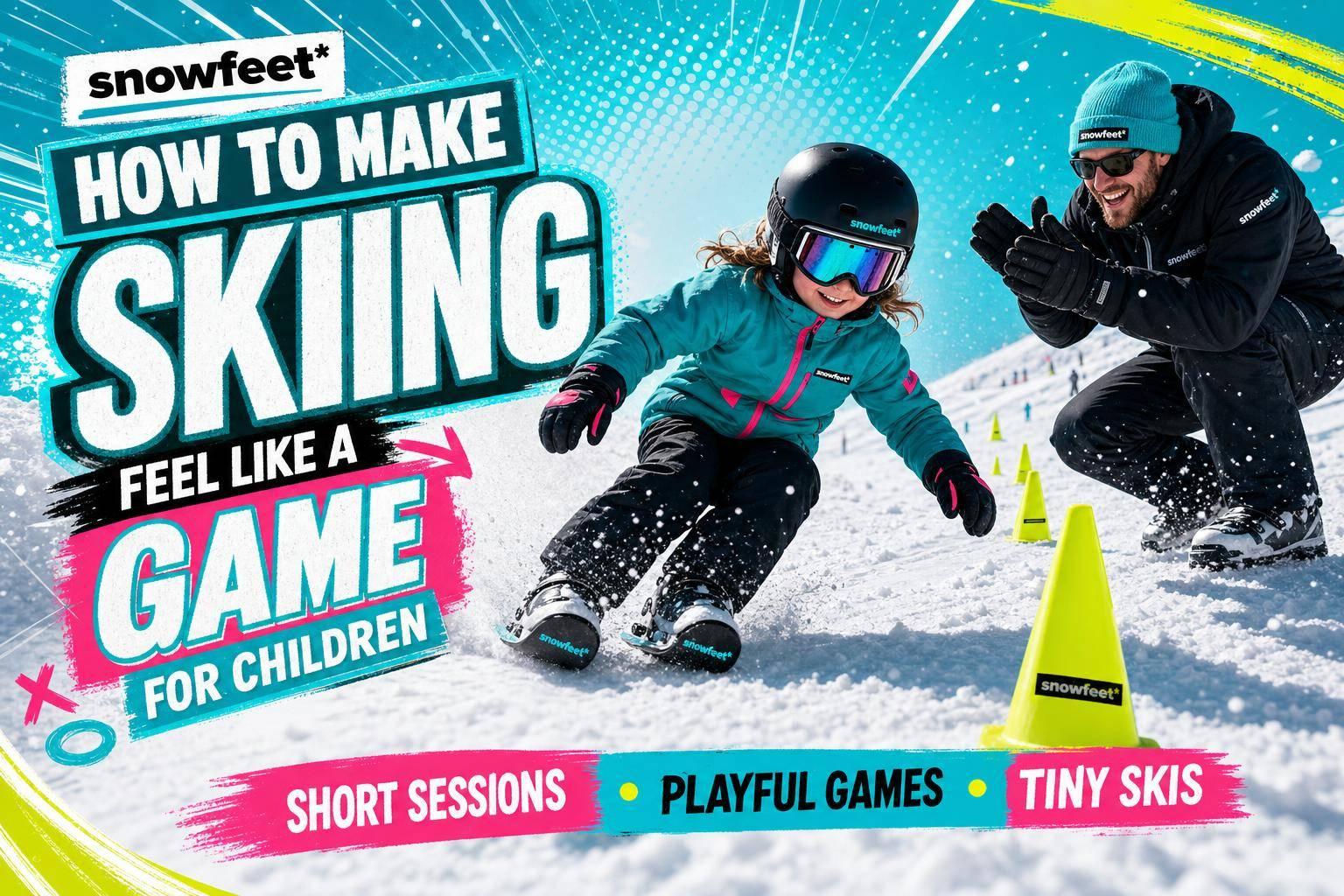
- Snowfeet MINI KIDS work well for the youngest beginners who can handle a short session on snow.
- Snowfeet* mini skis fit kids who are ready for their first bunny hill.
- 44 cm Snowfeet* Skiskates are a nice match for kids who like a skating-style feel and want movement that feels natural.
- 65 cm Snowfeet* Skiblades fit kids who want more stability but aren’t ready for full-length skis.
Once ski length is dialed in, comfort starts with boots and layers.
Why shorter gear works better than long skis for most families
Compared with standard kids' skis, Snowfeet* options are lighter, easier to carry, and faster to learn on.
That’s not just nice in theory. It helps in all the little moments that can make or break a family ski day. Compact gear is less likely to cross tips. Kids are less likely to bump into other skiers in a packed lift line. And that cuts a surprising amount of stress. If you’ve ever tried to untangle long kids’ skis while someone’s mitten is missing, you know the deal.
How to pick the right length without overbuying
Choose the shortest option your child can control today.
If they can link turns on green runs and want more speed, it’s time to move up. Until then, control now beats buying for growth later. Bigger isn’t always better on snow. Sometimes it’s just... more to wrestle with.
Once skis feel easy, the rest of the setup should feel easy too. After ski length, boots, helmets, goggles, and layers have a big effect on how long kids stay happy.
Build the rest of the kit around comfort and fewer complaints
Once skis feel easy to control, comfort becomes the next big win. This is the stuff that often decides how the day goes: boots, helmets, goggles, gloves, and layers. Get those right, and you usually get more laps, fewer meltdowns, and way less “I want to go inside.”
Boots that are warm, simple, and easy to walk in
Stiff rental boots can wreck a kid’s day in a hurry. They lock up the ankle, make walking awkward, and wear kids out fast. If the fit is off, you can also end up with shin pain and numb toes. Not fun.
This is one spot where Snowfeet* setups help a lot. Snowfeet MINI KIDS, Skiskates, and Skiblades can work with regular insulated winter boots or soft snowboard boots. So you can skip the boot-fit drama at the rental counter. That takes away one of the biggest family ski-day hassles and makes the morning feel a lot less chaotic. Kids can also move in a more natural way, which helps.
For socks, keep it simple:
- Use one pair of ski socks
- Pick merino or a synthetic blend
- Make sure they come up to the knee
- Skip cotton
- Don’t double up socks
More socks sounds warmer, but it often backfires. It can bunch up, cut circulation, and make feet colder. Yep, skiing is weird like that.
Helmets and goggles that stay comfortable all day
If a helmet pinches or slides around, kids will keep messing with it all day, or they’ll try to take it off. A good fit is pretty easy to check. The helmet should sit level on the forehead, about 1–2 finger widths above the eyebrows, and it shouldn’t wobble when your child shakes their head. The chin strap should feel snug, with only one or two fingers fitting underneath.
Helmets help cut head-injury risk, but only if kids will actually wear them. That’s why comfort matters so much. A model with an adjustable fit system makes life easier, and it’s smart to test the helmet and goggles together instead of treating them like separate pieces.
Once the helmet fits, pair it with goggles that match well. There shouldn’t be a gap between the top of the goggles and the helmet. That gap lets cold air in and can lead to headaches. Double-lens goggles with anti-fog coating and solid ventilation tend to work best in normal resort weather. For cloudy beginner terrain, rose or amber lenses are a smart pick.
Layers, gloves, and socks that keep kids on the slope longer
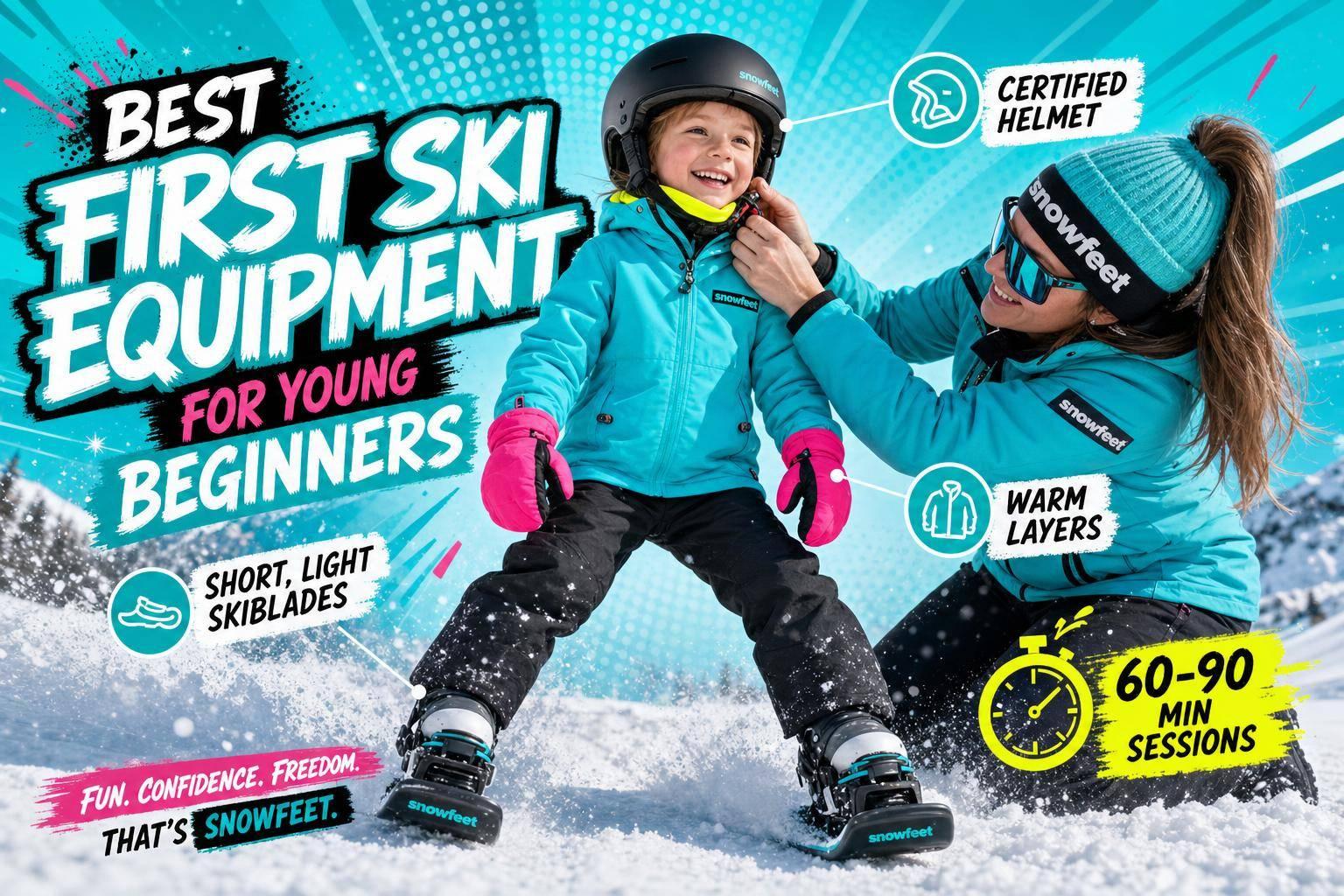
Warmth works best when you build it from the inside out. For most ski days, a simple setup does the job well:
- A wicking base layer
- A light fleece or insulated mid-layer
- A waterproof shell
Aim for a waterproof rating of at least 5,000–10,000 mm. That helps keep kids dry when they fall, sit in the snow, or spend half the lesson making snow angels instead of turning. It happens :)
For hands, waterproof insulated mittens are usually warmer than gloves for younger kids. Non-waterproof mittens soak through fast in wet snow, and once hands get cold, the day can go downhill fast. Toss a second dry pair in your bag for a midday switch. That one small move can save the afternoon.
sbb-itb-17ade95
Match gear to your child's attention span, not your ideal ski day
Once skis and boots feel easy to handle, there’s one more fit test that matters a lot: how long your child wants to be out there.
Most parents picture a full ski day. Kids? Not so much :)
Start with session length, energy, and personality. Age can help as a rough guide, but it shouldn’t run the whole show. A high-energy 5-year-old and a cautious 7-year-old may need very different setups.
Use the child type below to match skis, boots, and session length.
For cautious beginners who need quick wins
A nervous child needs to feel steady and in control from the first slide. The Snowfeet MINI KIDS keeps things small and keeps the feet close together. That makes balance easier and feels way less scary than long skis.
Short gear is also less likely to catch an edge. And when falls happen, they tend to feel less dramatic. That’s a big deal. Small wins stack up fast when a child doesn’t feel spooked after every wobble.
Keep sessions short. Take breaks. Let your child be the one who asks to go back out.
For active kids who want fun right away
Active kids don’t want to wait while you mess with bindings. They want to click in and go.
That’s where compact Snowfeet* gear makes a lot of sense. MINI KIDS works well for younger children, while 44 cm Skiskates fit older kids with better coordination. Both clip on fast and work well for short runs followed by breaks.
And honestly, that’s how many active kids ski anyway: quick laps, a snack, then back at it.
For confident kids ready to move up
Some kids blow past basic beginner gear pretty fast. If your child likes to turn fast and move with freedom, long skis can start to feel like too much gear for the job.
That’s usually the time to look at 44 cm Snowfeet* Skiskates or 65 cm Snowfeet* Skiblades.
44 cm Snowfeet* Skiskates are a nice match for kids who already like ice skating or inline skating. The motion feels familiar, turns come fast, and the ride has a more playful, freestyle feel.
65 cm Snowfeet* Skiblades give a bit more stability when speed picks up, but they still stay much shorter and easier to turn than standard junior skis.
One small tip that can save your day: change either the gear or the terrain first, not both. If you switch everything at once, even a confident kid can hit a wall fast.
Conclusion: Less gear drama, more actual skiing
The big idea is pretty simple: shorter, lighter gear often works best for kids.
When gear is easy to carry and easy to steer, kids keep their confidence longer. And parents? They spend less time fixing gear issues and more time doing the fun part: actually skiing.
That’s where Snowfeet* stands out. Compared with old-school skis and snowboards, Snowfeet MINI KIDS, 44 cm Skiskates, and 65 cm Skiblades are easier for young beginners to handle. There’s less bulk, less weight to haul around, and less of that awkward “why is this thing so huge?” struggle. For families, that’s the big win.
Of course, the rest of the setup matters too. Warm, well-fitted boots, helmets, goggles, gloves, socks, and layers help kids stay out on the hill longer instead of heading inside after one cold run.
The best gear setup isn’t the one that might fit next season. It fits right now - their skill level, energy, and attention span. So keep it simple. Go for fun, warmth, and gear that feels easy to use. The right kid-specific setup makes skiing a lot more doable today and helps keep family ski days from turning into an uphill fight in ski boots :)
FAQs
How do I know when my child is ready to size up?
Your child is ready to size up when they’ve nailed the basics and look steady and confident on their current Snowfeet gear.
For example, once they’ve built solid skills on the 44 cm Skiskates, they can step up to the 65 cm Skiblades. That jump gives them more stability at higher speeds and more room to try advanced moves.
And here’s the nice part: unlike old-school skis, Snowfeet gear lets you size up based on actual progress, not stiff height charts.
Can my child use Snowfeet* with regular winter boots?
Yes - Snowfeet* works with regular insulated winter boots, so your child can use the boots they already own.
That’s a big win for parents :) Unlike regular skis, there’s no need for stiff ski boots or extra gear. So you spend less, deal with less hassle, and your child stays more comfortable.
The fit is simple too. Adjustable straps and ratchet buckles lock things in fast, usually in 1–2 minutes.
What should I pack to avoid a mid-day meltdown?
Put comfort first and keep transitions easy. Pack extra moisture-wicking base layers, dry socks, hand warmers, and backup waterproof mittens and goggles in case something gets wet or goes missing.
If stiff old-school ski gear turns the day into a hassle, Snowfeet is a better pick. Since Snowfeet works with regular winter boots, it cuts out the pain of rigid ski boots and helps the day go a lot more smoothly.











Hagyj egy hozzászólást
Ezt a webhelyet a hCaptcha rendszer védi, és a hCaptcha adatvédelmi szabályzata, valamint szolgáltatási feltételei vonatkoznak rá.