



















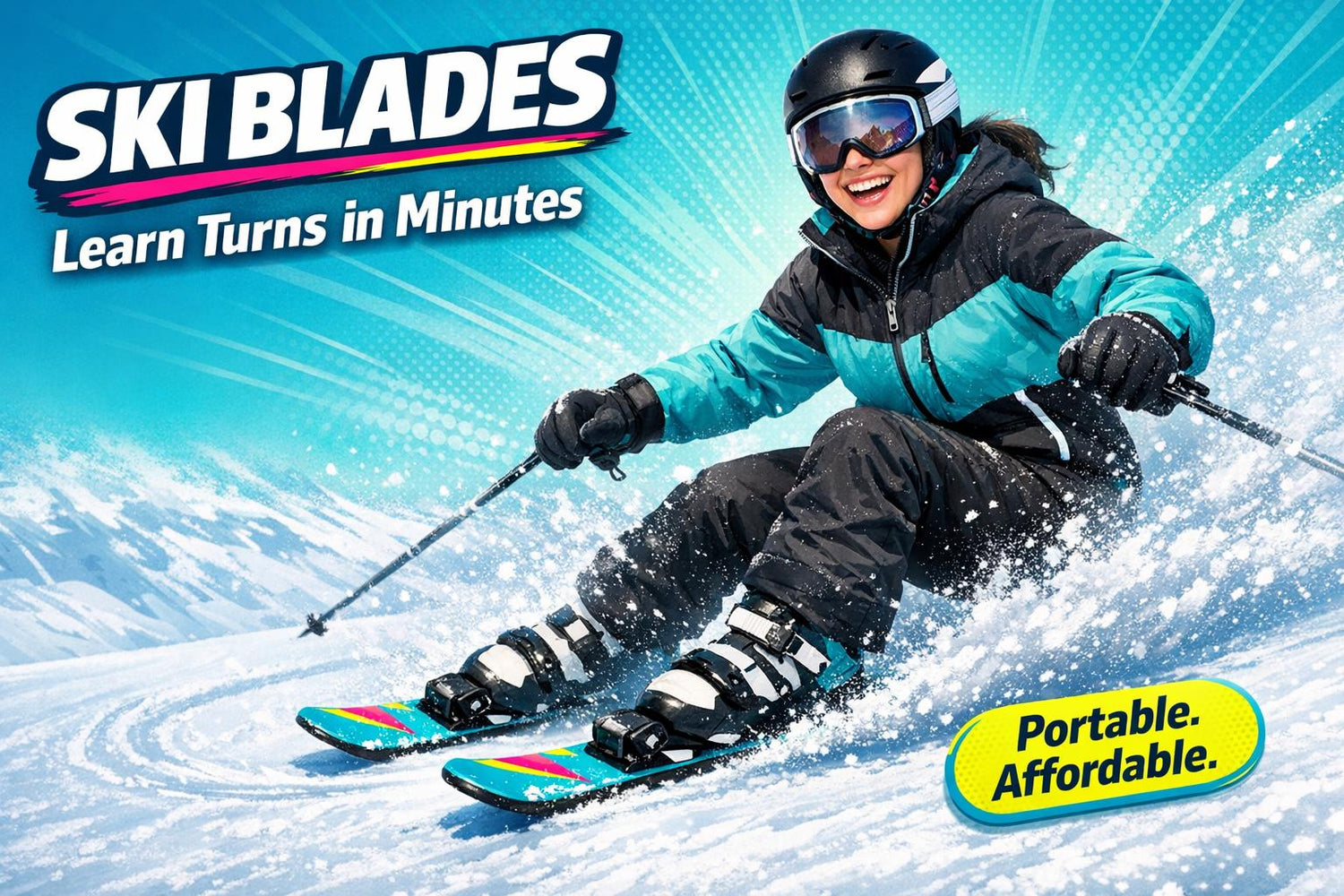
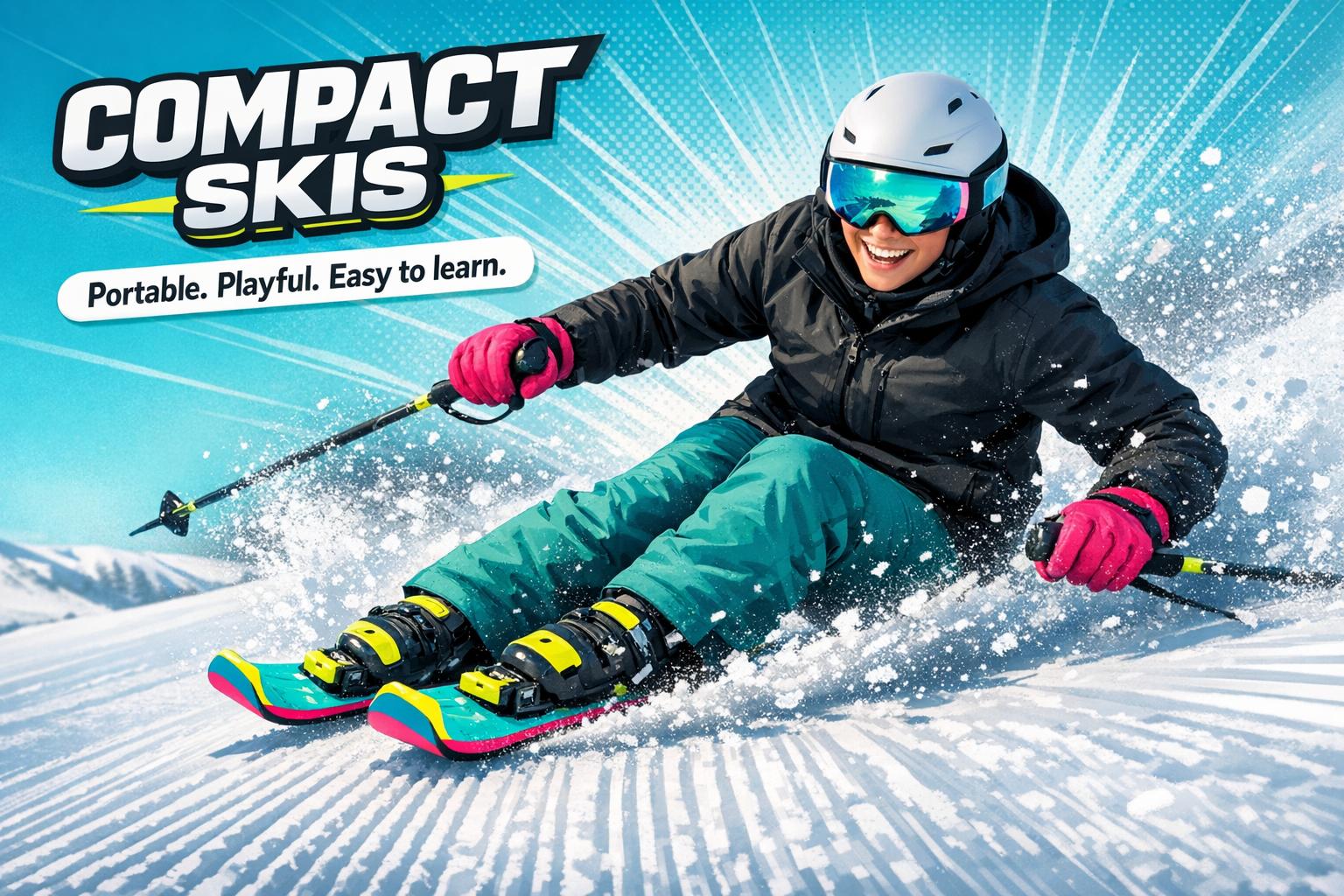
Skiing for the first time can feel like a battle with bulky, hard-to-control equipment. But what if there was a simpler, lighter way to hit the slopes? Meet Snowfeet*, a game-changer for anyone new to snow sports. These mini skis - ranging from 17 to 47 inches - combine the feel of skating with the fun of skiing, making them easier to learn and way less hassle to carry around.
Here’s why Snowfeet* might be the perfect choice for beginners:
- Quick Learning: Most users get the hang of it in just minutes.
- Lightweight & Portable: Fits in a backpack - no more wrestling with roof racks or oversized bags.
- Affordable: Starting at around $250, it’s far cheaper than a full ski setup.
- Comfortable: Works with regular winter boots, skipping the need for clunky ski boots.
While long skis and snowboards are great for speed and advanced terrain, they can be tough for first-timers. Snowfeet* gear is all about easy control, smooth turns, and having fun right from the start. Whether you're tackling beginner slopes or cruising through snow parks, Snowfeet* makes skiing approachable and enjoyable.
Snowboarder tries Snowfeet* | Which Snowfeet* Short Ski is the Best? | Snowblades 44, 65, 99 Review
1. Snowfeet* Products (Skiblades, Skiskates, Short Skis)
Snowfeet* has four main options for beginners: 44 cm (17 in) Skiskates, 65 cm (26 in) Skiblades, 99 cm (39 in) Skiblades, and 120 cm (47 in) Short Skis. These shorter alternatives allow beginners to ease into skiing without jumping straight to full-length skis.
Learning Curve
Getting started is quick - many beginners grasp the basics in just 5 minutes, as shared by users. The shorter length minimizes leverage and reduces the chance of catching edges, making turns feel natural and intuitive. One user, Biba, shared their experience: "Facile à skier même pour une débutante!" ("Easy to ski even for a beginner!"). For those in the U.S. who might only ski a few times a year, this fast learning curve means more time enjoying the slopes and less time struggling with complicated gear. Plus, the ease of learning translates directly into better control on the mountain.
Portability
The 44 cm Skiskates are so compact they can fit in a regular backpack, making ski trips a breeze. Forget about roof racks or oversized bags - these are the ultimate grab-and-go option. User heyjerz noted, "easier to transport than traditional skis!". Even the larger 120 cm Short Skis fit comfortably in most car trunks without needing special arrangements. This portability not only simplifies travel but also ensures you're ready to hit the slopes without a hassle.
Turning and Control
Thanks to their short, curved design, Snowfeet* products respond instantly at slower speeds. A simple weight shift or gentle leg rotation triggers smooth, controlled turns. The metal edges provide solid grip on groomed snow, while the narrow waist makes quick carving easy. The 65 cm Skiblades are forgiving for beginners, while the 99 cm version offers more edge contact for those who want to level up. Reviews back this up - Skiblade models frequently score a 5.0/5, and Skiskates hold an impressive 4.9/5 from 123 reviews.
Terrain Versatility
Snowfeet* equipment is perfect for groomed runs, beginner slopes, snow parks, and moguls - exactly where most first-timers spend their time. The nimble 44 cm Skiskates shine in tight spaces like terrain parks or tow-rope areas, while the 120 cm Short Skis provide extra stability for moderate blue runs. While they’re not built for deep powder or expert-level black runs, they deliver exactly what a beginner in the U.S. needs for greens and easy blues.
Beginner Accessibility
Traditional skiing often means renting expensive boots, but Snowfeet* changes the game. Most models work with regular winter boots or snowboard boots, and the bindings are adjustable and tool-free - no rental hassles here. As user Sunshine Straiges noted, "I had no muscle soreness after using these because I can change my leg position, unlike the snowboard which is set.". These features make Snowfeet* an excellent choice for beginners looking for an easy, affordable way to start skiing.
2. Long Skis and Snowboards
Learning Curve
The length of traditional skis and snowboards can make learning tricky. Even small balance errors are magnified, increasing the chances of catching an edge. Snowfeet* products, on the other hand, offer a much simpler and more intuitive way to get started with winter sports. With traditional skis or snowboards, beginners often need several days of practice just to connect basic turns. For many casual skiers in the U.S., finding that much time to practice is a challenge.
Portability
Let’s face it - traditional gear can be a hassle to transport. Skis often need a roof rack or folded-down rear seats to fit in your car, and then there are the boots, poles, and everything else to lug around. Snowfeet* gear, with its compact design, eliminates these headaches. It's easy to carry and store, making it a much more convenient option for spontaneous trips to the slopes.
Turning and Control
Long skis are built for high-speed carving, but at beginner speeds, they can feel unresponsive. Snowboards bring their own challenges - riders need to commit fully to one edge, or they risk catching the other and taking a tumble. Both types of gear demand solid edge control, something beginners are still working on. This often leads to skidded or uneven turns, especially on easier green runs.
Terrain Versatility
Once you’ve mastered the basics, traditional skis and snowboards really shine. They grip well on hard-packed snow, float better in powder, and provide stability on steeper blue runs. Snowboards also excel in terrain parks and softer snow conditions. But here’s the catch: these benefits only become noticeable after a significant amount of practice - sometimes several days or even an entire season. For most casual beginners in the U.S., this level of progression may not be realistic.
Beginner Accessibility
While ski schools and rental shops in the U.S. are well-equipped to support traditional gear, the physical demands can be overwhelming for newcomers. Heavy equipment, stiff boots, and frequent falls can quickly wear out a beginner. Plus, industry data highlights that the cost and hassle of managing bulky gear are major reasons many adults hesitate to try skiing - or don’t return after a tough first day. These factors make traditional gear less appealing for beginners compared to the lightweight and user-friendly design of Snowfeet* products.
sbb-itb-17ade95
Pros and Cons
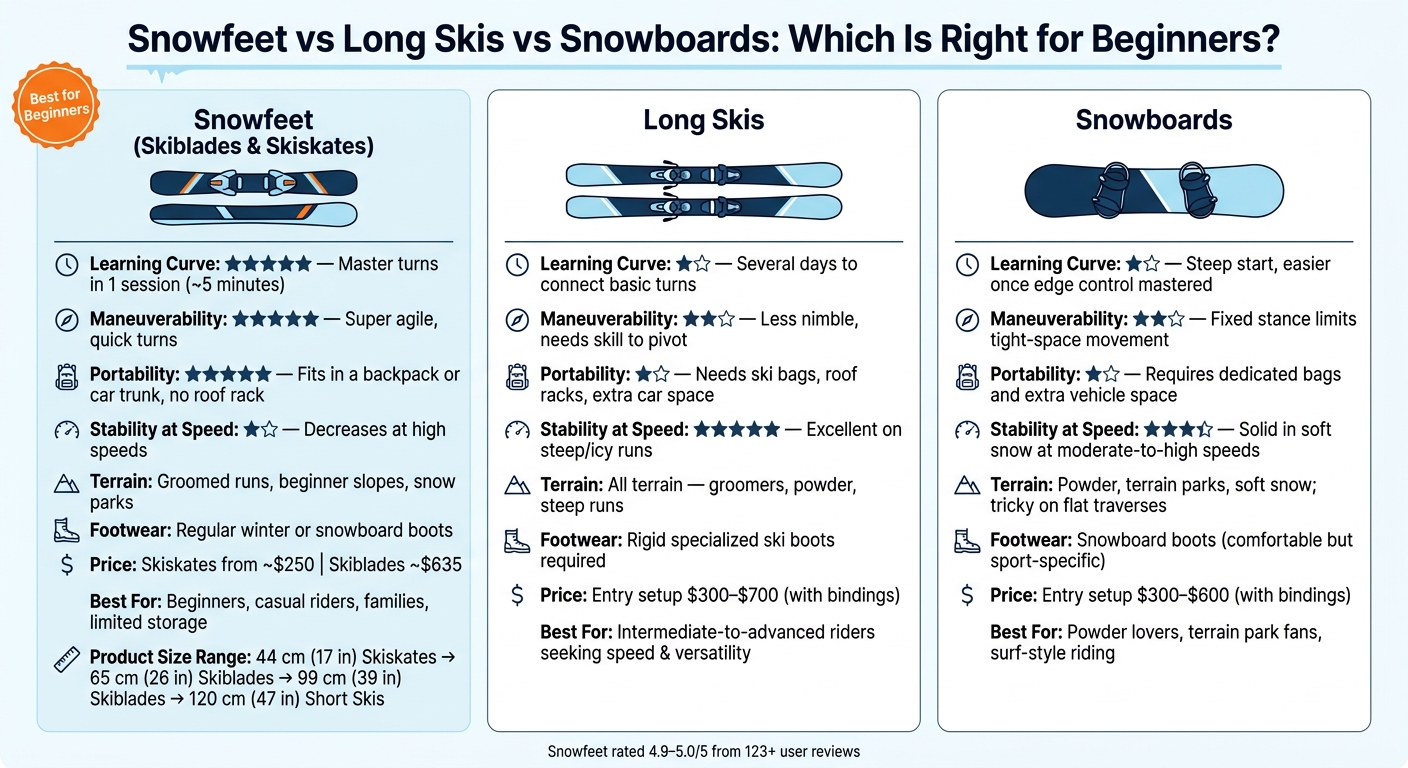
Snowfeet vs Traditional Skis vs Snowboards: Beginner's Comparison Guide
Here’s a handy comparison of Snowfeet* products versus traditional long skis and snowboards. This breakdown highlights the strengths and limitations of each option:
| Aspect | Snowfeet* (Skiblades & Skiskates) | Long Skis | Snowboards |
|---|---|---|---|
| Learning Curve | Quick to pick up – most beginners can master turns in just one session | Takes more time – connecting turns often requires a few days of practice | Starts steep but gets easier once edge control is mastered |
| Maneuverability | Super agile – short length allows for quick turns and stops | Less nimble – longer edges need more skill to pivot | Decent, but the fixed stance can limit movement in tight spots |
| Portability | Compact – fits easily in a backpack or a car trunk (no roof rack needed) | Bulky – needs ski bags, roof racks, or extra car space | Also bulky – requires dedicated bags and extra vehicle space |
| Stability at Speed | Not great for high speeds – stability decreases as speed increases | Excellent – great grip and stability on steep or icy runs | Solid in soft snow and at moderate-to-high speeds |
| Terrain Versatility | Best for groomed runs and small hills; struggles in deep powder | Handles all kinds of terrain, from groomers to powder | Excels in powder and soft snow but can be tricky on flat traverses |
| Footwear Comfort | Works with regular winter or snowboard boots – no need for stiff ski boots | Requires rigid, specialized ski boots | Uses snowboard boots, which are comfortable but sport-specific |
| Price Range | Skiskates start at ~$250; skiblades begin around ~$635 | Entry setups cost $300–$700 (with bindings) | Entry setups cost $300–$600 (with bindings) |
| Best For | Beginners, casual riders, families, and those with limited storage space | Intermediate-to-advanced riders looking for speed and versatility | Powder lovers, terrain park enthusiasts, and fans of surf-style riding |
Snowfeet* gear is perfect for beginners and anyone looking for a simple, fun way to hit the slopes. With sizes ranging from 44 cm skiskates to 120 cm short skis, they’re easy to learn and super convenient. Beginners especially will love how quickly they can get the hang of it and start enjoying the mountain.
That said, traditional long skis and snowboards still shine when it comes to high-speed runs, deep powder, and advanced carving on steep terrain. If you’re planning to use Snowfeet* gear, it’s a good idea to check your resort’s rules first. Most U.S. resorts allow them, thanks to their full steel edges and safety leashes, but a few may have specific policies about short-ski devices.
Conclusion
If you're just starting out with winter sports and wondering where to begin, Snowfeet* makes the decision easy. As highlighted above, their gear is designed to be beginner-friendly - it's easy to learn, lightweight to carry, and delivers fun right from the start.
While traditional skis and snowboards are great for seasoned pros, they come with steeper learning curves, bulkier designs, and higher price tags. For someone looking for casual weekend fun, those options can feel like overkill. Snowfeet* gear, on the other hand, bridges that gap beautifully. From the compact 44 cm (approximately 17 in) skiskates to the more stable 120 cm (approximately 47 in) short skis, this gear helps beginners feel at ease. Whether you're tackling green runs, gentle slopes, or even resort parks, Snowfeet* makes it easier to build confidence without the usual struggles of traditional setups.
Another bonus? Snowfeet* gear is super portable. It fits neatly in your car trunk, works with boots you probably already own, and doesn’t require any special storage. That means less hassle and more time enjoying the slopes.
"These ski blades are a blast to use. Super easy to control, quick to turn, and way more forgiving than traditional skis." - Brad Tolin, User
FAQs
Which Snowfeet* size should I start with?
For those just starting out, the shorter Snowfeet* models are a great pick. They’re much easier to maneuver compared to traditional skis, making them perfect for beginners. Opt for the 38–65 cm sizes to gain confidence quickly. If you’re looking for more stability while still keeping things fun, the 99 cm Skiblades are a solid choice. They strike a nice balance between control and playfulness, helping you feel steady and in charge right from the start.
Are Snowfeet* allowed at most U.S. ski resorts?
Yes, Snowfeet products are usually allowed at most ski resorts across the U.S. They’re made for use on ski slopes and function similarly to skiboards or skiblades, which are commonly accepted. Still, it’s a good idea to check the rules at your chosen resort to make sure you're in the clear.
What boots and safety gear do I need for Snowfeet*?
For Snowfeet, you’ll need ski or snowboard boots sized between 36-49 EU (4.5-14.5 US). Make sure to gear up with safety essentials like a helmet, wrist guards, and protective padding - just like you would for skiing or snowboarding. This ensures both your safety and a secure fit while using them.











Hagyj egy hozzászólást
Ezt a webhelyet a hCaptcha rendszer védi, és a hCaptcha adatvédelmi szabályzata, valamint szolgáltatási feltételei vonatkoznak rá.