







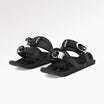












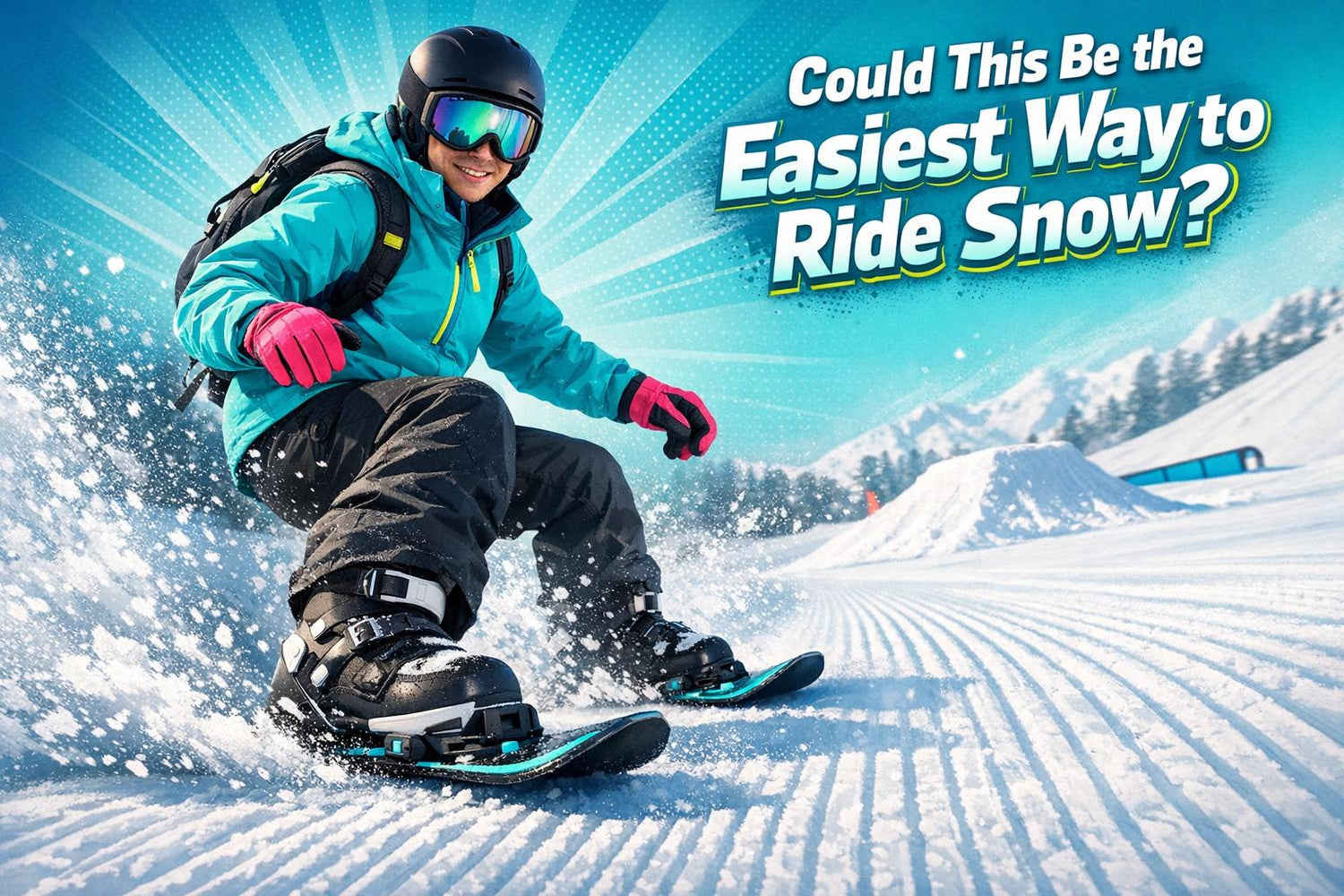
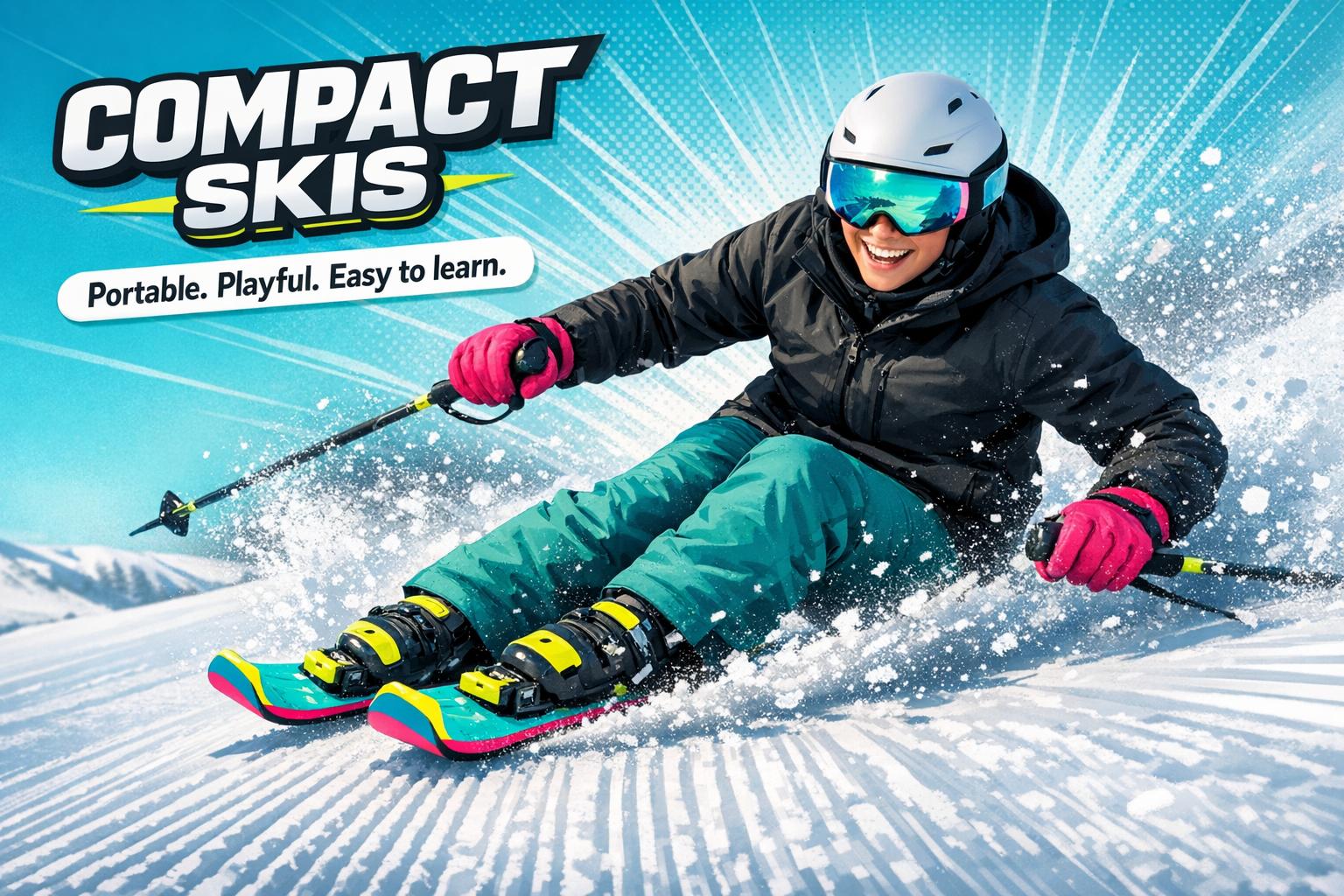
Looking for a simpler, lighter way to enjoy snow sports? Meet Snowfeet* - a compact alternative to skis and snowboards. These mini ski skates, skiblades, and skiskates attach to your boots, making them easy to carry, affordable, and beginner-friendly. Perfect for groomed slopes, small hills, and terrain parks, they’re a great option for casual riders or anyone tired of lugging heavy gear. Here's a quick breakdown:
- Portability: Fits in a backpack; weighs ~2.6 lbs.
- Learning Curve: Basics mastered in about an hour.
- Cost: Starts at $250, much less than skis or snowboards.
- Best Use: Groomed runs and parks - not ideal for deep powder or steep terrain.
If you’re after low-hassle snow fun, Snowfeet* might be your new go-to. But if speed, powder, or steep slopes are your thing, skis or snowboards still have the edge. Let’s dive into the details.
Snowboarder tries Snowfeet* | Which Snowfeet* Short Ski is the Best? | Snowblades 44, 65, 99 Review
1. Snowfeet* (Mini Ski Skates, Skiskates, Skiblades, Short Skis)
Snowfeet* products bring a fresh twist to snow sports by offering compact, maneuverable gear. The philosophy? "Shorter is better." Here’s what they’ve got:
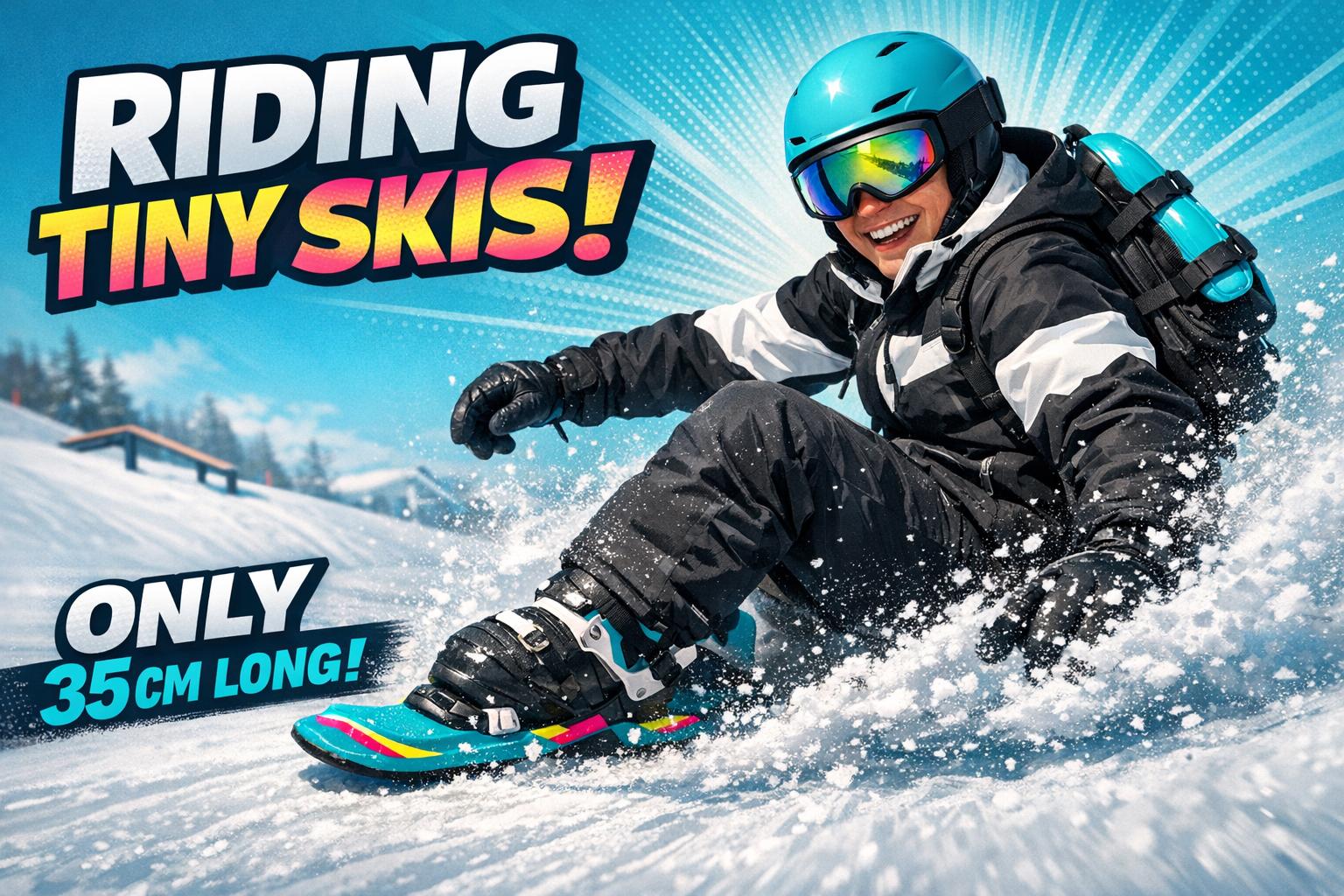
- Mini ski skates: Measuring 9–16 inches, these pair with winter or snowboard boots.
- Skiskates: At 20–26 inches, these are designed for ski boots.
- Skiblades/short skis: Ranging from 30–40 inches, these provide a nimble ride.
Portability
One of Snowfeet*’s standout features is their portability. Mini ski skates weigh just 2.6 lbs and can fit into a standard backpack. This means no more lugging around heavy ski bags or paying extra baggage fees. Perfect for city dwellers or impromptu snow outings. As one happy customer, Michele, shared:
"I loved how easy they are to carry in a backpack with their handy waterproof bag! Highly recommended for fun for experts and beginners alike!" - Michele
Learning Curve
If you’ve ever ice skated, rollerbladed, or played hockey, you’ll likely find Snowfeet* pretty intuitive. Thanks to their upright stance and forgiving turns, most people can grasp the basics within an hour on a beginner slope. For complete novices, starting on gentle green runs is the way to go. The key? Bend your knees, keep your weight centered, and use your hips to steer. Once you’ve got the hang of it, you’ll be gliding confidently across various terrains.
Terrain Use
Snowfeet* shines on groomed resort runs, small hills, and terrain parks. Their short edges make quick, playful turns a breeze and are great for park tricks or small jumps. That said, they’re not built for deep powder or steep, icy black-diamond runs. The reduced surface area means they’re best for everyday resort riding rather than tackling big-mountain challenges.
Cost
Let’s talk numbers. A traditional ski setup (skis, bindings, boots) can set you back $500 to $1,000 or more in the U.S. Snowfeet* mini ski skates, on the other hand, start at about $250. Plus, many models work with your existing winter boots, saving you the $200–$500 you’d spend on specialized ski boots. If you’re eyeing higher-end models like Skiskates or Skiblades, they’re priced between $575 and $775 - still a more affordable option for casual snow enthusiasts.
With their cost-effectiveness and ease of use, Snowfeet* is quickly becoming a go-to alternative to traditional skis and snowboards.
| Aspect | Snowfeet* Products | Traditional Skis / Snowboards |
|---|---|---|
| Weight | ~2.6 lbs per pair | 10–20+ lbs (skis + bindings) |
| Packed Size | Fits in a backpack or carry-on | Requires large ski bag or roof rack |
| Learning Time | ~60 minutes on easy slopes | Several days with lessons |
| Boots Required | Regular winter boots (some models) | Specialized ski or snowboard boots |
| Entry Cost (US) | ~$250–$775 | ~$500–$1,000+ |
| Best Terrain | Groomed runs, parks, small hills | Groomed runs, powder, steep terrain |
2. Traditional Skis
Compared to the minimalistic approach of Snowfeet*, traditional skis represent the classic, more involved side of snow sports. Adult skis are usually 150–190 cm long (around 5–6+ feet), attach to stiff boots via bindings, and are designed for sustained downhill runs at various speeds. They are a staple at U.S. ski resorts, from Colorado to Vermont, with the National Ski Areas Association (NSAA) reporting over 60 million skier visits during the 2022–23 season.
Portability
When it comes to travel, traditional skis aren’t exactly convenient. Along with poles and boots, they require oversized bags, which can lead to extra fees and hassle at airports. Airlines often classify ski bags as oversized sports luggage, making them cumbersome to transport. Even at the mountain, carrying long skis while trudging through the parking lot in stiff boots is a workout in itself - especially for families with kids.
Learning Curve
Learning to ski takes time and patience. Beginners typically need at least a full day of lessons to grasp the basics and around 2–3 days before they can confidently leave the beginner slopes. Studies show that newcomers face a higher risk of knee ligament injuries due to the twisting forces associated with long skis. Ski schools generally recommend multiple days of instruction to handle the coordination required for stiff boots, long skis, and poles. These challenges often push people to explore simpler options like Snowfeet*, which eliminate many of these difficulties.
Terrain Use
Traditional skis shine on varied terrain. They offer stability at high speeds, solid grip on icy surfaces, and excellent flotation in deep powder. However, they’re not ideal for every scenario. For smaller hills, casual outings, or urban snow parks, they can feel like overkill. Plus, hauling them around the lodge or between runs is far from enjoyable. While they perform well in diverse conditions, traditional skis can’t match the portability or ease of use that Snowfeet* provide.
Cost
Skiing with traditional gear isn’t budget-friendly. A beginner setup typically costs $650–$1,200. Add to that lift tickets, which can range from $150–$250 per day at major Rocky Mountain resorts, and lessons, which often run $100–$200+ per session. On top of that, there are ongoing maintenance costs like waxing, edge sharpening, and base repairs. While traditional skis deliver impressive performance across different terrains, their cost, portability issues, and steep learning curve make alternatives like Snowfeet* an attractive option for many.
sbb-itb-17ade95
3. Snowboards
Snowboards have carved out a special place in snow sports, celebrated for their ability to glide through deep powder and perform tricks in terrain parks. That said, they aren’t always the most practical option for everyday use.
Portability
A snowboard typically measures between 140–165 cm (4.5–5.5 ft) and weighs about 10–15 lb with bindings. Add in a board bag, snowboard boots, and often a separate boot bag, and traveling with a snowboard can quickly become a hassle. By comparison, Snowfeet* products are much easier to pack and carry, offering a more convenient alternative. This portability can make a big difference, especially for those who value simplicity when hitting the slopes.
Learning Curve
Snowboarding isn’t exactly beginner-friendly. Most ski schools in the U.S. recommend 2–3 full days of lessons before new riders can master basic skills like linking turns and controlling speed on green runs. Plus, with both feet locked into a sideways stance, beginners often take spills - usually landing on their wrists or tailbone. It’s no surprise that many resorts encourage first-timers to wear wrist guards. In contrast, Snowfeet* are easier to pick up, with most users gaining confidence after just a few runs. Their forgiving design makes them less intimidating for beginners, cutting down on the trial-and-error frustration that comes with snowboarding.
Terrain Use
Snowboards shine in powder and terrain parks. Their wide surface helps them float effortlessly in deep snow, and the fixed stance makes carving on groomed trails a smooth and enjoyable experience. However, they falter on flat terrain or long cat tracks, often forcing riders to unstrap one foot to keep moving. Snowfeet* products, on the other hand, excel on groomed slopes and in tighter spaces, offering more agility and versatility. Unlike snowboards, which can struggle on flats, Snowfeet* provide a consistent ride across varied terrain.
Cost
Getting started with snowboarding can be pricey. A new setup - including the board, bindings, and boots - typically costs between $400 and $700. That’s before adding essentials like helmets, goggles, or outerwear. Renting gear at U.S. resorts usually runs about $40–$60 per day, and keeping your board in top shape with regular waxing and edge sharpening can add $20–$40 per tune-up throughout the season. Snowfeet*, on the other hand, work with regular winter boots, eliminating the need for specialized footwear and cutting down both initial and ongoing costs. This makes them a budget-friendly option without sacrificing the fun.
Pros and Cons
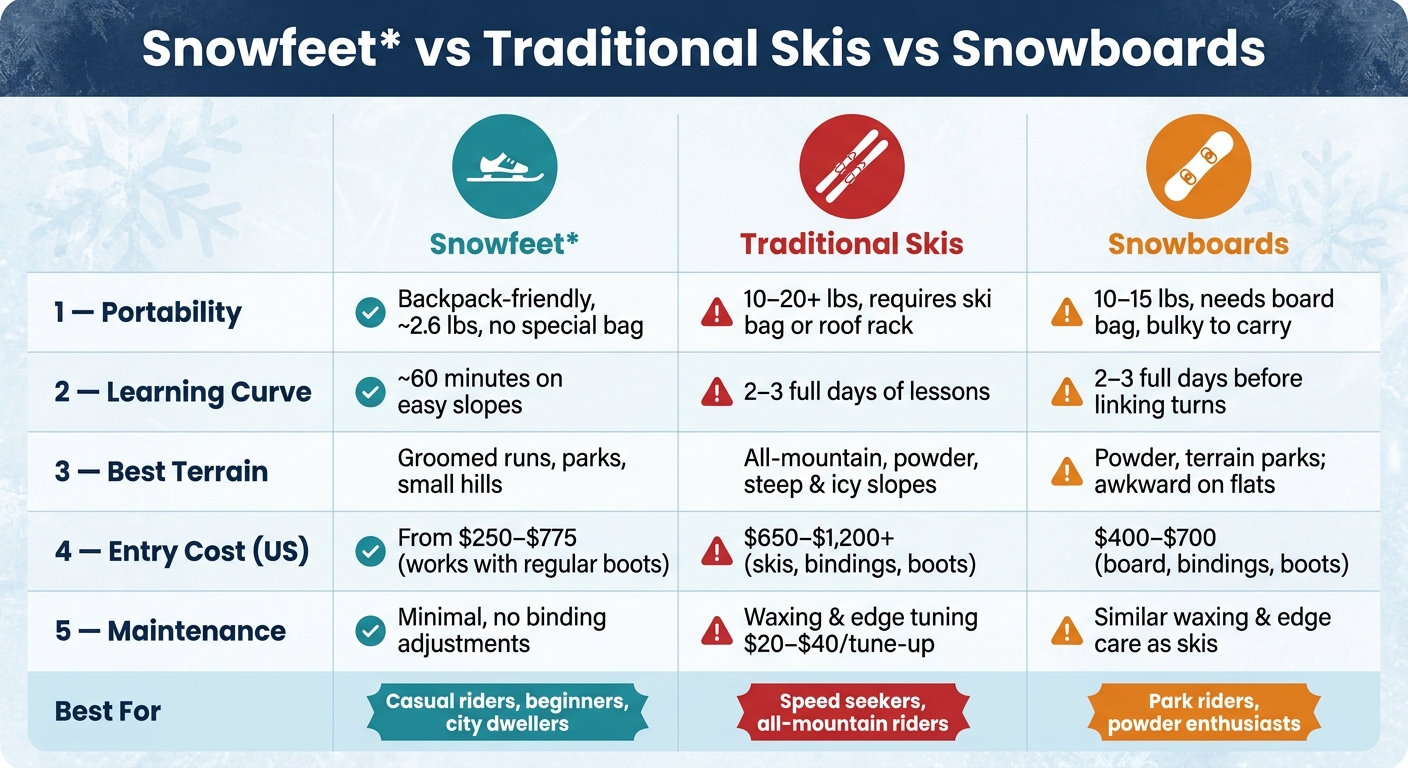
Snowfeet vs Skis vs Snowboards: Which Is Right for You?
Here's a straightforward comparison of the three options:
| Snowfeet* | Traditional Skis | Snowboards | |
|---|---|---|---|
| Portability | Backpack-friendly; no special bag required | Requires ski bags, roof racks, or oversized luggage | Needs a board bag; bulky to carry |
| Learning Curve | Riders adapt within a single session | Several days of lessons for basic control | Several days before linking turns confidently |
| Terrain Use | Groomed slopes, parks, moguls, and hiking trails; limited in deep powder | All-mountain; excellent on ice, on steep slopes, and in powder | Excel in powder and parks; can be awkward on flat terrain |
| Entry Cost | From $250–$690; works with boots you may already own | $400–$700+ for skis and bindings, plus $200–$400 for boots | $300–$500 for a board, $150–$300 for bindings, and $150–$300 for boots |
| Maintenance | Minimal; no binding adjustments or mounting fees | Regular waxing and edge tuning ($20–$40 per tune-up) | Similar waxing and edge care as skis |
Let’s break these points down further.
Snowfeet* stand out for their convenience and affordability. They’re compact enough to fit in a backpack, so there’s no need for oversized bags or racks. Plus, they work with your regular winter boots, saving you from buying extra gear. The downside? Their shorter edges don’t offer the same grip or stability as traditional skis, especially on steep, icy slopes or in deep powder. As one user, Brad Tolin, shared:
"Only trade-off is at higher speeds, where longer skis still feel more stable - but for overall fun and maneuverability, these are hard to beat." - Brad Tolin, Snowfeet* user
Traditional skis, on the other hand, shine when it comes to all-mountain performance. They handle icy conditions, steep terrain, and deep powder effortlessly. However, this versatility comes at a cost - both in terms of price and bulk. A beginner setup can easily exceed $1,000 once you factor in skis, bindings, boots, and poles. Add regular maintenance like waxing and edge tuning, and the expenses keep piling up.
Snowboards bring their own charm, offering a surf-like experience that’s hard to replicate. They perform beautifully in powder and terrain parks, making them a favorite for riders seeking that playful, floaty feel. But they’re not without challenges. Beginners often face a steep learning curve, and snowboards can feel clunky on flat terrain. Plus, the need for specific boots and bindings adds to the overall cost and effort.
Each option has clear strengths and compromises, so the best choice depends on what matters most to you - whether it’s portability, cost, terrain versatility, or ease of learning.
Conclusion
Snowfeet* bring together portability, simplicity, and affordability in a way that’s hard to beat. For U.S. riders who only get a few snow days each season, the expenses tied to renting bulky gear, paying baggage fees, or investing in full setups make traditional options feel like a lot of effort and money.
- Go with Snowfeet* if you’re after compact, no-fuss fun on groomed trails, small hills, or weekend getaways - no special boots or oversized bags needed.
- Stick with traditional skis if your heart’s set on carving at high speeds or tackling deep powder, though be ready for the gear and lesson costs.
- Choose snowboards if you’re all about terrain parks or that surf-like ride, but keep in mind the steeper learning curve and extra gear expenses.
For quick, easy winter fun, Snowfeet* make snow sports accessible to just about anyone. Sometimes, keeping it short really does make it sweeter!
FAQs
Will Snowfeet* work at most U.S. ski resorts?
Yes, Snowfeet products work at most U.S. ski resorts. They come with metal ski edges and secure bindings that meet standard safety requirements for both lift access and slope use. They're perfect for groomed runs and terrain parks. That said, it's smart to double-check your resort's equipment policies ahead of time. If anyone asks, you can explain that Snowfeet have the same metal edges as regular skis.
What boots do I need for Snowfeet*?
You don’t need to splurge on fancy or oversized gear to enjoy Snowfeet*. Most models are designed to work with the waterproof winter boots or snowboard boots you likely already have. Plus, the adjustable bindings accommodate a wide range of sizes, from US 4.5 to 14.5.
If you're hitting the slopes, snowboard boots are a great choice - they provide solid ankle support and just the right amount of flexibility. And if you're into aggressive carving, some models, like the 44 cm Skiskates, can even be used with traditional ski boots.
Are Snowfeet* safe on icy or steep runs?
Snowfeet* come with metal edges that provide solid grip and control, especially on icy or hard-packed snow. Thanks to their compact and responsive design, they perform well on groomed trails and a variety of terrains. That said, they might not be the best choice for steep, icy black diamond runs, where traditional skis tend to offer better edge contact and braking ability. For most resort conditions, though, their agility and user-friendly nature make for a fun and confident ride.











Hagyj egy hozzászólást
Ezt a webhelyet a hCaptcha rendszer védi, és a hCaptcha adatvédelmi szabályzata, valamint szolgáltatási feltételei vonatkoznak rá.