



















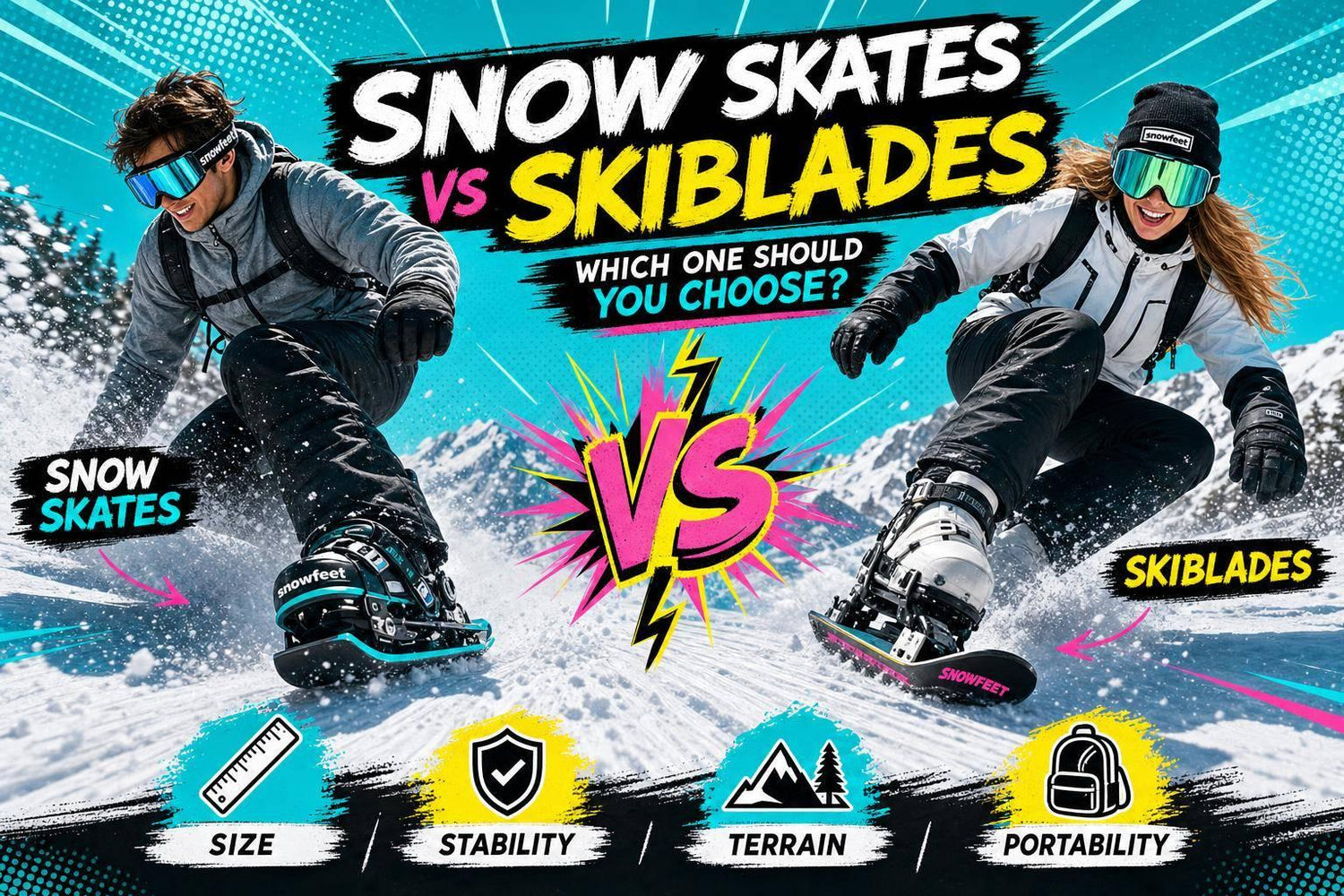
If you’re torn between Snowfeet Skiskates and Skiblades, here’s the deal: Skiskates are super short (44 cm), giving you a skating-like experience on the slopes. They’re lightweight, portable, and great for quick turns, tricks, and groomed runs. Skiblades, on the other hand, come in longer lengths (65 cm, 99 cm, and 120 cm), offering more stability and better performance at higher speeds or on steeper terrain.
Quick Overview:
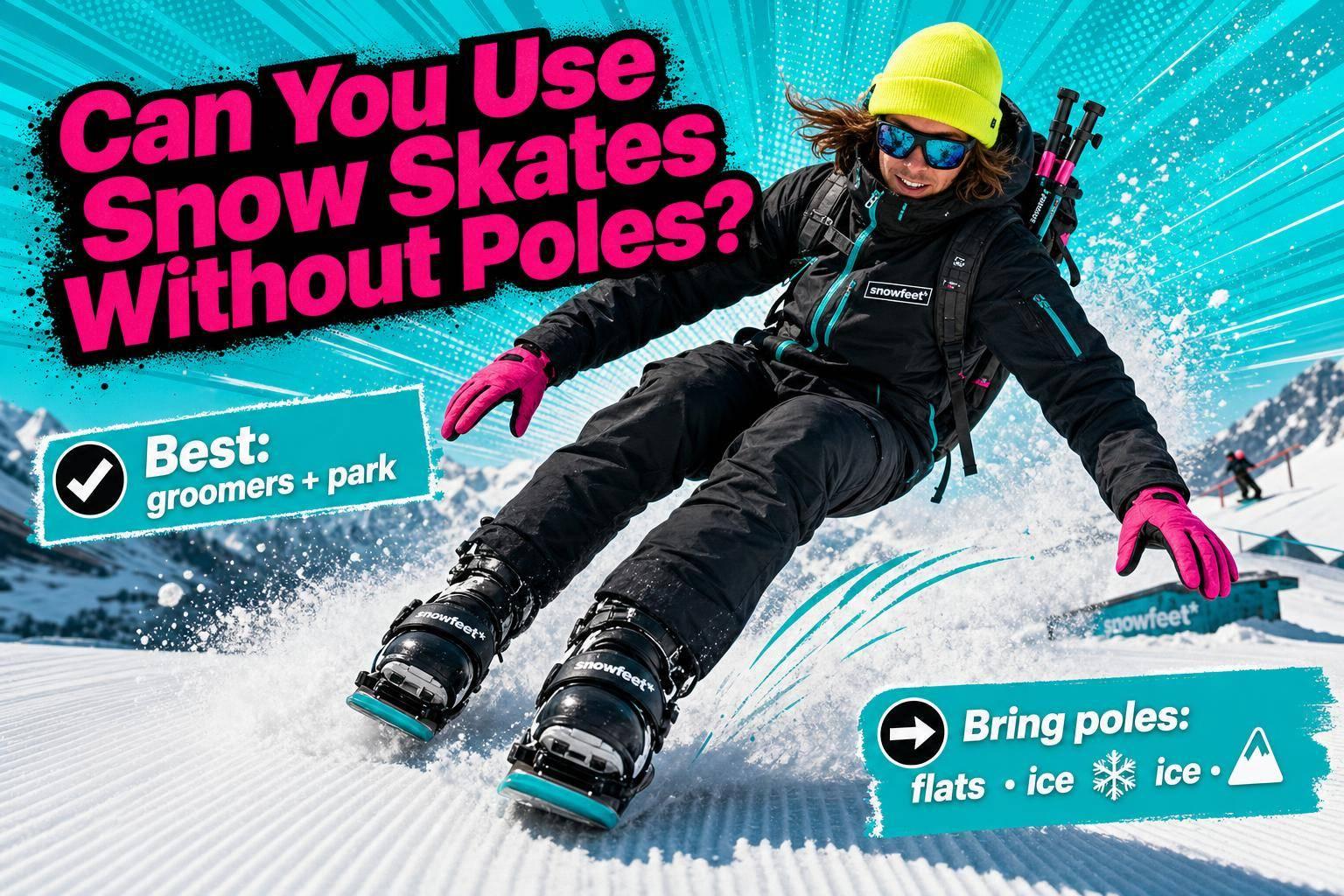
- Skiskates (44 cm): Perfect for agility, tricks, and portability. Best for groomers and terrain parks.
- Skiblades (65 cm): Great for park features and beginner-friendly stability.
- Skiblades (99 cm): A versatile option for all-mountain fun and moderate speeds.
- Skiblades (120 cm): Ideal for advanced riders and steeper slopes.
If you’re all about portability and a playful ride, go for Skiskates. If you want more stability and versatility, Skiblades are your pick. Let’s break it down further.
How to Use Snowfeet* Skiskates 44 CM | Skates for Snow | Mini Ski | Snowblades | Snowskates
What Are Snowfeet Skiskates?
Snowfeet Skiskates are compact skis - just 17 inches (44 cm) long - that strap onto your boots, giving you a skating-like experience on snow. Dubbed "the shortest skis in the world" by Snowfeet, their small size - about a quarter of a standard ski's length - makes them incredibly easy to maneuver.
Design, Size, and Build
These skiskates are built with the same materials you'd find in traditional skis: a sustainable wood core, steel edges, and a sintered graphite base. This combination ensures they’re responsive, absorb vibrations on uneven snow, and provide excellent control for carving and stopping on hard surfaces. With a starting price of $575, they’re designed for serious performance.
The bindings are adjustable without tools, fitting ski boots (US sizes 4.5–14.5) and snowboard boots (US sizes 6–14.5). Plus, their small size means you can toss them into a standard backpack - no need for a roof rack or special storage.
This thoughtful construction directly impacts how they feel on the slopes.
How They Feel to Ride
Riding Skiskates is a completely different experience from traditional skiing. Each foot moves independently, facing forward, which makes the motion feel more like ice skating or inline skating. You can make quick, tight turns, stop like a hockey player, and the short length reduces the chance of injuries if you fall.
One user, Sunshine Straiges, shared their experience:
"I had no muscle soreness after using these because I can change my leg position, unlike the snowboard which is set."
This freedom of movement is especially appealing to beginners and anyone with a skating background. Most people can get the hang of them in just five minutes, making them approachable and fun right away.
Where Skiskates Work Best
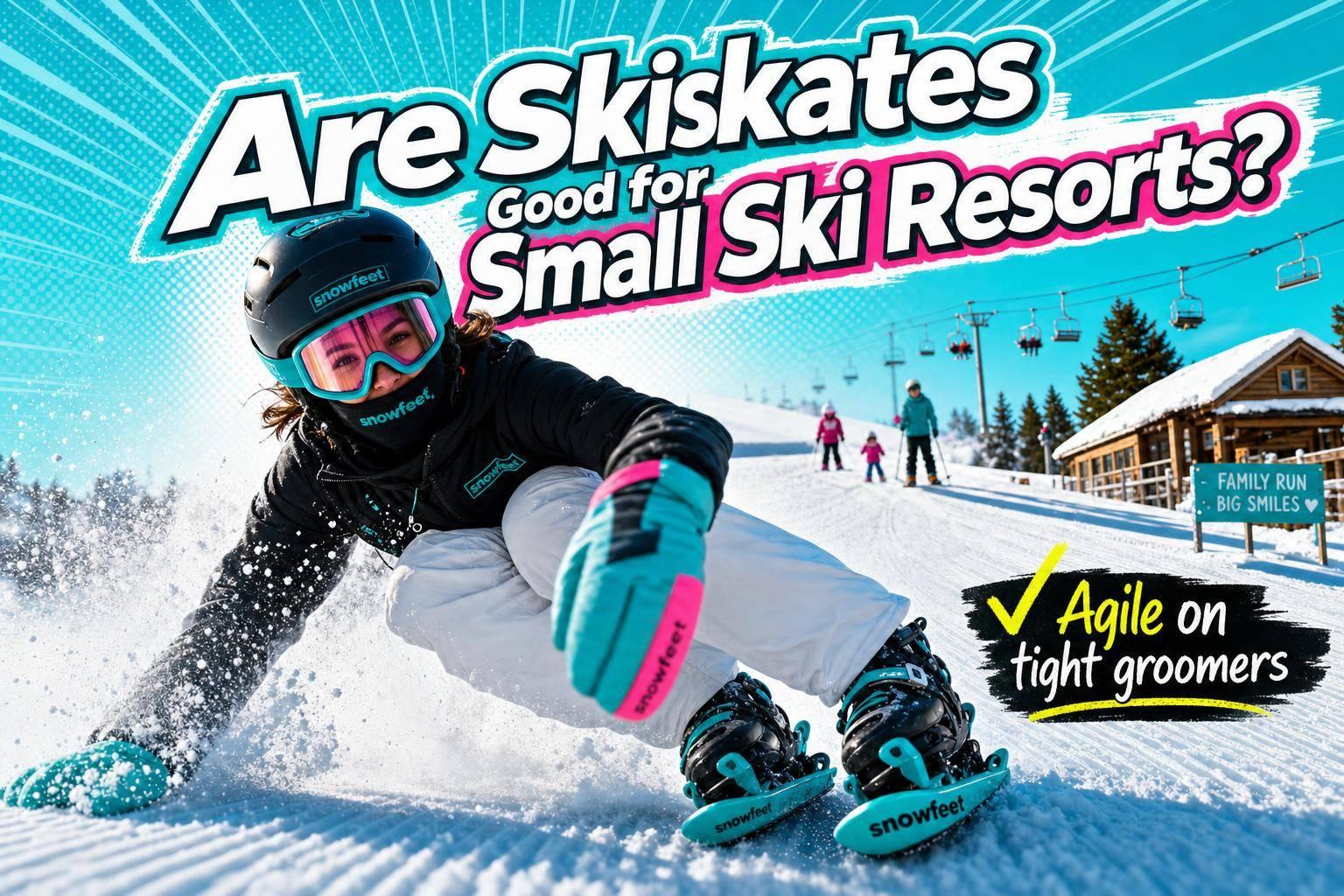
The compact size and responsive handling make Skiskates ideal for groomed slopes, terrain parks, moguls, and even small backyard hills. Their lightweight design is perfect for tricks like spins, butters, and 180s on park features. One customer even mentioned how much easier they are to carry around compared to traditional skis.
That said, they’re not built for everything. If you're aiming for high speeds, tackling steep black-diamond runs, or navigating deep powder, you’ll want the extra surface area and edge length of Snowfeet Skiblades instead. Skiskates shine in more playful, controlled environments.
What Are Snowfeet Skiblades?
Snowfeet Skiblades are compact, twin-tip skis that sit somewhere between Skiskates and traditional full-length skis. They’re available in three lengths - 65 cm (about 25.6 inches), 99 cm (around 39 inches), and 120 cm (roughly 47.2 inches) - each designed for a distinct riding experience.
Length Options and Their Features
- 65 cm Skiblades: These are all about agility. Perfect for spins, jumps, and tackling park features like rails and boxes. Jan from Snowfeet summed them up as "quick to learn, fast on groomers, and extremely agile in tight spaces". The downside? They can feel less stable at higher speeds or on steep slopes due to their shorter edge contact.
- 99 cm Skiblades: This is the most versatile choice. They balance solid edge grip on groomed blue and black runs with a playful, skate-like feel. Whether you’re cruising groomers, navigating light moguls, or hitting the park, these Skiblades can handle it all. For many U.S. resorts, where conditions range from smooth morning runs to afternoon slush, this pair is a reliable go-to. Price: $675.
- 120 cm Skiblades: These offer a more traditional skiing experience, with better edge hold and carving ability. They’re geared toward intermediate and advanced skiers who want to tackle steeper terrain or rack up vertical. Price: $775.
Build Quality and Bindings
All lengths feature a certified sustainable wood core, metal edges, and a graphite base. The wood core provides a lively feel and helps absorb vibrations, making for a smoother ride on uneven snow. The metal edges can be maintained and sharpened just like regular skis, which is a big plus for icy conditions often found at U.S. resorts.
The bindings are tool-free and adjustable, fitting ski boots (US sizes 4.5–14.5) and snowboard boots (US sizes 6–14.5). The 120 cm Skiblades come exclusively with Pro Ski bindings, while the 65 cm and 99 cm models offer more flexibility for different boot types. One customer, Mike E., shared his experience:
"I was nervous about the boots not being stiff enough for skis but it was not an issue at all. SUPER comfortable, easy to control, very agile, easy on the knees and ankles because they are so light."
Ideal Terrain and Riding Styles
Skiblades shine on groomed runs, in terrain parks, and on moguls. Their shorter length makes them quicker and easier to maneuver than traditional skis, which is especially helpful in tight spaces like tree runs or crowded slopes. The twin-tip design also allows for riding switch, making them a fun option for freestyle enthusiasts.
Compared to traditional skis - usually 150–180+ cm for adults - Skiblades are much more maneuverable and beginner-friendly. Brad Tolin, another Snowfeet customer, said it best:
"These ski blades are a blast to use. Super easy to control, quick to turn, and way more forgiving than traditional skis. Only trade-off is at higher speeds, where longer skis still feel more stable - but for overall fun and maneuverability, these are hard to beat."
That said, like all short skis, Skiblades aren’t ideal for deep powder. But for most lift-served resort days in the U.S., they’re more than capable of handling a wide range of terrain. Up next, we’ll break down how Skiblades compare to Skiskates to help you decide which is the better fit for your style.
sbb-itb-17ade95
Skiskates vs Skiblades: Side-by-Side Comparison
Snow Skates vs Skiblades: Full Comparison Chart
Here's a closer look at how Skiskates and Skiblades stack up, so you can decide which fits your style best.
What We Are Comparing
Six key factors come into play: size, stability at speed, maneuverability, learning curve, terrain fit, and portability. These criteria apply across all Snowfeet gear, as well as traditional skis and snowboards, to give you a clear picture of where each option shines.
Comparison Table
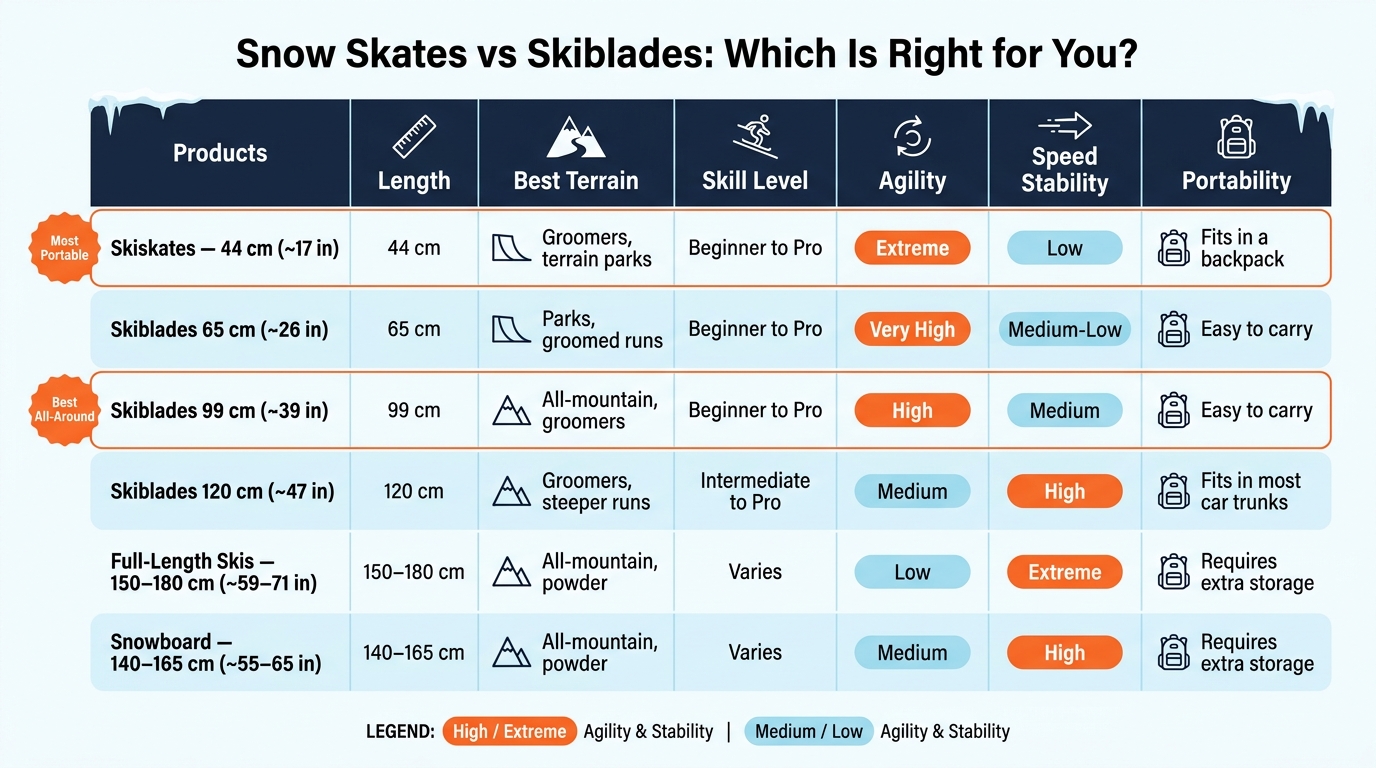
| Product | Length | Best Terrain | Skill Level | Agility | Speed Stability | Portability |
|---|---|---|---|---|---|---|
| Skiskates | 44 cm (~17 in) | Groomers, terrain parks | Beginner to Pro | Extreme | Low | Fits in a backpack |
| Skiblades 65 cm | 65 cm (~26 in) | Parks, groomed runs | Beginner to Pro | Very High | Medium-Low | Easy to carry |
| Skiblades 99 cm | 99 cm (~39 in) | All-mountain, groomers | Beginner to Pro | High | Medium | Easy to carry |
| Skiblades 120 cm | 120 cm (~47 in) | Groomers, steeper runs | Intermediate to Pro | Medium | High | Fits in most car trunks |
| Full-Length Skis | 150–180 cm (~59–71 in) | All-mountain, powder | Varies | Low | Extreme | Requires extra storage |
| Snowboard | 140–165 cm (~55–65 in) | All-mountain, powder | Varies | Medium | High | Requires extra storage |
What the Comparison Shows
This breakdown highlights each option's strengths. Snowfeet gear, particularly Skiskates, dominates in agility and portability. At just 44 cm (~17 in), Skiskates can fit in a backpack, while full-length skis (150–180 cm/~59–71 in) demand roof racks or extra storage space.
However, longer equipment like traditional skis and snowboards excels in speed stability and deep powder performance. On steep, icy runs or during a powder day in places like Utah, their extra length provides better edge control and float. But for most resort conditions - groomed blue runs, terrain parks, moguls, or crowded weekend slopes - Snowfeet gear offers a hassle-free alternative.
According to Snowfeet founder Zbyněk, Skiskates are his go-to for their unmatched versatility and ability to handle tricks and varied terrain with ease.
If you're looking for an all-around winner, the 99 cm Skiblades strike a great balance. They’re nimble enough for park laps and tree runs, stable enough for black diamond groomers, and compact enough to fit in your car trunk without needing a ski bag. But if portability and freedom of movement are your top priorities, Skiskates are the clear winner.
How to Pick the Right Snowfeet Product for Your Riding Style
Finding the perfect Snowfeet* product depends on how you like to ride, the terrain you prefer, and your goals on the snow. Using the details from our comparison table, this guide will help you match your riding style with the right gear. Let’s dive into which product suits your background and ambitions best.
For Skaters and Beginners
If you’re comfortable on ice or inline skates, the Snowfeet* Skiskates (44 cm / 17 in) will feel like second nature. Their compact size, quick edge-to-edge transitions, and skating-like stance make it easy to pick up the basics - often in just one session. Plus, their small design is perfect for short outings to local hills or Midwest resorts.
For those new to skating, the Snowfeet* Skiblades (65 cm / 26 in) provide a longer platform, offering more stability on gentle green runs. They’re more forgiving than traditional skis, giving beginners extra confidence while still being easier to handle than the shorter 44 cm Skiskates.
If you’re ready to move beyond the basics and explore tricks, keep reading for specific recommendations.
For Tricks and Park Riding
If the terrain park is your playground and you’re into spins, butters, and rails, the Snowfeet* Skiskates (44 cm / 17 in) are your go-to. Their lightweight design makes spins like 180s and 360s feel effortless, while their small size is perfect for quick, technical movements.
When you’re ready for bigger jumps and faster park lines, the Snowfeet* Skiblades (99 cm / 39 in) are a natural progression. The added length provides more stability for takeoffs and landings, while still keeping spins manageable - ideal for riders stepping up to medium-sized features.
For All-Mountain and Advanced Riders
If you like to mix it up - carving groomers, navigating moguls, weaving through trees, and hitting the occasional park feature - the Snowfeet* Skiblades (99 cm / 39 in) are a versatile choice. They handle moderate speeds well, adapt to varying snow conditions, and remain nimble for quick turns and playful riding.
For those tackling steeper blue and black runs or picking up the pace, the Snowfeet* Skiblades (120 cm) are the way to go. Priced at $775, they offer excellent edge grip and stability for high-speed descents and choppy snow. They’re a great option for advanced riders hitting bigger terrain at resorts in places like Colorado or Utah.
Conclusion: Picking the Right Snowfeet Gear
Snowfeet* Skiskates are perfect if you're after agility, convenience, and a skating-like experience. They're great for casual laps and anyone with a background in skating. On the other hand, Snowfeet* Skiblades offer more stability and versatility. The 65 cm and 99 cm options are excellent for park tricks and all-mountain adventures, while the 120 cm length is built for tackling steeper slopes and faster runs - ideal for places like Colorado or Utah resorts.
What makes Snowfeet* gear stand out is how compact and easy to transport it is. Unlike traditional skis, which can be a pain to lug around and require extra time for fitting and setup, Snowfeet* products fit effortlessly in a car trunk or even a carry-on bag. This means less hassle and more time enjoying the snow, whether you're driving to a Midwest resort or catching a flight to Tahoe.
Still weighing your options? Head over to the Snowfeet Store at snowfeetstore.com. There, you'll find a detailed comparison of models, size charts, binding compatibility info, and up-to-date pricing in USD. Everything you need to gear up with confidence for your next snow adventure is just a click away.
FAQs
Can I use Snowfeet* with snowboard boots?
Absolutely! Snowfeet* are designed to work with all kinds of winter footwear, including snowboard boots. In fact, snowboard boots are a solid choice because they offer both flexibility and comfort, making your time on the slopes even better.
The bindings on Snowfeet* are adjustable, so they can fit any boot size snugly. Plus, they provide a secure, anti-slip grip, giving you confidence as you carve through the snow or try out some tricks. This setup makes Snowfeet* a fun and versatile alternative to traditional ski or snowboard gear.
Do Snowfeet* work on icy or steep runs?
Snowfeet* skiblades work best on groomed snow, making them ideal for ski slopes, snow parks, and even hiking trails. However, they’re not suited for icy or very steep runs. These skiblades shine in casual settings but aren’t built for extreme conditions like deep powder or challenging icy terrain. Stick to moderate slopes for the best mix of safety and performance.
Which Snowfeet* length is best for my height?
The best Snowfeet* length varies based on your height, skill level, and what you plan to do with them. If you're a beginner, a kid, or someone who loves hitting terrain parks, the shorter 44 cm Skiskates are a solid choice - they're easy to maneuver and super portable. On the other hand, if you're taller or have more experience, the 65 cm or longer Skiblades offer better stability and control, making them ideal for tackling a range of terrains. For beginners or shorter riders, sticking with the 44 cm option is usually the way to go.











Jätä kommentti
Tämä sivu on suojattu hCaptcha-tunnistuksella, ja hCaptchan tietosuojakäytäntöjä ja käyttöehtoja sovelletaan.