




















Lyhyet sukset tekevät laskemisesta helpompaa, hauskempaa ja vähemmän uuvuttavaa – täydellisiä sekä aloittelijoille että kokeneille laskijoille. Tässä syyt:
- Kevyet: Lyhyet sukset, kuten Snowfeet'n Skiblades ja Skiskates, ovat paljon kevyempiä kuin pitkät sukset, vähentäen rasitusta jaloissa ja polvissa. Jotkut ovat jopa niin pieniä, että ne mahtuvat reppuun!
- Helpommat käännökset: Lyhyt pituus tekee terävistä käännöksistä helppoja, antaen paremman hallinnan ahtaissa paikoissa kuten metsäpoluilla tai kumpareilla.
- Nopeampi oppiminen: Aloittelijat voivat oppia perusteet jo yhdessä päivässä, kiitos niiden anteeksiantavan muotoilun, joka minimoi kaatumiset ja virheet.
- Monipuoliset: Ne toimivat hyvin hoidetuilla reiteillä, maastopuistoissa ja jopa POWDERissa (oikealla mallilla).
Vaikka pitkät sukset voivat tarjota vakautta suurilla nopeuksilla, useimmat laskijat eivät sitä tarvitse. Lyhyet sukset sopivat paremmin jokapäiväiseen laskemiseen – enemmän hallintaa, vähemmän vaivaa ja paljon enemmän hauskaa.
Haluatko laskea ilman raskaan ja kömpelön varusteen vaivaa? Lyhyet sukset voivat olla uusi paras ystäväsi. Sukelletaan yksityiskohtiin.
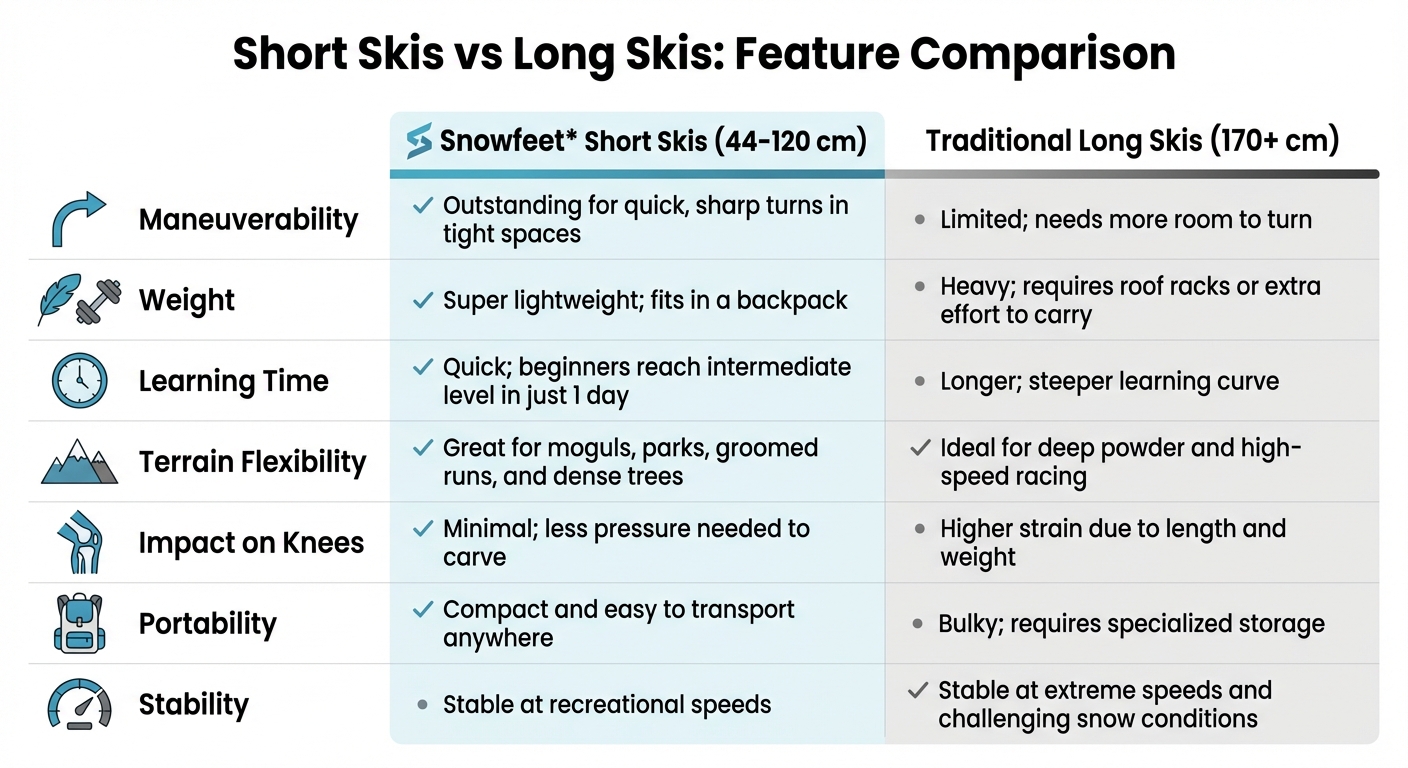
Lyhyet sukset vs pitkät sukset vertailutaulukko
Ovatko lyhyet sukset parempia aloittelijoille?
Ongelmia pitkien suksien kanssa
Pitkät sukset – yli 67 tuumaa (170 cm) – voivat olla todellinen riesa, erityisesti harrastelijalaskijoille. Ne ovat raskaita, kömpelöitä käsitellä ja vaativat paljon enemmän fyysistä ponnistelua kuin lyhyemmät vaihtoehdot.
Raskaat ja vaikeasti hallittavat
Pitkien suksien paino ei ole leikin asia. Niiden hallinta väsyttää, erityisesti ahtaissa paikoissa kuten kumpareilla, metsäpoluilla tai ruuhkaisilla rinteillä. Jokainen käännös tuntuu treeniltä, vaatien ylimääräistä voimaa ja kestävyyttä. Lisäksi niiden hidas reagointi voi tehdä laskemisesta enemmän velvollisuuden kuin ilon.
"Pitkät sukset ovat useimmille laskijoille liian kömpelöt ja raskaat." - Snowfeet Team
Hitaampi oppimiskäyrä
Aloittelijoille pitkät sukset voivat olla armottomat. Ne korostavat pieniä virheitä, mikä vaikeuttaa tasapainon säilyttämistä. Reunan tarttuminen tai kaatuminen tapahtuu useammin, koska lisäpituus tekee tasapainon löytämisestä hankalampaa. Tämä tarkoittaa enemmän kaatumisia, enemmän turhautumista ja pidemmän oppimisprosessin – erityisesti epätasaisessa lumessa.
Kestävä haastavassa maastossa
Kun olosuhteet käyvät haastaviksi – ajattele liukkaita kohtia, epätasaista lunta tai epätasaista maastoa – pitkät sukset voivat tuntua väärältä työkalulta. Niiltä puuttuu nopea ja terävä kääntymiskyky, jota tarvitset sopeutuaksesi muuttuviin olosuhteisiin. Liukumisen sijaan päädyt taistelemaan varusteidesi kanssa. Kenellekään, joka ei ole asiantuntija, tämä ylimääräinen pituus vaatii edistyneitä taitoja ja paljon enemmän voimaa, mikä muuttaa hauskan laskun uuvuttavaksi taisteluksi.
Kuinka lyhyet sukset ratkaisevat nämä ongelmat
Lyhyet sukset ratkaisevat monia päänsärkyjä, joita pitkien suksien käyttö aiheuttaa. Sen sijaan, että taistelisit varusteesi kanssa, huomaat työskenteleväsi sen kanssa kolmen erottuvan edun ansiosta: kevyempi paino, parempi hallinta ja helpompi oppimiskäyrä.
Kevyempi paino tarkoittaa vähemmän väsymystä
Painoero lyhyiden ja pitkien suksien välillä on valtava. Snowfeet* -mallit esimerkiksi vähentävät merkittävästi pitkien suksien aiheuttamaa raskasta kuormitusta kehollesi. Ilman yli 5,5 jalkaa pitkien suksien raahaamista polvesi ja jalkasi eivät väsy yhtä nopeasti. Itse asiassa lyhyet sukset voivat vähentää fyysistä rasitustasi jopa 50 %. Tämä tarkoittaa, että voit hiihtää pidempään ilman uupumuksen tunnetta. Lisäksi mallit kuten Snowfeet* 65 cm Skiblades tai 99 cm Skiblades ovat niin kompakteja, että ne mahtuvat jopa reppuun – ei enää tilaa vievän varusteen raahaamista mukana. Se ylimääräinen energia, jonka säästät? Se tekee terävistä, nopeista käännöksistä vaivattomia.
"Lyhyet sukset ovat vastaus kaikkeen siihen, mikä häiritsee häntä pitkien suksien kanssa hiihtämisessä: kömpelyys, raskaat kuormat jaloissa ja rasittava liike." - Zbynek, Snowfeetin perustaja
Helpompi kääntyä ja suunnistaa
Lyhyillä suksilla on kääntösäde vain 4–8 jalkaa, mikä tekee niistä täydelliset nopeisiin ja tarkkoihin liikkeisiin. Tämä on kätevää kumpareilla, metsäpoluilla ja ruuhkaisilla rinteillä. Snowfeet* 44 cm Skiskates vie ketteryyden uudelle tasolle tarjoten luistelun kaltaisen kokemuksen lumella. Mutta kyse ei ole pelkästään ahtaisiin tiloihin mahtumisesta – lyhyet sukset antavat paremman hallinnan. Ne reagoivat välittömästi liikkeisiisi, jolloin voit käsitellä vaikeaa maastoa vaivatta, vaikka et olisi asiantuntija.
Nopeampi oppia kaikille
Lyhyet sukset tekevät oppimisesta nopeampaa ja vähemmän turhauttavaa. Toisin kuin pitkät sukset, jotka voivat korostaa virheitä, lyhyet sukset auttavat aloittelijoita kehittymään nopeasti. Monet ensikertalaiset voivat siirtyä aloittelijasta keskitasolle vain yhdessä päivässä. Snowfeet* -mallit ovat anteeksiantavia, vähentäen reunaan tarttumisen tai tasapainon menettämisen riskiä – yleisiä haasteita pidemmillä suksilla. Kokeneille hiihtäjille lyhyet sukset avaavat enemmän mahdollisuuksia. Temput, hypyt ja nopeat liikkeet ovat helpompia toteuttaa. Snowfeet* 65 cm Skiblades (arvio 5.0/5) ovat huippuhauskat maastopuistoissa, kun taas 99 cm mallit tarjoavat lisävakautta kaarrossa menettämättä herkkyyttä. Olitpa oppimassa tai kehittämässä taitojasi, lyhyet sukset tekevät koko kokemuksesta hauskemman ja palkitsevamman.
Snowfeet* lyhyet sukset vs. pitkät sukset

Ominaisuuksien vertailutaulukko
Kun vertaat Snowfeet* lyhyitä suksia perinteisiin pitkiin suksiin, erot ovat silmiinpistäviä:
| Ominaisuus | Snowfeet* lyhyet sukset (44–120 cm) | Perinteiset pitkät sukset (170+ cm) |
|---|---|---|
| Ketteryys | Erinomainen nopeisiin, teräviin käännöksiin ahtaissa tiloissa | Rajoitettu; tarvitsee enemmän tilaa kääntymiseen |
| Paino | Erittäin kevyt; mahtuu reppuun | Painava; vaatii kattotelineet tai ylimääräistä vaivaa kantamiseen |
| Oppimisaika | Nopea; aloittelijat voivat saavuttaa keskitasoisen tason vain yhdessä päivässä | Pidempi; oppimiskäyrä jyrkempi |
| Maaston monipuolisuus | Erinomainen kumpareille, puistoihin, hoidettuihin rinteisiin ja tiheisiin metsiin | Ihanteellinen syvään POWDERiin ja nopeisiin kilpailuihin |
| Vaikutus polviin | Minimaalinen; kaarteen tekemiseen tarvitaan vähemmän painetta | Suurempi rasitus pituuden ja painon vuoksi |
| Kannettavuus | Kompakti ja helppo kuljettaa minne tahansa | Tilaa vievä; vaatii erikoissäilytyksen |
| Vakavuus | Vakaa harrastevauhdissa | Vakaa äärinopeuksissa ja haastavissa lumisissa olosuhteissa |
Tämä taulukko korostaa, miksi Snowfeet* lyhyet sukset ovat erinomainen valinta jokapäiväiseen lasketteluun.
Miksi Snowfeet* on parempi valinta
Näitä eroja tarkastellessa on helppo ymmärtää, miksi Snowfeet* lyhyet sukset tarjoavat nautinnollisemman laskettelukokemuksen.
Laskijoille, jotka arvostavat hauskuutta, ketteryyttä ja helppoutta, Snowfeet* osuu juuri oikeaan kohtaan. Niiden tuotteet, kuten 44 cm Skiskates (arvio 5.0/5), tuovat rinteille luistelun kaltaisen tunteen, kun taas 99 cm Skiblades (myös arvio 5.0/5) tarjoavat lisävakautta ilman perinteisten pitkien suksien painoa. Arvostelut korostavat jatkuvasti, kuinka Snowfeet* mallit vähentävät vaivaa kumpareilla ja helpottavat polvien rasitusta.
Vaikka pitkät sukset tarjoavat lisävakautta äärinopeuksissa tai haastavissa lumisissa olosuhteissa, ne ovat usein liioittelua jokapäiväiseen lasketteluun. Snowfeet* lyhyet sukset puolestaan tarjoavat nopeutta ja ketteryyttä tavallisilla rinteillä, tehden niistä yhtä nopeat tuntuiset.
65 cm mallin hinta on 550 dollaria ja 99 cm version 590 dollaria, Snowfeet* lyhyet sukset tarjoavat korkean suorituskyvyn ja monipuolisuuden ilman suurten pitkien suksien hankaluutta. Snowfeetin kanssa nautit enemmän hauskuudesta, suuremmasta joustavuudesta ja vähemmästä väsymyksestä – kaikki tämä samalla kun suoriudut vaikuttavasti rinteillä.
"Lyhyet sukset ovat yleisesti parempia kuin pitkät sukset... ne ovat helppoja oppia, erittäin ketteriä ja sopivat mille tahansa pinnalle." - Snowfeet-tiimi
sbb-itb-17ade95
Snowfeet* tuotteet, jotka tekevät laskettelusta helpompaa
Snowfeet* tuotteet keskittyvät pitämään asiat kevyinä ja helpoina rinteillä, tarjoten uudenlaisen tavan nauttia laskettelusta kompaktien muotoilujen ja käyttäjäystävällisten ominaisuuksien avulla.
Mini Ski Skates ja PRO-mallit
Mini Ski Skates (38 cm / ~15 tuumaa) ovat Snowfeetin pienin vaihtoehto, suunniteltu kiinnitettäväksi suoraan talvikengillesi. Alkaen 250 dollarista, nämä ultrakevyet skiskatesit ovat tarpeeksi pieniä mahtuakseen reppuusi, tehden niistä täydelliset spontaaniin lumiseikkailuun. Lasikuituvahvistetulla ytimen rakenteella ne ovat kestäviä mutta kevyitä, joten saat kestävyyttä ilman ylimääräistä painoa.
Jos haluat seuraavan tason, PRO-malli (50 cm / ~20 tuumaa) tarjoaa enemmän hallintaa ja ketteryyttä. Hinta 275 dollaria, se on silti kannettava mutta antaa sinulle lisäedun sujuvampiin laskuihin. Molemmat mallit sopivat aloittelijoille – perusasiat opit vain viidessä minuutissa. Se on kuin "luistelua lumella" ilman perinteisen hiihtovarustuksen vaivaa.
Skiskates ja Skiblades
Erityisesti kaartelevaa, hyppäävää ja ahtaita paikkoja rakastaville Skiskates (44 cm / ~17 tuumaa) ovat erinomainen valinta. Puuydin ja täydellinen 5.0/5 suorituskyvyn arvio hoidetuilla rinteillä ja maastopuistoissa tekevät niistä vapauden ja hauskanpidon välineen. Hinta alkaa 575 dollarista, ja ne sopivat hiihtäjille, jotka haluavat luistelun kaltaisen tunteen.
Skiblades ovat saatavilla kolmessa pituudessa eri tyyleihin sopien. 65 cm (~26 tuumaa) vaihtoehto, alkaen 635 dollarista, yhdistää luistelun ketteryyden ja hiihdon vakauden. Monipuoliseen all-mountain-kokemukseen 99 cm (~39 tuumaa) versio on saatavilla 590 dollarista. Se on tasapainoinen kaarrokseen ja nopeisiin käännöksiin, mutta pysyy kevyenä. Jos haet maksimaalista vakautta perinteisemmällä hiihtotuntumalla, 120 cm (~47 tuumaa) malli on valintasi, hinta 775 dollaria. Pidemmästä pituudestaan huolimatta se säilyttää lyhyempien suksien edut.
Snowfeet POWDER syvälle lumelle
Powderin ystäville Snowfeet POWDER (99 cm / ~39 tuumaa) on suunniteltu käsittelemään syvää lunta kuin ammattilainen. Leveämmän profiilinsa ansiosta se kelluu paremmin yli 10 cm (4 tuumaa) lumessa, ja se on valintasi off-piste-seikkailuihin tai unelmien powder-päiviin paikoissa kuten Vail tai Tahoe. Hinta alkaa 675 dollarista, ja se tarjoaa täydellisen tasapainon vakauden ja ketteryyden välillä. Saat lyhyiden suksien hauskuuden ja reagoivuuden ilman perinteisten pitkien suksien vaivaa tai tilavuutta. Kyse on siitä, että syvässä lumessa laskeminen olisi helpompaa ja hauskempaa.
Olitpa sitten kaarteleva hoidetuilla rinteillä, temppuilija maastopuistoissa tai tutkimassa tuoretta POWDERia, Snowfeet* tarjoaa jotain, joka tekee laskemisestasi rinteillä jännittävää ja saavutettavaa.
Yleisiä myyttejä pitkistä suksista
Hiihtomaailma on pitkään juhlistanut ajatusta, että pidemmät sukset ovat paras valinta, mutta monet näistä väitteistä eivät kestä tarkastelua. Puretaanpa muutamia yleisimpiä myyttejä pitkistä suksista.
Myytti: Pitkät sukset ovat vakaampia
Toki pitkät sukset – yli 67 tuumaa (170 cm) – voivat tuntua vakaalta erittäin kovissa nopeuksissa, mutta tavalliselle hiihtäjälle ne ovat usein enemmän riesa kuin hyöty. Ne ovat kömpelöitä, raskaita ja vaikeampia hallita, varsinkin jos et syöksy alas vuorelta kuin ammattilaiskilpailija. Useimmat hiihtäjät suosituilla hiihtokeskuksilla kuten Vailissa tai Tahoe’ssa pujottelevat väkijoukkojen läpi, laskevat kumpareita tai suhaavat hoidettuja rinteitä – eivät jahtaa ennätysnopeuksia.
Toisaalta lyhyet sukset tarjoavat vakautta eri tavalla: ketteryys ja nopea reagointi. Snowfeet* -mallit, joiden pituus vaihtelee 17 tuumasta (44 cm) 47 tuumaan (120 cm), loistavat ketteryydessä, tehden niistä ihanteelliset tiukkoihin käännöksiin ja nopeisiin toipumisiin. Ne ovat kevyitä, anteeksiantavia ja helppoja hallita, joten voit keskittyä sujuvien käännösten tekemiseen ja nopeuden hallintaan ilman, että sinun tarvitsee taistella liian isojen varusteiden kanssa.
"Mennessäni nopeasti hallitsin täydellisesti jokaisen liikkeen, käännökset ja pysähdykset. Tuotteesi on todellakin paras, ja kiitos, että annoit minun löytää hiihtämisen ilo ja onnellisuus uudelleen niin helposti ja niin hyvällä hallinnalla." - Daniel Siouffi, Snowfeet* käyttäjä
Nyt pureudutaan ajatukseen, että pidemmät sukset tarkoittavat automaattisesti nopeampaa hiihtoa.
Myytti: Pitkät sukset ovat nopeampia
On helppo olettaa, että pidemmät sukset tarkoittavat enemmän nopeutta, mutta totuus on hieman monimutkaisempi. Vaikka pitkät sukset voivat loistaa äärimmäisissä nopeuksissa, lyhyet sukset voivat itse asiassa lisätä nopeuttasi tietyissä tilanteissa, kuten pujotteluradalla, niiden ketteryyden ja nopeiden, tarkkojen käännösten ansiosta.
Snowfeet* lyhyet sukset on rakennettu ketteryyttä silmällä pitäen, mikä todistaa, että hallinta usein voittaa pituuden nopeudessa. Ja ollaanpa rehellisiä – useimmat harrastelijahiihtäjät eivät kuitenkaan saavuta nopeuksia, joissa suksen pituudella olisi merkittävä vaikutus. Olitpa sitten liikkeellä 26 tuuman (65 cm) Skiskatesilla tai 47 tuuman (120 cm) lyhyillä suksilla, nautit runsaasta nopeudesta ja paljon paremmasta hallinnasta kuin perinteiset pitkät sukset voivat tarjota.
Mutta nopeus ei ole ainoa alue, jossa lyhyitä suksia ymmärretään väärin – on myös väärinkäsitys siitä, kenelle ne on tarkoitettu.
Myytti: Lyhyet sukset ovat vain aloittelijoille
Tämä ei voisi olla kauempana totuudesta. Lyhyet sukset on suunniteltu kaikentasoisille taitajille – aloittelijoista kokeneisiin ammattilaisiin. Erityisesti edistyneet hiihtäjät rakastavat lyhyiden suksien tarjoamaa vapautta tehdä freestyle-temppuja, kuten pyörähdyksiä, hyppyjä ja jopa taaksepäin hiihtämistä – liikkeitä, jotka ovat lähes mahdottomia perinteisillä pitkillä suksilla. Hiihto-opettajat vannovat myös skibladejen nimeen, sillä niiden kevyt paino ja ketteryys tekevät lasten opettamisesta paljon helpompaa.
Seikkailunhaluisille 17-tuumaiset (44 cm) Skiskates yhdistävät rullaluistelun hauskuuden laskettelun vauhtiin. Keskitasoiset laskijat huomaavat usein, että lyhyet sukset auttavat heitä kehittymään nopeammin ja saamaan takaisin itseluottamuksensa, kun taas aloittelijat arvostavat niiden anteeksiantavuutta ja helppoa käsiteltävyyttä. Lisäksi ne ratkaisevat yhden laskettelun ärsyttävimmistä ongelmista: jumittumisen tasaisilla osuuksilla. Lyhyillä suksilla voit yksinkertaisesti luistella ylämäkeen sen sijaan, että kamppailisit raskaiden ja kömpelöiden varusteiden kanssa.
Olitpa muotoilemassa hoidettuja rinteitä, vierailemassa maastopuistossa tai suuntaamassa POWDERiin, Snowfeet* tuotteet tarjoavat monipuolisuutta ja hauskuutta kaiken tasoisille ja kaikenlaisille laskijoille. Lyhyet sukset eivät ole vain aloittelijoille – ne ovat kaikille, jotka haluavat nostaa kokemuksensa uudelle tasolle rinteillä.
Yhteenveto
Miksi pysyä raskaissa, kömpelöissä perinteisissä suksissa, kun voit siirtyä Snowfeet* lyhyisiin suksiin? Nämä kompaktit sukset, joiden pituus vaihtelee 17 tuumasta (44 cm) 47 tuumaan (120 cm), tarjoavat kevyen, helposti hallittavan vaihtoehdon, joka sopii nopeampaan oppimiseen ja enemmän hauskaa rinteillä. Olitpa kokeilemassa Breckenridgeä ensimmäistä kertaa tai piristämässä menoa Park Cityssä, Snowfeet* lyhyet sukset tekevät muotoilusta, kääntämisestä ja vuoren navigoinnista vaivatonta samalla kun väsymys pysyy loitolla.
Snowfeet* tuotteet tarjoavat jokaiselle jotakin. Erittäin kannettavat 17-tuumaiset (44 cm) Skiskates mahtuvat siististi reppuun, tehden niistä täydelliset nopeisiin seikkailuihin, kun taas 39-tuumaiset (99 cm) Skiblades ovat valintasi muotoilemaan hoidettuja rinteitä tai leikkimään POWDERissa. Tällainen monipuolisuus on erottuva ominaisuus, joka antaa laskijoille vapauden kohdata lähes minkä tahansa maaston.
"Ennen kaikkea lyhyet sukset ovat yksinkertaisesti hauskoja. Ne tarjoavat ainutlaatuisen ja jännittävän laskettelukokemuksen, joka eroaa perinteisistä pidemmistä suksista." - Snowfeet-tiimi
Toinen iso etu? Näiden suksien hallitseminen onnistuu jo yhdessä päivässä. Se tarkoittaa vähemmän aikaa oppimiseen ja enemmän aikaa nauttia sujuvista käännöksistä, hypyistä ja tempuista. Lisäksi ne ovat polvillesi ystävällisempiä, superhelppoja kantaa ja avaavat mahdollisuuksia, joita pitkät sukset eivät pysty tarjoamaan – kuten hypyissä onnistuminen maastopuistossa tai liukuminen tasaisilla osuuksilla vaivatta.
Usein kysytyt kysymykset
Miksi lyhyet sukset ovat helpompia hallita ja ohjata?
Lyhyiden suksien hallinta on helppoa niiden kapeamman kääntösäteen ja kevyemmän, napakamman tuntuman ansiosta. Ne antavat sinun vaihtaa reunoja nopeasti ja tehdä teräviä, tarkkoja käännöksiä ilman hikoilua – täydelliset pitämään menon sujuvana ja vaivattomana.
Niiden pienempi koko lisää hauskuutta tekemällä niistä superhelppoja käsitellä. Olitpa pujottelemassa puiden välissä, kaartelemassa hoidetuilla rinteillä tai haastavassa maastossa, lyhyet sukset auttavat sinua tuntemaan olosi hallituksi. Aloittelijoille ne tekevät oppimisesta vähemmän pelottavaa. Ja kokeneille hiihtäjille ne lisäävät itsevarmuutta ja hallintaa, tehden jokaisesta laskusta nautinnollisemman.
Miksi lyhyet sukset ovat aloittelijoille helpompia kuin pitkät sukset?
Lyhyet sukset voivat tehdä suuren eron aloittelijoille. Miksi? Koska ne ovat kevyemmät, helpommat käsitellä ja vaativat vähemmän vaivaa hallintaan. Pienempi koko helpottaa kääntymistä ja tasapainon ylläpitämistä, auttaen uusia hiihtäjiä saamaan itsevarmuutta ilman ylivoimaisuuden tunnetta. Lisäksi lyhyemmät sukset luonnollisesti pitävät nopeudet alhaisempina, antaen aloittelijoille enemmän aikaa reagoida ja sopeutua rinteillä.
Verrattuna perinteisiin pitkiin suksiin, jotka voivat olla vaikeita hallita ja vaativat enemmän voimaa ja tarkkuutta, lyhyet sukset – kuten Snowfeet* – tekevät hiihdosta vähemmän pelottavaa ja paljon hauskempaa. Olitpa sitten vasta aloittamassa tai hiomassa taitojasi, lyhyet sukset tarjoavat nopeamman oppimiskäyrän ja sujuvamman, rennomman laskun.
Pystyykö lyhyet sukset käsittelemään erilaisia maastoja?
Lyhyet sukset, kuten Snowfeet Skiblades (65 cm, 99 cm, 120 cm) ja Skiskates (44 cm), on suunniteltu loistamaan kaikenlaisessa maastossa. Kompaktin kokonsa ansiosta ne tekevät nopeista, terävistä käännöksistä helppoa hoidettavaa hoidetuilla reiteillä ja tiiviillä lumella. Kevyt muotoilu sopii täydellisesti pujotteluun ahtaissa paikoissa, kumpareiden hallintaan tai metsäpoluilla liikkumiseen. Lisäksi ne ovat huippuhauskat parkissa, tarjoten ketteryyttä ja hallintaa, jota on vaikea päihittää.
Jos vertaat niitä perinteisiin pitkiin suksiin, on pieni kompromissi. Pitkät sukset loistavat syvässä POWDERissa ja tarjoavat enemmän vakautta kovissa nopeuksissa. Mutta Snowfeet lyhyet sukset? Ne ovat monipuolisuuden mestareita. Ne ovat superhelppoja käsitellä, aloittelijaystävällisiä ja tarjoavat silti vahvan kanttipidon ja vakautta kokeneille laskijoille. Ja missä pitkät sukset tai lumilaudat saattavat kamppailla tiukkojen, teknisten käännösten kanssa, nämä lyhyet sukset tarjoavat tarkkuutta ja ketteryyttä, tehden niistä hauskan ja käytännöllisen vaihtoehdon kaikenlaisiin vuoristoseikkailuihin.
Aiheeseen liittyvät blogikirjoitukset
- Ovatko sukset liian pitkät? Merkit, ongelmat ja miksi lyhyempi on usein parempi
- Aloittelijan sukset: Pitäisikö valita pidemmät vai lyhyemmät?
- "Apua! Sukset ovat liian pitkät!" – Mitä tehdä & miten tunnistaa
- Todellinen syy, miksi niin monet hiihtäjät lopettavat – ja miten lyhyet sukset ratkaisevat sen













Jätä kommentti
Tämä sivu on suojattu hCaptcha-tunnistuksella, ja hCaptchan tietosuojakäytäntöjä ja käyttöehtoja sovelletaan.