



















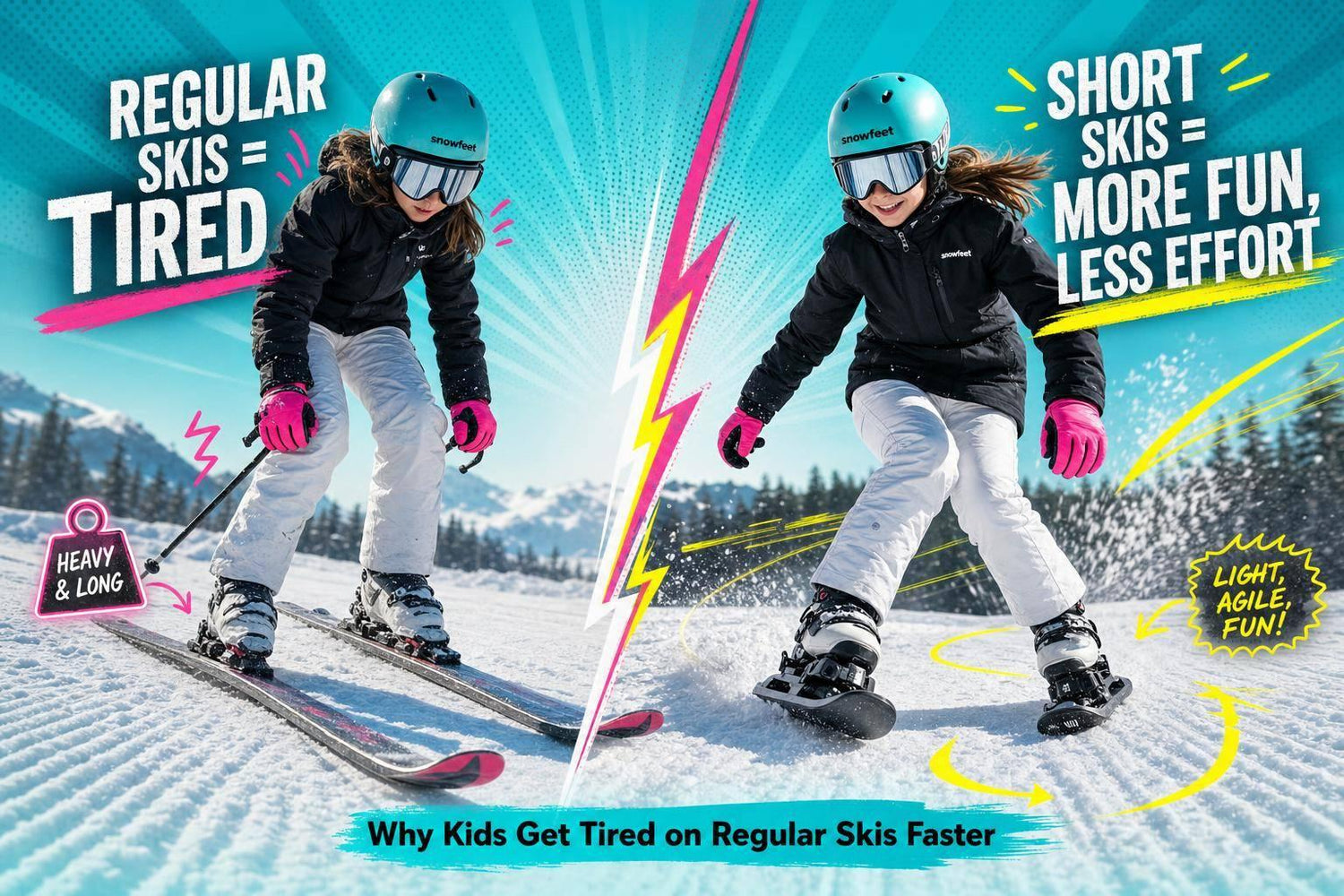
Most kids don’t get tired first because they’re out of shape. They get tired because long skis ask small legs to do too much.
If I had to sum it up in one line, it’s this: shorter skis usually take less effort to turn, stop, balance, and get up from after a fall. That can mean less leg burn, fewer wipeouts, and more time on snow before the “I’m done” face shows up.
Here’s the short version:
- Junior skis are often about 39–51 in (100–130 cm) long
- More ski in front of and behind the boot means more effort to steer
- Kids often burn energy in:
- wide turns
- snowplow stops
- getting up after falls
- staying balanced on long, bulky gear
- Short options like Snowfeet* MINI KIDS, Skiskates 44 cm, and Skiblades 65 cm keep more of the gear close to the foot, so movements feel more direct
What I’d look at first: turning effort, control, balance, and how tired a kid feels by lunch. That tells you more than skill level alone.
How to Choose the Best Skis for Kids
Quick Comparison
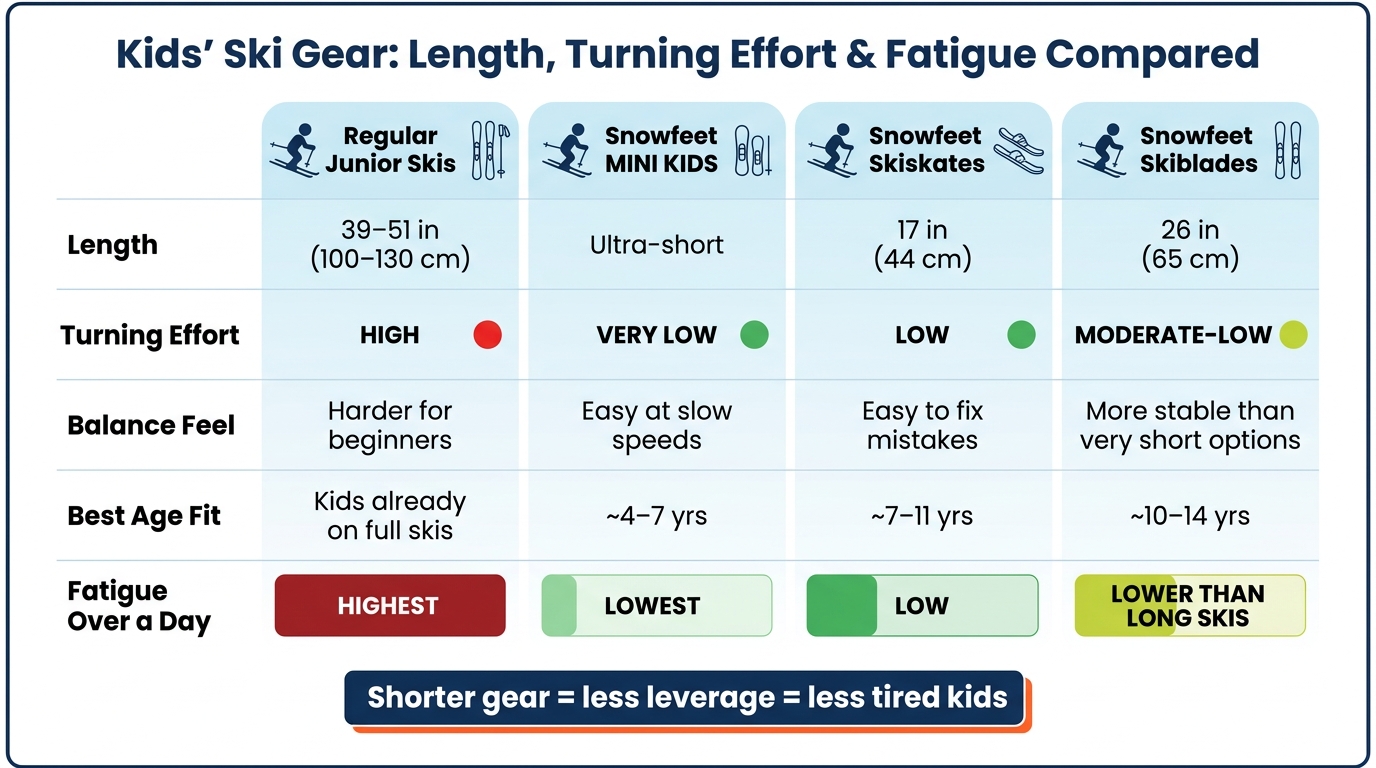
Kids' Ski Gear Comparison: Length, Effort & Fatigue
| Gear | Length | Turning Effort | Balance Feel | Best Fit | Fatigue Over a Day |
|---|---|---|---|---|---|
| Regular junior skis | 39–51 in (100–130 cm) | High | Harder for new riders | Kids already used to full skis | Highest |
| Snowfeet* MINI KIDS | Short | Very low | Easy at slow speeds | First-timers, about 4–7 | Lowest |
| Snowfeet* Skiskates | 17 in (44 cm) | Low | Easy to fix mistakes | Beginners to early intermediate, about 7–11 | Low |
| Snowfeet* Skiblades | 26 in (65 cm) | Moderate-low | More stable than very short options | Confident beginners, about 10–14 | Lower than long skis |
So, if your child fades fast, I wouldn’t blame fitness right away. I’d check whether the skis are simply too long, too heavy, or too much work for where they are right now. That one gear change can make a big difference :)
If you want a fast visual on short skis vs long skis, these clips help:
Why Kids Get Tired Faster on Regular Skis
Regular long skis wear kids out faster because they take more work to start, turn, stop, and balance on. What feels simple to an adult can feel like a lot for a small rider. The big issue here is leverage.
Longer Skis Demand More Strength and Constant Attention
A long ski works like a lever. The more the tip and tail stick out past a child’s boot, the more force it takes to move, turn, or stop. Typical junior skis run 39–51 in (100–130 cm) long, and even a small weight shift gets spread across that whole length.
That means kids are doing a lot at once:
- trying to stay centered
- keeping their skis from crossing
- steering
- controlling speed
That steady effort can drain them in a hurry.
Shorter options like Snowfeet* Skiblades 65 cm, Snowfeet* Skiskates 44 cm, and Snowfeet MINI KIDS cut that leverage by a lot. Small foot movements lead to more direct ski movement, so kids can stay in control without wrestling the gear. Less fight with the skis means less fatigue. Simple as that :)
Small Energy Drains Add Up by Midday
Long skis also chip away at a kid’s energy in small ways all morning. Every wide turn, snowplow stop, fall, and reset takes more effort. A snowplow stop keeps the thighs working in a tense, low stance. And after a fall, kids have to lift more length and weight just to get back up.
On their own, those things may not seem huge. Put them together, though, and by midday a lot of kids are cooked.
sbb-itb-17ade95
Heavier Gear and Harder Turning Drain a Child's Energy
Weight matters. But turning effort is what wears kids out fast.
Long skis are often heavier and more awkward than parents think. On every run, a child has to lift them, tip them on edge, and swing that extra length through each turn. It doesn’t sound like much at first. Then a few runs later, the hips, thighs, and lower back start to feel it.
Regular Long Skis vs. Snowfeet* Shorter Options
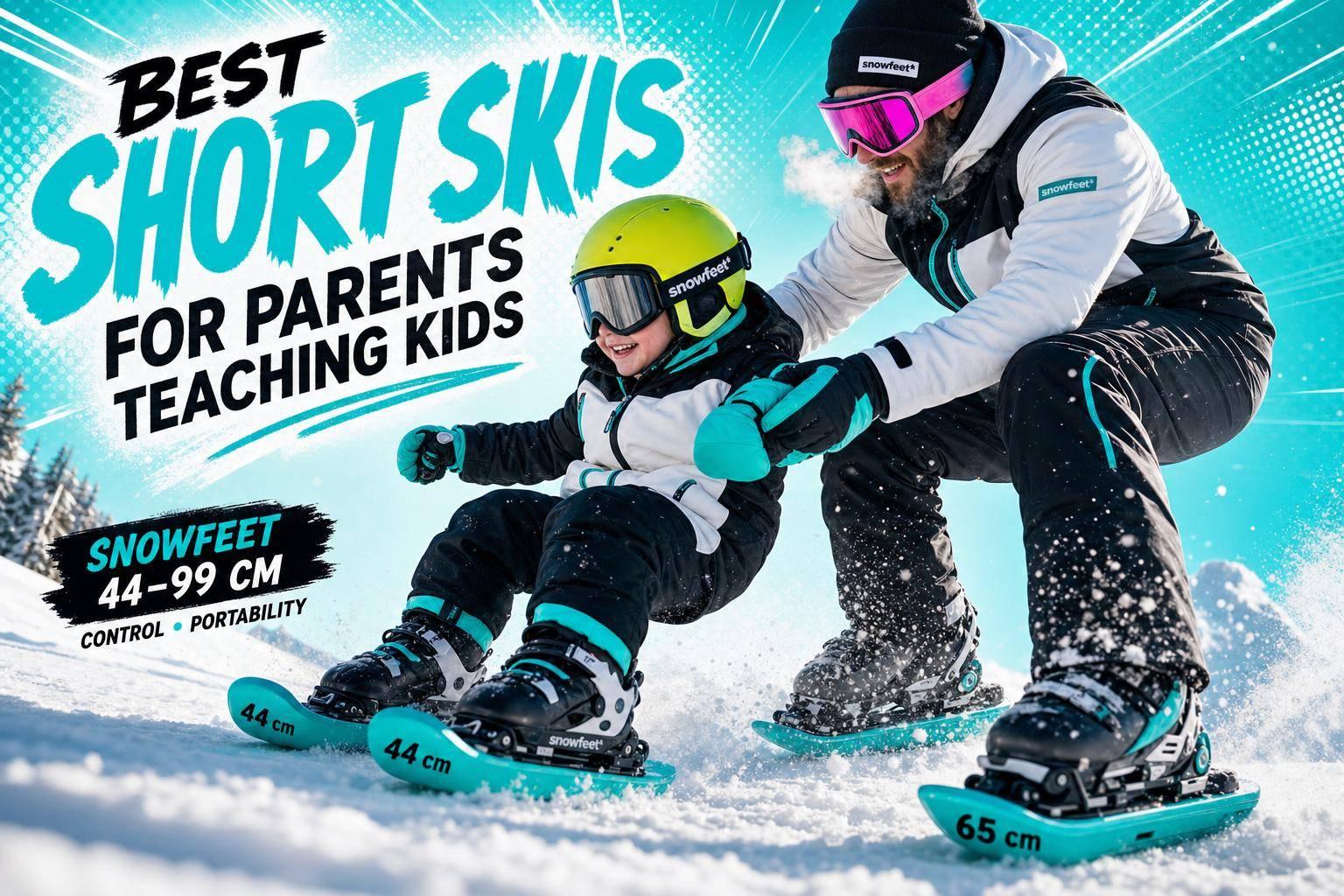
Long skis ask for bigger movements and more force to turn. Shorter gear is a different story. Most of the ski stays close to the boot, so even a small ankle or knee move can start and finish a turn. That’s a big deal for kids, because little movements take a lot less out of them.
| Equipment | Overall Feel | Turning Effort | Ease of Control | How Tiring Over a Full Day |
|---|---|---|---|---|
| Regular long skis | Long and bulky; tips and tails feel in the way | High; requires more force and bigger movements | Harder for beginners | Most tiring; legs and back wear out fastest |
| Snowfeet* MINI KIDS | Ultra-compact and playful | Very low; tiny movements start a turn | Very easy at low speeds | Least tiring for short runs and parks |
| Snowfeet* Skiskates 44 cm | Short, light, agile | Low; quick response, easy to pivot | High; easier to recover from mistakes | Much less tiring than regular skis |
| Snowfeet* Skiblades 65 cm | Shorter than regular skis but more stable | Moderate-low; smoother, carved turns easier | Very good; forgiving yet more ski-like | Noticeably less tiring than long skis |
Why Easier Turning Matters for Young Riders
Easy turns save energy. They also help kids stay calm and in control.
When a child feels like they can’t manage the turn, things get messy fast. They stiffen up, lean back, or fall into a wide snowplow. And yeah, that snowplow burns through leg strength like a kid tearing through a plate of fries after ski school.
Snowfeet* designs react almost right away to small ankle and knee movements, so kids can make short, quick turns without picking up more speed or throwing their body around. That makes it easier to link turns, fix mistakes, and stay loose instead of tense. And that’s exactly why fit and size matter so much for younger riders.
Better Balance and Easier Control Mean Less Leg Strain
Turning is only part of the issue. Balance matters too. Kids need to stay centered over their skis, and that gets tougher on long skis. Even small wobbles can feel bigger, so they end up spending more energy fixing the skis than enjoying the ride.
Why Long Skis Feel Awkward for Beginners
When a child starts to feel off-balance, they often lean back and crouch low. It’s a common move, but it tires their legs out fast. That tense, low stance puts a lot of work on the quads, and after a couple of hours, even a strong kid can be toast.
Why Snowfeet* MINI KIDS and Skiblades 65 cm Feel Easier to Use
This is where shorter Snowfeet* options make things easier. With Snowfeet* MINI KIDS and Snowfeet* Skiblades 65 cm, there’s less ski sticking out past the boot. That helps kids stay centered with less effort and makes turning feel much more natural.
A small knee movement or light shift in weight is often enough to start a turn. They don’t have to swing their whole body around like they’re wrestling a shopping cart with one bad wheel. And when kids can stand more upright, their legs don’t get beat up as fast.
That makes the next step simple: choose the size that matches the child’s comfort and control.
Which Snowfeet* Option Is the Right Fit for a Child
Once a child can balance and turn with a bit more ease, the next step is simple: pick the Snowfeet* size that fits their current ability. If long skis tire kids out because they ask for more strength and balance, shorter gear helps take some of that load off.
The best Snowfeet* setup depends on three things:
- the child’s confidence
- their size
- where they’ll ride most
Matching Each Option to Skill Level and Comfort
| Option | Best For | Typical Fit | Confidence Level | Where It Works Best |
|---|---|---|---|---|
| Snowfeet* MINI KIDS | True first-timers | ~4–7 years old | Hesitant first-timers | Bunny slopes, flat practice areas, very gentle hills |
| Snowfeet* Skiskates 44 cm | Beginners to early intermediates | ~7–11 years old | Cautious to moderately confident | Green runs, small local hills, fun zones |
| Snowfeet* Skiblades 65 cm | Confident beginners ready for more speed and longer runs | ~10–14 years old | Moderate to confident riders | Green and easy blue runs, longer resort sessions |
The fit matters more than many parents think. Easier gear helps kids stay relaxed, ski longer, and use less energy on each run. It’s usually smarter to match the gear to the child’s current level, not the level you hope they’ll hit by the last day of the trip. That’s how you avoid the classic “too much ski, too soon” problem.
Use the brand’s sizing chart for weight and shoe size. Since Snowfeet* gear is shorter and lighter, each run tends to take less effort. That can make a big difference, especially when a kid is still building control and gets tired fast.
How Easier Gear Helps Kids Ski Longer
Easier control means less strain, fewer falls, and longer sessions on the slopes. That’s the whole game, honestly.
With shorter, lighter Snowfeet* gear, tired kids can still make small corrections without throwing their whole body into every move. They don’t have to fight the gear just to stay balanced and in control. And when the gear feels easier, kids often stay calmer, which helps them keep going instead of calling it a day after a few rough runs.
Less effort. More confidence. More time on snow. :)
FAQs
How do I know if my child’s skis are too long?
Your child’s skis may be too long if they feel heavy, clunky, or hard to turn. A common clue is when your child starts leaning backward. That can make the tips feel shaky and chatter on the snow.
If your child struggles to turn, has trouble staying in control, or gets tired fast, ski length may be part of the problem. Long skis can add extra strain, and kids feel that pretty fast.
Traditional junior skis can also feel bulky and a bit intimidating. Compact, lightweight options like Snowfeet MINI KIDS or Skiblades are often much easier to handle. For a lot of kids, that means less fighting with the skis and more time just having fun :)
Are shorter Snowfeet* options safer for beginners?
Yes. Shorter Snowfeet* options are usually safer and easier for beginners than long, old-school skis. Their small size means there’s less chance of crossing your skis, and if you do fall, it’s often simpler to get back under control.
They also keep your center of gravity closer to the snow and take less effort to turn. That helps beginners feel more stable, more in control, and more confident - without as much strain or frustration.
Which Snowfeet* size is best for my child?
The best Snowfeet* size comes down to your child’s age and how comfortable they are on snow.
For kids ages 4–10 or total first-timers, Snowfeet MINI KIDS (38 cm) is the best place to start. It’s light, simple to control, and works with regular winter boots. That means less hassle for you and an easier first day for them :)
Once your child starts getting the hang of it, 65 cm Skiblades are a nice next step. They give a bit more stability but still feel much easier to handle than standard kids’ skis.
For older kids or young riders with more time on the slopes, 99 cm Skiblades may be the better fit.











Deja un comentario
Este sitio está protegido por hCaptcha y se aplican la Política de privacidad de hCaptcha y los Términos del servicio.