



















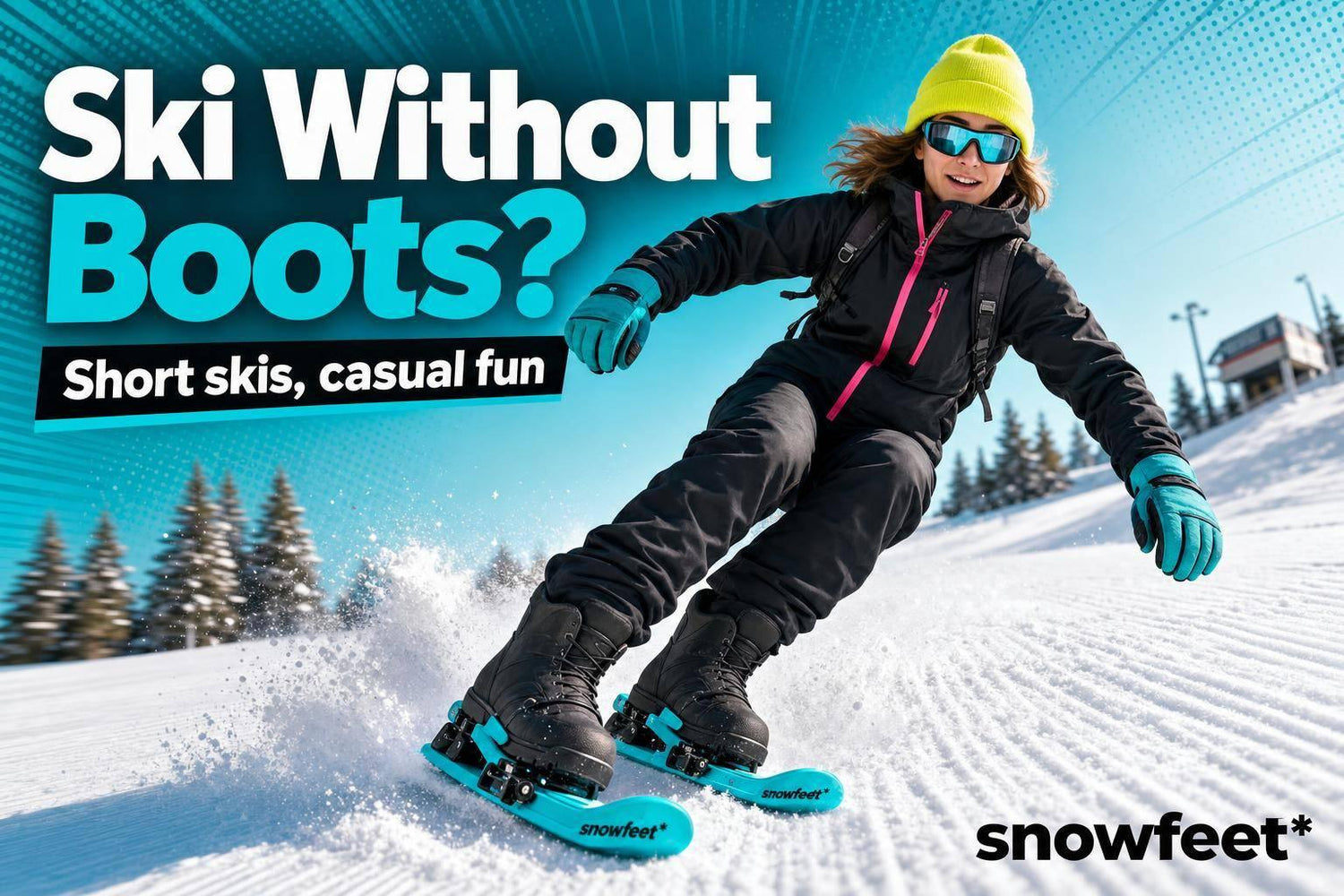
Yes - you can ski without hard ski boots. But it only works with the right short-ski setup, and the right boot.
Here’s the short answer:
- Long skis still need hard ski boots for control, edge grip, and high-speed stability.
- Short skis like Snowfeet* can work with snowboard boots.
- Mini ski skates can also work with sturdy winter boots with strap bindings.
- Best fit: beginners, travelers, snowboarders, and people with skating or hockey background.
- Not the best fit: racing, icy steeps, deep powder, or fast groomer carving.
So, if you want comfort, easy walking, and a setup that can fit in a backpack, this route makes sense. If you want full-speed carving or steep terrain, hard boots still win.
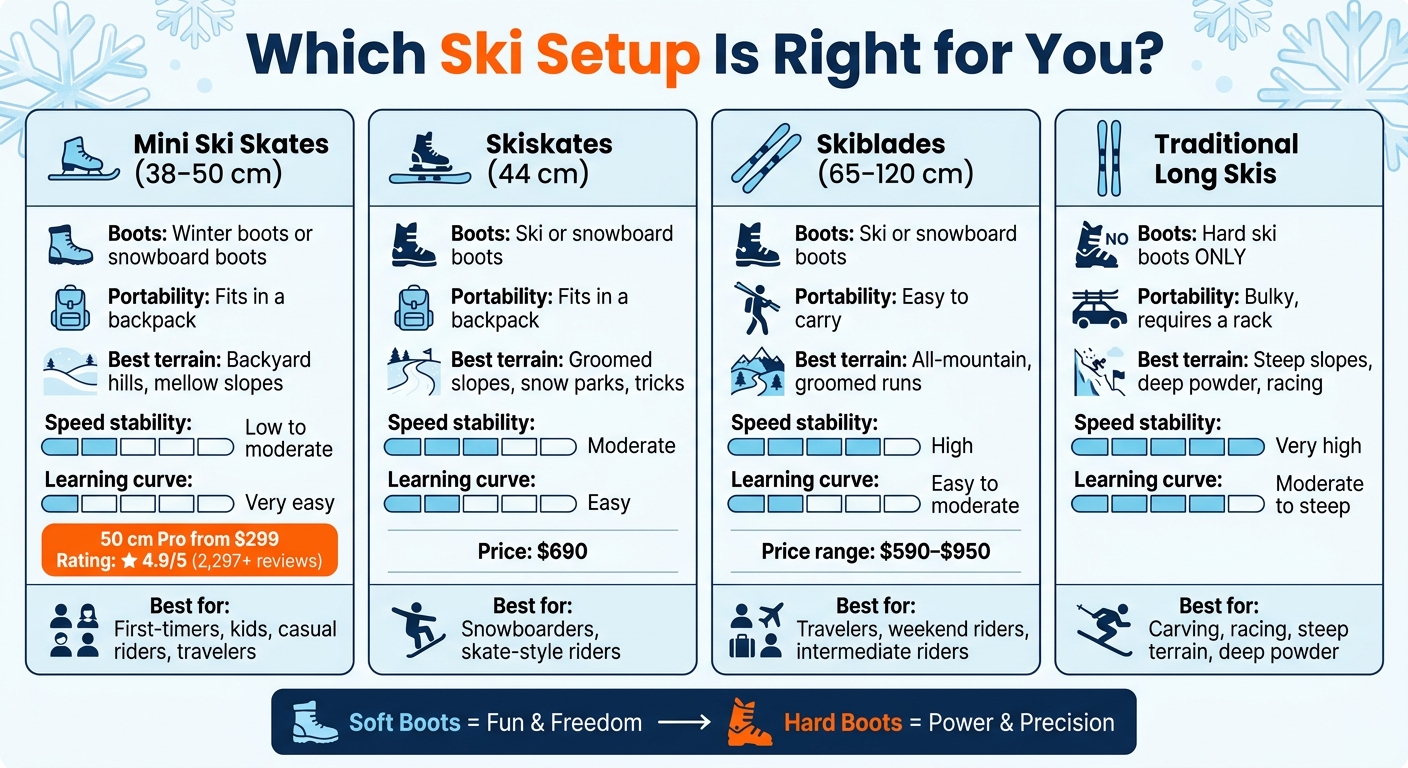
Ski Boot & Ski Setup Comparison Guide: Which Setup Is Right for You?
Short Skis with Snowboard Bindings | Must-Have of This Winter
Quick comparison
| Setup | Boots | Best for | Main trade-off |
|---|---|---|---|
| Mini Ski Skates (38–50 cm) | Winter boots or snowboard boots | Small hills, casual use, first-timers | Less stable at speed |
| Skiskates (44 cm) | Ski or snowboard boots | Skate-like feel, groomers, tricks | Short platform, less support than long skis |
| Skiblades (65–120 cm) | Ski or snowboard boots | Groomed runs, all-mountain fun, travel | Still not a full long-ski setup |
| Long skis | Hard ski boots only | Carving, steep runs, powder, speed | Bulky gear, stiff boots |
A few numbers stand out too. The 50 cm Pro starts at $299 and has a 4.9/5 rating from 2,297+ reviews. It’s a nice middle ground for casual riders. But once snow gets deeper than about 4 inches, or speed starts climbing, longer skis and stiffer boots have the edge.
If I were giving shop-floor advice, I’d put it like this: use soft boots for fun and freedom; use hard boots for power and precision. Simple as that :)
Snow gear that works with regular winter boots or snowboard boots
Snowfeet* Mini Ski Skates 38 cm and 50 cm
The 38 cm and 50 cm Pro models work with waterproof winter boots or snowboard boots thanks to universal bindings. So, you don’t need hard ski boots to use them.
The 50 cm Pro is the best all-around option of the two. It gives you more balance, a raised tip and tail, and smoother carving than the 38 cm. It starts at $299 and holds a 4.9/5 rating from 2,297+ reviews.
That said, these are best for lighter use. They handle only light powder, up to about 4 inches (10 cm), and they can feel shaky once you pick up speed. That makes them a good match for:
- backyard hills
- sledding hills
- mellow slopes
If you want more stability and more speed, it makes sense to step up to Snowfeet*’s longer models.
One small but important fit note: if you wear US size 12–13 snowboard boots, the straps on the 50 cm model may feel too short for a comfy fit.
Snowfeet* Skiskates 44 cm and Skiblades 65 cm, 99 cm, and 120 cm
If you want to keep the same boot freedom but get more control on snow, the longer Snowfeet* models are where things get more fun. The 44 cm, 65 cm, 99 cm, and 120 cm versions offer more stability and better edge hold. They all use a wood core with steel edges and graphite bases.
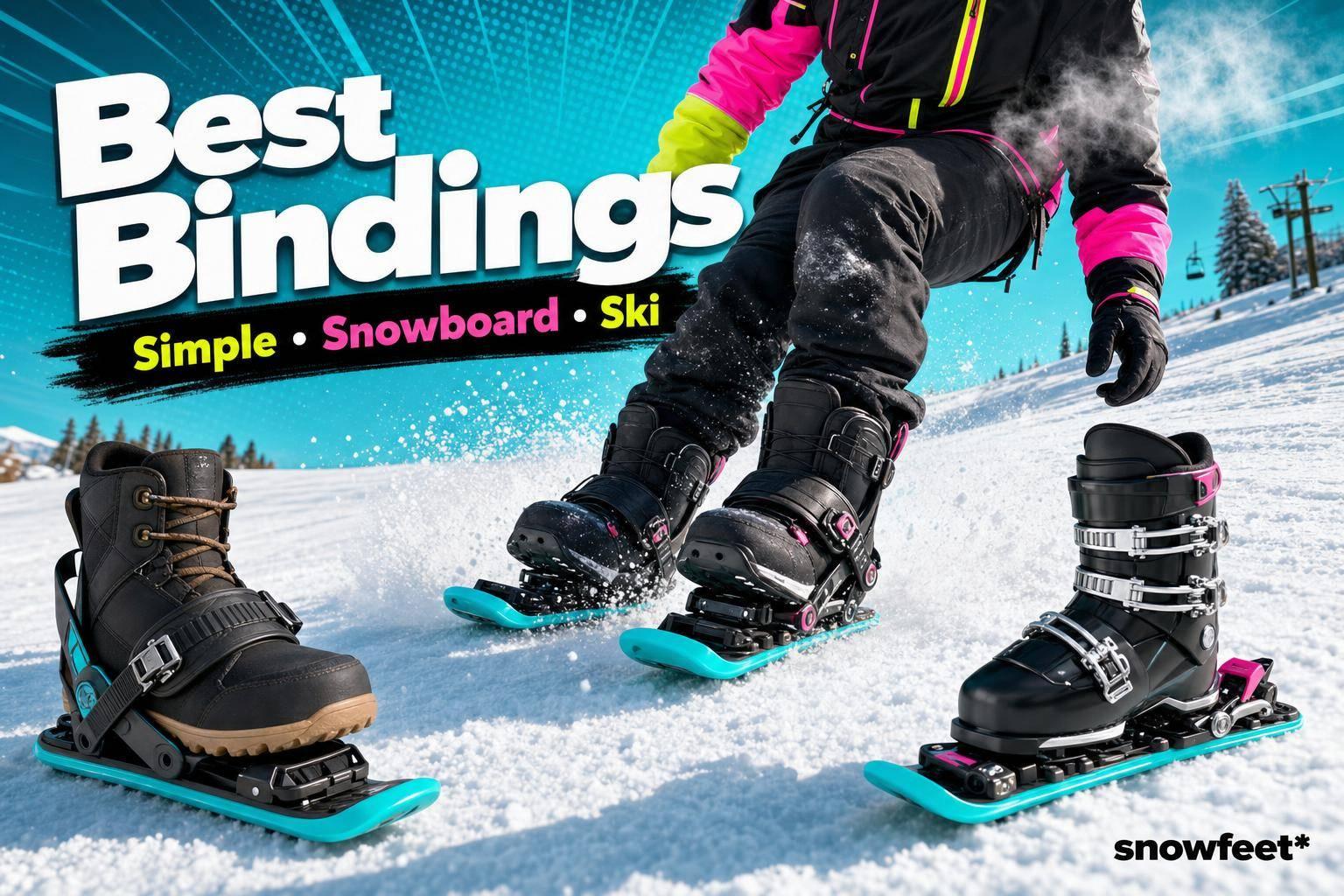
Each one comes with either ski-boot or snowboard-boot bindings, which is a big plus if you already own snowboard boots and don’t want to buy another setup.
Here’s how the lengths change the ride:
- The 44 cm Skiskates ($690) have more of a skating feel on groomed slopes. They’re quick, playful, and great for tricks or fast direction changes.
- The 65 cm Skiblades (from $590) sit in the middle. You still get that skaty feel, but with easier ski-style carving too.
- The 99 cm Skiblades ($690) feel the closest to a short ski. They’re stable enough for faster runs and all-mountain terrain.
- The 120 cm Skiblades ($950) give the most ski-like feel in the lineup, while still being small enough to fit in a backpack.
How Snowfeet* compares with long skis and other short-ski brands
Older snowblade-style setups often still needed hard ski boots, which kind of defeated the whole point if you wanted a simpler boot setup. Snowfeet* goes another way: the mini models work with boots you may already have, and the longer models let you pick your binding style.
| Mini Ski Skates (38–50 cm) | Skiskates (44 cm) | Skiblades (65–120 cm) | Traditional Long Skis | |
|---|---|---|---|---|
| Footwear | Winter boots or snowboard boots | Ski or snowboard boots | Ski or snowboard boots | Hard ski boots only |
| Portability | Fits in a backpack | Fits in a backpack | Easy to carry | Bulky, requires a rack |
| Best terrain | Backyard, hills, mellow slopes | Groomed slopes, snow parks | All-mountain, groomed runs | Steep slopes, deep powder |
| Speed stability | Low to moderate | Moderate | High | Very high |
| Learning curve | Very easy | Easy | Easy to moderate | Moderate to steep |
The gap shows up fast once you start adding speed, steeper terrain, or deeper snow. That’s where the extra length helps a lot.
sbb-itb-17ade95
When hard ski boots are still the better choice
Long skis, high speeds, and resort carving
Hard ski boots make the most sense when precision and speed are the main goals. If you're driving full-length skis fast on groomed runs, a stiff boot sends power straight to the ski. Small leg movements turn into clean, steady turns instead of a softer, less exact response.
That matters a lot for resort skiing on firm snow or icy patches. When the surface gets fast and unforgiving, the stiffness helps you stay in control.
Steep terrain, racing, and deep powder
On steep slopes, hard boots give you near-instant edge control when the pitch gets tighter. Racing asks for that same direct feel. Softer footwear just can't match that level of power transfer.
Deep powder changes the game too. Variable snow can throw you off balance in a hurry, and hard boots help with strong ankle support and exact ski pressure. In all three cases, hard boots still come out on top.
Snowfeet* Skiblades are built for fun-first riding, not racing. The 99 cm and 120 cm models don't offer the same stability, top speed, or hard-snow precision as long skis paired with hard boots. For racing and steep, technical terrain, long skis with hard boots still win.
There’s also a safety point here. Traditional ski boots work with release bindings, which can disengage during a fall to help cut injury risk - a key advantage of standard alpine setups.
For casual riders, comfort and freedom of movement can matter more than max stiffness. Next, we’ll look at how winter boots and snowboard boots actually feel on snow.
What it actually feels like to ski with winter boots or snowboard boots
Comfort, movement, and learning curve
Compared with hard ski boots, the change hits right away. Without that stiff plastic shell, your stance feels more upright and relaxed. On the Snowfeet* Mini Ski Skates (38 cm and 50 cm) and the 44 cm Skiskates, the feel is much closer to skating or rollerblading than alpine skiing. You make turns with quick foot moves and short edge changes, not long sweeping arcs.
If you’ve played hockey, skated, or spent time on rollerblades, you’ll likely get the hang of it fast. A lot of riders can slide, turn, and stop within a few runs.
Snowboard boots feel soft and cushioned. Winter boots are also nice because they make walking around the resort a lot easier than clomping around in hard ski boots. Both tend to give you less pressure and fewer hot spots than a rigid shell. That alone can make the day feel a lot more fun :)
Boot requirements and safety
Use waterproof boots with firm ankle support. Snowboard boots are usually the best match. Sturdy winter boots can work too.
Here’s what matters most:
- Keep the fit snug
- Make sure the ankle has support
- Avoid loose lacing or soft, floppy boots
If the boot is loose, your foot can shift around. That means less control, and yeah, that’s when things start to feel sketchy.
There is a trade-off. You get more comfort and easier movement off the snow, but less control on hard snow. That means:
- Less edge grip on ice
- Less leverage on steeper pitches
- Less confidence at higher speeds than hard ski boots give you
These setups work best on moderate slopes and groomed runs. They’re not the right pick for icy steeps or hard charging carved turns.
That’s why boot choice matters, but the bigger factor is pairing the right Snowfeet* length with the terrain you plan to ride.
Choosing the right setup for your riding style
Best Snowfeet* option for casual riders, travelers, and snowboarders
Choose based on your boot type, where you ride, and how fast you want to go. Here’s the quick match-up:
- First-timers, kids, casual riders: 38 cm or 50 cm Mini Ski Skates
- Snowboarders and skate-style riders: 44 cm Skiskates
- Travelers and weekend riders: 65 cm Skiblades
- Intermediate riders: 99 cm or 120 cm Skiblades
For local hills and family ski trips, the 50 cm Mini Ski Skates or 65 cm Skiblades work well for the biggest mix of casual riders. They’re easy to pack, easy to use, and a lot less fussy than hauling full ski gear around.
If you come from snowboarding, you’ll likely lean toward the 44 cm Skiskates. They feel more natural for riders who like a looser, skate-like feel.
So that leaves one clean choice: Snowfeet* for comfort and convenience, hard boots for max performance.
Final takeaway
Snowfeet* makes boot-free skiing practical. The right model comes down to your terrain, your speed, and the boots you already own. A simple rule of thumb: Snowfeet* for casual, portable, boot-friendly riding; hard ski boots for speed, carving, and steep terrain.
FAQs
Can beginners really ski with snowboard boots?
Yes. Beginners can use snowboard boots with Snowfeet* gear.
Snowfeet* makes bindings on shorter models like the 44 cm Skiskates and 65 cm to 99 cm Skiblades that work well with the comfort and flex of snowboard boots.
That’s a big plus when you’re starting out. The secure two-strap bindings help keep things simple, and you skip the stiff, clunky feel of old-school ski boots. Snowboard boots are also easier to walk in, which, let’s be honest, can save beginners from that awkward parking-lot penguin shuffle :)
They give you a nice mix of:
- Flex for easier movement
- Ankle support for more control
- Better comfort on and off the snow
So if you’re new to Snowfeet*, snowboard boots can make the first few rides feel a lot less intimidating.
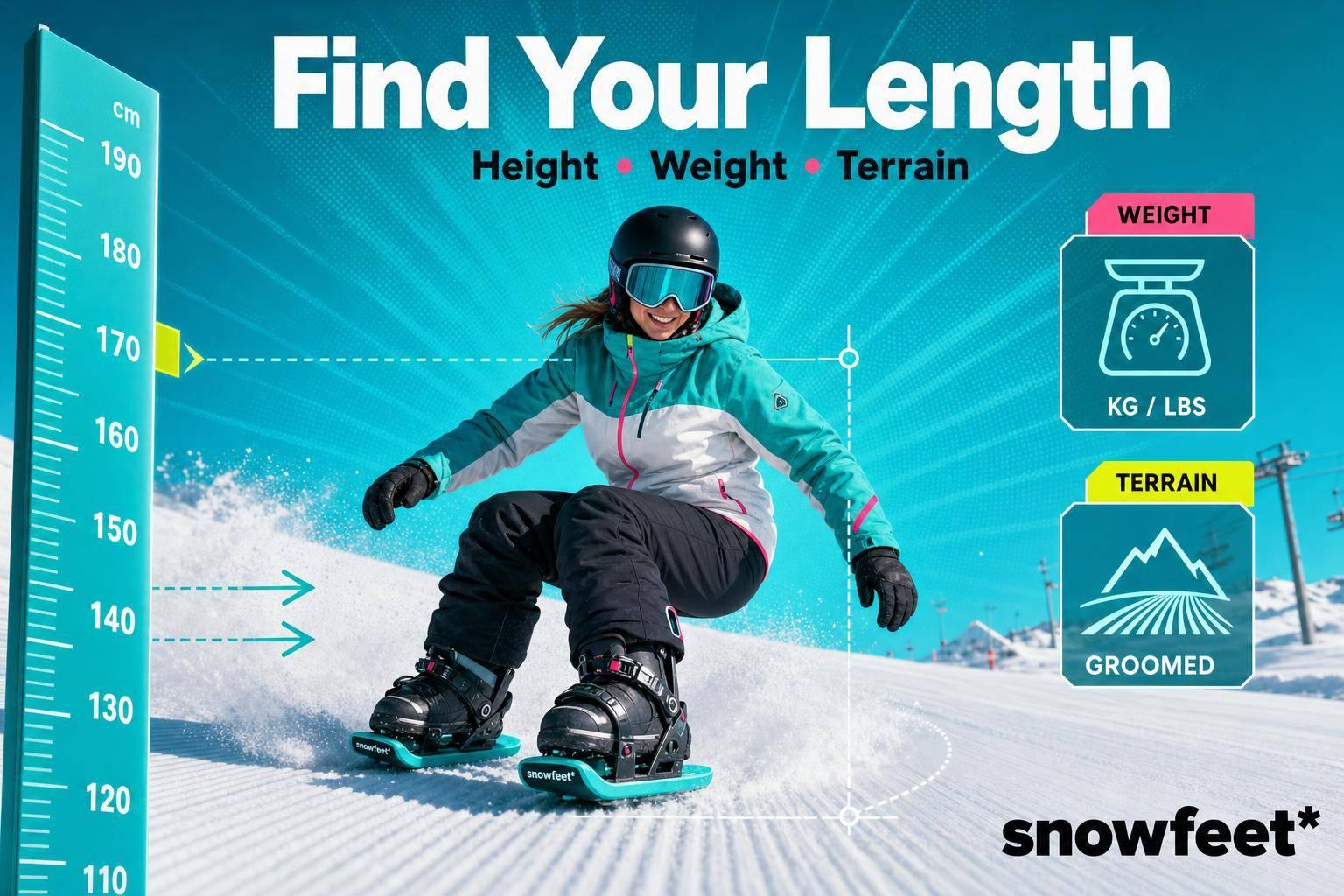
Which Snowfeet* length is best for me?
It comes down to your goals, your experience, and where you ride.
If you're new to this or just want something easy and fun, Mini Ski Skates (38 cm–50 cm) are the simplest to control. They’re also easy to carry, which is nice when you don’t want to lug gear around like a pack mule :)
If you come from hockey or inline skating, 44 cm Skiskates will likely feel the most natural, especially on groomed slopes. They tend to click fast for skaters because the stance and feel are more familiar.
If you want more range, here’s the quick breakdown:
- 65 cm Skiblades are a great pick for agility and park riding
- 99 cm gives you a nice mix of stability and control for intermediate riders
- 120 cm feels closest to standard skis, especially on steeper terrain
So, the short version? Go shorter for ease and playfulness. Go longer for more stability and a feel that’s closer to regular skiing.
Are winter boots safe for skiing?
Yes - winter boots can be safe for skiing if you use gear like Snowfeet*, which is made to work with your own footwear.
Here’s the key difference: traditional skis need rigid ski boots because of how their bindings work. Snowfeet* doesn’t. It uses secure, adjustable straps that fit waterproof winter boots or snowboard boots.
Snowboard boots are often the better pick for steeper slopes. They give you more ankle support and better control than basic winter boots. Before you ride, check that your boots are sturdy and fastened tight. Loose boots and snow don’t mix well :)











Deja un comentario
Este sitio está protegido por hCaptcha y se aplican la Política de privacidad de hCaptcha y los Términos del servicio.