



















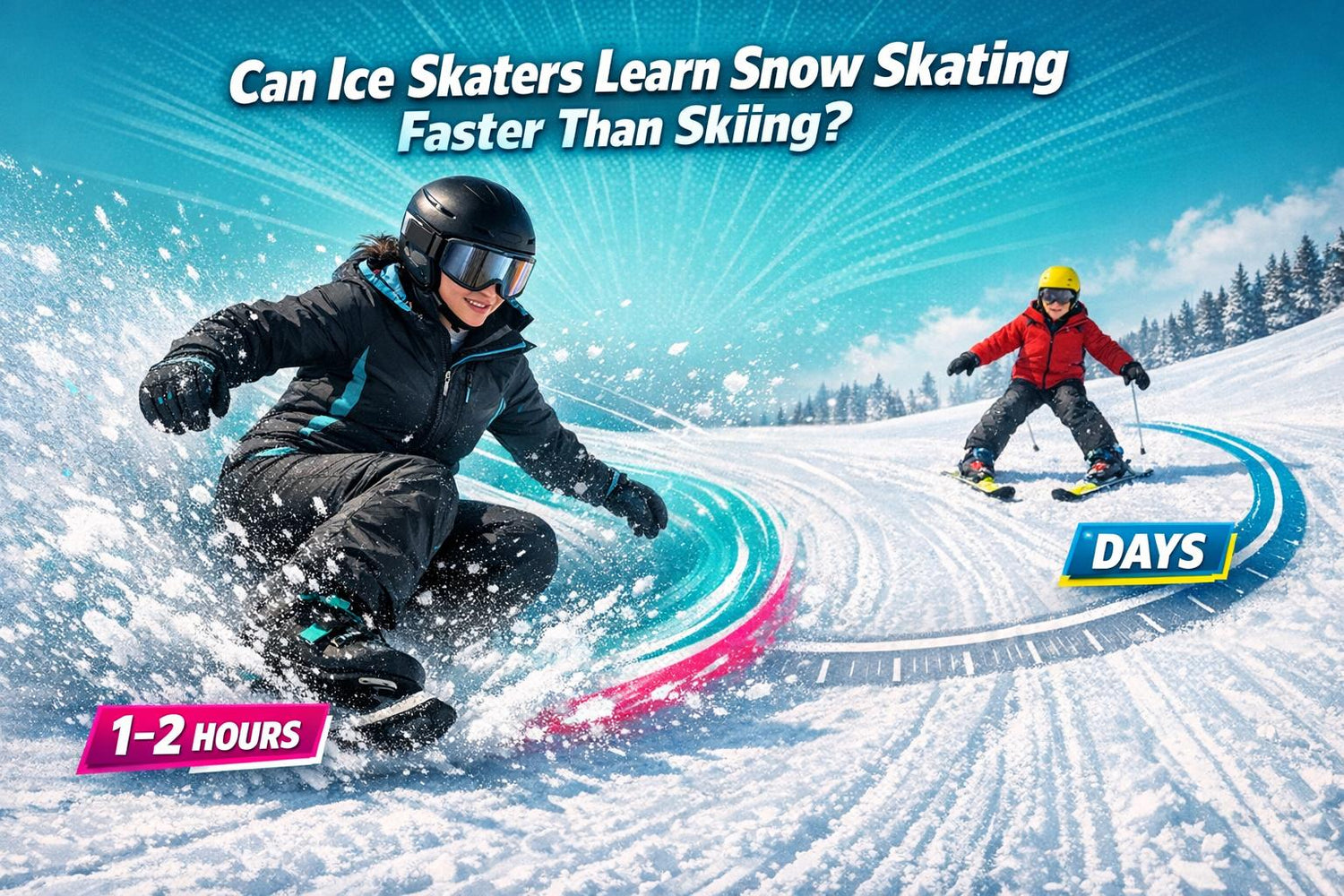
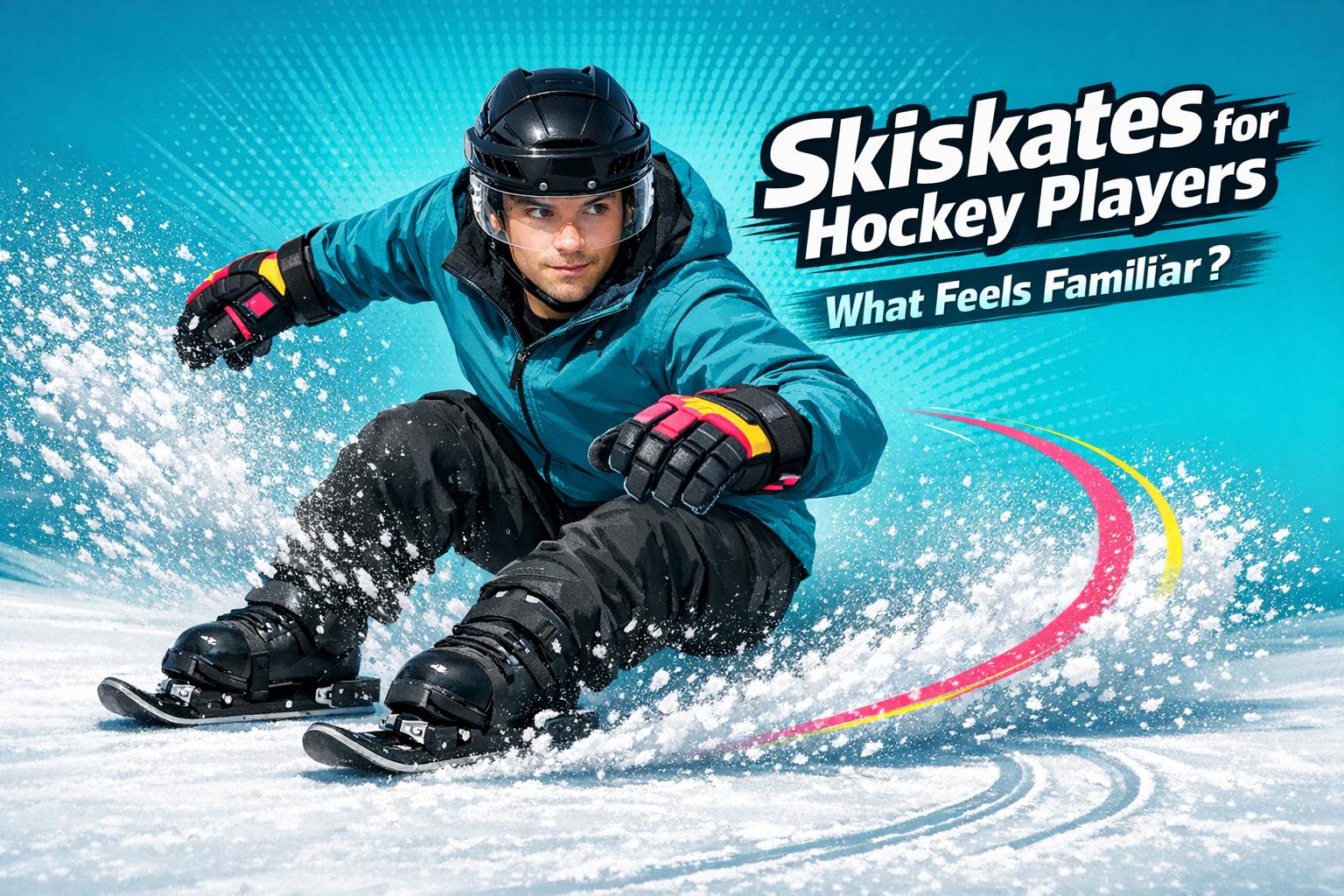
If you’re an ice skater looking to try snow sports, here’s the deal: snow skating is way easier to pick up than skiing. Why? Because snow skating uses many of the same skills you already have - balance, edge control, and smooth weight shifting. Skiing, on the other hand, feels pretty foreign with its stiff boots, long skis, and totally different techniques.
Key Takeaways:
- Snow skating feels like skating on snow. The compact gear (like Snowfeet Mini Ski Skates) works with your natural skating instincts.
- Skiing requires learning new moves, like snowplow stops and wide turns, which can feel awkward for skaters at first.
- You can master basic snow skating moves in 1–2 hours, while skiing might take 2–4 days to feel comfortable.
Quick Comparison:
| Feature | Snow Skating (Snowfeet) | Skiing |
|---|---|---|
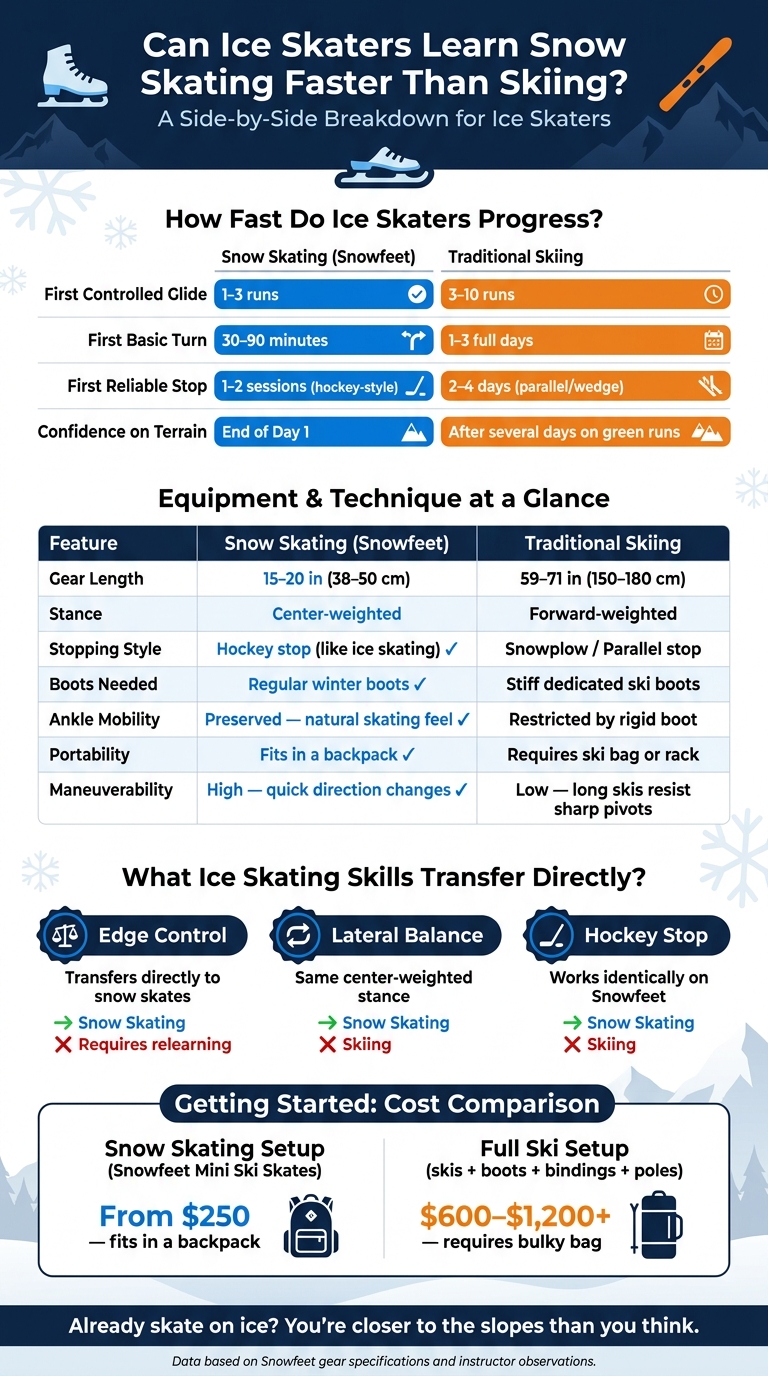
| Gear Length | 15–20 in (38–50 cm) | 59–71 in (150–180 cm) |
| Stance | Center-weighted | Forward-weighted |
| Stopping Style | Hockey stop (like skating) | Snowplow/Parallel stop |
| Learning Curve | Fast (1–3 runs) | Slower (2–4 days) |
| Boots Needed | Regular winter boots | Stiff ski boots |
If you’re comfortable on ice, snow skating is the fastest way to hit the slopes without feeling like a total beginner. Plus, the gear is lighter, cheaper, and easier to carry. Ready to give it a shot? Let’s break it down further.
Ice Skater's Guide: Snow Skating vs. Skiing Learning Curve & Key Differences
Technique Breakdown: Ice Skating vs. Snow Skating vs. Skiing
Building on the shared techniques from ice skating, let’s take a closer look at how the equipment in each sport either supports or challenges those instincts.
Skills Ice Skating and Snow Skating Have in Common
Ice skating and snow skating rely on similar techniques like precise edge control, maintaining dynamic balance, and smooth weight transfers. For example, carving a turn on ice - where you press into the blade's edge and shift your center of gravity - feels very much like using Snowfeet* gear.
"The principles of balance, edge control, and the rhythmic dance with the surface remain remarkably consistent, creating an instant sense of familiarity for the seasoned ice skater." - ODR Skis
The design of Snowfeet* Mini Ski Skates, which are 38–50 cm long, mimics the feel of ice skate blades. This keeps skaters center-weighted, avoiding the awkwardness of bulkier equipment.
How Snow Skating Differs From Skiing
Traditional alpine skis - usually 59–71 inches long - require a completely different approach. Skiers use a forward-weighted stance, with stiff boots locked into fixed bindings. For ice skaters, this body position can feel unnatural. One ski instructor on the snowHeads Forum explained this challenge:
"Skating gives good balance; and will help with the dynamic balance part of the skiing game; but it can also lead to trying to 'skate down the mountain' - had this very problem with a girl in a lesson tonight. Loads of body movements to get the feet moving!"
Snowfeet* Skiskates and Mini Ski Skates, at just 44 cm, avoid this problem. Their shorter length makes quick, reactive movements feel intuitive. Techniques like hockey stops - second nature to ice skaters - translate seamlessly to snow skates. In contrast, standard skis require skaters to learn entirely new methods, like parallel stops or snowplows, from the ground up.
Quick Reference Comparison: Ice Skates, Snowfeet*, and Standard Skis

| Feature | Ice Skates | Snowfeet* (Mini Skates/Skiskates) | Standard Skis |
|---|---|---|---|
| Length | ~12 in blade | 15–20 in (38–50 cm) | 59–71 in (150–180 cm) |
| Primary Control | Blade edges | Short metal edges | Long steel edges |
| Stopping Technique | Hockey stop | Hockey stop (easier to use) | Parallel stop / snowplow |
| Stance | Center-weighted | Center-weighted | Forward-weighted |
| Maneuverability | High | High | Moderate |
| Learning Curve for Skaters | N/A | Minimal | Moderate - requires adjustment |
This table highlights why Snowfeet* is such a smooth transition for ice skaters. Its design mirrors the mechanics of skating, while standard skis demand a completely new skill set.
Learning Curve: Snow Skating vs. Skiing for Ice Skaters
Let’s dive into how ice skaters adapt to Snowfeet* compared to traditional skis. Thanks to the mechanics shared between ice skating and snow skating, Snowfeet* offers a smoother, faster learning curve, making it an appealing option for skaters transitioning to snow sports.
How Ice Skaters Progress on Snow Skates
Ice skaters have a head start when it comes to Snowfeet*. Their expertise in edge control, weight shifts, and balance translates almost instantly to these mini ski skates. Snowfeet* Mini Ski Skates (38–50 cm) and Skiskates (44 cm) are short - about 15–20 inches - so there’s no dealing with the awkwardness of long skis. This compact design allows skaters to stride, pivot, and stop in ways they’re already comfortable with.
Here’s how quickly things click for most skaters:
- A controlled glide? Usually mastered in just 1–3 runs.
- Linked turns? Often achieved within 30–90 minutes.
- A reliable stop, using a hockey-style edge? That’s typically nailed within a session or two.
This fast adaptation is why Snowfeet* is a favorite for ice skaters looking to hit the snow without a steep learning curve.
Why Skiing Takes Longer for Ice Skaters to Learn
Now, skiing? That’s a different story. Traditional skis introduce movements that feel foreign to ice skaters. For example, the snowplow stop - a beginner’s go-to in skiing - feels awkward for skaters used to parallel blades and precise edge control. Add to that the rigid forward stance of ski boots, which limits ankle movement and delays feedback. These factors disrupt the dynamic balance that skaters rely on.
The longer length of skis also complicates things. They’re less responsive, which can lead to overcorrections and frustration. It’s no surprise that most ice skaters need 1–3 full days to link turns consistently and 2–4 days to feel comfortable executing a controlled stop on skis.
These challenges highlight why Snowfeet* gear offers a faster, more intuitive learning experience for skaters.
Learning Milestone Table: Snowfeet* vs. Standard Skis
| Milestone | Snowfeet* (Mini Ski Skates / Skiskates) | Standard Skis |
|---|---|---|
| First controlled glide | Within 1–3 runs - feels like skating | 3–10 runs to feel stable |
| First basic turn | Achieved in 30–90 minutes | 1–3 full days for consistent turns |
| First reliable stop | 1–2 sessions using hockey-style edging | 2–4 days for a natural parallel/wedge stop |
| Confidence to explore terrain | By the end of day one | After several days on green runs |
This comparison clearly shows how Snowfeet* simplifies the transition to snow sports for ice skaters, making it an ideal choice for those eager to get moving quickly and confidently.
Why Snowfeet* Works Well for Ice Skaters
Snowfeet* Design Features That Match Skating
Snowfeet* gear is tailor-made for ice skaters, blending seamlessly with the skills they already have. Let’s break down how its design aligns with skating techniques.
Compact size makes all the difference. Snowfeet* products are small and nimble - Mini Ski Skates measure just 15–20 inches, and Skiskates are 44 cm long. Compare that to standard skis, which are a hefty 59–71 inches (150–180 cm). This shorter length allows for tighter turns, quick pivots, and a stride that feels very similar to skating. These features aren’t just convenient - they directly enhance performance, as shown in the comparison table below.
Boot compatibility is a game-changer. Snowfeet* works with regular winter boots or snowboard boots, so there’s no need for stiff ski boots that limit ankle movement. Ice skaters rely on their ability to feel the surface beneath them, and Snowfeet* maintains that connection. Unlike traditional ski boots, which lock your ankles in place, Snowfeet* keeps your natural balance instincts intact. This alignment with skating dynamics makes the transition to Snowfeet* much smoother.
Lightweight design seals the deal. Snowfeet* gear is built to be light, making it easy to lift, shift, and redirect your feet - just like on ice. Heavy skis can feel clunky and unresponsive, but Snowfeet* stays agile, keeping you in control.
Performance Table: Snowfeet* vs. Standard Ski Gear
| Feature | Snowfeet* (Mini Ski Skates / Skiskates) | Standard Skis | Snowboard |
|---|---|---|---|
| Length | 15–20 in (38–50 cm) | 59–71 in (150–180 cm) | 55–65 in (140–165 cm) |
| Turning radius | Very tight - similar to skating pivots | Wide, requires planned turns | Moderate, edge-to-edge carving |
| Maneuverability | High - quick direction changes | Low - long skis resist sharp pivots | Moderate |
| Portability | Fits in a backpack | Requires a ski bag or rack | Requires a board bag |
| Footwear needed | Winter boots or snowboard boots | Dedicated ski boots (rental or purchase) | Snowboard boots |
| Ankle mobility | Preserved - natural skating feel | Restricted by rigid boot | Moderate restriction |
| Learning curve for ice skaters | Fast - familiar mechanics | Slow - new stance and technique required | Slow - completely different body position |
When it comes to portability and footwear, Snowfeet* stands out. Mini Ski Skates start at $250 and can fit in a backpack. By contrast, a full ski setup - skis, boots, bindings, and poles - costs $600–$1,200+ and requires a bulky bag to transport. For ice skaters looking to dip their toes into snow sports without a big investment, Snowfeet* makes it simple and accessible.
sbb-itb-17ade95
Tips for Ice Skaters Moving to Snow Skating
On-Snow Drills to Get Started
Begin with a warm-up lasting 10–15 minutes, then spend 20–30 minutes practicing drills on a gentle, groomed slope. These drills build on your ice skating skills, focusing on balance and edge control - making Snowfeet* a smooth transition.
Here’s a step-by-step guide:
- Static balance: Stand on flat snow with your knees slightly bent, keeping your weight evenly distributed.
- Weight shifts: March in place to practice transferring your weight between feet. This mimics the ready position from skating.
- Straight glides: Push off gently on a mild slope, keeping your feet hip-width apart and eyes forward.
- Edge transitions: Once you’re gliding comfortably, shift your weight smoothly between inside and outside edges in small arcs. This feels similar to hockey stops or figure skating edge work.
- Linked turns: Combine these movements into shallow S-turns by shifting weight from one foot to the other while tipping your ankles slightly.
- Stops: Start with a simple snowplow wedge (toes in, heels out). As your confidence grows, work toward a hockey-style pivot stop.
Once you’re comfortable with these drills, it’s time to pick the right Snowfeet* model to take your skills further.
How to Pick the Right Snowfeet* Model
Choosing the right Snowfeet* model depends on your skating style and what you want to achieve on the snow:
| Your Background | Best Snowfeet* Match | Why |
|---|---|---|
| Hockey player, loves sharp cuts | Snowfeet* Mini Ski Skates (38 cm) – from $250 | Great for quick turns and an "ice-like" feel. |
| Figure skater, focused on precision | Snowfeet* PRO (50 cm) – $275 | Offers more stability for controlled carving. |
| Ski-resort enthusiast using chairlifts | Skiskates (44 cm) – from $575 | Balances control and stability for longer runs. |
If you’re not sure where to start, the Mini Ski Skates are a solid choice. They’re compact, easy to carry, and forgiving for beginners. As you grow more confident, you can explore longer models for higher speeds and varied terrain.
Safety and Comfort on Snow Skates
Once you’ve got your Snowfeet* model, focus on staying safe and comfortable on the slopes. One of the perks of Snowfeet* is that you can use your regular winter or snowboard boots, which allow natural ankle movement. Just make sure your boots are firm and supportive to keep you stable during edge work.
Safety gear is a must. Wear a certified snow sports helmet (ASTM F2040 standard), and consider adding wrist guards and knee pads while you’re getting used to snow skating. Dress in layers for comfort: a moisture-wicking base layer, an insulating mid-layer, and a waterproof outer shell. Don’t forget waterproof gloves!
Before you start, warm up with dynamic moves like lunges or side-to-side steps to activate the muscles you’ll use for balance and edging. A little preparation goes a long way toward a fun and safe day on the slopes.
Conclusion: Why Ice Skaters Take to Snow Skates So Quickly
For ice skaters, transitioning to snow skates feels almost natural. Why? Because the core skills - edge control, lateral balance, and that rhythmic push-and-glide motion - are already second nature. These abilities don’t need to be relearned; they carry over seamlessly, making snow skates a perfect fit.
Compare this to traditional skiing, which requires a whole new approach. Long skis, a forward-leaning stance, and a steep learning curve can feel foreign to anyone used to the fluid, side-to-side motion of skating. Snow skating, on the other hand, mirrors the skating stride almost perfectly. As TrainingPeaks Level 2 Coach Carrie McCusker explains:
"Skate skiing employs a side-to-side motion similar to ice skating. Skiers push off the inside edges of their skis, creating a V-shaped pattern."
This connection is exactly why Snowfeet* gear works so well for ice skaters. Whether it’s the Mini Ski Skates (38 cm), Skiskates (44 cm), or Snowfeet* PRO (50 cm), these products are compact and responsive - just like the feel of ice skates. Plus, you can use your regular winter or snowboard boots, which keeps the movements familiar and eliminates the need for intensive lessons.
If you’re comfortable on ice, Snowfeet* offers a straightforward way to conquer the slopes. Pick the model that suits your style, practice the basics, and you’ll be ready to glide down the mountain in no time.
FAQs
Can I use Snowfeet* on any ski slope?
You can use Snowfeet* on a variety of ski slopes, especially groomed runs and packed snow. The 44 cm Skiskates are made specifically for ski resorts and snow parks, featuring metal ski edges that allow for sharp, precise turns. Similarly, Snowfeet* Mini Skis (available in 38 cm and 50 cm sizes) work great on groomed slopes, snow parks, backyards, and even local trails. For the best experience, stick to groomed terrain or light powder no deeper than about 4 inches.
Do I need poles for Snowfeet*?
Nope, you don’t need poles for Snowfeet* skiskates. These are made to let you use your ice-skating skills - like balance, edge control, and rhythm - without dealing with all the bulky ski gear. Snowfeet* lets you glide naturally, so there’s no need for extra equipment like poles. Just strap on your Snowfeet* and wear warm boots or gear, and you’re good to go!
What boots work best with Snowfeet*?
Snowfeet* Skiskates are designed to work seamlessly with waterproof winter boots or snowboard boots - no need for stiff ski boots here. The 38 cm model pairs nicely with regular winter boots, while the 44 cm version provides extra stability when used with snowboard or ski boots. If you're into aggressive or hockey-style riding, go for boots that offer strong ankle support. The bindings are adjustable to fit US shoe sizes 6–13 (and up to 14.5 for ski/snowboard boot models).











Deja un comentario
Este sitio está protegido por hCaptcha y se aplican la Política de privacidad de hCaptcha y los Términos del servicio.