



















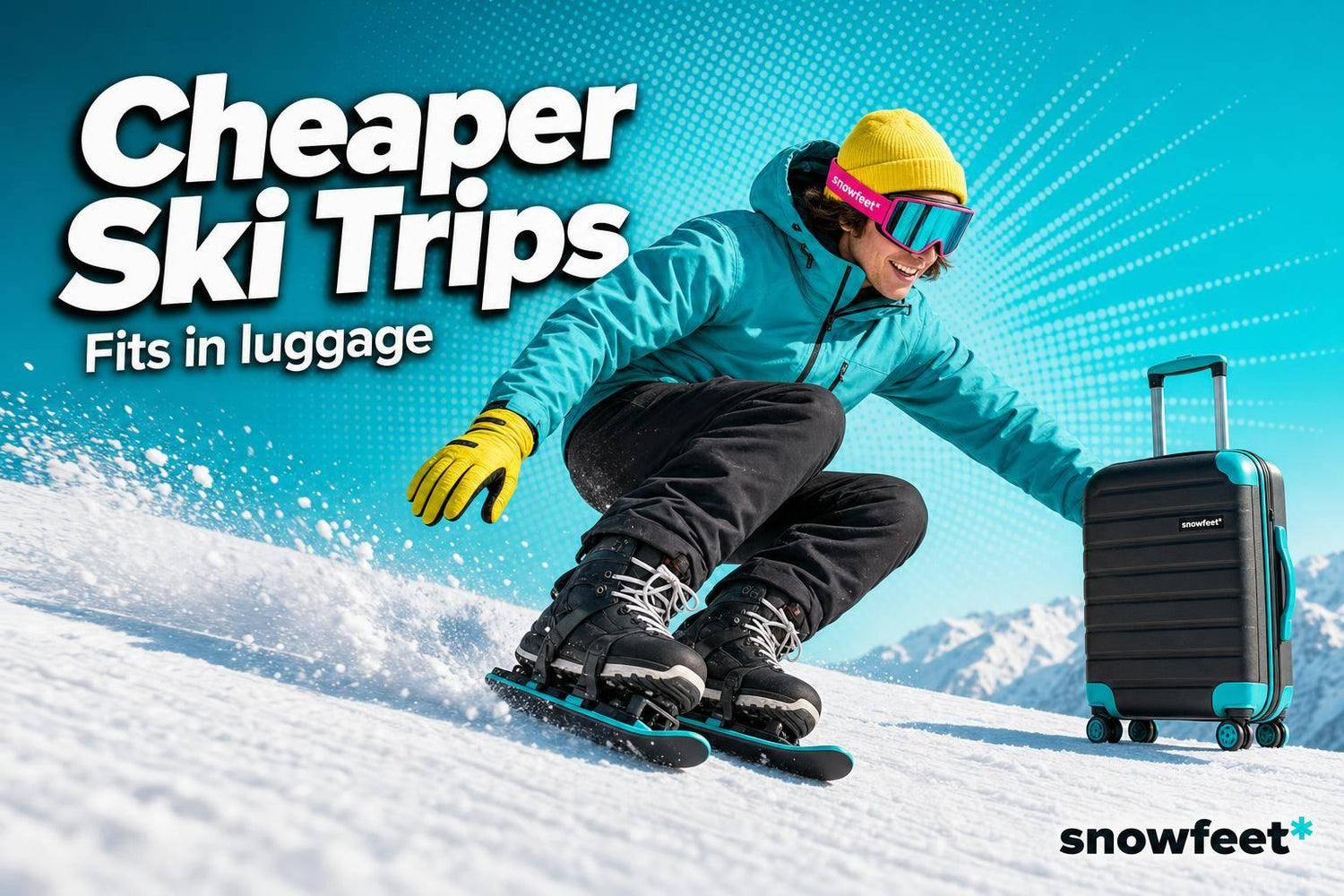
A ski trip can cost hundreds more than the lift ticket alone. If I want to spend less, the fastest cuts are usually rentals, bag fees, car size, roof racks, and parking.
Here’s the short version:
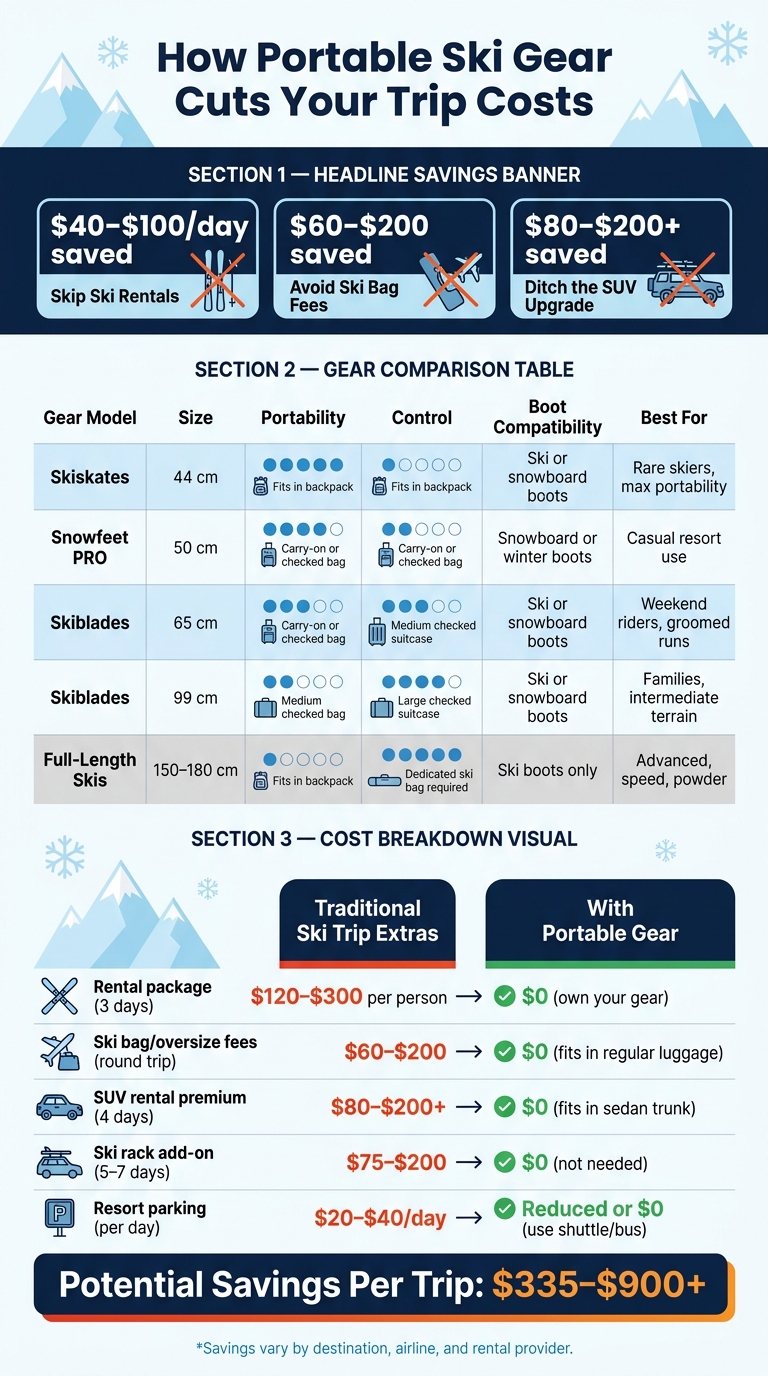
- I can save $40 to $100 a day per person by skipping ski rentals
- I can avoid $60 to $200 round-trip in ski bag or oversize airline fees
- I may skip the $80 to $200+ jump from a sedan to an SUV
- I can use boots I already own with some compact setups
- I can make shuttles, buses, and trains much easier to use
That’s the whole idea: small gear can trim trip costs without turning a weekend on snow into a gear headache.
Portable Ski Gear vs. Full-Length Skis: Cost Savings & Trip Comparison
Snowfeet* 50 CM | Ski Skates
Quick comparison
| Gear option | Main money-saving angle | Best fit for |
|---|---|---|
| Skiskates 44 cm / 17 in | Small enough for very light packing | Rare skiers, short trips |
| PRO 50 cm / 20 in | Packs small and can work with snowboard or winter boots | Casual riders |
| Skiblades 65 cm / 26 in | More control without full ski bulk | Weekend resort riders |
| Skiblades 99 cm / 39 in | More mountain coverage, still easier to pack than long skis | Families, intermediate riders |
| Full-length skis | Best on speed, powder, and steep runs, but often cost more to travel with | Strong skiers who want full performance |
If I’m trying to cut the total cost of a ski trip, not just one line item, portable gear is one of the first places I’d look :)
Step 1: Find Out Which Ski Trip Costs Portable Gear Can Actually Cut
Portable gear won’t lower your lift ticket price. But it can trim the stuff around it. And on a ski trip, those side costs add up fast.
Rentals, baggage, and transport are the easiest places to save
A standard adult rental package often costs $40–$70 per day at many U.S. resorts and $70–$100 per day at Colorado or Utah resorts. Over three days, that works out to $120–$300 per person. If you own compact gear, that expense is gone.
Airlines often charge $30–$40 each way for a checked bag. And ski bags can tack on $75–$150 per direction in oversize fees. That’s where smaller gear can help in a very plain, practical way. Since Snowfeet* Skiskates, Snowfeet PRO, and Snowfeet* Skiblades fit in a standard suitcase, many travelers can pack everything into one bag instead of hauling a long ski case through the airport. Much nicer, and way less of a circus :)
Full-size skis can also push people into pricier car rentals. Long gear often means an SUV, roof rack, or cargo box. An SUV can cost $20–$50 more per day than a compact sedan, or $80–$200+ over four days. Compact gear fits in a normal trunk, so a smaller car, shuttle, bus, or train becomes a lot more realistic.
| Cost Category | Typical Range | How Portable Gear Helps |
|---|---|---|
| Daily ski rental package | $40–$100/day per person | Owning compact gear eliminates this entirely |
| Ski bag / oversize baggage fees | $60–$200 round trip | Short gear packs into a regular suitcase |
| SUV vs. sedan rental premium | $80–$200+ per trip | Standard trunk fits all compact gear |
| Shuttle/bus feasibility | Often harder with long skis | Short gear travels more easily on public transit |
How smaller gear can open up cheaper lodging options
Compact Snowfeet* gear can also make off-mountain lodging easier to use. If you’re staying away from the base area to save money, smaller gear makes shuttles, ski buses, and short walks much less of a hassle. You’re not dragging a huge ski bag through a parking lot or trying to wedge full-size skis onto transit like you’re moving furniture.
Next, choose the smallest Snowfeet* setup that covers these costs without forcing full-size ski baggage.
Step 2: Pick Portable Gear That Replaces Rentals and Extra Boots
If Step 1 showed where the savings come from, this step shows which Snowfeet* setup cuts those costs the fastest.
Snowfeet* Skiskates 44 cm and PRO 50 cm for the most compact setup
The Skiskates 44 cm fit in a backpack or under a bus seat. That makes them the most portable option in the lineup. They have a skate-like feel that works well on gentle groomed slopes and resort learning areas.
The PRO 50 cm fits into a larger carry-on or a checked suitcase. It gives you more edge contact, which helps with stability on steeper groomers. If the Skiskates sound a bit too twitchy for your taste, the PRO gives you a little more room to breathe.
If you want more control than skiskates but still want gear that won’t take over your whole trip, move up to the 65 cm Skiblades.
Snowfeet* Skiblades 65 cm and 99 cm for more control without full-size bulk
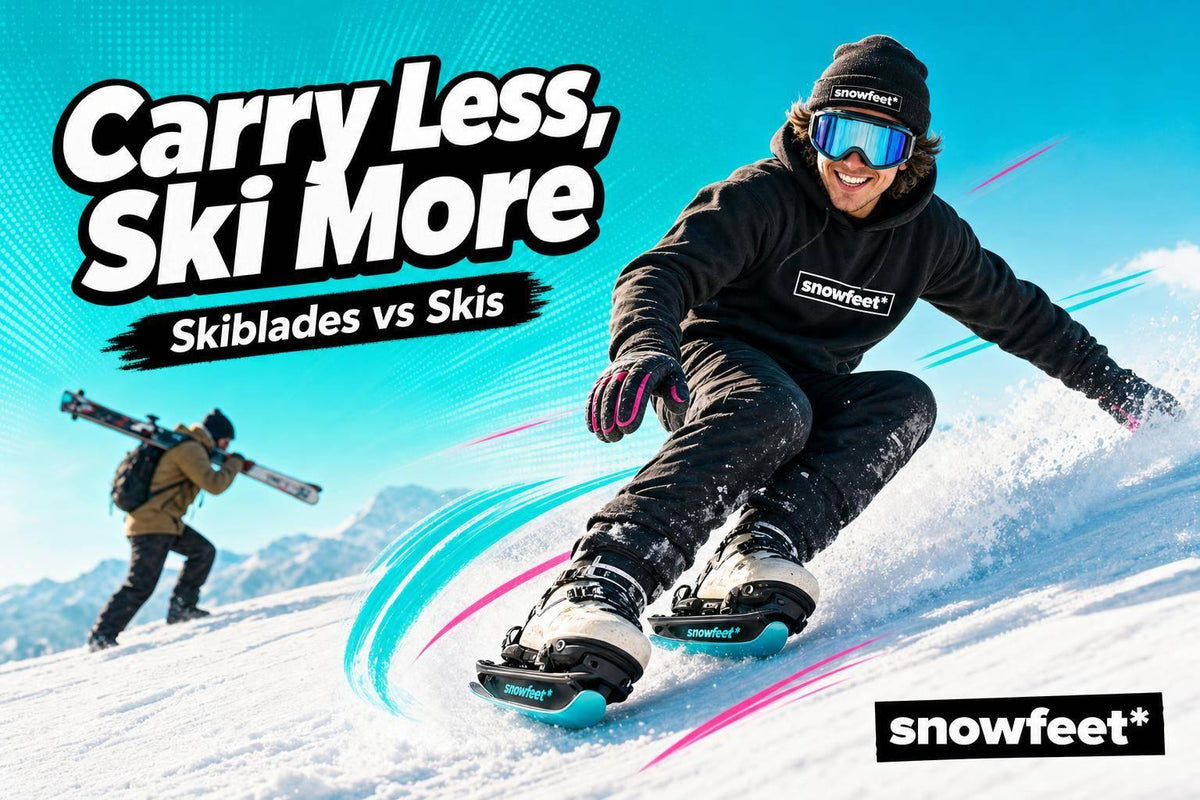
The Skiblades 65 cm fit diagonally in most medium to large checked suitcases. They give you more turning control and stability than the shorter options. That makes them a solid pick for riders who want a more ski-like feel for all-day resort use.
The Skiblades 99 cm feel more like short skis. They handle longer turns and chopped-up afternoon snow better, and they suit riders who want to cover more of the mountain. Both are still much easier to carry through an airport or toss into a compact car than a pair of 150–180 cm skis. That part alone can save you a headache.
Use boots you already own to cut costs further
Ski boot rentals at U.S. resorts usually cost $20–$30 per day on top of the equipment fee. Several Snowfeet* models work with snowboard boots or sturdy winter boots. So if you already own either pair, you can skip a second rental and pack less.
For snowboarders, this is pretty nice: bring one pair of boots for both the slopes and the trip. No extra rental line. No extra bag. No lugging around stiff ski boots in the parking lot like you lost a bet.
Long skis still do better at speed, deep powder, and steep terrain. But for most casual resort visitors, one of these four setups covers the riding experience while cutting the extra costs that standard gear tends to pile on.
| Snowfeet* Model | Best For | Boot Compatibility | Fits In |
|---|---|---|---|
| Skiskates 44 cm | Max portability | Ski or snowboard boots | Backpack or small carry-on |
| Snowfeet PRO 50 cm | Casual resort use | Snowboard or winter boots | Larger carry-on or checked suitcase |
| Skiblades 65 cm | More control, all-day use | Ski or snowboard boots | Medium checked suitcase |
| Skiblades 99 cm | Broader terrain | Ski or snowboard boots | Large checked suitcase |
Once you pick your setup, the next savings come from how you pack and travel with it.
sbb-itb-17ade95
Step 3: Pack and Travel More Cheaply With Compact Gear
Fit gear into regular luggage and skip the ski bag
Once you’ve picked compact gear, the next place you save money is packing. And this is where Snowfeet* shines.
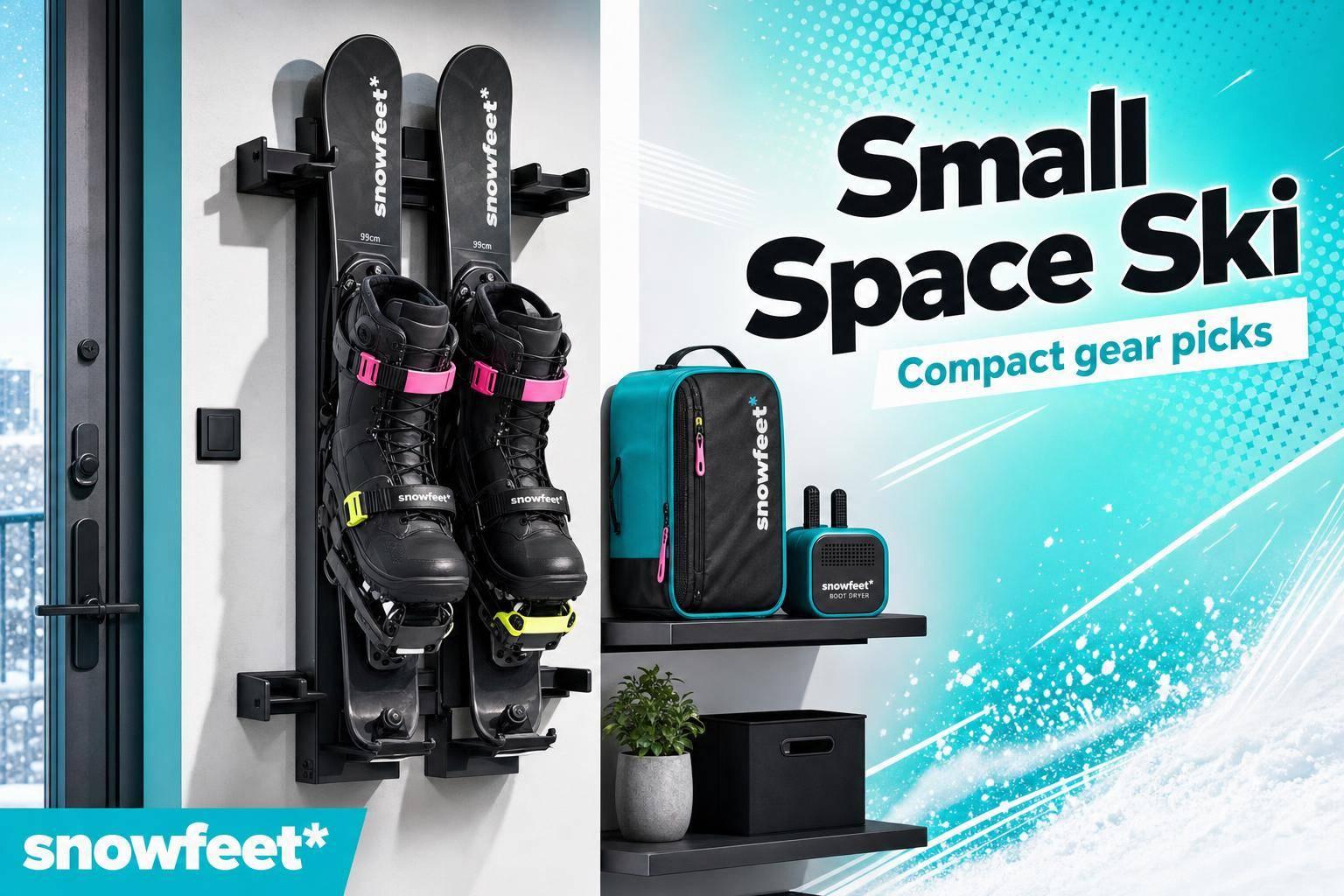
The big win is simple: it fits in luggage you already own. Skiskates 44 cm and PRO 50 cm fit diagonally in a 24–28 inch suitcase. Skiblades 65 cm and 99 cm fit in a larger checked bag. So you can skip the dedicated ski bag and dodge oversize baggage fees. That can save $70–$150 per person on a round trip. To stay under the 50 lb limit, use compression bags and move a layer or two into your carry-on.
Less stuff. Less hassle. Less money out the door :)
Less bulk helps once you land, too.
Use a smaller car and skip roof racks or cargo boxes
Long skis can turn a simple rental into a pricey one fast. They often mean folded seats, a roof rack, or a cargo box. That’s how a normal car booking turns into an SUV bill.
With smaller gear, you’ve got more room to work with. A couple in Denver can often rent a midsize car instead of an SUV, and a family of four can fit four Snowfeet* setups plus luggage in a standard sedan or SUV. Ski-rack add-ons can cost $75–$200 over a 5- to 7-day trip, and that’s before extra fuel kicks in.
That kind of size shift can make a big dent in the travel budget.
Make buses, trains, and walking realistic options
Compact gear also makes car-free travel a lot easier. A regular suitcase is much simpler to roll through an airport, load onto a shuttle, or carry to a hotel. And walking to a bus stop feels a lot more doable when you’re not dragging a long ski bag down an icy sidewalk.
There’s a money side to that, too. Parking at busy U.S. resorts often costs $20–$40 per day on weekends and holidays. If your gear is easy to carry, you’re more likely to use a free or low-cost hotel shuttle or a town bus instead of driving and paying to park. The same goes for regional ski buses and shuttles, where a regular suitcase is a much easier fit than a ski bag. You can also skip XL ride-share fees that come with long gear.
Step 4: Match the Right Snowfeet* Setup to Your Budget and Riding Style
Best picks for beginners, weekend riders, and families
Once you see where the savings come from, the next step is simple: pick the setup that fits how you actually ride, not how you imagine yourself riding on your best day :)
If you ski once in a while, want the smallest setup possible, and already own boots that work with it, Skiskates 44 cm and Snowfeet PRO 50 cm make a lot of sense. Skiskates 44 cm are all about portability. They’re tiny, easy to pack, and nice for trips where you don’t want gear to become a whole project. If you already have snowboard boots, PRO 50 cm gives you more support. Both help cut rental and baggage costs without turning travel into a hassle.
If you want a bit more stability but still want gear that’s easy to carry, go one size up. Skiblades 65 cm give you more edge control than the shorter models. That makes them a smart pick for groomed green and blue runs, especially on short resort trips where cost and convenience matter most.
Families can save the most here, plain and simple. One setup can stand in for a pile of rental days. Skiblades 99 cm can, as a one-time purchase, replace repeat rental costs for more than one person. The 99 cm length gives adults steadier handling on intermediate runs, and it can also work well when similar-size siblings share one setup.
When full-length skis still make sense
Snowfeet* gear isn’t built to replace every long-ski setup. If you ski steep terrain a lot, like going fast, hunt for powder, or want race-style carving, full-length skis are still the better fit. Longer skis hold an edge better on icy hardpack at speed, float better in deep snow, and give advanced riders the precision they want on tougher runs.
Long skis still come out on top for speed and powder. But for most casual resort trips, Snowfeet* is the easier option. The trade-off is pretty clear: as size goes up, you get more control, but you give up some portability.
Comparison table: Snowfeet* vs full-length skis vs other short-ski options
Use the table below to compare portability, control, and boot fit at a glance.
| Setup | Portability | Control | Boot Compatibility | Best For |
|---|---|---|---|---|
| Skiskates 44 cm | Maximum | Basic | Ski or snowboard boots | Rare skiers, maximum portability |
| Snowfeet PRO 50 cm | Very high | Moderate | Snowboard or winter boots | Compact support, casual resort use |
| Skiblades 65 cm | High | Good | Ski or snowboard boots | Weekend riders, groomed terrain |
| Skiblades 99 cm | Moderate | Strong | Ski or snowboard boots | Families, intermediate runs |
| Other short skis (e.g., Bigfoot, Salomon Snowblades) | Moderate | Good | Ski boots only | Resort use, limited travel flexibility |
| Full-length skis (150–180 cm) | Low | Best | Ski boots | Speed, powder, advanced terrain |
Conclusion: Plan a Lower-Cost Ski Trip Around Portable Gear
Portable gear can cut ski-trip costs in a few simple ways: fewer rentals, fewer baggage fees, and less need for a bigger rental car. So the last call is pretty simple: choose the shortest setup that still fits the way you ride.
For most casual riders, Snowfeet* is the best fit. Compact gear is easier to pack, easier to carry, and more likely to earn back its cost over a few trips.
There is a tradeoff, of course. Shorter gear gives up some speed and stability. Full-length skis still make more sense for steep runs, racing, and deep powder.
Key points to review before you buy
Before you buy, look at your trip costs and ask a basic question: do these same charges keep showing up? Add up your repeat rental, baggage, car, and lodging costs. If you pay them on every trip, portable gear can pay for itself fast.
A simple way to think about it:
- Go with the shortest Snowfeet* model that still matches your style. Skiskates 44 cm or PRO 50 cm work best if portability is the main goal. Skiblades 65 cm or 99 cm give you more control.
- If boot fit is your fastest way to save money, pick a setup that works with boots you already own. That can help you skip one more rental, which is always nice :)
FAQs
How many ski trips does Snowfeet* take to pay for itself?
Snowfeet* can pay for itself after only a few days on the snow by cutting costs that keep coming back, like daily rental fees and airline baggage charges.
Here’s the big win: you can use your own winter boots instead of renting ski boots. And ski boot rentals often run $50 to $80 per day. So the upfront cost can come back fast through trip-by-trip savings.
That means each outing can feel a bit cheaper from day one. Nice, right? :)
Can I really use Snowfeet* with the boots I already own?
Yes. Snowfeet* Skiskates, Skiblades, and Short Skis come with adjustable bindings that fit regular winter boots, snowboard boots, and even hiking boots.
That’s a big plus. You can use boots you already own instead of renting or buying ski boots, which can save you money and cut one more hassle from your day on the snow.
Which Snowfeet* model is best for my skiing style?
It comes down to your skill level and where you want to ride.
Here’s the simple version:
- 38 cm Mini Ski Skates or 44 cm Skiskates: best if you're new to this or want the most portable option
- 65 cm Skiblades: a good pick for groomers, moguls, and terrain parks
- 99 cm Skiblades and POWDER models: best for all-mountain riding or deep powder
- 120 cm Short Skis: the closest match to the feel of a regular ski
Think of it like this: shorter models feel more playful and easy to toss around, while longer ones give you more stability and a feel that’s closer to standard skis.











Deja un comentario
Este sitio está protegido por hCaptcha y se aplican la Política de privacidad de hCaptcha y los Términos del servicio.