



















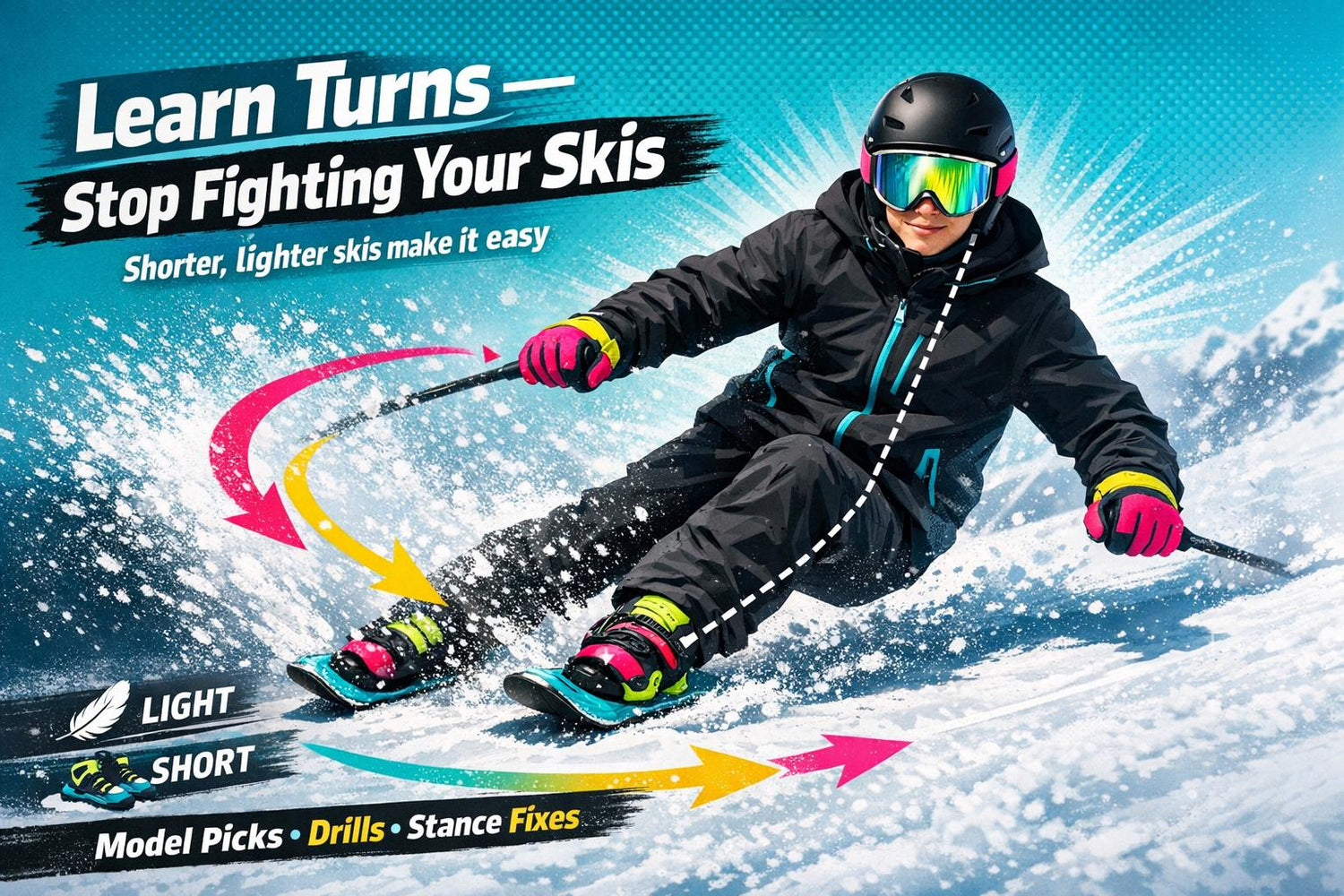
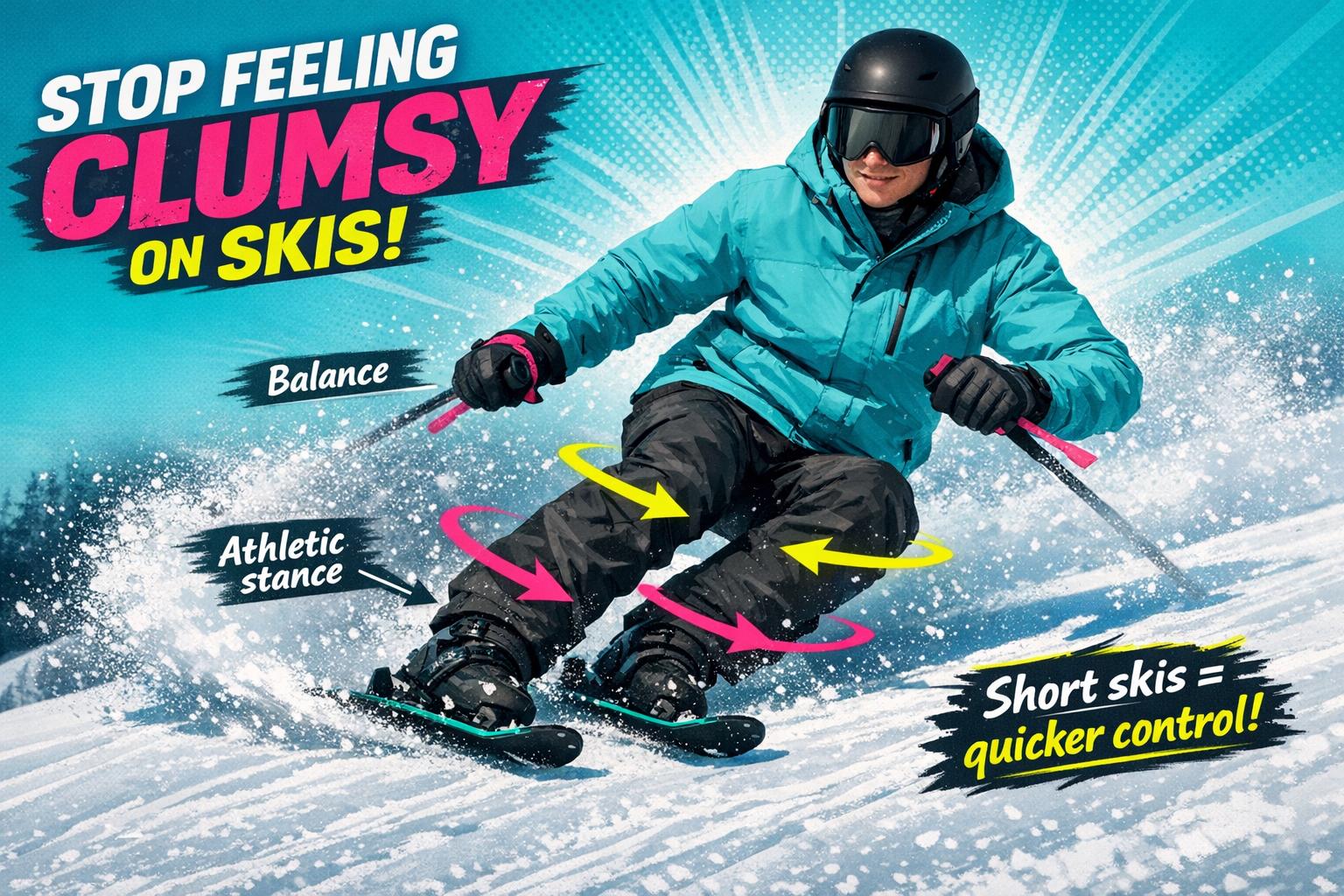
Learning to turn on skis doesn’t have to feel like a battle. If you’ve ever struggled to stay in control on long skis, you’re not alone. Traditional skis (150–180 cm) can be tough for beginners - they’re heavy, harder to pivot, and often leave you fighting your gear instead of enjoying the slopes. The solution? Shorter, lighter options like Snowfeet* Skiskates and Skiblades, designed to make turning smoother and more intuitive.
Here’s the gist: shorter skis reduce resistance, are easier to steer, and help you stay balanced. Snowfeet* offers three options to fit your needs:
- Skiskates (44 cm): Perfect for beginners on gentle green runs. Compact and responsive for quick, sharp turns. Starting at $575.
- Skiblades (65 cm & 99 cm): Great for intermediates. The 65 cm version is playful and agile, while the 99 cm version offers better grip for carving. Starting at $635.
- Short Skis (120 cm): Ideal for upper-intermediate skiers who want stability and a more classic ski feel. Starting at $775.
With Snowfeet*, you’ll learn to turn faster and with less effort, all while building skills that translate to longer skis later. Ready to stop fighting your skis and start gliding with confidence? Keep reading for tips, drills, and how to pick the right Snowfeet* model for you.
How to Use Snowfeet* Snowblades 99 CM | Short Skis | Skiblades | Tutorial
Why Turning Feels Hard
To nail a smooth turn on the slopes, beginners need to juggle four key skills: edge control, balance, pressure management, and timing. Miss one, and things can go sideways - literally.
Common Problems with Long Skis
Most adult skis are 150–180 cm long, and that length adds a lot of swing weight. Swing weight is just a fancy way of saying "how much effort it takes to rotate the ski." For beginners, who are usually moving at slower speeds, momentum and sidecut geometry aren’t much help, so it often feels like you're forcing the skis to turn with sheer leg power.
On top of that, poor posture - like leaning back - can make things even harder. When you take pressure off the ski tips, you lose the ability to guide the turn smoothly and end up muscling through it instead. Add stiff legs, a wide stance, oversized rental skis, or loose boots, and edge control gets even trickier. Instead of carving, you’re skidding your way down the slope.
Why Shorter Skis and Skates Change the Experience
Shorter skis tackle these issues head-on. Snowfeet* Skiblades (65–120 cm) and Skiskates (44 cm) are game-changers because their shorter length means way less resistance when you pivot. With less ski edge touching the snow, you don’t need sharp angles or high speeds to make them respond. A simple ankle tilt is often enough to engage the edge and start a turn.
Balance is easier, too. Since there’s less ski sticking out in front of or behind your feet, your hips stay naturally centered - kind of like standing in sneakers. This makes it easier to steer with your legs instead of twisting with your shoulders. As Snowfeet* user MindySue shared:
"I had a lot of fun with the 99s. They are easier to turn than skis."
This ease isn’t a fluke. The shorter length, reduced swing weight, and tighter turning radius all work together to make the gear feel like it’s responding to you, not the other way around. With these benefits in mind, the next step is finding the right Snowfeet* model to match how you like to turn.
Picking the Right Snowfeet* Model for Easy Turns
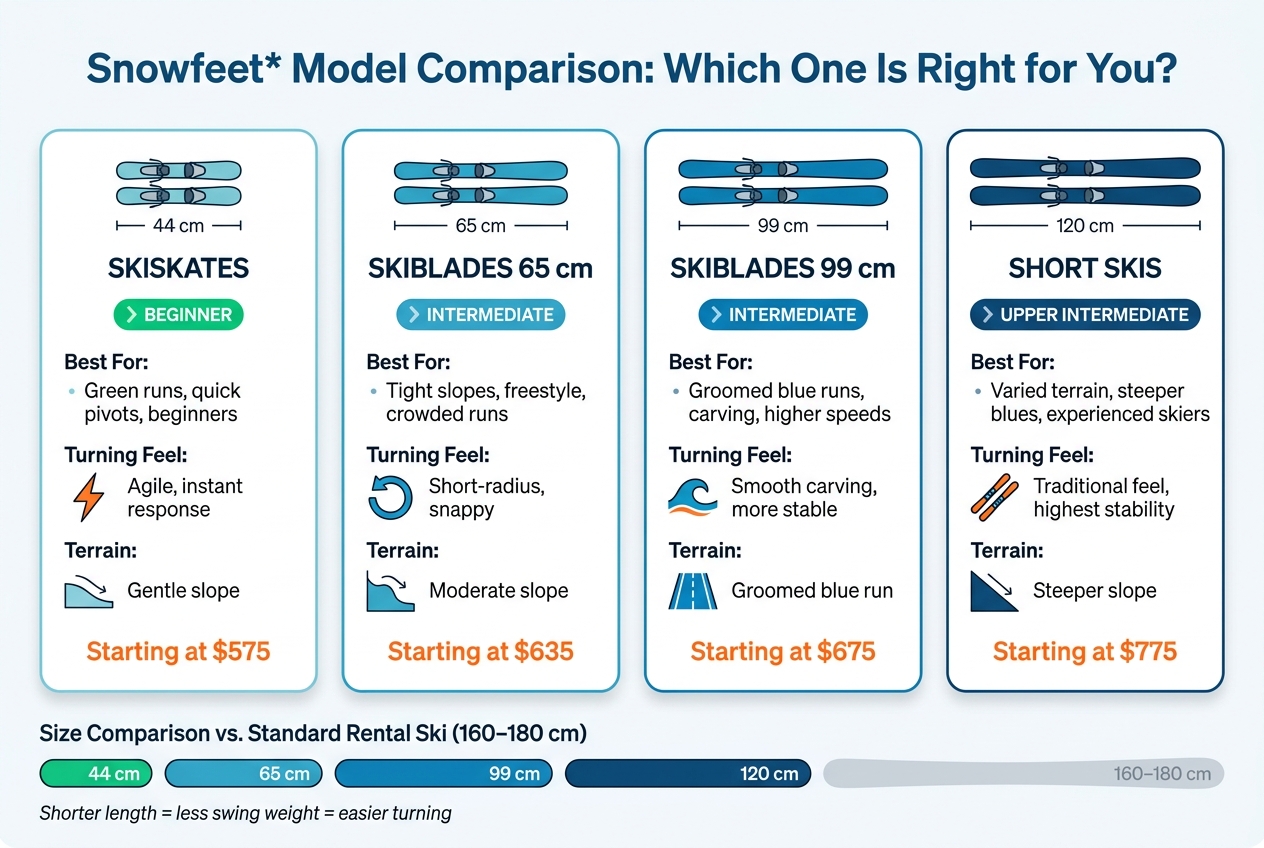
Snowfeet Ski Models Compared: Find Your Perfect Turn
Snowfeet* offers a range of products tailored to your skiing style, skill level, and how you prefer to turn. If you're ready to tackle the challenges of turning with ease, here's a breakdown of each model and what makes them shine.
Snowfeet* Skiskates for Quick, Sharp Turns
At just 44 cm long, Skiskates are the most compact and responsive option. Their short length means minimal edge contact, so even the slightest ankle or hip movement can pivot them instantly. This makes them perfect for beginners on gentle green slopes who want to focus on building balance and confidence without feeling overwhelmed by bulky gear. Imagine a first-timer at a small Midwest hill practicing tight, hockey-style turns - Skiskates make frequent direction changes and natural speed control a breeze. Plus, they’re compatible with regular winter boots and start at $575, making them an easy and affordable entry point for new skiers.
Looking for something that combines agility with a bit more control? Check out the Skiblades.
Snowfeet* Skiblades for a Balance of Control and Agility
Skiblades come in two lengths - 65 cm and 99 cm - offering a mix of playfulness and stability. The 65 cm version is ideal for tight, crowded slopes or freestyle skiing with quick, snappy turns. On the other hand, the 99 cm version provides more edge contact, giving you better grip on firmer snow and a smoother ride when carving longer turns on groomed blue runs.
Here’s a simple way to decide: if you’re after quick and playful turns, go with the 65 cm option (starting at $635). If you prefer smooth carving and more confidence at higher speeds, the 99 cm version (starting at $675) is the better choice. Either way, both lengths are far easier to handle than the typical 160–180 cm rental skis, making them a great upgrade for intermediates.
For those craving a more traditional ski experience with extra stability, the Short Skis are a great next step.
Snowfeet* Short Skis for a More Familiar Ski Feel
At 120 cm, Short Skis ($775) offer the most traditional skiing experience in the Snowfeet* lineup. They have the longest effective edge of the three models, which means better grip on steeper blue slopes and firmer snow - perfect for those early morning groomed runs at resorts in Colorado or Utah. These skis are a solid choice for upper-intermediate skiers who want the stability to carve cleanly and handle varied terrain, without the hassle of full-length rentals. The added platform provides extra support, making them feel grounded and controlled, yet still noticeably lighter and shorter than standard rental skis.
| Model | Length | Best For | Turning Feel | Starting Price |
|---|---|---|---|---|
| Skiskates | 44 cm | Beginners, green runs, quick pivots | Agile, instant response | $575 |
| Skiblades | 65 cm | Playful intermediates, tight slopes | Short-radius, snappy | $635 |
| Skiblades | 99 cm | Intermediates, groomed blues | Smooth carving, more stable | $675 |
| Short Skis | 120 cm | Experienced skiers, varied terrain | Traditional feel, highest stability | $775 |
sbb-itb-17ade95
How to Make Smooth Turns: A Step-by-Step Guide
With Snowfeet* gear's quick response, learning to make smooth turns is within reach. Once you've picked the right Snowfeet* model, it’s time to focus on turning. Unlike traditional skis that can feel sluggish during quick maneuvers, Snowfeet* gear reacts instantly to even the smallest movements. Their shorter design gives you immediate feedback, helping you figure out what adjustments work and what still needs some tweaking.
Get Your Balance and Posture Right First
Before diving into turns, nail down a solid stance. Stand with your feet hip-width apart, bend your ankles and knees slightly, and press your shins against the front of your boots or bindings. Keep your hips centered over your feet - not leaning back. Your hands should be slightly forward and apart, just inside your peripheral vision. Think of the common cue: "nose over toes" or "hands up and forward."
Try bouncing lightly in place. If you feel yourself tipping backward, shift your weight forward until you’re steady.
Practice Edging and Pressure Control
Smooth turns start with your ankles and knees, not by twisting your upper body. On a gentle green slope with a flat section, try these drills:
- Edge rocking: While standing still, roll your knees and ankles side to side. Feel how the inside edges grip the snow, then notice when the outside edges engage.
- Sideslip drill: Stand across the slope with your skis perpendicular to the fall line. Flatten your edges slightly to slide downhill, then re-engage them to stop. This shows how edge angles control speed without stomping or abrupt braking.
- J-turns: Glide straight, then shift your weight onto your outside foot and roll that knee inward. Let the ski naturally curve into a half-turn, finishing across the slope. No twisting needed!
These drills help build muscle memory for smooth, controlled turns. Once you’re comfortable with edging, you’ll be ready to link your turns together.
Linking Turns Together
Now that you’ve got the basics of edging and pressure control, it’s time to connect your turns. Think of each turn as having three parts: release, guide, and finish.
- Release: Soften your legs and flatten your skis slightly to end one turn and prepare for the next.
- Guide: Use your legs to steer both feet into the new direction while keeping your upper body facing downhill.
- Finish: Add edge pressure to your outside ski to shape the turn and naturally slow down.
Count "one-two-three" as you start each turn. This rhythm helps avoid long, hesitant traverses that can lead to picking up too much speed. Aim for smooth, rounded S-shapes rather than sharp, zigzag Z-turns. Finishing each turn slightly across the hill will help control speed without sudden stops. While Snowfeet*’s agility might tempt you to make quick, jerky pivots, focusing on smooth, flowing arcs will give you better control and a more enjoyable ride.
Fixing Common Turning Problems
Now that you’ve got the hang of linking your turns, let’s tackle a few common hiccups that might pop up. Even with solid technique, some pesky habits can sneak in. The upside? Snowfeet* gear provides quick feedback, making it easier to spot - and correct - issues compared to traditional skis.
Keeping Your Speed Under Control
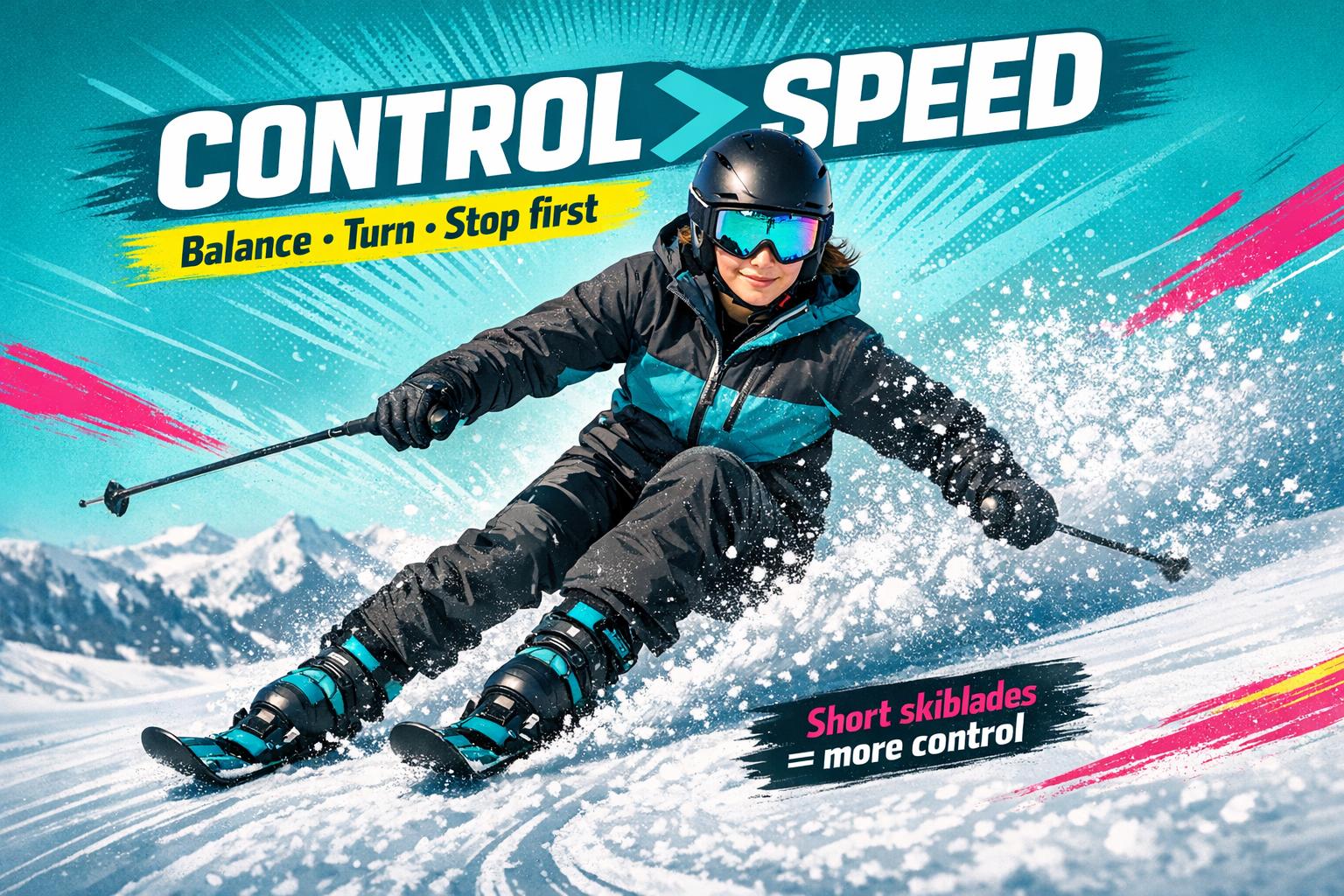
One of the biggest mistakes is charging straight downhill without controlled turns. This leads to excessive speed and, let’s face it, panic. Here’s the fix: use your turns to manage speed instead of relying on your heels. At the end of each turn, steer slightly across the hill before transitioning into the next one. That finishing move naturally slows you down without the need for abrupt braking.
Snowfeet* Skiskates and Skiblades make this process easier. Their shorter length allows for quick pivots and rapid turn-linking, so you’re not locked into a long, out-of-control descent. Think of it like finding a rhythm: turn, finish across the slope, turn again. If you notice your speed creeping up, just turn more frequently. The National Ski Areas Association’s (NSAA) Responsibility Code highlights this too - staying in control and being able to stop or avoid others is key, and your turn shape is your best tool to stay safe.
Once you’ve got your turns dialed in, it’s time to make sure your posture is helping, not hurting.
Staying Forward and Off Your Heels
Leaning back when you’re nervous or picking up speed is super common - but it’s also one of the worst habits you can have. On Snowfeet* gear, this “back-seat” stance is easy to spot: the tips of your skates feel unstable, turns are sluggish, and even small bumps make you wobble more. The good news? That unsteady feeling is like a built-in alarm system telling you to adjust.
Here’s how to fix it: gently flex your ankles forward until your shins lightly press against the front of your boots. Keep your hips centered over your feet - don’t let them drift behind you. A quick balance test? If you were to stop suddenly, you should feel a slight forward lean, not backward. Try some slow bounces while gliding to get a feel for active, flexible legs instead of stiff, locked knees. Once you’re in the right stance, you’ll notice that turns feel smoother and almost effortless.
With your posture in check, the next step is making sure you’re on the right terrain to practice.
Picking the Right Slope and Conditions
The terrain you choose can make or break your progress. A slope that’s too steep or icy can throw you into survival mode - heels down, legs stiff, and upper body tense. None of that helps you improve.
Start on a wide, gentle green run with soft, freshly groomed snow. Stay away from icy early-morning trails or narrow, crowded runs that make you feel cramped. If you can, hit the slopes during off-peak hours when there’s less traffic, so you can focus on your movements without worrying about dodging others. Also, be cautious in wet or heavy spring slush - shorter platforms like Snowfeet* gear can get caught up in dense snow more easily than longer skis.
Stick to easy, groomed terrain while you get the hang of things. Once you’re able to link 10–15 smooth, controlled turns and stop exactly where you want, you can start exploring slightly steeper greens or mellow blues. It’s all about building confidence step by step!
Conclusion: Why Snowfeet* Makes Learning Turns Easier
Turning on skis doesn’t have to feel like a battle. Traditional long skis can be heavy and hard to manage, especially on the smaller hills common in the Midwest, Mid-Atlantic, and East Coast. Snowfeet* changes the game with shorter, lighter gear that makes turning feel smooth and natural, not exhausting.
Snowfeet* gear removes common learning roadblocks. The Skiskates (44 cm) respond immediately to your weight shifts, making them super intuitive. On the other hand, the Skiblades (available in 65 cm, 99 cm, and 120 cm lengths) strike a sweet spot between agility and stability. They let you carve clean arcs without needing advanced skills or high speeds. Most users notice better control and confidence from their very first run.
No matter your skill level, there’s a Snowfeet* model designed for you. Beginners skip the struggle of managing bulky long skis, while adults gain better control at slower speeds - perfect for crowded slopes on busy weekends. Intermediate skiers love the quick edge-to-edge response, which makes carving and transitions feel more precise and fun.
What’s more, the skills you build with Snowfeet* carry over to other gear. Using shorter equipment helps you master the basics - like maintaining a solid stance, engaging edges smoothly, and controlling your speed. These fundamentals translate directly to better performance on longer skis. So, while Snowfeet* gear simplifies the learning process, it also sets you up for long-term success.
Picture this: gliding effortlessly down a gentle green run as your Snowfeet* gear responds to every movement, or enjoying a family day on a small hill where even the kids can steer with confidence. Need help getting started? Check out Snowfeet* YouTube tutorials for step-by-step tips on stance, edging, and linking turns. Not sure which model is right for you? The product pages break down the options, making it easy to find the perfect fit. The best way to see the difference? Try them out on your favorite hill this season!
FAQs
Can I use Snowfeet* with my regular winter boots?
Snowfeet* work seamlessly with your regular winter boots, so you don’t need to invest in expensive, stiff ski boots. They come with adjustable, universal bindings that attach securely to durable, waterproof boots with good ankle support and firm soles. This setup keeps your feet warm, cozy, and lets you move naturally - unlike the stiff, restrictive feel of traditional ski equipment.
Will Snowfeet* help me switch to long skis later?
Snowfeet products are an awesome tool for building the skills you’ll need for long skis. They help you work on key fundamentals like balance, edge control, and shifting your weight - all without the bulk of traditional ski gear. Thanks to their simple, user-friendly design, Snowfeet make it easier to practice turns and stops, helping you gain the confidence to tackle longer skis when the time comes.
Are Snowfeet* safe on icy or steep runs?
Snowfeet* shine on groomed, packed snow, where their compact design delivers excellent agility and effortless maneuverability. That said, they fall short on steep or icy black diamond runs. The shorter edge length means less grip and stability, making them a bit tricky in those conditions. For cruising and mastering gentle to moderate slopes, they’re fantastic. But if you’re tackling high-speed descents or icy, challenging terrain, traditional skis are the better choice.











Deja un comentario
Este sitio está protegido por hCaptcha y se aplican la Política de privacidad de hCaptcha y los Términos del servicio.