







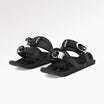












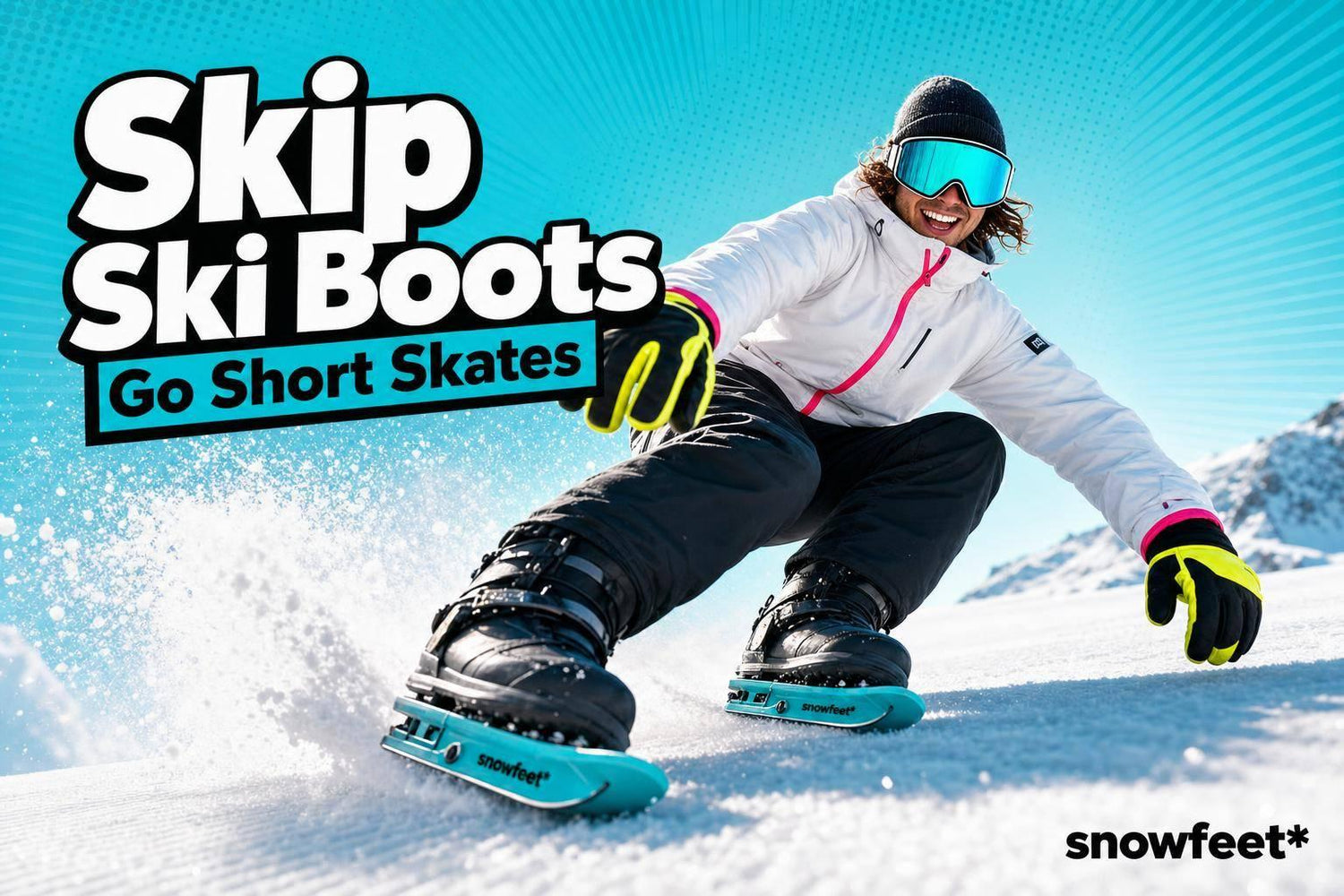
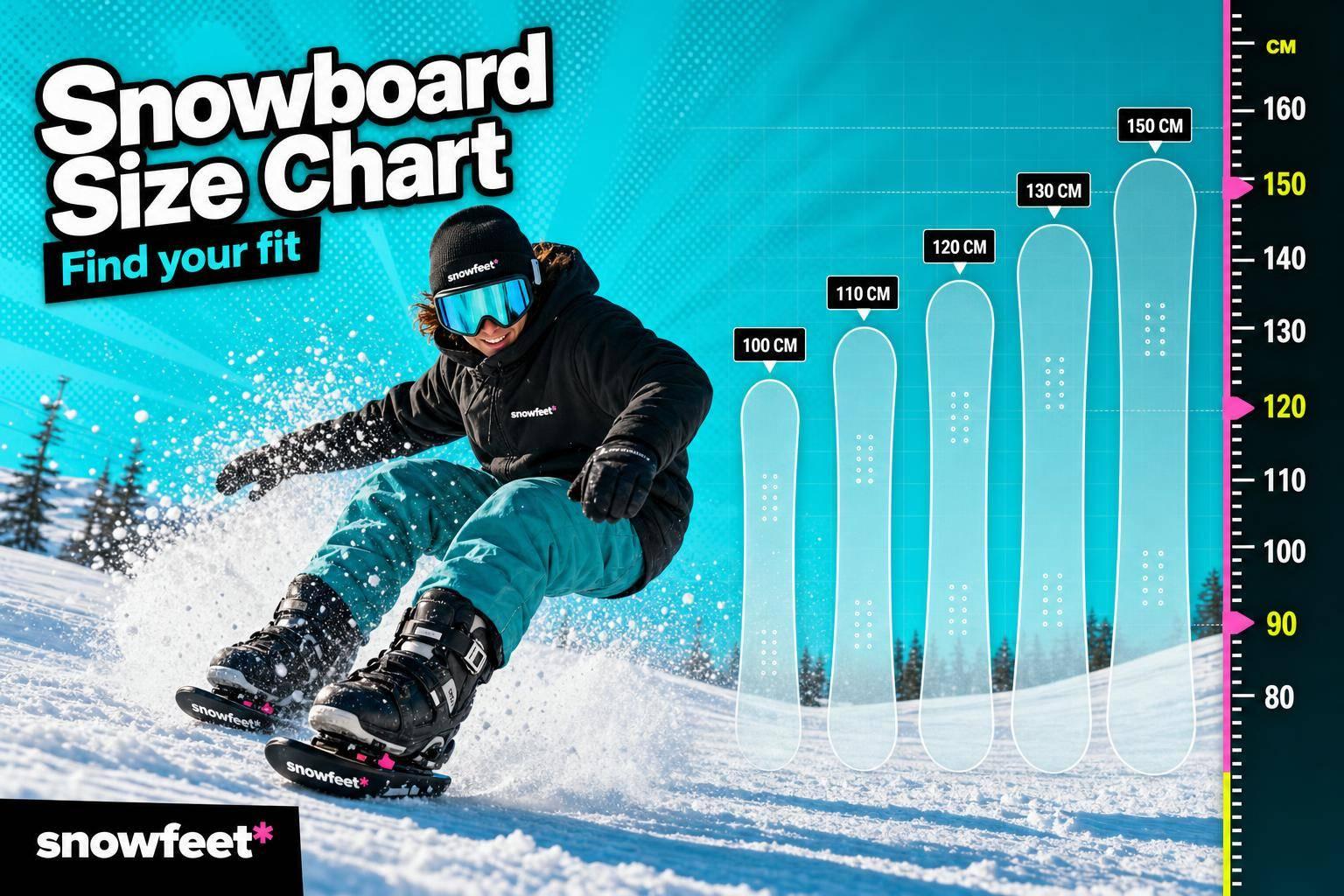
Hate stiff ski boots? You’ve got other options. My short take: if comfort and easy carrying matter most, Snowfeet* gives you a simple path in. The best picks depend on how you ride: PRO 50 cm for the easiest all-around start, Skiskates 44 cm for a skate feel, Skiblades 99 cm for more control, and WALKSKI 100 cm for touring with boots you already own.
Here’s the whole thing in plain English:
- Smallest and easiest to pack: Mini Ski Skates 38 cm and 50 cm
- Best first pick for most people: PRO 50 cm
- Most skate-like feel: Skiskates 44 cm
- Best middle ground of control and size: Skiblades 65 cm and 99 cm
- Most stable in this group: Skiblades 120 cm
- Best for uphill travel: WALKSKI 100 cm
A few fast facts stand out:
- The shortest models can fit in a backpack
- Prices run from $199 to $950
- The 44 cm Skiskates have a 4.95/5 rating from 123 reviews
- Some models work with winter boots, some with snowboard boots, and some with both
If I had to make it simple: go shorter for comfort, fun, and travel. Go longer for a calmer ride and more grip.
World's most versatile ski skates - Snowfeet* PRO
Quick Comparison
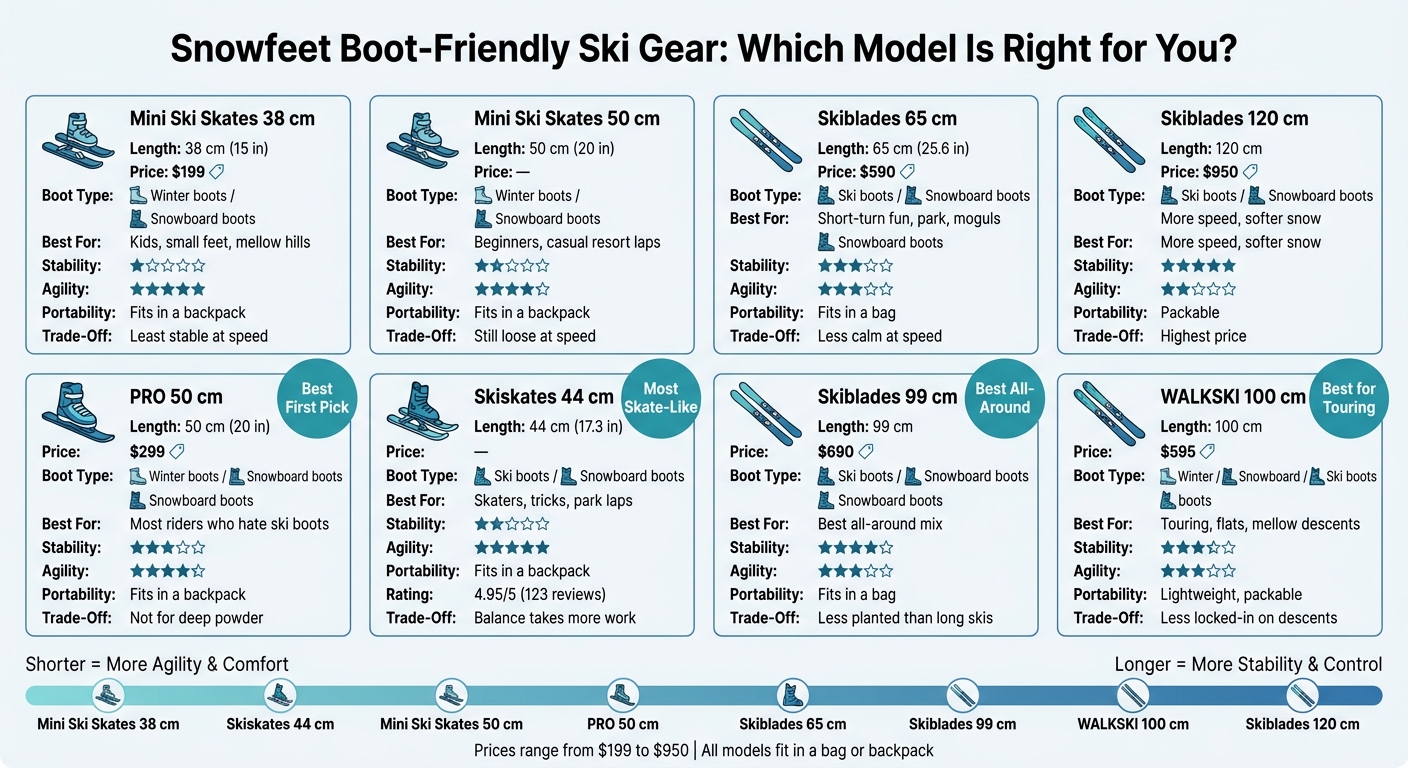
Snowfeet Ski Gear Comparison: Find Your Perfect Boot-Friendly Setup
| Model | Works With | Best For | Main Trade-Off | Price |
|---|---|---|---|---|
| Mini Ski Skates 38 cm | Winter boots / snowboard boots | Kids, small feet, mellow hills | Least stable | $199 |
| Mini Ski Skates 50 cm | Winter boots / snowboard boots | Beginners, casual resort laps | Still loose at speed | - |
| PRO 50 cm | Winter boots / snowboard boots | Most riders who hate ski boots | Not for deep powder | $299 |
| Skiskates 44 cm | Ski boots / snowboard boots | Skaters, tricks, park laps | Balance takes more work | - |
| Skiblades 65 cm | Ski boots / snowboard boots | Short-turn fun, park, moguls | Less calm at speed | $590 |
| Skiblades 99 cm | Ski boots / snowboard boots | Best all-around mix | Less planted than long skis | $690 |
| Skiblades 120 cm | Ski boots / snowboard boots | More speed, softer snow | Higher price | $950 |
| WALKSKI 100 cm | Winter / snowboard / ski boots | Touring, flats, mellow descents | Less locked-in on the down | $595 |
So, if your ski day gets ruined in the parking lot because your boots already hurt, this lineup makes a lot of sense. You give up some top-end grip and speed, sure. But for many riders, that’s a fair trade for warmer feet, less hassle, and a lot less clomping around like a robot :)
If you want a quick look before buying, I’d also watch a few demo clips on YouTube:
1. Snowfeet* Mini Ski Skates 38 cm
Boot Compatibility
These fit US kids' size 10 up to US adult 6 (EU 27–38). They work best with waterproof boots that have solid ankle support. Snowboard boots work well too. Once you dial in the fit, the main trade-off is simple: more agility, less stability.
Stability vs. Agility
At about 15 inches long, this is the most agile option in the Snowfeet* lineup. They feel more like skates than skis.
That’s the fun part. The catch? You get less front-to-back stability. With less length under your feet, your stance matters more. So, if you're new, expect a short learning curve. The good news: people with ice skating or rollerblading experience often get comfortable in about 5 minutes. Terrain matters a lot here.
Terrain Fit
These work best on:
- Groomed slopes
- Packed snow
- Sledding hills
- Snow parks
Start on flat ground first. Then move to gentle slopes. Skip bumps, holes, and deep powder - that stuff can turn a fun ride into a yard sale fast.
Portability
If easy carrying is your top goal, this is where these shine. They fit inside a backpack, and Snowfeet* includes a waterproof carry bag. That makes them the easiest model in the line to travel with.
At $199, they’re also the most affordable Snowfeet* option. So if you want something small, easy to pack, and simple to bring anywhere, these are the natural place to start.
2. Snowfeet* Mini Ski Skates 50 cm
If the 38 cm skates feel a bit too twitchy, the 50 cm version gives you more balance without giving up the easy, boot-friendly setup.
Boot Compatibility
The 50 cm model uses boot-friendly bindings that work with regular winter boots that have firm ankle support and with snowboard boots. No ski boots needed. The size range covers US 6–13 (EU 38–47). US 12–13 snowboard boots may be a tight fit.
Snowboard boots are the better pick here. They give you more ankle support and sharper edge control on groomed runs. Winter boots are fine for laid-back use, but softer uppers can make things feel less precise when you need a clean stop.
Stability vs. Agility
At 20 inches, the 50 cm model is the longest true mini ski in the Snowfeet* lineup. That extra length over the 38 cm version gives you more front-to-back balance and a ride that feels less jumpy.
"We added a bit of length, just the perfect amount to keep the effortless skating experience but at the same time add more balance." - Snowfeet*
You give up some of the 38 cm model’s quick snap, but you get enough stability for snowplow stops and basic parallel turns. For beginners and casual riders, that extra platform makes the 50 cm model the easiest Snowfeet* option for resort use.
Terrain Fit
These do best on groomed green and blue runs, plus hard-packed snow. The 50 cm can also handle light powder up to about 4 inches (10 cm), so you’ve got a bit more room if you drift off the groomed trail.
Skip steep black runs, heavy chop, and backcountry terrain. The short contact length just doesn’t give you the edge hold or float you need for hard-charging skiing.
Portability
At 50 cm, they still fit in a standard backpack, which makes them easy to travel with. That’s one of the biggest selling points for travelers and casual riders.
Next comes the PRO version, which keeps the same size but adds a more locked-in feel.
3. Snowfeet* PRO 50 cm
The PRO 50 cm is a good pick for riders who like the standard 50 cm but want a firmer, more locked-in feel. It uses the same boot-friendly setup as the standard 50 cm model, but the ride changes in a clear way. You get a narrower base and a higher stance, which makes it feel more precise and steady underfoot.
Boot Compatibility
It fits US 6–13 (EU 38–47). If you wear US 12–13 snowboard boots, the fit can get tight, so it’s smart to check strap reach before you head out.
Stability vs. Agility
This is where the PRO earns its name. The raised stance and narrower base help the edges bite better on firmer snow. On groomers, edge hold feels more predictable, and turns come through a bit cleaner.
At the same time, it still changes direction fast. So you don’t lose that quick, playful feel. That balance makes it a nice middle-ground choice for beginners and casual intermediates who want more control without moving into full ski territory.
"Snowfeet 50 CM are here to make skiskating more accessible to everybody... Even if you have never skied before, Snowfeet feel so natural that anyone can pick up this sport instantly." - Snowfeet*
Terrain Fit
It works best on:
- Groomed green and blue runs
- Small park features
- Light powder up to about 4 in (10 cm)
Skip steep blacks, deep powder, and heavy chop. That’s not where this model feels at home.
Portability
At 50 cm, it still fits easily into a suitcase or backpack. That makes travel way simpler than hauling full skis around. At $299, it gives riders a compact, boot-free option with more control, but without the bulk of full ski boots.
If you want a more planted feel but aren’t ready to jump to full-length skis, the 44 cm Skiskates are the next model to look at.
4. Snowfeet* Skiskates 44 cm
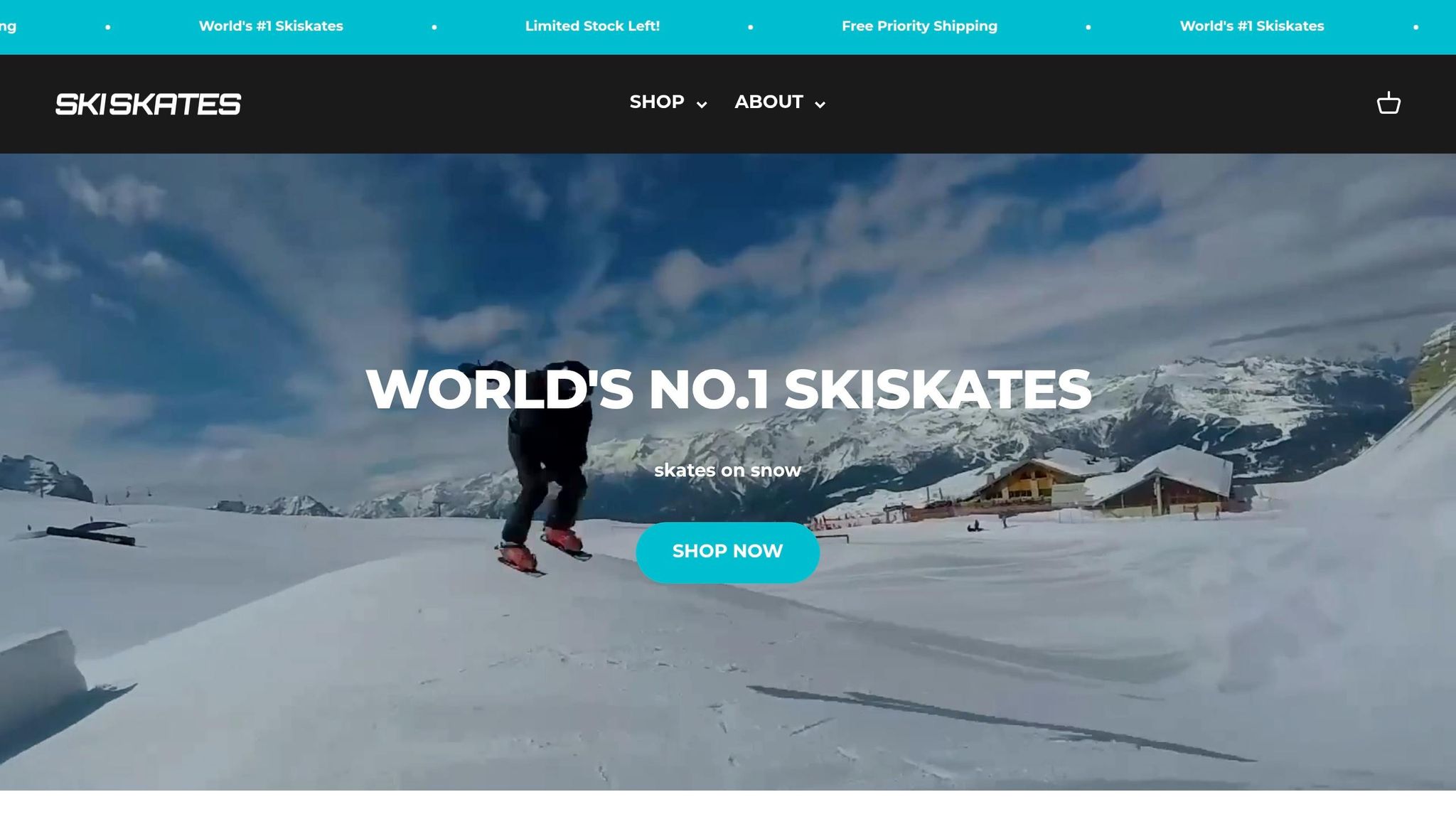
Snowfeet* Skiskates 44 cm are the most skate-like pick in the lineup. At 44 cm (17.3 in), they feel much closer to snow skating than normal skiing. If you like a fast, playful ride, this is where things get fun.
They’re rated 4.95 out of 5 stars across 123 customer reviews, and 95% of buyers gave them a full five stars.
Boot Compatibility
If you want to skip ski boots, the snowboard-boot version is the cleaner match. This model comes in two versions - one for ski boots and one for snowboard boots - so you choose your binding type at checkout.
Here’s the fit range:
- Ski-boot version: US 4.5–14.5 (EU 36–49)
- Snowboard-boot version: US 6–14.5 (EU 38–49)
Both use adjustable bindings with safety leashes.
The snowboard-boot version makes sense for riders who want more comfort and less hassle. The ski-boot version suits riders who want a firmer, more locked-in feel.
Stability vs. Agility
The 44 cm Skiskates are built for quick turns and tricks. Their short length makes direction changes fast, spins easier, and the whole ride feel more like inline skating than skiing.
That short size comes with a trade-off, though. You get less ski in front of and behind your foot, so front-to-back balance matters more. You need to stay centered. Drift too far forward or back, and they’ll let you know. Fast.
Compared with the PRO 50 cm, the 44 cm version feels looser, faster, and less forgiving. So, if you want the most playful option so far, this is it. If you want more room for mistakes, it’s not.
Terrain Fit
The Skiskates do best on groomed slopes and in snow parks. They can handle light powder up to about 4 in (10 cm), but they’re not the right tool for deeper snow.
The build helps here:
- Metal edges help on packed snow
- Graphite base supports glide
- Wood core keeps the ride lively
Portability
At 44 cm, these are easy to pack and easy to carry. That’s a big part of the appeal. They don’t eat up trunk space, and they’re simple to bring along for a day on the hill.
If you want more stability but still want a compact setup, move up to the 65 cm Skiblades.
5. Snowfeet* Skiblades 65 cm
The 65 cm Skiblades hit a nice middle ground for riders who want more ski-like control without ski boots. They sit right between the 44 cm Skiskates and the longer 99 cm and 120 cm blades. Snowfeet* calls them a "perfect hybrid" - long enough to carve, short enough to spin.
Boot Compatibility
Like the 44 cm Skiskates, the 65 cm Skiblades come in two binding versions. You pick your setup at checkout:
- Ski boot bindings: fit US 4.5–14.5 (EU 36–49)
- Snowboard boot bindings: fit US 6–14.5 (EU 38–49)
If you don’t want ski boots, go with the snowboard-boot version. Simple as that.
Stability vs. Agility
This is the big difference from the 44 cm Skiskates. That extra length gives you more stability, but it doesn’t turn them into slow, clunky mini skis. You still get that quick, playful ride.
Compared with the 99 cm and 120 cm models, the 65 cm stays looser and easier to spin. So if you like fast turns, side hits, and a bit of park-style fun, this size makes a lot of sense.
Terrain Fit
The 65 cm Skiblades are made for groomed slopes, moguls, and snow parks. They can also deal with light powder up to about 4 in (10 cm). Past that, the 99 cm or 120 cm models are the better call.
The build helps here too. You get a wood core, a sintered base, and metal edges, which means better grip and smoother glide. In plain English: they’re built to hold an edge and keep moving, not just mess around on flat snow.
Portability
At 65 cm (25.6 in), they’re still easy to pack and travel with. That’s part of the appeal. You get more control than the shorter models without hauling around full-size skis.
At $590, they cost more than the shorter options. Still, they make a nice stepping stone if you’re eyeing the jump to the 99 cm or 120 cm models.
If you want more speed and stability, the 99 cm Skiblades are the next step.
sbb-itb-17ade95
6. Snowfeet* Skiblades 99 cm
The 99 cm Skiblades hit a sweet spot. They balance stability, easy turns, and packability better than the shorter models. After the more playful 65 cm version, the 99 cm moves closer to a ski feel without dragging you back into ski boots.
Boot Compatibility
These skiblades come with two binding options:
- Ski boot bindings: fit US 4.5–14.5 (EU 36–49)
- Snowboard boot bindings: fit US 6–14.5 (EU 38–49)
If comfort matters most, go with the snowboard binding option.
Stability vs. Agility
This model uses a wood core and deep sidecut. That gives it more edge hold and better carving grip than the 65 cm model, while still keeping turns easier than full-size skis.
Compared with the 65 cm version, the 99 cm feels more planted on groomers and calmer at speed. This is where Snowfeet starts to feel a lot more like skis, but without the boot headache.
The trade-off is pretty simple: at very high speeds, long skis still feel steadier.
Terrain Fit
The 99 cm gives you more edge hold and more confidence in light powder than the 65 cm model. It also handles groomers, moguls, parks, and more light powder than the shorter models.
Portability
At 99 cm, they’re still much easier to travel with than full-length skis. The price is $690, which is higher, but you also get a wood core, sintered bases, and metal edges.
If you want even more ski-like speed and stability, the 120 cm Skiblades are the next step.
7. Snowfeet* Skiblades 120 cm
The 120 cm Skiblades are Snowfeet’s most stable model. They’re the top pick here for speed and powder too. If the 99 cm version feels like the sweet spot, the 120 cm is the next step for riders who want more speed and more confidence in soft snow, without being stuck in stiff ski boots.
Boot Compatibility
This model comes with two binding options: standard-release ski bindings and snowboard bindings. The ski boot setup fits US 4.5–14.5 (EU 36–49), while the snowboard setup fits US 6–14.5 (EU 38–49).
That detail matters. Only the 120 cm and 99 cm models come with standard-release bindings, which is a big deal for safety when you’re moving fast. If comfort and easy walking matter more, the snowboard binding option lets you skip the hard plastic shells and makes walking around the resort a lot less annoying.
Stability vs. Agility
The wood core, sintered bases, and cap construction help this model last and give it solid edge hold at speed. You still get turns that feel much easier than full-length skis. That said, it’s a bit less quick and playful than the shorter models.
Terrain Fit
This model works best in powder and chopped-up runs. It also does well on groomers, carving, bumps, and rough snow. So, if your day includes mixed conditions and a bit more speed, this is where the 120 cm shines.
Portability
At 120 cm, it’s still much easier to carry than standard 160+ cm skis. It’s also less of a pain to fit in a car or haul around the resort. Price: $950.
For riders who want less boot hassle but an even more walkable setup, the 100 cm WALKSKI comes next.
8. Snowfeet* WALKSKI 100 cm
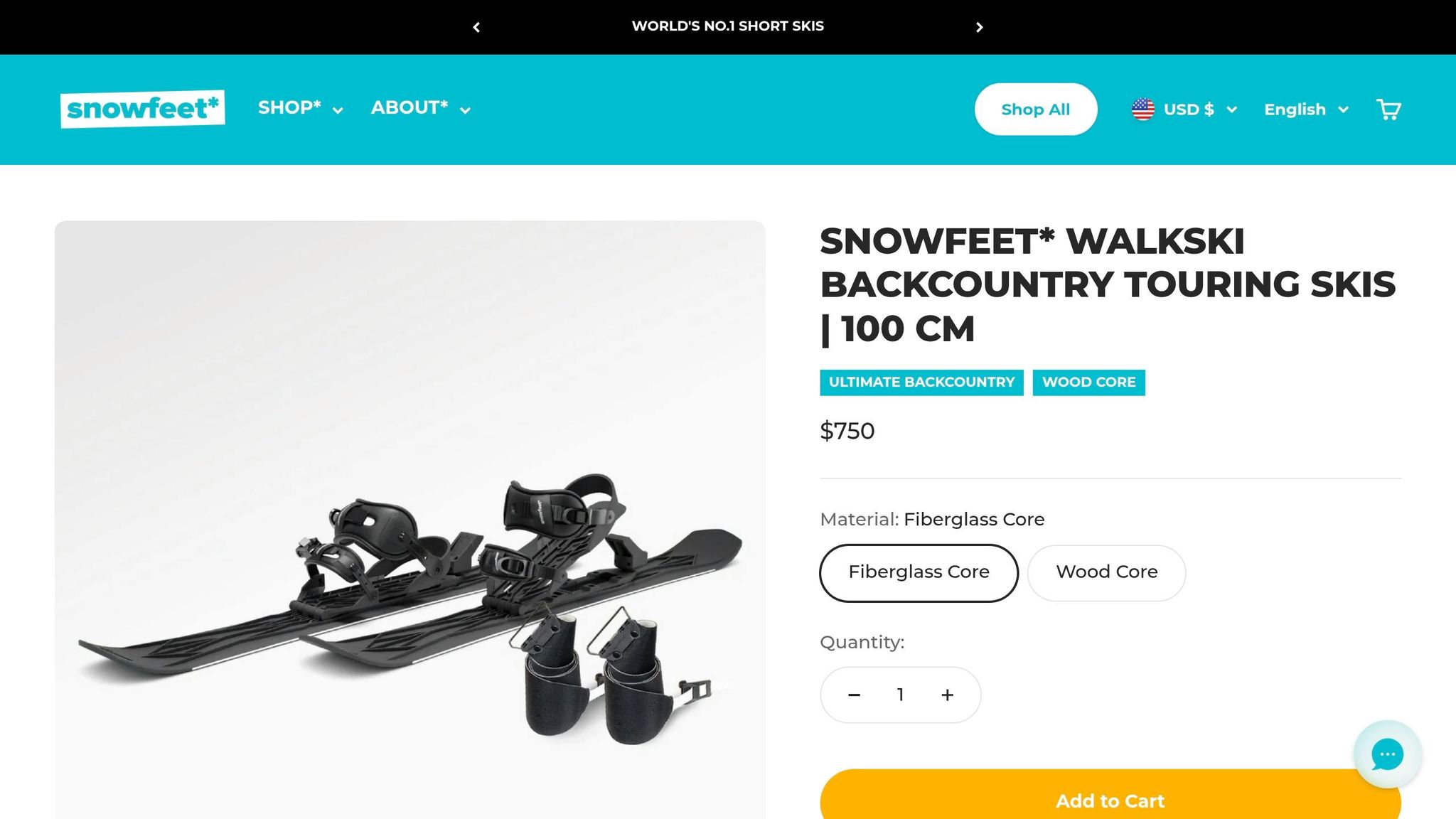
Snowfeet’s WALKSKI 100 cm takes the brand’s no-ski-boot idea and moves it into touring. The pitch is simple: hike up, ski down, and skip stiff ski boots. If comfort is your top thing, that’s a big draw. And at $595, it costs a lot less than most touring setups.
Boot Compatibility
The WALKSKI uses a free-heel binding that works with:
- winter boots
- snowboard boots
- ski boots
Snowfeet lists a boot sole length range of 9.5 to 15 inches (24–38 cm). So, you’ve got a lot more freedom here than with a standard touring setup.
Stability vs. Agility
At 100 cm, the WALKSKI lands in the middle. It’s longer than Snowfeet’s mini skis, but still much shorter than a full touring ski.
That matters on snow. Compared with touring skis that often run past 150 cm, the WALKSKI gives up some stability at speed, especially on steep or icy slopes. But it also feels easier to turn and less demanding on mellow terrain. Think of it like taking a nimble trail bike instead of a full downhill rig. You lose some planted feel, but you gain ease and quick handling.
The free-heel setup also changes the ride. Walking and climbing feel more natural, which is kind of the whole point. On the way down, though, it won’t feel as locked-in as a fixed-heel ski setup. So yeah, terrain choice matters more here.
Terrain Fit
WALKSKI is built for backcountry trails, climbs, flats, and controlled descents. It includes walk, ski, and climb modes, plus climbing skins for uphill grip.
It’s not the top pick for steep or icy backcountry lines. In those spots, a full touring ski still does a better job.
Portability
The wood-core version weighs 6.9 lb per pair (3,116 g). The fiberglass-core version weighs 8.8 lb per pair (3,980 g).
Both are much easier to carry than full-length touring skis. And within the Snowfeet lineup, this is the model most focused on touring.
If your goal is boot-free touring, WALKSKI is the clearest match in the range. After that, it helps to look at comfort, control, and the trade-offs across the full lineup.
Comfort, Control, and Trade-Offs by Category
The biggest split across the Snowfeet lineup comes down to one thing: how much stability will you give up for comfort and agility?
The shortest models feel a lot like skating on snow. They’re nimble, playful, and easy to hop on without much fuss. Longer models, like the 99 cm and 120 cm Skiblades, feel more like skis. You get better edge hold and more control at speed. Then there’s the WALKSKI, which plays a different game. It’s built more for getting around across mixed terrain than for pure downhill laps.
Boot choice matters just as much as length. Winter boots and snowboard boots are warmer, easier to walk in, and skip the stiff, foot-crushing feel that can come with ski boots. That alone is a big deal for a lot of people.
Here’s the simple trade-off: shorter models lean into comfort and portability, while longer ones give you more control.
| Model | Boot Compatibility | Best Terrain | Stability vs. Agility | Portability |
|---|---|---|---|---|
| Mini Ski Skates 38 cm | Winter boots | Flat trails, gentle slopes | Max agility, low stability | Fits in a backpack |
| Mini Ski Skates 50 cm | Winter boots | Slopes, light trails | High agility, low stability | Fits in a backpack |
| PRO 50 cm | Winter / snowboard boots | Slopes, soft snow | High agility, moderate stability | Fits in a backpack |
| Skiskates 44 cm | Ski / snowboard boots | Slopes, parks | Max agility, low stability | Fits in a backpack |
| Skiblades 65 cm | Ski / snowboard boots | Groomed slopes, moguls | Balanced | Fits in a bag |
| Skiblades 99 cm | Ski / snowboard boots | All-mountain, light powder | High stability, moderate agility | Fits in a bag |
| Skiblades 120 cm | Ski / snowboard boots | All-mountain, powder | Max stability in lineup | Packable |
| WALKSKI 100 cm | Winter / snowboard / ski boots | Trails, touring, gentle descents | Moderate stability, easy turns | Lightweight, packable |
Long alpine skis still win where speed and edge grip matter most. They carve better at high speed, float better in deep powder, and feel more planted on steep, icy runs. That longer edge contact and stiffer build give them a locked-in feel that short gear just can’t copy.
But for casual mountain days - groomers, short sessions, or mixing skiing with other resort stuff - the downsides of shorter, boot-friendly gear often don’t matter much. For a lot of people, that trade feels well worth it :)
Next, the pros and cons break each option down more clearly.
Pros and Cons of Each Option
Here’s the fast read on the lineup: where each model shines, and where it gives up some control.
| Product | Biggest Pros | Biggest Cons | Best For |
|---|---|---|---|
| Mini Ski Skates 38 cm | Very compact; best for small feet (up to US size 6) | Least stable at speed; not meant for powder | Kids and small-footed riders on gentle groomed terrain |
| Mini Ski Skates 50 cm | Lightweight fiberglass core; backpack-portable | Bouncier on rough snow; less stable at higher speeds | Casual riders and beginners on groomed runs |
| PRO 50 cm | Works with regular winter boots or snowboard boots; raised stance makes edge changes easier | Needs waterproof, ankle-supporting boots to work well; not for deep powder | Travelers and boot-averse riders |
| Skiskates 44 cm | Fits in a backpack; skating feel | Requires strong front-back balance; poor in powder | Inline skaters, trick riders, and anyone who wants to skate on snow |
| Skiblades 65 cm | Hybrid ski/skate feel; easy turning | Too short for fast carving; still requires ski or snowboard boots | Intermediate riders and terrain park fans |
| Skiblades 99 cm | Carves well; easy to control on groomed runs | Less stable than 170 cm+ traditional skis at high speed | Resort skiers who want easier gear and quicker turns |
| Skiblades 120 cm | The most stable Skiblade here; handles powder better than shorter options | Priciest option at $950; still requires ski or snowboard boots | Confident riders who want a ski feel without full-length skis |
| WALKSKI 100 cm | Works with winter boots, hiking shoes, or snowboard boots; patented 4-mode binding (Walk, Ski, and two climbing modes); fits in a backpack | Not built for aggressive resort carving; heavier than the shortest models | Backcountry riders and tourers who want to tour with regular boots |
If boot comfort, the learning curve, or touring matters most, this table gives you the clearest match.
The big split is pretty simple. Fiberglass feels lighter and quicker. Wood core feels calmer and easier to trust when speed picks up.
So it comes down to the trade-off. Fiberglass gives you a more lively ride. Wood core gives you a smoother, steadier one. That’s the same split the conclusion uses to narrow the lineup and point most riders to the right fit.
Conclusion
If ski boots are the issue, Snowfeet* gives you a few solid ways to skip them - and each one has its own feel when it comes to control, speed, and how easy it is to carry.
For the smallest, easiest-to-pack picks, start with the Mini Ski Skates. Go with the 38 cm or 50 cm models if portability is your top goal. Pick the PRO 50 cm if you want more control. And if you want the most skate-like ride, Skiskates 44 cm is the one to look at.
If you want more control and less twitchy movement, step up to the Skiblades. The 65 cm version gives you a hybrid feel. The 99 cm model hits the best all-around balance. And the 120 cm version feels the most like a ski.
For a different kind of ride, WALKSKI 100 cm is the touring pick. It’s made for riders who want uphill access without going all-in on a full touring setup. Its free-heel binding works with most adult winter, hiking, and snowboard boots, so you can use the boots you already own.
The short version: hate ski boots → start with PRO 50 cm or Mini Ski Skates. Want tricks and skating → Skiskates 44 cm. Want stability and carving → Skiblades 99 cm or 120 cm. Want backcountry access with boots you already own → WALKSKI 100 cm.
Snowfeet* won’t replace long skis for high-speed carving. But for most casual riders, it makes skiing lighter, easier, and more comfortable.
FAQs
Which Snowfeet* model is best for complete beginners?
For complete beginners, the best pick is Snowfeet PRO 50 cm or the 38 cm Mini Ski Skates. Both work with regular winter boots or snowboard boots, which is a big plus. You don’t need stiff, pricey ski boots or a pile of extra gear.
Snowfeet PRO 50 cm is the most flexible option and the easiest one to learn on. It gives new riders a nice middle ground: stable enough to feel in control, but still fun and light on snow.
If you’re shopping for kids or want something for mellow slopes, the 38 cm Mini Ski Skates are a great place to start. They’re easy to handle and less intimidating, which can make those first runs feel a lot less scary :)
Can I really use my regular winter boots with these?
Yes - most Snowfeet gear works with regular winter boots or snowboard boots. So, in most cases, you don’t need ski boots.
Just pick the binding type that fits the footwear you already have. That gives you a setup that feels more comfortable and less clunky on your feet.
Are Snowfeet* good enough for resort skiing?
Yes - Snowfeet* gear works well for resort skiing, most of all on groomers, in terrain parks, and through moguls.
Models like the 44 cm Skiskates, Skiblades, and Short Skis come with metal edges, which helps them hold on packed snow and icy spots. Long skis still tend to do better in deep powder. But for most resort riders, Snowfeet* can be a better match if you want easy turning, easy carry, and the comfort of using your own winter boots or snowboard boots.











Deja un comentario
Este sitio está protegido por hCaptcha y se aplican la Política de privacidad de hCaptcha y los Términos del servicio.