







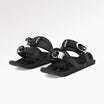












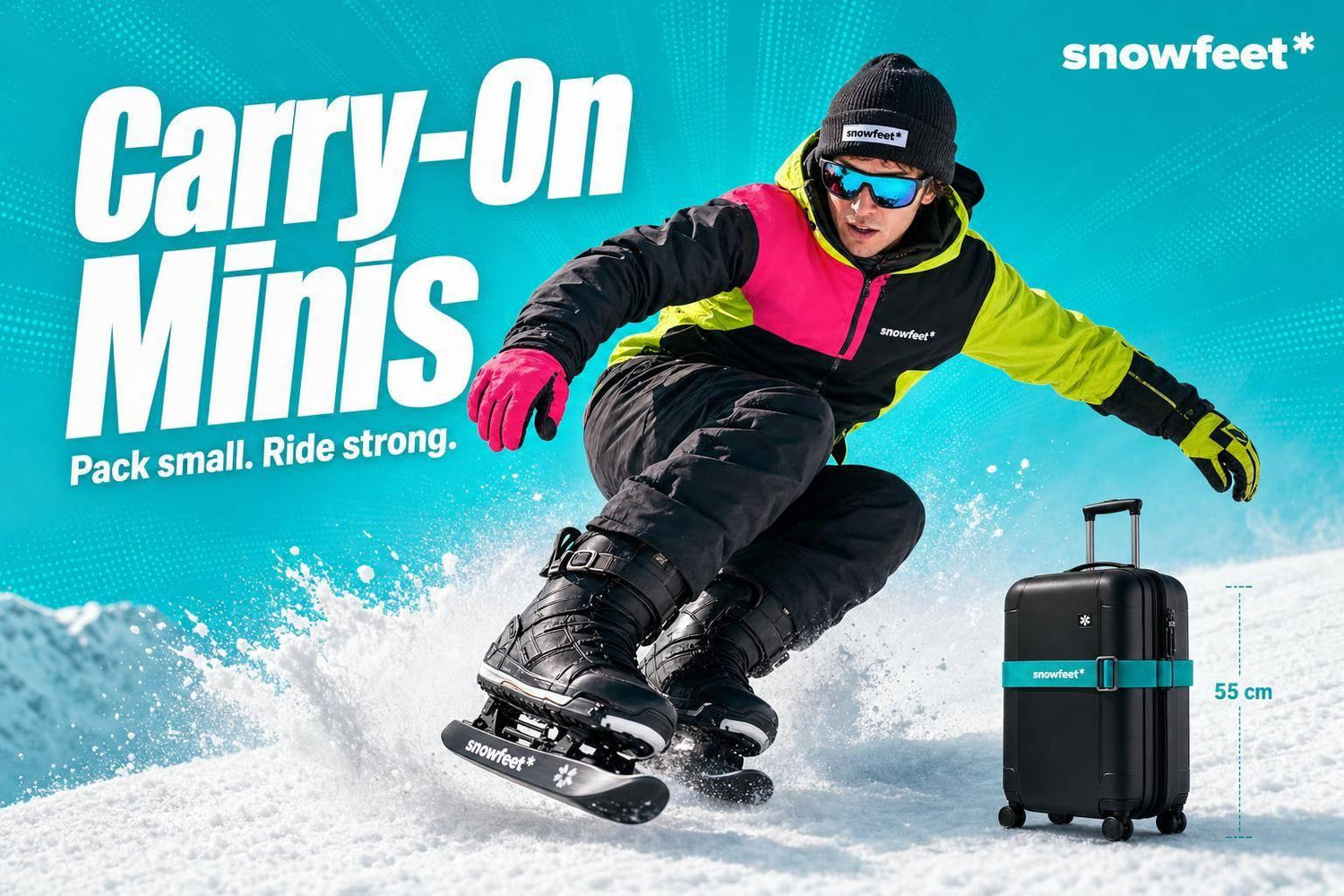
Want the short answer? If I wanted the best mini ski for most U.S. trips on July 9, 2026, I’d pick the Snowfeet Skiskates 44 cm. It hits the best mix of small size, better stability than 38 cm, and easier packing than 50–120 cm options.
Here’s the whole article in one quick sweep:
- Best for carry-on attempts: Snowfeet 38 cm and 44 cm
- Best all-around pick: Snowfeet 44 cm
- Best for more control on snow: Snowfeet PRO 50 cm
- Best ski-like feel in the Snowfeet line: Snowfeet Skiblades 65 cm
- Best if you already use alpine ski boots: classic 90–120 cm snowblades
- Old-school short-ski pick: Kneissl Bigfoot-style skis
- Most closed-off setup: ODR compact skis with built-in boot system
The big split is simple:
- 38–44 cm: easiest to pack, less stable
- 50 cm: middle ground
- 65–120 cm: more planted on snow, harder to fly with
And boot choice matters a lot. Some models work with winter boots or snowboard boots, while others need alpine ski boots. That can mean one less bulky item in your bag, which, let’s be honest, feels like a small airport victory :)
If you want the fast version, this table says most of it.
How to Use Snowfeet* Skiskates 44 CM | Skates for Snow | Mini Ski | Snowblades | Snowskates
Quick Comparison
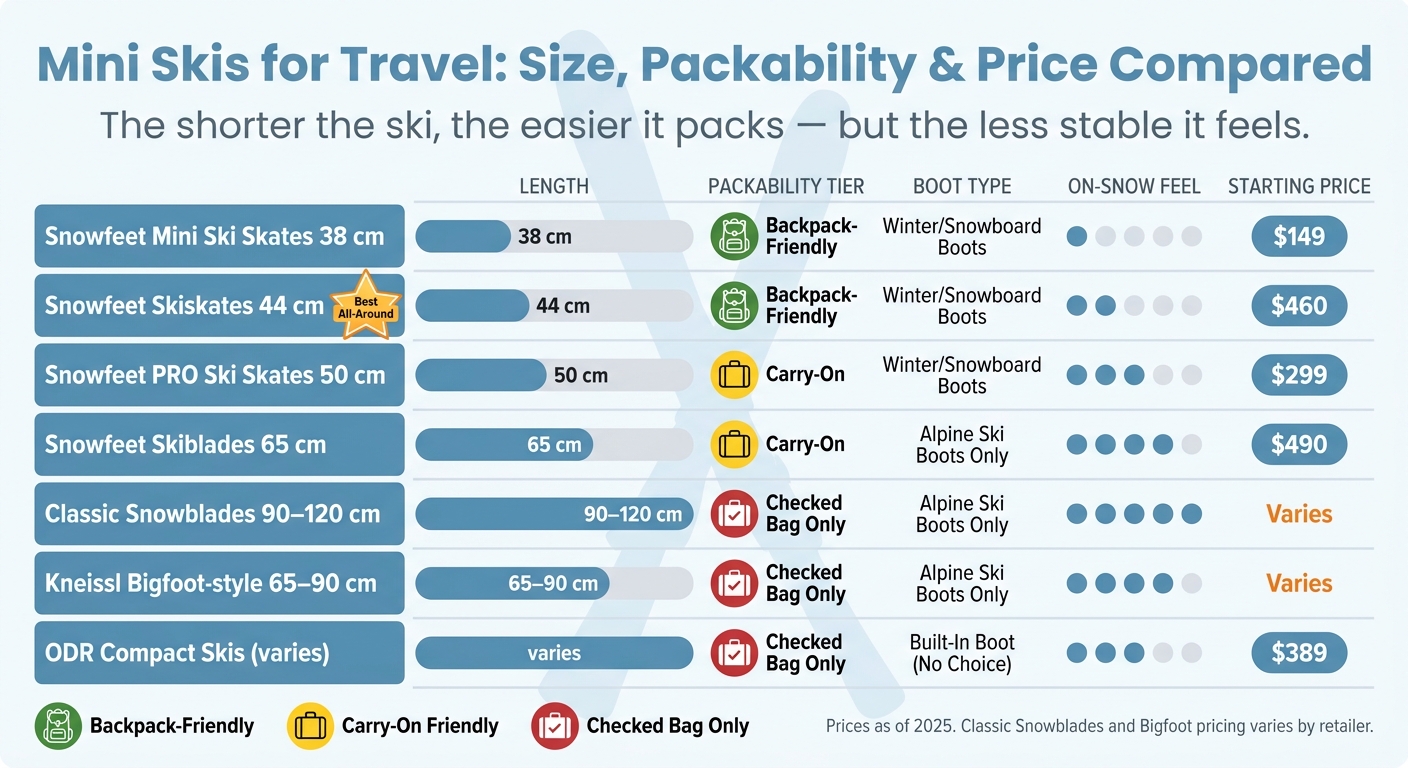
Mini Skis for Travel: Size, Packability & Price Compared
| Model | Length | Boot Setup | Travel Use | On-Snow Feel | Starting Price |
|---|---|---|---|---|---|
| Snowfeet Mini Ski Skates | 38 cm / 15 in. | Winter boots / snowboard boots | Best for suitcase or carry-on try | Most playful, least stable | $149 |
| Snowfeet Skiskates | 44 cm / 17 in. | Ski-boot or snowboard-boot version | Best all-around travel pick | More calm than 38 cm | $460 |
| Snowfeet PRO Ski Skates | 50 cm / 20 in. | Winter boots / snowboard boots | Better for road trips, duffels | More control, more ski feel | $299 |
| Snowfeet Skiblades | 65 cm / 26 in. | Ski boots or snowboard boots | Usually checked bag | Closest to short skis | $490 |
| Classic Snowblades | 90–120 cm | Alpine ski boots | Checked bag | More like skis, less portable | Varies |
| Kneissl Bigfoot-style | 65–90 cm | Alpine ski boots | Car trips, checked bag | Fun short-ski feel | Varies |
| ODR Compact Skis | Varies | Built-in boot | Usually checked bag | Groomer-focused, closed system | $389 |
My takeaway: if packing light is your top goal, go short. If snow feel matters more, go longer. That’s the whole game.
1. Snowfeet* Mini Ski Skates 38 cm
The 38 cm model is the smallest Snowfeet option, so it’s the easiest one to bring along.
Packability and Carry-On
At 38 cm (15 inches), this is the easiest Snowfeet model to pack, store, and carry. It can fit in a suitcase, trunk, locker, or closet. If you want the best carry-on shot in the Snowfeet lineup, this is it - though airline size rules still apply.
Boot Compatibility
Snowfeet lists the 38 cm model for winter shoes or snowboard boots, based on the binding, in US sizes 6–13 (EU 38–47). That’s handy for travelers who don’t want to pack a separate pair of ski boots.
On-Snow Feel
Here’s the trade-off: the small size makes it easy to turn and fun to mess around on, but you give up some stability. Edge hold and glide are more limited than on longer skis, so don’t expect a smooth, fast downhill feel.
That makes this model a better match for:
- Short runs
- Mellow slopes
- Casual riding
- Trips where easy packing matters most
If your top goal is packing light, this one makes a lot of sense. It’s a better fit for casual riders than for aggressive skiers.
Pricing starts at $149.
Next up is the 44 cm Skiskates, which give up a bit of packability for more stability and a smoother ride.
2. Snowfeet* Skiskates 44 cm
The 44 cm Skiskates keep things easy to pack, but give you a bit more stability than the 38 cm model. They start at $460. So, if the 38 cm version feels a touch too tiny, this one lands in a nice middle spot in the Snowfeet lineup.
Packability
At 44 cm (17 inches), they can fit diagonally inside a carry-on duffel or backpack, which makes travel a lot less of a hassle. Their length also sits well within common U.S. carry-on size limits of 22 x 14 x 9 inches.
Boot Compatibility
The 44 cm Skiskates come in both ski-boot and snowboard-boot versions. That matters more than it might seem at first.
If you already travel with ski boots or snowboard boots, you can pick the binding version that matches what you use now. Nice and simple.
On-Snow Feel
On snow, the 44 cm version feels a bit more stable and a bit more forgiving than the 38 cm model, while still staying quick and playful. It’s still a short ski experience, just with a little more calm under your feet.
If you’re coming from regular skis, don’t expect a huge learning wall. Most people should only need a short adjustment period.
Next, the 50 cm PRO adds one more step in stability while still keeping a compact travel-friendly size.
3. Snowfeet* PRO Ski Skates 50 cm
The PRO 50 cm starts at $299 and adds fiberglass reinforcement, metal edges, and a more ski-like shape for better turning and stopping. If the 44 cm Skiskates feel a bit too short, this model gives you more stability without turning into a pain to pack.
Packability
At 50 cm (about 20 inches), the PRO still fits in a standard backpack or carry-on duffel. That’s a nice middle ground. You get more ski under your feet, but you don’t need to wrestle with full-size gear at the airport. Pack them in a soft bag, then pad the edges with clothing or a towel.
Boot Compatibility
The PRO uses tool-free fixed bindings that fit regular winter shoes and snowboard boots - specifically US men's sizes 6–13 (EU 38–47).
To get the best feel from this setup, look for boots with:
- Firm ankle support
- A stiff sole
- Good heel hold
That combo helps you get more out of the binding and edge response.
On-Snow Feel
The metal edges and higher stance give the PRO a more stable, ski-like feel in turns and stops than the shorter Snowfeet models. It still feels playful, which is part of the fun, but it gives you the most control and stability in the Snowfeet lineup short of the 65 cm Skiblades.
Next, the 65 cm Skiblades give up some packability for a more planted ride.
4. Snowfeet* Skiblades 65 cm
The 65 cm Skiblades lean the farthest toward a ski-style ride while still staying much shorter than full-length skis. They start at $490, and the final price depends on the binding setup. In the Snowfeet lineup, this is the most ski-like option. It has a wood core, metal edges, and a 4-meter turn radius, which helps it snap into short, quick turns. You can get them with either ski boot bindings or snowboard boot bindings.
Packability
At 65 cm (about 26 inches), these take up more space than the 38–50 cm models. Still, they’re a lot shorter than standard skis, which usually land in the 150–180 cm range. A pair with ski bindings weighs 3.79 lbs. With snowboard bindings, it weighs 5.89 lbs.
That means they’re still pretty travel-friendly. You can fit them in a checked suitcase or a duffel, and they slide into a car with no roof rack drama. Carry-on, though? Yeah, that’s where the plan falls apart.
Boot Compatibility
This 65 cm model gives you the most boot options in the lineup. You can order it with:
- Standard ski bindings: EU 36–49 / US 4.5–14.5
- Snowboard boot bindings: EU 38–49 / US 6–14.5
That range is a big plus. If you already ride in snowboard boots, you can leave ski boots at home and save space in your bag. That’s one less bulky item to lug through the airport, which, let’s be honest, feels like a small win every time.
Carry-On Practicality
The 65 cm Skiblades are usually too long for carry-on. The safer move is to check them in a padded sleeve or soft bag and add edge and tip covers so they don’t beat up the rest of your gear.
If you want a setup that has a better shot at flying carry-on only, go with the 38 cm or 44 cm models instead.
On-Snow Feel
On snow, these feel closer to short skis than the smaller Snowfeet models. The 4-meter sidecut radius makes turn initiation quick, and the ride feels more like skiing than skating. On groomed runs and blue runs, they carve with good control and stay steady at moderate speeds. They feel more planted than the 44 cm Skiskates, but they still keep that light, playful character.
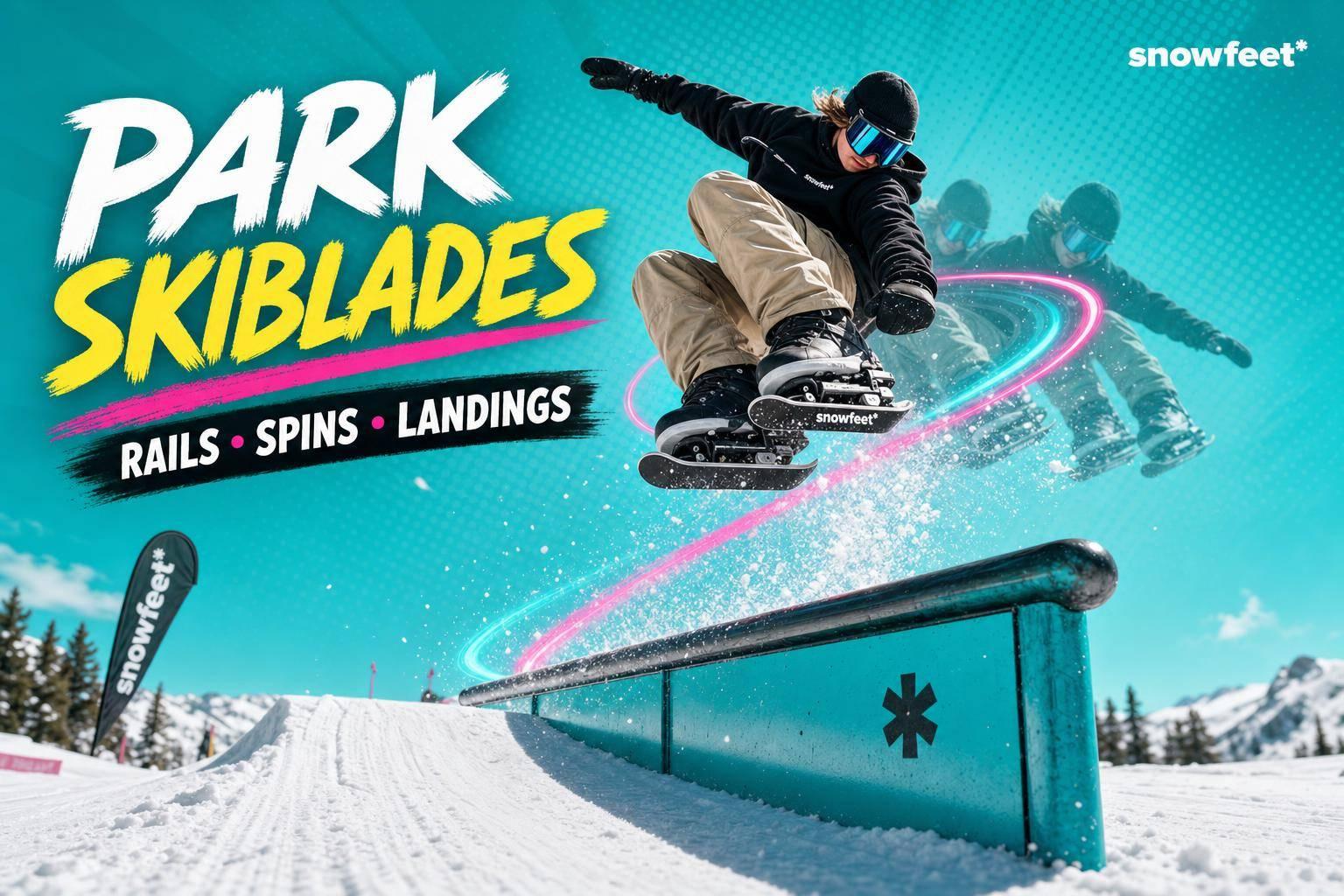
They’re also easy to pick up, which is nice if you don’t want your first run to feel like a wrestling match. They work well for tricks, small jumps, and cruising groomers. Deep powder isn’t their thing, though. The short platform doesn’t float well, so they make the most sense on groomed or tracked terrain.
If you want the classic short-ski format next, the Salomon-style snowblades and other compact skis are the closest match.
sbb-itb-17ade95
5. Classic Snowblades (Salomon-style)
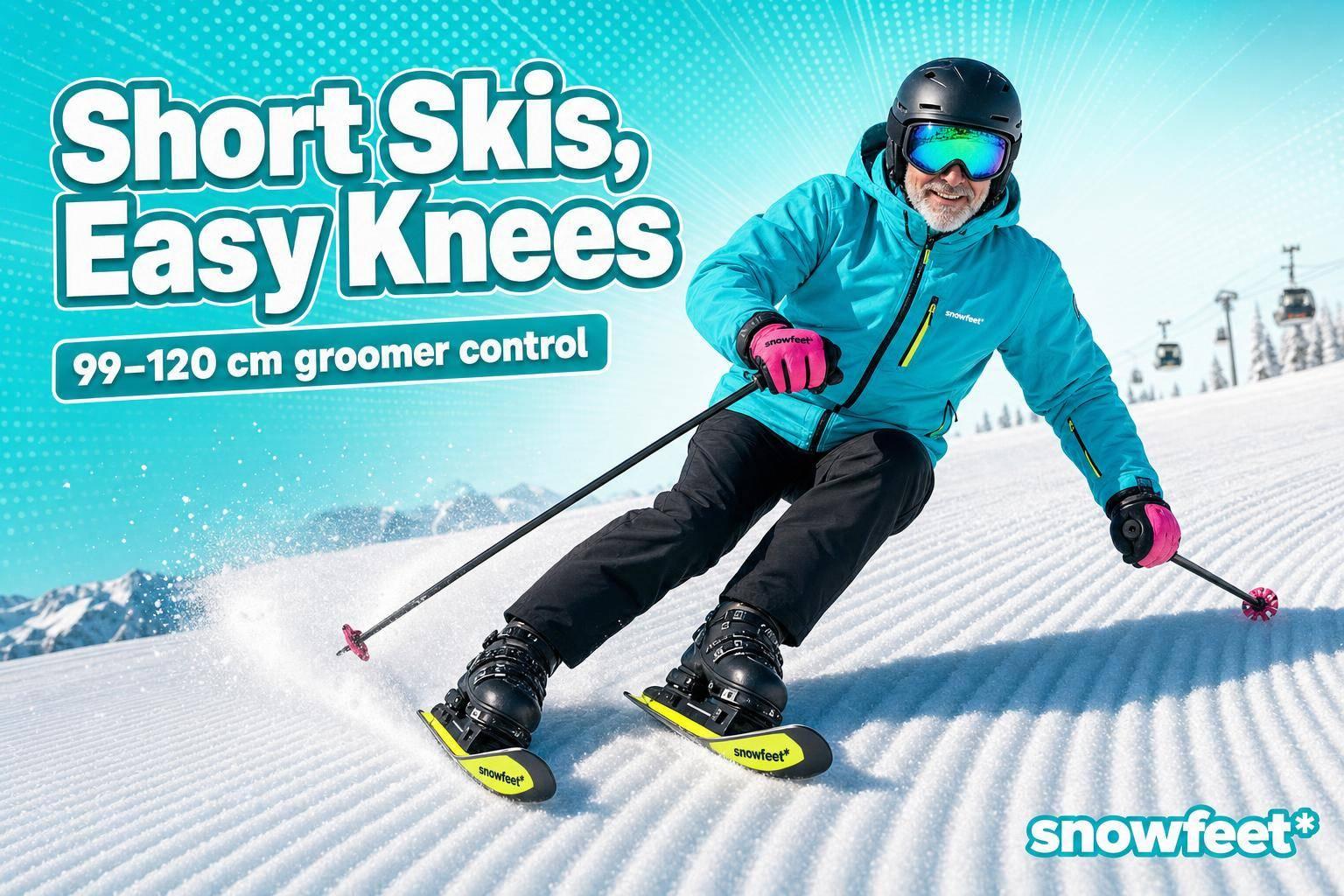
If 65 cm Skiblades still feel a bit too short, classic snowblades sit closer to short skis. They usually run 90 to 120 cm. So, yeah, they’re longer and chunkier than the Snowfeet models above, but still much smaller than full skis.
Packability
At 90 to 120 cm, they’re easier to fit than full-length skis. But in most cases, you’ll still need checked baggage or a larger car trunk. They’re usually not carry-on friendly.
Boot Compatibility
Most classic snowblades use standard alpine ski boots. That’s a nice plus if you already own alpine boots. If you’re trying to travel light, though, it’s a bit of a pain.
On-Snow Feel
On groomed runs, they turn fast and feel closer to regular skis than the 38–50 cm Snowfeet models. But there’s a trade-off. They’re less stable at speed, and they don’t do as well in powder.
That leaves them in a middle ground: more ski-like than the shorter Snowfeet options, but less portable and less travel-friendly.
Next: ODR compact skis, another short-ski option with its own mix of portability and ride feel.
6. Kneissl Bigfoot-style Short Skis
If you want a classic short-ski shape, not a modern strap-in setup, Bigfoot-style skis are the old-school benchmark. Kneissl's Bigfoot is the name most people think of here. It's a classic 65 cm short ski with fixed bindings, a foam core, and metal edges.
Packability
These are easy to toss in a car or put in a checked ski bag. But at about 65 cm - or roughly 26 inches - they're still a lot bigger than 38–50 cm Snowfeet models. Those smaller mini skis can slide into a duffel or even a large suitcase. Bigfoots? Not so much.
Boot Compatibility
Here’s the catch for travel: the fixed binding system. Classic Bigfoot-style skis need ski boots or a matching boot system, not regular winter boots. That adds bulk fast.
Snowfeet-style mini skis go the other way. They strap onto winter boots or snowboard boots, so you can leave the ski boots at home. That’s a pretty big deal if you’re trying to pack light.
Carry-On Practicality
Bigfoot-style skis are not carry-on friendly. In most cases, you'll need to check them.
On-Snow Feel
On groomed runs and short hills, Bigfoot-style skis feel more like actual skis than ultra-short mini skis. You get better edge grip and smoother carving at moderate speeds. They do well on tight terrain and short runs too.
That said, they’re less stable once speeds climb or the snow gets choppy. They also ask for more standard ski technique than Snowfeet strap-in models. So, yeah, they can feel great - but they’re not as casual or grab-and-go.
ODR compact skis take the short-ski idea in a different direction, with their own trade-offs in portability and boot setup.
7. ODR Compact Skis

ODR is the odd one out. Instead of separate boots and bindings, it uses one built-in setup. The ski and boot are a single unit. That makes ODR smaller than full skis, but it also gives you less freedom than Snowfeet* models.
Packability
ODRs are easier to store than full skis. But the built-in boot adds bulk, so they won't pack as neatly as Snowfeet* Skiskates 44 cm. That's the trade-off: easier storage, more bulk.
Boot Compatibility
There’s no boot-compatibility issue here because you can’t use your own boots. ODR is a closed system. The beginner-friendly Eclipse line uses a dynamic liner that fits a range of shoe sizes within each shell, which is handy. Still, if you have wide feet, check the sizing with care.
Carry-On Practicality
ODR skis often go past U.S. carry-on size limits. So, in most cases, you’ll need to check them. Before you head to the airport, measure the bag and compare it with your airline’s rules.
On snow, that same built-in design helps ODR feel quick on groomed runs, but it’s less flexible than Snowfeet*.
On-Snow Feel
ODRs do best on groomed snow and hardpack, not powder. If you skate, you may get the hang of them pretty fast. Skiers, on the other hand, often need a few sessions to feel at home. Eclipse starts at $389.
Travel Trade-Offs: Portability, Boots, and Performance
For travel, the fastest way to sort these options is simple: think about your trip type first. Are you packing a backpack, a carry-on, or a checked bag? That one choice cuts the list down fast.
The 38 cm and 44 cm models are the most packable. They’re the only options here that are actually backpack-friendly. That’s a big deal if you’re trying to keep your trip light and skip baggage fees. They’re also easy on footwear: both work with regular winter boots or snowboard boots, so you don’t need to haul a second pair just for the slopes.
The PRO 50 cm sits in the middle. It’s not backpack-friendly, but it still travels a lot easier than full ski gear. In return, you get metal edges and better control on groomers. On snow, it feels more planted than the 38 cm and 44 cm models.
At 65 cm, the Skiblades step into checked-bag territory. The ride starts to feel closer to a short ski. You get better carving and more edge grip, which sounds great, and it is. But there’s a catch: that usually means bringing a ski bag and, if you’re using ski bindings, alpine boots too.
Classic snowblades and Bigfoot-style skis land in that same camp. They need checked bags and ski boots, so they’re less about light travel and more about planned ski trips.
Here’s the quick comparison at a glance.
| Model | Packability Tier | Boot Type | Best Trip Type |
|---|---|---|---|
| Snowfeet Mini Ski Skates 38 cm | Backpack-friendly | Winter boots / snowboard boots | Budget airline weekends, local hills |
| Snowfeet Skiskates 44 cm | Backpack-friendly | Winter boots / snowboard boots | Budget airline weekends, spontaneous trips |
| Snowfeet PRO 50 cm | Carry-on-friendly | Winter boots / snowboard boots | Road trips, mixed terrain |
| Snowfeet Skiblades 65 cm | Checked bag | Ski boots / snowboard boots | Road trips, checked-bag ski vacations |
| Classic Snowblades (~90–100 cm) | Checked bag | Alpine ski boots only | Checked-bag ski vacations |
| Kneissl Bigfoot-style (~65–90 cm) | Not backpack-friendly | Alpine ski boots only | Car trips, destination resorts |
Next, the pros and cons break these trade-offs down even further.
Pros and Cons
Here’s the quick travel breakdown: packability, boot use, setup, and ride quality.
| Model | Main Pros | Main Cons | Best For |
|---|---|---|---|
| Snowfeet Mini Ski Skates 38 cm | Smallest and easiest to pack; works with winter boots | More tiring on long or steep runs; limited edge grip at speed | Carry-on-only flyers, casual laps, apartment storage |
| Snowfeet Skiskates 44 cm | Best balance of packability and stability in the Snowfeet line | Feels more like skating than skiing at first | Budget airline weekends, spontaneous trips |
| Snowfeet PRO Ski Skates 50 cm | More control than the shorter models; works with winter or snowboard boots | Too long for most carry-ons | Road trips, mixed terrain, riders who want more control |
| Snowfeet Skiblades 65 cm | Best carve-and-stability compromise in the Snowfeet lineup | Requires more luggage space; needs ski or snowboard boots | Checked-bag resort trips, groomer performance in compact gear |
| Classic Snowblades (Salomon-style) | Maneuverable, good carving fun | Tied to alpine boots and checked baggage | Planned destination ski vacations with checked gear |
| Kneissl Bigfoot-style Short Skis | Fun short-ski feel | Less travel-friendly and harder to source; requires dedicated ski boots | Car-based trips to destination resorts with an existing ski boot setup |
| ODR Compact Skis | Decent groomer performance; stable for its size | Compact, but not truly carry-on friendly; does not use your own boots | Road trips or car-based day trips for intermediate riders |
If your top goal is easy packing, go with the shortest model. If you want a better middle ground, 50 cm is the sweet spot. And if carving matters more than carry-on size, 65 cm makes more sense.
There’s a catch, of course. Shorter models ask more from you on icy or steep runs. They’re fun, quick, and easy to stash in a closet or trunk, but they can feel twitchy when things get fast.
So, the choice is pretty simple: how much packing ease are you willing to trade for more stability?
Final Verdict: Which Mini Ski Should You Buy?
Pick based on how you travel: carry-on, road trip, or checked bag.
For carry-on travel, the Mini Ski Skates 38 cm ($149) and Skiskates 44 cm ($460) are the top picks. For most people, the 44 cm hits the sweet spot. It packs easily, but still feels more stable and more like skiing than the shorter option.
If you want one model that works well for most trips, go with the Skiskates 44 cm. It’s the best all-around choice.
If you’re driving and want more control and stability, the PRO Ski Skates 50 cm ($299) is the better fit. It gives you a calmer ride, which is nice when you want a bit more confidence on snow.
Want the most ski-like feel from Snowfeet* and don’t mind checking a bag? Step up to the Skiblades 65 cm ($490). They feel the closest to regular skis in this group and are built more for resort trips with ski or snowboard boots.
For most casual U.S. travelers, the 44 cm Skiskates is the one to buy.
FAQs
Will mini skis really fit in a carry-on?
Yes. Snowfeet mini skis and skiblades are made to fit in standard U.S. airline carry-on bags. Most models, from 15 to 47 inches, fit within the usual 22 x 14 x 9 in. carry-on limit.
That small, light build makes them much easier to pack and haul than regular ski gear. For the best fit, place them diagonally inside your carry-on or a 40–45L backpack, and use clothing around them for padding.
Which mini skis are best for beginners?
For beginners, the Snowfeet Mini Ski Skates (38 cm) are the best pick. They’re the most compact, most budget-friendly, and easiest option to start with in the lineup.
Most people can learn basic turning and stopping in about five minutes. That’s a pretty nice way to start :) They’re light, easy to carry, and work with regular winter boots or snowboard boots. So you skip the big, clunky feel and the harder learning curve that often comes with old-school ski gear.
Do I need ski boots for Snowfeet mini skis?
No. Snowfeet mini skis are made to work with footwear you may already have, like regular waterproof winter boots or snowboard boots.
So, for casual riding and travel, you can skip ski boots. That’s a nice little win for comfort, packing, and cost :).
If you want more aggressive carving, you can still use ski boots.











Deja un comentario
Este sitio está protegido por hCaptcha y se aplican la Política de privacidad de hCaptcha y los Términos del servicio.