



















Short answer: yes - if you want easy control, low hassle, and more fun than speed. After 20+ days in U.S. resort conditions, I’d say the Snowfeet 99 cm Skiblades make the most sense for beginners, casual riders, park dabblers, and anyone who hates hauling long skis around.
Here’s the simple take:
- Best for: groomers, short runs, small park laps, travel
- Less great for: high-speed charging, icy steeps, deep powder
- Price: $690
- Boot options tested: ski boots and snowboard boots
- What stood out: easy turns, light feel, simple to carry
- What didn’t: less calm at speed than full-length skis
If you’re choosing between short skis and long skis, this is the trade-off in plain English: you give up some speed stability, and you get a much easier, more playful ride back. For a lot of riders, that’s a fair deal.
A few fast facts before you dive in:
- The 99 cm length hits a nice middle ground between tiny skiblades and full-size skis
- The build uses a wood core, metal edges, and graphite base
- After repeat use, the topsheet shows scuffs first, while the base and edges hold up fine with normal care
- These work best for riders who want control over raw speed
If that sounds like your kind of setup, you’ll probably get along with them just fine :)
Build Quality and Durability After Repeated Use
Construction Details That Affect On-Snow Performance
The 99 cm Skiblades pack in a wood core, cap build, metal edges, and a graphite base, which gives them a solid feel without making them sluggish edge to edge. On snow, that means they feel planted but still easy to flick around. That’s a nice combo, especially if you like short skis that don’t feel cheap or twitchy.
The sidecut radius, camber profile, and taller tips and tails also play a big part here. They help the skis carve with less effort and make both forward and backward riding feel natural. Sounds good on paper, sure. But the bigger question is what happens after a few hard weeks at the resort, when gear starts to show its true colors.
That’s where these design choices matter most. They don’t just shape how the skis turn on day one. They also affect how well the skis keep that same feel after repeated days on snow.
What Wears First and What Holds Up
After repeated resort use, the topsheet tends to show cosmetic scuffs first. That’s pretty normal. Skis knock together, get leaned against racks, and take a few parking lot hits. If you ski often, those marks come with the territory.
The good news: the base, edges, and bindings hold up well with routine care. So while the topsheet may look a little battle-worn, the parts that matter most for performance stay in good shape.
Maintenance vs. Long Skis and Other Short Skis
From a maintenance angle, these behave like any other ski. The main difference is that they’re smaller and easier to handle. So, same drill:
- Wax the base
- Tune the edges
- Check the bindings on a regular schedule
It also helps to sharpen the edges often so burrs and rust don’t start to build up. Nothing fancy there. Just standard ski care.
One nice perk of the shorter format is how easy they are to deal with off the hill. They’re easier to store, easier to carry, and less likely to get banged up in transit. That may sound minor, but if you’ve ever wrestled long skis through a crowded lodge or packed car, you know it’s not nothing :)
And that’s where durability starts to connect back to performance. It’s not just about whether the skis survive repeated use. It’s about whether they still feel steady and predictable once you roll them onto edge. That leads straight into the next part: stability and control on groomed runs.
Stability, Control, and Learning Curve
Turning, Stopping, and Edge Grip on Groomed Runs
After the durability check, the next thing that matters is simple: do these skis still feel steady once you pick up speed and hit firmer snow?
On green and blue groomers, the 99 cm Skiblades feel much faster edge-to-edge than full-length skis. The shaped sidecut helps a lot here. Tip them over, and they start the turn fast. That makes busy weekend slopes less of a headache, since it’s easier to make quick direction changes without feeling like you’re steering a bus.
Stopping feels solid at moderate resort speeds. The metal edges grip firm groomed snow well, so you can scrub speed without wrestling the skis. But there’s a catch. Because the edge contact is shorter, grip still falls short of what you’d get from a longer all-mountain ski, most of all when the snow gets harder.
How Quickly New Riders Get Comfortable
The shorter platform is easier for first-timers and casual riders. It feels lighter underfoot, easier to pivot, and less demanding than full-length skis, even after a lot of use.
"I felt comfortable on them within just a few runs. Super easy to control, quick to turn, and way more forgiving than traditional skis." - Brad Tolin
That lines up with what many casual riders notice. If rental skis tend to feel awkward or a little scary, the 99 cm format often feels easier much sooner than expected. The ski doesn’t ask for the same level of precision as long skis, so small mistakes are easier to fix in the middle of a turn.
Where the Control Limits Show Up
The trade-offs are real, and it’s better to know them before you click in. At higher speeds, most of all on open and steep groomers, the 99 cm length feels less planted than longer skis. There’s just less ski on the snow, so the ride gets looser once you start charging.
"Only trade-off is at higher speeds, where longer skis still feel more stable - but for overall fun and maneuverability, these are hard to beat." - Brad Tolin
Icy steeps show the same limit. You get less bite and less hold than you would with a longer ski, which can feel less secure when conditions get firm. For most recreational riders sticking to blues, moguls, or shorter groomers, that may not be a big deal. But if your perfect day means bombing wide-open runs at high speed, longer skis are still the better tool for that job.
That trade-off matters most over a full day, which is where comfort and portability come next.
Comfort, Portability, and Best Use Cases
Boot Compatibility and All-Day Comfort
The big comfort win here is boot flexibility. The Simple Ski Boot bindings fit U.S. sizes 4.5–14.5, and the Snowboard Boot option stands out if you want easier walking comfort without giving up usable all-day control. On a long resort day, that stuff matters. If your setup feels good, you stay out longer. Pretty simple.
"SUPER comfortable, easy to control, very agile, easy on the knees and ankles because they are so light..." - Mike E, User
The light weight helps too. Compared with full-length skis, these skiblades put less strain on your knees and ankles, which you’ll feel after hours on the hill.
Travel, Packing, and Resort Convenience
At 99 cm, these skiblades are much easier to carry and pack than full-size skis. That’s a nice little win from the moment you leave the car. Less awkward gear. Less bumping into door frames. Less of that parking-lot shuffle where everything feels one hand short.
Over a season, that smaller size cuts down on the day-to-day hassle. And for weekend trips, it removes one of the biggest annoyances of bringing your own setup: bulk.
Who Gets the Most Out of Them
The 99 cm Skiblades won’t fit every rider, but they line up well with a pretty broad group.
- Beginners and intermediates get a lighter setup and simpler boot options.
- Casual resort riders get an easier, less tiring ride day to day.
- Park riders get a twin-tip shape and light build that make small jumps, spins, and riding switch easier to get into.
- Travelers and day-trippers get their own gear without hauling around full-length skis.
The main group that may want something else is advanced riders who care most about maximum speed. As Mike E. put it: "If you want maximum speed, you'll want longer skis. For everything else, these are absolutely incredible."
These comfort perks show up most on groomers, short runs, and park laps. The next piece is where the 99 cm length feels best once it’s actually on snow.
sbb-itb-17ade95
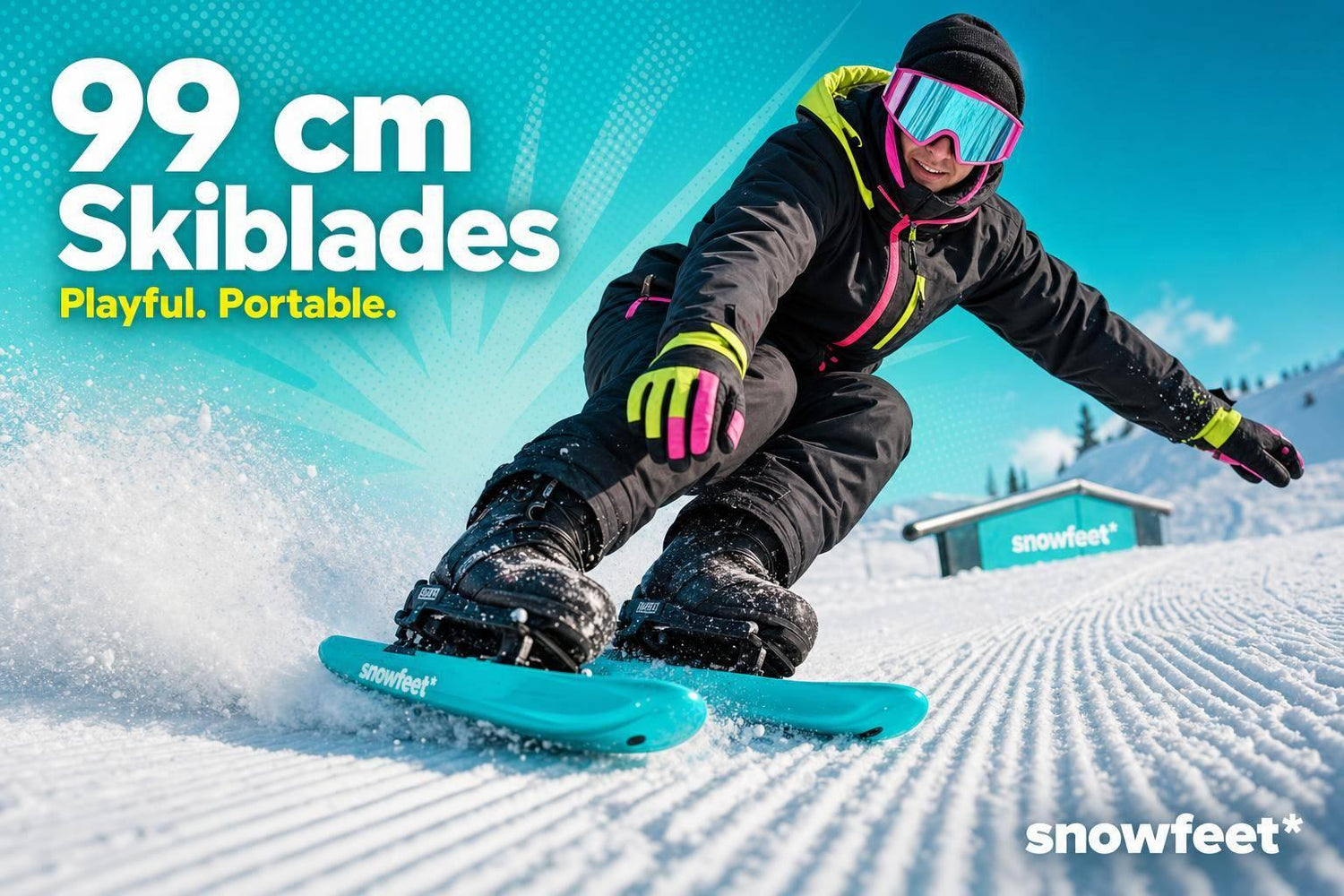
Ultimate Short Skis 🎿 Snowfeet* Skiblades 99 CM
On-Snow Performance by Terrain and Final Verdict
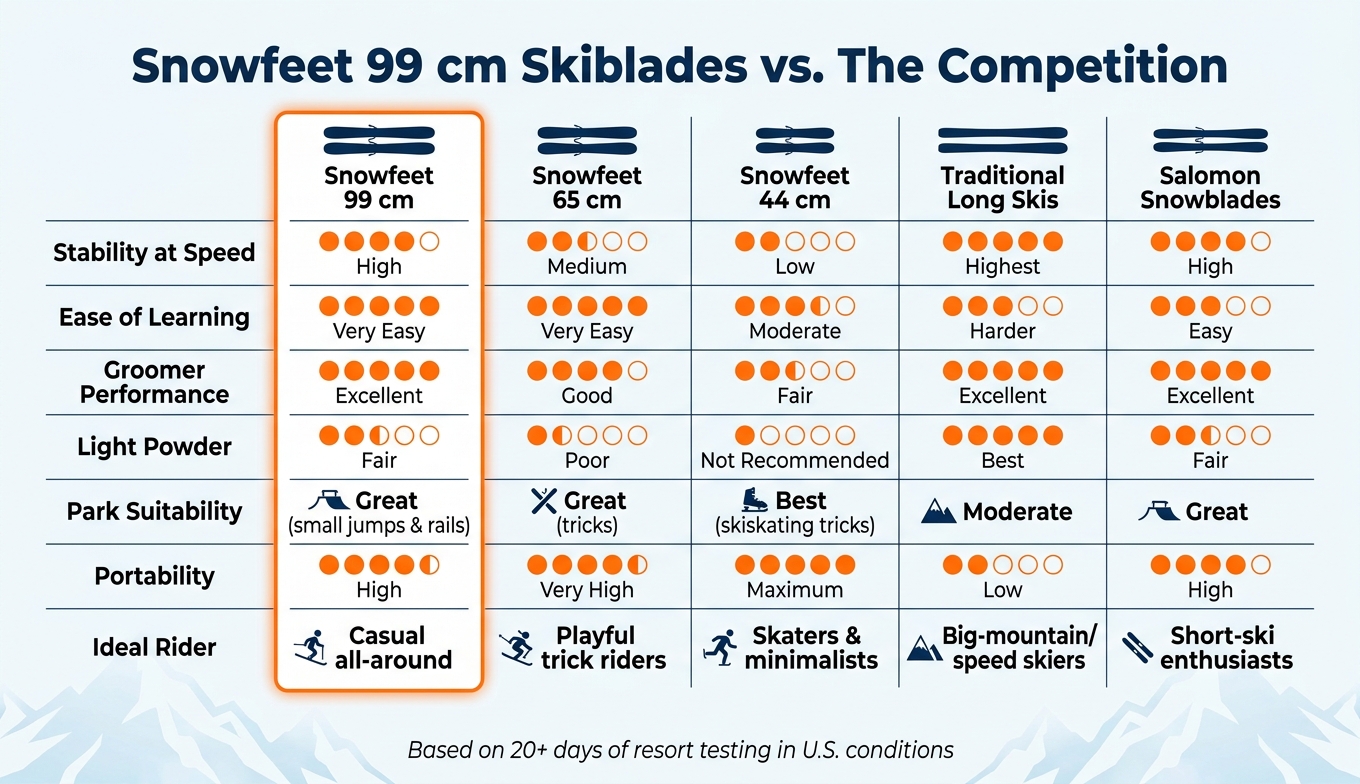
Snowfeet 99 cm Skiblades vs. Alternatives: Full Feature Comparison
Groomers, Short Runs, Light Powder, and Park Performance
You feel the balance of the 99 cm model most on different types of terrain. Groomed runs are where the 99 cm Skiblades feel most at home. The sidecut helps you make tight carving turns with less fuss. And next to the 65 cm and 44 cm models, that extra length gives you more fore-aft stability. So you can link turns fast without wrestling the ski, and edge hold on firm morning snow stays steady.
On short runs and busy resort laps, the 99 cm length pulls its weight. It takes less effort to scrub speed, reset your line, and keep your legs from getting cooked by the end of the day. On a smaller hill or a packed blue run, that matters a lot. You spend more time turning than gliding, and this ski fits that rhythm well.
Light powder works fine in small doses. A few inches of fresh snow can still be a good time, but the short, narrow platform doesn’t give you much float. Once snow gets deeper or more mixed, the ski asks more from the rider. Powder is nice to have here, not the main event.
In the park, the twin tips and low weight make the 99 cm a good match for boxes, rollers, and small jumps. That said, it still doesn’t replace a park ski for bigger features. Think of it like a fun Swiss Army knife, not a full park weapon :)
Comparison Table: Snowfeet* 99 cm vs. 65 cm, 44 cm, Traditional Long Skis, and Salomon Snowblades
Side by side, the 99 cm lands in the sweet spot for most casual riders.
| Feature | Snowfeet* 99 cm | Snowfeet* 65 cm | Snowfeet* 44 cm | Traditional Long Skis | Salomon Snowblades |
|---|---|---|---|---|---|
| Stability at Speed | High for short skis | Medium | Low | Highest | High |
| Ease of Learning | Very easy | Very easy | Moderate | Harder | Easy |
| Groomer Performance | Excellent | Good | Fair | Excellent | Excellent |
| Light Powder | Fair | Poor | Not recommended | Best | Fair |
| Park Suitability | Great for small jumps and rails | Great for tricks | Best for skiskating-style tricks | Moderate | Great |
| Portability | High | Very high | Maximum | Low | High |
| Ideal Rider | Casual, all-around riders | Playful riders who want tricks | Skaters and minimalists | Big-mountain or speed-focused skiers | Short-ski enthusiasts |
Long-Term Verdict: Are the Snowfeet* 99 cm Skiblades Worth It?
This is why the 99 cm works so well as a do-it-most ski. After repeated use, the big takeaway is pretty simple: the 99 cm Skiblades stay true to their job. They’re playful, easy to move around, and practical for riders who spend most of their time on groomers and short resort laps.
Long skis still win when the day is all about big-mountain speed, deep powder, and hard charging carves. If that’s your main thing, go with full-length skis.
But if you want a fun-first, travel-friendly setup that works well on groomers, short runs, and light park features, the Snowfeet* 99 cm Skiblades are a strong all-around pick. They make the most sense for skiers who care about convenience, playfulness, and easy control, and who want one ski that can handle most resort days without the bulk of a full-length setup.
FAQs
Are the 99 cm Skiblades good for total beginners?
Yes. 99 cm Skiblades are a great pick for total beginners.
Compared with long, old-school skis, they’re easier to turn, easier to control, and more forgiving. That means the learning curve often feels a lot faster, which is a nice win when you’re just trying to stay upright :) .
They can also help cut leg strain and give you a more stable, confidence-building ride than shorter 65 cm models.
Can I use snowboard boots with the 99 cm Skiblades?
Yes - the 99 cm Skiblades work with snowboard boots.
Snowfeet offers a snowboard binding option for this model, which means you can ride with the comfort and familiar feel of your current snowboard boots. Nice and simple :)
Just make sure you pick the snowboard binding option when you buy, so everything fits as it should.
How do the 99 cm Skiblades handle ice and powder?
On ice and firm, groomed trails, the standard 99 cm Snowfeet Skiblades hold their line well. They use full-length metal edges and a stable build, so they carve with a smooth, precise feel.
For deep powder, Snowfeet makes a dedicated 99 cm Powder version. The ski is wider, which helps it float better and stay easier to control in soft snow. You still get the quick, playful feel that makes the 99 cm platform such a blast :)











اترك تعليقًا
This site is protected by hCaptcha and the hCaptcha Privacy Policy and Terms of Service apply.