







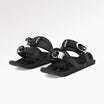












Yes - for a lot of skiers, snowblades are worth it in 2026. If you ski a few resort days each year, stick to groomed green and blue runs, like park laps, or want gear that’s easier to carry, they can be a smart buy.
Here’s the short answer:
- Best for: beginners, casual resort riders, park riders, families, travelers, and snowboarders trying skis
- Not best for: fast carving, deep powder, steep black runs, and rough snow
- Best all-around pick for most people: 99 cm skiblades
- Price range: about $460 to $950
So, if your ski day looks more like fun laps with friends than full-send charger mode, snowblades fit well. If you chase speed and storm days, long skis still make more sense.
A few facts that matter:
- Snowblades in this piece range from 17.3 in. to 47.2 in. (44 cm to 120 cm)
- The shortest models turn with less effort, but feel less calm as speed climbs
- The 120 cm option gives more support, but still keeps the short-ski feel
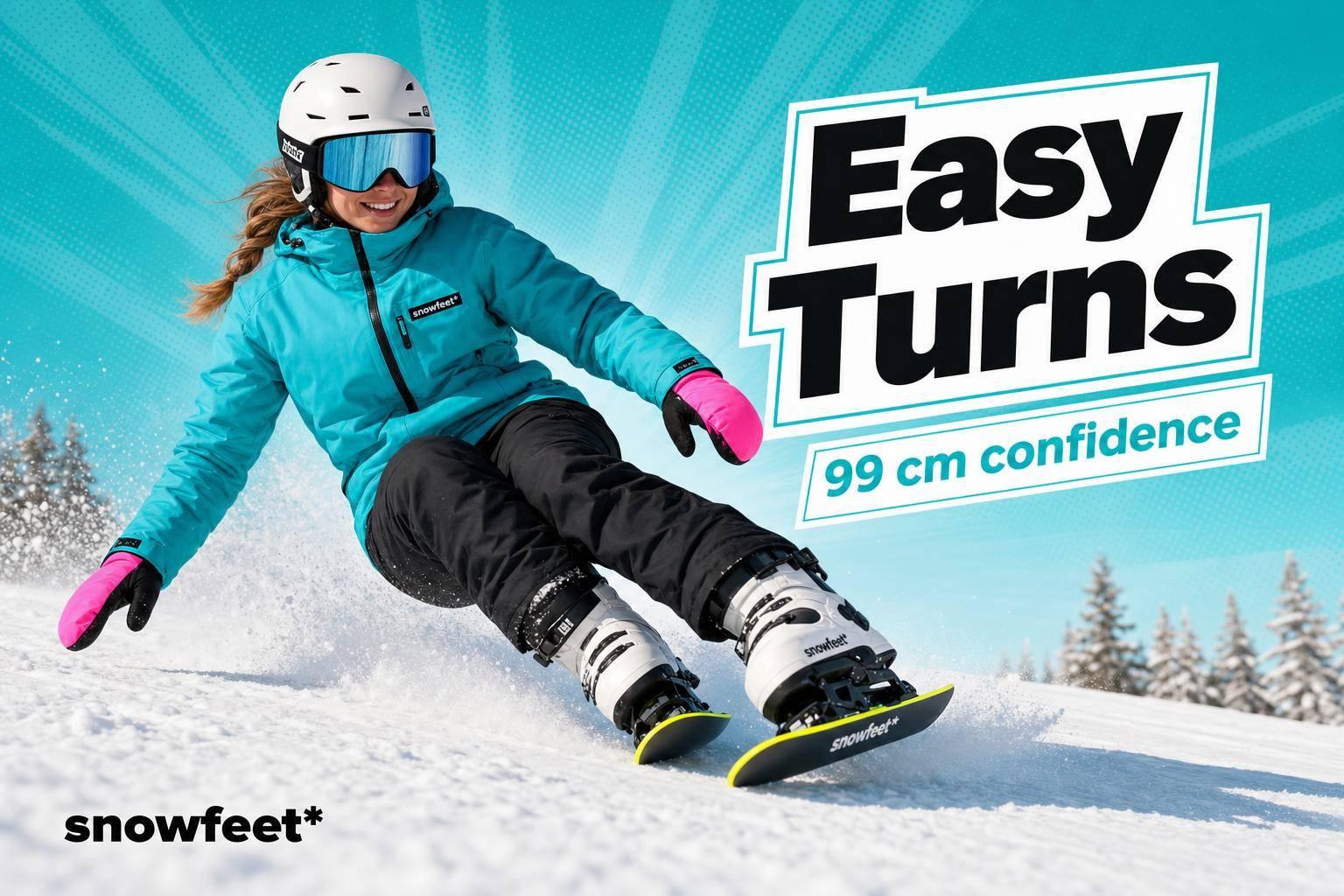
- For most resort riders, the sweet spot is 99 cm
Snowboarder tries Snowfeet* | Which Snowfeet* Short Ski is the Best? | Snowblades 44, 65, 99 Review
Quick Comparison
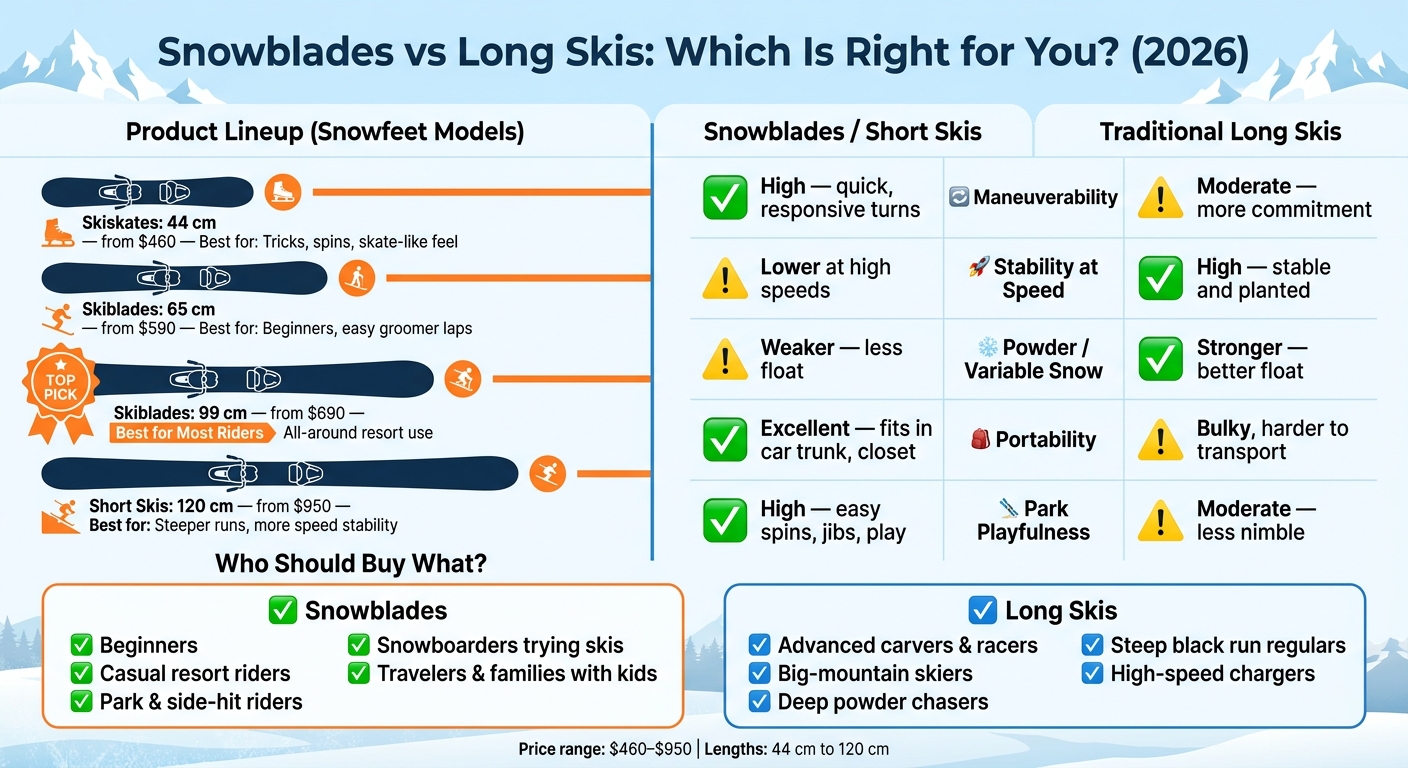
Snowblades vs Long Skis: Which Is Right for You? (2026)
| Option | Length | Starting Price | Best Use | Main Trade-Off |
|---|---|---|---|---|
| Skiskates | 17.3 in. / 44 cm | $460 | Tricks, rails, skate-like feel | Least stable |
| Skiblades | 25.6 in. / 65 cm | $590 | Beginners, easy groomer laps, park | Can feel twitchy fast |
| Skiblades | 39 in. / 99 cm | $690 | Most resort days, mixed casual use | Still not built for powder |
| Short Skis | 47.2 in. / 120 cm | $950 | More support on steeper runs | Costs more, less playful |
| Long skis | Varies | Varies | Fast skiing, powder, rough snow | Harder to carry and turn |
My take: if you want one short ski that does most things well, go with the 99 cm model. If you want max playfulness, look at 44 cm or 65 cm. If you want more calm on steeper terrain, 120 cm is the safer bet.
And yep, if you’re still on the fence, that’s normal - snowblades are a lot of fun, but they’re not magic little cheat codes on snow :)
For a quick visual explainer, these videos help:
Bottom line: I’d say snowblades are worth it in 2026 if you want easy, fun, low-hassle resort skiing. If your goal is speed, powder, or hard charging all over the mountain, stick with long skis.
Honest Trade-Offs: Where Snowblades Beat Long Skis and Where They Fall Short
Why many riders find snowblades easier and more fun
Snowblades are worth it if you care more about quick handling, easy travel, and a playful feel than top-end speed or powder days.
That’s the big trade. And for a lot of riders, it’s a fun one.
Short skis turn fast with less effort. You don’t need big movements to change direction, which makes them feel easier on busy groomers. On crowded runs, that can be a huge plus. You can make small corrections on the fly instead of wrestling your skis around.
They’re also just plain easier to deal with off the snow. Snowblades fit more easily in a car trunk, move through the lodge without that awkward “sorry, coming through” moment, and pack better for trips. That part sounds small, but it’s nice when you’re hauling gear at 7:30 a.m. with cold hands and bad coffee :)
Where long skis still have a real edge
Long skis still win where things get faster, steeper, or messier.
At higher speeds, longer skis are more stable. Put simply, they stay calmer when you open it up. Snowblades can start to feel twitchy once the pace climbs.
Powder and chopped-up snow are another clear split. Short skis just don’t have the surface area to float as well in heavier snow. In powder, longer skis ride more on top of the snow, while short skis sink deeper and feel slower. If you spend a lot of time in mixed conditions or like skiing fast, long skis still have the edge.
Comparison table: Snowblades vs long skis
| Attribute | Snowblades / Short Skis | Traditional Long Skis |
|---|---|---|
| Maneuverability | High - quick, responsive turns | Moderate - more commitment required |
| Stability at speed | Lower at higher speeds | High - more stable and planted |
| Powder/variable snow | Weaker - less float in deep snow | Stronger - better float, especially wider skis |
| Portability | Excellent - easier to carry, store, and travel with | Lower - bulkier and harder to transport |
| Park playfulness | High - easy to spin, jib, and play | Moderate - less nimble |
That trade-off is why short skis fit some riders much better than others.
sbb-itb-17ade95
Who Snowblades Actually Make Sense For in 2026
Beginners, casual riders, and families on groomed runs
Once you accept the trade-offs, the next step is simple: who are these things for? In most cases, short skis work best for riders who want an easier, more forgiving day on groomed runs.
They’re easier to learn on, easier to control, and less punishing when your form isn’t dialed in yet. That matters a lot for beginners. Shorter skis can help new riders build control faster and stay with lessons.
They also cut down on those awkward beginner moments. You’re less likely to catch an edge or get pulled into a turn you didn’t mean to make. On green and blue groomers, that quick control and playful feel are where snowblades make the most sense.
Snowfeet* Skiblades 65 cm fit nervous beginners and smaller riders well. 99 cm works better for casual cruisers who want more confidence on steeper groomers. You get more stability, but the skis still feel quick and easy to move around.
And that snappy feel isn’t just nice for beginners. It’s also a big reason freestyle riders like short skis.
Park riders, side-hit riders, and snowboarders trying skis
Freestyle riders tend to like short skis for one plain reason: less swing weight. That makes spins easier.
On a 180° or 360° off a small side hit, a shorter ski usually lets you rotate faster and clean things up in the air with less effort than full-size park skis. Landings can feel easier to fix, too. And for switch riding, less tail length means fewer random edge catches when you transition. That alone can save a few “well, that went badly” moments :)
Snowboarders often adapt fastest to the 44 cm Skiskates or 65 cm Skiblades because both feel quick and playful. A common setup looks like this:
- 44 cm Skiskates for rail gardens and small boxes
- 65 cm Skiblades for a more mixed day around the mountain
If tricks aren’t the main goal, there’s another reason people go this route: they’re just easy to bring along.
Travelers, riders with limited storage space, and kids
Compact skis make a lot of sense for travelers, people in apartments, and kids. They fit in a checked bag or the trunk of a car. At home, they can slide into a closet instead of hogging half the room.
For kids and lighter riders, the lower weight and shorter length help in all the annoying in-between moments too, like chairlifts, crowded lift lines, and clomping around the lodge. The Snowfeet* Skiskates 44 cm and Snowfeet* Skiblades 65 cm work well on local hills and beginner areas, where low speed and easy turning matter most.
There is one practical catch. If a kid is heading toward racing or more advanced all-mountain skiing, traditional junior skis will usually be the better long-term move. But for fun weekend laps, early learning, and mellow days on snow, compact snowblades fit the job well.
Best Snowfeet* Models by Riding Style
If snowblades match how you like to ride, the next call is length. Think of it like this: do you want max quickness, one setup for most resort days, or more calm when the mountain gets rough?
Snowfeet* Skiskates 44 cm and Skiblades 65 cm for maximum agility
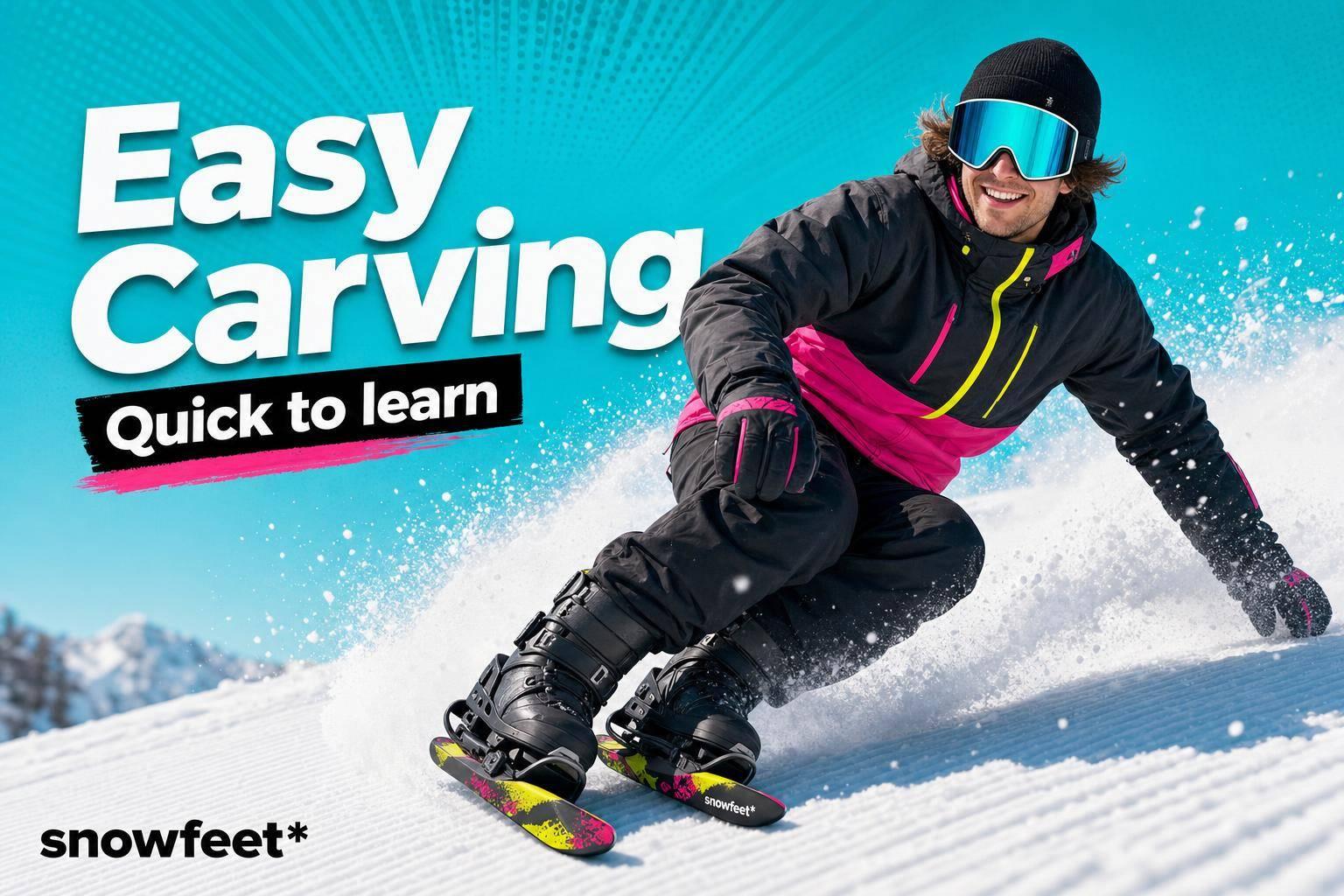
If you want the most nimble ride, start with the 44 cm Skiskates or 65 cm Skiblades. These are the top picks for park laps, side hits, and snowboarders who want to try skis without jumping straight onto long boards.
The 44 cm Skiskates are the shortest model in the lineup. They’re built to feel a bit like skating on snow, which makes spins, jumps, and tricks feel natural. The 65 cm Skiblades give you a touch more support but still stay very quick edge to edge. At 65 cm, they come with tool-free, non-release bindings for ski boots in sizes US 4.5 to 14.5.
Go with 44 cm or 65 cm if you want that short, playful feel for spins, jumps, and fun resort laps. They’re the kind of setup that makes you want to duck into side hits all day :)
There are limits, though. These shorter models aren’t the best match for high-speed carving on steep black runs, deep powder, or heavy, chopped-up snow. If that’s your usual day on the hill, a longer model will make more sense.
If you want a bit more confidence but still want that short-ski vibe, the 99 cm model is the next step.
Snowfeet* Skiblades 99 cm for all-around resort use
The 99 cm Skiblades are the best all-around resort choice. They still feel playful, but they’re calmer than the 44 cm and 65 cm models, especially when the snow gets choppy.
This is a good fit for casual riders who want one short ski for most mountain days. Groomers, a little park, and light off-piste terrain are all in play here. If the shorter models feel a bit too twitchy, the 99 cm version tends to hit the sweet spot.
If you like the short-ski format but want more calm when speed picks up, move to 120 cm.
Snowfeet* Short Skis 120 cm for more stability on the mountain
The 120 cm Short Skis sit right in the middle for riders who like the short-ski idea but want more confidence on steeper terrain and at higher speeds. This is the closest Snowfeet* gets to a more standard ski feel without going all the way to full-length skis.
That extra length helps in afternoon chop, refrozen corduroy, and light crud. In plain English: when the snow gets weird, these stay more settled.
For expert-speed carving, deep powder, and hard-charging big-mountain skiing, full-length skis still come out on top. The 120 cm model makes the most sense as a bridge for riders who want to ease toward that feel.
| Model | Length | Starting Price | Best For |
|---|---|---|---|
| Skiskates | 44 cm | $460 | Tricks, spins, quick turns |
| Skiblades | 65 cm | $590 | Playful resort laps, easy control |
| Skiblades | 99 cm | $690 | All-around resort use, intermediates |
| Short Skis | 120 cm | $950 | Steeper runs, more speed stability |
Final Verdict: Are Snowblades Worth It for Most Riders in 2026?
For most U.S. resort riders, yes - snowblades are worth it in 2026.
Here’s the simple version: if you care more about easy learning, simple travel, and fun groomer laps than all-out speed, snowblades make a lot of sense. They’re easier to handle, less of a pain to carry, and just plain fun on mellow resort days.
Long skis still have the upper hand in a few spots. If you like going fast, chase powder days, or spend a lot of time on steep, messy terrain, longer skis are still the better tool.
Who should buy snowblades this year
Snowblades are a good fit for:
- Beginners
- Casual resort riders
- Park and side-hit riders
- Snowboarders moving over to skis
- Travelers
- Families with kids
Who should stick with long skis
Long skis still make more sense for advanced carvers, racers, and big-mountain skiers. If you ski steep black runs or deep powder on a regular basis, short skis can feel too twitchy when edge grip and speed control matter most.
Quick picks by rider type
That leaves one last call: length.
| Snowfeet* Model | Best For |
|---|---|
| Skiskates 44 cm - from $460 | Skate-like fun, tricks, snowboarder crossover |
| Skiblades 65 cm - from $590 | Beginners, easy groomer laps, casual resort days |
| Skiblades 99 cm - from $690 | Best starting point for most riders - all-around resort use |
| Short Skis 120 cm - from $950 | Intermediates who want more confidence at speed |
FAQs
Are snowblades hard to learn on?
No. Snowblades are beginner-friendly, and plenty of riders get the hang of them in a single day, sometimes within their first few runs.
Their short, lightweight build makes them feel more natural right away. They’re easier to control and turn than standard skis, which takes some of the stress out of learning. A lot of people also say the forward-facing stance and independent foot movement of Snowfeet* products just feels familiar from the start.
What length snowblades should I buy?
Choose based on your riding style and experience level:
- 44 cm Skiskates: best if you're brand new and want a feel that's close to skating
- 65 cm Skiblades: a great pick for tricks, tight turns, and first-timers
- 99 cm Skiblades: a nice middle ground between agility and stability
- 120 cm Skiblades: best if you want more stability and control when speeds pick up
Can I use snowblades all over the mountain?
Yes. Snowblades are pretty versatile and do well on groomed slopes, in terrain parks, on hiking trails, and in light powder up to about 4 inches.
Their short, light build also makes them a great fit for tight spaces, moguls, and crowded runs. That’s where they can feel extra fun - quick to turn, easy to move, and less of a hassle when things get busy.
They’re not built for deep, heavy powder. But Snowfeet* models handle most recreational mountain conditions with ease and agility.











اترك تعليقًا
This site is protected by hCaptcha and the hCaptcha Privacy Policy and Terms of Service apply.