



















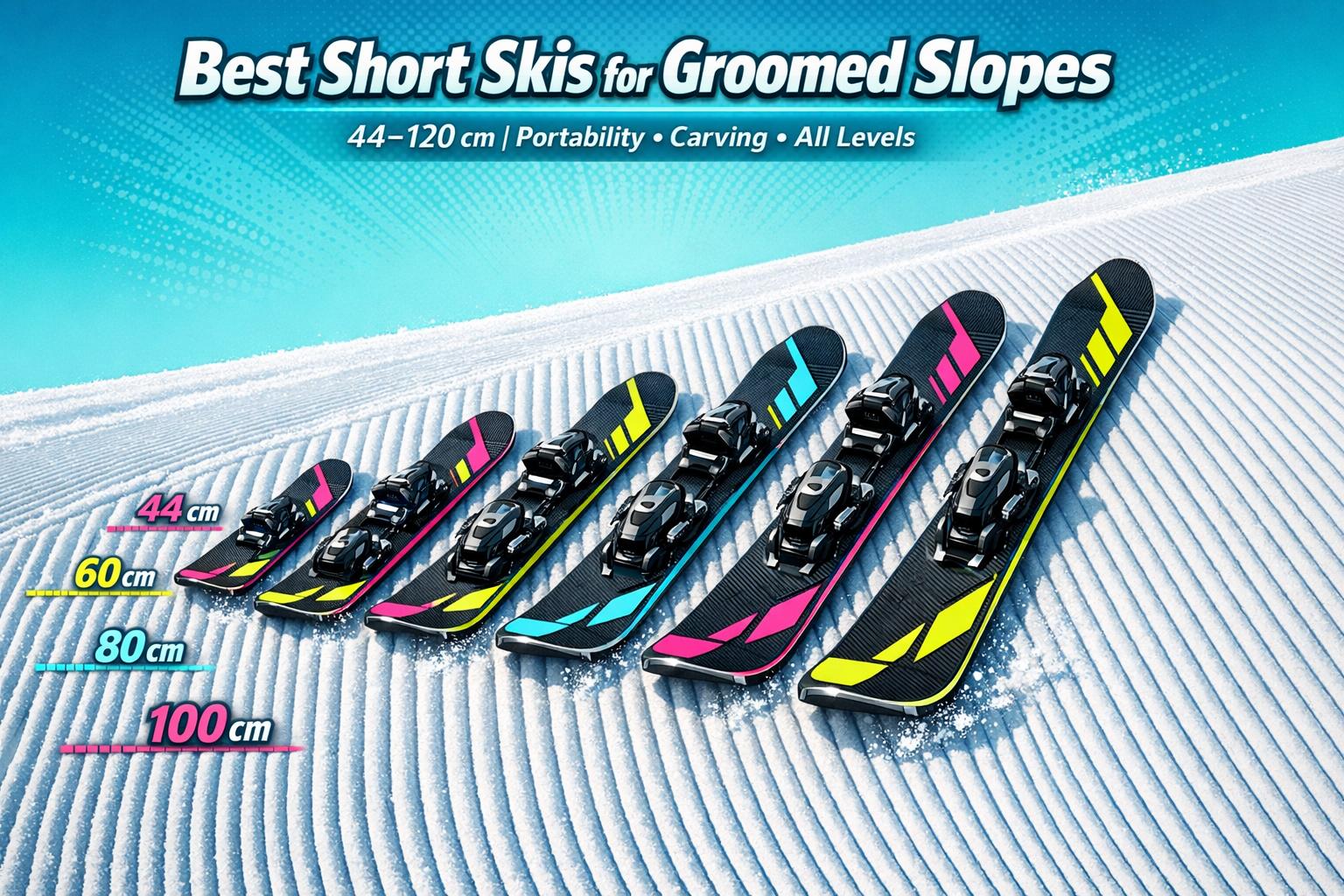
Skiing can feel overwhelming, especially if you're a beginner. Long skis, heavy gear, and tricky techniques often scare people away after their first try. But what if there was an easier way to enjoy the slopes? Enter Snowfeet* - a game-changer in skiing gear. Their short, lightweight skis (ranging from 44 cm to 120 cm) are easy to control, quick to learn, and even fit in your backpack. Whether you're new to skiing or just looking for a simpler option, Snowfeet* makes skiing way more approachable and fun.
Why Short Skis Work Better for Beginners:
- Easier to Turn: Shorter skis respond faster to small movements.
- More Control: Less effort needed to stop or steer.
- Faster Learning Curve: Most users feel confident within minutes.
- Portable: Compact enough to carry in a backpack - no bulky gear.
Snowfeet* Product Line:
- Skiskates (44 cm): Perfect for casual use and tricks.
- Skiblades (65 cm & 99 cm): Great for carving, agility, and longer runs.
- Short Skis (120 cm): Ideal for speed and stability on bigger slopes.
Instead of struggling with traditional long skis, Snowfeet* offers a simple, fun way to hit the snow without the hassle. Ready to give skiing another shot? Check out their gear at snowfeetstore.com and start enjoying the slopes in no time.
How to Ski | 10 Beginner Skills for the First Day Skiing
Why Skiing Feels Hard at First
Most people don't struggle with skiing because they're out of shape or lack coordination. The real challenge lies in mastering traditional long skis, which are tricky to control - especially for beginners.
Balance and Control on Long Skis
Long skis make even small weight shifts feel exaggerated, forcing your legs to constantly adjust. This can quickly tire out muscles that aren’t used to the movement. And when your legs give out, you’re more likely to lean back, losing control completely.
Turning and Stopping: Easier Said Than Done
Turning long skis isn’t as simple as it looks. You’ve got to rotate both skis while managing your weight, and their length makes this harder - even at slow speeds. Stopping, especially with a snowplow, also takes more effort because longer skis need more force to hold steady.
A study published in the British Journal of Sports Medicine found that beginners fall significantly more often than advanced skiers. Why? Poor balance and undeveloped technique. This physical struggle only adds to the mental challenge of managing long skis.
Long Skis Can Be Intimidating
It’s not just the physical difficulty - long skis can feel overwhelming mentally. The weight and size of traditional skis can make beginners tense up, adopting a stiff posture that reduces control. This creates a frustrating cycle: fear → stiff posture → less control → more falls → even more fear.
One skier, Brad Tolin, described his experience after switching to shorter gear:
"These ski blades are a blast to use. Super easy to control, quick to turn, and way more forgiving than traditional skis. They're great for carving and navigating crowded slopes without feeling bulky."
This is why shorter skis, like Snowfeet* gear, can completely change the game for beginners, offering a more approachable and enjoyable way to learn.
Why Short Skis Are Easier to Use
Long skis can feel awkward and overwhelming, especially if you're new to skiing. Short skis, on the other hand, are lighter, more responsive, and require far less effort to maneuver. The science behind it is simple: a shorter length means quicker reactions, easier balance adjustments, and smoother control. From your very first run, you'll notice how natural it feels to turn, stop, and stay steady.
Easier to Turn and Control
Short skis make steering a breeze. A slight shift in weight is all it takes to change direction or come to a stop. Unlike traditional longer skis, short skis require less force to move into a wedge or parallel position. This quick response creates a smooth rhythm - move, react, adjust - that's especially helpful on beginner-friendly slopes.
Mike E., a verified Snowfeet* user, shared his thoughts:
"I was nervous about the boots not being stiff enough for skis but it was not an issue at all. SUPER comfortable, easy to control, very agile, easy on the knees and ankles because they are so light."
Beginners Gain Confidence Faster
Short skis help you improve faster because they’re forgiving. Even if your movements aren’t perfect, you’ll still manage smooth turns and stops. When mistakes happen - like being slightly off-balance or late on a turn - you’ll recover quickly. This means more time practicing and less time struggling, which speeds up the learning process. It’s not just about talent; the right equipment makes all the difference.
Biba, another verified Snowfeet* user, put it simply:
"Facile à skier même pour une débutante! (Easy to ski even for a beginner!)"
Snowfeet* gear consistently helps beginners feel more confident, turning first-timers into capable skiers. With early success like this, building skills becomes second nature.
Snowfeet* Skiblades and Skiskates: A Better Way to Ski
Snowfeet* has taken the idea of short skis and transformed it into an entire lineup designed to make skiing more approachable and fun. By focusing on shorter, lighter, and easier-to-handle gear, this Czech brand eliminates many of the frustrations that come with traditional ski equipment. Their range includes four lengths - 44 cm, 65 cm, 99 cm, and 120 cm - each tailored to different skiing styles and skill levels. Whether you're a beginner or a seasoned skier, Snowfeet* offers something to boost your confidence on the slopes.
Snowfeet* Skiskates (44 cm)
Skiskates are the standout product in Snowfeet*’s collection. At just 44 cm (around 17 inches), they’re small enough to fit in a backpack. These compact skates attach to regular ski or snowboard boots, combining the precision of ice skating with the excitement of skiing. If you’ve tried rollerblading or ice skating before, you’ll feel right at home on Skiskates.
Perfect for resort slopes, small hills, or casual weekend outings, Skiskates make chairlifts and lift lines way less of a hassle. Plus, they’re easy to master, even for first-timers. With a 5.0/5 rating from 123 reviews, they’ve clearly won over many fans. Founder Zbyněk, who helped develop the product, shared his enthusiasm:
"In my opinion, Skiskates is the best product for slopes we developed so far. I love how easy they are to ski and skate and how many different kinds of tricks I can perform without much effort and almost no restrictions."
Snowfeet* Skiblades (65 cm, 99 cm)
Snowfeet* Skiblades come in two lengths, each designed with specific goals in mind:
- 65 cm Skiblades: These are perfect for skiers who want agility and quick turns. With a 4-meter turning radius, they’re ideal for groomed runs, moguls, and terrain parks. Beginners will appreciate the control, while advanced skiers can enjoy spins, jumps, and tricks.
- 99 cm Skiblades: Offering more stability and edge hold, this version is great for carving and tackling longer blue runs. Built with a wood core and deep sidecut, these Skiblades deliver a smooth, controlled ride at higher speeds.
Brad Tolin, a satisfied user, summed up his experience with Skiblades:
"These ski blades are a blast to use. Super easy to control, quick to turn, and way more forgiving than traditional skis."
If you’re looking for a balance between the playful feel of short skis and the stability of longer ones, the 99 cm Skiblades might be your best bet.
Snowfeet* Short Skis (120 cm)
At 120 cm, these are the longest skis in the Snowfeet* lineup. They’re designed for skiers who want more speed and stability but aren’t ready to go back to full-length skis. Compared to standard adult skis (which are typically 150–180 cm), these still offer easier turning while providing solid edge contact and grip on hard-packed snow.
The 120 cm Short Skis are perfect for longer runs at larger resorts, like those in Colorado or Utah. They’re also a natural progression for anyone who has mastered Skiskates or Skiblades and is ready to take on more challenging terrain.
Snowfeet* Lineup Overview
Here’s a quick look at the full lineup:
| Product | Length | Best For | Skill Level |
|---|---|---|---|
| Skiskates | 44 cm | Casual use, tricks, compact travel | All levels, great for skaters |
| Skiblades | 65 cm | Agility, moguls, terrain parks | Beginners to advanced |
| Skiblades | 99 cm | Carving, all-mountain, longer runs | Progressing beginners to intermediate |
| Short Skis | 120 cm | Speed, stability, varied terrain | Intermediate and up |
Whether you're after portability, agility, or speed, Snowfeet* has reimagined skiing to fit your style and skill level.
sbb-itb-17ade95
How Snowfeet* Compares to Long Skis
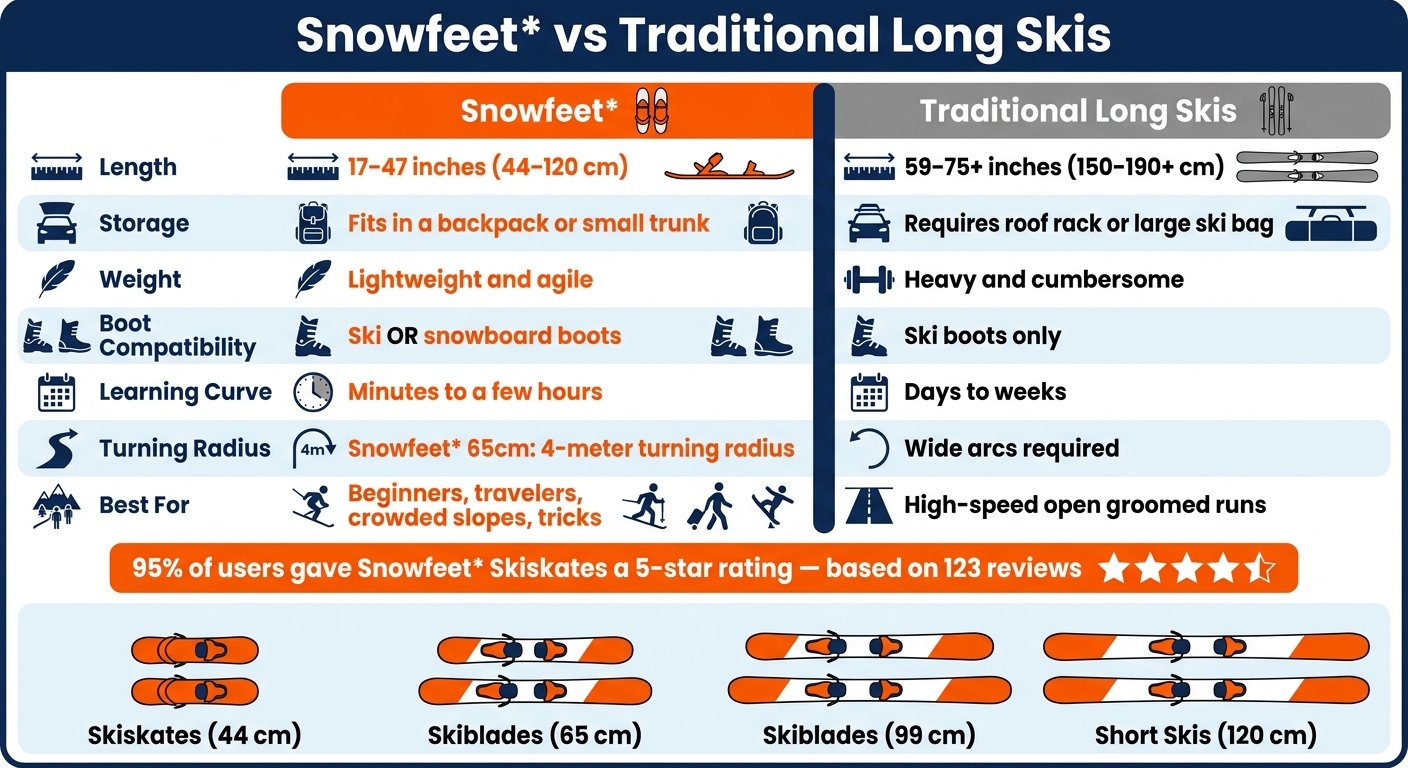
Snowfeet vs Traditional Skis: The Ultimate Beginner Comparison
Let’s face it - traditional 6-foot skis can be a hassle, especially in crowded areas. Snowfeet* flips the script with a shorter, lighter, and more approachable design.
Turning and Control
Long skis, ranging from 150 to 190+ centimeters (about 59 to 75+ inches), require wide arcs to change direction. That’s fine for wide-open, groomed slopes, but they’re a headache on moguls, tight trails, or busy runs. Snowfeet* Skiblades, on the other hand, offer quick, precise carving. Their parabolic shape and narrow waist make turning feel natural and responsive without the need for those sweeping arcs. Sure, longer skis provide stability at high speeds, but for beginners and intermediate riders, that’s rarely a dealbreaker.
What’s more, Snowfeet* isn’t just about performance - it’s about convenience, too.
Easy to Carry and Store
Snowfeet* gear’s compact size makes it a dream for travelers. Traditional skis? You’re looking at roof racks, oversized bags, and a fight for storage space. Snowfeet* models, even the longer 99 cm and 120 cm versions, are way easier to transport.
| Feature | Snowfeet* (44–120 cm) | Traditional Long Skis |
|---|---|---|
| Length | 17–47 inches | 59–75+ inches |
| Storage | Backpack or small trunk | Roof rack or large ski bag |
| Weight | Lightweight and agile | Heavy and cumbersome |
| Boot Compatibility | Ski or snowboard boots | Ski boots only |
| Learning Curve | Minutes to a few hours | Days to weeks |
"A lot easier to haul around the hills & on vacation than traditional skis!" - heyjerz, Snowfeet* Customer
This portability also plays a role in how fast you can get the hang of them.
Faster to Learn
Traditional skiing? It can take days - or even weeks - of lessons to feel confident. Snowfeet* Skiskates are designed to be intuitive, especially for anyone who’s tried rollerblading or ice skating. Most people get the hang of it in about 5 minutes. And with 95% of users giving the 44 cm Skiskates a 5-star rating, it’s clear that the compact design helps build confidence right out of the gate.
Snowfeet* isn’t just a smaller version of traditional skis - it’s a whole new way to enjoy the slopes, making skiing more accessible and fun for everyone.
How to Get Started with Snowfeet*
Getting out on the snow with Snowfeet* is easier than you might think. Thanks to their simple design, you’ll spend less time fiddling with gear and more time enjoying the slopes. How you get started depends on the model you choose.
Setting Up Your Snowfeet* Gear
Each Snowfeet* model has a straightforward setup, designed to fit a wide range of boot sizes (US 4.5–14.5) without needing tools. Here’s how it works:
- Skiskates (44 cm): These attach directly to sturdy winter or snowboard boots using adjustable, tool-free bindings. Loosen the straps, position your boot on the binding plate, and tighten from the toe to the ankle until your boot is snug. Make sure there’s no heel lift or side-to-side movement. Before heading out, flex forward and give a light stomp to ensure everything feels secure.
- Skiblades (65 cm and 99 cm) and Short Skis (120 cm): These use standard ski bindings that work with alpine ski boots. Just click your boots into the bindings like you would with traditional skis. Unlike regular ski setups that might need technical adjustments, Snowfeet* bindings are designed to be quick and simple. If you’re unfamiliar with ski bindings, it’s worth stopping by a resort rental shop for a quick DIN check - it only takes a few minutes.
Once your gear is ready, you can start practicing basic movements on flat snow.
Learning the Basics: Stance, Turning, and Stopping
Start with your stance: keep your feet hip-width apart, knees slightly bent, and hands forward. Your weight should stay centered over the middle of your feet - not on your heels.
On flat ground, practice moving one foot forward while keeping the other still. It’s a lot like inline skating. Once that feels natural, practice the snowplow stop. To do this, point the tips of your gear slightly inward, push your heels outward into a “V” shape, and press into the inside edges to slow down. Make sure you’re comfortable stopping before heading to a slope.
Snowfeet* products are shorter than traditional skis, so they’re easier to pivot and respond quickly to small movements. This makes turning much simpler and less effort-intensive.
Where to Practice First
Once you’ve got the basics down on flat ground, it’s time to find a safe practice area. Look for flat, open snow, like a beginner area at a resort, a park, a golf course fairway, or even your backyard if the snow is packed. After you’re confident in stopping, move on to a gentle slope with a safe, open run-out. A bunny hill with a magic carpet is perfect for this stage. Stick to soft, groomed snow - it’s much more forgiving than icy or uneven terrain.
"Although not meant for deep powder, it's wonderful on groomed trails, which I try to use exclusively." - Sunshine Straiges, Snowfeet* Customer
Avoid steep or crowded areas until you’re completely comfortable with turning and stopping. The good news? Many beginners find Snowfeet* easier to pick up than traditional skis, so you’ll likely feel confident quicker than you expect. Once the basics feel second nature, you can start tackling gentle slopes and gradually work your way up.
Conclusion: Give Snowfeet* a Try
Snowfeet* changes the game when it comes to skiing. Traditional long skis can feel intimidating, requiring days of practice to find your balance and precision. But Snowfeet* makes skiing approachable and fun right from the start. With a lower center of gravity, you'll feel more stable, and the compact design takes the stress out of learning, turning skiing into something instinctive and enjoyable.
Take your pick from their lineup: the playful 44 cm Skiskates for freestyle tricks, the 65 cm or 99 cm Skiblades for sharp, controlled turns, or the 120 cm Short Skis for smoother, longer runs. No matter your skill level, there’s a Snowfeet* option to match. You can grab any of these models at snowfeetstore.com, with free priority shipping to the U.S. and delivery in about 3 business days.
Before hitting the slopes, gear up with a helmet, warm waterproof clothes, and start on an easy beginner hill. The best part? Snowfeet* simplifies the process, so you can focus on having fun. Say goodbye to bulky, complicated equipment and hello to more time enjoying the snow.
FAQs
Which Snowfeet* length should I choose?
When picking the right Snowfeet* length, think about your experience level and what you want to do with them. Shorter lengths (44 cm or 65 cm) are ideal if you're just starting out or want to focus on tricks. On the other hand, longer lengths (99 cm or 120 cm) work best for seasoned riders who want better control and a range of riding options.
Can I use Snowfeet* at any ski resort?
Yes, Snowfeet can be used at many ski resorts. That said, each resort may have its own rules about equipment like Skiblades or Skiboards. To avoid any issues, it's always a good idea to check with the resort ahead of time to make sure you're following their guidelines.
Are short skis safe at higher speeds?
Short skis, such as Snowfeet* skiblades and skiskates, are designed to handle higher speeds safely. Their quick edge-to-edge control and responsiveness make them stable even when moving fast. That said, it's always smart to stay cautious - match your speed to your skill level and pay attention to the terrain you're on.











اترك تعليقًا
This site is protected by hCaptcha and the hCaptcha Privacy Policy and Terms of Service apply.